فیچرڈ

  • | |

    IRGC warns UK of retaliation as US maintains naval…

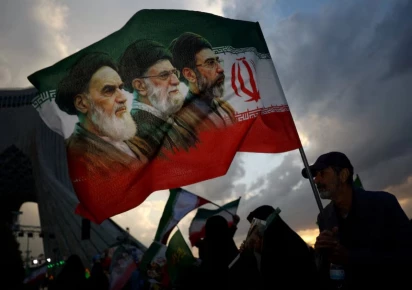
    TEHRAN: Tensions between Iran and the United States have escalated further after Iran’s Islamic Revolutionary Guard Corps (IRGC) warned that any country assisting Washington in military operations against Tehran could become a legitimate target, while the US confirmed its naval blockade on Iran remains fully operational. An IRGC spokesperson, speaking to Iranian state media, warned that countries providing logistical or military support to the United States—including the United Kingdom—would face retaliation. The official alleged that US B-1 bombers had recently used British bases during strikes on Iran, claiming any nation involved in such operations would be treated as a direct participant in the conflict. The warning came as reports emerged that US President Donald Trump has temporarily suspended plans for additional strikes on Iran after nearly two weeks of continuous military operations. According to US media, the decision was influenced by concerns over dwindling missile defence stockpiles, the risk of wider regional escalation and the desire to allow more room for diplomatic efforts. Despite the pause in airstrikes, the United States Central Command (CENTCOM) said its naval blockade against Iran remains in force. US forces reported intercepting several commercial vessels suspected of attempting to breach the blockade, redirecting multiple ships, disabling one vessel that ignored repeated warnings and carrying out verification inspections on others before allowing them to continue their voyages. US officials said contingency plans remain in place should military operations resume, underscoring that Washington is maintaining pressure on Tehran while keeping diplomatic options open. Meanwhile, Iran’s latest warning has added to growing concerns that the confrontation could draw more regional and international actors into the crisis.
  • | |

    US reviews military strategy as weapons stockpile …

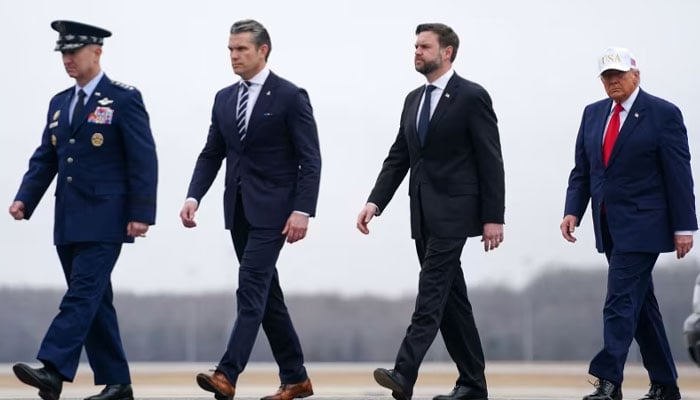
    WASHINGTON: Senior US officials have reportedly raised concerns over the country’s military readiness as the conflict with Iran intensifies, prompting the Trump administration to temporarily pause its air campaign while continuing diplomatic efforts. According to US media reports, Vice President JD Vance and Chairman of the Joint Chiefs of Staff General Dan Caine briefed President Donald Trump during a White House meeting on the escalating conflict and the potential impact of prolonged military operations on US weapons stockpiles. Sources said military leaders expressed concern over the depletion of key defence munitions and outlined the risks of expanding the conflict. While General Caine reportedly assured the president that the US military remains capable of carrying out all available operational options, he also highlighted the strategic consequences of continued military escalation. Following the meeting, the United States halted its nightly airstrikes on Iran after nearly two weeks of sustained attacks. Defence officials described the pause as temporary, although they did not confirm whether it was directly linked to concerns over weapons supplies or other strategic considerations. President Trump said negotiations with Iran remain ongoing but warned that military operations could resume or intensify if necessary. He also acknowledged appeals from several Gulf nations urging Washington to exercise restraint as regional tensions continue to rise. White House Communications Director Steven Cheung reiterated that President Trump continues to favour a diplomatic resolution but stressed that all military options remain available if Iran threatens international shipping in the Strait of Hormuz or targets US allies. He added that after nearly two weeks of economic pressure and strikes on military targets, the administration believes Tehran should pursue negotiations to avoid further escalation.

  • | | |

    Govt accelerates FBR reforms to build transparent,…

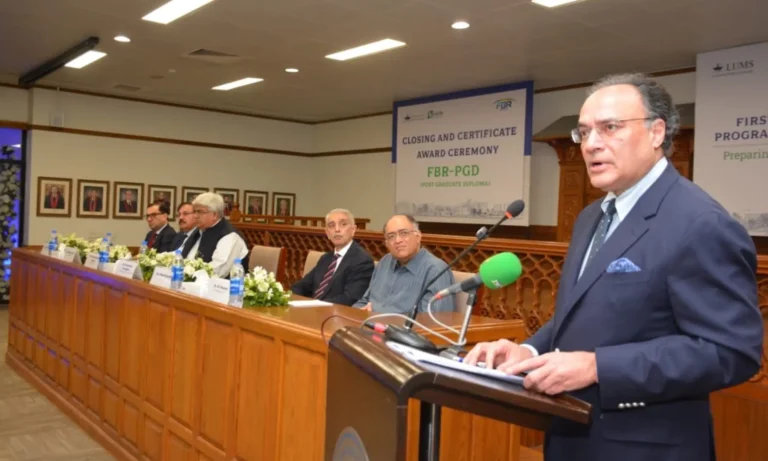
    LAHORE: The federal government has intensified efforts to modernise Pakistan’s tax system by accelerating reforms in the Federal Board of Revenue (FBR), expanding the cashless economy and integrating advanced digital technologies to improve transparency and tax compliance. Speaking at the certificate distribution ceremony for the FBR’s Postgraduate Diploma Programme at Lahore University of Management Sciences (LUMS), Finance Minister Muhammad Aurangzeb said the government is committed to creating a taxpayer-friendly and transparent financial system that supports long-term economic growth. He said reforms are being implemented simultaneously in tax policy and tax administration, with a new operational model being introduced in the FBR to improve efficiency, accountability and public trust. The minister added that Prime Minister Shehbaz Sharif is personally overseeing initiatives aimed at documenting the economy, broadening the tax base and promoting digital financial transactions. Aurangzeb revealed that authorities have uncovered major sales tax evasion cases, resulting in higher tax collections and increased revenue for the national exchequer. He stressed that modern digital tools, integrated databases and artificial intelligence will play a central role in strengthening tax administration and bringing the FBR in line with international standards. Calling on tax officials to continuously upgrade their skills, the finance minister said restoring taxpayers’ confidence and protecting national resources remain among the institution’s highest priorities. He expressed confidence that ongoing reforms would improve the business environment and ensure the benefits of economic reforms reach ordinary citizens. FBR Chairman Muhammad Rashid Langrial also addressed the ceremony, highlighting the importance of professional training and capacity building for tax officers. He said the organisation is focused on developing a modern, transparent and efficient tax system capable of meeting Pakistan’s evolving economic needs.

  • | |

    PTI social media faces internal differences, group…

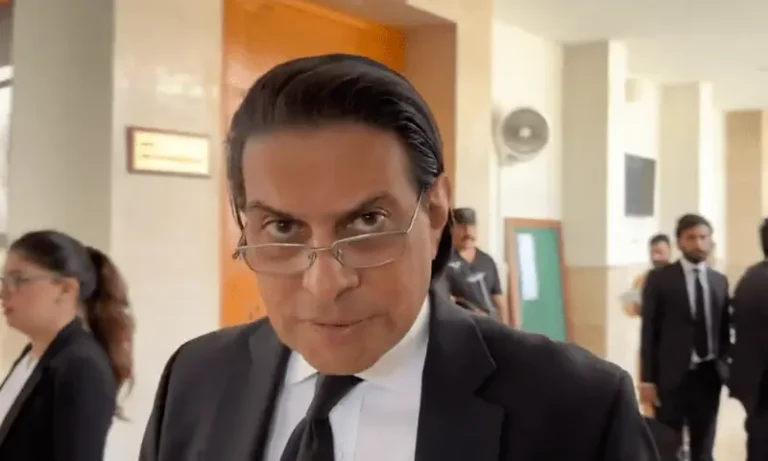
    ISLAMABAD: Pakistan Tehreek-e-Insaf (PTI) Secretary General Salman Akram Raja has acknowledged that the party is facing internal differences and grouping, saying that the lack of contact with party founder Imran Khan for the past nine months has made decision-making much more difficult. In a post on X, Salman Akram Raja said that, for the first time in the party’s history, there has been no contact with Imran Khan for nine months. He said that issues and disputes that were previously resolved within minutes through the party founder’s guidance now become the subject of long discussions. His remarks suggest that the absence of the jailed PTI founder has created a leadership gap, allowing disagreements within the party to become more visible. Raja also admitted that PTI had faced what he described as a “planned campaign” to weaken the party during this period. According to him, efforts were made from within the party to create problems, but senior leaders remained united and resisted those attempts. “I am grateful to Imran Khan’s senior colleagues who stood firm against these failed attempts,” he said. The PTI secretary general also claimed that another challenge comes from social media, where he said three different groups are active against the party’s interests. According to Raja, the first group consists of people who are formally linked to the media teams of PTI’s political opponents. The second group, he said, includes people within PTI who are seeking party positions and view certain leaders as obstacles to their ambitions. His statement is being seen as a rare public acknowledgment that internal rivalries and competition for positions exist within the party. Raja said the third group includes sincere PTI supporters who genuinely want Imran Khan’s release and the party’s success. He described them as passionate young people and older supporters who may not be fully aware of all developments. He argued that while emotional slogans are easy to raise, developing and following an effective political strategy requires patience, understanding and careful planning. Referring to calls for immediate action, Raja said that a political revolution cannot be achieved simply by gathering “one truck and 20,000 to 30,000 people.” He stressed that successful movements require well-thought-out strategies rather than emotional decisions. He added that every PTI worker wants Imran Khan to be released as soon as possible, but said the party must adopt practical and successful methods instead of relying on slogans alone. Raja’s comments come at a time when PTI has faced repeated speculation about internal divisions, disagreements over strategy and criticism exchanged on social media by supporters of different leaders. While he blamed external forces for trying to weaken the party, his remarks also indicate that internal competition, differences over leadership and disagreements about political strategy have become significant challenges for PTI during the prolonged absence of direct communication with its founder. His statement is likely to fuel further debate about unity within the party as it continues to navigate political and organisational challenges.

  • | |

    Ghazi University, Chinese academy sign MoU for agr…

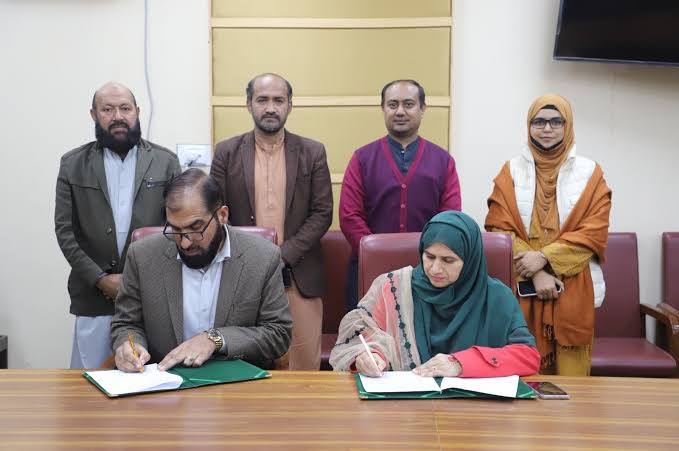
    By MIR HUNBAL BIRMANI DG Khan: Ghazi University has formally signed a Memorandum of Understanding (MoU) with the Chinese Academy of Agricultural Sciences (CAAS), China, establishing a strategic partnership aimed at advancing agricultural research and academic excellence.The agreement was officially signed by Dr. Muhammad Asif (Registrar, Ghazi University) and Dr. Zahoor Hussain on behalf of Ghazi University, alongside Prof. Dr. Xiaohui Zhang and Prof. Dr. Haiping Wang representing CAAS According to details , Department of Horticulture at Ghazi University, Dera Ghazi Khan, successfully organized a comprehensive one-day international workshop attended by scientists from china titled “Sustainable Vegetables Production Under Changing Climate” to address the growing challenges posed by global climate fluctuations on agricultural security. Registrar of Ghazi University, Dr. Muhammad Asif, who underscored the immense value of the event in enhancing the technical capacity and research aptitude of the university’s faculty members and senior students in attendance. The workshop’s core highlight featured keynote addresses delivered by a delegation of distinguished international agricultural scientists from the Chinese Academy of Agricultural Sciences (CAAS) in Beijing, China. The visiting panel included Prof. Dr. Xiaohui Zhang, Prof. Dr. Haiping Wang—Director, Chief Scientist of the Department of Vegetable Germplasm, and Curator of the National Vegetable Germplasm Resources Bank—and Dr. Jiangping Song, also a scientist and curator at the institution. During the technical sessions, these experts presented advanced, climate-resilient strategies tailored to modern horticultural demands, focusing on improved cultural practices, vegetable forcing techniques to optimize growth cycles, and controlled greenhouse production systems designed to maintain high yield quality despite extreme weather conditions. An interactive question-and-answer session was also part of the workshop, providing attendees with a valuable opportunity to engage directly with the keynote speakers and clarify complex concepts. The event concluded with a vote of thanks from Dr. Zahoor Hussain, Chairperson of the Department of Horticulture, who expressed deep gratitude to the honorable international guests, administration, and participants for contributing to the event’s success. Ultimately, the workshop served as a vital academic platform for knowledge transfer and scientific exchange, strengthening bilateral ties between Pakistani and Chinese agricultural researchers while setting a clear path forward for sustainable vegetable cultivation in the region. Ghazi University has formally signed a Memorandum of Understanding (MoU) with the Chinese Academy of Agricultural Sciences (CAAS), China, establishing a strategic partnership aimed at advancing agricultural research and academic excellence. The agreement was officially signed by Dr. Muhammad Asif (Registrar, Ghazi University) and Dr. Zahoor Hussain on behalf of Ghazi University, alongside Prof. Dr. Xiaohui Zhang and Prof. Dr. Haiping Wang representing CAAS. This bilateral agreement lays the groundwork for joint research initiatives, faculty and student exchange programs, and the provision of specialized scholarships. Additionally, the collaboration will focus on hosting joint workshops, technical training sessions, and capacity development programs designed to build expertise and strengthen global academic cooperation in agricultural sciences.

  • | | |

    National History Museum summer school 2026 ends wi…

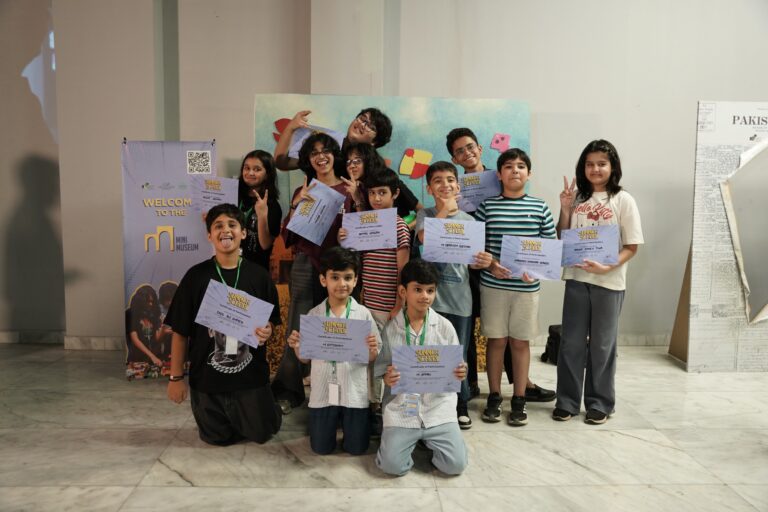
    Lahore: The National History Museum (NHM) hosted a week-long Mini Museum Display from 26th July to 2nd August 2026, marking the culmination of its flagship Summer School 2026 Programme. The display showcased projects created by participants exploring museum curation, oral histories, arts and crafts, architecture, and Pakistan’s food heritage during the summer school. Through field visits, hands-on activities, workshops, and creative experimentation with artificial intelligence, participants learned a variety of aspects from the history and culture of Pakistan. Reflecting on the experience, one participant said, “Being part of the Summer School is always exciting. This is my second time attending the school at the National History Museum, and I return each time with great enthusiasm to learn something new about my culture.” The opening day welcomed participants, parents, and special guests from academia. Attendees participated in interactive activities, including a LEGO-making workshop, making virtual block-printed bookmarks and postcards. The event also featured Circles of Life, a special workshop conducted by Taimoor Khan Mumtaz, the renowned architect at Kamil Khan Mumtaz Architects in Lahore. A parent of a Summer School participant remarked, “My children had a wonderful time. Displays like this build children’s confidence and encourage them to learn and experiment. The activities made the experience engaging, while Mr Taimoor Khan Mumtaz’s workshop was particularly memorable.” The Mini Museum Display received encouraging attendance and positive feedback from visitors. Speaking about the initiative, Awais Malik, Director, National History Museum, said, “The summer school is the soul of our mission at the National History Museum i.e., to educate the youngsters on the rich heritage of Pakistan.” The Mini Museum Display reflected NHM’s continued commitment to creating experiential learning experiences that connect the youth with Pakistan’s history, heritage, and culture.

  • | |

    Punjab University bus falls into Ravine while tryi…

    A bus belonging to the University of the Punjab met with an accident after it fell into a ravine while attempting to avoid a car on the road. According to the spokesperson of Punjab University, the incident resulted in injuries to 16 university employees who were travelling on the bus at the time of the accident. The university spokesperson stated that the bus was carrying employees of the Transport Wing when the accident occurred. A total of 19 employees were present on the bus. The vehicle was reportedly travelling along its route when the driver suddenly tried to save the bus from colliding with a car. During this attempt, the driver lost control of the vehicle, causing it to veer off the road and fall into a nearby ravine. Following the accident, rescue teams and university officials reached the site to assist the injured passengers. The injured employees were immediately provided with medical aid and shifted to nearby hospitals for further treatment. The condition of the injured employees was being monitored by medical teams. The university administration expressed concern over the incident and assured that all necessary support would be provided to the affected employees and their families. Officials also began gathering information about the circumstances that led to the accident to determine the exact cause. Road accidents involving university transport vehicles often raise concerns about road safety, vehicle maintenance, and driver precautions. Authorities usually emphasize the importance of careful driving, regular vehicle inspections, and strict compliance with traffic rules to prevent such incidents in the future. The Punjab University spokesperson further stated that the university administration was closely following the situation and ensuring that injured employees received proper medical treatment. The officials also visited the injured individuals to inquire about their health and provide necessary assistance. The accident created concern among the university community, including students, faculty members, and employees. Many expressed their wishes for the quick recovery of those injured in the incident. The university community also highlighted the importance of improving safety measures for employees who rely on university transport services. Transport facilities play an important role in helping university staff and students travel safely, especially in large educational institutions. Ensuring that buses are properly maintained and drivers are trained to handle emergency situations is considered essential for reducing the risk of accidents. Authorities are expected to conduct a detailed investigation into the incident to identify whether any technical issues, road conditions, or other factors contributed to the accident. The findings of the investigation may help in introducing additional safety measures for university transportation in the future. The incident serves as a reminder of the importance of road safety and responsible driving. While the quick action of the driver to avoid a collision may have prevented a direct crash with the car, the situation ultimately resulted in the bus falling into a ravine and causing injuries to several passengers. The Punjab University administration has assured that the safety and well-being of its employees remain a priority and that further steps will be taken to prevent similar incidents in the future. The injured employees continue to receive medical attention as officials monitor their recovery.

  • | |

    Ahsan Iqbal highlights importance of Artificial In…

    Federal Minister for Planning, Development, and Special Initiatives Ahsan Iqbal has stated that artificial intelligence (AI) is set to bring extraordinary changes across the world. He emphasized that Pakistan must prepare its youth for the future by providing them with modern education, digital skills, and technological resources, including laptops, to compete in the rapidly changing global environment. Addressing a ceremony at Islamia Degree College Narowal, Ahsan Iqbal said that equipping young people with digital skills has become an urgent necessity in today’s era. He stressed that technology is transforming economies, industries, and workplaces around the world, and nations that fail to adapt to these changes may fall behind in global competition. The federal minister highlighted that science and technology will play a decisive role in shaping the future economy. According to him, investment in scientific research, innovation, and technological development is essential for securing a prosperous future for the country. He stated that countries that focus on research and technological advancement are better positioned to achieve economic growth and development. Ahsan Iqbal said that the modern world is moving rapidly towards digital transformation, where artificial intelligence, automation, and emerging technologies are changing the way people work and communicate. He emphasized that Pakistan’s youth represent a valuable resource, and providing them with the right skills and opportunities can help them contribute significantly to national progress. He further stated that the government is committed to supporting young people by improving access to quality education, digital training programs, and technological facilities. He mentioned that initiatives such as providing laptops and promoting skill development programs are aimed at helping students gain knowledge and abilities required in the modern job market. The minister explained that digital skills are no longer limited to the technology sector but have become important in almost every field, including business, education, communication, healthcare, and industry. He encouraged students to learn new technologies and develop skills that can increase their employment opportunities and enable them to participate in the digital economy. Ahsan Iqbal also highlighted the importance of scientific research and innovation in achieving sustainable development. He said that investment in universities, research institutions, and technology-based projects can help Pakistan create solutions for future challenges and strengthen its position internationally. He stated that nations that successfully integrate technology into their education systems and economic structures will be the ones that succeed in the global arena. According to him, technological awareness and digital readiness are essential for young generations to take advantage of emerging opportunities. The minister urged students to focus on acquiring knowledge, improving their technical abilities, and using technology positively for personal and national development. He said that the youth must be prepared to meet future challenges and benefit from opportunities created by advancements in science and technology. Concluding his remarks, Ahsan Iqbal reiterated that artificial intelligence and digital transformation will shape the future of the world. He emphasized that Pakistan’s progress depends on empowering its young population with modern education, research opportunities, and digital skills. By investing in technology and human resources, the country can build a stronger economy and compete effectively at the international level.

  • | |

    U.S. congressional delegation visits Punjab safe c…

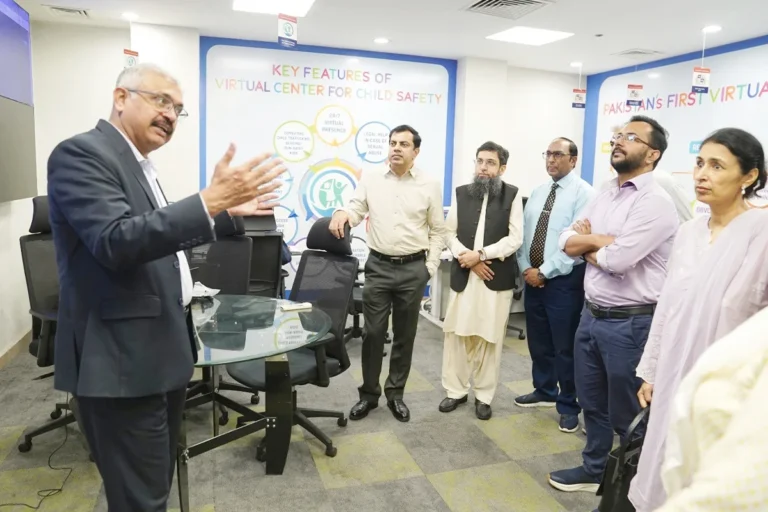
    Lahore, July 26, 2026: A high-level delegation from the United States Congress, including Congressman Ryan Zinke and Congressman Michael Baumgartner, visited the headquarters of the Punjab Safe Cities Authority (PSCA) in Lahore. During the visit, the delegation was briefed on the Authority’s advanced Artificial Intelligence (AI)-based systems, modern surveillance technologies, and digital public safety initiatives aimed at improving security and emergency response mechanisms across Punjab. The visiting delegation was warmly welcomed by Managing Director Punjab Safe Cities Authority Muhammad Ahsan Younas and Chief Operating Officer Muntansir Feroz upon their arrival at the PSCA headquarters. The officials provided an overview of the Authority’s operations and highlighted the role of technology-driven solutions in strengthening law enforcement capabilities and ensuring better public safety services for citizens. During their visit, the U.S. Congressional delegation toured different operational sections of the Authority and observed the functioning of various advanced security systems. The visitors were informed about the latest technological developments introduced by PSCA, including artificial intelligence-powered upgrades, smart monitoring tools, and digital solutions designed to improve security management throughout the province. According to the PSCA spokesperson, the delegation received a detailed briefing on the Authority’s modern surveillance infrastructure, including state-of-the-art security cameras, the Integrated Command and Control Centre, AI-based security modules, and province-wide monitoring networks. Officials explained how these technologies help authorities monitor public spaces, respond quickly to emergencies, and support law enforcement agencies in maintaining peace and security. The delegation was also briefed on PSCA’s coordination with Punjab Police and other security institutions. Officials highlighted the Authority’s role in creating an integrated security environment through advanced communication systems, data-driven monitoring, and rapid emergency response mechanisms. The visitors were informed about how these systems assist law enforcement agencies in improving operational efficiency and providing timely assistance to citizens. The PSCA spokesperson further explained that the delegation was given a detailed presentation on the upgraded features of Emergency Helpline 15. The briefing included information about its technology-based emergency response system and various citizen-focused digital services developed to make emergency assistance faster and more accessible for the public. The U.S. Congressional delegation showed particular interest in several major initiatives launched by PSCA, including the Women Safety App, Virtual Women Police Station, Virtual Center for Child Safety, Intelligent Traffic Management System, and other innovative digital public safety projects. These initiatives were presented as examples of how technology can be effectively used to address social challenges and improve public services. The visiting representatives appreciated the efforts of the Punjab Safe Cities Authority in using modern technology to enhance public security and improve citizen services. They recognized these initiatives as progressive models that demonstrate the potential of artificial intelligence and digital innovation in strengthening safety systems. At the conclusion of the visit, commemorative shields were presented to the members of the U.S. Congressional delegation as a gesture of appreciation and goodwill. Senior officials from PSCA and representatives of relevant departments were also present during the concluding ceremony. The visit highlighted the growing importance of technological cooperation and knowledge-sharing in the field of public safety. The Punjab Safe Cities Authority continues to focus on adopting modern digital solutions to create safer communities, enhance emergency response capabilities, and provide improved services to citizens across the province.

  • | |

    River garden residents protest repeated increase i…

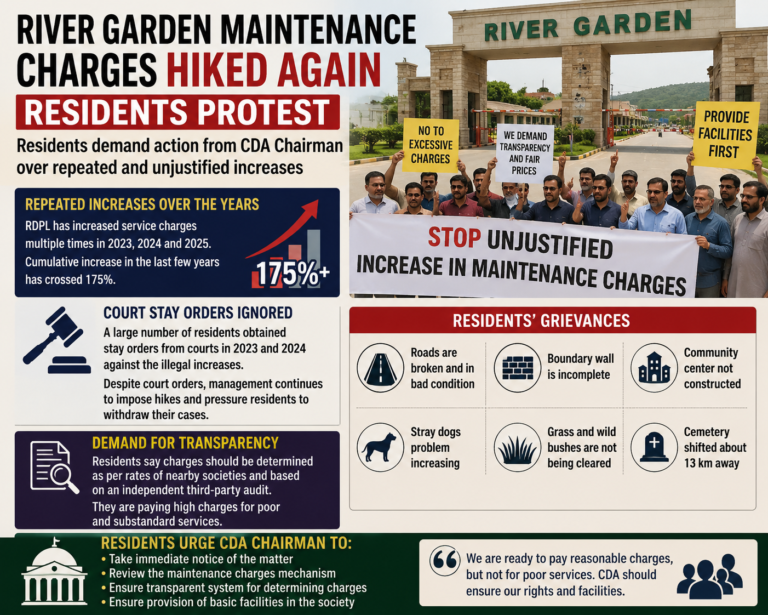
      Residents of River Garden Islamabad have strongly protested a fresh increase in monthly maintenance charges after the society’s management, River Garden Development Private Limited (RDPL), once again raised service fees. According to residents, the revised charges have been applied unilaterally in bills issued from July onward, placing an additional financial burden on homeowners. Residents claim that this is not the first time maintenance charges have been increased. They state that RDPL had already raised service charges several times during 2023, 2024, and 2025. As a result of these repeated revisions, the cumulative increase in maintenance fees over the past few years has reportedly exceeded 175 percent, leading to growing frustration among residents. A large number of River Garden residents have previously challenged these increases in court. During 2023 and 2024, several homeowners obtained stay orders against the hikes, arguing that the increases were unjustified and lacked transparency. However, residents allege that despite these court orders, the management has continued to introduce higher maintenance charges and adopt various administrative measures that they believe place pressure on residents to withdraw their legal cases. The latest increase has once again triggered widespread criticism within the community. Residents argue that they continue to pay maintenance charges despite receiving inadequate and below-standard services. They believe that the fees being collected do not reflect the quality of facilities available in the housing society. Residents have demanded that maintenance charges should be determined through a transparent and independent process. They have called for the appointment of a neutral third-party auditor to evaluate the society’s operational expenses and recommend fair service charges. They also insist that the rates should be comparable to those charged by neighboring housing societies offering similar facilities and services. According to the residents, the Capital Development Authority (CDA) regulations emphasize that housing societies must prioritize the provision of essential infrastructure and address the concerns of residents before imposing additional financial burdens. They argue that instead of increasing maintenance charges, the management should first improve the condition of the society and fulfill its basic responsibilities. Residents highlighted several longstanding issues that, they say, remain unresolved. They claim that many roads within River Garden are damaged and require urgent repair. They also pointed out that the boundary wall of the housing society is still incomplete, raising concerns about security. In addition, residents say that the promised community center has yet to be constructed despite repeated assurances. They have also expressed concerns over the increasing number of stray dogs roaming the society, describing the situation as a public safety issue for families and children. Other complaints include poor maintenance of green areas, with grass and wild shrubs reportedly left unattended for extended periods. Residents further criticized the relocation of the society’s cemetery, stating that it has been moved approximately 13 kilometers away from the residential area, making it difficult for families to visit and creating inconvenience during funeral arrangements. The residents have once again appealed to the Chairman of the Capital Development Authority to take immediate notice of the matter. They have urged the authority to review the process used to determine monthly maintenance charges and introduce a transparent mechanism that ensures fairness and accountability. Furthermore, residents have requested the CDA to ensure that RDPL fulfills its obligations by improving infrastructure, completing pending development projects, and providing the essential services promised to homeowners. They believe that only after these basic facilities are delivered should any discussion regarding increases in maintenance charges take place. The issue has become a major concern for many families living in River Garden, who say they are willing to pay reasonable service charges but expect transparency, accountability, and quality services in return. They hope that intervention by the CDA will help resolve the dispute and ensure that residents receive the facilities and standards they were promised when investing in the housing society.