International

  • | |

    South Indian actress Shakeela undergoes neck surgery after excessive phone use

      South Indian actress Shakeela has revealed that her excessive use of mobile phones left her with a serious neck problem that eventually required surgery costing around Rs300,000 Indian rupees. The 53-year-old actress shared her experience in a video posted on her YouTube channel and urged people, especially parents, to limit unnecessary mobile phone use. Shakeela, who has worked in Malayalam, Tamil, Kannada and Telugu films, said her habit of playing games and watching videos on her phone for several hours caused significant damage to her neck. She explained that she would often lie on her side in bed for long periods while using her phone. “I used to play games on my phone continuously for four hours while lying on my side in bed,” Shakeela said. She added that she would only get up occasionally to have tea or coffee before returning to her phone. After playing games, she would spend hours watching reels on YouTube and Instagram. According to the actress, maintaining an incorrect posture while using her phone, combined with prolonged screen time, affected important blood vessels in her neck and eventually led to serious health complications. She underwent surgery in Chennai and said that a titanium screw was also used during the procedure. After returning home, doctors advised Shakeela to wear a neck collar until she recovered. She said that following the surgery, she has needed assistance even with basic activities such as getting out of bed and eating. Shakeela stressed that mobile phones are useful devices when used responsibly, but excessive use can have serious consequences. She advised people not to spend unnecessary hours watching videos or playing games, even if the content is entertaining. She also issued a warning to parents, urging them to avoid giving mobile phones to children unnecessarily. According to her, children should use phones only for essential activities and educational or useful content rather than spending long periods watching short videos and playing games. The actress said that people could end up paying a heavy financial and physical price for excessive phone use, adding that her own experience had cost her around Rs300,000 and caused considerable pain and difficulty. Shakeela Begum was born in Chennai. Her mother, Chand Bee, was from Andhra Pradesh, while her father, Chand Basha, was from Tamil Nadu. She began her acting career with a Tamil film in 1995. However, she gained widespread recognition after appearing in the Malayalam film Kinnarathumbikal, released in 2000. Over the years, Shakeela became a well-known name in South Indian cinema, particularly for her work in Malayalam films. Her latest health experience has now prompted her to use her public platform to raise awareness about responsible mobile phone use and the potential health risks associated with prolonged screen time and poor posture.


  • | | |

    Rhea Chakraborty opens up about years of suspicion…

    Indian actress Rhea Chakraborty has opened up about one of the most difficult periods of her life, saying that she spent years under suspicion following the death of her former boyfriend and actor Sushant Singh Rajput. Rhea’s life changed dramatically in 2020 after Sushant Singh Rajput was found dead at his Mumbai residence. The case attracted enormous public attention, while Rhea faced intense scrutiny, criticism and legal proceedings. Months ago, the Central Bureau of Investigation (CBI) reportedly filed a closure report in the case, providing major relief to Rhea. She was cleared of the allegations connected to the case. Rhea and her brother Showik Chakraborty had also been arrested by India’s Narcotics Control Bureau in connection with a drugs-related case linked to the investigation into Sushant’s death. The actress recently discussed her experience while appearing on the second season of The Traitors. During a conversation with host Karan Johar, she was asked whether she would prefer to present herself as innocent or as a traitor in order to survive the show. Rhea chose the role of the innocent. Explaining her decision, she said that she had finally received a clean chit and that people had learned she was innocent. She added that she had remained under suspicion for a very long time and no longer liked the feeling of being viewed through that lens. The actress has previously spoken about the impact the controversy had on her life. She said the experience affected her mental well-being and that she struggled with post-traumatic stress disorder following the intense period of public and legal scrutiny. For Rhea Chakraborty, the recent developments appear to represent an important turning point. After years of controversy surrounding her name, the CBI closure report has allowed her to publicly emphasize her position and move forward. Her comments on The Traitors have once again brought attention to the long-running controversy, while also highlighting the personal toll she says the ordeal took on her. Rhea Chakraborty says she is innocent, and her latest remarks show how deeply the years of suspicion and public scrutiny continue to shape her perspective on that chapter of her life.

  • | | |

    Nearly 600 Israeli settlers enter Al-Aqsa mosque c…

    Nearly 600 Israeli settlers entered the Al-Aqsa Mosque compound in occupied East Jerusalem on Thursday under Israeli police protection, according to a local official cited by Anadolu Agency. An official from Jerusalem’s Islamic Endowments Department said at least 584 settlers entered the compound during the morning period through the Moroccan Gate. The official added that additional groups were expected to enter after noon prayers. Eyewitnesses reported that some of the incursions involved prayers, religious rituals and dancing. Such activities have become a source of heightened tension because of disputes surrounding the longstanding arrangements governing access and worship at the holy site. The latest incident occurred on the first day of a new month in the Hebrew calendar, a period when Israeli settler visits to the compound have traditionally increased. According to the report, Israel began allowing such entries into the compound in 2003. Since then, visits have taken place regularly, except on Fridays and Saturdays, with the number of participants increasing over the years. The Al-Aqsa Mosque compound is one of the most sensitive religious and political sites in Jerusalem. It is Islam’s third-holiest site and holds profound religious significance for Muslims around the world. The site is also known to Jews as the Temple Mount, who associate the area with the historical location of two ancient Jewish temples. Competing religious and political claims over the site have contributed to repeated tensions in Jerusalem. East Jerusalem, where Al-Aqsa Mosque is located, was occupied by Israel during the 1967 Arab-Israeli War. Israel later annexed the entire city in 1980, a move that has not been recognised by the international community. The latest entry of hundreds of Israeli settlers under police protection is likely to draw further attention amid the longstanding tensions surrounding access to and activities at the holy compound. The incident underscores the continuing sensitivity of Al-Aqsa Mosque and its central role in the broader Israeli-Palestinian conflict.

  • |

    Air India to introduce mandatory drug testing for all Pilots

      Air India is set to introduce mandatory substance testing for all its pilots from Thursday, going beyond the drug-screening requirements currently imposed by aviation regulators. The decision comes days after the captain of an Air India flight involved in a serious mid-air incident reportedly tested positive for marijuana, raising fresh concerns about flight safety and crew fitness. According to an internal memo circulated by the airline, the expanded testing programme will check pilots for substances and medications prohibited under aviation regulations. The screenings will be carried out at several locations, including the airline’s training academy in Gurugram, briefing centres and offices, as well as other facilities designated according to pilots’ home bases. Pilots working for Air India Express, the airline’s budget subsidiary, will also be included in the new testing programme. Air India said in the memo that although existing regulations already require airlines to conduct random testing on at least 10% of their flight crew for psychoactive substances every year, the company believes additional measures are necessary. The airline said the broader testing initiative was being introduced to strengthen safety standards and reassure passengers, employees and other stakeholders. The announcement follows an investigation into an incident involving an Air India Airbus A320neo travelling from Phuket, Thailand, to New Delhi on August 4. During the flight, the aircraft unexpectedly lost around 300 feet, or approximately 91 metres, of altitude while cruising. According to a source familiar with the matter, the aircraft’s captain tested positive for marijuana during a confirmatory drug test. The incident has prompted increased scrutiny of pilot health and safety procedures at the airline. The flight was carrying 137 passengers and eight crew members when it experienced what authorities described as a “momentary altitude variation” while flying over Odisha in eastern India. Although the aircraft subsequently continued its journey and landed safely in Delhi, the sudden change in altitude reportedly resulted in injuries to 13 passengers and four crew members. Indian aviation authorities have launched an investigation into the incident to determine what caused the sudden altitude change and whether any operational or human factors were involved. Earlier, Reuters reported that India’s Ministry of Civil Aviation had summoned Air India Chief Executive Officer Campbell Wilson following the incident. A source familiar with the matter said the summons was related to the investigation and the airline’s handling of the situation. Air India and the Ministry of Civil Aviation did not immediately respond to requests for comment regarding the summons or the investigation. Wilson, however, told news channels that the airline had provided the ministry with an update on the progress of the investigation. The introduction of mandatory testing represents a significant expansion of Air India’s internal safety measures. By testing its entire pilot workforce rather than relying solely on the minimum regulatory requirement for random checks, the airline aims to strengthen oversight of substances that could potentially affect pilots’ ability to perform their duties. The move also comes at a sensitive time for Air India, as the airline faces continued scrutiny over operational safety following several recent incidents. Aviation authorities and industry observers are expected to closely monitor the findings of the investigation into the Phuket-to-Delhi flight. Air India’s expanded testing programme is intended to ensure that pilots remain fit to operate aircraft and comply fully with aviation safety regulations. The airline said the initiative would reinforce its commitment to maintaining high safety standards and restoring passenger confidence as investigations into the August 4 incident continue.

  • | |

    Iran rejects US claims over Strait of Hormuz control 

      Iran’s military on Thursday rejected US claims that ships were continuing to pass normally through the Strait of Hormuz, insisting that no vessel could safely transit the strategic waterway without permission from Tehran. According to news agency, Ebrahim Zolfghari, spokesperson for the Khatam al-Anbiya Central Headquarters, said the strait remained under Iran’s “full management and control.” He warned that commercial vessels and oil tankers would not be able to secure safe passage without the permission and supervision of Iran’s armed forces. Zolfghari’s remarks came amid growing tensions between Tehran and Washington over the strategically important waterway, through which a significant portion of global oil and energy shipments traditionally passes. The conflicting statements from Iran and the United States have further intensified uncertainty surrounding maritime traffic in the region. Meanwhile, US Defence Secretary Pete Hegseth said Washington had the capability to maintain a naval blockade of Iranian ports for as long as necessary. Speaking to reporters, Hegseth said the US Navy could sustain such an operation indefinitely by rotating ships in and out of the region. His comments came as Washington continued to assert its ability to control maritime activity around Iran. Tehran, however, has strongly disputed those claims and maintained that it retains authority over the Strait of Hormuz. Iranian officials have also issued increasingly forceful warnings about a potential future conflict. Brigadier General Rasoul Sanaei-Rad said on Thursday that Iran would respond more aggressively if another war occurred. Sanaei-Rad, who currently serves as a political adviser in the office of Iran’s Supreme Leader, said Iran had stood firm during the recent conflict and would be prepared to respond with greater determination in any possible future war. Although he did not directly name the United States, he accused Iran’s “enemy” of attempting to create divisions inside the country through economic pressure. According to the general, those efforts had failed to achieve their intended objective. His comments reflected the increasingly confrontational rhetoric coming from Iranian officials as tensions with Washington remain high. Iranian Foreign Minister Abbas Araghchi also criticised US assessments of the conflict, saying Washington had repeatedly miscalculated because of intelligence failures. Referring to the recent war, Araghchi said the United States had made serious errors in assessing the situation and was now making an even bigger mistake regarding the Strait of Hormuz. “Worse than fake news is fake intelligence. Be careful,” Araghchi said, warning against what he described as flawed assessments of Iran’s capabilities and intentions. His comments came a day after US President Donald Trump claimed on his Truth Social platform that the United States had “total control” over the strategic waterway. Iran has rejected the assertion, with officials continuing to emphasise Tehran’s role in regulating passage through the strait. Iranian officials have also sought to project confidence in the country’s ability to withstand continued pressure. A former Iranian diplomat, Abbas Khameyar, said the United States had failed what he described as a test of economic and military warfare against Iran. Khameyar argued that Tehran would not accept American conditions or surrender to US ambitions. He also claimed that Washington had effectively fallen into a “trap” involving the Strait of Hormuz. The latest statements from both sides underline the deepening confrontation over the waterway. While Washington maintains that it has the military capability to sustain a blockade, Tehran insists that maritime passage remains subject to its authority. With both countries issuing conflicting claims over control and navigation, the Strait of Hormuz has once again emerged as a major flashpoint in the wider regional confrontation.

  • |

    Drought reveals Nazi-era warships in Danube

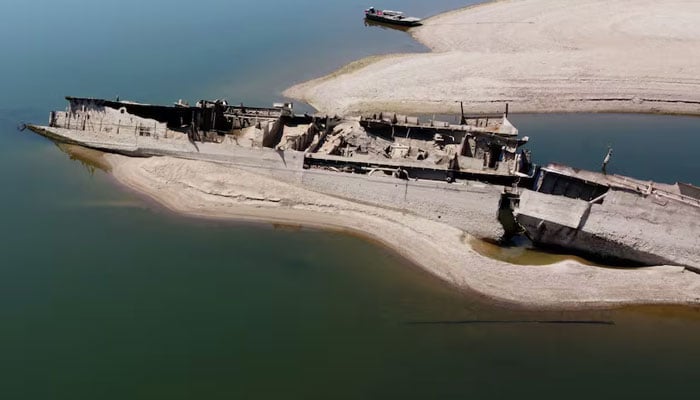
    Severe heat and prolonged drought across Europe have caused the Danube River to fall to record-low levels, exposing the wreckage of German warships that sank during World War II. The wrecks have emerged near the border between Serbia and Romania, offering a rare glimpse into one of the lesser-known chapters of the war. The vessels sank in 1944, when Nazi Germany attempted to prevent advancing Soviet forces from moving further west along the Danube. According to foreign media reports, German forces deliberately scuttled dozens of warships in the river as Soviet troops advanced through Eastern Europe. The wrecks remained hidden beneath the water for decades, but the dramatic decline in the Danube’s water level has now brought parts of the vessels back into view. The discovery highlights the wider impact of Europe’s increasingly severe heat and drought conditions. With water levels dropping sharply, the Danube has exposed not only historic shipwrecks but also other submerged remains that normally stay hidden beneath the river. The newly visible wrecks are drawing attention from historians and researchers, while also underscoring how extreme weather can unexpectedly reveal traces of the past.

  • |

    Luton student Nawal Qazi secures four A grades 

      Talented student Nawal Qazi, who hails from Luton in the United Kingdom, has achieved an outstanding academic result by securing four A grades in her A-Level examinations. Her exceptional performance has earned her an offer to study law at Wadham College, one of the renowned colleges of the University of Oxford. Nawal’s achievement has been widely celebrated by her family and community, as her academic success marks an important milestone in her educational journey. Her offer from Oxford represents an opportunity to study at one of the world’s most prestigious universities and pursue a degree in law. Nawal is the daughter of Siraj Qazi and the granddaughter of the renowned personality Allama Qazi Abdul Aziz Chishti MBE. She received her education at Bedford Girls’ School, where she completed her studies before appearing in the A-Level examinations. In her A-Level examinations, Nawal demonstrated strong academic ability across a range of subjects. She achieved an A grade in History, English Literature and Chemistry. She also secured an A grade in the Extended Project Qualification (EPQ), bringing her total achievement to four A grades. Her results reflect not only her academic performance but also her ability to excel in subjects requiring different skills. History and English Literature demand strong analytical and writing abilities, while Chemistry requires scientific understanding and problem-solving skills. Her success across these subjects demonstrates a broad academic profile. Nawal’s achievement in the Extended Project Qualification further highlights her commitment to independent academic work. The qualification allows students to undertake an extended research project, requiring them to develop a topic, conduct research and present their findings in a structured manner. Securing an A grade in the EPQ alongside three A-Level subjects further strengthened her academic record. The offer to study law at Wadham College, University of Oxford, is another major milestone in Nawal’s educational career. Oxford is internationally recognized for its academic excellence, and admission to one of its colleges is considered a significant achievement for students seeking to pursue higher education at the highest level. Nawal’s success has also brought pride to her family. As the daughter of Siraj Qazi and granddaughter of Allama Qazi Abdul Aziz Chishti MBE, her achievement adds another notable accomplishment to her family’s educational and professional legacy. Her journey from Bedford Girls’ School to an opportunity to study law at Oxford demonstrates the value of dedication, academic discipline and consistent effort. The combination of her strong A-Level grades and success in the EPQ helped establish an impressive academic profile and contributed to her receiving the opportunity to pursue her chosen field at Oxford. Nawal is now expected to begin the next stage of her education by studying law at Wadham College. Her achievement serves as an encouraging example for young students, particularly those from British Pakistani communities, who aspire to pursue higher education at leading universities. With four A grades and an offer from one of the world’s most prestigious institutions, Nawal Qazi’s academic success represents a proud moment for her family, school and wider community. Her achievement reflects both her personal dedication and the support she received throughout her educational journey, while her upcoming studies at Oxford are expected to open the door to further academic and professional opportunities.

  • | |

    England moves closer to eliminating Hepatitis C

      Glasgow: England is moving closer to becoming one of the first countries in the world to achieve the goal of eliminating hepatitis C, a viral infection that primarily affects the liver. According to the National Health Service (NHS), significant progress has been made in diagnosing and treating people living with the disease. So far, around 80 percent of known hepatitis C patients have successfully completed treatment, while deaths associated with the disease have fallen by 36 percent over the past decade. Health authorities say the progress is the result of increased testing, early diagnosis and wider access to treatment. Several initiatives have been introduced to identify people who may have hepatitis C without knowing that they are infected. Among these measures are blood testing in emergency departments, screening when patients register with general practitioners (GPs), and the provision of free home testing kits. These programmes have helped health authorities identify thousands of people who were previously unaware that they had the infection. Following diagnosis, patients have been referred for treatment, allowing many to receive medical care before the disease could cause more serious liver damage. Official figures show that more than 100,000 people have been diagnosed and treated for hepatitis C in England since 2015. Health experts say this represents a major step forward in the country’s efforts to eliminate the disease as a public health threat. Hepatitis C is caused by a virus that can lead to long-term liver damage if it remains untreated. In some cases, chronic infection can result in serious complications, including cirrhosis and liver cancer. However, advances in medical treatment have significantly improved the chances of recovery. Experts say modern antiviral medicines have transformed the treatment of hepatitis C. Patients generally take direct-acting antiviral medicines for between eight and 12 weeks. These treatments are highly effective, with approximately 95 percent of patients able to achieve a complete cure. The availability of effective treatment has also strengthened England’s ability to meet international targets for hepatitis C elimination. Health officials believe that combining widespread testing with rapid access to treatment can help identify remaining cases and prevent further transmission. The NHS has emphasized that finding people who have the virus but do not know they are infected remains an important part of the elimination strategy. Because hepatitis C can sometimes remain without noticeable symptoms for years, individuals may not seek medical attention until significant liver damage has already occurred. Routine and targeted screening therefore plays an important role in identifying cases at an earlier stage. The decline in deaths over the past 10 years is another indication of the progress made against the disease. A 36 percent reduction in hepatitis C-related deaths suggests that improved diagnosis and access to effective treatment are helping reduce the most serious consequences of the infection. With more than 100,000 people diagnosed and treated since 2015, and around 80 percent of known patients successfully treated, England is now considerably closer to its hepatitis C elimination target. Health experts say continued testing, early diagnosis, treatment and public awareness will be essential to maintain this progress. With modern medicines capable of curing around 95 percent of patients within a relatively short treatment period, England is increasingly well placed to become one of the countries leading global efforts to eliminate hepatitis C as a major public health concern.

  • |

    India warns border tensions could affect ties with China

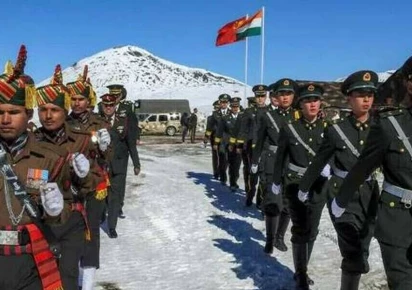
      India has stressed that maintaining peace along its disputed border with China is essential for improving relations between the two Asian powers. The statement comes amid reports of renewed encounters between Indian and Chinese troops in a remote part of the Himalayas. India’s latest remarks mark the second time in less than a week that New Delhi has addressed concerns over the border. The two countries have been attempting to rebuild relations after deadly clashes in 2020 severely damaged diplomatic ties. The issue is particularly significant ahead of the BRICS summit, scheduled to take place in New Delhi from September 12 to 13, where Chinese President Xi Jinping is expected to participate. Speaking at a regular media briefing on Tuesday, Indian Foreign Ministry spokesperson Randhir Jaiswal said New Delhi considers border matters with China extremely serious. He stressed that the situation along the disputed frontier would have a direct impact on the broader relationship between the two countries. Jaiswal said India had consistently communicated to Beijing that the condition of the border was closely connected to the overall state of bilateral relations. His comments came in response to questions about reports of a recent military encounter between troops from both countries. China’s Foreign Ministry and Defence Ministry did not immediately respond to requests for comment regarding the reported developments. According to news , Indian and Chinese military patrols reportedly came into contact in late July near Taksing, a remote village in Arunachal Pradesh’s Upper Subansiri district. The area lies along the border with Tibet and is located in the eastern Himalayas. China claims Arunachal Pradesh as part of what it describes as southern Tibet, referring to the region as Zangnan. India strongly rejects Beijing’s claim and maintains that Arunachal Pradesh is an integral part of Indian territory. The reported encounter allegedly occurred around 2.5 kilometres inside territory controlled by India. Chinese personnel reportedly withdrew from the area initially but returned in early August and set up two tents. However, Indian defence officials have rejected reports suggesting that the developments represent a significant increase in military tensions. The defence spokesperson responsible for Arunachal Pradesh described the reports as unverified and lacking sufficient evidence. A residents’ welfare organisation in the region had earlier raised concerns in a July 26 letter sent to local authorities. The group claimed that Chinese personnel were increasing their presence and moving into strategically important areas near the border. Reuters reviewed the letter. Military patrols from India and China occasionally encounter one another along their disputed 3,488-kilometre frontier. Such confrontations are not unprecedented, although they do not happen regularly. Relations between the two countries deteriorated sharply after a deadly confrontation in the western Himalayas in 2020. Twenty Indian soldiers and four Chinese troops were killed during the clashes, leading both sides to deploy tens of thousands of troops and large quantities of military equipment along the frontier. Tensions gradually began to ease after Indian Prime Minister Narendra Modi and Chinese President Xi Jinping held talks in 2024. The two leaders agreed to take steps to end the prolonged military standoff and work toward reducing tensions. Despite those efforts, the latest reports highlight the continuing sensitivity of the border dispute and the importance of maintaining stability as India and China attempt to restore their broader relationship.

  • |

    Trump says US will maintain control of Strait of Hormuz 

      US President Donald Trump has said American forces are likely to remain in control of the strategically important Strait of Hormuz, as tensions between Washington and Tehran continue to rise and efforts to revive a temporary peace agreement show little progress. In a post on his Truth Social platform on Wednesday, Trump claimed that the United States has “total control” over the waterway and suggested that Washington intends to maintain its presence there. He described the ongoing naval blockade as a “wall of steel” and said Iran had no effective means of challenging it. Trump also claimed that Iran’s military strength had been severely weakened, alleging that the Islamic Revolutionary Guard Corps had been “decimated.” He further described Iran’s economy as collapsing, pointing to high inflation and accusing Tehran of relying on rhetoric rather than meaningful action. However, an Iranian source said there had been no progress in efforts to restore an interim agreement reached in June. The agreement had called for an immediate halt to military operations and provided a 60-day period, which could be extended by mutual agreement, for both sides to negotiate a longer-term settlement. The arrangement quickly deteriorated. Trump later declared the agreement over, while Iran described it as suspended. Tehran has accused Washington of failing to meet its commitments, including lifting restrictions on Iranian ports and releasing frozen Iranian financial assets. The United States, meanwhile, has accused Iran of failing to reopen the Strait of Hormuz. The Iranian source said mediators were discussing the possibility of Washington returning to the interim agreement and establishing a timetable for fulfilling its commitments, but no progress had been made. Tensions have increased further following fresh attacks on shipping in the region. The Strait of Hormuz, located between Iran and Oman, is one of the world’s most important energy routes and previously carried around one-fifth of global oil and liquefied natural gas supplies. Concerns over disruptions have contributed to a sharp rise in oil prices since the conflict began. Shipping traffic through the strait also dropped significantly. Data showed that only eight vessels were tracked passing through the waterway on Tuesday, the lowest daily figure in about a week. Ship operators have increasingly avoided the route because of security concerns. Additional attacks were reported at other major maritime chokepoints. In the Bab el-Mandeb Strait at the southern end of the Red Sea, four crew members were reportedly killed when an Iran-backed Houthi attack targeted a small cargo vessel. Two Yemeni rescuers were also reported killed. The US military separately said an American Navy helicopter fired two missiles to disable the steering system of a Panama-flagged cargo ship. US Central Command said the vessel had ignored repeated warnings and violated the naval blockade of Iranian ports. Maritime sources said the ship was struck near Pakistan while travelling toward the Gulf of Oman. The latest attacks have increased concerns about global energy supplies. Brent crude prices continued to rise, while investors reacted to growing uncertainty over the possibility of a quick end to the conflict. Iran has warned that the Strait of Hormuz will remain closed unless Washington accepts its conditions for ending the war. At the same time, Trump has continued to alternate between threatening further escalation and suggesting that a peace agreement could be reached soon. With military tensions, attacks on commercial shipping and diplomatic disagreements continuing, prospects for a swift resolution appear increasingly uncertain.