International

  • | | |

    Pakistan highlights mediatory role in US-Iran conf…

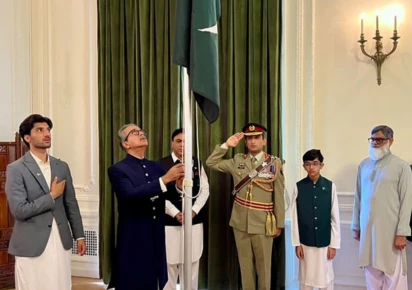
    Pakistan’s Permanent Representative to the United Nations, Ambassador Asim Iftikhar Ahmad, has highlighted Pakistan’s mediatory efforts in the US-Iran conflict, saying the country remains committed to promoting peace and stability amid growing global tensions. Speaking at an Independence Day ceremony at Pakistan House in New York, Ahmad said Pakistan continued to seek peaceful solutions to conflicts and reaffirmed its commitment to sovereignty, security and socio-economic development. He paid tribute to Quaid-e-Azam Muhammad Ali Jinnah, describing him as a visionary leader who played a historic role in creating Pakistan. Reflecting on the country’s journey since 1947, he praised the resilience and achievements of Pakistanis despite major challenges. Ahmad also praised the armed forces for defending the country and protecting its people, particularly during the May 2025 conflict with India. He highlighted the contributions of Pakistanis around the world, including innovators, athletes and artists, and recognised the work of Saima Saleem and Aleena Majeed at Pakistan’s UN mission. The ambassador said Pakistan had overcome major economic and structural challenges over the decades and continued to show resilience in the face of adversity.

  • | |

    Irish Football association withdraws support for FIFA President Gianni Infantino

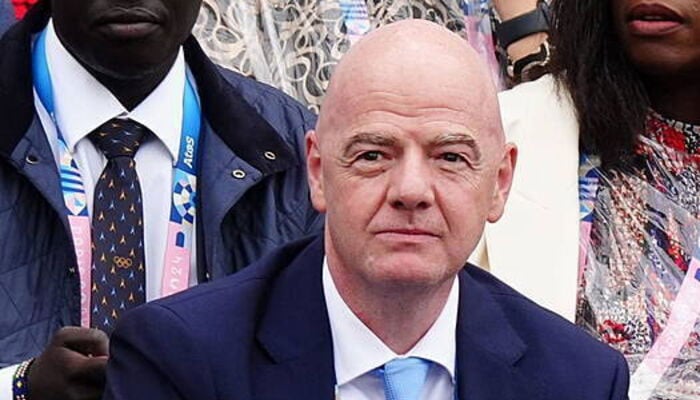
      The Irish Football Association (FAI) has formally confirmed that it has withdrawn its support for FIFA President Gianni Infantino, delivering another setback to his bid to secure a fourth term as the head of world football’s governing body. According to international media reports, the FAI informed Infantino of its decision through a formal letter. The association said that recent developments had raised serious concerns regarding governance, transparency and consultation within FIFA. The decision reflects growing unease among football organisations over the way important matters have been handled under Infantino’s leadership. The withdrawal of support from Ireland adds to increasing pressure on Infantino as he prepares to seek another term as FIFA president. Infantino has led FIFA since 2016 and was re-elected in 2019 and again in 2023. A fourth term would extend his leadership of the organisation, but recent disagreements with several football bodies could make the process more challenging. European football’s governing body UEFA, along with CONCACAF and the Asian Football Confederation, have already expressed serious concerns about Infantino’s leadership. These organisations have accused him of undermining trust and have raised questions about governance and communication. The FAI’s decision is particularly significant because Ireland is one of the associations within the British Isles football community, where several national football bodies have recently reconsidered their positions regarding Infantino. The Football Association of Wales became the first of the four British home nations to withdraw its support for Infantino. The English Football Association has also stepped back from supporting the FIFA president. The latest decision by the Irish association further increases the number of football bodies distancing themselves from Infantino. Meanwhile, the Northern Ireland Football Association has also expressed support for UEFA’s position. Although the four home nations operate independently in international football, their positions can carry political and symbolic importance within the wider European football structure. The growing disagreement centres largely on concerns about FIFA’s governance practices and the level of consultation with national and regional football organisations. Critics believe that major decisions affecting international football should involve greater communication and consultation with the organisations directly responsible for the sport in their respective regions. The FAI’s letter is therefore being viewed as another indication of the growing divisions between FIFA leadership and some of its member associations. While withdrawing support does not automatically prevent Infantino from seeking another term, it demonstrates that his leadership is facing opposition from several influential football organisations. Infantino has previously defended FIFA’s approach and has promoted reforms aimed at expanding football’s global reach and increasing opportunities for national associations. Under his presidency, FIFA has also pursued major changes to international competitions and commercial strategies. However, disagreements over governance and transparency have increasingly become a source of tension between FIFA and some football confederations. With the Irish Football Association now joining other organisations in withdrawing or reconsidering their support, Infantino’s campaign for a fourth presidential term faces a growing political challenge. The developments are likely to increase pressure on FIFA to address concerns about transparency, consultation and trust before the next presidential election. The extent to which other national football associations follow Ireland, Wales and England could play an important role in determining the strength of Infantino’s bid for another term. For now, the FAI’s decision represents another significant warning for the FIFA president as opposition to his leadership continues to grow across parts of the international football community.

  • |

    Builders discover Gold hoard worth €9 million hidden inside Belgian house

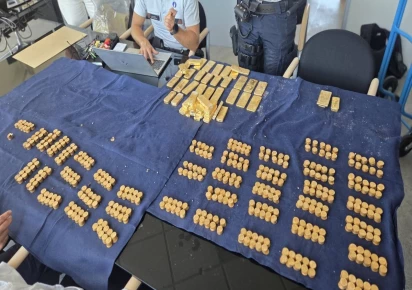
      Construction workers renovating a property in Belgium have made an extraordinary discovery after uncovering a large collection of gold bars and coins estimated to be worth around €9 million, or approximately Rs2.89 billion. The valuable hoard was reportedly hidden inside the walls of a cellar at a house in East Flanders. According to Belgian media reports, the workers discovered the treasure earlier this week while carrying out renovation work on the property. They were drilling into the building as part of preparations to install new sewage pipes when they unexpectedly came across the hidden collection. The discovery immediately attracted attention because of its enormous value and raised an unusual legal question: who will eventually be entitled to the gold? Both the construction workers who found the treasure and the charity that owns the property could potentially have a claim, depending on the outcome of the investigation. Police have launched an inquiry into the discovery and have warned members of the public to stay away from the construction site. Authorities said the property had effectively been searched and disturbed after news of the discovery spread. The gold has since been removed from the building and placed in a secure location while officials investigate its origin and ownership. The workers reportedly found the treasure while carrying out work around the foundations of the house. Among those involved was an 18-year-old student named Kobe, who was working a summer job at the construction site. Speaking to Belgian public broadcaster . He described the moment as one of disbelief and excitement. He initially thought some of the objects they had uncovered might simply be ordinary €1 coins. However, when the workers noticed what appeared to be a gold nugget among the items, they realised they had discovered something far more valuable. The workers quickly contacted police rather than attempting to take the treasure for themselves. Site manager Mario explained that the sheer quantity of gold made it impossible to secretly keep the discovery. He also acknowledged that taking it would amount to theft. Kobe similarly said that an amount worth around €9 million could not realistically be hidden. The property is currently owned by CAW Oost-Vlaanderen, an organisation that provides welfare and social support in the Dendermonde area, a Flemish community with a population of around 47,000 people. CAW Oost-Vlaanderen director Geert Hillaert said the organisation was shocked and amazed by the discovery. He expressed hope that, if the charity eventually receives part of the treasure, the money could be used to help people in need and support its welfare programmes. Police have appealed to the public not to visit the site in search of additional valuables. Authorities said they hoped the unusual discovery would eventually be placed in the hands of the rightful owner or used in a way that could benefit society. Under Belgian law, a legitimate owner has up to five years to come forward and claim hidden treasure. Prosecutors are currently investigating the circumstances surrounding the hoard, including whether it could be connected to criminal activity. If no owner is identified, Belgian civil law may allow the treasure to be divided between the person who discovered it and the owner of the property. However, this rule applies only if authorities determine that the gold is not connected to a crime. For now, the builders and the charity must wait while investigators determine who has the legal right to the extraordinary fortune. If no rightful owner appears within the five-year period, the discovery could transform an ordinary renovation project into a life-changing event.

  • |

    India’s chief justice clarifies ‘Cockroach’ remark, days comments were misquoted

      India’s Chief Justice Surya Kant has clarified his controversial remarks involving the term “cockroach,” saying that his comments made during a Supreme Court hearing were misquoted and subsequently presented out of context. In a recent interview, Chief Justice Surya Kant addressed the controversy surrounding his remarks and alleged that the statement had been deliberately misrepresented. He said that his comments were presented in a misleading manner, creating confusion and misunderstanding, particularly among young people. The Chief Justice said that what he had actually stated during the court proceedings was different from the version that was circulated publicly. According to him, his remarks were taken out of context and presented in a way that misled the public and India’s youth. Surya Kant also expressed concern over the growing practice of sharing short video clips of court proceedings on social media without providing the necessary background or context. He said that isolated clips can create an inaccurate impression of what was actually said during judicial proceedings. The Chief Justice appealed to the media as well as citizens to recognize that constitutional rights come with corresponding responsibilities and duties. He stressed that while people have the right to express their views and access information, they must also understand their responsibility toward society. “When we talk about rights, we must also have the ability to perform our duties,” Surya Kant said, emphasizing the importance of maintaining social harmony. He added that society must make continuous efforts to promote harmony and responsible public discourse. The controversy dates back to May, when the Chief Justice reportedly compared holders of fake degrees and people allegedly misusing the Right to Information (RTI) system or social media to “cockroaches.” The remarks triggered a strong public reaction and generated widespread discussion on social media. Following the controversy, a satirical public political movement called the “Cockroach Janta Party” was reportedly established. The group used the Chief Justice’s controversial remarks as a basis for its political satire and public activities. The movement has also attracted attention through its recent protest over the alleged NET-UG paper leak issue in Delhi. Demonstrators reportedly gathered at Jantar Mantar one of the capital’s prominent locations for political protests and public demonstrations. The protest over the examination paper leak reportedly ended with calls for the resignation of Indian Education Minister Dharmendra Pradhan, highlighting the growing political and public anger surrounding the issue. The latest comments by Chief Justice Surya Kant appear aimed at clarifying his position and explaining the context in which the original “cockroach” remarks were made. His criticism of social media clips also reflects broader concerns within the judiciary about court proceedings being circulated online without the complete context. The controversy has sparked a wider debate in India over judicial language, freedom of expression, responsible use of social media and the responsibilities that accompany constitutional rights. By clarifying his remarks, the Chief Justice has urged the public and media to consider the complete context of judicial observations rather than relying solely on short clips or selectively quoted statements circulating on social media. He also emphasized the need for citizens to balance their rights with their responsibilities and work toward maintaining social harmony.

  • |

    France’s top court blocks social media ban for under-15s

        France’s Constitutional Council, the country’s highest constitutional authority, has rejected a proposed law that would have banned children under the age of 15 from accessing social media. The decision represents a setback for President Emmanuel Macron, who had strongly supported measures aimed at protecting young people from the potential harms of social media. The proposed legislation would have prevented children below 15 from creating social media accounts from September 1. It also required social media companies to close accounts belonging to existing under-15 users within four months. Platforms would have been required to introduce an age-verification system approved by France’s privacy regulator to determine whether users met the minimum age requirement. However, the Constitutional Council ruled that important parts of the legislation did not provide sufficient legal safeguards. In particular, the council objected to the requirement that users prove their age without clearly defining the conditions and limits surrounding the collection and use of such information. According to the council, the legislation placed disproportionate restrictions on freedom of expression and communication. It also failed to adequately protect individuals’ right to privacy. The ruling effectively prevents the law from coming into force in its original form. French lawmakers had approved the legislation in July, making France one of the first European countries to pursue such a comprehensive restriction on social media use by young teenagers. The move followed Australia’s decision to introduce a world-first social media ban for children under 16 in December. The Australian restrictions cover major platforms such as Facebook, Snapchat, TikTok and YouTube. Australian lawmakers are now considering stronger penalties for companies that fail to comply, although early data has indicated that the ban has had mixed results. Several other countries have also taken steps to restrict young people’s access to social media. China, the United Arab Emirates and Türkiye have introduced measures or discussed plans aimed at limiting children’s access to online platforms. At the European Union level, authorities have also indicated that stronger protections may be needed to shield children from harmful features and content on social media platforms. Major technology companies have generallyFrance’s Constitutional Council, the country’s highest constitutional authority, has rejected a proposed law that would have banned children opposed blanket restrictions, arguing that they already provide tools and age-based safeguards to protect younger users. At the same time, companies have indicated that they would follow government regulations where required. Google, Meta, Snap and TikTok had not immediately issued comments on the French court’s decision. Following the ruling, Macron instructed Prime Minister Sebastien Lecornu to revise the proposed legislation and address the Constitutional Council’s concerns. The Elysee Palace said the French president remains committed to introducing the reform. The government wants a revised version of the legislation to take effect before spring 2027, when France is scheduled to hold its next presidential election. Macron is constitutionally barred from seeking a third consecutive term, making the issue a significant part of his government’s remaining agenda.

  • |

    Heavy rain kills four in Japan

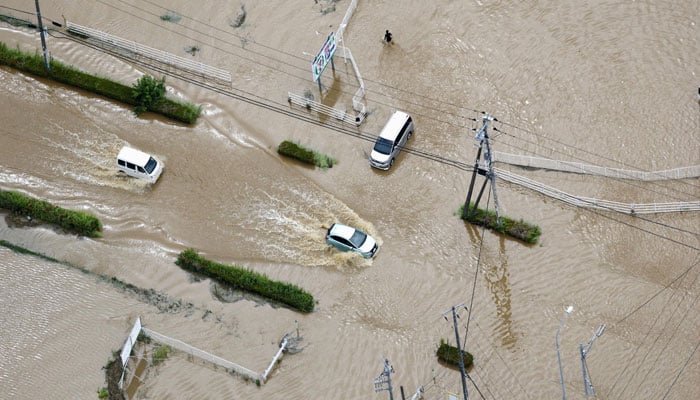
      CHIBA, Japan: At least four people have died and another remains missing after record-breaking rainfall triggered flooding and severe disruption in Chiba Prefecture, east of Tokyo. Japan’s weather authorities reported that Chiba City received 367 millimetres of rain within 24 hours, marking an exceptionally heavy downpour for the region. The intense rainfall caused flooding, damaged infrastructure and disrupted daily life across several areas. More than 25,000 households lost electricity as the storm damaged power infrastructure. The severe weather also disrupted air travel, leaving more than 7,000 passengers stranded at airports. Authorities cancelled dozens of train services, while flooding and dangerous road conditions forced the closure of several major highways. Officials issued an emergency high alert for areas facing the greatest risk from flooding and further rain. Rescue teams have been working to reach affected communities, while the Japanese government has sought assistance from the Self-Defense Forces to support evacuation and relief operations. Authorities have urged residents in vulnerable areas to remain alert, avoid flooded roads and follow evacuation instructions as emergency crews continue searching for the missing person and assessing the extent of the damage.

  • | |

    PML-N France marks Independence Day

    PARIS: Pakistan Muslim League-Nawaz (PML-N) France organized a ceremony to mark Pakistan’s 79th Independence Day, bringing together party officials, members of the Pakistani community and supporters to celebrate the country’s national day. The ceremony, held at the local level, was presided over by PML-N France President Mian Muhammad Hanif. In his address, Hanif extended Independence Day greetings to Pakistanis in France and paid tribute to the spirit of unity and patriotism among the Pakistani community abroad. He said Pakistan had gained greater recognition and respect internationally under the leadership of Prime Minister Shehbaz Sharif, stressing the need for collective efforts to preserve the country’s standing and support its continued development. Hanif urged Pakistanis to remain united and contribute to building a stronger and more prosperous Pakistan. He said progress and stability would help create better opportunities for the younger generation, enabling Pakistanis living abroad to move forward with greater confidence and pride in their homeland. The ceremony also featured speeches by the president of the PML-N France Women’s Wing, other party office-bearers and individuals seeking future organizational positions. Speakers highlighted the importance of Pakistan’s Independence Day and emphasized the role of overseas Pakistanis in supporting the country and strengthening national unity. A large number of members of the Pakistani community attended the event, reflecting their strong attachment to Pakistan and their enthusiasm for celebrating the national occasion. PML-N Azad Kashmir leader Raja Ashfaq Hussain thanked the media, organizers and participants for their presence and support. He reaffirmed the party’s commitment to celebrating Independence Day in France with the same enthusiasm and patriotic spirit in the years ahead. The event concluded with renewed expressions of solidarity with Pakistan and a pledge to continue promoting unity, progress and a positive image of the country among the Pakistani diaspora.

  • |

    Lavrov rules out immediate Ukraine ceasefire

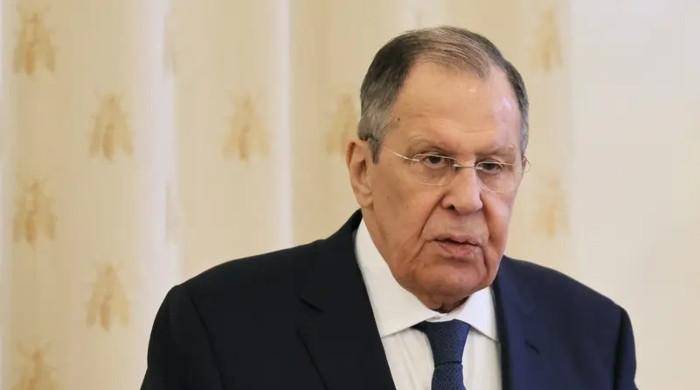
    Russian Foreign Minister Sergei Lavrov has ruled out the possibility of an immediate ceasefire in Ukraine, arguing that any truce must form part of a long-term and sustainable settlement rather than serve as a temporary pause in the conflict. In an interview with Russian state television, Lavrov said Moscow would continue to take stronger measures against Western support that, according to Russia, strengthens Ukraine’s military capabilities. He accused Western countries of prolonging the war by providing Kyiv with military and other forms of assistance. Lavrov maintained that Russia would only consider a ceasefire if it could lead to a lasting political solution. He said an immediate halt to fighting would not address what Moscow considers the underlying causes of the conflict and could allow Ukraine to strengthen its forces and resume hostilities later. The Russian foreign minister also accused the United States of involvement in attacks against Russia. His remarks came as Moscow seeks clarification from the US State Department over alleged American intelligence cooperation with Ukraine. Despite the escalating rhetoric, Lavrov said Russia had not rejected dialogue with representatives of US President Donald Trump. He indicated that Moscow remained open to discussions with Trump’s envoys, suggesting that diplomatic channels between Washington and Moscow remain available. Lavrov’s comments highlight the difficult path toward a ceasefire as Russia and Ukraine continue to disagree over the conditions for ending the war. Moscow has repeatedly called for a settlement that addresses its security demands, while Kyiv and its Western allies have pushed for a durable peace that preserves Ukraine’s sovereignty and security.

  • | | |

    Drone attack damages oil tanker in Strait of Hormuz

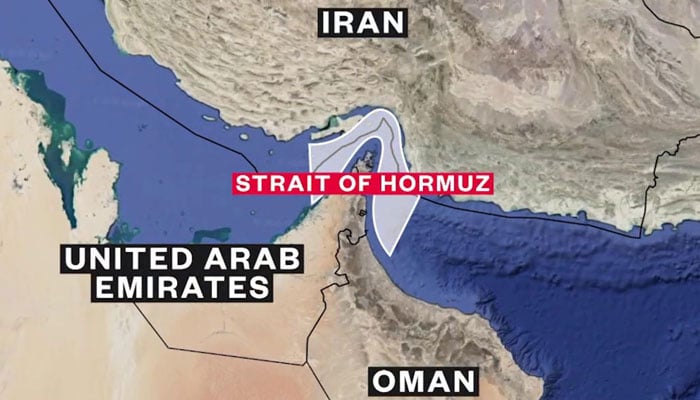
    A drone attack targeted an oil tanker in the Strait of Hormuz, causing minor damage to the vessel but leaving all members of the crew safe, according to the United Kingdom Maritime Trade Operations (UKMTO). The maritime security agency said the incident took place as the tanker was navigating the strategically important waterway. The drone strike caused limited damage to the vessel, but authorities reported no casualties or injuries among the crew. UKMTO also said the incident did not result in any environmental damage. There were no reports of an oil spill, leakage or other pollution following the attack, easing concerns about a possible impact on the marine environment. The Strait of Hormuz remains one of the world’s most important shipping routes, particularly for global energy supplies. Large volumes of crude oil and petroleum products pass through the narrow waterway every day, linking major oil-producing countries in the Gulf with international markets. The latest attack has once again highlighted security concerns surrounding commercial shipping in the region. Any disruption or attack involving an oil tanker in the Strait of Hormuz can raise concerns about the safety of maritime traffic, insurance costs and the uninterrupted movement of energy supplies. Authorities continue to monitor the situation and advise commercial vessels operating in the area to remain alert to potential security threats.

  • | |

    South Indian actress Shakeela undergoes neck surgery after excessive phone use

      South Indian actress Shakeela has revealed that her excessive use of mobile phones left her with a serious neck problem that eventually required surgery costing around Rs300,000 Indian rupees. The 53-year-old actress shared her experience in a video posted on her YouTube channel and urged people, especially parents, to limit unnecessary mobile phone use. Shakeela, who has worked in Malayalam, Tamil, Kannada and Telugu films, said her habit of playing games and watching videos on her phone for several hours caused significant damage to her neck. She explained that she would often lie on her side in bed for long periods while using her phone. “I used to play games on my phone continuously for four hours while lying on my side in bed,” Shakeela said. She added that she would only get up occasionally to have tea or coffee before returning to her phone. After playing games, she would spend hours watching reels on YouTube and Instagram. According to the actress, maintaining an incorrect posture while using her phone, combined with prolonged screen time, affected important blood vessels in her neck and eventually led to serious health complications. She underwent surgery in Chennai and said that a titanium screw was also used during the procedure. After returning home, doctors advised Shakeela to wear a neck collar until she recovered. She said that following the surgery, she has needed assistance even with basic activities such as getting out of bed and eating. Shakeela stressed that mobile phones are useful devices when used responsibly, but excessive use can have serious consequences. She advised people not to spend unnecessary hours watching videos or playing games, even if the content is entertaining. She also issued a warning to parents, urging them to avoid giving mobile phones to children unnecessarily. According to her, children should use phones only for essential activities and educational or useful content rather than spending long periods watching short videos and playing games. The actress said that people could end up paying a heavy financial and physical price for excessive phone use, adding that her own experience had cost her around Rs300,000 and caused considerable pain and difficulty. Shakeela Begum was born in Chennai. Her mother, Chand Bee, was from Andhra Pradesh, while her father, Chand Basha, was from Tamil Nadu. She began her acting career with a Tamil film in 1995. However, she gained widespread recognition after appearing in the Malayalam film Kinnarathumbikal, released in 2000. Over the years, Shakeela became a well-known name in South Indian cinema, particularly for her work in Malayalam films. Her latest health experience has now prompted her to use her public platform to raise awareness about responsible mobile phone use and the potential health risks associated with prolonged screen time and poor posture.