National

  • | |

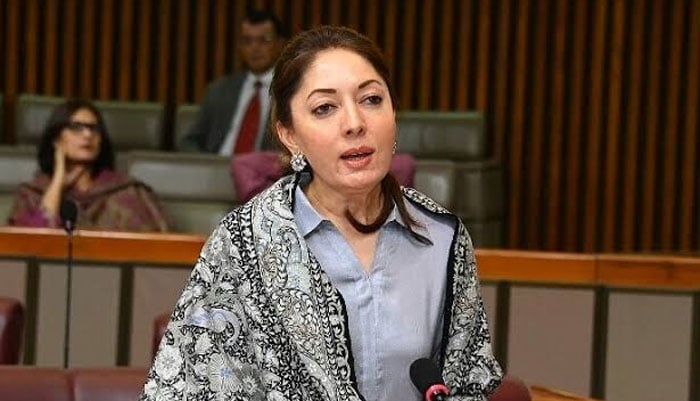
    Sharmila Faruqui warns of growing PPP-PML-N tensio…

    Pakistan Peoples Party (PPP) lawmaker Sharmila Faruqui has warned that relations between the PPP and Pakistan Muslim League-Nawaz (PML-N) have become increasingly tense following the Azad Jammu and Kashmir (AJK) elections. Speaking to journalists outside Parliament, Faruqui said the situation between the two coalition partners was currently strained. She added that it was difficult to predict how the political situation would develop in the coming days. Her remarks came amid discussions over the political relationship between the PPP and PML-N and growing differences on several issues. Faruqui said the issue of creating new administrative units should be handled through Parliament. She opposed turning the matter into a debate primarily conducted through television channels. She said any proposal to create new administrative units should be formally brought before the National Assembly and the Senate. According to her, Parliament is the appropriate forum for discussing matters that could have major constitutional and administrative implications. The PPP leader stressed that such issues require detailed debate and consultation. She said lawmakers should have the opportunity to examine the proposals and discuss their possible political, administrative and constitutional consequences. Faruqui also highlighted the impact of the AJK elections on relations between the PPP and PML-N. She said the situation between the two parties had become “very tense” after the elections. She warned that the political developments could take different turns. Her comments indicate that differences between the coalition partners may become more prominent if the issues are not addressed through dialogue. The PPP and PML-N have remained key political partners at the federal level. However, differences between the two parties have surfaced on various political and administrative matters. Faruqui’s comments come at a time when the question of new administrative units has also generated political debate. The proposal has attracted attention because any major change in the administrative structure could have wider political and constitutional implications. The PPP lawmaker maintained that such a sensitive issue should not be settled through media discussions. She called for the matter to be brought before both houses of Parliament for a proper debate. Her statement also reflects the growing political uncertainty following the AJK elections, with questions emerging over the future course of relations between the PPP and PML-N.

  • | |

    New provinces needed to improve governance: speake…

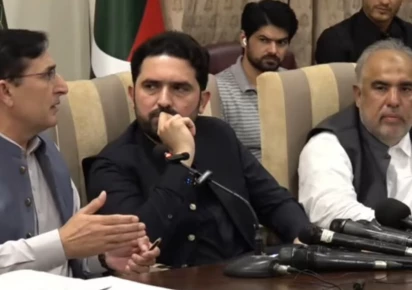
    Speakers at a seminar on the creation of new provinces in Pakistan have said that establishing new administrative units could directly benefit the public. The seminar was organised by the Sustainable Development Policy Institute (SDPI) in Islamabad. MQM leader Mustafa Kamal, PPP leader Qamar Zaman Kaira and PTI Secretary General Salman Akram Raja addressed the gathering. The speakers described the creation of new provinces as necessary to address public problems. They also stressed the need for a strong and empowered local government system. The participants said Pakistan needs new administrative units to improve governance and ensure that resources are distributed at the grassroots level. Mustafa Kamal said the existing system had failed to ensure effective accountability of governments. He added that even if new provinces were created, a strong local government system would remain necessary. PPP leader Qamar Zaman Kaira suggested that the debate over creating new provinces should take place within the constitutional framework. He also called for strengthening the local government system. PTI Secretary General Salman Akram Raja said that even after the creation of new provinces, some provinces would still have populations running into millions. The speakers agreed that administrative reforms were necessary to improve governance and ensure a more effective distribution of resources among the people.

  • | | |

    Arij Fatyma reveals she is a cancer survivor, open…

      Pakistani-American content creator and former television actor Arij Fatyma has shared a deeply personal update with her followers, revealing that she is a cancer survivor and opening up about the major changes in her life since leaving the entertainment industry. In a recent Instagram post, Arij shared a selfie accompanied by an emotional message in which she introduced herself to new followers and offered a glimpse into her personal and professional journey. She explained that many new people from Pakistan and other parts of the world had recently started following her on social media. Taking the opportunity to reconnect with her audience, she decided to share more details about her background, career and life away from television. Arij revealed that she was born in North Carolina and has Pakistani-Indian and Iranian roots. She spent more than a decade living in Pakistan, where she established herself as a television actor and became familiar to audiences through several popular drama serials. After spending years working in Pakistan’s entertainment industry, Arij eventually moved back to the United States to begin a new chapter of her life and start a family. Speaking about her professional journey after leaving acting, the former actress revealed that she did not completely step away from the professional world. Instead, she transitioned into the corporate sector and worked as a social media director and account executive at a Fortune 500 company. She currently lives in Toledo, Ohio, where she describes her lifestyle as relatively suburban. She said her daily routine revolves around motherhood, her professional responsibilities, content creation and managing various aspects of her personal life. However, one of the most significant revelations in her post was about her health. Arij disclosed that she had been diagnosed with a rare form of cancer known as choriocarcinoma. According to Arij, battling the disease fundamentally changed the way she viewed life. She described the experience as a difficult chapter that gave her a new perspective and made her appreciate life and the time she has been given. She revealed that she now lives with one ovary following her medical journey. Rather than focusing solely on what she lost during the difficult period, Arij said the experience left her with a greater sense of gratitude and appreciation for life. Her candid disclosure has given her followers a more personal understanding of the woman behind her social media content. She is now focusing primarily on lifestyle-related content and regularly shares aspects of her everyday life online. Although she has moved away from television acting, Arij remains remembered by Pakistani drama viewers for her performances in several popular projects. She appeared in dramas including Aap Ke Liye, Meri Beti and Aik Pal, which helped establish her presence in the Pakistani television industry. Her last major acting appearance came in the 2019 drama Hasad, which featured Minal Khan and Noor Hassan. Since then, Arij has taken a different direction, concentrating on her family, professional career and social media presence. Her latest revelation about surviving cancer adds another important chapter to her journey and reflects how her experiences have shaped her outlook on life. By sharing her story openly, Arij has also highlighted the importance of gratitude, resilience and appreciating everyday moments after overcoming difficult circumstances.

  • | |

    Former MPA accuses ex-wife of AI image deception

    Former Sindh Assembly member Ghulam Rasool Unar has accused his former wife of allegedly deceiving him through artificial intelligence-generated images. The case was heard by the Additional District and Sessions Court South in Karachi. During the hearing, the former MPA’s ex-wife opposed the petition filed by Unar. Her lawyer rejected several claims made in the petition. He said the former MPA’s claim that he had established contact with the woman through social media was not correct. The lawyer also told the court that the applicant had accepted certain conditions before the marriage. He said these conditions were acknowledged through an affidavit signed before the couple’s marriage. The dispute relates to allegations about photographs allegedly shared before the marriage. A few days earlier, Ghulam Rasool Unar had approached the court with his allegations. In his petition, he claimed that he had communicated with the woman through social media before their marriage. According to the former MPA, photographs were shared with him during their communication. He claimed that the woman appeared different in those photographs. Unar alleged that he saw his former wife in person for the first time after the marriage. He claimed that her appearance was completely different from the photographs he had received before the marriage. The former lawmaker alleged that the photographs had been manipulated or generated using artificial intelligence. He said the difference between the images and the woman’s actual appearance led him to distance himself from her. Unar further told the court that he stopped maintaining contact with the woman after seeing her in person. He also stated in his petition that he divorced her on August 9. The divorce followed the dispute over the alleged differences between the photographs and her actual appearance, according to his account. The former wife’s lawyer, however, disputed the allegations. The defence maintained that the claims made by the former MPA should not be accepted without proper legal examination. The court proceedings have brought attention to the growing legal questions surrounding AI-generated and digitally manipulated images. Such technology can create highly realistic photographs and has raised concerns about identity, consent and online deception. The case is still being heard. The allegations made by the former MPA have not been established by the court, while his former wife has challenged his claims through her legal counsel.

  • | | | |

    ‘Severe anxiety’: What Imran Khan’s report r…

    A medical report submitted to the Supreme Court has revealed that former prime minister and PTI founder Imran Khan is experiencing severe anxiety symptoms. The report was submitted by the superintendent of Adiala Jail. It contains details about Imran Khan’s physical and mental health. The report was submitted after PTI Secretary General Salman Akram Raja approached the Supreme Court. His petition raised concerns about Imran Khan’s health and restrictions on meetings with him. According to the report, Imran Khan’s anxiety was recorded at “Level 3+”. The condition has been described as severe. A medical board examined Imran Khan on August 10, 2026. The board included specialists in eye diseases, cardiology and general medicine. The report states that Imran Khan is around 73 years old. His blood pressure was recorded at 140/80. His pulse was 54 beats per minute. His ECG was found to be normal. His chest was also clear. Doctors found his heart valves and chambers to be normal. The report says Imran Khan complained of heaviness in his head. He also reported feeling that his heartbeat was faster than usual. However, he did not report chest pain. He also did not complain of chest heaviness or shortness of breath. The medical board recommended medicines to control his blood pressure and anxiety. Doctors also recommended regular physical activity. The board suggested that Imran Khan should walk for one hour every day. It also recommended activities that could provide mental relaxation. The report recommends that he should be provided with magazines, newspapers, television and books. These activities could help reduce mental stress during his imprisonment. The medical board also recommended increasing the duration of meetings with Imran Khan’s family and wife. According to the report, greater family interaction could help control his anxiety and blood pressure. The recommendations come amid repeated demands from PTI leaders for greater access to the former prime minister. Jail authorities said Imran Khan receives regular medical attention. Medical officers reportedly check his food intake and conduct medical examinations three times a day. The report also states that several government doctors have examined him during his imprisonment. Records of these medical examinations have reportedly been maintained. The former prime minister has also received treatment from an eye specialist. According to the jail authorities, one of his eyes has now recovered to an almost normal condition. The report includes a summary of medical examinations conducted by 39 different specialists between November 4, 2023, and August 10, 2026. The jail authorities have asked the Supreme Court to dispose of the petition. They maintain that Imran Khan is receiving regular medical care inside the prison. The report also discusses the issue of meetings with Imran Khan. Jail authorities claimed that some meetings had been used to generate public sentiment against the judiciary, foreign policy and law enforcement institutions. According to the report, Imran Khan and his wife Bushra Bibi meet every Tuesday under jail rules. A total of 84 meetings between them have reportedly taken place so far. The document also states that Imran Khan’s lawyer Salman Safdar met him on February 10 and April 4, 2026. The medical report comes amid renewed political pressure over Imran Khan’s health and access to his family and personal doctors. Khyber Pakhtunkhwa Chief Minister Sohail Afridi recently announced a protest programme if Imran Khan was not allowed access to his family and personal physicians. The issue of Imran Khan’s health has become a major point of political debate. PTI leaders have repeatedly demanded better medical facilities and greater access to his personal doctors. A psychiatrist cited in the report said that “Level 3+” anxiety indicates a severe state of anxiety and distress. The psychiatrist explained that prolonged isolation and limited social interaction can worsen anxiety. Such conditions may also contribute to hopelessness and depression. He said regular interaction with other people can help reduce anxiety. He also recommended walking and exercise as useful measures for managing symptoms of anxiety and panic. The three-member Supreme Court bench headed by Justice Shahid Waheed will hear the petition. Justice Naeem Afghan and Justice Ishtiaq Ibrahim are also part of the bench. The court will examine the medical report and the concerns raised over Imran Khan’s health, medical treatment and access to family members and doctors.

  • | | | |

    PTI seeks immediate hospital transfer for Imran Kh…

    The Pakistan Tehreek-e-Insaf (PTI) has demanded the immediate transfer of party founder Imran Khan to a hospital after a medical report highlighted concerns over his blood pressure and anxiety. The demand came after a report from Adiala Jail authorities was submitted to the Supreme Court. The report contains details of Imran Khan’s latest medical condition and recommendations for his care. PTI leaders held a press conference on Monday and expressed concern over the former prime minister’s health. They called for him to be moved to a hospital where he could receive specialised medical treatment. PTI Chairman Barrister Gohar Ali Khan said Imran Khan’s elevated blood pressure was a serious concern. He demanded that the former prime minister receive the best available medical care. Gohar said Imran Khan should also be given access to his personal doctors. He demanded that his family members and lawyers should be allowed to meet him. The PTI chairman said access to Imran Khan had remained restricted for months. He claimed that party representatives had repeatedly approached the courts seeking permission for meetings. According to Gohar, the PTI had approached the high court around 25 times and the Supreme Court around 15 times over the issue. He described meetings with family members, doctors and lawyers as Imran Khan’s fundamental legal right. He urged the judiciary to address the matter and ensure that the former prime minister received appropriate medical attention. Gohar said the party’s concerns would not end until Imran Khan was provided proper medical treatment and regular access to his family and legal team. He also criticised what he described as a prolonged dispute over access to the PTI founder. Gohar said the situation had continued since October and called for an end to what he termed a “cat and mouse game”. The PTI’s demands came shortly before the Supreme Court was scheduled to hear matters concerning Imran Khan. The jail report had recommended increasing family interaction to help manage his anxiety and blood pressure. It also contained details of his medical examinations and treatment. PTI leaders argued that the reported health concerns should be treated seriously and that hospitalisation would ensure closer medical supervision. The party has also continued to call for access to Imran Khan’s personal physicians, saying they should be allowed to assess his condition independently. The issue of Imran Khan’s health has become a major political and legal point of contention. PTI leaders have repeatedly raised concerns over his medical care and restrictions on meetings.

  • | |

    Court allows tax credit adjustment against super t…

    The Federal Constitutional Court has issued an important ruling in favour of corporate taxpayers. The court has declared the adjustment of tax credits against super tax legally valid. It has also overturned an earlier decision of the Islamabad High Court. Justice Amir Farooq authored the six-page detailed judgment. The court accepted the appeals filed by a private mobile phone company. The case relates to the adjustment of tax credits against super tax. The company had challenged a demand raised by the Federal Board of Revenue (FBR). The FBR had issued a notice to the private company. The notice required the company to pay super tax. The company approached the Islamabad High Court after receiving the notice. It argued that its available tax credit should be allowed to adjust against the super tax liability. The Islamabad High Court rejected the company’s petition. The company then challenged that decision before the Federal Constitutional Court. The Federal Constitutional Court has now accepted the company’s appeals. It has declared that tax credits available to a taxpayer can be adjusted against super tax. The court referred to the relevant provisions of the tax law. It observed that the tax credit available under Section 168 is a separate and legally recognised right. According to the judgment, a taxpayer should not be prevented from using this credit for adjustment. The court said forcing a taxpayer to seek only a refund would not be consistent with the intention of the law. The judgment also addressed the interpretation of financial and tax laws. The court observed that such laws should be interpreted in a manner that facilitates taxpayers. The court emphasised that taxpayers should be able to exercise rights provided to them under the law. A legal right to a tax credit cannot be unnecessarily restricted through an interpretation that creates additional difficulties for taxpayers. The court also issued directions to the FBR. The FBR has been directed to examine the taxpayer’s claim for adjustment. The department must consider the claim in response to the tax notice. The FBR will now have to decide the matter according to the applicable law and the court’s ruling. The judgment provides an important clarification for corporate taxpayers. It establishes that an eligible tax credit can be considered for adjustment against a super tax liability. The ruling may also have wider implications for companies facing similar tax demands. Businesses with legally available tax credits may now rely on the court’s interpretation when seeking adjustments against their tax liabilities. By setting aside the Islamabad High Court’s decision, the Federal Constitutional Court has clarified the legal position on the issue. The case also highlights the continuing dispute between taxpayers and the FBR over the interpretation and application of tax laws.

  • | |

    Ishaq Dar, Turkish foreign minister discuss region…

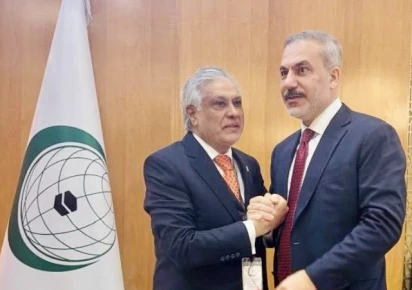
      ISLAMABAD: Deputy Prime Minister and Foreign Minister Ishaq Dar held a telephone conversation with Turkish Foreign Minister Hakan Fidan on Sunday night, during which the two sides discussed recent developments in the region and reaffirmed their commitment to strengthening cooperation on issues of mutual interest. According to Pakistan’s Ministry of Foreign Affairs, the two foreign ministers agreed that dialogue and diplomacy remained the most effective means of addressing regional challenges and promoting peace and stability. The conversation took place as Pakistan continues its diplomatic engagement with regional and international partners amid the ongoing conflict involving the United States, Israel and Iran. Islamabad has increasingly emerged as an important diplomatic channel in efforts aimed at reducing tensions and encouraging negotiations between the parties. Dar has recently held discussions with several senior diplomats regarding the rapidly changing regional situation. Last week, he met US Chargé d’Affaires Natalie Baker, British High Commissioner to Pakistan Jane Marriott, Chinese Ambassador Jiang Zaidong and Pakistan’s Ambassador-designate to Sweden Ahmed Amjad Ali. During these meetings, the foreign minister exchanged views with the diplomats on regional developments and Pakistan’s efforts to contribute to peace and stability. Dar emphasized that the Islamabad Memorandum of Understanding must be implemented in both letter and spirit, describing this as the most appropriate way forward. He also reiterated Pakistan’s commitment to regional peace, security and diplomatic engagement. Dar recently held a joint press conference with Norwegian Foreign Minister Espen Barth Eide, who praised Pakistan’s role during the US-Iran conflict. Eide particularly acknowledged the efforts of Prime Minister Shehbaz Sharif, Ishaq Dar and Chief of Defence Forces Field Marshal Asim Munir during delegation-level discussions held in Islamabad. The Norwegian foreign minister said Pakistan had taken on a significant responsibility by offering Islamabad not only as a venue for negotiations but also as a facilitator between Washington and Tehran. Eide described Pakistan’s diplomatic efforts as a service to the international community and expressed strong support for the role Islamabad had assumed since the conflict began on February 28. The latest diplomatic contacts also come against the backdrop of a major regional security development: the signing of the Makkah Joint Defence Agreement by Pakistan, Saudi Arabia and Turkiye on August 7. The trilateral agreement has been described as a defensive security framework designed to strengthen collective deterrence, expand military cooperation and contribute to regional stability. The agreement has attracted considerable attention because of the growing security challenges in the region and the evolving strategic relationships among Pakistan, Saudi Arabia and Turkiye. The Makkah agreement follows the Strategic Mutual Defence Agreement signed between Pakistan and Saudi Arabia last year. That pact established a stronger bilateral security relationship and stated that aggression against either country would be regarded as aggression against both. The latest developments indicate that Pakistan is seeking to strengthen diplomatic and security partnerships while maintaining its stated preference for dialogue and peaceful resolution of regional disputes. Dar’s conversation with Fidan further reflects the close relationship between Islamabad and Ankara, particularly on regional security and diplomatic matters. Both countries have consistently emphasized the importance of cooperation, consultation and peaceful negotiations in addressing regional crises. Their latest discussion is expected to contribute to continued coordination as tensions across the region remain high.

  • | |

    Federal Cabinet Interference in CCI matters violat…

      Islamabad: The federal cabinet has no constitutional authority to decide matters reserved for the Council of Common Interests, a Senate sub committee has declared, warning that continued cabinet interference in electricity, petroleum, gas, railways, ports and regulatory bodies is damaging provincial rights and weakening constitutional protection for smaller provinces. The Senate Sub Committee on Devolution, chaired by Senator Barrister Zamir Hussain Ghumro, directed that matters falling under the CCI must not be taken to the federal cabinet. The committee said the Prime Minister should place such issues before the CCI and call its meetings frequently. According to the committee, Article 154 of the Constitution gives the CCI responsibility over subjects listed in Part II of the Federal Legislative List. The committee argued that these powers belong to the CCI rather than the federal cabinet. It said this constitutional arrangement was created to protect provinces from decisions dominated by the federal government. The committee particularly highlighted the position of smaller provinces. It noted that Punjab has 141 seats in the National Assembly while the other three provinces together have 122 seats. According to the committee, putting important provincial matters under the CCI provides protection against decisions based only on the strength of the majority in the National Assembly. The committee said the CCI should be reconstituted in a way that ensures equality among provinces. It also called for more frequent CCI meetings so important disputes between the federation and provinces are not left unresolved. The committee said the prices of electricity, petroleum, gas and medicines should be supervised and controlled through the CCI rather than the federal cabinet. It argued that federal executive authority must operate within the Constitution and that Article 154 gives the CCI authority over relevant subjects. The committee also said major national organisations and sectors connected with Part II of the Federal Legislative List should come under the CCI. These include Railways, Petroleum, Electricity, Ports and several regulatory bodies. The committee specifically named OGRA, NEPRA, PEMRA and PTA among institutions whose matters, in its view, should fall under the CCI framework. It said Planning and Development authorities and other bodies working in fields covered by Part II should also operate under CCI authority instead of federal cabinet control. The committee strongly objected to federal cabinet involvement in these areas. It said interference by the federal cabinet in CCI subjects was contrary to Article 97 read with Article 154 of the Constitution. One of the most serious issues discussed was the planned privatization of electricity distribution companies. The committee stated that the privatization of companies including IESCO, FESCO, LESCO, GESCO, SEPCO and HESCO cannot proceed without CCI approval from the Power Division or Privatization Commission. It argued that taking such decisions without the CCI would violate Articles 154 and 157 of the Constitution. The committee directed that the privatization of electricity distribution companies must be placed before the CCI. It also referred to the Supreme Court judgement in the Mian Nawaz Sharif case and said the CCI should be involved before such major decisions are taken. The committee rejected the federal government’s reliance on the Gadoon Amazai ruling regarding CCI meetings. It said Parliament had already addressed the issue of meeting frequency by requiring the CCI to meet at least once every three months or earlier when urgent matters arise. The committee therefore called on the Prime Minister to convene CCI meetings regularly. According to members, failure to use the CCI weakens the constitutional voice of provinces and allows issues affecting the entire federation to be decided through the federal cabinet. The panel also questioned several ministries, divisions and state owned bodies dealing with subjects it believes belong either to the provinces or the CCI. It said federal structures created around provincial or CCI subjects should be devolved or closed where required, without harming employees. Among the institutions and sectors the committee mentioned included Water Resources, Railways, Industries, Statistics, Petroleum, Inter-Provincial Coordination, Planning and Development and WAPDA. The committee also referred to regulatory bodies and other organisations whose functions, it said, should be examined according to the constitutional division of powers. Members said the purpose of the CCI was not simply to hold occasional meetings. They described it as a constitutional mechanism designed to allow the federation and provinces to jointly decide major national matters. The committee warned that bypassing the CCI could create mistrust between the provinces and the federal government. It said smaller provinces need the CCI to ensure they have a meaningful voice in decisions involving national resources, energy, infrastructure and regulation. The committee directed the federal government to amend its Rules of Business within 15 days so that matters falling under the CCI are handled according to the Constitution. It asked the government to submit a report explaining the changes made. The message from the committee was clear. Major decisions involving electricity, petroleum, gas, railways, ports, regulators and other CCI subjects should not be decided by the federal cabinet alone. The committee wants these matters taken back to the Council of Common Interests, with the Prime Minister required to use the constitutional forum regularly to protect provincial rights and build agreement between the federation and all four provinces.

  • 575 waste management employees dismissed in Gujranwala

    GUJRANWALA: The Gujranwala Waste Management Company (GWMC) has dismissed 575 employees over alleged absenteeism and poor performance, while another 184 employees deputed from other government departments have been repatriated to their parent departments. The action was taken following inspections and monitoring of sanitation operations in different union councils of the district, officials said. Managing Director of the Gujranwala Waste Management Company and Suthra Punjab, Abdul Razzaq Dogar, has stepped up monitoring of sanitation arrangements and ordered action against employees found absent from duty or failing to perform their assigned responsibilities. Sources said the company had received complaints regarding poor sanitation arrangements and the alleged absence of field workers. Following the complaints, the management conducted inspections and discreet monitoring to identify employees who were either not performing their duties or were allegedly drawing salaries without proper attendance. According to sources, the alleged irregularities were causing a financial burden of around Rs25 million a month on the public exchequer. Officials said the company’s management was now carrying out surprise inspections of two to three union councils every day. During these visits, sanitation arrangements, garbage collection and attendance of workers are checked without prior notice. “Where sanitation arrangements are found unsatisfactory or employees are absent from their assigned duties, action is taken,” Mr Dogar said. The disciplinary action has also been extended to supervisory staff. Show-cause notices have been issued to 46 officers and employees over negligence, while 52 have been given formal warnings. Besides, 21 officers and employees have been transferred or posted to different union councils and tehsils as part of efforts to improve monitoring and field operations. Officials said the management was also reviewing staff working against additional positions and those considered a burden on the organisation. The objective, they said, was to ensure that the available workforce was utilised effectively and that salaries were paid only to employees performing their assigned duties. Mr Dogar said action against inefficient and non-performing elements would continue without discrimination. He said the measures were expected to reduce unnecessary expenditure and improve the performance of sanitation operations, while also helping reduce public complaints regarding garbage collection and disposal. The company has also constituted special committees to monitor the collection and disposal of waste. The committees will submit daily reports on sanitation operations, according to officials. At the union council level, Suthra Punjab teams have also been made more active and placed under closer supervision of officers. The management has directed field staff and supervisory officers to ensure regular attendance and timely removal of garbage from residential and commercial areas. The latest action is part of efforts to improve sanitation services in Gujranwala district, where complaints regarding garbage accumulation, irregular collection and poor cleanliness have remained a concern in several areas. Officials said inspections and monitoring would continue and further disciplinary action would be taken against employees found negligent or absent from duty.