National

  • | |

    Punjab cybercrime crackdown, 28 suspects arrested

    LAHORE: Authorities have arrested 28 suspects in Lahore, Faisalabad and Multan as part of a major crackdown on organised online fraud, exposing alleged schemes that relied on impersonation, fake investment opportunities and fabricated official identities to deceive citizens. The arrests were made during a province-wide operation by the National Cyber Crime Investigation Agency (NCCIA) Punjab, directed by Punjab Director Muhammad Ali Wasim, officials said. Investigators also seized 24 mobile phones and a laptop, which are now being examined for evidence that could lead to other members of the alleged network. The investigation has revealed how fraudsters allegedly manipulated trust to convince victims to hand over large sums of money. Millions allegedly lost in Lahore scam In Lahore, 18 suspects were arrested in separate operations. Investigators said the suspects allegedly impersonated relatives, visa agents, government officials and personnel associated with the Punjab Safe Cities Authority. In one case, suspects allegedly posed as both a relative and a visa agent and persuaded a victim to transfer Rs25.86 million. The case has highlighted how scammers can combine apparently familiar identities with urgent requests to make their schemes appear legitimate. Rs54.66m trading fraud uncovered Three suspects were arrested in Faisalabad in connection with alleged online trading fraud and unauthorised access to a company email account. According to investigators, a victim was shown fabricated trading records, digital-wallet balances and purported profit statements to create the impression that substantial returns were being generated. After being persuaded to invest, the victim allegedly lost Rs54.66 million, investigators said. The case demonstrates the growing sophistication of investment scams, where criminals allegedly use manipulated digital information to make fraudulent platforms appear genuine. Multan arrests expose impersonation tactics In Multan, seven suspects were arrested for allegedly posing as relatives, bank employees and individuals claiming to be based in Britain. Officials said victims were approached with various demands, including payments supposedly required for prize money, customs clearance, taxes and visa renewals. Such tactics typically create a sense of urgency, leaving victims with little time to verify the identity of the caller or the authenticity of the demand. Digital evidence now under forensic examination NCCIA investigators are examining the seized devices through forensic analysis. Financial transactions, call records and digital communications are also being reviewed to establish the full extent of the alleged operation and identify other people who may be connected to it. The crackdown comes amid growing concern over online financial fraud in Pakistan. The NCCIA’s own statistics identify financial fraud as a major category of reported cybercrime. The latest arrests underscore a simple but increasingly important warning: an apparently familiar voice, official-looking message or promising investment opportunity may not be what it seems. Authorities are expected to continue the investigation as they trace the alleged network and follow the digital and financial trails left behind.

  • | |

    Punjab cybercrime crackdown, 28 suspects arrested

    LAHORE: Authorities have arrested 28 suspects in Lahore, Faisalabad and Multan as part of a major crackdown on organised online fraud, exposing alleged schemes that relied on impersonation, fake investment opportunities and fabricated official identities to deceive citizens. The arrests were made during a province-wide operation by the National Cyber Crime Investigation Agency (NCCIA) Punjab, directed by Punjab Director Muhammad Ali Wasim, officials said. Investigators also seized 24 mobile phones and a laptop, which are now being examined for evidence that could lead to other members of the alleged network. The investigation has revealed how fraudsters allegedly manipulated trust to convince victims to hand over large sums of money. Millions allegedly lost in Lahore scam In Lahore, 18 suspects were arrested in separate operations. Investigators said the suspects allegedly impersonated relatives, visa agents, government officials and personnel associated with the Punjab Safe Cities Authority. In one case, suspects allegedly posed as both a relative and a visa agent and persuaded a victim to transfer Rs25.86 million. The case has highlighted how scammers can combine apparently familiar identities with urgent requests to make their schemes appear legitimate. Rs54.66m trading fraud uncovered Three suspects were arrested in Faisalabad in connection with alleged online trading fraud and unauthorised access to a company email account. According to investigators, a victim was shown fabricated trading records, digital-wallet balances and purported profit statements to create the impression that substantial returns were being generated. After being persuaded to invest, the victim allegedly lost Rs54.66 million, investigators said. The case demonstrates the growing sophistication of investment scams, where criminals allegedly use manipulated digital information to make fraudulent platforms appear genuine. Multan arrests expose impersonation tactics In Multan, seven suspects were arrested for allegedly posing as relatives, bank employees and individuals claiming to be based in Britain. Officials said victims were approached with various demands, including payments supposedly required for prize money, customs clearance, taxes and visa renewals. Such tactics typically create a sense of urgency, leaving victims with little time to verify the identity of the caller or the authenticity of the demand. Digital evidence now under forensic examination NCCIA investigators are examining the seized devices through forensic analysis. Financial transactions, call records and digital communications are also being reviewed to establish the full extent of the alleged operation and identify other people who may be connected to it. The crackdown comes amid growing concern over online financial fraud in Pakistan. The NCCIA’s own statistics identify financial fraud as a major category of reported cybercrime. The latest arrests underscore a simple but increasingly important warning: an apparently familiar voice, official-looking message or promising investment opportunity may not be what it seems. Authorities are expected to continue the investigation as they trace the alleged network and follow the digital and financial trails left behind.

  • | |

    Khawaja Asif calls bureaucracy Pakistan’s real r…

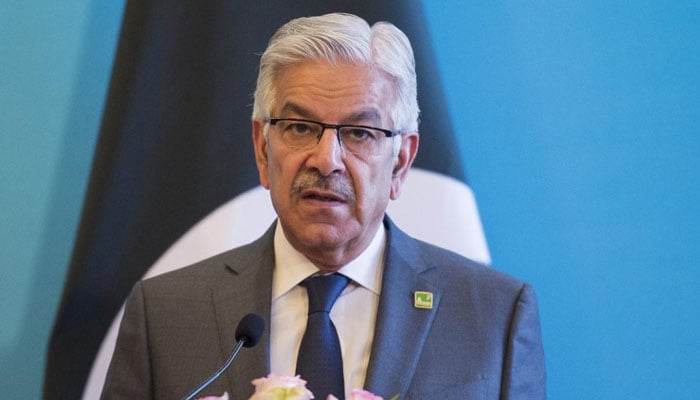
    ISLAMABAD: Defence Minister Khawaja Asif has criticised Pakistan’s bureaucracy. He described it as the country’s “real and permanent rulers.” Asif said bureaucrats had remained largely beyond effective accountability during Pakistan’s 78-year history. He said politicians had faced accountability on numerous occasions. Other powerful groups had also been held accountable at different times. However, he said it was difficult to find similar examples involving senior bureaucrats. The defence minister made the remarks while sharing a social media post about alleged financial corruption involving a senior bureaucrat. Asif said the bureaucracy had gradually become a powerful and largely untouchable class. He questioned why bureaucrats had not been subjected to the same level of scrutiny as politicians. According to Asif, politicians themselves were partly responsible for the situation. He said political leaders had failed to establish an effective system to hold the bureaucracy accountable. The minister also referred to a former bureaucratic ruler while discussing the influence of senior officials in Pakistan. He said the former official used highly inappropriate and insulting language against politicians. Despite this behaviour, politicians continued to tolerate him, according to Asif. Asif’s comments highlight his criticism of the imbalance in accountability among powerful sections of Pakistani society. His remarks also raise questions about the role of the bureaucracy in governance and decision-making. The minister maintained that stronger accountability was needed for all powerful groups. He suggested that politicians could not blame bureaucrats alone for the existing system because political leaders had also contributed to its continuation.

  • | |

    Crude oil spills onto road after pipeline leak in …

    KARACHI: An underground oil pipeline developed a leak on Khayaban-e-Sehar, Street 13, in Karachi’s Defence area, causing crude oil to spill onto the road. According to police, the leakage resulted in crude oil spreading across the affected section of the road. The road has been closed to traffic as a precautionary measure to ensure public safety and facilitate repair work. A DHA vigilance team reached the site after being informed about the incident. The relevant authorities were also alerted and teams were deployed to assess the situation. Police said the pipeline is quite old and runs beneath the middle of the road. The National Refinery stopped the supply through the affected line after the leakage was reported and immediately began repair work. Officials are currently working to repair the damaged pipeline and control the oil leakage. Traffic restrictions will remain in place until the repair work is completed and the affected road is considered safe for motorists and pedestrians. No casualties or injuries have been reported in connection with the incident so far.

  • | |

    Polling begins in PS-30 Khairpur by-election

    Polling has begun for the by-election in Sindh Assembly constituency PS-30 Khairpur, where Pakistan Peoples Party (PPP) candidate Barrister Asfandyar Khan Khuhro is facing seven independent candidates. According to election officials, 254,980 voters are eligible to cast their ballots in the constituency. Authorities have established 164 polling stations across the constituency to facilitate voters and ensure a smooth electoral process. Security remains a major focus during the by-election. Officials have designated 64 polling stations as highly sensitive and 68 as sensitive due to security concerns. Around 2,500 police personnel have been deployed across the constituency to maintain law and order and protect voters, polling staff and election material. The election is taking place following the death of PPP lawmaker **Naeem Khuhro**, which left the PS-30 seat vacant. The PPP has fielded Barrister Asfandyar Khan Khuhro to retain the constituency, while seven independent candidates are also contesting the election. Voters will choose the next representative for the Sindh Assembly as polling continues under heightened security arrangements across Khairpur.

  • |

    Karachi braces for cloudy, humid weather and night…

    Karachi is likely to experience cloudy and humid weather over the next 24 hours, with the Pakistan Meteorological Department forecasting a chance of light drizzle in parts of the city tonight. According to the weather department, temperatures are expected to remain between 32°C and 34°C during the day. The city recorded a minimum temperature of  27.5°C over the past 24 hours. Sea breezes are blowing from the southwest at around 15 kilometres per hour, while the humidity level stands at approximately 75 per cent. The prevailing humid conditions may keep the weather uncomfortable despite the cloudy skies. Residents can expect generally overcast conditions, with the possibility of brief drizzle during the night.

  • |

    Balochistan flood resilience project faces delays despite housing support progress

    QUETTA: Implementation of a major World Bank-backed flood resilience programme in Balochistan is facing significant delays, with slow progress on infrastructure, climate services and housing reconstruction raising concerns about the project’s ability to meet its targets before the scheduled completion date. The Integrated Flood Resilience and Adaptation Project (P180323), launched in the aftermath of the devastating 2022 floods, has seen mixed results. While more than 74,000 affected households have received the first tranche of financial assistance for housing reconstruction, several key components of the project remain substantially behind schedule. According to the World Bank’s latest Implementation Status and Results Report, overall implementation progress has been downgraded to “Moderately Unsatisfactory”, while the project’s development objective continues to carry a “Moderately Satisfactory” rating. The overall risk associated with the project remains high. The programme was approved in May 2023 with the broader objective of helping flood-affected communities restore livelihoods, regain access to essential services and strengthen their ability to withstand future climate-related disasters. Infrastructure work gains momentum The project includes several major components covering community infrastructure, resilient housing, hydro-meteorological and climate services, as well as institutional strengthening and project management. The World Bank reported some improvement in the community infrastructure component following the appointment of a dedicated project director and the strengthening of the Project Implementation Unit. Detailed engineering designs and bidding documents are now close to completion, while procurement activities have begun. Despite these developments, the project has yet to achieve any of the three development-objective-linked output indicators associated with the component. The gap reflects the difference between preparatory work and actual delivery of infrastructure on the ground, with authorities still required to translate procurement and planning progress into completed projects for flood-affected communities. Climate services remain behind schedule Progress has also been reported in the climate-services component following the appointment of a new deputy project director and the award of a contract for Automatic Weather Stations (AWS). However, several critical steps remain outstanding. The onboarding of the system integrator has yet to be completed, while a number of important procurement activities are still pending. The project aims to strengthen Balochistan’s ability to monitor weather conditions and provide timely warnings to communities exposed to floods and other climate-related hazards. Under the programme, the authorities are targeting the installation of 110 Automatic Weather Stations and the operationalisation of four weather radars. As of July 2026, none of the targeted weather radars had become operational. One positive development has been the establishment of a hydrological modelling-based early warning system for hill torrents in Balochistan, which could improve preparedness in areas vulnerable to sudden flooding. Housing component performs better The strongest performance has been recorded under the resilient housing component. More than 74,000 households have received the first tranche of housing assistance, providing financial support to families whose homes were damaged or destroyed by the 2022 floods. However, the World Bank has identified several risks that could affect further progress. These include a decision by the Project Steering Committee to limit beneficiary coverage, a funding shortfall affecting other eligible households, unresolved complaints and grievances, and communication difficulties with beneficiaries. The World Bank warned that these issues could undermine confidence in the programme and affect its ability to reach the intended beneficiaries. The physical reconstruction figures also show that considerable work remains. By July 2026, only 30,226 housing units had been restored or reconstructed against the project’s target of 97,000 homes by December 2028. This means authorities will need to significantly accelerate reconstruction during the remaining implementation period if the target is to be achieved. Essential services target remains distant The project also aims to restore access to essential services for flood-affected communities. By July 2026, around 214,217 people had regained access to at least one essential service. However, the eventual target is 1.5 million people, indicating a substantial gap between current achievements and the programme’s planned outcome. Similarly, the project has yet to register progress against its target of improving climate resilience for 1.8 million people. The figures suggest that while financial assistance and preparatory activities have moved forward, the broader resilience-building objectives are yet to translate into measurable results on the required scale. Irrigation and flood protection work yet to deliver The restoration of flood-damaged irrigation systems is another major area where implementation remains slow. The project has a target of restoring irrigation infrastructure covering approximately 50,000 hectares. A similar target has been set for improving flood-protection infrastructure over an area of 50,000 hectares. However, as of July 2026, no achievement had been recorded against either target. The lack of progress is particularly significant given the importance of irrigation to livelihoods in Balochistan, where agriculture and livestock remain major sources of income for many communities. Restoring damaged irrigation networks is also critical to rebuilding economic activity in areas affected by the 2022 floods. Financing constraints add pressure Financial challenges are adding another layer of difficulty to implementation. The project has a revised allocation of approximately $214.03 million under the IDA-73330 facility. Of this amount, around $113.97 million, equivalent to 62.61%, has been disbursed, while approximately $68.05 million remains undisbursed. In addition, a separate $32 million IDA-78980 facility remains completely undisbursed. The financing position means authorities have both resources and time constraints to manage as they seek to accelerate implementation. Bridging funding gaps for eligible beneficiaries and ensuring timely utilisation of available financing will be crucial to maintaining momentum during the remaining project period. Grievances and communication concerns The World Bank has also highlighted unresolved grievances and communication shortcomings as risks to the housing component. For a project involving thousands of flood-affected households, effective communication is essential to ensure beneficiaries understand eligibility criteria, payment arrangements, construction requirements and complaint-resolution procedures. Unresolved grievances could not only delay implementation but also create dissatisfaction among communities that expected assistance following the 2022 floods. Authorities will therefore need to strengthen communication channels and grievance mechanisms alongside accelerating physical reconstruction. Limited time remains The Integrated Flood Resilience and Adaptation Project is scheduled to close on December 31, 2028.

  • | | |

    Security forces eliminate 7 militants in Kharan op…

    Security forces have killed seven militants during an intelligence-based operation in Balochistan’s Kharan district. According to security sources, the operation was conducted in the Lajay area of Kharan. The action was carried out on the basis of intelligence reports about the presence of militants in the area. Seven militants linked to Fitna al-Khawarij were killed during the operation. Several other militants were also wounded, according to the sources. Security forces conducted a search of the militants’ hideouts after the operation. A large quantity of modern weapons and ammunition was recovered. Other military equipment was also found at the sites. Security forces also recovered a motorcycle and two vehicles from the militants’ hideouts. The security forces subsequently destroyed the militants’ positions. The hideouts were completely dismantled during the operation. According to security sources, the militants were involved in several serious criminal and terrorist activities. These included extortion, kidnapping and target killings. The militants were also allegedly involved in planning suicide attacks. Their activities posed a security threat in the region, the sources said. The operation was conducted as part of Operation Radd-ul-Fitna 3. Security forces have been carrying out intelligence-based operations under the campaign to eliminate terrorist networks. Officials said such operations are aimed at disrupting militant activities before attacks can be carried out. Security forces are continuing operations against militant groups in different areas of Balochistan. Intelligence-based actions are being used to identify militant hideouts and target terrorist networks.

  • | |

    Polling begins in PS-30 Khairpur by-election

    Polling has begun for the by-election in Sindh Assembly constituency PS-30 Khairpur. Pakistan Peoples Party (PPP) candidate Barrister Asfandyar Khan Kharral is contesting the election against seven independent candidates. The constituency has a total of 254,980 registered voters. The Election Commission has established 164 polling stations for the by-election. Officials have classified several polling stations as sensitive due to security concerns. A total of 64 polling stations have been declared highly sensitive. Another 68 polling stations have been classified as sensitive. Security arrangements have been strengthened at these locations. Around 2,500 police personnel have been deployed across the constituency. They have been assigned duties at polling stations and other important locations. Security personnel are also monitoring the polling process to prevent any untoward incident. Authorities have directed officials to ensure a peaceful environment for voters. The by-election was necessitated by the death of PPP MPA Naeem Kharral. His death left the PS-30 Khairpur seat vacant. The contest is being closely watched because the PPP candidate is facing multiple independent candidates. Voters in the constituency will decide who will represent them in the Sindh Assembly. Polling officials have been instructed to facilitate voters and ensure that the electoral process remains orderly. Security personnel will remain deployed throughout the polling process. Authorities have also taken measures to protect polling staff and voters.

  • |

    Four K-P Heritage sites added to UNESCO tentative list

    PESHAWAR: Khyber-Pakhtunkhwa has gained further international recognition for its cultural and historical heritage after four important sites from the province were included in the UNESCO World Heritage Centre’s Tentative List. Khyber-Pakhtunkhwa Information and Public Relations Minister Shafi Jan described the development as a significant achievement for the provincial government, saying the recognition would help draw international attention to the province’s diverse archaeological, architectural and cultural legacy. The sites added to the tentative list include Bhamaala in Haripur, Sethi House and Gor Gathri in Peshawar, and Barikot in Swat. According to the minister, the inclusion of these locations on the UNESCO list would provide greater international visibility to K-P’s historic sites and highlight their importance as part of the region’s rich cultural heritage. Recognition of K-P’s historical legacy Shafi Jan said Khyber-Pakhtunkhwa possessed a heritage that reflected centuries of civilisation, cultural interaction and historical development. He noted that the newly listed sites represented different aspects of the province’s past, ranging from archaeological remains to historic buildings and urban heritage. The minister said the addition of the four sites was not only a source of pride for Khyber-Pakhtunkhwa but could also contribute to efforts aimed at preserving the province’s heritage for future generations. He said the provincial government was committed to protecting historical locations from deterioration and ensuring that their cultural significance was properly documented and promoted. Focus on preservation and promotion Shafi Jan said the government was working to strengthen measures for the preservation, restoration and promotion of historical and archaeological sites across the province. He emphasised that cultural heritage should be viewed as a valuable national and provincial asset rather than simply as remnants of the past. “Our rich cultural heritage is our pride and a trust for future generations,” he said, stressing the need for sustained efforts to protect historic sites. The minister added that the provincial government wanted to improve the visibility of K-P’s heritage at both national and international levels. Potential for cultural tourism The inclusion of the sites on UNESCO’s Tentative List could also provide an opportunity to promote cultural tourism in Khyber-Pakhtunkhwa. The province is home to numerous archaeological and historical locations associated with different periods and civilisations. Greater international recognition could help attract researchers, historians, archaeologists and tourists interested in the region’s history. Officials believe that improved preservation and promotion of these sites could also support local economies by creating opportunities for tourism-related businesses and services. However, greater recognition also places additional responsibility on authorities to ensure that the sites are properly protected, maintained and presented to visitors. Government commitment The minister said the provincial administration, under the vision of founding chairman Imran Khan and the leadership of Chief Minister Sohail Afridi, would continue efforts to preserve and promote Khyber-Pakhtunkhwa’s cultural assets. He maintained that protecting historical sites required long-term planning, proper conservation measures and cooperation between government institutions, heritage experts and local communities. The latest additions to the UNESCO Tentative List have therefore been welcomed by the provincial government as an important step towards placing K-P’s historical heritage on the international cultural map.