National

  • | |

    Jamaat-e-Islami protest enters second day

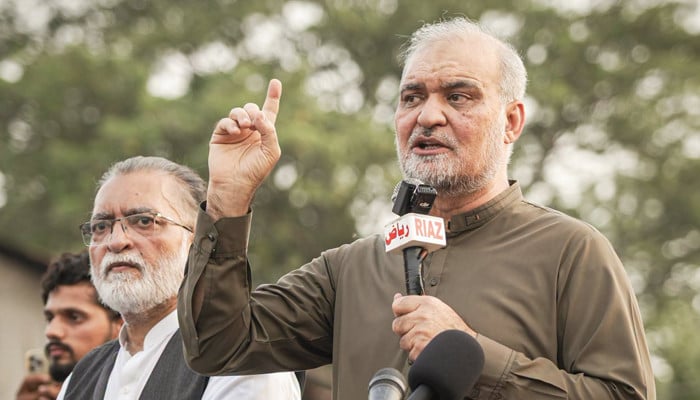
    Jamaat-e-Islami Karachi chief Munim Zafar Khan has called for an immediate reduction in petrol prices, saying the government must end what he described as excessive petroleum levies that are placing an unfair financial burden on the public. Speaking to Geo News, Zafar said the Jamaat-e-Islami’s sit-in outside the Governor House in Karachi had entered its second day. He said the protesters had presented clear demands and would continue their demonstration until the government addressed their concerns. According to Zafar, a large number of women will join the protest at 3pm today, adding further momentum to the demonstration. He said the party plans to maintain pressure on the government over rising fuel prices, electricity bills and other issues affecting ordinary citizens. The JI Karachi chief also demanded a forensic audit of Independent Power Producers (IPPs), arguing that the government should investigate power-sector agreements and costs to identify areas where consumers may be facing unnecessary financial pressure. Zafar said controlling inflation should remain the government’s top priority, as rising prices continue to affect household budgets across the country. He maintained that the public should not have to bear what he termed excessive charges and levies. He further said Jamaat-e-Islami had launched sit-ins in all four provinces and would continue its protests until the government accepted its demands. The ongoing Karachi demonstration focuses on petroleum levies, electricity bills and broader public concerns. The party has vowed to continue the sit-in at the Governor House as part of its campaign for relief from rising living costs.

  • | |

    Motorway police must avoid unlawful challans

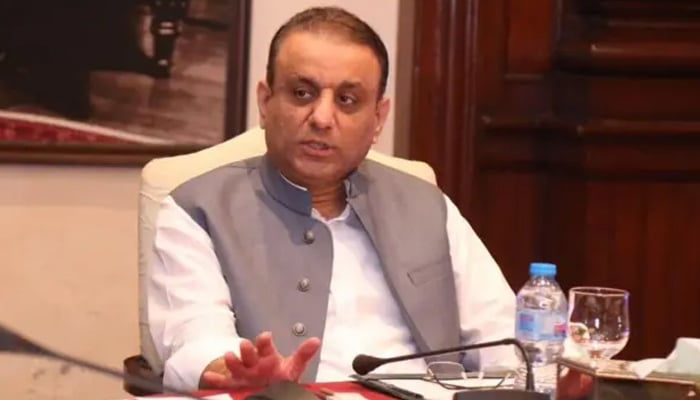
    Federal Minister for Communications Abdul Aleem Khan has assured goods transporters that he will not allow the motorway police to issue a single unjustified or unlawful traffic challan, stressing that the government will honour all commitments made to the transport sector. The minister made the remarks at a reception hosted in his honour by goods transporters following the successful conclusion of negotiations between transporters and the government. Addressing the gathering, Abdul Aleem Khan urged transporters to comply with the axle-load policy, saying the regulation serves their own interests. He explained that carrying excessive weight puts additional pressure on vehicles and causes significant damage to roads and other transport infrastructure. The federal minister acknowledged the vital role of the transport industry in keeping the country’s economy moving. He said the government needs the cooperation of transporters to support economic growth and improve the overall transportation system. Abdul Aleem Khan also assured the transport community that he would personally monitor their concerns if necessary. “If required, I will stand on the roads myself to observe the problems faced by transporters,” he said, underlining his commitment to resolving issues through direct engagement. The development follows high-level talks chaired by Sindh Governor Syed Muhammad Nehal Hashmi, during which representatives of the Pakistan Goods Transport Association held negotiations with federal and provincial government officials. The talks ended successfully, prompting goods transporters to suspend their nationwide strike, which had continued for nine days. The transporters have agreed to postpone the strike for 40 days and resume the movement of goods across the country. The agreement has temporarily eased tensions between the government and the transport sector, while both sides are expected to use the 40-day period to address outstanding concerns and work toward a longer-term resolution.

  • |

    Supreme Court reserves verdict on diyat amount

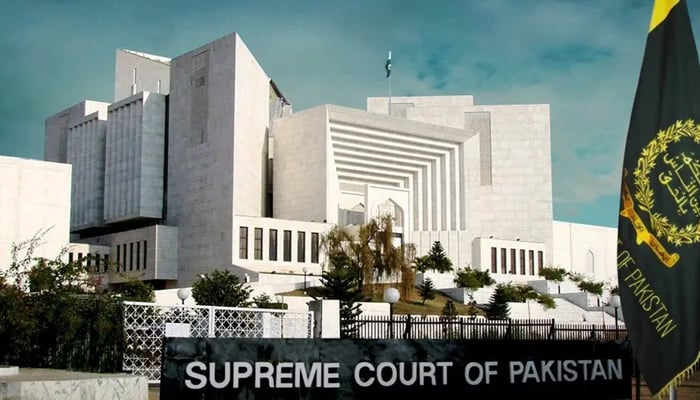
    The Supreme Court of Pakistan has reserved its decision on an important legal question concerning the determination of diyat, or blood money, in murder cases. A bench of the apex court reserved the verdict while hearing an appeal filed by convict Nadeem Khan. The case focuses on the amount of diyat payable and the point in time that should be used to determine its value. During the hearing, the convict’s lawyer argued that his client had already completed his prison sentence for the murder conviction and was now serving additional imprisonment because he had not paid the required diyat. Prosecutor Arshad Hussain told the court that the case was the first of its kind and that a High Court judgment already exists regarding the determination of the amount. He informed the court that the current diyat amount stands at around Rs197 million (Rs19.7 million). Justice Hashim Kakar asked whether the diyat should be calculated according to its value at the time of the offence, the accused’s arrest, or the time of conviction and sentencing. Justice Salahuddin remarked that making the financial consequences of murder more serious might discourage people from committing such offences. He also noted that Saudi Arabia continues to use 100 camels as the traditional basis for diyat. Justice Ishtiaq Ibrahim observed that delays in deciding cases reflect shortcomings in the justice system and said an accused should not suffer because of institutional delays. In response, Prosecutor Arshad Hussain argued that certain legal matters, such as determining a person’s age, are assessed from the time of arrest, suggesting that a similar principle could apply in determining the relevant period for diyat. The Supreme Court directed all prosecutors concerned to submit their written arguments on the matter. After receiving the submissions, the court will issue its decision on how and when the amount of diyat should be determined.

  • |

    Two arrested in Rs220m Karachi heist

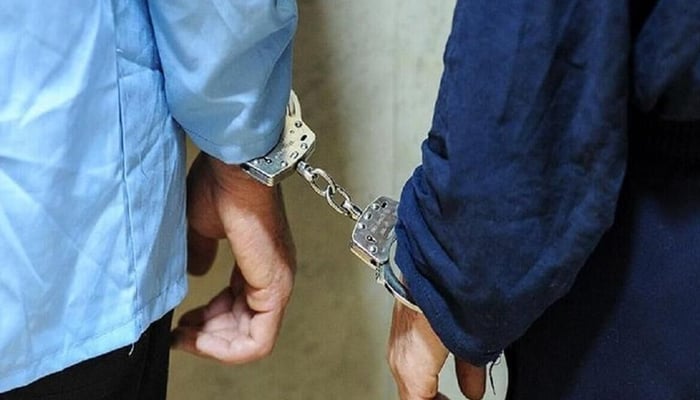
    Police have arrested two suspects in connection with a Rs220 million theft in Karachi, apprehending them from Jhang after tracing their alleged involvement in a series of criminal activities across Punjab and Sindh. According to the spokesperson for the DIG Operations, police arrested suspect Mehtab along with his relative, Abdul Rehman, during an operation in Jhang. The spokesperson said Mehtab has 18 previous cases of theft and burglary registered against him. Investigators have also linked him to a major robbery in Karachi’s Saddar area in April, in which valuables worth around Rs220 million were reportedly stolen. Police said the two suspects had allegedly carried out thefts in several other cities, including Jhang, Faisalabad and Rahim Yar Khan. During the arrest operation, officers recovered a 9mm pistol and ammunition from Abdul Rehman, according to police. Authorities also recovered stolen property from the suspects that allegedly belonged to a theft case registered at Islamabad’s Ramna Police Station. Police are continuing their investigation to determine the suspects’ involvement in other criminal cases and to trace any additional stolen property.

  • | |

    Karachi traffic plan issued for 8 Rabi-ul-Awwal pr…

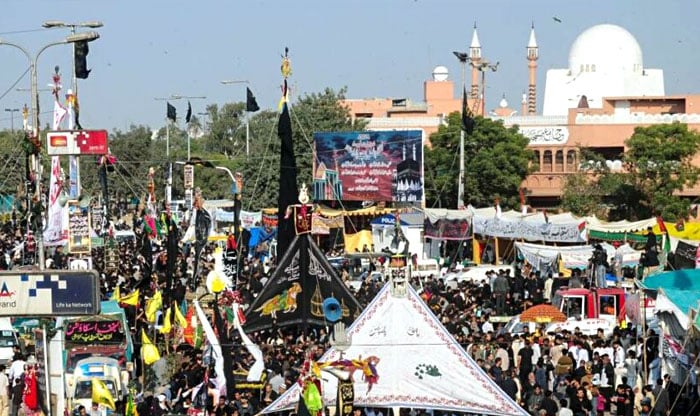
    Karachi Traffic Police have announced a special traffic management plan for processions scheduled to take place across the city on August 22 in connection with 8 Rabi-ul-Awwal. According to the traffic police spokesperson, processions will leave from Nishtar Park and several other locations in Karachi. Authorities have made special arrangements to keep traffic moving and minimize disruption along the procession routes. Traffic police said vehicle entry passes for the processions will be available from August 17 to 20. Applicants must submit the vehicle’s registration card, their CNIC, and two recent photographs to obtain a pass. Drivers must also carry the original vehicle registration card and CNIC with them during the procession. Those seeking vehicle passes can contact the designated central office for further information and registration. The traffic police will introduce alternative traffic routes and make diversions at different points during the processions. Additional personnel will also be deployed to manage traffic and guide motorists. Citizens have been advised to avoid unnecessary travel on procession routes and follow instructions from traffic police officials. Authorities have urged motorists to cooperate with traffic management teams to ensure smooth movement and reduce inconvenience for commuters across the city.

  • | |

    Rana Sanaullah says PML-N set to secure two-thirds…

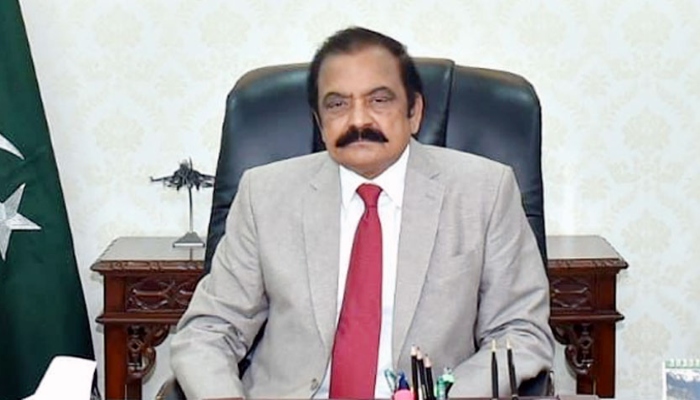
      ISLAMABAD: Adviser to Prime Minister Rana Sanaullah has said that the Pakistan Muslim League-Nawaz (PML-N) is expected to secure a two-thirds majority in the Azad Jammu and Kashmir (AJK) Legislative Assembly after elections for the reserved seats. Speaking about the political situation in Azad Kashmir, Rana Sanaullah said that PML-N would form its government in the region with a clear majority. He stated that the party had secured victory on 25 seats and would achieve a two-thirds majority once the elections for reserved seats were completed. The prime minister’s adviser also expressed his appreciation for Sajid Iqbal, who was elected from LA-14. He thanked the newly elected lawmaker for deciding to support PML-N and said that Sajid Iqbal would work alongside the party for the development and improvement of Azad Kashmir. Rana Sanaullah said that the people of Azad Kashmir had given PML-N a mandate to improve the situation in the region and address the issues faced by its people. He emphasized that the party would fulfill the commitments it had made during the election campaign and would work to bring positive changes to the lives of citizens. He further said that the AJK Legislative Assembly would be allowed to function with its full constitutional powers. According to him, the new government would focus on governance, development and resolving the problems of the people instead of engaging in political confrontation. Commenting on the ongoing protests and sit-ins in Azad Kashmir, Rana Sanaullah said that the citizens participating in the demonstrations were their brothers and should not be viewed as opponents. He stressed that the people of Azad Kashmir were as much owners of Pakistan as citizens living in other parts of the country. However, he claimed that only a very small portion of the protesters, estimated at around one to one-and-a-half percent, might be influenced by elements attempting to create unrest or provoke violence. He maintained that the majority of the people participating in the protests were ordinary citizens expressing their concerns. Rana Sanaullah’s remarks come amid heightened political activity in Azad Kashmir following the recent elections. The expected formation of a PML-N government, along with the possibility of the party securing a two-thirds majority through reserved seats, could significantly strengthen its position in the AJK Legislative Assembly. The PML-N leadership has indicated that its priority will be to address governance and development-related challenges in Azad Kashmir. Rana Sanaullah reiterated that the party would honor its election commitments and work toward improving the region’s overall situation. He also emphasized the importance of maintaining unity between Azad Kashmir and Pakistan, saying that the people of the region have an equal stake in the country. His comments appeared aimed at reassuring protesting citizens while also distinguishing them from what he described as a small number of potentially disruptive elements. With the reserved-seat elections still to be completed, the final composition of the AJK Assembly will determine whether PML-N achieves the two-thirds majority claimed by the prime minister’s adviser. The party is nevertheless confident that it has secured sufficient political support to form the government and pursue its legislative and development agenda in Azad Kashmir.

  • | |

    Hepatitis screening made mandatory for Islamabad e…

    The federal government has decided to launch mandatory hepatitis screening for all government employees in Islamabad. Employees working in federal ministries will also be required to undergo screening. The move is part of the government’s efforts to detect hepatitis cases at an early stage and provide timely treatment. According to sources in the Ministry of Health, the screening will be conducted under the Prime Minister’s Hepatitis Programme. The programme aims to identify people infected with hepatitis and connect them with free diagnostic and treatment facilities. Employees who test positive during the initial screening will be referred for a PCR test. The PCR test will be provided free of cost under the programme. The government will also provide free medicines to patients after completion of the PCR testing process. The initiative is intended to reduce the financial burden on patients and ensure that those diagnosed with hepatitis receive proper treatment. The Prime Minister’s Hepatitis Programme has a total allocation of Rs67 billion. The funds will be used for screening, diagnostic tests, treatment and other measures aimed at controlling the spread of hepatitis. Free hepatitis screening is already being conducted at different locations across Islamabad. The government plans to expand the screening process to federal government employees as part of the wider programme. Sources said more than 50,000 hepatitis screening kits have already been purchased. The kits will be used to screen employees and identify suspected cases. Machinery for PCR testing has also been installed at the National Institutes of Health in Islamabad. The facility will help process tests for people who are found positive during the initial screening. Health authorities are focusing on early diagnosis because many hepatitis patients may not show clear symptoms in the initial stages. Regular screening can help identify infections before they cause serious health complications. The mandatory screening of government employees is therefore being seen as an important step in strengthening hepatitis prevention and treatment efforts in the federal capital.

  • | |

    Complete story emerges after body of Karachi busin…

      KARACHI: Details have emerged surrounding the discovery of the body of young Karachi businessman Mir Raza, with investigative sources revealing several alleged delays and irregularities in the initial response to the incident. According to investigative sources, information about Mir Raza’s body was received at around 12:36 p.m. on July 29. The body reportedly remained at the scene until approximately 1:45 p.m., before rescue personnel shifted it to Jinnah Hospital shortly before 2 p.m. The sources said that the Crime Scene Unit did not reach the location on the day the body was discovered. Instead, the unit reportedly received information about the body through social media at around 3:11 p.m. According to the initial investigation, the Crime Scene Unit had allegedly been instructed not to visit the location on the day of the incident. The team eventually arrived at the scene the following day. Investigators have raised questions over the delay, particularly because preserving a crime scene is crucial for collecting physical evidence and determining what may have happened. The delay in reaching the location could have affected the availability or condition of potential evidence. Sources further said that personnel responsible for tracking or searching for the device associated with the case were informed approximately 15 minutes after the discovery of the body. However, they reportedly did not reach the location at that time either. The Crime Scene Unit has since visited the site five times as part of the ongoing investigation. Investigators are examining the circumstances surrounding the discovery of the body and attempting to establish a clear timeline of events. The investigation has also revealed another development concerning the police response before the body was discovered. According to investigative sources, police had received information about a robbery in Gulistan-e-Johar before receiving information regarding the body. Sources said that instead of being directed toward the location where the body was eventually found, police personnel were instructed to remain at the reported robbery site in Gulistan-e-Johar Block 7. The initial investigation suggests that the absence of local police personnel at the location where Mir Raza’s body was found may have contributed to the loss or disturbance of important evidence. Investigators are now examining whether the police response and the delay in the arrival of relevant units affected the collection of forensic material. The sequence of events has raised questions about the handling of the case during the crucial early hours. The period immediately following the discovery of a body is particularly important because physical evidence can be disturbed, removed or contaminated if the area is not properly secured. Authorities are continuing to investigate the circumstances surrounding Mir Raza’s death. Investigators are also working to determine why the Crime Scene Unit was not present at the scene on the day the body was found and why the relevant personnel allegedly failed to reach the location after being informed. The repeated visits by the Crime Scene Unit indicate that investigators are continuing their efforts to gather evidence and reconstruct the events surrounding the case. Meanwhile, questions surrounding the police response and the alleged delays remain an important part of the investigation. Officials will need to establish the reasons behind the instructions given to various teams and determine whether any procedural failures contributed to the loss or disturbance of evidence. The final cause of Mir Raza’s death and the circumstances leading to it will depend on the findings of the ongoing investigation, forensic examination and other available evidence.

  • | |

    Senate debates Imran Khan’s health after opposit…

    The Senate held a detailed discussion on the health of PTI founder Imran Khan. The discussion was held after a demand by Opposition Leader Allama Raja Nasir Abbas. The Senate proceedings were also suspended to take up the issue. Speaking in the Senate, Raja Nasir Abbas said Imran Khan was facing punishment for crimes he had not committed. He described the former prime minister’s health as a highly sensitive matter. The opposition leader urged the government to show restraint. He said political differences should not lead to anyone being subjected to unnecessary suffering. Raja Nasir Abbas said the government should focus on resolving the country’s problems instead of pursuing political revenge. He also questioned whether the priority was to fix the system or settle political scores. He demanded that Imran Khan be allowed to meet his personal doctors. He said access to proper medical care was essential, particularly because of concerns about the PTI founder’s health. The opposition leader also called for Imran Khan to be shifted to a hospital if necessary. He demanded that a meeting with him should be allowed. Raja Nasir Abbas said such measures could help prevent a serious situation in the future. He stressed that the authorities should take the health concerns seriously. He also called for politicians to be given an opportunity to run the country. He said political issues should be resolved through political means. The opposition leader also raised the issue of PTI women who are currently in prison. He called for greater attention to their situation. During the debate, Raja Nasir Abbas addressed PML-N Senator Rana Sanaullah. He said Rana Sanaullah knew that the cases against him had not been filed by politicians. Rana Sanaullah responded by asking Raja Nasir Abbas who had filed the case against him. The exchange highlighted the political tensions between the government and opposition benches in the Senate. The debate also brought renewed attention to Imran Khan’s health and the opposition’s demand for greater access to medical care and personal doctors. Opposition lawmakers have continued to raise concerns about the PTI founder’s condition and have called for his medical needs to be addressed without political considerations.

  • | |

    Pakistan’s civil awards triple in nine years…

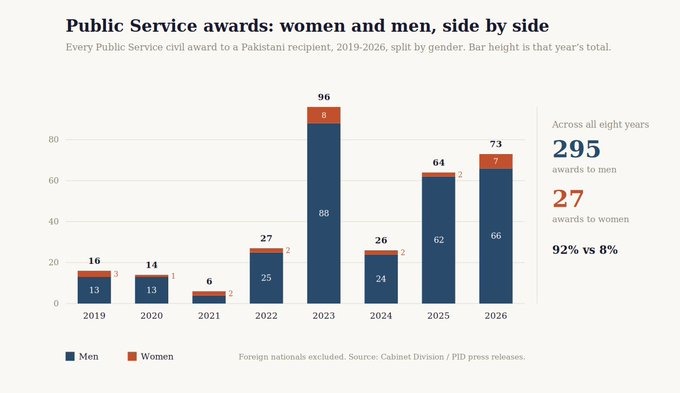
    ISLAMABAD: The number of people receiving Pakistan’s civil awards has increased sharply over the past nine years, but the share of women among the recipients has remained almost unchanged, according to an analysis by economist Zehra Farooq. Farooq, who has analysed civil award lists from 2018 to 2026, said she compiled all 2,209 awards announced during the nine-year period and examined each award by field, gender, level of award and nationality. Her analysis shows that the number of award recipients increased more than three times during the period, rising from 73 people in 2018 to 372 in 2026. However, the share of women receiving the awards did not show a similar increase. Women made up between roughly 10% and 16% of civil award recipients in each year from 2018 to 2026. Ms Farooq said the figures show that while the size of the annual awards lists changed greatly, the share of women remained within almost the same range. The lowest share was around 10% in 2023, while the highest was 16% in 2018 and 2021. The share stood at 15% in 2024 before falling to 12% in 2025 and 11% in 2026. Her analysis also looked at the figures after excluding gallantry awards. Gallantry awards were kept separate because they mainly relate to military and police roles. Even after removing these awards, the overall share of women increased only from around 12% to 14%, according to the analysis. This suggests that the low share of women is not limited to gallantry awards. Farooq said the same pattern can also be seen in civilian awards. Public service awards show a wider gap The Public Service category is the largest civilian category in the dataset and shows a particularly large difference between men and women. Among Pakistani recipients of Public Service awards, 295 were men and only 27 were women. This means men received about 92% of these awards, while women received only around 8%. Farooq noted that in several years, the entire Public Service list included only one or two women. The figures raise questions about how women are represented among people being recognised for public service. The analysis does not, however, establish why the gap exists. Farooq suggested that one possibility worth examining is whether the awards reflect the existing structure of Pakistan’s civil bureaucracy. She noted that the quota for women in the civil bureaucracy is around 10%, while the share of awards going to women remains below or around that level. This raises a question about whether the civil awards are reflecting the existing gender structure in public institutions rather than creating a separate pattern of their own. Major changes in fields The analysis also found major changes in the fields represented in the civil award lists. Science and engineering together accounted for close to one-third of the 2021 list. However, by 2025 and 2026, the two fields together made up less than 2% of the list. At the same time, some new categories appeared. Information technology appeared as a category for the first time in 2021, while climate appeared in 2025. Farooq said these changes raise questions about how the state decides which areas deserve recognition. She asked whether the decline in science and engineering awards reflects fewer major contributions in these fields, fewer people entering these professions, or a change in the areas where the state looks for achievement. The appearance of IT and climate-related awards also raises another question: whether official recognition is beginning to follow changes in the areas where Pakistan’s talent and work are growing. Women receive fewer top-level awards The analysis also examined the civil awards according to their level. The awards are divided into different levels, with Nishan and Hilal at the senior end, followed by Sitara and Tamgha. Ms Farooq found that the share of women becomes smaller as the level of the award becomes higher. At the two highest levels, women account for less than 5% of recipients. At the more common lower levels, the share of women is higher, generally ranging between 11% and 14%. This means that the overall percentage of women receiving civil awards does not tell the full story. Women may represent around 10% to 16% of all recipients in a year, but their representation becomes much smaller when only the highest-level honours are considered. The findings therefore point to two separate issues: the overall number of women receiving civil awards and the level of recognition they receive. Nine years provide a wider picture Ms Farooq said looking at the awards over several years gives a clearer picture than looking at a single annual list. The civil awards are announced every August, and each year’s list can show changes in the number and type of recipients. But when the lists are combined over nine years, longer-term patterns become visible. The biggest pattern in the data is the contrast between the rapidly growing number of awards and the almost unchanged share of women. From 73 recipients in 2018, the annual list reached 372 in 2026. Yet women remained within roughly the same 10% to 16% range throughout the period. The analysis also shows that the composition of the awards has changed in other ways, including the fields being recognised and the introduction of new categories. She said the data does not provide all the answers, but it raises questions that can be examined further.