National

  • | |

    Shahid Khaqan Abbasi challenges delisting of Awaam…

      Former Prime Minister Shahid Khaqan Abbasi has written a letter to Chief Election Commissioner Sikandar Sultan Raja, challenging the Election Commission of Pakistan’s decision to delist the Awaam Pakistan Party. In his letter, Abbasi expressed concern over what he described as an unjustified decision by the Election Commission to remove the party from its list of registered political parties. He said he was surprised that Awaam Pakistan had been delisted on the grounds that it had failed to conduct intra-party elections. Abbasi rejected the allegation and maintained that the party had already conducted intra-party elections for its National General Council and national office-bearers. According to him, the elections were held between March 26 and April 2, within the deadline provided by the Election Commission of Pakistan. The former prime minister said that Awaam Pakistan fulfilled the requirements set by the electoral body and completed its intra-party election process within the prescribed period. He added that the party submitted the election results along with detailed documentation to the Election Commission on April 6. Abbasi argued that the party had therefore complied with the Election Commission’s instructions and questioned the basis on which it was subsequently delisted. The letter stated that a total of 12,084 members participated in Awaam Pakistan’s intra-party elections. Abbasi described the electoral process as democratic and transparent, saying that the participation of thousands of party members demonstrated the party’s commitment to democratic procedures. He further expressed concern over what he termed the unfair and unusual manner in which an active political party had been delisted. According to Abbasi, the decision was difficult to understand, particularly because the party had conducted its intra-party elections and submitted the required documents to the Election Commission. Abbasi also objected to the fact that the party was delisted without being given an adequate opportunity to present its position. He said that removing an active political party from the electoral list without hearing its case was beyond comprehension and raised questions about due process. The former prime minister urged Chief Election Commissioner Sikandar Sultan Raja and the Election Commission to conduct an immediate hearing into the matter. He requested that Awaam Pakistan be provided an opportunity to explain its position and present the relevant evidence regarding the intra-party elections. Abbasi’s letter comes amid continued debate over the legal and procedural requirements that political parties must meet to remain registered with the Election Commission. Intra-party elections are an important requirement under Pakistan’s political and electoral framework, as they are intended to ensure democratic participation and accountability within political parties. The former prime minister maintained that Awaam Pakistan had fulfilled this requirement within the deadline and had provided the Election Commission with the necessary election results and supporting documents. He called on the electoral body to review its decision and hear the party’s case before taking any further action. Abbasi stressed that Awaam Pakistan should be given a fair opportunity to clarify the circumstances surrounding its intra-party elections and the documents submitted to the Commission. The controversy has placed renewed focus on the relationship between political parties and the Election Commission, particularly regarding compliance with electoral laws and the right of political parties to be heard before facing major administrative decisions. Abbasi’s appeal now seeks an immediate hearing and a review of the delisting decision, with the party arguing that it followed the prescribed procedure and conducted its intra-party elections in a democratic and transparent manner.

  • | |

    Lahore police decide polygraph test for ASI in all…

    Lahore police have decided to conduct a polygraph test on an Assistant Sub-Inspector (ASI) in connection with allegations that a young woman was sexually assaulted at Ghaziabad police station. According to police sources, ASI Imran, who is currently in custody, will undergo the test as investigators continue examining the allegations and conflicting accounts surrounding the incident. Police said the alleged victim has already undergone a psychiatric assessment. The report from the assessment is expected to be received on August 18, while additional medical and forensic examinations have also been conducted. According to the police, ASI Imran has denied the allegations. He reportedly told investigators that he had brought the woman to the police station because she was allegedly involved in begging. He claimed that he did not assault her and instead provided her with food and counselled her before sending her away. Investigators said the initial medical report contains some ambiguity regarding the allegations of sexual assault. Police officials said a detailed report from the Punjab Forensic Science Agency (PFSA) is expected to provide further findings that could help investigators establish what happened. The case is being closely monitored by DIG Investigation Lahore Zeeshan Raza, who said he is personally supervising the investigation. He assured that anyone found responsible would be punished according to the law. Police sources said further tests of the alleged victim have also been conducted, but their results are still awaited. Investigators are expected to consider the medical evidence, forensic findings, statements and other available material before reaching conclusions about the case. The investigation is being conducted under the direction of DIG Investigation Lahore. A team comprising Ghaziabad Investigation Incharge Inspector Nasir Hameed, Gender Cell Incharge Inspector Fatima and Investigation Officer Faryal is working on the case. The decision to conduct a polygraph test on the detained ASI comes as investigators attempt to establish the facts surrounding the allegations. However, the reported initial medical ambiguity means that the final medical and forensic findings will be important in determining the direction of the investigation. Authorities have said that the investigation remains ongoing and that legal action will be taken on the basis of the evidence collected.

  • | |

    Australian court rejects Indian appeal in Basmati …

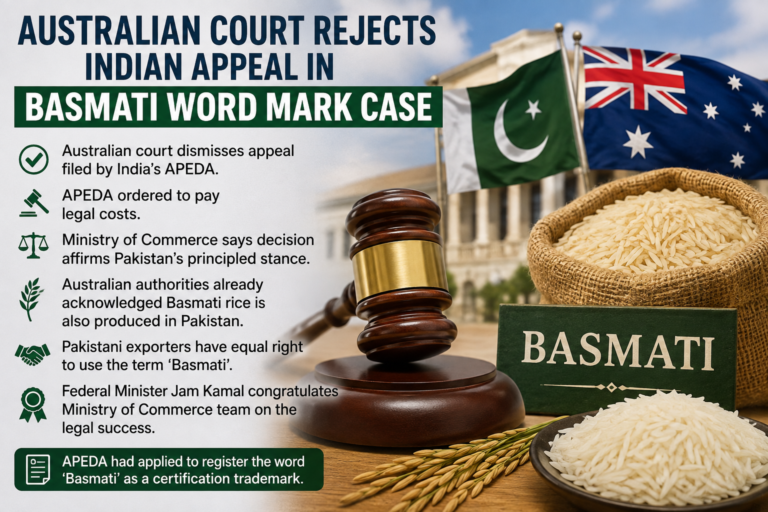
      An Australian court has dismissed an appeal filed by the Agricultural and Processed Food Products Export Development Authority (APEDA) in the Basmati word mark case, marking a significant legal development for Pakistan’s rice exporters. According to the Ministry of Commerce, the Australian court’s decision has reaffirmed Pakistan’s principled position that the term “Basmati” cannot be treated as the exclusive property of India. The ruling is being viewed by Pakistani authorities as an important legal success in protecting the rights of the country’s Basmati rice producers and exporters. The Australian court has also ordered the Indian institution APEDA to pay the legal costs associated with the proceedings. The decision follows a legal dispute over the use and registration of the word “Basmati” in Australia. APEDA had applied to register the word “Basmati” as a certification trademark. The application was challenged, leading to legal proceedings concerning whether the term could be claimed exclusively for Indian rice products. Pakistan has consistently maintained that Basmati rice is also produced in Pakistan and that Pakistani exporters should have equal rights to use the name. The Ministry of Commerce said Australian authorities had already acknowledged that Basmati rice is produced in Pakistan, strengthening Islamabad’s position in the dispute. The latest court decision has therefore been welcomed by Pakistani officials as confirmation of the country’s longstanding stance on the geographical and commercial identity of Basmati rice. The Ministry of Commerce stated that the ruling represents an important legal victory for Pakistan because it supports the principle that Pakistani exporters should not be deprived of the right to use the term Basmati for rice produced in the country. Federal Minister for Commerce Jam Kamal congratulated the Ministry of Commerce team on what he described as Pakistan’s legal success in the case. He appreciated the efforts of the officials and legal representatives involved in defending Pakistan’s position before the Australian authorities. The dispute is significant because Basmati rice is an important agricultural and export commodity for both Pakistan and India. The term has considerable commercial value in international markets because consumers associate Basmati with a distinctive variety of aromatic long-grain rice. Pakistan is among the countries known for producing and exporting Basmati rice, particularly from areas in Punjab. The country has sought greater recognition of its rights over the Basmati name in international markets, arguing that the rice is a shared agricultural heritage of the region and is produced on both sides of the border. APEDA’s attempt to register “Basmati” as a certification trademark had raised concerns in Pakistan because exclusive registration could potentially affect Pakistani exporters’ ability to market their products using the internationally recognized name. The Australian court’s rejection of APEDA’s appeal is consequently being seen by Pakistan as an important development in safeguarding its exporters’ commercial interests. The order requiring APEDA to pay legal costs also adds to the significance of the decision for Pakistan. The Ministry of Commerce has emphasized that the ruling strengthens Pakistan’s position in international legal and commercial forums. Pakistani authorities are expected to continue protecting the interests of local rice growers and exporters and ensuring that they retain the right to market their Basmati rice under its recognized name. The decision could also contribute to broader efforts to strengthen Pakistan’s agricultural exports and promote its Basmati rice in international markets.

  • | |

    Arshad Nadeem to skip lausanne diamond league for …

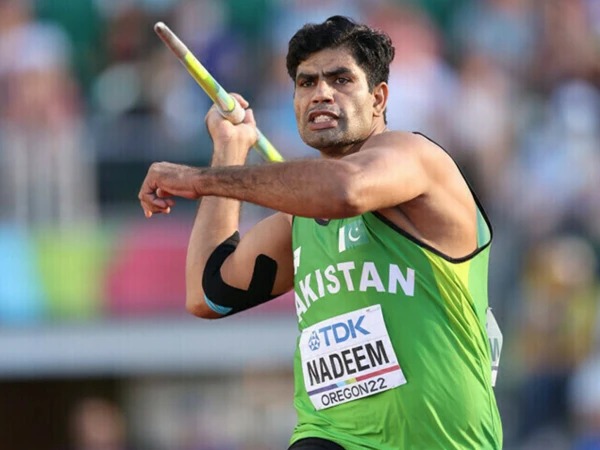
    Pakistan’s Olympic gold medallist Arshad Nadeem has decided to skip the upcoming Lausanne Diamond League and instead focus on an overseas training camp in South Africa. The 2026 Lausanne Diamond League is scheduled to take place in Switzerland on August 21. Nadeem was initially included in the event’s entry list, but he has now opted to prioritize training and preparation ahead of his upcoming international competitions. Nadeem is currently training at Punjab Stadium in Lahore and is expected to spend around two weeks training in South Africa. Reports indicate that he plans to travel to Potchefstroom once his visa arrangements are completed. The decision comes after a disappointing outing at the recent 2026 Commonwealth Games in Glasgow, where Nadeem finished ninth among 12 competitors with a best throw of 77.41 metres. He failed to progress beyond the first three throws in the final. Sri Lanka’s Rumesh Tharanga Pathirage won the Commonwealth Games javelin gold medal with an impressive throw of 89.75 metres, while Nadeem was unable to defend his title at the event. Despite the setback, Nadeem remains one of Pakistan’s leading track and field athletes. He won Olympic gold in the men’s javelin throw at the Paris 2024 Olympics, producing an Olympic-record throw of 92.97 metres. The Lausanne event had initially attracted considerable attention because Nadeem was listed among a strong javelin field. His withdrawal means he will instead use the coming weeks to work on his form and conditioning in South Africa. Nadeem’s next major appearances are expected to include the World Athletics Ultimate Championship in Budapest from September 6 to 14, followed by the Asian Games. The decision to skip Lausanne appears aimed at giving the Olympic champion additional preparation time before those important competitions. For Nadeem, the South Africa training camp could provide an opportunity to address the issues exposed by his recent Commonwealth Games performance. Rather than immediately returning to competition, the javelin star will now have additional time to train and prepare for the remainder of the 2026 season. His withdrawal from Lausanne also highlights the importance of managing his competition schedule while preparing for major championships. Fans will now be watching closely to see whether the additional training helps Nadeem regain his best form in his next international appearance.

  • | |

    Ali Khursheedi calls for transparent probe into Mi…

      Sindh Assembly Opposition Leader Ali Khursheedi has called for a transparent investigation into the Mir Raza case, saying that hundreds of similar incidents have taken place in Karachi and that the authorities must take effective steps to address the situation. Speaking to the media in Karachi, the Muttahida Qaumi Movement (MQM) leader said that the Mir Raza case was not an isolated incident. He stressed the need for a transparent and impartial inquiry so that the facts could be established and those responsible could be held accountable. “Hundreds of cases like the Mir Raza case have occurred,” Khursheedi said, adding that a transparent investigation would be necessary to determine what had happened. He also questioned the performance of the Sindh government and urged people in Karachi to assess whether the provincial government was actually delivering on its responsibilities. The opposition leader said that the concerns of Karachi’s residents should be taken seriously, particularly in relation to law and order, governance and the protection of citizens. He questioned whether the people of Karachi believed that the provincial government was working effectively for the city. Khursheedi also commented on an incident that recently took place in the Bahadurabad area. He described the incident as unfortunate and said that it was not appropriate. However, he declined to discuss the matter in detail, saying that questions regarding the issue should be directed to the party leadership. “I am a worker, and you should ask the leadership these questions,” he told reporters when asked about the Bahadurabad incident. The MQM leader further expressed frustration over what he described as the continued deterioration of Karachi. He said that the situation had gone too far and that a stop must now be put to the problems facing the city. Khursheedi alleged that Karachi was being systematically damaged through what he described as a “system” of poor governance and mismanagement. He called for an end to practices that, in his view, were contributing to the decline of the city and affecting the daily lives of its residents. The opposition leader’s remarks come amid renewed concerns over security, governance and accountability in Karachi following the Mir Raza case. The incident has attracted attention and prompted demands for a thorough investigation into the circumstances surrounding the death. Khursheedi maintained that the authorities should not treat such cases as isolated incidents. Instead, he called for broader measures to improve law and order and ensure that citizens receive justice when serious incidents occur. He also emphasized the importance of transparency in investigations, particularly in cases that generate public concern. According to him, an impartial investigation could help establish the facts, restore public confidence and ensure accountability. The opposition leader’s criticism also reflects broader political tensions between the Sindh government and opposition parties over the administration of Karachi. Opposition leaders have frequently raised questions about the city’s governance, public services and law-and-order situation. Khursheedi said that Karachi’s residents should ultimately judge the performance of the provincial government based on their everyday experiences. He suggested that the condition of the city itself provides an indication of whether the government is fulfilling its responsibilities. Calling for immediate action, he said that “enough is enough” and that the deterioration of Karachi could not continue indefinitely. He urged authorities to take concrete steps to improve governance, investigate serious cases transparently and prevent further incidents from occurring. The MQM leader’s statements have added to calls for accountability and a transparent investigation into the Mir Raza case, while also highlighting wider concerns about Karachi’s governance and security situation.

  • | |

    Petrol price cut by 94 paisa, diesel become more e…

      The government has reduced the price of petrol while increasing the price of high-speed diesel, according to a notification issued by the Petroleum Division. The Petroleum Division has formally announced changes in the prices of petroleum products, with the revised rates taking effect from midnight. Under the new pricing structure, the price of petrol has been reduced by 94 paisa per litre, while the price of diesel has increased by 54 paisa per litre. Following the revision, the new price of petrol has been fixed at Rs324.98 per litre, compared with the previous rate. Meanwhile, high-speed diesel will now be available at Rs382.79 per litre. According to the notification, the revised prices of petroleum products will be applicable for August 13 and will come into effect from 12am tonight. The latest adjustment comes just a day after the government made another revision to petroleum prices. On the previous day, petrol had been reduced by Rs1.70 per litre, while the price of diesel had been increased by Rs1.39 per litre. The repeated adjustments in petroleum prices come amid fluctuations in international oil prices and changes in domestic pricing factors. Petrol and diesel prices are closely watched in Pakistan because changes in fuel rates can directly affect transportation costs, electricity generation, industrial activity and the prices of everyday goods. The government has also reduced the price of kerosene oil. According to the notification issued by the Oil and Gas Regulatory Authority (OGRA), the price of kerosene oil has been cut by 41 paisa per litre. Following the reduction, the new price of kerosene oil has been set at Rs289.27 per litre. Kerosene oil is used by households and other consumers in areas where access to conventional gas or other energy sources can be limited. Any change in its price can therefore have an impact on household energy expenses.   Alongside the change in the retail price of diesel, the government has also increased the petroleum levy imposed on the fuel. According to OGRA, the petroleum levy on diesel has been increased by Rs1 per litre. Following the increase, the levy on diesel now stands at Rs77.28 per litre. The petroleum levy on petrol, however, has remained unchanged at Rs80 per litre. Similarly, the levy on kerosene oil has also been maintained at Rs20.36 per litre. The latest revision means consumers will see a marginal reduction in the price of petrol and kerosene oil, while diesel users will face a slight increase. Although the changes are relatively small on a per-litre basis, fuel price revisions can have a broader impact on the economy because diesel is widely used by public transport, commercial vehicles, agriculture and the industrial sector. The government is expected to continue reviewing petroleum prices in line with prevailing market conditions and other relevant pricing factors. For consumers, the latest notification provides a mixed outcome, with petrol and kerosene becoming slightly cheaper while diesel has become more expensive. The revised rates will remain applicable from August 13, with implementation beginning at midnight.

  • | |

    Barrister Gohar again seeks permission to meet PTI…

      Pakistan Tehreek-e-Insaf (PTI) Chairman Barrister Gohar Khan has once again appealed for permission to meet the party’s founding chairman, saying that he has not met him since October 15, 2025. Barrister Gohar said he was once again requesting the authorities to allow him to meet the PTI founder. He strongly denied reports or claims suggesting that he had met the party founder after October 15, 2025. “I once again request that I be allowed to meet the founding chairman,” Barrister Gohar said, reiterating his demand for access to the incarcerated PTI leader. The PTI chairman clarified that he had not met the party founder since October 15 last year and categorically rejected any suggestion that a meeting had taken place after that date. According to him, despite repeatedly submitting requests for a meeting, he had neither been offered an opportunity nor granted permission to meet the former prime minister. Barrister Gohar said that his repeated requests had not resulted in any meeting being arranged. He maintained that he had made several attempts to obtain permission but had not received a positive response from the relevant authorities. The PTI chairman said he would once again submit a request for permission to meet the party founder. He also stressed the importance of allowing the founder’s family members and legal team to meet him. His remarks come amid continued political and legal developments surrounding the PTI founder, whose access to family members, lawyers and party leadership has remained a subject of political discussion. Barrister Gohar’s statement also seeks to clarify his own position regarding reports about his alleged meetings with the PTI founder. By specifying October 15, 2025 as the date of his last meeting, he rejected any claims that he had subsequently met the party leader. The PTI chairman emphasized that he had not been given even a single opportunity to meet the founder despite repeatedly requesting permission. He therefore appealed again to the authorities to facilitate a meeting. The issue of access to political leaders in custody has remained particularly significant for their parties, as meetings with senior leadership allow them to discuss political strategy, legal matters and organizational issues. For PTI, communication with its founder is especially important because party members have frequently sought his guidance on political and legal matters. Barrister Gohar’s latest comments indicate that he intends to continue pursuing permission for a meeting. He did not indicate that any such permission had been granted. He also called for the founder’s family and lawyers to be given access, underscoring their role in maintaining communication and handling his legal affairs. The PTI chairman concluded by reiterating his request for permission to meet the party founder. His statement makes clear that, according to his account, no meeting has taken place between the two since October 15, 2025. The development is likely to attract further political attention as PTI continues to seek access to its founder and maintain communication with him regarding the party’s political and legal affairs.

  • | | | |

    Tanweer Ahmed champions human-centred AI at UN you…

    Tanweer Ahmed, a technology and artificial intelligence professional, has called for a human-centred approach to AI adoption, stressing that emerging technologies should support people rather than replace them. Speaking at the Youth and AI Summit at United Nations Headquarters in New York on International Youth Day, Ahmed delivered a presentation titled “Keeping Humanity in AI Adoption.” He focused particularly on how nonprofit organisations can use artificial intelligence responsibly while protecting human judgment and accountability. Ahmed said his professional background in technology consulting, data analytics and AI had given him experience in understanding the opportunities created by emerging technologies. However, he said his passion for the nonprofit sector was rooted in his earlier experiences working with communities and young people. He recalled working on a community farm and participating in cultural education activities in Cuba during 2007 and 2008. In 2010, he travelled to South Africa, where he taught mathematics to fifth-grade students. Ahmed said these experiences shaped his long-term desire to contribute to communities and help children around the world. He described his appearance at the UN event on International Youth Day as an honour and an opportunity to reconnect with those early aspirations. During his presentation, Ahmed discussed the rapid growth of artificial intelligence and its increasing use by individuals, businesses and nonprofit organisations. He explained that AI adoption should not simply mean occasionally using chatbots or other AI applications. Instead, organisations should strategically integrate AI into their daily workflows, operations and decision-making processes. Ahmed highlighted several areas where nonprofits can use AI, including internal productivity, communication, fundraising, grant writing and administrative tasks. He presented the Ugandan Water Project as an example of how AI can support a nonprofit organisation. The project works to improve access to clean water in Uganda and reduce the impact of waterborne diseases. According to Ahmed, the organisation uses AI to assist with grant applications and donor outreach. Previous grant applications and organisational information can be analysed to help prepare targeted applications for new funding opportunities. Ahmed stressed that AI-generated material is not simply submitted without human involvement. Staff review, edit and verify the content before applications are sent to funders. He said AI had also helped the organisation identify new grant opportunities and improve internal processes, including contract drafting and project-management workflows. Ahmed emphasised that the purpose of such technology should be to make employees more efficient rather than eliminate their jobs. He also discussed AI-powered voice-to-text technology used in social work and community services. Such systems can allow workers to record information while they are in the field and transfer it into required software, reducing the amount of time spent on administrative duties. Ahmed said reducing paperwork could give nonprofit workers more time to interact directly with the people and communities they serve. However, he warned that AI adoption also presents challenges. These include financial costs, limited access to technology, concerns over job losses, inaccurate information, privacy issues, bias and difficulties in understanding cultural and linguistic nuances. He also highlighted concerns about the environmental impact of the infrastructure required to operate increasingly powerful AI systems. Ahmed urged organisations to develop responsible AI policies covering privacy, security, fairness, transparency, human oversight and accountability. He encouraged nonprofit organisations to learn from one another and share successful experiences with AI, saying organisations working for social causes can benefit from cooperation rather than competing over technological approaches. A key message of his presentation was that humans must remain responsible for AI-assisted decisions. Ahmed warned organisations against blindly accepting AI-generated content and urged them to review outputs carefully, correct errors and ensure that technology does not replace human judgment. Who is Tanweer Ahmed, the Pakistani-American philanthropist? Pakistani-American businessman and philanthropist Tanweer Ahmed has attracted renewed attention in Pakistan following his reported $9 million contribution to the National University of Sciences and Technology (NUST) and his recent appearance alongside senior Pakistani officials in the United States. Ahmed, who is based in Houston, has built a diverse business portfolio in the United States while also becoming involved in philanthropy, education, healthcare and cricket. His recent contribution to NUST is aimed at supporting talented students from financially disadvantaged backgrounds. The endowment is expected to provide scholarships to deserving students each year, with a particular focus on fields such as artificial intelligence, information technology, science and other emerging technologies. Ahmed has said his objective is to ensure that talented Pakistani students are not deprived of quality education because of financial difficulties. He has also expressed plans to expand similar scholarship initiatives to other educational institutions. The businessman has also supported infrastructure and technology-related initiatives at NUST, including the development of facilities intended to strengthen research and innovation. His philanthropic activities extend beyond education. Ahmed has been associated with healthcare initiatives in Pakistan and has supported efforts aimed at providing assistance to communities affected by natural disasters. He also drew attention for his role in relief efforts following the devastating floods that struck Pakistan in 2022. He has been credited with helping mobilise substantial humanitarian assistance for flood-affected communities. Ahmed’s business journey began after he moved to the United States as a student. According to accounts of his career, he initially worked in restaurants and at gas stations while trying to establish himself. He later moved through several positions in the American fast-food industry. His career accelerated after he joined Jack in the Box as a shift manager. His performance and business approach helped him move into senior management positions, eventually leading to opportunities in the Taco Bell franchise system. Ahmed later expanded into franchising and developed a large portfolio of food outlets across several US states. His business interests have also extended into insurance, energy, transportation and other sectors. Over the years, he has developed a reputation as an entrepreneur who combines commercial ventures with philanthropic activities. Ahmed is also closely associated with the development of cricket in the United States. A passionate cricket enthusiast, he established the Prairie View Cricket Complex near Houston after acquiring a large tract of

  • | | |

    Pakistan seeks to revive Iran-US mediation efforts

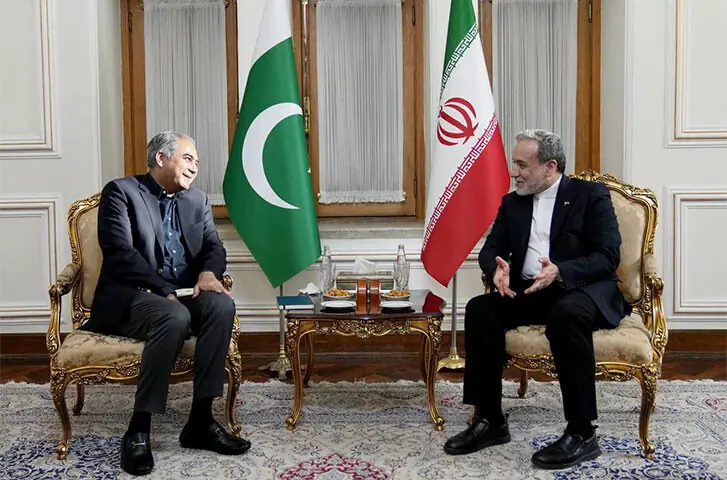
    ISLAMABAD: Pakistan is making fresh diplomatic efforts to revive its role as a mediator between Iran and the United States. Interior Minister Mohsin Naqvi travelled to Tehran on Tuesday for talks with senior Iranian officials. During his visit, he met Iranian Foreign Minister Abbas Araghchi and President Masoud Pezeshkian. The visit is aimed at keeping Pakistan’s mediation channel active. Islamabad is seeking progress on the Islamabad Memorandum of Understanding (MoU), which emerged from earlier efforts to ease tensions between Iran and the United States. Naqvi was received in Tehran by Iranian Interior Minister Eskandar Momeni. He later held discussions with Araghchi on bilateral relations and regional developments. Pakistan’s diplomatic efforts had slowed after Oman became more directly involved in talks concerning arrangements for navigation through the Strait of Hormuz. However, recent contacts between Oman and Iran appear to have created an opportunity for Islamabad to renew its broader mediation initiative. A diplomatic source said Pakistan wants to follow up on the Islamabad MoU and encourage both sides to return to a wider diplomatic process. The situation around the Strait of Hormuz remains particularly sensitive. The waterway is vital for international energy and trade routes. Iran has maintained that the Islamabad MoU remains the key framework for resolving the wider dispute. Tehran has also linked the full reopening of the Strait of Hormuz to implementation of the commitments contained in the agreement. Iran and Oman have been discussing arrangements for safer passage through the strategic waterway. Their discussions include possible shipping routes and mechanisms for managing navigation. However, Tehran has indicated that any understanding with Oman would initially address technical matters. It would not necessarily represent a complete resolution of the wider dispute. Iran has also called for concrete assurances from Washington before moving towards the next stage of negotiations. Tehran wants guarantees that can be verified rather than verbal commitments. Pakistan has continued to encourage dialogue between the two sides. Defence Minister Khawaja Asif also indicated that Washington and Tehran could be moving closer to an understanding. He said recent signals suggested that the two countries were again moving towards a possible peace arrangement or deal. Meanwhile, Pakistan has invited Iranian Foreign Minister Araghchi and Iranian Parliament Speaker Bagher Ghalibaf to visit Islamabad. Iranian officials have said the visit would take place at an appropriate time. Naqvi’s trip to Tehran is therefore significant because Islamabad is maintaining direct engagement instead of waiting for the Iranian delegation to visit Pakistan. During his meeting with President Pezeshkian, Naqvi described Pakistan-Iran relations as strong and longstanding. He conveyed Islamabad’s intention to further strengthen ties with Tehran. Pezeshkian also stressed the importance of bilateral relations. He said stronger cooperation between Pakistan and Iran could serve their national interests and contribute to regional stability. The discussions come amid broader diplomatic and security developments in the region. Pakistan recently signed a trilateral defence agreement with Saudi Arabia and Turkiye. Islamabad has maintained that the arrangement is defensive and is not directed against any country. Deputy Prime Minister and Foreign Minister Ishaq Dar also discussed the agreement with his Iranian counterpart. He briefed Araghchi on its objectives and stressed its focus on strategic cooperation and regional peace. At the same time, US President Donald Trump has adopted a tougher tone towards Iran’s negotiating team. Trump described Iranian negotiators as difficult and accused them of making commitments privately and later presenting them differently in public. He also warned that Iran’s economic problems and inflation were becoming increasingly difficult to sustain. Trump said Washington could continue applying economic pressure on Tehran. He also suggested that the United States could take stronger measures if necessary. The contrasting positions underline the difficulties facing diplomatic efforts. Pakistan is now attempting to keep communication channels open with Tehran while encouraging a broader political process involving Iran and the United States.

  • |

    Students protest Cambridge exam leaks

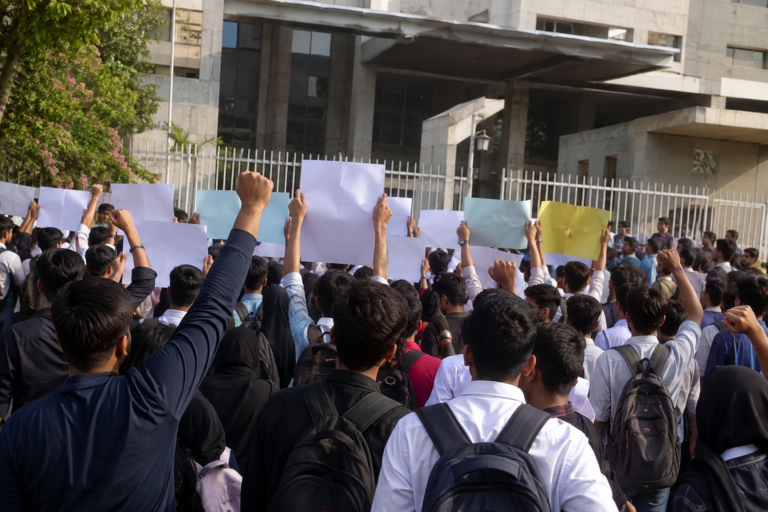
    ISLAMABAD: Accountability4Cambridge has called for a student protest against Cambridge Assessment International Education (CAIE) over alleged examination paper leaks during the 2026 examination cycle, saying the incidents have raised serious concerns about fairness and the credibility of Cambridge examinations. The student group said reports of leaked papers emerged in 2024 and increased in 2025, but Cambridge failed to provide sufficient public explanations or demonstrate that it had effectively strengthened its examination security system. According to Accountability4Cambridge, leaked material from several major papers circulated before scheduled examination times in 2026. The group compiled evidence from 17 alleged cases, including screen recordings showing time-zone information that it says established that the material was available before the relevant examinations. Cambridge recognised four cases and took action, but the students say the remaining evidence was not adequately addressed. The group raised the issue before the Senate Standing Committee on Federal Education and Professional Training on May 18 and again on June 16. Following the meetings, a sub-committee comprising IBCC, Cambridge, Accountability4Cambridge, the British Council, the Ministry of Education and NCCIA was formed. During a July 13 meeting, the students presented the 17 recordings and asked Cambridge to respond. After Cambridge questioned the reliability of the videos, Accountability4Cambridge sought forensic verification from the National Cyber Crime Investigation Agency (NCCIA). The group said NCCIA’s report, received on July 29, found no evidence of tampering in the submitted recordings. Accountability4Cambridge subsequently requested another sub-committee meeting to present the forensic findings. The meeting was initially scheduled for August 7 but was postponed to August 12 after Cambridge said it was unavailable. The students have also criticised Cambridge’s decision to use S1 paper marks instead of assessed marks. They argue that using compromised papers for grading could unfairly benefit students who accessed leaked material while disadvantaging those who did not. Accountability4Cambridge is demanding reversal of the S1 marking decision, lower grade thresholds for Computer Science and Mathematics, recognition of additional leaks supported by forensic evidence, publication of a detailed investigation report and a transparent mechanism for handling compromised examinations. The group has also urged schools to demand greater accountability from Cambridge. Founder Samaak Iqbal Malik said the dispute concerns the integrity of the entire examination system rather than a few individual papers. The organisation has announced a student demonstration outside the IBCC office in G-10, Islamabad, at 1pm on Wednesday, August 12, calling for immediate action before the controversy further affects students’ academic futures.