National

  • | |

    PTI leader Abdullah Tahir murder case: Police unco…

        LAHORE – In a significant development in the high-profile murder case of Pakistan Tehreek-e-Insaf (PTI) leader Abdullah Tahir, the police investigation has uncovered shocking details involving a sophisticated honey-trap operation and the use of drone cameras for surveillance. Abdullah Tahir, a prominent political figure, was gunned down in the upscale Gulberg area of Lahore just a few days ago, sending shockwaves through the political landscape and prompting widespread calls for a swift and transparent investigation. According to official police sources and investigative reports, the murder was not a random act of violence but a meticulously planned assassination that leveraged technology and human manipulation to track the victim’s movements. The breakthrough in the case came when investigators zeroed in on the victim’s personal driver, who has become a pivotal figure in the unfolding narrative. Police interrogation and digital forensics have revealed that the driver was systematically honey-trapped by a female accomplice working in tandem with the primary suspects. The investigation has established that the female suspect initiated contact with Abdullah Tahir’s driver through a popular social media application. Over a period of several days, she allegedly cultivated a rapport with the driver, gaining his trust and extracting crucial information about his employer’s daily routines, security arrangements, and travel schedules. The use of social media as a tool for reconnaissance highlights the increasing sophistication of criminal networks in Pakistan, which are now exploiting digital platforms to orchestrate targeted killings. The most damning evidence, however, emerged from the timeline of the day of the murder. Police sources confirm that on the fateful day, after the driver had accompanied Abdullah Tahir to his clinic, a video call was placed between the driver and the female suspect. During this call, the suspects are believed to have instructed the driver to confirm the victim’s presence at the clinic in real-time. The video call effectively served as a live verification mechanism, allowing the hitmen to ensure that their target was indeed on the premises before they moved in to execute the attack. This revelation underscores the calculated and cold-blooded nature of the conspiracy. Furthermore, the investigative team has uncovered evidence that the suspects deployed a drone camera to conduct aerial surveillance of the clinic and its surroundings prior to the assassination. The drone was reportedly used to map out the location, identify potential escape routes, and monitor the movement of security personnel or any other individuals who could interfere with the operation. The use of drone technology in this case represents a disturbing new trend in criminal activity, indicating that the perpetrators had access to advanced equipment and technical expertise, possibly hinting at a larger network behind the killing. The recovery of digital data from the driver’s mobile phone, including chat logs, call records, and multimedia files, has been instrumental in piecing together the conspiracy. The police have also detained the female suspect for interrogation, and efforts are underway to trace the other accomplices who participated in the planning and execution of the murder. Preliminary investigations suggest that the suspects operated with a high degree of coordination, using encrypted communication methods to avoid detection.   Abdullah Tahir’s murder has already become a politically charged issue, with his party, the PTI, demanding a high-level judicial inquiry and condemning what they describe as a failure of state institutions to protect their leaders. The party has also alleged that the killing may be linked to political vendettas, though the police have so far refrained from assigning a political motive to the crime, stating that all angles are being explored. As the investigation continues, the focus remains on capturing the masterminds and executing the attack. The police have assured the public and the political leadership that no effort will be spared in bringing the culprits to justice. The use of honey-trapping and drone surveillance in this case has not only complicated the investigation but has also raised serious questions about the safety of public figures in an era of rapidly evolving technological threats. The authorities are now reviewing security protocols for VIPs and considering stricter regulations on the use of drones and surveillance equipment to prevent similar incidents in the future.
  • | |

    Pakistan goods transporters association declares i…

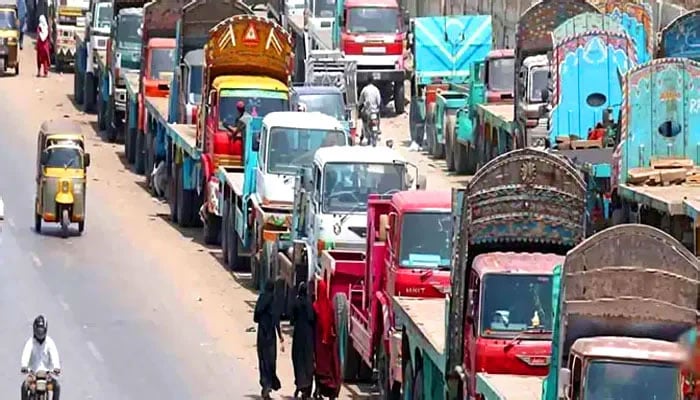
      The Pakistan Goods Transporters Association has raised serious concerns over the volatile and unpredictable daily adjustments in petroleum prices, stating that such frequent fluctuations make it impossible for the transport sector to continue operations smoothly. In a press conference held in Lahore, association officials, led by President Nabeel Mahmood Tariq, articulated a series of demands and grievances that have been mounting over recent months, warning that without immediate government intervention, the entire logistics and supply chain network could face severe disruption. Addressing the media alongside other senior office-bearers of the All Pakistan Goods Transporters Association, Nabeel Mahmood Tariq emphasized that the transportation industry is the backbone of the national economy, responsible for moving essential commodities, industrial raw materials, and consumer goods across the length and breadth of the country. However, he argued that the current pricing mechanism for petroleum products—which has seen almost daily revisions—has created an environment of extreme uncertainty for fleet operators. Unlike larger corporate entities, most truck owners and small transport companies operate on thin profit margins, and without a stable fuel pricing framework, they are unable to quote competitive rates to clients or plan their operational budgets effectively. Tariq pointed out that many transporters have already started grounding their vehicles, as each trip now carries the risk of financial loss if fuel prices rise unexpectedly mid-journey. Beyond fuel prices, the association president laid out a comprehensive list of demands aimed at reducing the financial burden on the sector. First and foremost, he called for an immediate end to unnecessary customs checking at various inter-provincial checkpoints. According to Tariq, these intrusive and repetitive inspections not only cause long delays—sometimes stretching into hours—but also open the door to harassment and bribery, which further inflate the cost of doing business. He urged the federal and provincial governments to streamline customs procedures and adopt a more efficient, technology-driven system that would expedite the movement of goods without compromising security or revenue collection. Another major point of contention raised by Tariq was the recent increase in toll taxes on highways and motorways. He demanded that this hike be rolled back completely, arguing that transporters are already struggling with rising maintenance costs, spare part prices, and tyre rates. The additional toll burden, he said, is simply unsustainable and forces many operators to take longer, less safe alternative routes, which ultimately hurts the overall efficiency of freight movement. Turning his attention to provincial policies, particularly in Punjab, Tariq called for the establishment of new, modern truck terminals across the province. He noted that existing truck stands and loading points are outdated, overcrowded, and lack basic amenities for drivers and helpers. New truck yards, equipped with proper parking, resting areas, workshops, and loading/unloading facilities, would not only improve working conditions but also reduce traffic congestion in urban centers. He also strongly condemned the 300 percent increase in token tax imposed on commercial vehicles in Punjab, labeling it as punitive and counterproductive. He demanded that this excessive tax hike be withdrawn immediately, asserting that it disproportionately affects small owner-operators who form the majority of the association’s membership. In a significant announcement, Nabeel Mahmood Tariq declared that the association fully supports the wheel-jam strike (hunger strike) called for August 8, which has been organized by various transport unions across the country to pressure the government into addressing these long-standing issues. He clarified that this is not a political move but a last-resort measure to draw attention to the existential crisis facing the transport industry. He warned that if the government fails to respond positively before that date, thousands of trucks, trailers, and tankers will park on the roads, effectively paralyzing the movement of food, medicine, fuel, and industrial goods. Such a strike, he cautioned, would have catastrophic consequences for an already fragile economy, leading to shortages, price hikes, and factory closures. Concluding his address, Tariq appealed to Prime Minister Shehbaz Sharif and the chief ministers of all provinces to personally intervene and hold urgent consultations with transport representatives. He reiterated that the industry is not asking for subsidies or charity, but merely for a predictable policy environment, fair taxation, and the elimination of corrupt practices at checkpoints. He expressed hope that the government would act wisely and avert a crisis that benefits no one except speculators and hoarders. The press conference ended with a unanimous resolution passed by the association leaders, vowing to continue their struggle peacefully but firmly until all their legitimate demands are met. The coming days, they warned, will be decisive for the future of Pakistan’s transport sector and, by extension, its entire supply chain.

  • | |

    Federal minister for energy meets Iranian ambassad…

      Islamabad – Federal Minister for Energy Awais Leghari held a meeting with Iranian Ambassador to Pakistan, Reza Amiri Moghaddam, in Islamabad to discuss energy cooperation, trade expansion, and regional stability. The talks marked another step in the growing partnership between the two neighbors. Ambassador Amiri Moghaddam announced that work on the second Pakistan-Iran transmission line will begin soon, a project long awaited by both sides. He also revealed that both countries are considering expanding the existing 100-megawatt electricity supply agreement, which currently powers parts of Balochistan. “Energy security is a shared goal. The second line will boost our capacity and open doors for deeper cooperation,” he said. He further invited Pakistani companies to attend the upcoming joint commission meeting in Tehran, aimed at exploring new business and investment opportunities. Federal Minister Awais Leghari emphasized that regional peace and stability are in the mutual interest of both nations. He stressed that uninterrupted electricity supply is critical for Gwadar’s development, which serves as a key hub for the China-Pakistan Economic Corridor. “Gwadar cannot progress without stable power. Any disruption affects local communities and our broader economic vision,” he stated. He also highlighted that electricity trade with Iran will become even more significant in the future, given Pakistan’s rising energy demands and limited domestic resources. Ambassador Amiri Moghaddam praised the current state of Pakistan-Iran relations, describing them as having reached new heights. He commended Prime Minister Shehbaz Sharif and Pakistan’s military leadership for their peace efforts in the region, calling them commendable and constructive. “The vision shown by both sides is remarkable. We are committed to turning this goodwill into tangible outcomes,” he added. He also expressed Iran’s interest in expanding cooperation beyond energy into agriculture, pharmaceuticals, and border trade. Both sides agreed to fast-track procedural formalities for the second transmission line and explore long-term energy purchase agreements. They also discussed barter trade mechanisms to overcome financial challenges. The upcoming joint commission meeting in Tehran is expected to produce concrete results, benefiting businesses and communities on both sides. With work on the new transmission line nearing start and expanded electricity trade under consideration, Pakistan and Iran appear set to enter a new phase of cooperation built on shared interests, mutual trust, and a vision for regional connectivity. The meeting concluded with a renewed commitment to transform political goodwill into practical economic gains for both nations.

  • | |

    PTI founder not in solitary confinement

      The Islamabad High Court on Thursday heard petitions challenging the alleged solitary confinement of Pakistan Tehreek-e-Insaf (PTI) founder Imran Khan and his wife Bushra Bibi. During the proceedings, Advocate General (AG) Islamabad Naveed Hayat Malik informed the court that the two prisoners were not kept in solitary confinement, adding that they were being provided facilities even better than B-class prison standards. Justice Khadim Hussain Soomro presided over the hearing. The petitioners were represented by Barrister Salman Safdar, while the jail superintendent was also present in the courtroom and submitted a detailed report regarding the facilities provided to the high-profile inmates. Advocate General Malik clarified that the detainees were not isolated due to punitive measures but as a security protocol. He noted that the inability of petitioners’ families to meet them did not constitute solitary confinement. Meanwhile, Jail Superintendent Sajid Beg explained that solitary confinement legally means locking an inmate in a single cell for 24 hours—which, he emphasized, was not the case for Imran Khan. The PTI founder, he said, was housed in a compound consisting of seven interconnected cells, allowing free movement. Additionally, a convicted inmate was permanently assigned to accompany him, further disproving the solitary confinement claim. The superintendent also disclosed the amenities provided to Khan. He was given access to a television set, newspapers, and books. Both Urdu and English dailies are being delivered daily, and more than 500 books have been provided to him so far—with nine more recently added to his cell. However, Barrister Salman Safdar, representing the petitioners, painted a contrasting picture. He informed the court that on the Supreme Court’s directive, he had visited Imran Khan as a friend of the court and noticed his deteriorating eyesight. According to Safdar, Khan expressed satisfaction with his food, security, and bathroom facilities but pleaded: “Just save my eyesight.” Safdar further alleged that for seven months, he was not allowed to meet his client, and it was only after the intervention of the Chief Justice that a meeting was arranged in April, lasting barely 65 minutes. Out of that brief meeting, the PTI founder spent 60 minutes complaining about mental torture and restrictions on meetings. He claimed he was under 22-hour isolation while Bushra Bibi faced 24-hour confinement. Safdar also pointed out that the TV provided in the cell had no functioning channels. In a disturbing revelation, Safdar informed the court that Imran Khan’s 68-year-old sister, Aleema Khanum, visited Adiala Jail 38 times without being granted a single meeting. The PTI founder has also been deprived of telephonic conversations with his sons for the last eight months. Safdar argued that this psychological torture is far more severe than physical violence and urged the court to intervene. He requested that a panel of three lawyers be formed to visit the jail and independently assess the conditions. He also demanded that Imran Khan be allowed a weekly phone call with his sons and that the jail authorities submit an affidavit committing to this arrangement. Justice Soomro noted that he had previously visited jails in Sindh when he was a senior judge there, but Aleema Khanum interjected, urging the judge to personally visit Adiala Jail to ascertain the reality. After hearing all parties, the court directed them to submit written reports and relevant legal references, after which an appropriate order would be issued.

  • | |

    Interior Minister Talal Chaudhry says government&#…

      ISLAMABAD: Minister of State for Interior Talal Chaudhry has asserted that the ruling coalition will complete its full five-year constitutional term, even as he acknowledged that political speculation intensifies after the two-and-a-half-year mark. The minister addressed a range of pressing political questions, from the possibility of an opposition alliance to the stability of the current government. Chaudhry began by offering a pragmatic observation about Pakistan’s political rhythm. “After two and a half years, the countdown for any government effectively begins,” he said. However, he quickly dispelled any notion that this countdown implies an early end for the present administration. “The five years will be completed in full,” he emphasized, “and the coalition will continue to function in exactly the same manner as it does today.” He expressed complete confidence that the ruling alliance, led by the Pakistan Muslim League-Nawaz (PML-N), remains cohesive and resilient against any internal or external pressures. When questioned about the Pakistan Peoples Party (PPP) – a key coalition partner – Chaudhry delivered a nuanced response. He acknowledged that the PPP possesses a certain political awareness, or “ehsas”, regarding its current position within the alliance. He went further to state that this awareness will only deepen with time. “The PPP has this feeling today, and more feeling will also come,” he remarked, suggesting that as the government progresses, all partners will increasingly recognize the mutual benefits of remaining united. He framed this evolving consciousness not as a threat, but as a natural part of political maturity within a multi-party democratic setup. One of the most emphatic parts of Chaudhry’s interview was his categorical dismissal of any potential alliance between the PPP and the Pakistan Tehreek-e-Insaf (PTI). He stated, “There is no possibility of an alliance between the PPP and the PTI,” calling such speculation unfounded and politically motivated. He further reassured the public and investors alike that the government faces no existential threat from the opposition. According to the minister, the opposition remains fragmented and lacks the numerical strength or public mandate to destabilize the elected administration. Chaudhry then elevated his argument beyond mere political expediency, framing the continuity of the coalition as a national imperative. “It is in the best interest of Pakistan and the entire political system that the current alliance continues to function as it is,” he declared. He warned that any premature disruption of the government would create a dangerous power vacuum at a time when the country is grappling with economic stabilization, security challenges, and the need for institutional reforms. He called on all political stakeholders to prioritize national unity over partisan scores. The minister also took the opportunity to defend the government’s performance on key issues, including inflation management, anti-terrorism operations, and diplomatic engagements. While conceding that difficulties persist, he argued that the government has set the foundation for long-term recovery and that the opposition’s role should be constructive criticism rather than obstructionism. He urged political parties to rise above personal rivalries and focus on the greater good of the nation. In his concluding remarks, Talal Chaudhry made it clear that while the government is not afraid of early elections, it is also not shirking its responsibilities. “We were elected for five years, and we will serve for five years,” he said firmly. He expressed confidence that the public will ultimately judge this administration on its tangible achievements, not on opposition rhetoric. He dismissed the “two-and-a-half-year countdown” as a political cliché rather than a prophecy, reiterating that the coalition will not only survive but thrive until the very last day of its term. Overall, the interview projected an image of a self-assured government determined to see through its tenure, while subtly reminding its coalition partners – especially the PPP – that their long-term political futures are best secured within the existing fold. Whether this confidence will translate into political reality remains to be seen, but for now, Chaudhry’s message was unambiguous: the alliance is stable, the system is strong, and the government is here to stay.

  • | |

    FPAP, IPH hold breastfeeding policy dialogue

    LAHORE: Institute of Public Health Lahore and Rahnuma Family Planning Association of Pakistan joined hands to organize a Policy Dialogue on promoting Breastfeeding in connection with the World Breastfeeding Week 2026. The week is commemorated globally from 1-7 August to highlight the importance of breastfeeding. The house discussed strategies to improve breast feeding as only 45% of newborns in Pakistan were put to breast milk within the first hour of life, resulting in stunted growth and vulnerability to disease outbreaks. Moderated by Dean IPH Dr. Saira Azfzal, the event was joined by foreign dignitaries from the UKHSA, Chairman BoG IPH Prof Abdul Majeed Chaudhry, Executive Director Punjab Institute of Neuro Sciences & Principal General Hospital/PGMC Sardar Al Farid, former chairperson BoG Punjab Healthcare Commission Prof Atiya Mubarak, Head of Office WHO Punjab Dr. Jamshaid Ahmed, UNICEF Health Specialist Dr. Quratul Ain Ahmed, former Executive Director Health Services Academy Prof Shakila Zaman, WHO Technical Officer Dr. Irfan Ahmed, DGHS representative Dr. Zubair Hafeez as well as KEMU, Jinnah Hospital, SIMS and Ganga Ram experts including Prof Sobia Qazi, Prof Nadia Khursheed, Prof Munir Akhtar Saleemi, Dr Rameeza Kaleem Dr Asif Batani, Dr Mamoona, , Dr Ali Arshad, Prof. Dr Madeeha Rashid, Prof. Dr Muntaha, Dr Ammara Dr Amber Mustafa and a large number of students. Project Director GAVI RISE Rahnuma FPAP Sajjad Hafeez acknowledged IPH for joining hands with Rahnuma for a national cause. Highlighting this year’s theme “Breastfeeding for a Sustainable Start in Life: Strengthen What Works,” he said that Rahnuma-FPAP is one of the largest and oldest organizations in Pakistan, renowned for integrated package of mother & child health services, (ANC, safe deliveries PNC, vaccination, nutrition and family planning) at its country-wide network of facilities. Prof Sardar Al Farid highlighted barriers for mothers especially in office settings and need to designate workplace nursing stations. WHO representative Dr. Jamshaid elaborated key indicators (Early Initiation of Breastfeeding, Exclusive Breastfeeding and Continued Breastfeeding, highlighting that formula milk must not be marketed aggressively. UNICEF representative Dr. Quratul Ain highlighted that deliveries in Punjab under skilled birth attendants have improved to around 80%, yet the breastfeeding figures remain sub optimal. This requires integrating skilled counseling into routine family planning and reproductive health services.

  • | |

    Supreme Court upholds landlord’s right to us…

    The Supreme Court of Pakistan has ruled that a property owner has the exclusive right to decide how to use their property and is not bound by the wishes or preferences of a tenant. The judgment came while deciding a long-running landlord-tenant dispute involving a residential building in Karachi’s Saddar area. In an eight-page verdict authored by Justice Aqeel Ahmed Abbasi, the apex court set aside an earlier decision of the Sindh High Court, which had ruled in favour of the tenant. The Supreme Court observed that it is a well-established legal principle that a property owner is the sole judge of their own requirements. The court held that if a landlord submits a sworn statement declaring the need to use their property personally, that statement is sufficient to establish bona fide necessity unless proven otherwise. The judgment further stated that an owner cannot be compelled to use another portion of the property simply because a tenant believes alternative accommodation is available. The court emphasised that the landlord’s choice regarding the use of their property cannot be dictated by the tenant. The case involved a dispute over a flat in a building located in Karachi’s Saddar neighbourhood. During the proceedings, the tenant argued that several other flats in the same building had become vacant and could instead be used by the landlord. The Sindh High Court accepted this argument and ruled in favour of the tenant. However, the Supreme Court disagreed with that reasoning, stating that the availability of other vacant units does not deprive the owner of the right to reclaim a specific property for personal use. Allowing the landlord’s appeal, the Supreme Court ordered the tenant to vacate the flat within six months, bringing the legal dispute to a close while reaffirming the property rights of landlords under the law.

  • | |

    Sindh rejects Miftah Ismail’s police recruit…

    Sindh Home and Law Minister Zia-ul-Hassan Lanjar has strongly rejected allegations made by former federal minister Miftah Ismail regarding police recruitment in the province, calling the claims baseless and politically irresponsible. Responding to Miftah Ismail’s statement, Lanjar said President Asif Ali Zardari represents all federating units of Pakistan and should not be portrayed as the representative of a single province, language or ethnic group. He added that the Pakistan Peoples Party (PPP) is a truly federal political party, and attempts to associate the president with a particular region undermine national unity. The provincial minister said all government recruitment in Sindh, particularly in Karachi, is conducted in accordance with established laws, the quota policy and merit. He maintained that the Sindh Police is a professional, impartial institution committed to merit-based recruitment. Lanjar further said the Sindh government does not believe in discrimination on the basis of language, ethnicity, region or community, and remains committed to providing equal opportunities to all citizens. He urged Miftah Ismail, as a senior political leader, to avoid making unsubstantiated allegations or statements that could fuel ethnic divisions. He said that if Miftah possesses evidence regarding any irregularity in police recruitment, he should present it before the relevant legal or administrative forum instead of making general accusations. The Sindh home minister also called on Miftah Ismail to clarify and withdraw what he described as an irresponsible statement that was contrary to the facts.

  • | | |

    SECP registers record 5,438 new companies in July

    The Securities and Exchange Commission of Pakistan (SECP) recorded its highest-ever monthly company registrations, with 5,438 new companies incorporated during July, reflecting growing business activity and investor confidence in the country’s corporate sector. According to the SECP, five international companies established offices in Pakistan during the month. The foreign firms are from Malaysia, the United Arab Emirates (UAE), and China, highlighting continued overseas interest in Pakistan’s business environment. The commission said 112 newly registered companies include foreign directors, indicating increasing international participation in the local corporate sector. Of the total registrations, 3,148 were private limited companies, while 2,117 were single-member companies. In addition, 127 limited liability partnerships (LLPs) were incorporated during the month. The SECP also registered 28 non-profit organisations and 18 public companies. Provincially, Punjab accounted for the largest share of registrations, with 2,756 companies, representing 51% of the total. Islamabad followed with 1,053 companies, while Sindh registered 864, Khyber Pakhtunkhwa 450, Gilgit-Baltistan 180, and Balochistan 135 new companies. The information technology (IT) sector recorded the highest number of new incorporations, with 1,008 companies registered during July. Other major sectors included trading with 845 new companies, services with 638, and construction with 348 registrations. The SECP also reported significant growth in other industries, with 256 companies registered in the food and beverages sector, 207 in tourism, 181 in e-commerce, 165 in education, 162 in real estate development, and 145 in corporate agriculture. The record number of company registrations reflects continued expansion across multiple sectors of Pakistan’s economy and increasing formalisation of businesses under the country’s corporate regulatory framework

  • | | |

    12 militants killed in Balochistan intelligence op…

    Pakistan’s security forces killed 12 suspected militants during two intelligence-based operations carried out in separate districts of Balochistan as part of the ongoing counterterrorism campaign, the Inter-Services Public Relations (ISPR) said on Thursday. According to the military’s media wing, the operations were conducted on August 5 and 6 in Washuk and Mastung districts under the third phase of Operation Rad-ul-Fitna, which targets militant groups allegedly backed by hostile foreign elements. The ISPR said the first operation was launched on August 5 after intelligence agencies detected the movement of six suspected militants in Washuk district. Security forces swiftly moved to the area and engaged the suspects in a targeted operation. Following an exchange of fire, all six militants were killed. A second intelligence-based operation was conducted on August 6 in Mastung district after security forces received information about the presence of armed militants. The ISPR said another six suspected militants were killed during an intense firefight. Security personnel also destroyed a militant hideout during the operation. The military stated that both operations were based on credible intelligence and were part of continuous efforts to eliminate militant networks operating in Balochistan. It added that security forces carried out the missions with precision, preventing the militants from escaping. According to the ISPR, the operations form part of Pakistan’s broader counterterrorism strategy being implemented under Azm-e-Istehkam, the national security initiative approved by the Federal Apex Committee under the National Action Plan. The military reaffirmed that Pakistan’s armed forces, together with law enforcement agencies, will continue intelligence-led operations across the country to eliminate terrorism and dismantle militant infrastructure.