National

  • | | |

    Cancer patient girl stuck in Karachi traffic jam d…

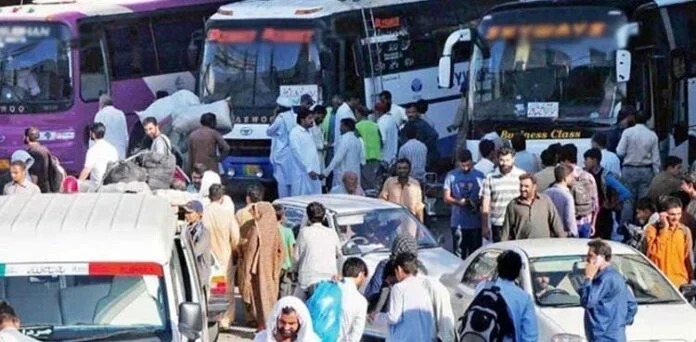
    A young girl undergoing cancer treatment was reportedly caught in a Karachi traffic jam while her family was taking her to a hospital for a medical check-up on Thursday. According to local media reports, the girl and her family became stuck near Essa Nagri after residents staged a protest over prolonged electricity and water outages in the area. The demonstration resulted in severe traffic congestion and long queues of vehicles on surrounding roads. The girl’s family said they were taking her to hospital for a scheduled check-up when they became trapped in the traffic. According to the family, the child is suffering from chest cancer and had a urine bag attached to her at the time, making the delay particularly distressing. Residents said they had been facing shortages of both electricity and water for around 15 days. Frustrated by the prolonged disruption, they took to the streets to demand an improvement in basic services. The protest caused significant disruption to traffic movement in the area. The road connecting Gharibabad to Hasan Square was reportedly closed to traffic, with vehicles being diverted through Liaquatabad No. 10, Karimabad and an internal bypass near Gharibabad. Traffic heading from the Hasan Square U-turn was also diverted towards University Road and NIPA. Meanwhile, motorists travelling from Hasan Square towards Liaquatabad faced further congestion and delays. The incident has drawn attention to the difficult balance between residents’ right to protest over essential services and the impact such demonstrations can have on emergency and medical journeys. For the affected family, the traffic jam created an especially difficult situation because of the child’s medical condition and the need to reach the hospital on time. The case also highlights the broader consequences of prolonged civic service disruptions, which can affect not only daily commuters but also patients requiring urgent or scheduled medical care. Residents maintain that repeated power and water outages have left them with little choice but to protest. Authorities, meanwhile, face the challenge of resolving the underlying service complaints while ensuring that major roads remain accessible, particularly for ambulances and people travelling for medical treatment. The situation has once again highlighted Karachi’s traffic and infrastructure challenges, as protests and road closures can quickly cause widespread congestion across major routes.

  • | |

    Pakistan Idol finale nears as Atif Aslam, Fawad Kh…

      The country’s biggest music competition, Pakistan Idol is rapidly moving toward its decisive stage, with the countdown to the grand finale officially underway. In a special appearance that has already generated excitement among music fans, internationally renowned pop singer Atif Aslam, actor and singer Fawad Khan, and legendary vocalist Ustad Rahat Fateh Ali Khan are set to appear together on Geo’s screen for the first time. Fans of the three celebrated artists are now eagerly preparing to watch the stars share the stage. As the competition reaches its final episode, anticipation is growing over which contestant will emerge as the new superstar of the country. With only a few days remaining before the final decision, excitement among viewers is reaching its peak. The winner of Pakistan Idol will not only receive the prestigious title but will also be rewarded with prizes worth millions of rupees. The opportunity is expected to be life-changing for the contestant who succeeds in winning the competition and earning the title of the next generation’s singing sensation. Pakistan Idol is broadcast first on Geo, making it one of the major platforms for discovering and showcasing emerging musical talent in Pakistan. Throughout its run, the show has presented a wide variety of musical performances and introduced audiences to different styles, traditions and cultural sounds. Its music has created such a strong impact that its popularity has also been noticed in neighboring countries. The programme has featured evergreen songs traditionally associated with weddings and celebrations, giving audiences an opportunity to enjoy familiar melodies in fresh and engaging presentations. Basant songs were also presented in new styles, generating considerable interest among viewers and adding a festive touch to the competition. One of the highlights of Pakistan Idol has been its celebration of Pakistan’s diverse musical heritage. Folk songs from all four provinces were performed by contestants, reviving memories of the country’s rich musical past and introducing younger audiences to traditional sounds. The show also embraced national occasions, with patriotic songs adding another dimension to its musical offerings during Independence Day celebrations. The judging panel has featured some of Pakistan’s most respected names in music and entertainment. Internationally acclaimed singer Ustad Rahat Fateh Ali Khan, actor and singer Fawad Khan, Bilal Maqsood and Zeb Bangash have served as judges, bringing their experience and expertise to the competition. The programme has also welcomed several prominent guest judges and performers, further increasing its appeal. Atif Aslam, widely regarded as one of the country’s most popular contemporary singers, appeared alongside other major names including the “Bhangra King” Abrar-ul-Haq, Asim Azhar and Fakhar-e-Alam. The show has also featured celebrated artists such as Arif Lohar, Sanam Marvi, Akhtar Chanal, Alamgir, Shazia Manzoor and Shafaat Ali, who contributed to the programme’s entertainment value and helped elevate its profile among viewers. Behind the success of Pakistan Idol is a large production team that has worked to bring the programme to audiences. Nadeem J, Badr Ikram and Tanveer Afridi, along with other members of the team, have played significant roles in making the programme successful. As the final episode approaches, viewers are eagerly waiting to discover who will claim the Pakistan Idol crown and become the newest star in Pakistan’s music industry.

  • | |

    Sindh orders immediate reduction in public transpo…

    The Sindh government has ordered an immediate reduction in public transport fares following a significant decrease in the price of high-speed diesel. According to local media reports, the Sindh Transport Department has directed transporters to pass the full benefit of the Rs32.63 per litre reduction in diesel prices on to passengers. The directive covers buses, minibuses, coaches, vans and other public service vehicles operating across the province. Transport authorities have also instructed operators to clearly display updated fare lists at vehicles and bus terminals. The move is aimed at ensuring that passengers receive the benefit of lower fuel prices and that transporters do not continue charging fares based on previous diesel rates. Officials have further been directed to conduct daily road inspections and check public transport vehicles to monitor compliance with the new instructions. Transporters found charging passengers excessive fares could face strict action. According to the Transport Department, penalties for violations may include fines, suspension of route permits and cancellation of vehicle fitness certificates. Authorities have also been instructed to submit daily implementation reports to the Sindh Transport Department. The directive comes after the price of high-speed diesel was reduced by Rs32.63 per litre, bringing its new price to Rs363.06 per litre. The reduction is expected to lower operating costs for public transport operators and has prompted authorities to seek a corresponding reduction in passenger fares. Public transport fares are an important issue for millions of commuters, particularly low-income workers, students and daily wage earners who rely heavily on buses, minibuses and other shared transport services. The Sindh government’s decision is therefore likely to attract considerable attention from passengers who have been waiting for transport fares to reflect changes in fuel prices. The enforcement mechanism will be crucial in determining whether commuters actually receive the benefit of the diesel price reduction. Daily inspections and penalties could help prevent transport operators from charging fares above the officially approved rates. Authorities have emphasized that transporters must comply with the new instructions and ensure that revised fares are clearly communicated to passengers. The latest move represents an effort by the provincial government to link public transport fares in Sindh with changes in fuel prices and provide immediate relief to commuters following the reduction in diesel costs.

  • | |

    Raja Nasir Abbas urges Govt to implement Supreme C…

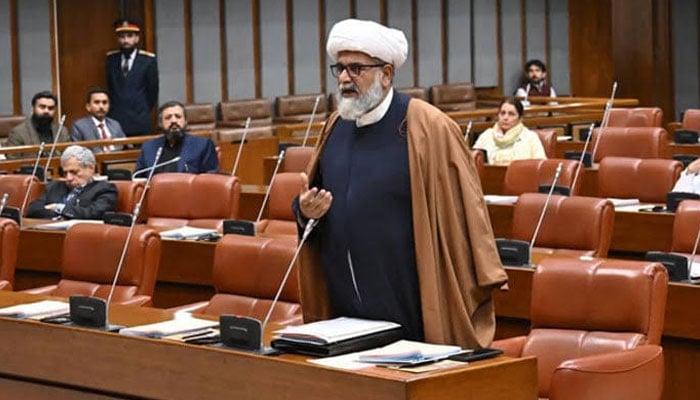
      Leader of the Opposition in the Senate, Raja Nasir Abbas, has said that the government is legally bound to implement the Supreme Court’s decision and expressed hope that the ruling would be implemented today. Speaking during a Senate session, Raja Nasir Abbas said that the Supreme Court’s decision had created a positive atmosphere and provided an opportunity for political forces to move closer to one another. He noted that there had been signs of improvement in the political environment following the court’s ruling. According to the opposition leader, the government is obligated to respect and implement decisions issued by the country’s highest court. He said that the opposition expected the government to comply with the Supreme Court’s decision without further delay. Raja Nasir Abbas emphasized that implementation of the court’s ruling could help maintain a positive political atmosphere. He said that after the Supreme Court decision, the situation appeared to be improving and political sides were gradually coming closer together. He suggested that developments could lead to greater political understanding if the government continued to act responsibly. During his speech, the opposition leader also raised concerns about the health and treatment of Pakistan Tehreek-e-Insaf (PTI) leader and physician Dr Yasmin Rashid, who is currently being held at Kot Lakhpat Jail. Raja Nasir Abbas said that it was the government’s responsibility to protect the health and well-being of people in its custody. He highlighted Yasmin Rashid’s medical condition and expressed concern about the circumstances in which she was being held. According to Abbas, Dr Yasmin Rashid is a cancer patient and has also continued to provide medical assistance to other people even while in prison. He said that despite facing serious health challenges herself, she had remained committed to helping others. The opposition leader further stated that doctors had raised concerns about a problem involving Yasmin Rashid’s spinal vertebrae. He said medical professionals had warned that her condition could become serious and that she might even lose the ability to walk. Abbas argued that, given her medical condition, Yasmin Rashid should not be kept in prison. He called on the government to take medical advice seriously and ensure that prisoners suffering from serious illnesses receive appropriate healthcare. He also expressed concern about conditions inside the prison, particularly the availability of electricity. According to him, there are periods of four hours or more during which electricity is unavailable in the jail. He suggested that such conditions could further worsen the difficulties faced by prisoners, particularly those with serious medical conditions. The opposition leader’s remarks come amid broader political discussions over the treatment of political prisoners and the implementation of judicial decisions. His statement reflects the opposition’s expectation that the government should follow court orders while also ensuring that prisoners receive adequate medical care. Raja Nasir Abbas maintained that respecting judicial decisions and protecting prisoners’ health were both important responsibilities of the state. He urged the government to take immediate steps to address the concerns raised regarding Yasmin Rashid and to ensure that her medical needs are properly addressed. He also expressed optimism that the Supreme Court’s decision could help create a more constructive political environment. According to him, cooperation and implementation of the court’s ruling could contribute to reducing political tensions and improving relations between the government and opposition. The opposition leader concluded by emphasizing the importance of the government fulfilling its legal responsibilities and protecting the health and dignity of individuals in its custody.

  • | |

    Family challenges post-mortem report of youth kill…

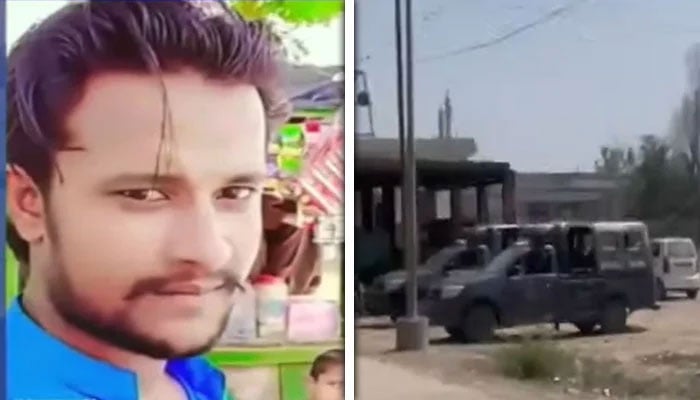
        The family of a young man who was killed in an alleged police encounter in the Kadhan area on the outskirts of Badin has raised serious objections to his post-mortem report, alleging that the report does not accurately reflect the condition of his body. The relatives of the deceased, identified as Moharram Dil, have declared the post-mortem report to be fake and demanded that his grave be exhumed so that a fresh post-mortem examination can be conducted. The family has called for an impartial investigation into the circumstances surrounding his death and the preparation of the medical report. Moharram Dil’s father said that there were no visible signs on his son’s body indicating that it had been cut open for a post-mortem examination. He said that when the body was being washed before burial, the family observed gunshot wounds but did not see any other marks that would suggest that a post-mortem had been performed. The father said that the family also possesses video recordings of his son’s body taken before the burial. According to him, these videos could provide important evidence regarding the condition of the body and may help determine whether the post-mortem examination described in the official report actually took place. The controversy has emerged over the timing and circumstances of the post-mortem report. Moharram Dil was reportedly killed in an alleged police encounter on July 26, while his post-mortem report was issued five days later, on July 31, by the Rural Health Centre. The family has questioned the circumstances under which the examination was conducted and how the report was prepared. Their demand for exhumation is aimed at obtaining a new medical examination that could independently establish the cause and circumstances of the young man’s death. Badin District Health Officer (DHO) has provided an explanation regarding who can conduct a post-mortem examination. According to the DHO, if a medico-legal officer is not available, the medical superintendent or a senior duty doctor can perform the post-mortem. The clarification comes amid questions raised by the family regarding the validity of the medical report. The authorities may now face pressure to determine whether the procedure was conducted according to the relevant medical and legal requirements. Police, meanwhile, maintain that Moharram Dil was a drug dealer who was killed during a police encounter on July 26. According to the police version, an exchange of fire took place between the police and the alleged drug dealer, during which Moharram Dil was killed. Police also claimed that two officers were injured during the encounter. The law enforcement authorities have presented the incident as an armed confrontation, while the deceased’s family has challenged the official account and raised doubts about the circumstances surrounding his death. The conflicting accounts have increased calls for an independent investigation. The family believes that a fresh post-mortem could help establish whether the injuries on the body correspond with the police account and whether the original medical report was prepared accurately. The demand for exhumation and a second post-mortem is now at the centre of the controversy. The videos reportedly recorded before the burial could also become relevant if an investigation is launched. The case has raised broader questions about transparency in alleged police encounters and the importance of properly documented medico-legal procedures. A fresh examination, if authorized, could provide additional evidence and help address the concerns raised by the deceased’s family.

  • | |

    Gold prices surge by Rs13,700 per tola in Pakistan

    Gold prices in Pakistan surged sharply on Thursday, rising by Rs13,700 per tola as international bullion prices recorded a strong increase. According to the All-Pakistan Gems and Jewellers Sarafa Association (APGJSA), the price of gold increased to Rs471,936 per tola, compared with Rs458,236 recorded on the previous day. The price of 10 grams of gold also climbed significantly, increasing by Rs11,746 to Rs404,609. The sharp increase in local gold prices came alongside a major rally in the international bullion market. International gold prices rose by $137 per ounce to $4,495, providing strong upward momentum to domestic prices. The latest increase follows significant fluctuations in Pakistan’s gold market over the past several trading sessions. On Wednesday, local gold prices had declined by Rs3,700 per tola despite a strong rise in international prices. The rate had fallen to Rs458,236 per tola, while 10 grams of gold were priced at Rs392,863. On Tuesday, gold prices remained unchanged at Rs461,936 per tola. Earlier on Monday, the precious metal had gained Rs2,000 per tola, reaching Rs461,936. The latest movement highlights the volatility currently being witnessed in the precious metals market. International bullion prices remain a key factor influencing gold rates in Pakistan, while local prices can also be affected by currency movements and domestic market conditions. Silver prices also recorded a substantial increase on Thursday. According to APGJSA figures, the price of silver rose by Rs317 per tola to Rs7,169. The price of 10 grams of silver also increased by Rs317 to Rs6,146. The sharp rise in gold prices is likely to attract renewed attention from investors, jewelers and consumers who closely monitor precious metal rates. Gold is often considered a store of value, making significant price movements particularly important for investors and households. With international gold prices reaching $4,495 per ounce and the local rate crossing Rs470,000 per tola, market participants will be closely watching the next trading sessions for signs of whether the rally will continue or prices will experience another correction.

  • | |

    Federal constitutional court overturns 16-year-old…

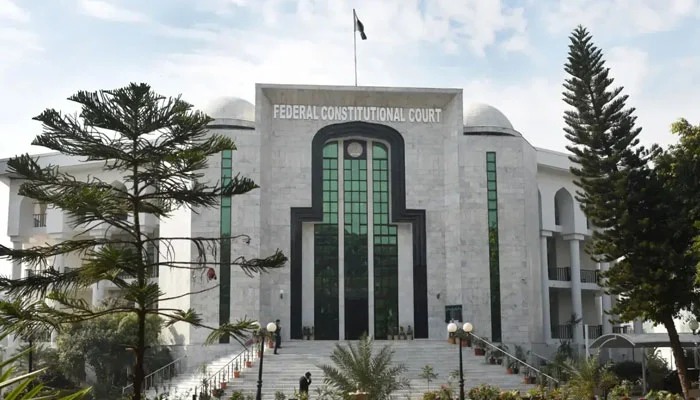
    Pakistan’s Federal Constitutional Court (FCC) has overturned a 16-year-old Supreme Court ruling concerning land acquisition and claims for additional compensation, delivering a significant judgment on the legal rights of landowners. A three-member bench headed by FCC Chief Justice Amin-ud-Din Khan announced the decision on review petitions challenging the Supreme Court’s 2010 majority judgment. Justice Ali Baqar Najafi and Justice Syed Arshad Hussain Shah were also members of the bench. The 47-page judgment, authored by Chief Justice Amin-ud-Din Khan, held that parts of the Supreme Court’s earlier decision in the Sadaqat Ali Khan case were not legally sustainable. The court ruled that a landowner who accepts compensation without raising an objection cannot subsequently claim additional compensation. It also held that a landowner who fails to file a reference within the prescribed legal period cannot later seek additional compensation. Another important finding was that landowners who were not parties to earlier proceedings cannot automatically claim the benefit of higher compensation awarded to other landowners through court proceedings. The Federal Constitutional Court observed that the Land Acquisition Act, 1894 provides a comprehensive legal framework for land acquisition and determination of compensation. Anyone seeking additional compensation must follow the procedure established under the law. According to the judgment, once the prescribed period for legal proceedings expires, the award issued by the Land Acquisition Collector becomes final. Courts cannot use their powers to bypass mandatory statutory requirements. The court further clarified that the principle of equality under Article 25 of the Constitution cannot eliminate statutory limitation periods or mandatory legal conditions. Similarly, the power to do complete justice cannot be used to create a new legal right that does not exist under the relevant law. The Supreme Court’s 2010 majority ruling had extended the benefit of additional compensation to certain landowners who were not parties to the original proceedings. The National Highway Authority chairman and other authorities subsequently challenged the ruling through review petitions. The Federal Constitutional Court accepted the review petitions filed by the concerned authorities and also allowed related civil appeals. Decisions of the Peshawar and Lahore High Courts concerning additional compensation were consequently set aside, while the original orders of the Land Acquisition Collectors and other competent authorities were restored. However, Justice Syed Arshad Hussain Shah’s additional note clarified that additional compensation already paid in good faith under the earlier judgment cannot be recovered. Recovery would not be permissible where the money was obtained without fraud, misrepresentation or an unlawful method. The ruling could have significant implications for future land acquisition and compensation disputes by emphasizing statutory procedures, legal deadlines and the finality of compensation awards.

  • Low breastfeeding linked to child deaths

    Bottle feeding and the use of formula milk are becoming more common in Pakistan while breastfeeding rates remain low. Health experts have warned that this trend may be putting many young children at greater risk of illness and death. Experts at a media workshop held at the Karachi Press Club said only about one in five newborn babies in Pakistan receives breast milk within the first hour after birth. According to experts from the Sindh Institute of Child Health and Neonatology around 33,700 child deaths every year in Pakistan are linked to inadequate breastfeeding. Many of these deaths are connected to illnesses such as diarrhea and pneumonia which can often be prevented or treated. Many babies do not get exclusive Breastfeeding Health experts said only around 48% of babies under six months are exclusively breastfed in Pakistan. Children who are not breastfed may face a much higher risk of serious infections and other health problems. Experts strongly recommend starting breastfeeding within the first hour after birth and giving babies only breast milk for the first six months unless a doctor advises otherwise. Families should support new mothers Experts stressed that breastfeeding should not be seen as the mother’s responsibility alone. Fathers, families doctors hospitals and workplaces all have a role in helping mothers breastfeed successfully. Providing mothers with proper support time and a comfortable environment can help more babies receive the benefits of breast milk and contribute to a healthier generation.

  • Aitzaz Ahsan calls for broader movement and empowered district governments

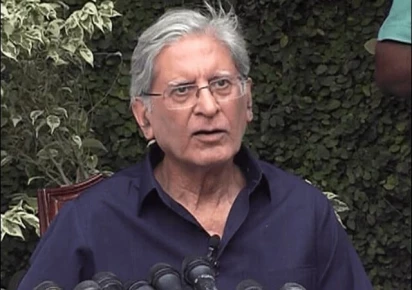
    Lahore: Senior leader of the Pakistan People’s Party, Chaudhry Aitzaz Ahsan, has said that we are eating our future generations, there is a need for an organized and broader movement in Pakistan, if we remain divided into sects and castes, there will be no production. If the potential is wasted now, Pakistan will suffer. He expressed these views while addressing a discussion on the topic of “More provinces or empowered district governments” organized by the People’s Information Bureau and Bhutto Shaheed Foundation at the SAIFMA Auditorium. The moderators were Bushra Manzoor Maneka and Ahmed Ghuman. The ceremony was also addressed by Shahzad Saeed Cheema, Imtiaz Alam, Barrister Aamir Hassan, Khan Asif Khan, Ahmed Owais, Brigadier (R) Dr. Amin Amir Bahadur Hoti, Intikhab Hanif. On this occasion, Faiza Malik Bushra Malik, Sadia Sohail, Dr. Farid Zakaria, Sania Kamran, Fatima Malhi, Aamir Naseer Dozens of PPP workers including Butt, Chaudhry Riaz, Mian Atiq, Rao Shujaat, Wajid Ali Shah were present. Addressing the discussion, the former Federal Interior Minister said that from August 14 till today, we have not seen any change in the British system except the change of the flag. He said that local bodies are not a substitute for anyone, elections should be held for them. Chaudhry Aitzaz Ahsan said that unfortunately, Pakistan has a debt of 150 billion dollars. In which a ship worth 12 billion also has to come, the PPP also spends lavishly, we will have to tighten the belt tied around our stomach. He said that the problems are so serious that we have made our neighbors enemies, let’s go after looking at the international interest of the country, otherwise we will have to sing their song. Today, the state has become a stepmother. One party is being beaten. Pakistan People’s Party Central Punjab Information Secretary Shahzad Saeed Cheema said that the 73rd unanimous constitution of Pakistan is a social contract, except for the 18th amendment, there are and will be question marks on the motives of every legislation. He said that everyone admits that whose thumb is on the neck of the parliament, there is a big difference between the choice of an individual and a book. Shahzad Saeed Cheema said that our problem is not authority, the problem is the distribution of authority. Imtiaz Alam said that the country was divided but the mandate of the people was not accepted, Imtiaz Alam clarified that national units are constitutional units from which a federation is formed, the main problem of Pakistan Authority-run system. He asked. Have the provinces become empowered after the 18th Amendment? The Joint Interests Council has not met for the last 2 years. He said that we are not ready to give municipal power to the Kashmiris and have gone to hold local body elections. Two provinces are already unstable and now they want to do the same for Sindh. Imtiaz Alam said that the military brothers should do their work, Pakistan is becoming administratively ungovernable. Birsatar Aamir Hassan said that our state institutions are working, right? Local governments, we have received the gifts of democracy from General Zia. He emphasized that Asif Zardari has taken out the N from the N, which has given 17 budgets. The People’s Party is the founder of the constitution, the same constitution put Bhutto on the throne. He said that if there is no rule of law, then what is the use? The People’s Party has not come through any Faiz Hameed nor has it been raised by any Hameed. He emphasized that Provinces should be formed constitutionally. Dividing ideas is not a child’s play. Barrister Aamir Hassan said, “We have been struggling since 1988. Don’t tell us Form 47. You are still a school child.” He said that it is impossible to become Zulfikar Ali Bhutto in history and it is difficult to become Asif Zardari. President Zardari gave powers to the parliament, the parliament gave powers to the provinces, now the provinces have given powers to the district governments. Barrister Aamir further said that abusing the army will not work. We have learned this by sacrificing our lives, we invite them to do politics, otherwise the people are helpless against politics, the 8houses and those whose names they cannot name. Dr. Amin said that the army does not come without the support of political parties, we are all Pakistanis, otherwise the issue of new provinces should become Kalabagh Dam. PTI leader Ahmed Owais said that a system is running in Pakistan without the constitution and law, here you cannot express your opinion, there is a ban on speaking and listening. Pakistan English media Associations (PEMA) representative and senior journalist Intikhab Hanif said all steps in Pakistan have been taken by the sitting regimes. And have been reversed after a change in government which has cost dearly to the country. No one is allowed the discuss the pros and cons of policy during a regime. And those supporting it start finding faults in the policy after the regime is over. Please make state policies in consultation with all stakeholders so that they are owned and continued by the succeeding regimes.


  • Three women killed in Faisalabad firing, IG Punjab orders arrests

    Lahore – Inspector General of Police Punjab Abdul Kareem has taken notice of the incident in which three women were killed and one was injured in firing over an old enmity at the makeshift tents of nomads in Samanabad, within the jurisdiction of Airport Police Station, Faisalabad. He has sought a report from RPO Faisalabad. IG Punjab has directed CPO Faisalabad to ensure the immediate arrest of the suspects involved in the firing, stating that all available resources should be utilized to apprehend the accused. Punjab Police spokesperson said that senior police officers and forensic teams reached the crime scene and collected evidence. CPO Faisalabad said that special teams have been constituted to arrest the suspects and they will be apprehended soon.