National

  • | | |

    KP makes registration mandatory for street vendors

    PESHAWAR: The Khyber Pakhtunkhwa Assembly has passed the Street Vendors Protection Bill 2026, making registration and vending certificates mandatory for people operating carts and roadside stalls across the province. The new law is expected to provide legal protection to more than 140,000 street vendors for the first time. Under the legislation, individuals aged 14 years and above will be eligible to register as street vendors. All vendors will be required to complete registration and obtain a valid vending certificate. Registered vendors will receive a modern digital vending certificate containing a QR code. The certificate is intended to formally recognise vendors and provide them with legal protection while carrying out their businesses. The law provides protection against unjustified eviction and harassment. Government employees found harassing street vendors could face strict departmental action. The legislation also introduces penalties for members of the public or shopkeepers who harass vendors. A person found guilty could face a fine of up to Rs20,000 or imprisonment for up to one month. Vendors will also have the right to appeal if their vending certificates are suspended or cancelled. The law prohibits vendors from selling or transferring their vending certificates to another person. Anyone violating this provision could face a fine of up to Rs3,000. The legislation also highlights the economic contribution of street vendors to the province. According to the bill, vendors collectively generate more than Rs380 billion in economic activity every year. The informal vending sector is estimated to contribute around Rs130 billion annually to the national economy. The government expects that better regulation and management of the sector could generate an additional Rs2.5 billion to Rs5 billion in annual revenue. The new legislation aims to bring the informal vending sector under a formal regulatory framework while providing vendors with legal recognition and protection.


  • | |

    Fawad urges Imran Khan’s immediate hospital tran…

    Former federal minister Fawad Chaudhry has called for the immediate end of Pakistan Tehreek-e-Insaf (PTI) founder Imran Khan’s solitary confinement and urged authorities to shift him to a hospital following recommendations in his latest medical report. In a statement posted on social media platform X, Chaudhry expressed concern over Imran Khan’s health and conditions at Adiala Jail. He said the medical report made it necessary for authorities to end the former prime minister’s solitary confinement and provide him with better medical facilities. Chaudhry criticised the decision to keep Imran Khan in isolation and alleged that denying adequate medical care to a major political leader was unacceptable. He urged the authorities to follow the recommendations of medical experts and ensure that all necessary treatment and facilities were provided without delay. A medical report submitted to the Supreme Court reportedly contains recommendations from a medical board that examined Imran Khan at Adiala Jail. According to the report, the medical board recommended several measures to help manage Imran Khan’s blood pressure and anxiety. The doctors recommended that the former prime minister be allowed to walk for at least one hour every day. The board said some relaxation in the prison environment was necessary in view of his current health condition. The medical team also recommended providing Imran Khan with newspapers, magazines, books and television facilities. The measures are intended to keep him mentally engaged during his imprisonment. The medical board also made recommendations regarding his meetings with family members and his wife. It suggested that meetings with his family and wife should take place more regularly and for longer than the currently prescribed duration, subject to the applicable rules. According to the recommendations, regular physical activity, access to reading material and greater interaction with family members could help reduce Imran Khan’s anxiety and assist in keeping his blood pressure under control. Fawad Chaudhry has called on the authorities to implement the medical recommendations and ensure that Imran Khan receives appropriate treatment and a suitable environment during his imprisonment.

  • | |

    Pakistan’s Cnergyico ramps up US crude purch…

    Cnergyico, Pakistan’s largest oil refiner, has increased its purchases of US crude as the federal government works to diversify the country’s energy supply following disruptions tied to the war in Iran that exposed how heavily Pakistan depends on Gulf shipping routes. The government is also pushing to expand imports from the United States as part of a broader effort to narrow its trade surplus with Washington and secure relief from tariffs imposed by President Donald Trump. Cnergyico, which made its first purchase of US crude last year, is now weighing spot purchases alongside longer term supply contracts with Vitol and other suppliers, basing those decisions on pricing, reliability and supply security, Vice Chairman Usama Qureshi said. The refiner imported roughly 8.1 million barrels of US crude over a nine month stretch, including 7.1 million barrels worth about $750 million during the fiscal year that ended in June, according to Qureshi. Central bank data showed Pakistan’s payments for US imports climbed by $914 million to reach $3.27 billion during that fiscal year, meaning Cnergyico’s crude purchases accounted for roughly 80 percent of that overall increase. Qureshi said the refiner could expand its US crude purchases further if Pakistan’s proposed EXIM Bank trade finance facility gets extended to Cnergyico. Islamabad pitched that facility last month as a mechanism allowing Pakistani buyers to delay payments to US exporters for as long as three years. Pakistan has traditionally sourced most of its oil from Saudi Arabia and the United Arab Emirates, with roughly 90 percent of its oil and liquefied natural gas imports passing through the Strait of Hormuz before the war disrupted that route. Rising fuel costs have added pressure on Islamabad to respond, particularly as fresh protests over inflation and fuel prices broke out this week. The government has also pursued alternative supply routes, including Saudi crude delivered via the Yanbu port on Saudi Arabia’s Red Sea coast. Qureshi said Cnergyico is evaluating construction of a second offshore mooring facility linked to its existing storage network, which would allow the company to import and export refined products using large tankers outside Karachi’s congested ports. That project forms part of a broader $1.2 billion upgrade aimed at meeting Euro V fuel standards, reducing furnace oil output and expanding refining capacity to around 200,000 barrels per day. Fawad Basir, head of research at KTrade Securities, said the disruptions in the Middle East have underscored the risks of relying on a single supply corridor. He said using Very Large Crude Carriers to import US oil could reduce freight costs by 25 to 30 percent, while adding a second Single Point Mooring facility would speed up vessel turnaround times. Cnergyico currently processes 156,000 barrels of crude per day and operates Pakistan’s only single point mooring terminal near Karachi, giving it the unique ability among the country’s refiners to handle large tankers directly. The company plans to build a second offshore terminal to accommodate larger or more frequent shipments and intends to upgrade its refinery over the next five to six years. The refiner, which has been running at an average utilization rate of just 30 to 35 percent amid weak domestic demand, is betting that demand for refined oil products will strengthen in the years ahead.

  • | |

    Sindh government spokesperson accuses Hafiz Naeem …

      Sindh government spokesperson Sadia Javed has accused Jamaat-e-Islami Pakistan Emir Hafiz Naeem ur Rehman of distorting the context of what she described as sincere national agreements reached in the past. In a statement issued from Karachi, Sadia Javed said that Hafiz Naeem was presenting previous national agreements in a misleading manner. She criticised the Jamaat-e-Islami leader for allegedly attempting to portray past understandings between political stakeholders in a way that did not reflect their original spirit or context. She questioned Hafiz Naeem’s position on electricity generated from Thar coal, asking why he remained silent about what she described as some of the cheapest electricity being produced through the country’s indigenous coal resources. “Why is Hafiz Naeem silent on the inexpensive electricity generated from Thar coal?” she questioned, while responding to his criticism of the Sindh government and the Pakistan Peoples Party (PPP). Sadia Javed also strongly rejected what she described as allegations against the Sindh government, saying that Hafiz Naeem had no justification for issuing what she termed “mafia certificates” to others. She challenged the Jamaat-e-Islami leader to examine his own political record before making accusations against others. According to her, political leaders should first reflect on their own actions and positions before questioning the credibility or performance of others. The Sindh government spokesperson further defended the provincial government’s policies and highlighted the importance of Thar coal in meeting Pakistan’s energy requirements. She suggested that criticism of the provincial government should be based on facts and a complete understanding of the agreements and projects under discussion. Another Sindh government spokesperson, Ghanhor Khan, also criticised Jamaat-e-Islami and Hafiz Naeem, accusing them of making allegations based on what he described as political hypocrisy. Ghanhor Khan said that making accusations against the PPP over the issue of Independent Power Producers (IPPs) was part of what he called Jamaat-e-Islami’s unsuccessful political strategy. He argued that the party was attempting to use the controversial issue of IPPs to create political pressure against the PPP and the Sindh government. The dispute comes amid renewed political debate over Pakistan’s electricity sector, particularly the cost of power generation, agreements with IPPs and the role of domestic energy resources. Political parties have frequently criticised successive governments over electricity prices, power-sector contracts and energy policies. The Sindh government has continued to highlight Thar coal as an important component of its energy strategy, while its political opponents have raised questions about governance, transparency and the broader impact of energy-sector agreements. The exchange between the Sindh government and Jamaat-e-Islami reflects growing political tensions over energy policy and the interpretation of past agreements. While Hafiz Naeem has criticised the government’s handling of the power sector, Sindh government representatives have rejected his allegations and questioned the consistency of his political position. Both sides have continued to defend their respective positions, with the Sindh government emphasising its energy initiatives and Jamaat-e-Islami maintaining its criticism of the power-sector policies.

  • | |

    Former Pakistan test cricketer Basit Ali hospitali…

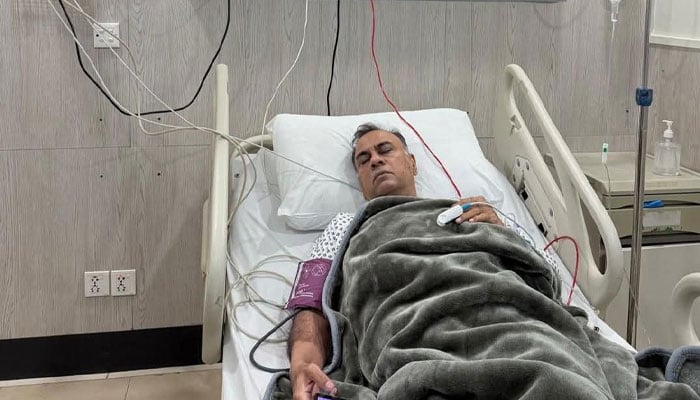
      Former Pakistan Test cricketer Basit Ali has been hospitalized after experiencing a heart-related health issue. The 55-year-old former international cricketer was taken to a private hospital, where doctors are currently treating him. According to Basit Ali’s wife, the former cricketer was brought to the hospital for an angioplasty procedure. She said that Basit Ali is currently under medical care and that doctors are monitoring his condition. Further details about his health are expected to emerge following the treatment. Basit Ali is a well-known former Pakistani cricketer who represented the national team during the 1990s. He was regarded as a talented middle-order batsman and became known for his aggressive approach at the crease. During his international career, he represented Pakistan in both Test and One Day International cricket. Basit Ali played 19 Test matches for Pakistan, scoring 858 runs. In the longer format, he was part of the national side during a period when Pakistan had a highly competitive cricket team and several established international batsmen. In One Day International cricket, Basit Ali represented Pakistan in 50 matches and scored 1,265 runs. His ability to score quickly and play attacking strokes made him a notable member of Pakistan’s limited-overs squad. The former cricketer’s hospitalization has drawn attention from the Pakistani cricket community, with fans and former players expressing concern over his health. His family has confirmed that he is receiving treatment at the private hospital. Angioplasty is a medical procedure commonly used to restore blood flow through narrowed or blocked arteries. During the procedure, doctors generally open the affected blood vessel to improve circulation. The decision to perform angioplasty depends on the patient’s medical condition and the assessment of the treating doctors. Basit Ali’s illness comes as a reminder of the importance of timely medical attention when symptoms related to the heart occur. His family brought him to the hospital for treatment, where specialists are currently attending to him. Born in Karachi, Basit Ali made his international debut for Pakistan in the early 1990s. Although his international career was relatively short, he remained a familiar figure in Pakistani cricket. Following his playing career, he continued to remain associated with the sport through cricket-related activities and analysis. His experience as a former international player has also allowed him to remain connected with Pakistan’s cricketing circles. Over the years, he has regularly shared his views on Pakistan cricket and the performances of national players. The cricket fraternity is now awaiting further updates regarding his condition. His family has requested prayers and good wishes as he undergoes treatment. At present, Basit Ali remains under medical supervision at the private hospital. His wife has confirmed that he was admitted for angioplasty and that treatment is underway. Fans and cricket supporters across Pakistan are hoping for his speedy recovery and a return to good health.

  • | |

    Overseas Pakistanis welcome proposal for creation …

      Overseas Pakistanis have welcomed the proposal to create new provinces in the country, describing it as a positive step toward improving administrative efficiency, strengthening governance and bringing public institutions closer to citizens. Rajah Nasir Hussain, a representative of overseas Pakistanis and a prominent businessman from Gujar Khan, expressed his support for the proposal . He said the idea of creating seven provinces should be considered alongside the establishment of an eighth province comprising Islamabad and the Potohar region. According to Hussain, the creation of new provinces could help address administrative challenges and improve the delivery of public services. He stressed, however, that any decision regarding the creation of new provinces should be made through constitutional amendments and broad political consensus. He said the issue should not be treated as a matter of political rivalry or regional competition. Instead, it should be viewed as an administrative reform aimed at improving governance and ensuring that citizens in different parts of the country receive better access to state institutions and public services. Hussain also highlighted the important role played by overseas Pakistanis in the national economy. He said millions of Pakistanis living and working abroad contribute significantly to the country through remittances. The funds sent by overseas Pakistanis provide vital support to Pakistan’s economy and help strengthen the country’s financial system. He noted that overseas Pakistanis continue to make economic contributions despite living outside the country. Their remittances support families, increase foreign exchange inflows and contribute to economic stability. In his view, their role should therefore be recognised not only in economic terms but also through greater representation in the country’s administrative and political framework. Hussain argued that the government and political leadership should explore new mechanisms through which overseas Pakistanis can participate more effectively in national affairs. He said their experience of living and working in different countries gives them exposure to modern administrative systems, business practices and governance models that could potentially benefit Pakistan. He further suggested that overseas Pakistanis should have greater opportunities to contribute to policy discussions concerning economic development, investment, governance and administrative reforms. Their participation, he said, could help policymakers understand international practices and identify approaches that may be adapted to Pakistan’s circumstances. Regarding the proposed new provinces, Hussain emphasised the importance of consultation among all stakeholders. He said political parties, provincial governments, civil society, constitutional experts and representatives of the affected regions should be involved in the discussion before any final decision is taken. He maintained that the creation of provinces should be based on administrative requirements, population, geographical considerations, economic viability and the interests of local communities rather than short-term political objectives. The proposal to consider Islamabad and Potohar as an eighth province, he said, should also be examined within this broader framework. Such a move, if supported by constitutional and political consensus, could potentially improve administrative management and representation in the region. Hussain reiterated that overseas Pakistanis support reforms aimed at strengthening the country’s administrative structure. He said the debate over new provinces provides an opportunity to consider broader governance reforms while ensuring constitutional procedures and national consensus. He concluded that overseas Pakistanis should be regarded as important stakeholders in Pakistan’s future. Given their economic contributions and national role, developing effective mechanisms for their political and administrative representation should be considered a priority alongside wider institutional reforms.

  • | | |

    ISPR calls India’s ‘Operation Sindoor&…

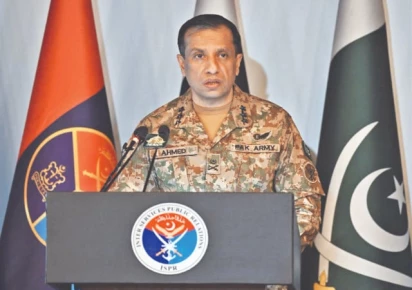
    Pakistan has strongly rejected what it described as India’s attempt to reshape the history of the 2025 military confrontation through a recently produced documentary on “Operation Sindoor,” calling the production a highly dramatized and factually distorted portrayal of events. In a statement, Pakistan said the documentary relied on selectively edited interviews, emotional narration and cinematic reconstructions to present a version of the conflict designed primarily for domestic political consumption. It argued that the production failed to provide an objective account of the military engagements and instead sought to portray a disputed outcome as an unequivocal Indian victory. Pakistan also questioned the documentary’s chronology surrounding the Pahalgam incident of April 22, 2025. It said India had subsequently claimed that the alleged perpetrators of the incident were identified and eliminated on July 28, nearly three months after Operation Sindoor. Islamabad argued that this timeline raised questions about India’s assertion that the May 7 operation was specifically intended to punish those responsible for the Pahalgam attack. The statement further rejected India’s claim of “100 percent mission success,” maintaining that Pakistani forces had effectively responded to the Indian offensive during what Pakistan refers to as Marka-e-Haq. Islamabad claimed that eight Indian military aircraft were shot down during the confrontation and said Pakistan later launched Operation Bunyanum Marsoos, targeting military installations with precision-guided rockets and missiles, precision air-launched munitions, loitering munitions and artillery. Pakistan said the documentary itself contained admissions that undermined its portrayal of decisive Indian dominance. According to Islamabad, references by Indian military officials to Pakistani missile and drone activity, prolonged engagements along the Line of Control and the activation of Indian air-defence systems demonstrated that the confrontation involved significant military exchanges on both sides. The Pakistani statement also challenged New Delhi’s account of how hostilities ended. It noted that the documentary acknowledged communication between the two countries’ Directors General of Military Operations and an agreed cessation of military activity. Islamabad said this account was inconsistent with portraying the conclusion of the conflict as an unconditional Indian military victory, particularly given the role of international diplomatic engagement in facilitating the ceasefire. Pakistan further accused the documentary of presenting contradictory explanations for India’s approach to escalation. While the production reportedly emphasised surprise attacks, precision strikes and escalation dominance, it simultaneously portrayed India as deliberately restricting the scope of the conflict and offering Pakistan an opportunity to withdraw. Islamabad described the documentary as an attempt to create a politically convenient narrative rather than an impartial military assessment. It maintained that cinematic reconstructions and official claims could not alter the chronology of events, the military engagements or the losses suffered during the confrontation. Pakistan said it had no need to construct an alternative narrative around Marka-e-Haq, arguing that battlefield developments, diplomatic interactions and subsequent statements by Indian officials provided sufficient material for assessing the conflict. Reaffirming its stated commitment to regional peace and stability, Pakistan said its armed forces remained prepared to protect the country’s sovereignty and territorial integrity. It warned that any future military escalation would receive a strong response, while asserting that no subsequent narrative or media production could change the actual course of events on the battlefield.

  • | |

    Torrential rain floods low-lying areas of twin cit…

    RAWALPINDI/ISLAMABAD: Torrential rainfall for the second consecutive day has inundated several low-lying areas of Rawalpindi and Islamabad, disrupting normal life and prompting authorities to step up emergency measures. According to the Managing Director of the Water and Sanitation Agency (WASA), Shamsabad received the highest rainfall, with 116 millimetres recorded in the area. WASA has declared a rain emergency and cancelled the leave of field staff to ensure an immediate response to any emergency. Heavy machinery has been positioned at vulnerable locations, including Liaquat Bagh, Committee Chowk Underpass, Murree Road, Dhok Khuba, Circular Road and Sadiqabad, to accelerate drainage operations. The agency said the water level in Nala Lai had reached 10.5 feet at Katarian and 8.5 feet at Gowalmandi. Authorities are closely monitoring the situation as further rainfall could increase the risk of urban flooding in vulnerable areas. Moreover, Lahore is experiencing hot and humid weather, with the current temperature recorded at 31°C and the maximum expected to reach 35°C. The minimum temperature is likely to remain at 28°C, while humidity stands at 75 percent and winds are blowing at 6 kilometres per hour. The Meteorological Department has forecast heavy rainfall in Lahore from August 17 to 20 as part of the sixth monsoon spell, with rain expected across Lahore and other districts of Punjab until August 21. Authorities have warned of possible water accumulation in low-lying areas and urban flooding. In view of the forecast, WASA Lahore has been placed on high alert on the special directives of Punjab Chief Minister Maryam Nawaz Sharif. WASA Vice Chairman Chaudhry Shahbaz Ahmed, DG WASA Punjab Tayyab Fareed, and MD WASA Lahore Ghufran Ahmed have directed officials to ensure that all major roads and underpasses remain clear and drainage operations continue without interruption. DG WASA Punjab directed all field teams to remain fully mobilised, while MD WASA Lahore instructed officials to operate disposal stations on generators in areas facing power outages to ensure uninterrupted drainage operations. The WASA Vice Chairman directed officials to keep pumps at all disposal stations operational and ensure that screens are regularly cleaned to prevent blockages. MD WASA Lahore also directed all Town Directors to closely monitor their respective areas and take immediate action wherever necessary. Meanwhile, WASA Lahore has released the latest rainfall record, with 21mm recorded at the Nishtar Town Director Office, 2.2mm in Kahna and 25.4mm at the Nishtar Town Disposal Station. The Nishtar Town Disposal Station recorded the highest rainfall among the reported locations. Under the directives of MD WASA Lahore Ghufran Ahmed, continuous monitoring of drainage operations is underway, with field officers and staff remaining fully mobilised to ensure the timely disposal of rainwater. The Meteorological Department has also advised citizens to take precautionary measures during rainfall and avoid unnecessary travel. Relevant authorities have been directed to remain alert and take all necessary measures to deal with any emergency situation.

  • | |

    US awards Raytheon $22.9 billion deal to expand To…

    WASHINGTON: The US military has awarded Raytheon, a unit of RTX, a massive $22.9 billion contract to significantly increase production of Tomahawk cruise missiles as Washington moves to replenish stocks of advanced weapons. The Pentagon’s decision comes after the United States supplied substantial quantities of military equipment to its allies while also using large amounts of precision-guided munitions during the conflict with Iran. The heavy use of weapons has raised concerns over the country’s remaining inventories, particularly air-defence systems and precision-strike capabilities. Acting US Secretary of the Navy Hung Cao said the agreement would help the defence industry rapidly expand ammunition production and ensure that American forces maintain sufficient combat capabilities. The contract represents one of the largest recent investments in Tomahawk production and underscores Washington’s effort to strengthen its weapons reserves amid growing global security challenges. Moreover,  The United States has approved the sale of advanced Tomahawk cruise missiles and Typhon ground-based launchers to Germany, marking a major step in strengthening bilateral defense cooperation and significantly enhancing NATO’s military capabilities in Europe. According to international media reports, the announcement followed high-level discussions held during the NATO summit, where German Chancellor Friedrich Merz described meetings with US officials as more productive than expected. He confirmed that Germany had reached an agreement with Washington to purchase the long-range missile system and eventually deploy it on German territory. The decision is widely seen as a strategic move to close a key gap in Germany’s long-range strike capabilities at a time of growing security concerns across Europe. Speaking after the summit, the German chancellor said the acquisition would strengthen the country’s defense posture while complementing broader European efforts to modernize military infrastructure and improve collective deterrence against emerging threats. Reports indicate that the US government signed a Letter of Intent earlier this week, assuring Berlin that formal approval for the sale of the Tomahawk missiles and Typhon launchers is expected to be finalized in August. German officials, however, declined to reveal how many missiles or launchers the country intends to purchase, citing national security and operational sensitivity. Defense sources said details regarding the size of the deal remain classified. The Tomahawk is one of the world’s most advanced long-range cruise missiles, capable of striking targets with exceptional precision hundreds of kilometers away. The missile has been extensively used by the US military in multiple operations and is valued for its ability to engage strategic targets while minimizing collateral damage. The Typhon launcher is a mobile ground-based missile system designed to fire multiple types of long-range precision weapons, providing greater operational flexibility and rapid deployment capabilities. Defense analysts believe the agreement reflects NATO’s broader strategy to reinforce its eastern flank and improve Europe’s long-range strike capacity amid an increasingly complex security environment. The move is also expected to deepen defense cooperation between Washington and Berlin while accelerating Germany’s military modernization program. Although officials have not disclosed a delivery timeline, the proposed acquisition is already being viewed as one of Germany’s most significant defense procurement decisions in recent years. Analysts say the deployment of Tomahawk missiles on German soil could reshape Europe’s strategic military balance, strengthen NATO’s deterrence posture and send a strong signal of allied unity as the alliance continues adapting to evolving geopolitical challenges.

  • | | |

    Pakistan strikes landmark offshore gas find

    KARACHI: Pakistan has recorded a significant breakthrough in hydrocarbon exploration with the discovery of high-quality gas from a new petroleum play. Pakistan Petroleum Limited (PPL) announced that its exploration well, Dolphin, drilled in the company-operated Sarani Block in Sujawal district, Sindh, has yielded a major gas discovery. The find marks the first hydrocarbon discovery from the Jurassic-age Chiltan Formation in the Lower Indus Basin, according to PPL. The company said the discovery confirms the existence of an active petroleum system and could open fresh opportunities for exploration in the onshore swamp region and its potentially prospective shallow marine extensions.