National

  • | | |

    Oil prices surges avove $91 as Iran war fuels Horm…

    Oil prices climbed on Tuesday, with Brent crude moving above $91 a barrel as stalled diplomacy over the Iran conflict raised fresh concerns about global energy supplies. Brent futures gained 27 cents, or 0.3%, to $91.14 a barrel, while US West Texas Intermediate rose 42 cents to $85.04. WTI had earlier reached $85.37, its highest level since July 31. Markets remained tense after Iran signalled a shift toward a more offensive military posture, while Washington ruled out extending a temporary ceasefire. Progress toward reopening the Strait of Hormuz to normal tanker traffic has also slowed, adding to fears of prolonged supply disruptions. Only a handful of commodity vessels crossed the strategic waterway over the weekend, sharply below normal traffic levels. Concerns were further heightened by attacks in the Red Sea, reinforcing fears over disruptions at both the Strait of Hormuz and Bab el-Mandeb. Despite the growing tensions, reports of possible back-channel contacts between the US and Iran offered a limited sign of hope for renewed diplomacy. Meanwhile, markets are also watching US crude inventories, which are expected to have declined last week. Earlier, Oil prices climbed on Monday as uncertainty over a possible diplomatic breakthrough between the United States and Iran increased, while a sharp slowdown in tanker movements through the Strait of Hormuz heightened concerns about disruptions to global crude supplies. Brent crude futures gained as much as 1% during early trading to reach $89.40 per barrel. The benchmark was later up 72 cents, or about 0.8%, at $89.20 a barrel by 0229 GMT. US West Texas Intermediate (WTI) crude also moved higher, rising 44 cents to $82.83 per barrel. Both international benchmarks posted gains of more than 5% last week after a series of attacks involving energy and shipping assets in and around the strategically important Strait of Hormuz. The incidents have intensified fears that further escalation could affect one of the world’s most important oil transit routes. Market sentiment was further affected by developments over the weekend, when Iranian Foreign Minister Abbas Araqchi said Tehran had yet to decide whether it would resume negotiations with Washington. US President Donald Trump, meanwhile, told Americans to prepare for somewhat higher gasoline prices as the conflict continues. Analysts said the renewed uncertainty had brought geopolitical risk back into crude markets after oil prices had previously come under pressure on expectations that diplomatic efforts could ease tensions. “Oil prices have now rebounded almost completely from the lows seen in early August, as hopes for a more permanent resolution between the US and Iran have faded and geopolitical risk premiums have returned to the market,” said Priyanka Sachdeva, head of market insights at Phillip Nova in Singapore. Sachdeva cautioned, however, that the rally could lose momentum unless there is evidence of a further deterioration in the situation. She said the market would need to see renewed aggression in the Strait of Hormuz, particularly significant damage to oil tankers or energy infrastructure, before prices were likely to move substantially higher. Hormuz shipping activity slows Concerns over physical supply disruptions increased after ship-tracking data showed a marked decline in vessel traffic through the Strait of Hormuz over the weekend. According to data from Kpler, only five commodity vessels crossed the strategic waterway on Saturday, while no such transits were recorded on Sunday. This compared with 31 commodity vessel crossings during the previous weekend. The slowdown is significant because the Strait of Hormuz is a critical route for international energy shipments. Any prolonged disruption could increase transportation risks, raise insurance costs and place additional upward pressure on crude prices. The United Arab Emirates also accused Iran of attacking another vessel operated by Abu Dhabi National Oil Company (ADNOC) while it was passing through the strait on Friday, according to the Emirati state news agency WAM. The UAE had earlier blamed Iran for two separate incidents involving ADNOC-operated vessels on Thursday evening. The latest incidents have added to concerns among traders that the conflict could increasingly affect commercial shipping and energy infrastructure, rather than remaining confined to military and diplomatic confrontation. The Strait of Hormuz remains particularly important to global oil markets because a substantial volume of crude and petroleum products moves through the waterway. Any sustained interruption could therefore have consequences well beyond the region. For now, traders are closely monitoring developments involving US-Iran diplomatic contacts, attacks on shipping and the movement of tankers through the strait. While the latest price gains reflect a higher geopolitical risk premium, analysts remain cautious about predicting a prolonged rally. If shipping activity resumes and diplomatic channels reopen, some of the premium built into crude prices could quickly unwind. Conversely, additional attacks on tankers, oil facilities or other critical infrastructure could trigger a stronger market reaction and push prices higher as traders reassess the security of regional supplies.

  • | | |

    Pakistan Independence Day celebrated at New York C…

    NEW YORK: Pakistan’s Independence Day was celebrated at the historic New York City Hall this year in a landmark event highlighting the growing presence and contributions of the Pakistani-American community. The ceremony marked the first time that Pakistan’s Independence Day celebrations were held inside New York City Hall, making it a notable occasion for the Pakistani diaspora and a significant moment in Pakistan-US community relations. The event was jointly organised by New York City Council Speaker Julie Menin and Council Member Linda Lee, with support from the American Pakistani Advocacy Group (APAG). Pakistan’s Consul General in New York, Aamer Ahmed Atozai, addressed the gathering and praised APAG and the participating elected representatives for their efforts in arranging the historic celebration. He described the event as a proud and memorable moment for Pakistani-Americans and said holding the ceremony at City Hall reflected the organisers’ strong connection with Pakistan. A large number of Pakistani-Americans, elected officials, community representatives and members of the media attended the ceremony. Speaking at the event, Speaker Julie Menin acknowledged the valuable contributions of the Pakistani-American community to New York City. She highlighted the community’s role in the city’s development while maintaining strong ties with both Pakistan and the United States. Other lawmakers and speakers also commended the Pakistani-American community for its dedication, resilience and continued contributions. They highlighted its role as an important bridge between Pakistan and the United States and recognised its growing influence in the city’s civic, economic and social life. The historic celebration at New York City Hall underscored the increasing significance of the Pakistani-American community and its positive contributions to New York, while also highlighting the enduring people-to-people ties between Pakistan and the United States. Moreover, Pakistan’s diplomatic efforts to promote peace and stability, including its role in mediating during the recent US-Iran tensions, were highlighted at an Independence Day ceremony held at Pakistan House in New York. Speaking at the event, Pakistan’s Permanent Representative to the United Nations, Ambassador Asim Iftikhar Ahmad, said Pakistan had consistently sought peaceful solutions amid growing international instability and conflicts. He urged renewed commitment to the country’s founding principles, sovereignty, security, peace and socio-economic progress. The ambassador paid tribute to Quaid-e-Azam Muhammad Ali Jinnah, describing him as a visionary statesman whose leadership led to the creation of Pakistan. Reflecting on the country’s journey since independence, he praised the resilience and achievements of Pakistanis despite significant challenges. Ahmad also commended the armed forces for their sacrifices in defending the country and protecting its people, while recognising the achievements of Pakistanis abroad in fields ranging from innovation and sports to the arts. He reaffirmed Pakistan’s diplomatic and political support for the people of Indian Illegally Occupied Jammu and Kashmir and for the rights of Palestinians. He also stressed the importance of combating terrorism while advancing economic development and national progress. Consul General Aamer Ahmad Atozai also paid tribute to the leaders and workers of the Pakistan Movement, emphasising that freedom carries both a legacy and a responsibility. He highlighted the Pakistani-American community’s contributions through investment, remittances, philanthropy and expertise, describing it as an important bridge between Pakistan and the United States. The ceremony featured the hoisting of the Pakistani flag and the national anthem, while messages from Pakistan’s leadership were also read out. Addressing children at the gathering, Ambassador Ahmad described them as the country’s future and called for collective efforts to build a peaceful, prosperous and inclusive Pakistan. The event concluded with calls for greater national unity and continued commitment to peace, diplomacy and Pakistan’s progress on the global stage.

  • | |

    Tirah displaced families to convene grand jirga ov…

    KHYBER: Representatives of families affected by the situation in Tirah Valley will convene a grand jirga on August 20 at Bara Press Club to discuss their return, financial assistance and a future strategy for pursuing their demands. The gathering is being organised by Tehreek Mutasireen Tirah following a consultative meeting held on Sunday. A 24-member committee, along with elected representatives and a special representative of the Khyber-Pakhtunkhwa chief minister, has been invited to attend the jirga. Participants will review the difficulties faced by Tirah affectees and discuss arrangements for a safe and dignified return to their areas. The provision of financial assistance and other longstanding demands will also be taken up during the meeting. The jirga is expected to determine the group’s next course of action and decide how to press the government to address the concerns of affected families. During the earlier consultation, community leaders, political representatives, traders, doctors and tribal elders called on the government to ensure a secure and dignified return for the affected population and provide immediate financial support. Tehreek Mutasireen Tirah spokesman Sohbat Afridi said the group would pursue its demands through peaceful means, stressing that any future protest strategy would reflect the wishes of the affected residents and the wider community.

  • | | |

    Pakistan rejects Indian claims, calls allegations …

    ISLAMABAD: Pakistan has rejected allegations by Indian Home Minister Amit Shah linking Islamabad to the arrest of alleged terror suspects in India, describing the accusations as part of a politically motivated campaign against Pakistan. Foreign Office spokesperson Tahir Hussain Andrabi said the allegations were baseless and appeared aimed at shifting attention away from India’s own internal security challenges. He accused New Delhi of using anti-Pakistan rhetoric for domestic political purposes. The remarks followed claims by Shah that Indian security agencies had detained more than 200 suspected militants allegedly connected to Pakistan during a nationwide crackdown across 14 states on August 12. Shah said the suspects were linked to what he described as the Shahzad Bhatti Network and alleged that the arrests had prevented planned attacks. Rejecting the claims, Andrabi said Pakistan had repeatedly faced accusations that he described as part of an ongoing campaign to portray Islamabad as responsible for security problems inside India. The spokesperson also levelled counter-allegations against New Delhi, accusing India of suppressing minorities and dissent at home while allegedly supporting terrorism and destabilising activities abroad. He maintained that such accusations could not divert international attention from what Pakistan considers India’s involvement in terrorism and subversive activities. Andrabi referred to Indian national Kulbhushan Jadhav, who was convicted by a Pakistani military court and remains in Pakistani custody, as evidence of Islamabad’s longstanding allegations of Indian involvement in activities against Pakistan. Pakistan called on the international community to reject what it termed unfounded allegations and to hold India accountable for what Islamabad describes as state-sponsored terrorism and destabilising activities in the region. Moreover, Pakistan has strongly rejected what it described as India’s attempt to reshape the history of the 2025 military confrontation through a recently produced documentary on “Operation Sindoor,” calling the production a highly dramatized and factually distorted portrayal of events. In a statement, Pakistan said the documentary relied on selectively edited interviews, emotional narration and cinematic reconstructions to present a version of the conflict designed primarily for domestic political consumption. It argued that the production failed to provide an objective account of the military engagements and instead sought to portray a disputed outcome as an unequivocal Indian victory. Pakistan also questioned the documentary’s chronology surrounding the Pahalgam incident of April 22, 2025. It said India had subsequently claimed that the alleged perpetrators of the incident were identified and eliminated on July 28, nearly three months after Operation Sindoor. Islamabad argued that this timeline raised questions about India’s assertion that the May 7 operation was specifically intended to punish those responsible for the Pahalgam attack. The statement further rejected India’s claim of “100 percent mission success,” maintaining that Pakistani forces had effectively responded to the Indian offensive during what Pakistan refers to as Marka-e-Haq. Islamabad claimed that eight Indian military aircraft were shot down during the confrontation and said Pakistan later launched Operation Bunyanum Marsoos, targeting military installations with precision-guided rockets and missiles, precision air-launched munitions, loitering munitions and artillery. Pakistan said the documentary itself contained admissions that undermined its portrayal of decisive Indian dominance. According to Islamabad, references by Indian military officials to Pakistani missile and drone activity, prolonged engagements along the Line of Control and the activation of Indian air-defence systems demonstrated that the confrontation involved significant military exchanges on both sides. The Pakistani statement also challenged New Delhi’s account of how hostilities ended. It noted that the documentary acknowledged communication between the two countries’ Directors General of Military Operations and an agreed cessation of military activity. Islamabad said this account was inconsistent with portraying the conclusion of the conflict as an unconditional Indian military victory, particularly given the role of international diplomatic engagement in facilitating the ceasefire. Pakistan further accused the documentary of presenting contradictory explanations for India’s approach to escalation. While the production reportedly emphasised surprise attacks, precision strikes and escalation dominance, it simultaneously portrayed India as deliberately restricting the scope of the conflict and offering Pakistan an opportunity to withdraw. Islamabad described the documentary as an attempt to create a politically convenient narrative rather than an impartial military assessment. It maintained that cinematic reconstructions and official claims could not alter the chronology of events, the military engagements or the losses suffered during the confrontation. Pakistan said it had no need to construct an alternative narrative around Marka-e-Haq, arguing that battlefield developments, diplomatic interactions and subsequent statements by Indian officials provided sufficient material for assessing the conflict. Reaffirming its stated commitment to regional peace and stability, Pakistan said its armed forces remained prepared to protect the country’s sovereignty and territorial integrity. It warned that any future military escalation would receive a strong response, while asserting that no subsequent narrative or media production could change the actual course of events on the battlefield.

  • | |

    Trees today, healthier Pakistan tomorrow: Presiden…

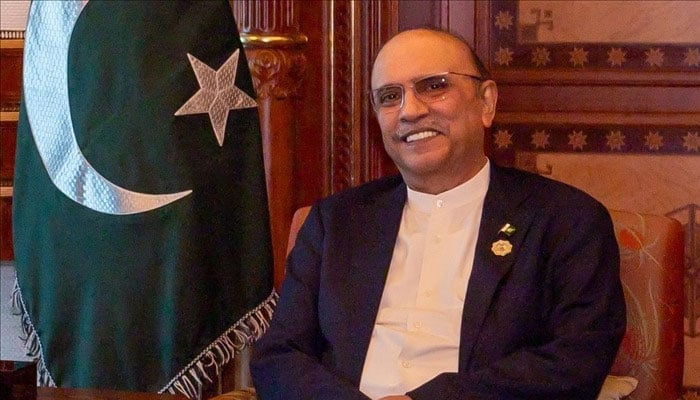
    President Asif Ali Zardari has stressed the need to protect trees and promote plantation across Pakistan. He said tree plantation is not only an environmental priority but also a national responsibility. In a message issued at the launch of the Monsoon Tree Plantation Campaign 2026, the president said the campaign aims to plant 20 million saplings across the country. He urged people and relevant institutions to actively participate in the plantation drive. He said increasing the country’s tree cover is essential for protecting the environment and improving the quality of life. President Zardari said forests play an important role in preserving biodiversity, water resources and the natural environment. Forests also help reduce the harmful effects of climate change. He stressed that Pakistan needs greater efforts to protect existing forests and increase the number of trees across the country. According to him, a stronger and healthier forest cover can help the country deal with rising environmental challenges. The president called for collective efforts to build a green, clean and climate-resilient Pakistan. He said government institutions, communities and citizens all have a role to play in protecting the environment. He also highlighted the importance of planting trees for future generations. He said the trees planted today will help provide a healthier and better environment for coming generations. The president’s message comes as Pakistan continues to face environmental challenges linked to climate change, changing weather patterns and pressure on natural resources. He said tree plantation should not be limited to seasonal campaigns. Continuous efforts are needed to protect trees, expand forests and ensure the survival of newly planted saplings. President Zardari said protecting the environment is a shared responsibility. He called for greater public awareness and participation in plantation activities to make Pakistan greener and more sustainable.

  • | | |

    PARCO, Cnergyico lead $1bn refinery exports

    Pakistan’s oil refining sector has achieved a major milestone. The country’s five major refineries exported petroleum products worth around $1.046 billion during the fiscal year 2025-26. This is the first time that the refinery sector has crossed the $1 billion export mark. The development has also strengthened the sector’s role as a source of foreign exchange for Pakistan. The achievement comes as the country continues to face pressure from a large trade deficit. Pakistan’s trade deficit is estimated at around $40 billion, increasing the importance of exports and import savings. The five major refineries made a significant contribution to the overall export earnings. Pakistan Arab Refinery Company (PARCO) recorded exports of around $277 million. Cnergyico Pakistan Limited exported petroleum products worth approximately $258 million. National Refinery Limited (NRL) recorded exports of around $238 million. Pakistan Refinery Limited (PRL) exported products worth approximately $200 million. Meanwhile, Attock Refinery Limited (ARL) exported petroleum products worth nearly $73 million. PARCO and Cnergyico remained the biggest contributors. Their combined exports reached approximately $535 million. This accounts for more than half of the total exports recorded by the five refineries. The development is particularly significant because the refining sector has traditionally been viewed mainly as a means of reducing Pakistan’s dependence on imported petroleum products. The latest figures show that the industry is increasingly contributing to both sides of the equation. It is helping reduce the import burden while also generating foreign exchange through exports. Cnergyico has also entered the global marine fuel market. The move could provide the company with new export opportunities and help expand Pakistan’s presence in the international fuel market. Industry modernization is expected to further improve the sector’s performance. Upgraded refinery facilities can increase production efficiency and enable companies to produce products that meet international market requirements. Further investment in refinery upgrades could therefore lead to higher exports in the coming years. It could also increase savings on petroleum imports. The latest performance highlights the growing importance of Pakistan’s refining industry. With continued modernization, better efficiency and access to international markets, the sector could become an increasingly important source of foreign exchange for the country. The development also comes at a critical time for Pakistan’s economy. Higher exports and lower import dependence are essential for reducing pressure on the country’s external account.

  • | |

    PTI leaders back JI sit-in, seek release of politi…

    Pakistan Tehreek-e-Insaf (PTI) leaders detained at Kot Lakhpat Jail have expressed support for Jamaat-e-Islami’s ongoing sit-in. A letter from the imprisoned PTI leaders was read out during the Jamaat-e-Islami protest. The letter was signed by senior PTI leaders Shah Mahmood Qureshi, Sarfraz Cheema, Dr Yasmin Rashid, Ijaz Chaudhry and Mahmood-ur-Rasheed. In their letter, the detained leaders appealed to the public to participate in the Jamaat-e-Islami sit-in. They urged citizens to support the protest and raise their voices on political and public issues. The support from the imprisoned PTI leaders comes as Jamaat-e-Islami continues its protest and demands action on issues highlighted by the party. The letter was presented to participants at the sit-in, conveying the PTI leaders’ position despite their detention at Kot Lakhpat Jail. Meanwhile, Jamaat-e-Islami Lahore has called for the release of all political prisoners. The party has also specifically demanded the release of PTI founder Imran Khan. Jamaat-e-Islami Lahore maintained that political prisoners should be released and called for political issues to be addressed through democratic and legal means.

  • | |

    More provinces or better governance? In Sindh, div…

    “Start With Punjab”: Saeed Sarbazi Calls for Pilot Model Karachi: Once again, the demand for new administrative units and provinces has been sparked — this time from within the government itself. Interior Minister Mohsin Naqvi’s recent statement has reignited the debate, raising questions about governance, service delivery, and political intent. Coming at a time when the current setup is widely described as a “hybrid system,” Naqvi is seen by many as representing the other partner in that arrangement. His call therefore carries weight beyond routine political rhetoric, forcing both parliament and the public to ask: is this about bringing the state closer to the people, or about redrawing Pakistan’s political map? MQM-P Backs Demand: “Engine of Pakistan’s Economy” The debate found immediate backing from MQM-Pakistan, which has once again strongly supported the idea of separating Karachi from Sindh. The party argues that the city, which generates the bulk of Pakistan’s revenue, should have control over its own resources so that what is earned in Karachi is spent on Karachi. Calling it the “engine of the entire Pakistan economy,” MQM-P maintains that an independent administrative setup for the metropolis is the only way to fix its decades-old issues of infrastructure, water, transport and governance. Sindh Government Rejects: “Dangerous Precedent” However, the Sindh government has strongly opposed the idea. Provincial leaders and ministers like Sharjeel Memon, Saeed Ghani and Nasir Hussain argue that carving out Karachi from Sindh will only deepen existing fault lines and promote hate and division among communities. They maintain that Karachi is an integral part of Sindh’s history, culture, and economy, and that separating it administratively would set a dangerous precedent for the federation. For them, the solution lies in better governance and resource allocation within the existing provincial structure, not in division. PML-N Opposition: “Will Never Be Approved” The Pakistan Muslim League-Nawaz has also come out in opposition to the proposal. A senior PML-N minister and veteran politician, Rana Sanaullah, Special Assistant to the Prime Minister on Political Affairs, stated in a TV talk show that any legislation aimed at dividing provinces into units would “never be approved” in the National Assembly. He also asserted that such proposals were never discussed in cabinet or in parliament. The party argues that such moves risk destabilizing national harmony, and that the focus should remain on strengthening local government systems within provinces rather than redrawing administrative boundaries. MQM-P Counter: Parliamentary Precedent Cited Commenting on PML-N’s remarks, MQM-Pakistan head Mustafa Kamal fired back, saying those who want to reorganize Pakistan into smaller administrative units have the political strength to do so. He argued whether the 26th or 27th amendment bills were discussed in cabinet before they were floated for approval in parliament. He disclosed that both the bills were presented on the day of passing and were passed unanimously even before discussion. “If a bill for new provinces is brought to the floor of the National Assembly, it would be passed — just as the 26th and 27th constitutional amendments were,” Kamal said. His statement signals MQM-P’s confidence that with the right backing, even a contentious legislative move can sail through parliament. Saeed Sarbazi’s Expert View: Ill-timed Debate, Governance Needed, Not Division Talking to this correspondent, senior journalist, news editor at a reputable daily and former president of the Karachi Press Club, Saeed Sarbazi said raising such a subject at this critical stage was ill-timed. With the country going through a severe economic meltdown amid the Iran-US conflict, he argued, separating Karachi from Sindh would not serve any purpose. Sarbazi pointed out a key administrative fact: “More than 65 percent of Karachi belongs to cantonment areas. So blaming the Sindh government for the state of 34 percent of the infrastructure is not fair.” For him, the debate distracts from the real issue of joint responsibility and better coordination between all stakeholders. Federal Responsibility: Revenue vs Investment Gap Sarbazi, a seasoned union worker turned leader, also highlighted the federal government’s obligations in the debate. “If Karachi is mini Pakistan, where the country’s most important ports are located and the entire Pakistan benefits from its structure and institutions, then it is obligatory on the Federal government to provide monetary support,” he stated. He cited the example of the National Highway M9 — a key CPEC project — which still remains a single lane in parts despite years of promises. “Till to-date the federal government has not completed the double lane highway,” Sarbazi said, arguing that Karachi generates the most revenue but gets the least direct federal investment in return. “Start With Punjab”: A Pilot Model Suggested by Sarbazi The former KPC president further added that the discussion should not be limited to Sindh alone. “Punjab Assembly has already passed a resolution to divide Punjab into South and Central Punjab,” Sarbazi noted. “If those who aspire to see how administrative units will function and become a model, then it should start from Punjab. If it presents a good governance model, then perhaps Sindh will follow.” His remarks suggest that instead of confrontation, a pilot model in Punjab could set the tone for the rest of the country. Power Politics and PPP’s Role in Sindh Saeed Sarbazi, who holds the unprecedented record of being elected unopposed along with his entire panel to the Karachi Press Club, stated that such tactics of creating more administrative units are often ignited by power corridors as a tool for arm-twisting political parties. “Though democratically elected governments have flaws, these can only be corrected through good governance,” he said. “Such arm-twisting only brings political instability in Pakistan.” Sarbazi emphasized that the role of the Pakistan Peoples Party in the Sindh government should not be underplayed. “It is serious about improving infrastructure in the province — by providing people with good transport, water at their doorstep, and by improving the sewage and drainage system.” The Way Forward: Merits, Concerns, and Alternatives As the debate over new provinces resurfaces, both merits and concerns demand attention. Proponents argue that smaller administrative units

  • | | |

    Nine terrorists killed in Balochistan intelligence…

    More than nine terrorists have been killed in intelligence-based operations in different areas of Balochistan, according to security sources. The operations were conducted under Operation Radd-ul-Fitna 3. Security forces carried out targeted actions after receiving intelligence about the presence and movement of terrorists. A major intelligence-based operation was conducted in the mountainous area between Ziarat and Harnai. Security forces surrounded a suspected terrorist hideout after receiving credible intelligence. The operation resulted in the killing of eight terrorists. Their hideout was also destroyed during the action. Security forces also conducted an operation in Hajika village in Surab district. One terrorist was killed in the operation. According to security sources, the movement of terrorists between Dasht-e-Katai and Hajika had been detected before the operation. Security forces tracked their movement and launched the action after confirming their presence. Weapons and other equipment were recovered from the possession of the killed terrorists. The recovered items included ammunition, magazines, hand grenades, a walkie-talkie, a motorcycle and other material. Security sources said operations against terrorist groups would continue across Balochistan. They said security forces remained determined to eliminate terrorism and establish lasting peace in the province. The latest operations are part of continued efforts to prevent terrorist activities and disrupt militant networks. Security forces have intensified intelligence-based actions to target terrorist hideouts and movements. Federal Interior Minister Mohsin Naqvi praised the security forces for the successful operations. He said the personnel who foiled the terrorists’ plans deserved the nation’s appreciation. Naqvi said the operations reflected the security forces’ commitment to protecting national security. He added that the nation stood firmly with the security forces in the fight against terrorism. The interior minister said operations against Fitna al-Hindustan and Fitna al-Khawarij were continuing. He made it clear that such actions would continue until the threat of terrorism was eliminated.

  • | | |

    SBP injects Rs11.6tr into banking system

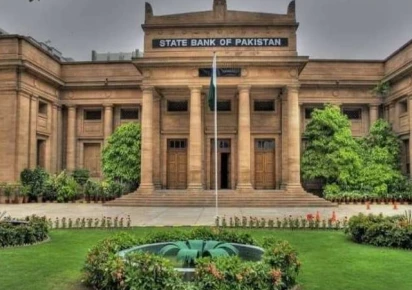
    The State Bank of Pakistan (SBP) injected around Rs11.6 trillion into the country’s banking system through an open market operation on Monday, providing significant liquidity to banks. The central bank conducted a reverse repo auction under its Open Market Operations (OMOs). Banks submitted bids worth Rs11.777 trillion across two different tenors. The SBP accepted Rs11.613 trillion in total. For the four-day tenor, banks offered Rs31 billion. The central bank accepted the entire amount at an interest rate of 11.54%. The bids in this category ranged between 11.56% and 11.54%. The 14-day tenor attracted much larger demand. Banks submitted offers worth Rs11.746 trillion. The SBP accepted Rs11.583 trillion at a cut-off rate of 11.51%. The bidding rate for the 14-day facility ranged from 11.57% to 11.51%. Of the Rs5.6527 trillion offered specifically at 11.51%, the central bank accepted Rs5.48415 trillion on a pro-rata basis. The large-scale liquidity injection comes as banks continue to manage their short-term funding requirements. Open market operations are among the SBP’s key tools for managing liquidity and maintaining stability in the financial system. Meanwhile, the Pakistani rupee recorded a slight improvement against the US dollar during Monday’s trading session. The rupee strengthened by three paisa, closing at Rs277.62 per dollar compared with the previous close of Rs277.65. The marginal gain reflected relative stability in the foreign exchange market. The US dollar index also declined by 0.1%. The index, which measures the dollar against six major international currencies, traded near its lowest level of the month at 99.519. Gold prices, meanwhile, moved sharply higher in Pakistan. The price of gold increased by Rs2,000 per tola to reach Rs461,936. The price of 10 grams also rose by Rs1,715 to Rs396,035, according to market rates. The increase followed a strong recovery in international bullion prices. Gold has gained around 9% in August and was trading near $4,400 an ounce. Market analysts said the recent recovery suggested renewed interest from institutional investors and central banks. The rebound has also pushed gold above key technical resistance levels. This has strengthened expectations that prices could move higher if buying momentum continues. Gold had faced heavy pressure following the escalation of the US-Israel conflict with Iran. International prices fell from a record level of around $5,595 an ounce in January to below $4,000 in June. The decline prompted some investors to raise cash. Some central banks also used reserves to support their domestic economies as oil prices surged. Analysts now believe renewed central bank purchases could support the precious metal. Institutional investors are also rebuilding their holdings after the earlier sell-off.