National

  • |

    Thousands Sahiwal villagers demand steel bridge at…

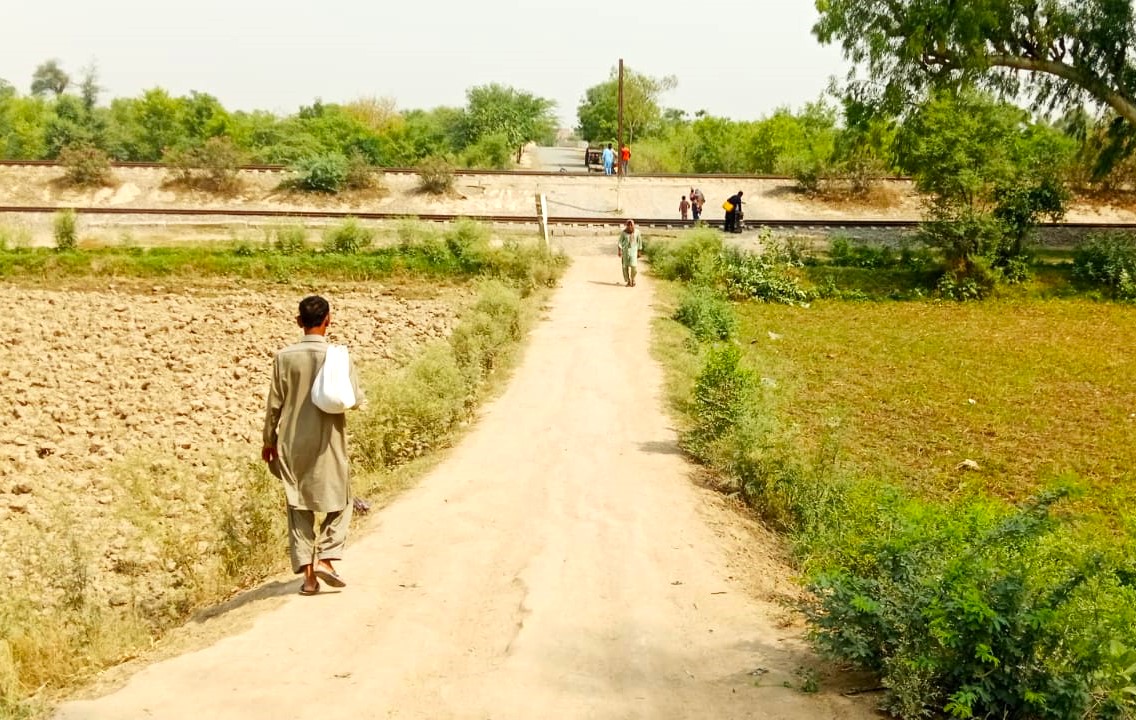
    SAHIWAL: Residents of villages 76/5-R, 77/5-R and 74/5-R have renewed their demand for a steel overhead bridge at 77 Wali Pully. They saying the long-standing absence of a safe railway crossing has turned a routine journey into a daily hazard for thousands of people. The three villages are home to an estimated 20,000 to 23,000 people. Residents say the proposed bridge would provide a safe route for pedestrians, cyclists, motorcyclists and rickshaws to cross the Lower Bari Doab Canal (LBDC) and the double-track Lahore-Khanewal railway line. They also demand improving access to the Lahore-Multan National Highway and markets in Yousafwala, Qadirabad and Sahiwal. The demand has been raised repeatedly with the district administration, Pakistan Railways, Punjab government and local PML-N parliamentarians since the 1,320MW Sahiwal coal-fired power plant became operational in 2017. Official records confirm that the plant is located near Qadirabad and that its commercial operations began in October 2017. Before the power plant was built, villagers had two traditional routes to Yousafwala and Qadirabad markets. One was through the railway crossing near Yousafwala Railway Station, which allowed light and heavy traffic to pass. The other, locally known as “77 Wali Pully”, involved crossing the LBDC by wire-boat before walking across the railway tracks. Tehzeeb, an LHV from village 76/5-R, said the second route had been used for three to four decades, particularly by women and pedestrians. Rickshaws operated on both sides of the canal and railway line, helping commuters reach nearby villages and markets. However, following the power plant’s development, the railway crossing was closed for public use and traffic was diverted to a new route several kilometres away. A concrete bridge was constructed over the LBDC, but no corresponding crossing was provided over the double railway track. “This challenge of crossing the railway line remains unresolved,” said Sadique, a resident of 76/5-R. Villagers say more than 1,000 people, including students, women, elderly residents, traders and labourers, cross the area on foot every day, often facing the danger of fast-moving trains. Pir Imran Shah, a former four-time MNA, said he had twice forwarded the villagers’ proposal to Pakistan Railways, but it did not progress to the PC-I stage. Residents working through the Model Village Welfare Committee have now renewed their appeal. Najam Lumberdar of 77/5-R said the bridge would eliminate a lengthy detour and provide safer access to markets and Sahiwal city. A local civil society representative also described the demand as genuine, noting that similar pedestrian and motorcycle bridges have been constructed elsewhere. Dawn has learnt that Pir Imran Shah has again forwarded the committee’s application to Pakistan Railways, seeking preparation of a PC-I and construction of the proposed steel bridge. For residents, the demand is simple: a safe crossing that restores the connectivity they say was lost nearly a decade ago.
  • | | |

    PTI to file contempt plea over Imran Khan hospital…

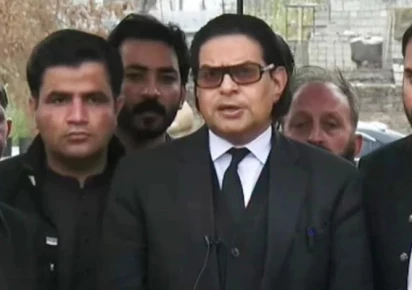
    ISLAMABAD: Pakistan Tehreek-e-Insaf (PTI) has announced that it will approach the Supreme Court over what it describes as the government’s failure to implement its order regarding Imran Khan’s transfer to Shifa International Hospital. PTI Secretary General Salman Akram Raja said the party would file a contempt petition on Saturday. He alleged that the authorities did not comply with the court’s directions and failed to constitute the medical board ordered by the Supreme Court. The development follows the government’s decision to take Imran Khan to the Pakistan Institute of Medical Sciences (PIMS) for a medical examination instead of Shifa International Hospital. Information Minister Attaullah Tarar said Imran was taken to PIMS during the night between August 20 and 21 because of security concerns around Shifa Hospital. According to Tarar, doctors from Shifa were present during the examination, while a team comprising specialists examined Imran and declared him medically fit. He said Imran was later taken back to Adiala jail at around 5am. Raja rejected the government’s explanation, saying there was no unusual rush on the roads leading to Shifa. He also claimed that Imran’s personal physician, Dr Faisal Sultan, was taken to the hospital in a police-escorted vehicle. The PTI leader said the party’s political and parliamentary committees were meeting to determine its next course of action. He also reiterated that PTI had already announced plans for street protests over the issue. PTI Chairman Barrister Gohar Khan separately criticised the government’s handling of the matter. He questioned how political negotiations could continue when, according to him, a clear Supreme Court order had not been implemented. Gohar said the party had been assured that the court’s directions would be followed. He argued that the order clearly required Imran to be shifted to a hospital for treatment and undergo medical tests. He also questioned why the PTI leadership and Imran’s family were not properly informed about the transfer and medical examination. “You do not shake hands like this. Negotiations do not happen like this,” Gohar said while responding to the government’s offer for political dialogue. Speaking in the National Assembly, he warned that PTI could reconsider its participation in Parliament. He said the party would decide within a few days whether it would continue attending the assembly. Opposition leader Mahmood Khan Achakzai also raised questions over the overnight transfer. He said people had expected Imran to be taken to Shifa after the Supreme Court order, but later learned that he had been taken to another hospital. Achakzai expressed concern that elements within the government could be attempting to damage prospects for political dialogue between PTI and the government. The controversy stems from a Supreme Court order issued earlier this week directing that Imran Khan be shifted to Shifa International Hospital for treatment for several days. The court also ordered weekly meetings between Imran and his family and allowed access to his personal physician. The court directed that a medical board comprising an ophthalmologist, general physician and cardiologist be formed, with Dr Faisal Sultan and Imran’s sister, Dr Uzma Khan, associated with the process. The Supreme Court also ordered that Imran’s medical reports remain confidential and should not be used for political purposes. It instructed PTI supporters and lawyers not to hold political activities or press conferences outside the hospital.

  • | | | |

    Imran Khan shifa hospital transfer: PTI announces …

    Pakistan Tehreek-e-Insaf (PTI) has decided to approach the Supreme Court with a contempt of court petition if former prime minister and PTI founder Imran Khan is not transferred to Shifa International Hospital by Thursday night. According to PTI sources, the party is waiting for implementation of the Supreme Court’s order regarding Imran Khan’s Shifa Hospital transfer. If no progress is made by the deadline, the party plans to file the contempt petition on Friday morning. The Supreme Court had ordered on August 18 that Khan, who remains imprisoned, be transferred to Shifa International Hospital in Islamabad for medical assessment and treatment. The court also directed the formation of a medical board, including specialists and Khan’s personal physician. The order came amid continuing concerns surrounding Khan’s health and access to medical treatment. The court also issued directions concerning family meetings and communication with his son. The government, however, challenged the decision. On August 19, it filed a review petition arguing that the order to move Khan to a private hospital should be reconsidered. The government has maintained that existing prison and legal procedures should be followed regarding treatment of prisoners. The legal dispute intensified on Thursday when the Supreme Court Registrar’s Office returned the government’s review petition after raising objections. Sources said the government intends to address the objections and submit the petition again. PTI has maintained that the Supreme Court’s order should be implemented without delay. Party representatives have warned that failure to comply with the directive could lead to contempt proceedings against the officials responsible for implementation. The developing situation has created another legal and political confrontation between PTI and the government. The next several hours could determine whether the matter is resolved administratively or moves into another round of proceedings before the Supreme Court. For now, PTI’s position is clear: if Imran Khan is not shifted to Shifa International Hospital by Thursday night, the party says it will seek legal action through a contempt of court petition on Friday morning.

  • | |

    Parliament approves sweeping defence command chang…

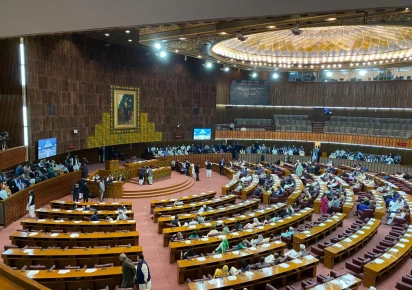
    Pakistan’s Parliament has approved legislation aimed at establishing a new legal framework for the country’s military command structure. The National Assembly and Senate passed the Defence Forces Act 2026 and amendments to the National Command Authority Act 2010 on Thursday. The legislation was approved despite strong opposition from opposition lawmakers, who objected to the speed at which the bills were brought before the Houses. Prime Minister Shehbaz Sharif attended the National Assembly session. The opposition later boycotted the voting process and walked out of the chamber in protest. The new Defence Forces Act provides a legal structure for the Defence Forces Headquarters. The headquarters will serve as a central institution for matters concerning national security, defence policy and coordination among the armed forces. Under the new framework, the Chief of Defence Forces will exercise operational command and control over the armed forces. The CDF will remain accountable to the federal government for matters related to command and control. The legislation also gives the CDF powers to improve coordination and integration among the Army, Navy and Air Force. The office will oversee joint operations, coordination and other matters involving the armed forces. The CDF will also have authority under relevant laws regarding the retirement, release and dismissal of military personnel, subject to constitutional provisions. The office will also be able to approve or reject resignations and retain personnel in service where permitted under the law. The federal government will frame rules and regulations needed to implement the new legislation. The CDF will also be authorised to issue orders and directions required to enforce the provisions of the Act. Parliament also approved amendments to the National Command Authority Act 2010. The changes replace references to the Chairman Joint Chiefs of Staff Committee with references to the Chief of Army Staff and Chief of Defence Forces. The legislation gives retrospective effect to key provisions from November 2025. The new laws are linked to changes introduced through the 27th Constitutional Amendment, which significantly altered Pakistan’s military command structure. Under the revised system, the Chief of Army Staff also serves as the Chief of Defence Forces. The office of Chairman Joint Chiefs of Staff Committee has been abolished under the new framework. The opposition strongly objected to the legislation being placed on the supplementary agenda. Opposition lawmakers said they had not been given sufficient time to examine the bills. Opposition Leader Allama Raja Nasir Abbas questioned the urgency of the legislation and called for more time for lawmakers to study the proposed changes. Mahmood Khan Achakzai also demanded that lawmakers be given at least a few days to review and debate the bills before voting. The government defended the procedure, saying parliamentary rules allow supplementary legislation to be introduced. Law Minister Azam Nazeer Tarar argued that the bills had already been examined and approved by the National Assembly. The cabinet had approved the draft legislation earlier in the day during a meeting chaired by Prime Minister Shehbaz Sharif in Islamabad. According to the government, the Defence Forces Act was necessary to provide administrative and legal arrangements for the office of the Chief of Defence Forces and its headquarters. The new framework also establishes the position of Commander of the National Strategic Command following the abolition of the CJCSC post. The commander is appointed by the prime minister on the recommendation of the army chief and CDF. The position carries a three-year term, with the possibility of another three-year term under the prescribed procedure.

  • | |

    Sindh police finally question doctor over Mir Raza…

    Sindh police have finally questioned Dr Usama, the medico-legal officer who conducted the first post-mortem examination of Karachi businessman Mir Raza, nearly 25 days after the initial report was prepared. Dr Usama had classified Mir Raza’s death as suicide in his original post-mortem report. The report later came under serious scrutiny after several alleged discrepancies were highlighted by Police Surgeon Dr Samia Syed. Police initially defended the medico-legal officer’s findings. However, Dr Usama was later removed from his position following concerns over major errors in the post-mortem examination. Police have now formally included him in the investigation and questioned him for around five hours. The case concerns the death of young Karachi businessman Mir Raza Ali Khan, who went missing from the PECHS area on July 28. He reportedly left his home at around 4:09am in an online taxi. His body was recovered from Gulistan-e-Johar two days later. According to police officials, the body was found in a severely damaged condition. Mir Raza had suffered a gunshot wound to the chest. His social media accounts were also reportedly deactivated one day before his body was found. Mir Raza’s father had said that his son was scheduled to get married on August 30 at Bait-ul-Mukarram Mosque in Gulshan-e-Iqbal. He said Mir Raza had been excited about beginning a new chapter in his life. Questions were raised over the initial post-mortem report after several discrepancies were highlighted during a television programme on August 4. Police Surgeon Dr Samia Syed and Mir Raza’s father both expressed dissatisfaction with the initial findings and called attention to issues surrounding the examination. Following a court order, Mir Raza’s grave was exhumed on August 8 for a second post-mortem examination. His body was reburied later the same day. The initial post-mortem findings reportedly stated that the bullet had entered from the back. The examination also documented signs of physical injuries and trauma. According to the report, Mir Raza had fractured ribs and multiple injuries to his head and face. Dark marks were also reportedly found on different parts of his body. The report further mentioned injuries to his feet and blood staining in tissues in the lower part of the body. A fracture and injury measuring around 12 centimetres were reportedly found on his right thigh. The initial examination also identified a deep injury and fracture around the jaw, along with injuries to the nasal bone and several areas of the face. The developments have intensified questions surrounding the circumstances of Mir Raza’s death and the accuracy of the first post-mortem report.

  • | |

    Sher Afzal Marwat urges government to rethink deci…

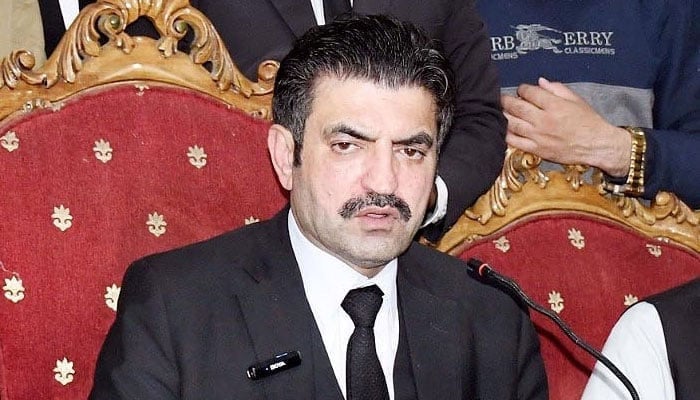
      National Assembly Member Sher Afzal Marwat has said that the government appears to be stuck on an issue that could negatively affect its public image and political standing. Marwat said the government needed to carefully consider its decisions and avoid taking positions that could ultimately damage its reputation among the public. He emphasized that decisions involving ordinary citizens, particularly matters related to healthcare, should be approached with greater understanding and consideration.   Commenting on the issue of medical treatment, Marwat said there was nothing wrong with a patient choosing to receive treatment at a private hospital at their own expense. He argued that if an individual is willing and able to pay for medical services privately, the government should not necessarily object to that choice.   According to Marwat, people should have the freedom to decide where and how they want to receive medical treatment, particularly when they are using their own resources. He suggested that restricting such choices could create unnecessary controversy and may not serve the interests of either the government or the public.   Marwat further stressed that the government must think carefully before making decisions that could have political or social consequences. He said that authorities should assess both the immediate and long-term impact of their policies instead of becoming fixated on a single issue. His comments come amid ongoing public debate over government decisions concerning healthcare and access to medical facilities. The issue has drawn attention because healthcare remains a sensitive matter for citizens, particularly those who seek timely treatment and may prefer private hospitals because of availability, facilities, or personal choice. Marwat’s remarks also highlight the broader question of how governments should balance public-sector policies with individual rights and choices. While governments have a responsibility to regulate healthcare and ensure that citizens have access to affordable and quality treatment, individuals may also want the option of using private healthcare services when they can afford them. The lawmaker maintained that the government should adopt a practical and carefully considered approach rather than allowing political disagreements to influence decisions that directly affect citizens. In his view, policies should be designed in a way that protects public interests while also respecting individual choices. He warned that continuing to remain focused on an issue without considering its wider implications could harm the government’s political standing. According to him, the government needs to recognize how its decisions are perceived by the public and make choices accordingly. Marwat’s statement reflects growing calls for greater flexibility and careful decision-making in matters that affect ordinary people. His comments suggest that governments can avoid unnecessary criticism by taking public concerns into account and ensuring that their policies remain focused on practical solutions. The National Assembly member ultimately urged the government to reconsider its approach and make decisions after carefully examining their possible consequences. He emphasized that thoughtful policymaking is essential to maintaining public confidence and avoiding decisions that could damage the government’s image. The remarks underline the importance of balancing government policy with the rights, needs, and preferences of citizens, particularly in sensitive areas such as healthcare.

  • | |

    ECP backs Punjab polls from December 15

    The Election Commission of Pakistan has agreed in principle to hold long-delayed local government elections in Punjab between December 15, 2026, and January 15, 2027. The decision was reached during an ECP meeting chaired by Chief Election Commissioner Sikandar Sultan Raja on Thursday. The meeting was held to discuss the proposed schedule and preparations for local polls in the province. A Punjab government delegation attended the meeting. The delegation included Local Government Minister Zeeshan Rafiq, Mines and Minerals Minister Sardar Sher Ali Gorchani, Agriculture Minister Syed Muhammad Ashiq Hussain Shah and Education Minister Rana Sikandar Hayat. The Punjab chief secretary and senior local government officials were also present. The ECP was informed that the delimitation process for Punjab had been completed, clearing an important hurdle in preparations for the elections. Chief Election Commissioner Sikandar Sultan Raja stressed that elected local governments are a constitutional requirement under Article 140-A. He also pointed out that election authorities are legally required to conduct local government elections within the prescribed period after the expiry of elected local bodies. Punjab officials said the provincial government needed sufficient time to complete administrative preparations, arrange financial resources and deploy staff for the electoral process. The provincial government proposed the December 15 to January 15 window as the most suitable period for polling. Officials said school examinations would have concluded by then, allowing educational staff to be available for election duties. The government also cited weather conditions as a factor. Holding the elections during the proposed period could help avoid difficulties associated with heavy fog during other parts of the winter season. Punjab authorities further informed the ECP that they preferred conducting the elections in phases. Officials said phased polling would allow better security arrangements and make it easier for the administration to manage the large-scale electoral exercise. The ECP accepted the proposed timeframe in principle and directed the Punjab government to submit a detailed plan promptly if it wanted the elections to be conducted in multiple phases. The commission said the proposed arrangements could help move the province toward fulfilling its constitutional obligation of establishing elected local governments. The Punjab government has already allocated Rs12.52 billion for the local elections. It has also approved the recruitment of 900 Union Council secretaries to support the functioning of local bodies. Punjab has not held local government elections since 2015. The previous polls were conducted in several phases between October and December that year. The elected local councils began functioning in 2017 after mayors and chairpersons were selected through indirect elections. The local governments were dissolved in April 2019 by the then Punjab government before completing their full term. The Supreme Court subsequently ordered their restoration, and the councils eventually completed their tenure on December 31, 2021. Since then, local government elections have remained pending amid repeated changes to Punjab’s local government laws. Successive provincial administrations amended or replaced the relevant legislation, forcing the ECP to repeatedly revise its preparations and carry out fresh delimitation exercises.

  • | |

    JI threatens nationwide shutdown over petroleum le…

    Jamaat-i-Islami (JI) Emir Hafiz Naeemur Rehman has warned the government that his party could expand its ongoing protests into a nationwide wheel-jam and shutter-down strike if the petroleum levy is not abolished. Speaking at a press conference in Islamabad on Thursday, Rehman said the nationwide strike could begin after August 26, following 12th Rabiul Awwal. He said the party would also establish protest camps in different parts of the country as part of its campaign. If the government failed to respond to its demands, he warned that JI could consider marching towards Islamabad on foot. The JI chief said he would address the party’s sit-in in Lahore, while a public gathering was scheduled at its Karachi protest site on Friday. Rehman said rising inflation had placed a heavy burden on ordinary citizens. He criticised the petroleum levy, describing it as an unfair additional charge on consumers. According to him, consumers were paying around Rs80 per litre under the levy. He claimed the charge was originally introduced to support the modernisation of Pakistan’s oil refineries but that the government had collected more than Rs8 trillion through it while spending less than Rs100 billion on refinery upgrades. He called for the immediate abolition of the levy and urged Prime Minister Shehbaz Sharif to reduce petrol and diesel prices by Rs130 per litre. The government recently revised fuel prices, reducing the price of high-speed diesel while increasing the price of petrol. Rehman said the JI’s protests in Lahore, Karachi and Peshawar were gaining support from traders, religious scholars, young people and members of civil society. He said the demonstrations had grown beyond the petroleum levy issue and were now highlighting broader public concerns. He said JI would not attend government briefings as part of negotiations. Instead, he demanded that government representatives visit the protesters and engage with them directly. The JI leader also referred to the party’s previous campaign against independent power producers. He claimed that negotiations following that protest resulted in the closure of several power projects and new agreements that saved the national exchequer Rs3.36 trillion. He called for a review of the remaining independent power producers, arguing that negotiations could help bring down electricity costs within 12 to 18 months. Rehman also criticised the government over the country’s growing debt, taxes and electricity prices. He claimed Pakistan’s total debt had reached Rs98 trillion and urged authorities to reduce reliance on interest-based financing. He called for greater austerity in government spending and suggested limiting official vehicles to engines of up to 1,300cc. The JI emir also criticised what he described as excessive privileges for the political elite while ordinary citizens continued to face rising living costs and taxes. On provincial matters, Rehman accused successive governments in Sindh and Punjab of failing to resolve major economic and social problems. He also criticised Punjab’s education policy and raised concerns over the outsourcing of thousands of schools.

  • | |

    Shakeel Rehman spotted at Jinnah International Air…

    ‎KARACHI, Pakistan: Shakeel Rehman was recently spotted at Jinnah International Airport in Karachi while traveling with his family, drawing attention to the digital personality’s recent public appearance. ‎Shakeel Rehman was seen at Jinnah International Airport accompanied by his family as he made his way through the airport. The sighting comes as the content creator continues his activities in Pakistan’s digital and social media space. ‎Known for his work as a content creator, Shakeel Rehman has around four years of experience in content creation. Over the course of his journey, he has developed an online presence through digital content and social media activities while also pursuing interests in entrepreneurship. ‎His recent appearance at Jinnah International Airport provided a glimpse into his activities away from his regular online work. Shakeel Rehman appeared to be traveling with his family, although specific details about his destination and the purpose of the trip were not publicly disclosed. ‎Airport sightings of public figures often attract attention, particularly when they are recognized through their online presence. Shakeel Rehman’s appearance was similarly noticed as he traveled with his family. ‎The Jinnah International Airport sighting comes during a period in which Shakeel Rehman continues to focus on his work in content creation and entrepreneurship. His four-year experience in the digital field has allowed him to establish a presence on social media and remain active within Pakistan’s growing creator community. ‎For Shakeel Rehman, the recent airport appearance was a departure from his usual digital activities, offering followers and observers a rare public glimpse of the creator outside his online environment. ‎While no further information has been released about his travel plans, the recent sighting has renewed attention around Shakeel Rehman as he continues to develop his career as a content creator and entrepreneur. ‎Shakeel Rehman remains active in the digital space, where he continues to work on content and explore entrepreneurial opportunities. His latest appearance at Jinnah International Airport in Karachi with his family has become a recent point of interest for those following his activities.

  • | | |

    Imran hospital move: security tightened at Shifa

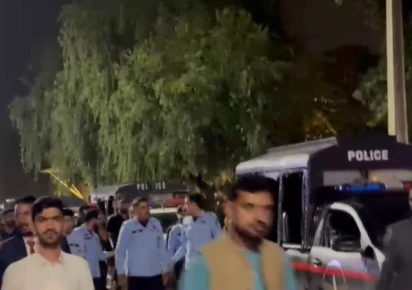
    Security has been intensified around Shifa International Hospital in Islamabad as the deadline approaches for the government to comply with a Supreme Court directive regarding the transfer of PTI founder Imran Khan for medical treatment. A significant number of police personnel and senior officers were deployed outside the hospital on Thursday. Officials inspected security arrangements and cleared roads around the facility of parked vehicles. The heightened security comes ahead of the midnight deadline set under the Supreme Court’s order issued on Tuesday. The court directed authorities to shift Imran Khan to Shifa International Hospital for medical treatment and also ordered arrangements for weekly meetings between him and his family. The federal government has challenged aspects of the order through a review petition, describing the decision as discriminatory and raising legal concerns over its wider implications. Law Minister Azam Nazeer Tarar said the government still had time until midnight to implement the order. He said the responsibility for making arrangements rested with the Islamabad administration and that officials were working on the matter. Speaking in the Senate, Parliamentary Affairs Minister Tariq Fazal Chaudhry said the government would follow the Supreme Court’s decision. He said the government had no intention of preventing Imran Khan from receiving necessary medical treatment. According to the minister, existing rules generally provide for convicted prisoners to receive medical care through government hospitals. However, he said a legal question concerning the scope of such arrangements was currently before the Supreme Court. Fazal said that if the required treatment was not available at a government hospital, the authorities would have to arrange treatment at Shifa International Hospital or another facility with better medical capabilities. He stressed that the government would comply with the court’s final determination regarding the matter. The minister also addressed concerns about the health of PTI leader Dr Yasmin Rashid. He said the government was concerned about her condition and would again contact the Punjab government and prison authorities to obtain an updated assessment. Meanwhile, Prime Minister’s Adviser on Political Affairs Rana Sanaullah said the government’s review petition was expected to be dealt with by the Supreme Court. Sanaullah said the government had raised technical and legal objections to parts of the court’s order. He argued that the decision could create difficulties for the broader judicial system if similar applications were filed by other prisoners seeking treatment at private hospitals. He maintained that the government would respect whatever decision the Supreme Court reached on its review petition. According to sources, the Supreme Court’s registrar’s office had returned the review petition after raising an objection concerning the completion of required paper books. The government was expected to address the objections and resubmit the petition, with possible amendments to its contents. The development has triggered a fresh dispute between the government and PTI over implementation of the court order. Imran Khan’s lawyer, Khalid Yousaf Chaudhry, announced that he would approach the Supreme Court with a contempt petition if the government failed to transfer his client to the hospital. The lawyer accused the government of delaying implementation of the court’s directive and said the legal team was preparing the contempt proceedings. He also visited Adiala Jail to obtain Imran Khan’s signatures on the required documents, including the contempt petition and power of attorney. Earlier, PTI Secretary General Salman Akram Raja claimed that the government had withdrawn its review petition after objections were raised by the Supreme Court’s filing branch. Raja demanded immediate implementation of the August 18 order and argued that there was no legal justification for further delaying Imran Khan’s transfer. The government, however, maintained that the legal process concerning the review petition was still underway and that it would act according to the law and the final position of the Supreme Court. Imran Khan’s sister Aleema Khanum also reached Adiala Jail amid the ongoing developments.