National

  • | |

    Azma Bukhari hits back at Sharjeel Memon over AJK …

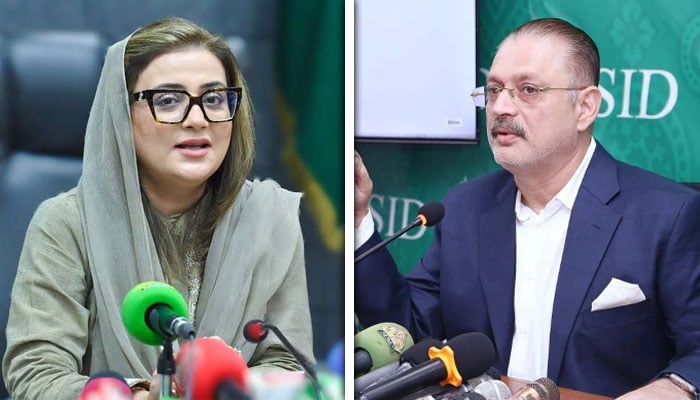
    Punjab Information Minister Azma Bukhari has strongly criticised Sindh Minister Sharjeel Memon over his remarks about the Azad Jammu and Kashmir (AJK) elections. Azma Bukhari told Memon to “drink cold water and pour some on his head,” saying the election was over and the people of AJK had already delivered their verdict. She said the election results had proved the Pakistan Peoples Party’s (PPP) calculations wrong and dismissed its allegations regarding pre-poll rigging. Bukhari claimed that a PML-N candidate had recovered bags containing ballot papers from the residence of a PPP candidate one night before polling. Taking a sharp jibe at the PPP, she said its “arrow had disappeared in the valleys of Kashmir,” while the PML-N’s “lion” was roaring across the region. She said AJK voters had given their verdict in favour of PML-N leader Nawaz Sharif during the first phase of the elections. Bukhari urged the PPP to learn to accept defeat instead of raising allegations whenever it loses an election. She said political parties should celebrate victories but also show maturity in defeat. She further questioned the PPP’s position on elections in Gilgit-Baltistan. Bukhari asked whether the party considered those elections transparent because it had formed the government there. She said it was unfair to describe an election as transparent when a party wins and allege rigging when it loses.

  • | | |

    Punjab’s Rs 40bn centralized medical tender trig…

    LAHORE: A Rs40 billion centralized procurement of surgical and medical disposables by Punjab has landed under the scanner after Minute Mirror examined official procurement documents. Managed directly by the Specialized Healthcare & Medical Education (SHC&ME) Department, this multi-billion-rupee initiative represents the province’s first centralized framework contract, effectively replacing the long-standing decentralized system under which individual public teaching hospitals and medical institutions conducted their own independent competitive bidding processes. While the primary objective of centralizing such a massive health department exercise was to leverage bulk purchasing power, lower overall market rates and enhance institutional transparency, an analysis of the purchase indicates sharp price increases, significant market distortions, and severely restricted commercial competition. According to documents available with Minute Mirror, out of 125 evaluated medical device categories, a staggering 50 items, representing 40 percent of the entire tender portfolio, attracted only a single responsive bidder. Furthermore, 45 item categories yielded just two responsive bidders, while 22 categories managed to attract three bidders. Procurement specialists and governance experts point out that although provincial procurement rules do not strictly prohibit single-bidder contract awards, relying on sole suppliers for such a vast portion of a multi-billion-rupee contract severely undermines competitive price discovery, weakens public sector bargaining power and risks creating artificial vendor monopolies across public sector healthcare facilities. Rather than securing bulk-buying discounts for taxpayers, the comparative statement demonstrates widespread price inflation when measured against established benchmark prices from the Director General Health Services (DGHS). Out of 23 medical disposables with available DGHS reference rates, 18 items, nearly 80 percent, registered dramatic price escalations. According to documents, the rate increases are most glaring among routine, high-volume surgical supplies used daily across hospital emergency rooms and operating theaters. Surgical blades across sizes 11, 15, 22, and 23 witnessed a steep 470 percent surge, rising from the benchmark rate of Rs 13.67 to Rs 78 per piece. Black braided silk sutures saw price hikes of up to 275 percent, jumping from Rs 77 to Rs 289 per unit. Similarly, essential 24G IV cannulas climbed 154 percent from Rs 96.30 to Rs 245 each, while standard blood transfusion sets increased by 40 percent, escalating from Rs 105 to Rs 147.56 per unit. The financial evaluation has also drawn strong criticism from participating firms for appearing inconsistent with earlier proceedings conducted by the Grievance Redressal Committee (GRC). During those formal hearings, several bidding vendors submitted extensive technical objections regarding bidder qualification criteria, product specification compliance, and regulatory eligibility. Stakeholders argue that the comparative evaluation sheet reflects financial outcomes that directly diverge from the issues debated and documented before the grievance committee. Legal experts contend that any apparent divergence between grievance proceedings and financial outcomes must be clearly explained through detailed, reasoned written orders to maintain public trust, uphold administrative fairness, and withstand prospective judicial scrutiny. Given the immense scale of public spending and the critical reliance of public teaching hospitals on these vital medical supplies, transparency advocates and healthcare commentators urged the provincial authorities to ensure institutional accountability, preserve regulatory compliance, and safeguard the overall integrity of Punjab’s largest public healthcare procurement exercise.

  • | |

    Rana Sanaullah calls AJK polls free and fair

    Special Assistant to the Prime Minister on Political Affairs Rana Sanaullah has defended the first phase of the Azad Jammu and Kashmir (AJK) elections. He described the polling process as peaceful, free, fair and credible. Speaking at a press conference in Islamabad, Sanaullah said voters had exercised their democratic right across 13 constituencies of Mirpur Division on July 27. According to unofficial results, the Pakistan Muslim League-Nawaz (PML-N) won nine seats. The Pakistan Peoples Party (PPP) secured four seats. Sanaullah congratulated the winning candidates. He also praised the Election Commission, AJK administration and security agencies for managing the election process. He said the polls were held despite a challenging security situation. He added that the authorities took steps to maintain law and order throughout polling. The prime minister’s aide urged opposition parties to respect the voters’ decision. However, he said they were free to challenge any alleged irregularities through constitutional and legal channels. Sanaullah said complaints regarding the election would be examined by the relevant authorities. He stressed that political parties should use legal forums instead of creating political tensions. He also said polling hours were extended by one hour. The extension was given to facilitate voters and allow more people to cast their ballots. He estimated voter turnout at between 40 and 60 per cent. Sanaullah said the election was largely peaceful. However, a serious incident occurred in LA-9 Nakyal. A dispute between members of the same family reportedly turned violent because of political differences. One person was killed and another was injured in the incident. Police arrested several suspects in connection with the shooting. Sanaullah also mentioned the killing of PML-N leader Malik Ashiq. He was shot during an election rally in Kotli on July 11. The government official further claimed that a candidate from LA-6 and members of his campaign team attempted to take ballot boxes after polling. He said the suspects were arrested and a case was registered. Minister for Kashmir Affairs and Gilgit-Baltistan Amir Muqam also addressed the press conference. He said the PML-N’s performance showed strong public support for the party. Muqam said the party would work to fulfil the promises made during its election campaign. Sanaullah attributed the PML-N’s success to teamwork and its political leadership. He also said development initiatives in Punjab had contributed to the party’s electoral performance. The election results have triggered political exchanges between the PML-N and PPP. The PPP has raised allegations of irregularities and accused the government of influencing the election process. The PML-N has rejected the allegations. It has also accused political opponents of attempting to manipulate the electoral process. The Election Commission has said that violations of electoral rules will be dealt with under the law. The AJK elections are being conducted in three phases. The first phase covered 13 constituencies in Mirpur Division. The second phase is scheduled for August 2. It will cover Muzaffarabad Division and refugee constituencies. The final phase will be held in Poonch Division on August 10. Sanaullah said the government was ready to address genuine complaints. He maintained that political parties should follow constitutional procedures while challenging election results.

  • | |

    HRCP demands probe into Rawalakot clash deaths

    The Human Rights Commission of Pakistan (HRCP) has called for an impartial and independent investigation into reports of deaths and injuries during clashes between protesters and law enforcement personnel in Rawalakot. The violence was reported during the first phase of the Azad Jammu and Kashmir (AJK) Legislative Assembly elections on July 27. The HRCP said it was deeply concerned by reports that several people had been killed and many others injured during the clashes. It stressed that the reported casualties must be investigated without political pressure. Videos showing unrest and violence have circulated on social media. However, the details and casualty figures shown in the reports could not be independently verified. The HRCP said authorities have a responsibility to maintain public order. However, that responsibility must not undermine the right to life or peaceful assembly. The rights body urged authorities to immediately stop further violence. It also called for restraint while dealing with protesters. The HRCP said anyone found responsible for unlawful use of force should be held accountable. It also stressed the need to restore public confidence ahead of the remaining phases of the AJK elections. AJK Prime Minister Faisal Rathore also commented on the situation. He said the “blood of innocent Kashmiris” had been spilled and blamed the Joint Awami Action Committee (JAAC) for escalating tensions. The opposition alliance Tehreek-e-Tahaffuz-e-Ayeen Pakistan (TTAP) also condemned the reported violence. It alleged that protesters had faced excessive force during demonstrations. The alliance said tensions in AJK had remained high for several weeks. It described the protesters’ demands as being linked to democratic rights, justice and the rule of law. According to TTAP, protesters had been demonstrating over issues including inflation and unemployment. The alliance claimed that efforts by political figures to engage with protesters and find a peaceful solution had faced restrictions. TTAP also referred to videos circulating online. It claimed that some footage showed unarmed people fleeing on roads amid gunfire. These claims could not be independently verified. The opposition alliance condemned what it described as violations of democratic and human rights principles. It called on political parties and citizens to oppose violence and support peaceful political engagement.

  • | |

    Pakistan monsoon death toll hits 110

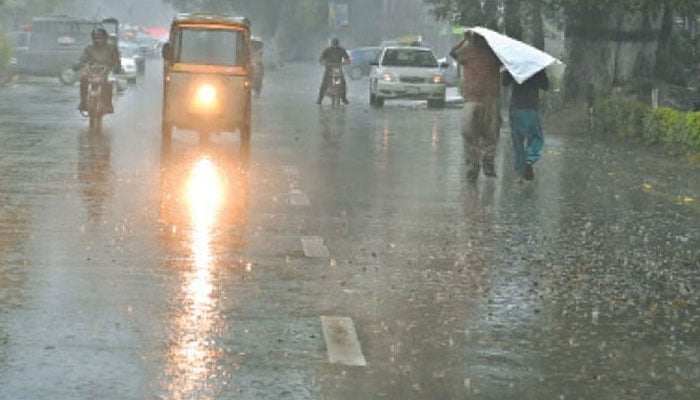
    The death toll from monsoon rains, flash floods and landslides across Pakistan has risen to 110, according to the National Disaster Management Authority (NDMA). The authority said 360 people have been injured in rain-related incidents since June 26. Nearly 800 houses have also been damaged across the country. Most fatalities have been reported in Khyber Pakhtunkhwa, followed by Punjab. Several areas have also faced flooding and damage caused by heavy rainfall. The NDMA briefed Prime Minister Shehbaz Sharif on the latest situation. The authority warned that northern parts of the country could face more flash floods and glacial lake outburst floods in the coming weeks. Rapidly melting glaciers have increased the risk in mountainous areas. Authorities have been asked to remain prepared for sudden flooding and other weather-related emergencies. Prime Minister Shehbaz directed officials to use all available resources to protect lives and property. He also stressed the importance of early warning systems and timely emergency measures. The Pakistan Meteorological Department has forecast another strong monsoon spell from July 29. The system is expected to affect Islamabad, upper Punjab, Khyber Pakhtunkhwa, Azad Kashmir and Gilgit-Baltistan. The upper catchment areas of major rivers may also receive heavy rainfall. The weather system is expected to continue until August 5. The weather department has warned of possible urban flooding. Rising water levels in rivers, hill streams and nullahs are also expected in vulnerable areas. Authorities have urged residents to remain cautious and follow official warnings during the latest spell of rainfall. Meanwhile, the Punjab Home Department has imposed Section 144 across the province for 60 days. The restrictions ban swimming, bathing and unauthorised boating at various water bodies. Pakistan faces heavy monsoon rainfall every year between late June and September. The season frequently causes flooding, landslides, infrastructure damage and loss of life.

  • Lodhran police rescue Filipino woman after alleged abuse

    Lodhran: A friendship that began on social media turned into love, bringing a Filipino woman to Lodhran to meet the man she loved. A Filipino woman, Rose Marie, embraced Islam before marrying a middle-aged man, Amir Matam, and adopted the Islamic name Kaniz Mai. However, after the marriage, she allegedly became a victim of domestic violence, while her husband also extorted millions of rupees from her. Acting on the instructions of DPO Lodhran Captain (Retd.) Ali Bin Tariq, a police team led by DSP Sadar Circle Lodhran Abid Hussain Bhulla carried out a swift operation, rescued the woman, and recovered her cash and belongings. Speaking to the media, DSP Abid Hussain Bhulla said that around two years ago, Rose Marie established contact with Amir Matam, a welder from Lodhran, through social media. Their friendship gradually developed into a love relationship, after which Amir Matam persuaded her to travel to Pakistan for marriage. The Filipino woman came to Lodhran, married Amir Matam, and began living with him. He said that serious disputes had developed between the couple in recent months, leaving the foreign woman feeling unsafe. According to the DSP, Rose Marie informed a Malaysian friend living in Islamabad about her situation. The Malaysian woman then contacted Police Helpline 15 seeking immediate assistance for her friend. DSP Abid Hussain Bhulla said that due to the high-profile nature of the call, DPO Lodhran Captain (Retd.) Ali Bin Tariq was immediately informed, who promptly constituted a police team under his supervision to respond to the situation. He added that the police not only rescued their foreign sister but also recovered her belongings and Rs. 1.5 million in cash, which had allegedly been misappropriated by her husband, Amir Matam. The recovered cash and belongings were returned to the woman, while she was provided with secure accommodation and police protection. DSP Abid Hussain Bhulla emphasized that the protection of the lives, property, and dignity of foreigners whether residents or tourists is among the highest priorities of the State of Pakistan and the police. Concluding his statement, the DSP Abid Hussain Bhulla said that the police response in high-profile cases is equally prompt and professional. He added that Lodhran Police resolved all matters concerning the foreign woman in accordance with her wishes. She is now expected to return to her home country, the Philippines, while the accused, who is currently on bail, will face legal proceedings in accordance with the law.

  • |

    Punjab approves Shuhada Package for 14 martyred police families

    Lahore: Provincial Minister for Law Rana Muhammad Iqbal Khan chaired an important meeting at the Home Department regarding the provision of financial assistance and residential facilities to the families of martyred police personnel under the Government of Punjab’s Shuhada Package. The meeting was attended by Secretary Home Dr. Ahmad Javed Qazi, Additional Inspector General of Police Imran Arshad, Additional Secretary (Police) Kanwar Anwar Ali Khan, DIG Welfare Mehboob Rashid and other senior officials. The meeting approved financial assistance, residential houses and other benefits under the Government of Punjab’s Shuhada Package for the families of 14 police personnel who embraced martyrdom in the line of duty in Bhakkar, Layyah, Bahawalnagar, Sargodha, Rajanpur, Faisalabad, Gujrat, Dera Ghazi Khan, Rahim Yar Khan and Sahiwal. Package-1 was approved for Constable Muhammad Shahbaz and Constable Muhammad Faheem, who were martyred in the terrorist attack on Dajal Check Post in Bhakkar, and for Constable Muhammad Asad Naseer, who embraced martyrdom while fighting terrorists in Layyah. Package-2 was approved for the families of Sub-Inspector Shahid Pervaiz of Bahawalnagar, Sub-Inspector Amir Rizwan of Sargodha, Constable Muhammad Nasir of Rajanpur, Driver Constable Iftikhar Ahmad of Faisalabad and Constable Mirza Umar Aftab Baig of Gujrat. Package-3 was approved for the families of Sub-Inspector Muhammad Zaman Zia, Assistant Sub-Inspector Muhammad Bashir and Constable Muhammad Waris of Bahawalnagar, Constable Muhammad Bismillah of Dera Ghazi Khan, Constable Muhammad Ramzan of Rahim Yar Khan and Constable Tahir-ul-Zaman Siddiqui of Sahiwal. The meeting was informed that under Package-1, the family of a martyred constable will receive Rs. 10 million, a five-marla house and other benefits. Under Package-2, the family of a martyred constable will receive Rs. 4 million, a five-marla house and other benefits, while the family of a martyred Assistant Sub-Inspector will receive Rs. 5 million, a seven-marla house and other benefits. Under Package-3, the family of a martyred constable will receive Rs. 3.5 million and other benefits, while the families of martyred Assistant Sub-Inspectors and Sub-Inspectors will receive Rs. 4 million along with other prescribed benefits. Addressing the meeting, Provincial Minister for Law Rana Muhammad Iqbal Khan said that the martyrs are the pride of the nation, the crown of our heads and the true heroes of the homeland. He said the sacrifices made by brave police personnel in protecting the country, maintaining law and order and safeguarding the public will always be remembered. He directed that all financial dues, residential facilities and other benefits for the families of martyrs be provided without delay, adding that no negligence or unnecessary delay would be tolerated. He further stated that no injustice would be allowed against any martyr’s family and that the Government of Punjab would continue extending full support to the bereaved families. The Provincial Minister further stated that terrorists responsible for martyring police personnel in the line of duty would be brought to justice in accordance with the law and that the fight against anti-state elements would continue with full determination. The meeting concluded with prayers for the elevation of the ranks of the martyrs, the security and prosperity of Pakistan, and patience and strength for their bereaved families.

  • |

    UoG reviews over Rs6bn budget for FY2026-27

    GUJRAT: The Finance and Planning Committee of the University of Gujrat (UoG) has reviewed a proposed budget exceeding Rs6 billion for the fiscal year 2026-27, with a focus on financial sustainability, institutional reforms, student welfare and infrastructure development. The proposed budget was discussed during the committee’s 36th meeting held at the Hafiz Hayat Campus under the chairmanship of Vice Chancellor Prof Dr Zahoor Ul Haq, recipient of the Tamgha-e-Imtiaz. The budget will now be placed before the university syndicate for final approval. During the meeting, the committee was informed that the university had strengthened its financial position through improved governance and prudent resource management. Officials said the institution generated nearly Rs3.75 billion through its own resources, reducing dependence on external financial support. The meeting was told that governance reforms and administrative measures implemented during the previous financial year resulted in savings of around Rs400 million. University management said these savings had been redirected towards student welfare initiatives and development projects. According to the budget proposal, around Rs370 million has been allocated for scholarships, enabling financial assistance for nearly one-third of the university’s enrolled students. Officials said the move reflects the institution’s commitment to ensuring that deserving students continue their education despite financial constraints. The committee also approved plans to invest Rs450 million in the purchase of 18 new buses to improve transport facilities for students and staff. The university estimates the new fleet will reduce annual transportation expenses by nearly Rs60 million through improved operational efficiency. Members were further informed that the university is expanding the use of solar energy across its campuses. The initiative is expected to significantly reduce electricity costs while supporting environmentally sustainable operations. The meeting also reviewed reforms related to faculty workload management, which reportedly generated savings of Rs119 million. University officials said the measures were designed to optimise academic resources without affecting the quality of teaching and learning. Vice Chancellor Prof Dr Zahoor Ul Haq emphasised the importance of financial discipline, transparency and efficient utilisation of resources to ensure the university’s long-term growth. He said the proposed budget reflects the institution’s priorities of academic excellence, student support and sustainable development. The meeting was attended by Additional Treasurer Ghulam Safdar Malik, Additional Secretary Higher Education Department Zahida Azhar, Section Officer Finance Department Asghar Ali, who joined online, Registrar Muhammad Naeem Butt, Dean Faculty of Social Sciences Prof Dr Faisal Mahmood Mirza, Academic Council members Dr Ashfaq Ahmad Mirza and Dr Bushra Akram, Deputy Treasurer Muhammad Fawaz Khokhar, Director ORIC Prof Dr Audil Rashid and other committee members.

  • | | |

    AJK officials allege militants among JAAC proteste…

    Authorities in Azad Jammu and Kashmir (AJK) have alleged that militants linked to the banned Tehreek-i-Taliban Pakistan (TTP) were present among protesters associated with the Joint Awami Action Committee (JAAC), amid heightened tensions in the region. AJK Information Secretary Muhammad Rashid Hanif said on Tuesday that the presence of armed individuals and suspected militants had raised serious security concerns as the region prepared for the next phases of its electoral process. Hanif said the government’s primary responsibility was to preserve law and order while ensuring the continuation of the democratic process. He claimed that some individuals involved in the demonstrations were not ordinary protesters but had links with militant groups. During his briefing, the official presented footage showing masked and armed men positioned on the roof of a building. He alleged that militant elements were attempting to exploit ordinary citizens and urged residents to keep away from individuals involved in violence. Hanif further claimed that women and children were being used as human shields. He also rejected social media claims portraying the protests as solely a human rights movement, saying state institutions had information about the alleged presence of militants and other armed groups. AJK police spokesperson and Deputy Inspector General Irfan Kashfi said law enforcement agencies would respond to armed individuals as they would to other militant threats. According to Kashfi, the suspects were carrying sophisticated weapons, including automatic firearms, M-4 rifles, submachine guns and AK-47s. He said initial information also suggested that snipers had been involved in attacks on security personnel. The police official said one police officer had been killed while five others sustained injuries during clashes. He added that authorities had arrested a suspected individual in Rawalakot and recovered a military-grade weapon from his possession. Initial information suggested that the suspect was a foreign national and had allegedly been operating as a sniper. Kashfi maintained that security personnel were responding in self-defence and to protect civilians. Authorities were also investigating individuals suspected of facilitating the alleged militants. AJK Prime Minister Faisal Mumtaz Rathore separately accused armed protesters of deliberately creating unrest and said security personnel had been targeted from strategic positions. He urged residents to avoid the demonstrations, alleging that the unrest was intended to provoke a wider confrontation during the election period. Tensions between the AJK administration and the JAAC have intensified over the past month. The committee has raised several demands, including a proposal to abolish 12 seats in the AJK Legislative Assembly.

  • |

    Senate seeks review of IPP deals over rising power costs

    Islamabad: Independent Power Producers (IPPs) faced strong criticism in the Senate after lawmakers raised serious concerns over billions of rupees paid as capacity payments to power plants that are not fully operational, calling the practice an unnecessary burden on electricity consumers. The issue was discussed during a meeting of the Senate Standing Committee on Cabinet Secretariat, where members questioned the impact of IPP agreements on electricity prices and demanded a complete review of power generation contracts. The committee expressed concern that consumers are paying for electricity capacity even when some power plants are not producing electricity according to expectations. Members said such payments increase the cost of electricity and place additional pressure on ordinary citizens already facing high power bills. The committee directed the National Electric Power Regulatory Authority (NEPRA) to provide complete details of all Independent Power Producers, including their electricity tariffs, generation capacity, installation costs and rate analysis. The committee chairman stressed that electricity prices must be reviewed and unnecessary costs should be removed to provide relief to consumers. The committee also discussed whether some IPPs had affected the government’s solar energy policy. Members observed that certain power producers had, apparently, created difficulties for the promotion of solar energy initiatives and questioned whether existing agreements were supporting or limiting cheaper energy options. The committee demanded transparency in tariff decisions and questioned why NEPRA had not provided complete tariff determination details despite repeated directions. Lawmakers said clear information was necessary to understand how electricity prices are decided and why consumers continue to face expensive power bills. The committee also discussed imported coal and RLNG based power plants installed in Punjab instead of coastal areas. Officials explained that these plants were established near major electricity demand areas to improve supply efficiency. However, the committee directed NEPRA to provide a detailed comparison of all power projects so that lawmakers could examine costs, benefits and long term impact. The chairman said the government should consider renegotiating IPP agreements where necessary and review contracts of projects that are no longer useful. He said reducing electricity prices requires serious decisions and better management of power sector agreements. The meeting was chaired by Senator Rana Mahmood Ul Hassan and attended by Senators Mohammed Abdul Qadir and Aimal Wali Khan, while other members participated in person and online. The committee also reviewed issues related to circular debt, which remains one of the biggest challenges facing Pakistan’s power sector. Members said increasing electricity costs and financial problems in the energy sector require immediate attention because they directly affect households, businesses and the national economy. The committee’s discussion highlighted concerns over the relationship between power generation costs, IPP agreements and electricity bills paid by consumers. Members called for accountability, transparency and a detailed examination of agreements to ensure that the electricity system works in the public interest. The committee will continue reviewing IPP agreements and related energy sector issues in upcoming