National

  • | |

    Azma Bukhari slams PPP over Kashmir election defea…

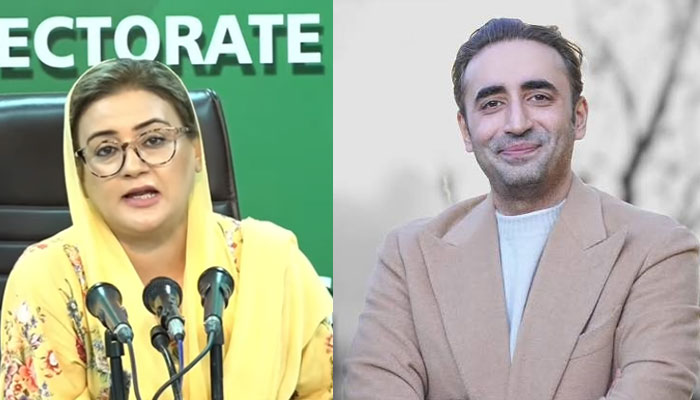
    Punjab Information Minister Azma Bukhari has criticised Pakistan Peoples Party (PPP) Chairman Bilawal Bhutto-Zardari, saying voters in Azad Jammu and Kashmir (AJK) had backed development and modernisation and that political parties should respect the public mandate. Speaking at a press conference in Lahore, Bukhari said the people of the Mirpur Division had made their choice through the ballot and supported the Pakistan Muslim League-Nawaz (PML-N). She urged rival parties to accept the election results with an open heart, saying respect for the people’s decision was an essential part of democratic politics. Bukhari claimed that the election outcome had increased frustration within an unnamed political party. Referring to Bilawal’s recent remarks, she accused him of trying to mock the PML-N leadership while avoiding a discussion of his party’s performance in Sindh. She challenged the PPP chairman to present the achievements of his party’s 18-year rule in Sindh, particularly in Karachi. She questioned why the city still lacked an effective public transport system and why municipal authorities struggled to manage waste collection. Comparing the performance of the Punjab and Sindh governments, Bukhari highlighted several initiatives launched under Punjab Chief Minister Maryam Nawaz, including public transport projects, the provision of laptops and scholarships to students, air ambulance services, improved drainage equipment and development schemes across the province. She also pointed to projects in southern Punjab, including public transport initiatives and the Recep Tayyip Erdogan Hospital, arguing that the region had received greater attention under the PML-N government. Bukhari further criticised the PPP’s record on education, saying students in Sindh continued to raise concerns over access to educational opportunities, while the Punjab government had expanded scholarship and laptop programmes for young people. She also defended the Punjab government’s response to heavy rainfall, saying authorities had equipped the Water and Sanitation Agency (WASA) with modern machinery to deal with urban flooding and drainage challenges. Bukhari invited Bilawal to visit Punjab and see its development projects firsthand, saying he should compare the performance of the two provinces before criticising Punjab’s infrastructure. Turning to the AJK election results, she said the people had clearly expressed their preference through their votes and urged all political parties to accept the outcome rather than question the public’s choice.
  • | |

    Nawaz Sharif heading LHAR to give old Lahore a new…

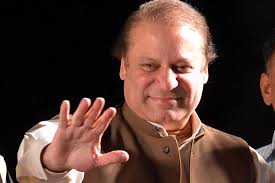
    Lahore’s old city is going through a major change under a heritage revival plan, and the project has now been placed directly under the leadership of Pakistan Muslim League-(N) leader Muhammad Nawaz Sharif. According to a recent notification issued by the Punjab government’s Local Government and Community Development Department, Nawaz Sharif has been made chairman of the newly formed board of the Lahore Heritage Area Revival project, also known as (LHAR) and patron-in-chief of the Punjab Walled Cities and Heritage Areas Authority (PWCHAA) Earlier, Nawaz Sharif only held the position of chief patron of the project. This meant he could give advice but had no formal powers. Under the new rules, the project’s legal structure has been changed, and a proper board has been formed. This board is now headed directly by the three-time former prime minister. The notification was published in the Punjab Gazette on July 23. It was issued under Section 8-A of the Punjab Walled Cities and Heritage Areas Authority Act 2012. The notification was approved by the governor of Punjab. With this change, the Lahore Heritage Area Revival Board has been formally established. The board now has full executive and administrative powers. Officials say this step was taken to remove bureaucratic delays in restoring the city’s historic fabric. The heritage revival areas cover Mughal, Sikh and colonial-era sites. Details of the ongoing work will be shared soon. Several government departments are working together on the project. These include the Traffic Engineering and Planning Agency, known as TEPA, C&W and PWCHAA. TEPA is handling infrastructure work, such as building basements and parking. The PWCHAA is handling the restoration of old buildings. A major part of the plan is to turn old city streets into pedestrian zones. This includes the route from New Anarkali to Paan Gali in Lohari. It also includes Bora Bazaar, which has Bakshi Market inside it. Another walking route will run from Kacheri Chowk to Anarkali and then onward to Neela Gumbad. To name a few. Many buildings along these routes are old. All of them are being restored as part of the project. One of the biggest parts of the plan is a new public space called Neela Gumbad Square, where a two-floor underground parking garage is being built; it will become a place for families to walk and gather. Fountains and seating areas will be added. The Parks and Horticulture Authority will help plant trees and grass in the area. Other nearby heritage sites are also being restored. These include Ewing Hall and the first Bank of India building. The mosque near Neela Gumbad is also being renovated, while some roads nearby will be closed for traffic. LHAR spokesperson also responded to earlier criticism in media reports, where past reports only mentioned TEPA, even though other departments were also doing important work on the ground. The project now has a monitoring cell in place to track progress and check timely completion. The spokesperson further said that shopkeepers near Neela Gumbad were paid compensation a year before their shops were relocated. The officials had collected data on each shop’s daily business and income before deciding how much compensation to give; this was done so shopkeepers would not lose their livelihood during construction. With Nawaz Sharif now in the driving seat and his past records of completing mega projects on time, officials believe the project will move forward faster. The government says the goal is to restore Lahore’s historic buildings and streets while creating new public spaces for residents and visitors.

  • | |

    Bilawal vows to fight alleged poll rigging in AJK

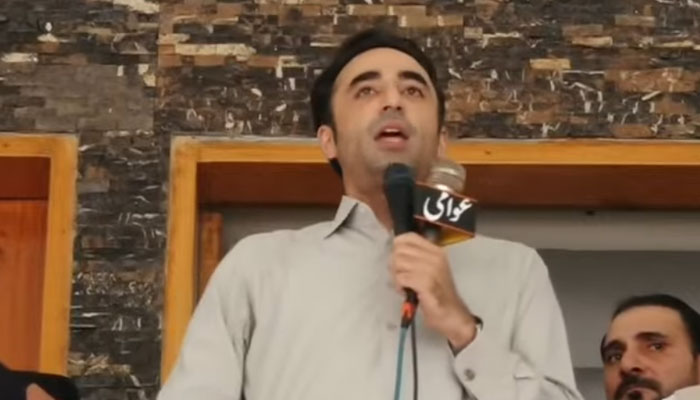
    Pakistan Peoples Party (PPP) Chairman Bilawal Bhutto Zardari has accused the Pakistan Muslim League-Nawaz (PML-N), without naming the party directly, of relying on electoral manipulation to gain power and warned that his party would resist any attempt to rig the upcoming elections in Azad Jammu and Kashmir (AJK). Addressing a PPP workers’ convention in Muzaffarabad, Bilawal said the large turnout at the gathering showed that his party was heading towards victory in the August 2 elections. He urged party workers to remain active and mobilise voters, expressing confidence that the “arrow” — the PPP’s electoral symbol — would emerge victorious. Bilawal alleged that certain political groups had historically benefited from manipulated elections and now believed they could use the same tactics in AJK. He said the people of Kashmir would not allow such efforts to succeed and that PPP workers and voters would stand against any attempt to undermine the electoral process. Referring to his party’s political rivals, Bilawal claimed that their rise to power had often followed controversial election processes. He said the PPP had repeatedly faced electoral challenges but continued to win public support despite what he described as unfair political practices. The PPP chairman also raised allegations of rigging in the constituency of senior party leader Chaudhry Yasin. He claimed that polling agents and workers had reported irregularities at around 30 polling stations, alleging that the stations were occupied and votes were unlawfully cast. Bilawal said he had evidence regarding the alleged irregularities and called on the Election Commission to order immediate re-polling at the affected polling stations if it had no involvement in the alleged misconduct. He maintained that the PPP would accept defeat if voters rejected the party through a transparent and fair election. However, he said the party would not accept what he called a “stolen election” and would continue to challenge any result that emerged through alleged manipulation. Bilawal also pledged to fight for the restoration of what he described as the “stolen seats” of Kashmir and promised to pursue the rights of the people through democratic and constitutional means. He said the PPP wanted to secure ownership and political rights for the people of AJK through the power of the ballot rather than through armed struggle. He urged voters to support the party’s electoral campaign and vowed that the PPP would continue its efforts to raise the Kashmir issue at the international level. Bilawal said the Bhutto family and the PPP had worked for three generations to highlight the Kashmir cause globally, adding that his party would continue to advocate for the rights and aspirations of the people of the region through political and diplomatic channels.

  • | |

    Rs4.21bn collected, thousands await housing

    Islamabad: The Senate Standing Committee on Housing and Works raised serious concerns over delays in major federal housing projects, where thousands of allottees have waited years for possession of their plots and apartments despite making payments. The committee decided to summon the Chairman of the National Accountability Bureau (NAB) in its next meeting to brief it on investigations, inquiries and legal issues related to delayed housing projects managed by the Federal Government Employees Housing Authority (FGEHA). The decision came after lawmakers expressed frustration over the long delays in the Green Enclave I project in Bara Kahu, Islamabad, where some allottees have reportedly waited years for possession after making payments for many years. The Senate committee, chaired by Senator Nasir Mehmood, reviewed the progress of several housing schemes and questioned why projects launched for public sector employees and other members had remained incomplete for such a long period. During the briefing, officials informed the committee about the status of housing schemes managed by FGEHA and the PHA Foundation. While reviewing the Green Enclave I project in Bara Kahu, the committee learned that land acquisition started in 2009 and the project covers around 3,375 kanals. Members expressed concern that despite a construction agreement being signed in 2019, physical development work remains suspended due to disputes related to contracts, work execution and security requirements. The committee was told that many allottees had been making payments since 2008 but had still not received physical possession of their plots. Lawmakers questioned how citizens could continue waiting for years after fulfilling their financial responsibilities. Housing officials informed the committee that development work could restart after approval from the relevant board once contractual disputes are resolved. However, members expressed dissatisfaction over the continued delay and decided to seek answers from NAB regarding the matter. The committee also reviewed the Green Enclave II or Sky Garden Housing Scheme located in Mauza Kathar and Mauza Mangal. Officials informed the committee that the project covers around 7,300 kanals and that more than 2,455 consent notices have been issued. The committee was informed that over Rs4.21 billion had been collected from members under different categories. Officials said land related issues in Mauza Kathar had been resolved, while the court decided legal disputes regarding Mauza Mangal in favour of FGEHA in April 2026. The committee reviewed the expected development timeline and was informed that block wise plot handovers are planned between December 2026 and March 2027. To remove administrative delays, the committee decided to call the Deputy Commissioner Rawalpindi for a detailed briefing in the next meeting. The committee also examined the EHFPRO Lifestyle Residency Apartments project in Sector G 13, Islamabad. Officials informed lawmakers that around 70 percent of the physical work had been completed, but the project faced serious problems due to rising construction costs after COVID 19, financial difficulties and the death of the private contractor. Following repeated violations, the joint venture agreement was terminated and FGEHA took control of the project. Officials said they are now trying to restart the project through a Public Private Partnership model to avoid placing additional financial pressure on allottees. The committee was informed that the project’s planning approval has been completed and the process to select a new partner is underway. Members directed the ministry to provide regular updates on the progress of the project. The Senate committee also reviewed the PHA F Residencia Project on Kuchlak Road, Quetta, and other government housing facilities. Officials informed the committee that the Quetta project has achieved around 50 percent physical progress. They said construction work has progressed on houses and apartment blocks, while additional units are being processed through new tendering. The committee also reviewed maintenance work at Federal Lodges and noted improvements in cleaning, repairs, and electrical work. Members discussed issues faced by residents, including water supply, drainage and basic facilities at some housing schemes. Officials informed the committee that discussions were ongoing between housing authorities and residents’ representatives to solve these problems. The committee also reminded residents that any unauthorised changes in buildings must be regularised through the Capital Development Authority. Senator Nasir Mehmood stressed that housing projects involving public money must be completed on time and that the rights of allottees must be protected. The committee said delays in public housing schemes create financial and emotional difficulties for citizens and directed relevant departments to improve transparency and speed up development work.

  • | |

    HR Committee raises alarm over violence against wo…

    Islamabad: Concerns over increasing cases of gender based violence and the protection of women and children came under discussion as the National Assembly Standing Committee on Human Rights reviewed government efforts to prevent crimes, improve investigations and provide better support to victims. The committee questioned whether existing systems are strong enough to protect victims and ensure quick justice, while calling for clearer laws, wider awareness campaigns and improved access to support services. The 13th meeting of the committee reviewed the performance of the National Commission on the Status of Women (NCSW), government measures against violence and progress on previous recommendations. The meeting was chaired by Committee Chairperson Asiya Naz Tanoli, with Federal Parliamentary Secretary for Information and Broadcasting Barrister Danyal Chaudhry serving as co chair.   During the briefing, NCSW informed the committee that its complaint management system has been active for the last five months to help women report problems and receive support. Officials said consultants working on the complaint system received special training with support from Rozan to improve complaint handling. The committee was also informed that gender based data is being updated through the National Gender Data Portal to help the government make better policies based on facts. Officials said the first Gender Parity Report has already been published and future reports will include provincial level information. The committee was informed that NCSW has also conducted media training sessions to improve reporting of rape and gender violence cases. Officials said journalists were trained to report such sensitive cases with responsibility, dignity and care for victims. The Ministry of Human Rights told the committee that reported cases of gender based violence increased between 2022 and 2024, leading authorities to strengthen special investigation units and women and child protection units. Officials said police officers and relevant staff received specialised training while complaint systems were improved to provide faster support to victims. Barrister Danyal Chaudhry stressed that awareness about harassment laws is necessary in both public and private institutions. He said people must understand their rights and responsibilities so that victims can seek help and legal procedures remain clear for everyone involved. He also called for removing confusion around the definition of harassment so that both complainants and accused persons understand their legal position. The parliamentary secretary recommended wider promotion of the Ministry of Human Rights 1099 helpline and the 1121 child helpline through newspapers, pamphlets and other awareness campaigns. He said many people are unaware of available support services and greater publicity can help victims reach authorities quickly. Committee member Shahida Rahmani suggested presenting a real rape case as a case study before the committee. She said studying actual cases could help lawmakers prepare practical recommendations to improve the justice system. The Secretary of the Ministry of Human Rights informed the committee that some countries provide free trial systems for rape victims. He suggested that Pakistan should examine the possibility of introducing a similar system to make justice safer, easier and more accessible for victims.

  • | |

    SBP asked to fix banking gaps after complaints of …

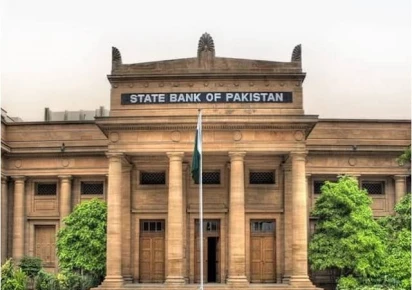
    Islamabad: The State Bank of Pakistan (SBP) came under pressure in the Senate after lawmakers raised concerns over complaints from customers, including Politically Exposed Persons (PEPs), who faced difficulties with commercial banks and alleged delays in resolving their issues. The Senate Standing Committee on Finance and Revenue questioned why banks and the SBP failed to establish clear and uniform procedures despite earlier directions to create dedicated officers and better complaint handling systems. During the meeting, Member National Assembly Muhammad Moin Amir Pirzada informed the committee that his bank account was closed in April 2026 and despite repeated communication with the concerned bank and the State Bank of Pakistan, he did not receive a satisfactory response. He told the committee that such situations show the need for a proper yearly data update system and clear banking procedures so customers do not face unnecessary difficulties. The committee learned that no common Standard Operating Procedures had been developed across the banking sector despite previous recommendations. Governor State Bank acknowledged the concerns and informed the committee that rules for dealing with Politically Exposed Persons already exist. He said the problem occurred at the branch level and assured lawmakers that steps would be taken to improve implementation. The Governor informed the committee that a backup officer had already been assigned and a dedicated focal person would also be appointed to handle such matters. The committee stressed that all banks must follow the same procedures so customers receive equal treatment and complaints are resolved quickly. Federal Minister for Finance also supported the need for standard procedures and said proper systems are necessary for better customer service and effective complaint resolution. The committee meeting, chaired by Senator Saleem Mandviwalla, also discussed wider banking issues including customer charges, investment policies and employee matters. Members raised concerns about banking service charges, especially SMS alerts and card transactions. The State Bank Governor informed the committee that SMS alerts are optional, allowing customers to choose whether to use the service. He said banks are also introducing alternative options such as mobile application and email alerts for customers. The Governor clarified that Visa card transactions conducted within Pakistan would not be charged in US dollars. He also informed the committee that banks are currently covering around Rs80 billion annually under the Pakistan Remittance Initiative. Committee members appreciated the reforms under the initiative, stating these steps have helped save significant costs. The committee also discussed complaints regarding dress code instructions in some banks. Senator Dr. Zarqa Suharwardy Taimur raised concerns that some female employees were allegedly pressured to wear abayas. Senator Sherry Rehman stated that no employee should be forced to adopt a specific type of clothing. The State Bank Governor informed the committee that previous recommendations had already been communicated to banks. He clarified that the committee had only recommended a modest dress code and had not ordered banks to impose any particular clothing. The committee directed all banks to submit their human resource dress code policies and instructed SBP to issue updated guidelines to ensure employees are not placed under unnecessary pressure. The committee also reviewed concerns related to investment protection policies. Senator Manzoor Ahmed suggested that incentives provided to the Reko Diq project should also be considered for other investment projects in Pakistan. Finance Ministry officials informed the committee that only one project currently meets the existing criteria and the government’s financial position does not allow similar benefits for all projects. The Finance Minister assured the committee that future proposals would be reviewed according to available resources.

  • | | |

    PM Shehbaz orders scientific system to assess tax …

    Prime Minister Shehbaz Sharif has directed the Federal Board of Revenue (FBR) to develop a scientific and comprehensive method to assess tax potential in different sectors of the economy. The new system is aimed at improving tax collection. It will also help identify sectors with untapped revenue potential. The government wants to strengthen tax administration and reduce tax evasion. The prime minister issued the directives during a meeting on FBR reforms in Islamabad on Wednesday. He directed the FBR to work with the power sector to identify businesses and individuals involved in the informal economy. Authorities will also identify those suspected of avoiding taxes. Shehbaz instructed officials to take legal action against people and businesses found involved in tax evasion. The prime minister said improvements in the FBR’s monitoring system were already producing results. He pointed out that sugar production data had matched FBR records for the first time in Pakistan’s history. He described the development as an important sign of improved monitoring and tracking. Shehbaz praised FBR Chairman Rashid Mahmood Langrial and his team for their efforts. He also appreciated taxpayers and businesses that were following tax laws. The prime minister said the government had provided maximum possible support to export-oriented and domestic industries. He said the government would continue facilitating businesses while ensuring compliance with tax regulations. He directed the FBR chairman and senior officials to spend the first week of every month in Karachi. They will meet business representatives and address their concerns. Shehbaz also ordered the expansion of digital production monitoring. He directed officials to make tracking systems operational in the textile, beverages, steel, poultry, edible oil and ghee, and tyre sectors by December. He also stressed that appointments and transfers within the FBR must be made strictly on merit. The prime minister praised the new system for evaluating officers. He said merit and transparency must remain central to FBR reforms. He directed authorities to prepare a list of high-performing officers. The best-performing officials will be considered for awards on Independence Day. Shehbaz also ordered an immediate third-party audit of customs bonded warehouses. The audit will examine the warehouses and identify possible irregularities. Officials will then be required to take corrective measures where necessary. The meeting was informed about progress on production tracking systems and human resource reforms. Officials said tracking systems were already fully operational in the sugar, cement, tobacco, tiles and fertiliser sectors. Work in five additional sectors was also nearing completion. These sectors have an estimated tax potential of more than Rs700 billion. Officials said tracking systems were also being developed for nine other production sectors. These sectors are estimated to have an additional tax potential of around Rs560 billion. The prime minister directed authorities to complete indirect tax tracking across the production sector by the end of the year. The meeting also reviewed reforms in the FBR’s workforce. Newly recruited officers are receiving specialised training. Existing officers are also undergoing training. The programmes have been designed around merit and performance. Officials said the training modules were aligned with international standards and Pakistan’s tax requirements. A new performance evaluation system has also been introduced. Under the system, high-performing officers can receive recognition. Officials who fail to meet performance standards can face penalties. The government has also appointed 957 third-party auditors. The move is intended to improve transparency and strengthen tax-related processes. Recruitment of 280 goods evaluators is also under way. The evaluators will work under the customs faceless assessment system. The meeting also discussed measures to reduce unnecessary tax disputes. A Case Scrutiny Committee is being established for this purpose. The committee will determine whether tax cases should proceed based on their merits. Officials also provided an update on Alternative Dispute Resolution Committees. By June 2026, 152 out of 377 applications had been resolved within 90 days. The process resulted in the recovery of Rs54 billion in tax revenue. Digital reforms also reviewed Prime Minister Shehbaz Sharif separately reviewed progress on the national digital vision. He ordered immediate measures to make the newly established Sky47 AI national central data centre available to federal government institutions. The prime minister said the initiative would help modernise government services. He said citizens would eventually be able to use a single digital identity to access multiple public services. These services could include government document verification, banking, healthcare and transfers. The prime minister said a central national data centre would bring information from federal institutions together. He said this would reduce the need for separate data centres. It could also help save public resources. Shehbaz said the national digital vision was important for building a more integrated society. He highlighted three key areas of the programme. These include the digital economy, digital citizen services and digital government services. He directed authorities to initially focus on health, agriculture, utilities, housing and small and medium-sized enterprises. The aim is to ensure that citizens begin receiving improved digital services as quickly as possible. Officials said digital implementation was already under way in agriculture, food, health, energy, housing and SMEs. Work has also started in 14 additional priority sectors. The housing component will introduce a central identification number for public and private properties. The SME component will create an integrated system of unique legal identities for businesses. The government believes these measures can improve transparency and economic activity. Shehbaz also ordered an early meeting of the National Digital Commission. The meeting will include key stakeholders. Provincial governments will also be consulted. The commission was established under the Digital Nation Pakistan Act 2025. It is chaired by the prime minister and includes the chief ministers of all provinces. The prime minister said consultation with federal and provincial institutions was essential for effective implementation. He also stressed the importance of international standards and global best practices.

  • | |

    Kuwaiti Foreign Minister meets Army Chief  Asim M…

    RAWALPINDI: Kuwait’s Minister of Foreign Affairs, Sheikh Jarrah Jaber Al-Ahmad Al-Sabah, met Field Marshal Syed Asim Munir, Chief of Army Staff and Chief of Defence Forces, at the General Headquarters (GHQ) in Rawalpindi on Tuesday to discuss regional security and ways to strengthen cooperation between the two countries. The Kuwaiti foreign minister was accompanied by Kuwait’s Ambassador to Pakistan, Nassar Abdul Rahman J. Al-Mutairi. According to the Inter-Services Public Relations (ISPR), the two sides exchanged views on matters of mutual interest, the regional security environment, and opportunities to further deepen bilateral cooperation. During the meeting, the Kuwaiti foreign minister appreciated Pakistan’s continued support and its constructive role in promoting regional peace and stability. He also highlighted the longstanding fraternal relationship between Pakistan and Kuwait. Field Marshal Syed Asim Munir reaffirmed Pakistan’s commitment to further strengthening ties with Kuwait, stressing that both countries share a common vision for regional peace, stability, and prosperity. He expressed confidence that the enduring partnership between the two nations would continue to grow across multiple areas of cooperation.

  • |

    Punjab shifts Journalists’ Colony Phase-II to Charbagh

    Lahore: In a significant move to provide residential facilities to the journalist community, the Government of Punjab has decided to relocate Journalists’ Colony Phase-II from Katar Band Road to J Block of the Charbagh Scheme. The project will be developed in accordance with the previously approved master plan. A high-level meeting was held at the Ravi Urban Development Authority (RUDA), jointly chaired by RUDA Chief Executive Officer Imran Amin and Secretary Information Punjab Tahir Raza Hamdani. The meeting reviewed the relocation of Journalists’ Colony Phase-II, the progress made so far, and the future roadmap to ensure the timely completion of the project. The meeting was attended by Lahore Press Club President Arshad Ansari, General Secretary Afzal Talib, Punjab Journalists Housing Foundation (PJHF) Deputy Managing Director Adnan Rashid, Assistant Director (Administration) Asad Hussain, RUDA Director Public Relations Colonel Abid Latif, and other senior officials. It was decided that, in order to expedite the project, the Punjab Journalists Housing Foundation would immediately provide RUDA with the list of eligible journalists for Phase-II plots. Upon receipt of the list, RUDA will issue formal allotment/intimation letters to the eligible applicants so that the remaining stages of the project can proceed without delay. The meeting further decided that the Charbagh Scheme (J Block) project will be implemented under the previously approved master plan. Advance payments and installment schedules will remain unchanged and will be collected in accordance with the original agreement. Development charges will be collected directly by RUDA, while all the rules and regulations applicable to Journalists’ Colony Phase-II will continue to apply to the eligible allottees. Speaking on the occasion, Secretary Information Punjab Tahir Raza Hamdani thanked RUDA CEO Imran Amin and appreciated his efforts in line with the vision of Punjab Chief Minister Maryam Nawaz Sharif to provide housing facilities to journalists. He expressed confidence that RUDA would complete the development work, hand over possession of the plots, and finalize all remaining stages of the project within the stipulated timeframe, enabling journalists to construct their homes. Lahore Press Club President Arshad Ansari thanked Chief Minister Punjab Maryam Nawaz Sharif, Provincial Minister for Information Azma Bukhari, Secretary Information Tahir Raza Hamdani, and RUDA CEO Imran Amin for their commitment to fulfilling the government’s promise to the journalist community. He said that the relocation of Journalists’ Colony Phase-II to the prime location of Charbagh reflects the Punjab Government’s dedication to the welfare of journalists. He added that the entire journalist community appreciates this initiative and congratulated all eligible journalists included in Phase-II.

  • |

    PSCA reunites missing child with family after three months

    Lahore: A three-month-old missing child, Ghulam Rasool, has been safely reunited with his parents as a result of a successful efforts of “Mera Pyara” Virtual Centre for Child Safety of Punjab Safe Cities Authority. According to the spokesperson of Punjab Safe Cities Authority, the missing child Ghulam Rasool, who was found within the jurisdiction of Police Station Sadar Muridke, was safely shifted by police to the Child Protection Bureau Lahore. Following this, “Mera Pyara” team initiated immediate efforts to identify the missing child and successfully traced his family. The spokesperson stated that after the child was found missing on April 13, 2026, “Mera Pyara” team conducted a detailed interview to collect information and started process of locating his parents. The child did not know his complete home address; however, he only remembered name of 32 Chak.Using modern technology, available data, and multiple sources of investigation, “Mera Pyara” team successfully identified 32 Chak, District Pakpattan. Further investigation revealed that the child’s parents had moved from 32 Chak and were currently residing in Arifwala. The spokesperson further stated that “Mera Pyara” team contacted child’s parents with the help of local sources and, after continuous efforts, successfully reunited missing child Ghulam Rasool with his family. The spokesperson appealed to the citizens that in case of any information regarding a missing, abandoned child, or a special person, citizens should immediately call Punjab Emergency Helpline 15 and select Option 3 or dial contact number 0309-0000015, enabling swift action along with ensuring safe recovery and protection of vulnerable individuals.