National

  • | |

    PTI rejects AJK polls, demands fresh elections

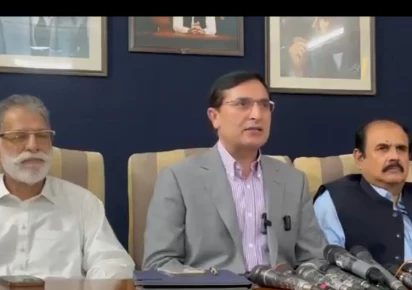
    Pakistan Tehreek-e-Insaf (PTI) has rejected the first phase of the Azad Jammu and Kashmir (AJK) elections. The party has described the July 27 polls as unacceptable and demanded a judicial inquiry into the violence reported in the region. PTI leaders also called for the cancellation of the remaining two phases of the elections. They demanded fresh elections across AJK in a single phase under an independent and impartial election commission. Speaking at a press conference on Wednesday, PTI Chairman Barrister Gohar Ali Khan appeared alongside former AJK prime minister Sardar Qayyum Niazi. The leaders strongly criticised the violence reported in Rawalakot, Mirpur and other areas. Multiple reports of deaths and injuries have emerged since Monday. Videos showing unrest have also circulated on social media, although the reported casualties could not be independently verified. Both security agencies and the Joint Awami Action Committee (JAAC) have reported casualties during clashes. Niazi said Kashmiris were facing what he described as unprecedented oppression. He said the situation was particularly concerning because Kashmiris had historically supported the cause of accession to Pakistan. He claimed protesters had attempted to resolve their grievances through negotiations. According to him, the situation deteriorated after their demands were not addressed. Niazi maintained that the protesters were peaceful. He questioned the use of force against them and urged authorities to avoid further escalation. He also criticised the decision to conduct the AJK elections in three phases. Niazi argued that the region has a relatively small population and questioned why the elections could not have been held on a single day. He said the ongoing violence was damaging Pakistan’s position on the Kashmir issue. According to him, AJK is considered an important base for the wider Kashmir cause. Niazi warned that the unrest could send a negative message internationally. He said Pakistan had previously highlighted alleged human rights violations in Indian-administered Kashmir at international forums. He argued that developments in AJK could make it difficult for Pakistan to effectively present its position on Kashmir before the international community. The former AJK prime minister also rejected the portrayal of protesters as terrorists. He said the same people had previously been engaging with authorities through negotiations. Niazi called for dialogue and urged the government to avoid further use of force. He proposed the establishment of a national government in AJK until conditions returned to normal. He said free and transparent elections should then be held across the region, with PTI participating in the process. Gohar also strongly criticised the July 27 elections. He alleged that the polls had failed to reflect the will of the people. The PTI chairman said using force to silence protesters could not resolve political and public grievances. He argued that listening to citizens was a fundamental part of democracy. Gohar criticised both the Pakistan Peoples Party (PPP) and the Pakistan Muslim League-Nawaz (PML-N) for turning the election dispute into a political contest. He said political parties should focus on the violence and reported casualties rather than exchanging allegations over electoral gains and losses. The PTI leader also pointed to the low voter turnout. He claimed that the limited participation represented public dissatisfaction with the existing political system. Gohar said the Kashmir issue was extremely sensitive and should not be used for political interests. He urged all stakeholders to act responsibly and resolve the crisis through dialogue. PTI has now formally demanded a judicial investigation into the reported violence. The party also wants the remaining election phases, scheduled for August 2 and August 10, cancelled. The party has further called for the resignation of the AJK government and the formation of a national government to manage the situation. PTI wants fresh elections to be held across AJK in a single phase. It has called for the process to be conducted under the supervision of an independent and impartial election commission. The party says dialogue should be prioritised to address public grievances and restore normalcy before a fresh electoral process begins.

  • | |

    Balochistan becomes regular police area after Levi…

    QUETTA: The Balochistan cabinet has approved several major measures aimed at improving security, governance, education and public services across the province. One of the key decisions was to declare the entire province a regular police area following the integration of the Levies Force into the police system. The decisions were taken during a cabinet meeting chaired by Chief Minister Mir Sarfraz Bugti at the Chief Minister’s Secretariat on Wednesday. The meeting reviewed several matters linked to law and order, development, administrative reforms and public welfare. The cabinet also approved the third phase of the Chief Minister Scholarship Programme. Under the programme, 300 children of registered workers from Balochistan will receive admission to a quality boarding school in Islamabad. The initiative aims to provide better educational opportunities to children of workers and help them build stronger prospects for the future. The cabinet approved the appointment of Superintendent of Police Nabeel Ahmed as chief operating officer of the Balochistan Safe City Authority. It also approved the establishment of a Provincial Parole Board on the recommendation of the Home Department. A new police station was approved for Hub Marble City. The move is aimed at improving security in the growing industrial and commercial area. The cabinet also approved a Service Level Agreement for the Quetta Safe City Project. The project will support the expansion of modern surveillance systems and technology-based policing in the provincial capital. Several decisions were also taken to strengthen local government institutions. Union Council Mesi Zai and Union Council Mai Zai were upgraded to municipal committees. The cabinet also approved a new Municipal Committee in Gulistan. The measures are intended to improve administrative services and strengthen local governance. For improved planning of development schemes, the cabinet approved the Balochistan Planning Manual. The meeting also endorsed the Balochistan Child Protection Rules 2026. The rules are aimed at strengthening safeguards for children and improving their welfare across the province. The cabinet approved amendments to the Balochistan Cadet Colleges Act 2026. It also extended the contract of the prosecutor general for another two years. Another major decision involved approval of the Balochistan Hybrid Weighted Procurement Policy 2026. The policy is intended to improve transparency and efficiency in government procurement. The cabinet also approved a financing proposal for the Harnai-Sibi Road Project. Other decisions included approval of the Gwadar Development Authority Service Rules 2024 and the creation of a new tehsil and subdivision in Nasirabad district. Officials said the administrative changes would help improve public service delivery and make development planning more effective. The meeting began with prayers for security personnel and civilians who lost their lives in recent incidents. Cabinet members paid tribute to those who died and expressed sympathy with their families. Speaking at the meeting, Chief Minister Sarfraz Bugti said his government was focused on improving law and order across Balochistan.

  • | |

    Sindh information minister Sharjeel Memon accuses …

      Sindh Information Minister Sharjeel Inam Memon has alleged that the Pakistan Muslim League-Nawaz (PML-N) is attempting to secure power in Azad Jammu and Kashmir (AJK) through electoral manipulation rather than the democratic process Speaking at a press conference in Islamabad, Memon strongly criticized the ruling party’s political approach and accused its leadership of relying on what he described as “backdoor” methods to gain power. He claimed that the PML-N was now trying to repeat the same strategy in Azad Kashmir ahead of the upcoming political developments in the region. “The Pakistan Muslim League-N wants to come to power in Azad Kashmir through rigging,” Memon said while addressing journalists. He argued that free and fair elections are essential for maintaining public trust in democratic institutions and urged all stakeholders to ensure transparency in the electoral process. During the press conference, Memon also took aim at former Prime Minister Nawaz Sharif and Punjab Chief Minister Maryam Nawaz. He alleged that Nawaz Sharif had himself entered power through what he called the “backdoor,” adding that Maryam Nawaz had followed the same path. Referring to one of her recent public remarks, Memon criticized her statement asking, “When will the Day of Judgment come?” He said such expressions should not be used by political leaders, arguing that they were inappropriate in public discourse. The Sindh minister emphasized that politicians should exercise caution in their choice of words and avoid making statements that could create unnecessary controversy or distract from issues affecting the public. He said political leaders have a responsibility to maintain respectful and constructive dialogue, particularly during periods of heightened political activity. Memon also spoke about the challenges facing Karachi, describing the country’s largest city as unique in both its size and complexity. “Karachi has many challenges because Karachi is not just a city—it is like a country,” he remarked. He said the metropolis faces a wide range of issues, including infrastructure demands, traffic congestion, rapid population growth, and the need for improved public services. According to Memon, the Sindh government continues to work on addressing these longstanding challenges through development projects and administrative reforms. He stressed that managing Karachi requires coordinated efforts from both provincial and federal institutions due to the city’s economic significance and its role as Pakistan’s commercial hub. The press conference primarily focused on the current political environment, electoral transparency, and governance issues. Memon reiterated that democratic values must be upheld and that any attempt to influence election outcomes unfairly would undermine public confidence in the political system. His remarks come amid increasing political activity across the country, with parties positioning themselves ahead of future elections and regional political contests. The statements are expected to draw responses from the Pakistan Muslim League-N, which has previously rejected similar allegations and maintained that it believes in democratic and constitutional processes. The comments made by Sharjeel Memon add to the ongoing political debate in Pakistan, where electoral integrity, governance, and accountability continue to dominate public discussion. As political tensions persist, attention remains focused on ensuring transparent elections and promoting constructive political dialogue across the country.

  • | | |

    Saudi Arabia rolls over $5bn Pakistan deposit

    Pakistan’s external financing pressure has eased after Saudi Arabia extended a $5 billion deposit for another three years, State Bank of Pakistan Governor Jameel Ahmad said on Wednesday. The rollover will give Pakistan additional breathing space as it manages its external debt obligations and works to strengthen its foreign exchange position. According to the governor, the Saudi deposit has been extended until December 2028. The development has reduced Pakistan’s gross external financing requirement for the current fiscal year to around $21.5 billion. Pakistan has received a total of $8 billion in deposits from Saudi Arabia. This includes $3 billion received in April this year. The remaining $5 billion had previously been rolled over annually. The latest arrangement provides Pakistan with a longer repayment period and reduces immediate pressure on its external account. Ahmad said lower interest costs on foreign debt had also helped reduce Pakistan’s financing requirements. He estimated the reduction at nearly $500 million. Pakistan continues to rely significantly on external financing to meet debt repayments and cover external account needs. The government is seeking to increase exports, attract investment and improve other sources of foreign exchange. The governor said the International Monetary Fund has projected Pakistan’s external financing requirements at around $30 billion for the next fiscal year. However, he said the estimate could be revised downward if the government succeeds in securing additional longer-term financing and improving external inflows. According to Ahmad, Pakistan’s $21.5 billion financing requirement includes around $7.3 billion in cash deposits and approximately $3.5 billion in foreign commercial loans maturing during the year. Pakistan also owes around $250 million to Kuwait through a long-standing cash deposit arrangement. The governor did not comment on reports concerning Pakistan’s request for a $10 billion credit facility from the United States. He said the federal government would be in a better position to respond to the matter. Pakistan also repaid a $1.3 billion Chinese commercial loan during July. The repayment temporarily reduced the country’s foreign exchange reserves to around $17.3 billion as of July 17. Ahmad said China was expected to refinance the amount, with the funds potentially arriving next month. Of Pakistan’s total external financing needs, around $7.5 billion represents net debt repayments. The country had already repaid approximately $2.2 billion during July, reducing the pressure for the remaining months of the fiscal year. The central bank governor also revealed that the State Bank had purchased around $9 billion from the local foreign exchange market during the previous fiscal year. The purchases were aimed at strengthening the country’s foreign exchange reserves. Over the past three years, the central bank’s total purchases from the market have reached around $28 billion. The State Bank expects workers’ remittances to continue supporting Pakistan’s external position. Remittances are projected to help finance a significant portion of the expected trade deficit. The central bank has also set a target of increasing foreign exchange reserves to $20.20 billion by the end of December 2026. Meanwhile, Ahmad told the Senate Standing Committee on Finance that the federal government had not allocated a subsidy for remittance transfers. He said commercial banks would now bear the cost of transferring workers’ remittances. Overseas Pakistanis sending money home would not be charged additional transfer fees. The committee also reviewed banking charges and services, including SMS alerts and card transactions.

  • | |

    Saudi Arabia names new envoy to Pakistan

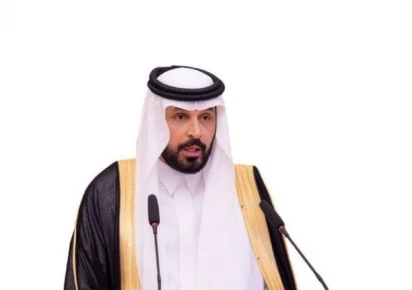
    Saudi Arabia has appointed Dr Rajeh bin Tami Al-Baqami as its new ambassador to Pakistan, replacing Nawaf bin Said Al-Malki. The appointment comes as Pakistan and Saudi Arabia continue to strengthen their longstanding partnership in defence, investment, trade and regional security. The Saudi Ministry of Foreign Affairs said Al-Baqami was among eight newly appointed ambassadors who recently took the oath of office. The ministry shared photographs of the newly appointed envoys and said they had been sworn in on behalf of the Saudi leadership. Al-Baqami brings both military and diplomatic experience to his new position. He previously served as a major general in the Saudi armed forces before joining the Foreign Ministry at ambassadorial rank. He holds a doctorate in Human Resource Management from Brunel University London. His appointment comes at a time when Islamabad and Riyadh are expanding their strategic cooperation. The two countries recently formalised their defence partnership through a Strategic Mutual Defence Agreement. Under the agreement, aggression against either country is considered an attack on both, further strengthening their long-standing military relationship. Economic cooperation has also become an important part of bilateral ties. Saudi Arabia has pledged major investments in Pakistan under Crown Prince Mohammed bin Salman’s Vision 2030 programme. Riyadh has also provided financial assistance to Pakistan during periods of economic and balance-of-payments pressure. Saudi Arabia remains an important source of oil supplies for Pakistan, including arrangements involving deferred payments. The kingdom has also supported Pakistan’s foreign exchange position through deposits with the State Bank of Pakistan. Relations between the two countries have gained further momentum amid changing regional security dynamics. Islamabad and Riyadh have maintained close consultations on regional developments, including tensions involving Iran. Pakistan has also provided military support to Saudi Arabia during periods of heightened security concerns in the region. Al-Baqami succeeds Al-Malki, who served as Saudi ambassador during a period of expanding political, defence and economic cooperation between the two countries. His arrival is expected to provide further momentum to bilateral engagement and strengthen coordination between Islamabad and Riyadh.

  • | |

    Overseas Pakistanis to verify Islamabad properties…

    MANCHESTER: British-Pakistani entrepreneur Shafiq Akbar has announced that an online property verification service in Pakistan will be launched next month, describing it as a major step towards protecting overseas Pakistanis from property fraud and restoring confidence in the country’s real estate sector. Speaking at an investment event in Manchester, Akbar said many overseas Pakistanis want to invest in Pakistan, whether to own a home, establish a base in the country or build long-term wealth. However, he said the biggest concern preventing many from investing is the fear of fraud and uncertainty over whether their investment will be secure. He said overseas Pakistanis need confidence that the promises made to them will be fulfilled, whether that is receiving ownership of a home or achieving the expected returns on their investment. “It is our responsibility, as Pakistanis, together with the Government of Pakistan and the private sector, to ensure their investments are protected,” he said. Akbar revealed that an online property verification service will be launched in Pakistan next month, allowing overseas buyers to verify the legal status and ownership of properties remotely before making a purchase. He said Pakistanis living in countries such as the UK will be able to check online whether a property in Islamabad has any legal, ownership or other issues before investing, helping them make informed decisions with greater peace of mind. He said the initiative is aimed at improving transparency in Pakistan’s real estate market and reducing the risk of fraudulent transactions, which have discouraged some overseas Pakistanis from investing. Highlighting Pakistan’s investment potential, Akbar said his experience over the past decade has convinced him that the country offers significantly greater growth opportunities than more mature economies. Comparing Islamabad with London, he said the Pakistani capital has witnessed remarkable infrastructure development over the past five to ten years, including new roads, underpasses, motorways, airport expansion and major public infrastructure projects. He said Pakistan’s growing population, expanding infrastructure and status as a developing economy continue to create strong long-term investment opportunities. Akbar also urged the Government of Pakistan to prioritise the protection of overseas Pakistanis’ investments by strengthening legal safeguards and providing greater security for investors. He said giving overseas Pakistanis confidence that their investments are safe would encourage them to invest back home with peace of mind. The online property verification service has yet to be launched, and further details regarding its implementation, regulatory oversight and the mechanism for verifying property records have not yet been disclosed.

  • | | |

    17-year-old killed after trailer hits motorcycle i…

    A tragic road accident involving a heavy vehicle claimed the life of a 17-year-old boy and left another person injured in Karachi on Tuesday, raising fresh concerns over road safety and the movement of heavy traffic across the city. According to rescue officials, the accident occurred near Gulshan Hadeed Turn in the Steel Town area when a trailer collided with a motorcycle carrying two riders. The impact of the crash proved fatal for one of the riders, who died at the scene, while the second rider sustained injuries. The deceased was identified as 17-year-old Usman, a resident of Shah Latif Town. Rescue teams responded promptly to the incident and shifted both the victim’s body and the injured person to Jinnah Postgraduate Medical Centre (JPMC) for legal formalities and medical treatment. Authorities have not yet released the identity or condition of the injured individual. Police officials from Steel Town stated that the trailer driver was taken into custody immediately after the accident. The trailer involved in the collision has also been seized as part of the investigation. A case is being processed, and authorities are examining the circumstances that led to the crash. The latest incident adds to a growing number of fatal accidents involving heavy vehicles in Karachi, where trailers, dumpers, and trucks have frequently been linked to deadly road crashes. Such incidents have repeatedly sparked public concern over traffic management, enforcement of road safety regulations, and the operation of heavy vehicles on busy roads. Residents and road safety advocates have urged authorities to implement stricter measures, including better monitoring of heavy transport vehicles, improved driver training, and stronger enforcement of traffic laws. Many believe that regulating the movement of heavy vehicles during peak traffic hours could significantly reduce the risk of similar accidents. The investigation into the Gulshan Hadeed accident is ongoing, and police are expected to determine whether negligence or traffic violations contributed to the fatal collision. Meanwhile, the loss of another young life has once again highlighted the urgent need for comprehensive road safety reforms to prevent further tragedies on Karachi’s roads.

  • | |

    PM Shehbaz Sharif reviews implementation of nation…

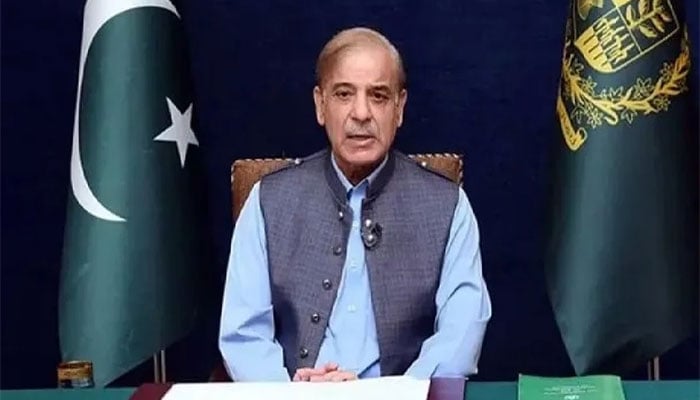
      Prime Minister Shehbaz Sharif chaired a high-level meeting to review the implementation of Pakistan’s National Integrated Digital Policy Framework, with discussions focusing on strengthening digital governance, expanding the digital economy, and improving public services through modern technology. During the meeting, the prime minister directed the relevant authorities to take immediate steps to make the facilities of the National Data Center, “Sky 47,” available to all federal government institutions. He emphasized that the initiative would serve as a cornerstone of Pakistan’s digital transformation strategy and significantly improve the efficiency of government operations. Shehbaz Sharif said the National Data Center would function as a centralized platform for storing and managing data from all government institutions. He explained that maintaining a unified data infrastructure would eliminate the need for individual departments to establish separate data centers, resulting in substantial savings of public resources while ensuring greater coordination and improved data security. The prime minister highlighted the role of the Pakistan Digital Authority in leading the country’s digital transformation. He said the authority was providing an effective direction for the delivery of government services and citizen-centric facilities. According to him, the implementation of the National Digital Vision would play a key role in building a modern, integrated, and technologically advanced society capable of meeting future challenges. Appreciating the progress made so far in promoting digital governance, the digital economy, and digital public services, Shehbaz Sharif instructed officials to strengthen international partnerships under the National Integrated Digital Policy. He stressed the importance of increasing collaboration with global technology partners and ensuring Pakistan’s effective representation at international digital forums to benefit from global expertise and innovation. The prime minister further directed that the National Digital Vision should be implemented across multiple sectors, including healthcare, agriculture, public utilities, housing, and small and medium-sized enterprises (SMEs). He noted that the adoption of digital technologies in these sectors would improve service delivery, enhance efficiency, and provide citizens with faster, more reliable, and transparent access to government services. He also instructed authorities to accelerate efforts to provide better digital facilities to the public without delay. According to the prime minister, the introduction of a Digital ID system would allow citizens to access multiple government services through a single, integrated platform. This initiative is expected to simplify administrative procedures, reduce paperwork, improve transparency, and make public services more accessible for people across the country. The meeting also decided that a session of the National Digital Commission would be convened in the near future. The commission will engage provincial governments and other key stakeholders to ensure coordinated implementation of the National Digital Policy across Pakistan. Officials said the collaborative approach would help align federal and provincial initiatives while accelerating the country’s digital transformation agenda. Several senior cabinet members and government officials attended the meeting, including Minister for Planning Ahsan Iqbal, Minister for Economic Affairs Ahad Cheema, Finance Minister Muhammad Aurangzeb, Commerce Minister Jam Kamal Khan, Law Minister Azam Nazeer Tarar, Information Minister Atta Tarar, National Health Minister Mustafa Kamal, Federal Minister for Information Technology Shaza Fatima Khawaja, Minister of State Bilal Azhar Kayani, and State Bank of Pakistan Governor Jameel Ahmad, along with other senior officials. The meeting reaffirmed the government’s commitment to creating a digitally connected Pakistan by modernizing public administration, strengthening the digital economy, and ensuring that technology-driven services improve the daily lives of citizens while supporting sustainable economic growth.

  • Senate questions PPRA over ePADS security and transparency

    Islamabad: The Public Procurement Regulatory Authority (PPRA) came under Senate scrutiny as lawmakers raised concerns over transparency, cybersecurity and accountability in Pakistan’s public procurement system. During a meeting of the Senate Standing Committee on Cabinet Secretariat, members questioned whether the country’s new digital procurement system was strong enough to protect government contracts, public money and sensitive information. The committee, chaired by Senator Rana Mahmood ul Hassan, reviewed PPRA’s performance and examined reforms aimed at improving how government departments purchase goods and services. The Managing Director of PPRA informed the committee that the Electronic Pakistan Acquisition and Disposal System, known as ePADS 2.0, has been introduced to make government procurement more transparent and reduce the chances of irregularities. Officials said the digital system now covers the complete procurement process, starting from planning until the final award of contracts. The committee was informed that Standard Bidding Documents have been added to the system to ensure all government departments follow the same procedures and prevent unauthorised changes in tender documents. Officials also informed lawmakers that payments made outside the ePADS system are no longer accepted, making the process more controlled and financially accountable. However, committee members raised questions about the electronic procurement platform’s cybersecurity, data protection, and overall safety. Lawmakers questioned how the system protects sensitive procurement information and whether Pakistan’s digital procurement framework matches international standards. The committee directed PPRA to provide a detailed briefing on the cybersecurity measures, encryption methods and data protection systems used in ePADS. Members also asked PPRA to compare Pakistan’s cybersecurity practices with leading international procurement systems to identify areas where improvements are needed. The committee stressed that a digital system can only succeed if it remains secure, reliable and protected from possible cyber threats. During the meeting, members also questioned the difference between manual and electronic procurement, the time required to complete procurement processes and the method used to select successful bidders. PPRA officials explained that contracts are awarded through the Most Advantageous Bid evaluation system. Officials said the relevant government departments decide technical requirements and qualification standards according to procurement rules. The committee was informed that complaints related to procurement decisions are handled through a formal grievance system before parties can approach courts or other legal forums. The committee also discussed government procurement during emergency situations, especially the purchase of fuel and essential goods during changing conditions in the Middle East. PPRA officials clarified that no special exemption was provided for emergency purchases. They informed the committee that existing Public Procurement Rule 21A already provides a legal method for urgent procurement during supply shortages or emergency requirements. The committee also reviewed draft regulations for the disposal of public assets. Officials informed members that the Disposal of Public Assets Regulations 2026 have been prepared according to the updated procurement framework and ePADS requirements. A special disposal module has also been developed within ePADS to ensure public assets are disposed of through a transparent process. The committee directed PPRA to continue improving procurement standards, expand vendor training across Pakistan and strengthen the overall digital procurement system. Members said better procurement management is important because government spending directly affects public services and national development. The committee also expressed concern over the Islamabad Club Administrator’s absence during the meeting despite the session being held at the club. Members recommended that Islamabad Club elections should be conducted according to rules and decided to raise the matter with the Prime Minister’s Office. The committee further expressed dissatisfaction over the National Vocational and Technical Training Commission’s failure to follow previous committee directives. Members recommended referring the matter to the Privileges Committee and informing the Prime Minister about the issue.

  • | | |

    Global oil prices drop 12% in three days, Pakistan…

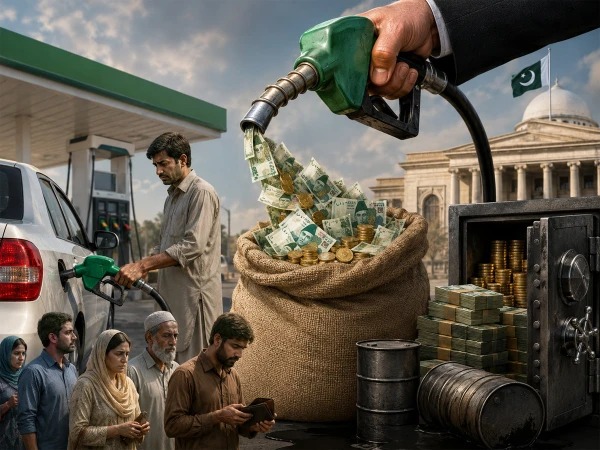
    Pakistani consumers have yet to benefit from a sharp decline in global oil prices, despite international petroleum markets recording a fall of up to 12% over the past three days. The continued high fuel prices have added to the financial burden on households already struggling with rising inflation. Over the last 12 days, fuel prices in Pakistan have increased significantly, with diesel becoming Rs. 65.08 per litre more expensive and petrol rising by Rs. 25.10 per litre. The increases followed the federal government’s decision on July 17 to introduce a daily fuel price adjustment mechanism in line with international market trends. On July 17, petrol was priced at Rs. 310.71 per litre, while high-speed diesel was available at Rs. 323.30 per litre. As of July 29, petrol is being sold at Rs. 335.81 per litre, whereas diesel has climbed to Rs. 388.38 per litre, marking one of the steepest short-term increases in recent years. Although consumers witnessed two minor reductions in petrol prices during this period, the relief was limited. Petrol prices were cut by Rs. 0.35 per litre on July 21 and by Rs. 1.00 per litre on July 27. Diesel prices, however, have not been reduced since the daily pricing mechanism came into effect. International oil markets experienced a sustained upward trend after July 17, contributing to higher domestic fuel prices. However, between July 25 and July 28, global petroleum prices fell sharply, with reports indicating a decline of approximately 12% across major international benchmarks. Despite this significant drop in global prices, Pakistani consumers have not yet received any corresponding reduction at the pump. The absence of immediate relief has sparked concerns among motorists and businesses, particularly those heavily dependent on transportation and logistics, where fuel costs directly affect operating expenses. Economists note that lower international oil prices, if sustained, could create room for a reduction in domestic fuel prices in the coming days. Any adjustment, however, will depend on several factors, including exchange rate movements, government taxes and levies, freight costs, and the pricing formula adopted by the authorities. With inflation continuing to squeeze household budgets, many consumers are hoping the recent decline in global oil prices will soon translate into lower petrol and diesel prices in Pakistan, easing transportation costs and reducing pressure on the overall cost of living.