Top Story

  • | | | |

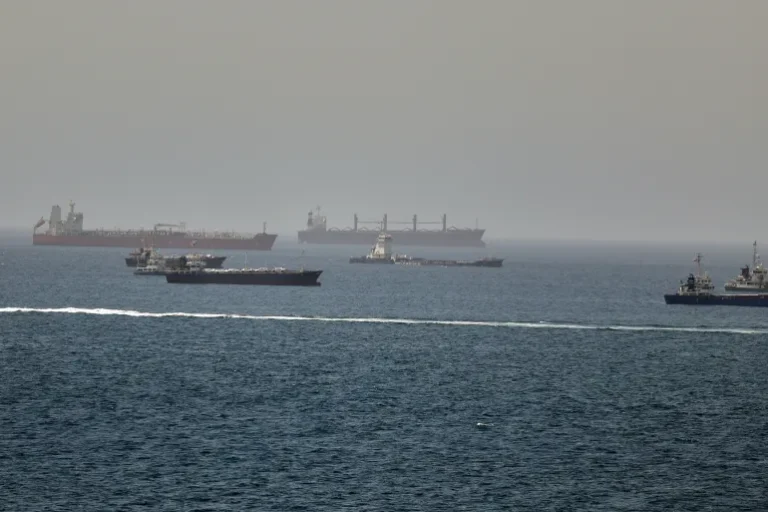
    Iran, Oman make progress on Strait of Hormuz shipping talks

    Iran and Oman have reported progress in discussions aimed at ensuring safer shipping through the Strait of Hormuz amid the ongoing regional conflict. Iranian Foreign Ministry spokesman Esmaeil Baghaei said senior officials from both countries held talks in Tehran over two days to discuss arrangements for managing maritime traffic through the strategic waterway. According to Baghaei, the discussions focused on common principles and practical measures to maintain safe shipping while respecting the sovereignty of Iran and Oman, the two countries bordering the strait. He described the talks as useful and said progress had been made. Further political and technical consultations are expected to continue between the two sides. Baghaei also said there had been no change in the current traffic situation in the Strait of Hormuz. The development comes as tensions remain high between Iran, the United States and Israel. The waterway has become a major focus of the conflict because it is a critical route for global energy shipments. Iranian army spokesman General Abolfazl Shekarchi separately claimed that Washington had failed to achieve its objectives in the Strait of Hormuz and in weakening Iran. He described the situation for the United States as “chaotic and undesirable” and said Washington was apparently considering a new strategy. Shekarchi also suggested that any possible US withdrawal from the conflict could depend on Israel’s approval. Meanwhile, tensions have spread beyond the immediate battlefield. Iran summoned Ukrainian diplomats after Kyiv reportedly struck an Iranian vessel in the Caspian Sea, killing at least one sailor and injuring another. Ukraine said the operation targeted Russian vessels allegedly carrying military cargo linked to Iran. Ukrainian President Volodymyr Zelenskyy has also accused Russia of supporting Iran during the ongoing conflict.
  • | | | |

    Qatar restores maritime traffic after two-week suspension

    Qatar has fully resumed maritime navigation for all types of vessels after a two-week suspension imposed amid heightened security tensions in the Gulf and around the Strait of Hormuz. Qatar’s Transport Ministry announced that maritime activities would resume from Sunday. It urged shipping companies, vessel operators and other concerned parties to follow safety regulations and official instructions to ensure safe voyages. The ministry did not provide further details about the reasons behind the decision. Qatar had suspended maritime navigation on July 12 as regional tensions intensified. It had earlier halted maritime traffic on June 29 before partially restoring operations on July 5. The conflict also prompted several shipping companies to advise vessels to remain outside the Strait of Hormuz because of security concerns. Meanwhile, Iran said it had made progress in talks with Oman on arrangements for safe shipping through the Strait of Hormuz. Iranian Foreign Ministry spokesman Esmaeil Baqaei said officials from the two countries held discussions in Tehran on Friday and Saturday. The talks focused on common principles and practical mechanisms for ensuring the safe movement of ships through the strategic waterway. Baqaei described the discussions as productive and said progress had been achieved. He added that technical and political consultations between the two countries would continue. Iran also said there had been no change in the existing maritime traffic situation in the Strait of Hormuz. The waterway remains a key route for international energy and commercial shipments, making any prolonged disruption a major concern for global trade. At the same time, Iranian military officials claimed that Tehran had targeted US military facilities in Jordan, Kuwait and Bahrain during retaliatory operations. Brigadier General Mohammad Reza Akraminia said Iran had taken action after accusing Washington of violating previous commitments related to the Strait of Hormuz. Iranian army spokesman General Abolfazl Shekarchi also claimed that the United States had failed to achieve its objectives against Iran. He described the situation as difficult for Washington and said the US was looking for a new strategy. Iranian officials further claimed that US military infrastructure in Iraq’s Erbil suffered extensive damage during the conflict. Tehran has warned that its military operations could resume if hostilities escalate again. The United States, meanwhile, says its naval blockade against Iran remains in effect. US Central Command said American forces had redirected several commercial vessels accused of attempting to breach the blockade. It also reported disabling two vessels and boarding others to verify compliance. One oil tanker was inspected in the Arabian Sea before continuing its journey, while another vessel was reportedly disabled in the Gulf of Oman after allegedly ignoring repeated warnings. The US actions have added to concerns over the safety of commercial shipping in the region. Kuwait has rejected reports that it participated in military operations against Iran. Kuwait’s ambassador to the United States said her country had not taken part in attacks against Tehran and had not allowed its territory, airspace or territorial waters to be used for offensive operations. Kuwait has also condemned attacks against shipping in the Red Sea. Its Foreign Ministry described such attacks as a threat to maritime security, international trade and freedom of navigation. Kuwait expressed solidarity with Saudi Arabia and backed measures taken by Riyadh to protect its security and interests. The latest Red Sea tensions followed the Houthis’ announcement of a naval blockade targeting Saudi Arabia. Saudi Arabia subsequently launched strikes against Houthi-held areas, while the Houthis later claimed attacks on Saudi oil facilities. Iran’s Islamic Revolutionary Guard Corps has meanwhile warned countries supporting US military operations against Tehran. An IRGC spokesperson said countries cooperating with Washington could become targets and specifically referred to Britain and Gulf states. US President Donald Trump has also reportedly paused plans for further strikes against Iran after nearly two weeks of military action. Reports suggested concerns over the availability of US air defence supplies in the region were among the factors behind the decision. The reported pause could provide additional space for diplomatic efforts, although it remains unclear whether it represents a temporary break or a broader halt to US strikes. US forces are reportedly maintaining contingency plans should major military operations resume.

  • | | | |

    Israeli settlers torch two mosques in West Bank as…

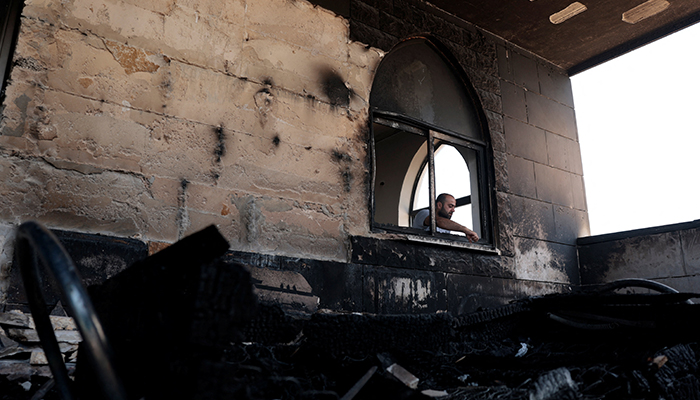
    WEST BANK: Two mosques were set ablaze in the occupied West Bank overnight, Palestinian officials said on Sunday, in the latest escalation of violence that has sharply raised tensions across the territory. The attacks targeted a mosque under construction in Qusra, south of Nablus, and another mosque in the village of Kour, near Tulkarm. The incidents came only days after a deadly confrontation in the nearby village of Tal that left four Palestinians and two Israelis dead. In Qusra, Mayor Abdel Azim Wadi said settlers set fire to the mosque’s entrance and damaged parts of its stonework. Hebrew graffiti, including the word “revenge,” was reportedly sprayed across the walls. The Israeli military said troops were sent to the area after receiving reports of the fire. According to the army, the suspected attackers had already fled when soldiers arrived. Israeli police were expected to collect evidence and investigate the incident. The second attack took place in Kour, where Palestinian officials said a mosque was set alight and racist slogans were written on its walls. Worshippers and local residents managed to prevent the fire from causing further destruction, according to reports. The mosque attacks have added another disturbing chapter to a widening cycle of violence in the West Bank, where clashes, arson attacks and raids have intensified since the Gaza war began in October 2023. The latest incidents also follow a deadly confrontation in Tal on Friday, where four Palestinians and two Israelis were killed. The aftermath has triggered further arrests, raids and attacks in surrounding Palestinian communities. With tensions already running high, the torching of places of worship has raised fresh fears that the latest violence could fuel further retaliation and deepen an already volatile situation across the occupied territory.

  • | | | | |

    Iran ready for talks with US as Tehran sends message through Pakistan

    Iran has reportedly conveyed to Pakistan that it is willing to resume negotiations with the United States, opening a possible new chapter in diplomatic efforts between the two countries, according to a report by Arab media. Sources cited in the report claimed that Tehran has informed Islamabad about its readiness to continue talks with Washington at possible venues including Geneva, Doha, or Islamabad. The discussions, according to the report, would proceed under the framework of a memorandum of understanding. The reported message suggests that Iran wants negotiations to be conducted in phases. According to sources, the first phase would focus on issues related to the Strait of Hormuz, followed by discussions on frozen assets and later the nuclear program. The report further claimed that Iran has rejected any initiative aimed at creating a new route or corridor through the Strait of Hormuz, which remains one of the world’s most strategically important waterways for energy transportation. Earlier, Iran and the United States had reportedly moved toward direct diplomatic engagement after signing an understanding in Islamabad on June 17, 2026. The agreement paved the way for high-level talks, including a meeting in Switzerland after decades without direct negotiations between the two sides. Representatives from Pakistan and Qatar were also present during earlier diplomatic efforts. Pakistan played a role in facilitating communication, while Qatar hosted one round of discussions in Doha. However, the negotiation process later faced setbacks after both sides accused each other of violating commitments and military tensions escalated. Former US President Donald Trump and Iranian officials blamed each other for the collapse of the dialogue process. Despite the tensions, both sides have indicated that diplomacy remains a possible path toward resolving disputes. Iran has maintained that it is open to negotiations but has rejected what it describes as pressure or threats. If confirmed, the reported Iranian message could mark a renewed opportunity for dialogue and place Pakistan in an important diplomatic role between Tehran and Washington.

  • | | | |

    Iran warns Ukraine of response over alleged Caspian Sea attack

    Iranian officials have warned Ukraine that Tehran will not ignore attacks against its interests. The warning came after Iran accused Ukraine of allegedly targeting an Iranian commercial vessel in the Caspian Sea. Ebrahim Azizi, chairman of the Iranian Parliament’s National Security and Foreign Policy Committee, said any action against Iran would carry consequences. He said the United States and Israel were already aware of Iran’s position. Azizi also warned that Ukraine could soon realise that Iran does not leave hostile actions against it unanswered. He said the list of countries making what he described as wrong calculations about Iran’s response was growing. The remarks followed an alleged attack on an Iranian commercial ship in the Caspian Sea. Iranian authorities said one crew member was killed and another was injured in the incident. Iran’s Foreign Ministry condemned the reported attack. It also summoned Ukraine’s chargé d’affaires to formally lodge a protest. The incident has raised concerns about the possibility of the wider Middle East conflict creating new tensions involving Ukraine and Iran. The Caspian Sea has now emerged as another area of concern amid the escalating regional disputes. Earlier, Ukrainian President Volodymyr Zelenskyy claimed that a Russian vessel allegedly carrying weapons to Iran had been targeted in the Caspian Sea. Kyiv has previously accused Iran of supporting Russia in its war against Ukraine. Iran, however, has strongly criticised what it describes as attacks on its territory and interests. Tehran has repeatedly warned that hostile actions could trigger retaliation. Azizi’s latest comments suggest that tensions between Iran and Ukraine could increase following the reported maritime incident. His warning also comes at a time when Iran is already facing heightened military and diplomatic pressure

  • | | | |

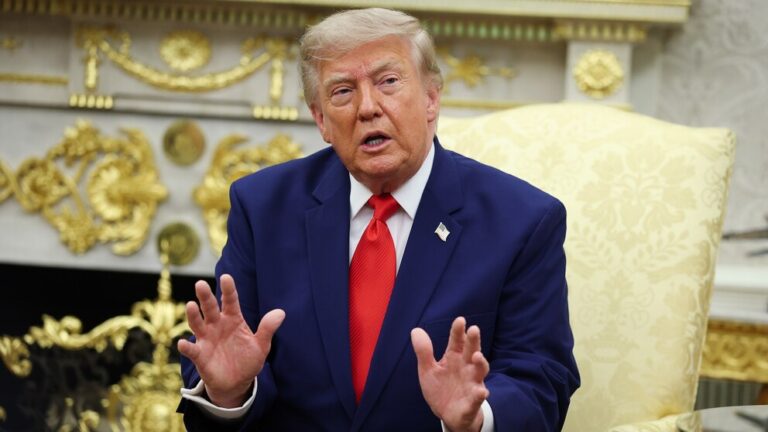
    Trump touts Iran talks as Netanyahu arrives

    US President Donald Trump has said that Washington is engaged in “very friendly talks” with Tehran as efforts continue to prevent a fresh escalation in the Iran war. Trump’s remarks came as Israeli Prime Minister Benjamin Netanyahu arrived in Washington for talks with the US president. The meeting is expected to focus heavily on the conflict with Iran and the possibility of reaching a longer-term agreement. The latest developments come after several days of reduced military activity between the United States and Iran. However, tensions remain high. Both sides continue to issue warnings and maintain their military positions. Iran has indicated that it remains open to diplomacy. At the same time, Tehran has warned that it is prepared to respond strongly if the United States launches another attack. Iranian officials have also stressed that Washington will not decide when the country should choose between negotiations and confrontation. Tehran has said that communication with the US is continuing through intermediaries. Qatar and Pakistan are among the regional countries involved in facilitating communication between the two sides. Iranian officials have described the diplomatic channel as active but uncertain. Several major issues remain unresolved. The nuclear programme is expected to be one of the central subjects in any future agreement. Sanctions, compensation for war-related damage and security arrangements are also likely to complicate negotiations. The Strait of Hormuz remains another major obstacle. The strategic waterway is vital for international energy supplies. Iran has insisted on maintaining a significant role in controlling and regulating movement through the strait. Washington, meanwhile, wants the waterway to return to normal operations. The issue has become an important source of leverage for Tehran and a major concern for the global energy market. Trump has indicated that he wants an agreement but has also warned that military action could resume if diplomacy fails. His comments have added pressure to the ongoing negotiations. The situation has also created wider economic concerns. Australia, which relies heavily on imported fuel, is considering plans for a new domestic oil refinery. The proposal comes as disruptions to global energy supplies raise concerns about fuel security. The conflict has also affected several Gulf states. Saudi Arabia has condemned a reported drone attack by Iran-aligned groups in Iraq targeting Riyadh and energy infrastructure in the kingdom’s Eastern Province. Satellite imagery has also shown smoke rising from areas in Saudi Arabia after Yemen’s Iran-aligned Houthis claimed attacks against oil-related facilities. Meanwhile, Netanyahu’s visit to Washington has added another layer to the diplomatic situation. Israel took part in the military campaign against Iran alongside the United States but has not been directly involved in the latest US-Iran diplomatic contacts. The Israeli prime minister is expected to discuss the conflict with Trump. Differences could emerge over the direction of US policy and the possibility of a diplomatic settlement. The meeting also comes amid continuing Israeli military operations in the occupied West Bank. Israeli forces have carried out further raids in the territory, while former senior Israeli military officials have reportedly urged Trump to pressure Netanyahu to reduce the violence. UN High Commissioner for Human Rights Volker Turk has also raised concerns over alleged violations of international law in the region. His office has documented incidents in Lebanon and said some could potentially amount to war crimes. Despite the latest diplomatic activity, the path toward a lasting agreement remains uncertain. Washington and Tehran appear interested in avoiding another major escalation, but serious disagreements continue to stand in the way of a final settlement. The Strait of Hormuz, Iran’s nuclear programme, sanctions and the consequences of the conflict are likely to remain central to the next phase of negotiations.

  • | | | |

    US confirms Israel-Lebanon talks in Rome

    The United States has confirmed that Israel and Lebanon will hold their next round of talks in Rome from August 4 to 6. The negotiations will focus on implementing a framework agreement aimed at ending the conflict and improving security along the Israel-Lebanon border. The talks will be mediated by the United States. Technical teams from both sides are expected to discuss several key issues. One major issue will be the expansion of pilot zones in southern Lebanon. Israel is preparing to withdraw from two of these areas as part of the framework agreement. The discussions will also cover unresolved border disputes. The sides are expected to explore steps towards a wider peace and security arrangement. The framework emerged after fighting between Israel and Hezbollah escalated on March 2. The conflict took place amid wider tensions across the Middle East. Under the agreement, Hezbollah is expected to disarm. Lebanese forces are also to increase their deployment in southern Lebanon. Israeli forces are expected to withdraw gradually from parts of southern Lebanon. The process will initially involve two designated pilot zones. US officials said the experience from the initial zones could help establish a broader system for withdrawal and security arrangements. The United States believes the pilot zones can be expanded in stages if the initial process proves successful. The Lebanese army, however, has raised concerns over continued Israeli military activity in the south. Beirut has accused Israel of carrying out intermittent strikes and artillery attacks despite the reduction in fighting. Lebanese officials say the continued military activity is making it harder for the army to fully deploy in the south under the framework agreement.

  • | | | |

    Israeli forces arrest 14 Palestinians in West Bank…

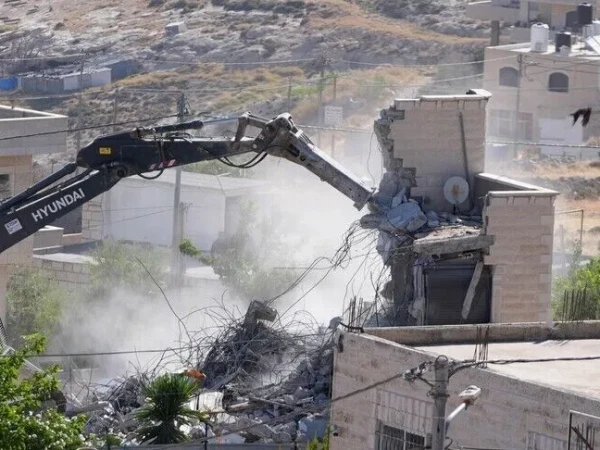
    RAMALLAH: Israeli forces detained at least 14 Palestinians, including a woman, during a series of military raids across the occupied West Bank on Tuesday, while three homes were also demolished, according to local sources. The latest arrests come as tensions continue to rise across the occupied territory, where Israeli military operations, arrests and settler violence have intensified in recent days. The raids targeted several locations, including Nablus, Jenin and Tulkarm, according to reports. Eight detained in Nablus In Nablus, Israeli forces entered the Ras al-Ain neighbourhood and stormed three buildings. Soldiers searched several homes before detaining eight Palestinians, including a woman, local sources said. The operation reportedly involved searches of residential properties, with residents subjected to questioning before the detainees were taken away. The raid was part of a wider military campaign across the northern West Bank, where Israeli forces have repeatedly carried out overnight and early-morning operations. Raids reported in Tubas and Jenin In Tubas province, Israeli troops entered the town of Tammun and remained there for several hours before withdrawing. No arrests were reported from the operation. Meanwhile, in the Jenin area, Israeli forces entered Al-Yamoun, where they arrested a former Palestinian prisoner from Jenin city. Another Palestinian was detained in Deir Ghazaleh, located northeast of Jenin, according to local sources. The arrests added to growing concerns over the continuing military pressure on Palestinian communities in the occupied West Bank. More arrests in Tulkarm Further arrests were reported in the Tulkarm area. Israeli forces detained a Palestinian customs police officer and a young man from Irtah, a suburb south of Tulkarm. Two other Palestinians were also arrested following raids and searches of homes in the village of Far’un. The latest operations come against a backdrop of escalating violence in the West Bank. Reuters reported this week that Palestinian residents have described mounting pressure from military raids and settler attacks, warning that the situation is approaching a breaking point. At the same time, reports of demolitions have added another layer to the tensions. Anadolu Agency reported that three Palestinian homes were demolished during the wider military campaign, with Israeli authorities citing claims related to construction permits. The developments are likely to fuel further concern over the security and humanitarian situation in the occupied West Bank, where repeated raids, arrests, demolitions and clashes have continued to affect Palestinian communities.

  • | | | | |

    Protest erupts in Washington over Netanyahu visit

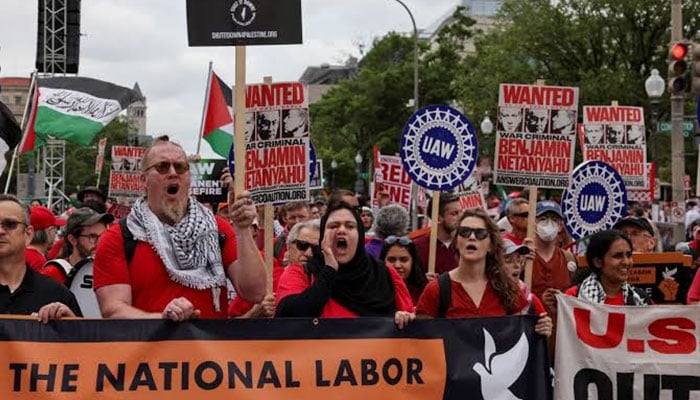
    WASHINGTON: Israeli Prime Minister Benjamin Netanyahu’s visit to Washington has sparked a fresh wave of protests, with demonstrators taking to the streets to oppose U.S. support for Israel and demand that the Israeli leader be arrested. Pro-Palestinian protesters gathered in the U.S. capital carrying Palestinian flags and banners criticising Washington’s backing of Israel. The demonstrations came as Netanyahu arrived in the United States for a scheduled meeting with President Donald Trump. At the heart of the protest was a demand that U.S. authorities enforce the International Criminal Court’s arrest warrant against Netanyahu. Demonstrators argued that the United States should not provide protection to an Israeli leader facing allegations before the international court. The protest reflects the wider political and public debate in the United States over Washington’s relationship with Israel and its approach to the conflict in Gaza. Trump rules out Netanyahu arrest The demonstrations gained additional attention because Trump has already made his position clear. The U.S. president has said Netanyahu will not be arrested while he is in the United States, directly rejecting calls for his detention. Trump has also strongly defended Israel and Netanyahu in connection with the ongoing regional conflict. Netanyahu’s visit comes at a particularly sensitive moment. His meeting with Trump on Tuesday is the first between the two leaders since their joint war against Iran, with tensions reportedly emerging over how the conflict should be handled. Protest adds pressure ahead of Trump meeting The Washington demonstration adds another layer of political pressure surrounding Netanyahu’s visit. Protesters say U.S. support for Israel should be reconsidered and that international legal proceedings should not be ignored. The issue of Netanyahu’s potential arrest has also become prominent in U.S. politics. New York Mayor Zohran Mamdani has said his administration is examining whether the city could enforce the ICC warrant if Netanyahu visits New York for the United Nations General Assembly in September. For now, however, Trump’s administration has made clear that Netanyahu will not face arrest during his stay in the United States. With protests continuing and the Trump-Netanyahu meeting attracting international attention, the visit is likely to keep the debate over Gaza, U.S.-Israel relations and international accountability firmly in the spotlight.

  • | | | |

    US, Saudi forces strike Iran allies in Iraq

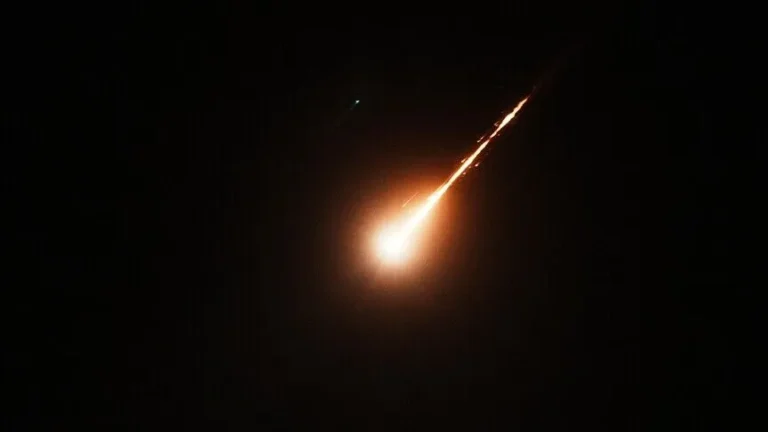
    The conflict involving Iran, the United States and its regional allies has entered a new and more dangerous phase, with fresh military strikes reported across the Middle East. US and Saudi forces carried out coordinated airstrikes against Iran-aligned armed groups in eastern Iraq, according to US Central Command (CENTCOM). The operation came after a series of drone attacks that Washington and Riyadh attributed to groups linked to Iran’s Islamic Revolutionary Guard Corps (IRGC). CENTCOM said American and Saudi fighter jets targeted weapons and logistics facilities used by the armed groups. The US military claimed the groups had carried out more than 30 IRGC-directed drone attacks in recent days, including strikes targeting Saudi energy infrastructure. Saudi Arabia also confirmed the operation, saying its forces acted alongside CENTCOM after drones were launched from Iraqi territory toward petroleum facilities in the kingdom’s Eastern Province and Riyadh region. Riyadh said it did not seek a wider escalation but warned that it would respond to further attacks. The latest strikes were followed by an explosion at the headquarters of Iraq’s Popular Mobilisation Forces (PMF) in Basra. The PMF is an umbrella organisation containing several armed factions, including groups closely aligned with Iran. The cause of the blast and any casualties were not immediately confirmed. Meanwhile, tensions escalated further after the US military reported that Iran had launched multiple ballistic missiles toward American military positions in Jordan. CENTCOM said the missiles were intercepted and that US forces remained on heightened alert. Iranian authorities had not immediately issued an official statement regarding the missile launches. However, an Iranian military official rejected claims that Tehran was responsible for projectiles fired toward Saudi Arabia, warning that attributing attacks on US interests to Iran could be a serious miscalculation. The developments threaten to derail diplomatic efforts aimed at containing the conflict. Iran has repeatedly warned that any attempt to restrict its control over the Strait of Hormuz could trigger a renewed military confrontation. The latest escalation also comes as US President Donald Trump met Israeli Prime Minister Benjamin Netanyahu. Their discussions reportedly focused on Iran and the possibility of renewed military action