Top Story

  • | | | |

    US launches strikes on Iran after attack on Jordan base

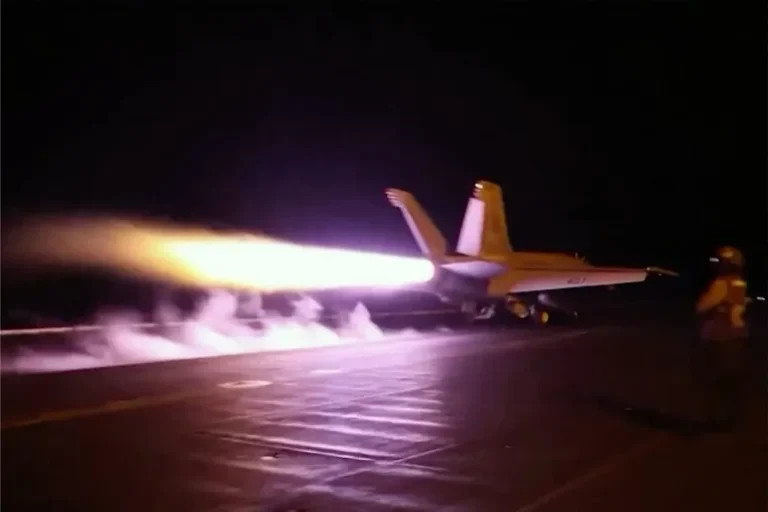
    WASHINGTON/TEHRAN: Tensions between the United States and Iran have sharply escalated after Washington launched strikes against Iranian targets following a ballistic missile attack on a US military base in Jordan. US Central Command said its forces began the strikes at around 8pm Eastern Time on Wednesday. CENTCOM described the operation as a “powerful response” to attempted attacks against American forces in the Middle East. The strikes came after Iran’s Islamic Revolutionary Guard Corps claimed responsibility for operations targeting US military assets in Jordan. The IRGC said it had targeted an airbase and a command centre. US President Donald Trump had earlier warned that Iran would face a strong military response. Trump said the United States would hit Iran “very hard” after the attack, despite reports that US forces had intercepted the missiles. The latest developments have raised fears of a wider regional conflict. Military activity has also been reported across southern Iran. Iranian state broadcaster IRIB reported explosions in Bushehr province, home to the country’s only nuclear power plant. Several explosions were also reported on Qeshm Island. Iranian media said a missile may have struck a residential area, although details about casualties were not immediately available. Other explosions were reported at several locations in southern Iran following the launch of the US operation. The conflict has also intensified around Iraq. Baghdad condemned US and Saudi strikes that reportedly killed members of Iraq’s Popular Mobilisation Forces. The group said at least 20 of its fighters were killed and 32 others were wounded. Iranian media separately reported that four Iranian advisers were killed in the strikes. The situation around the Strait of Hormuz has also become increasingly tense. Iran’s Revolutionary Guard said its naval forces targeted three oil tankers that were allegedly approaching the strategic waterway using routes not approved by Tehran. Iran has rejected an Omani proposal concerning shipping routes through the Strait of Hormuz. Tehran has also discussed imposing charges on vessels using the strategically important passage. Iranian officials have insisted that mine-clearing operations in the waterway should be carried out by Iranian forces. Tehran has warned that any European involvement could turn those forces into potential targets. The latest escalation comes only days after Trump said Washington was holding what he described as positive talks with Iran. He had also warned that military action could resume if Tehran failed to show seriousness in negotiations. Analysts have warned that continued retaliation could create a dangerous cycle of escalation. They say repeated strikes could eventually expand beyond military targets and increase the risk to civilians and critical infrastructure.

  • | | | |

    Iraq demands proof over Saudi attack claims

    BAGHDAD: Iraq has rejected allegations that its territory was used to launch attacks against Saudi Arabia and has called for evidence to support the claims. A spokesperson for the Commander-in-Chief of the Iraqi Armed Forces said no country or organisation had presented proof that attacks on Saudi Arabia originated from Iraqi soil. The spokesperson said Iraq remained committed to protecting its sovereignty and preventing its territory from being used to threaten neighbouring countries. He added that the government was implementing measures to strengthen national security and maintain full control over the country’s borders and military activities. The statement came after reports linked Iraq to attacks on Saudi Arabia, increasing tensions in an already volatile region. Following recent US and Saudi military strikes inside Iraq, the Iraqi National Security Council convened an emergency meeting to assess the security situation. During the meeting, the council condemned the attacks and described them as a violation of Iraq’s sovereignty. Officials stressed that all hostile actions carried out on Iraqi territory were unacceptable. The council said the Iraqi government alone has the authority to decide how to respond to any attacks launched from within the country. It warned against any unilateral military action that could further destabilise the region. The office of Iraqi Prime Minister also issued a statement reaffirming Baghdad’s policy of keeping Iraq out of regional conflicts. The statement said the government would continue to pursue diplomatic and legal measures to protect the country’s sovereignty, security and political stability. The latest developments follow joint US and Saudi air strikes targeting locations believed to be used by Iran-backed militias in Iraq. The strikes were reportedly carried out in response to drone attacks on Saudi oil facilities. According to the Popular Mobilisation Forces (PMF), the attacks targeted its headquarters and facilities across seven Iraqi provinces. The group said at least 20 of its personnel were killed, while another 32 were injured in the air strikes. It added that the heaviest attack took place in Nineveh province, where 10 fighters lost their lives. The military action has further raised concerns about growing instability in the region and the possibility of wider confrontation involving regional and international powers.

  • | | | |

    Iran vows retaliation after fresh US strikes

    Iran has vowed to retaliate after the United States launched fresh overnight air strikes on multiple locations across the country, further escalating the conflict that has increasingly drawn several Middle Eastern nations into the fighting. The Islamic Revolutionary Guard Corps (IRGC) issued a strong warning, saying those responsible for the attacks would face punishment. Iranian media quoted the force as saying that the “aggressor” would be held accountable. The latest US strikes reportedly targeted several areas in southern Iran, including Bushehr province, which is home to the country’s only nuclear power plant. Explosions were also reported in Qeshm, Kish, Bandar Abbas, Abadan and other nearby locations. Iranian officials said a residential building on Qeshm Island was struck during the attacks. Local authorities confirmed that three members of the same family, including a child, were killed. Two other children from the same family were injured and shifted to hospital for treatment. The US military said the strikes were launched in response to recent Iranian missile attacks targeting American forces stationed in Jordan. Washington described the operation as a powerful response aimed at deterring further attacks on its troops in the region. The military action came shortly after US President Donald Trump warned that Iran would face severe consequences following attacks on American military facilities. Meanwhile, Jordan said its air defence systems intercepted and destroyed five Iranian missiles heading toward its territory. Officials said this was the fourth consecutive day that missiles or drones launched from Iran had been intercepted. No casualties or property damage were reported. Iran also strongly condemned recent joint US-Saudi air strikes carried out in Iraq. Tehran described the attacks as a violation of Iraq’s sovereignty and territorial integrity. It accused Washington of widening the regional conflict and expressed support for the Iraqi government. The Iraqi government also criticised the strikes and called on all parties to avoid further escalation. Iraqi officials stressed that the country should not become a battleground for regional disputes. Israeli Prime Minister Benjamin Netanyahu said it was difficult to predict Iran’s next moves regarding the Strait of Hormuz. However, he argued that alternative energy routes could eventually reduce the strategic importance of the vital shipping lane. The United Nations expressed deep concern over the renewed fighting. UN Secretary-General António Guterres urged both the United States and Iran to end hostilities and return to diplomatic negotiations. He also welcomed mediation efforts by regional countries seeking to reduce tensions. The IRGC claimed that two oil tankers attempting to sail through what it described as an unauthorised route in the Strait of Hormuz turned back after a fire reportedly broke out on one vessel. Iranian officials insisted the country maintained control over the strategic waterway and warned that restrictions would remain as long as foreign military threats continued. The United Arab Emirates also condemned drone attacks targeting Saudi oil facilities from Iraqi territory, calling them a serious violation of Saudi sovereignty and a threat to regional security. The conflict has expanded rapidly over recent days, with military activity reported in Iran, Iraq, Jordan, Egypt and the Gulf region. The growing instability has increased concerns over regional security and disrupted global energy markets. Oil prices climbed sharply as investors reacted to fears of further escalation and possible disruptions to shipping through the Strait of Hormuz, one of the world’s most important energy trade routes.

  • | | | |

    Iranian strike hits Chinese company building in Ku…

    KUWAIT CITY: A building belonging to a Chinese company in northern Kuwait was struck during an alleged Iranian attack, leaving one worker dead and causing extensive structural damage, according to Kuwait’s Ministry of Defense. The ministry confirmed the incident in an official statement on Wednesday, saying emergency response teams and security agencies were immediately dispatched to the affected site to secure the area, assess the damage, and launch rescue operations. Authorities said one worker was killed in the strike, but did not immediately disclose the victim’s identity or nationality. Officials added that investigations are continuing to determine whether there were additional casualties or injuries and to establish the full extent of the damage caused by the attack. Images from the scene showed emergency personnel working around the damaged building as security forces cordoned off the area. Officials have yet to release further details regarding the type of weapon used or the circumstances surrounding the strike. In its statement, Kuwait’s Ministry of Defense stressed that the country’s armed forces remain on high alert and are fully prepared to safeguard Kuwait’s sovereignty, territorial integrity, and national security against any external threat. The ministry also urged the public to rely only on official government statements for updates, warning citizens against spreading or believing unverified reports and rumors circulating on social media. The attack comes amid heightened regional tensions linked to the ongoing confrontation between Iran and the United States, which has fueled growing security concerns across the Gulf region. In recent weeks, military facilities, energy infrastructure, commercial shipping routes, and strategic installations have increasingly come under threat, raising fears of a wider regional escalation. Security analysts say the latest strike demonstrates how the conflict is expanding beyond its primary actors, with neighboring Gulf states facing increasing risks from the deteriorating security environment. Kuwait, which has traditionally sought to maintain balanced regional relations, now finds itself confronting the possibility of being directly affected by the broader conflict. The incident is expected to intensify security measures across the country, particularly around critical infrastructure, industrial facilities, and foreign-owned commercial sites. Regional governments have already strengthened surveillance and emergency preparedness in response to the growing threat of cross-border attacks. No immediate statement was issued by Iranian authorities regarding the alleged strike. Meanwhile, Kuwaiti officials said investigations remain underway and pledged to provide further information as more details become available. The latest incident underscores the widening regional impact of the Iran-US confrontation and highlights growing concerns that escalating hostilities could increasingly affect civilian infrastructure and foreign businesses operating across the Gulf.

  • | | | |

    US strikes IRGC bases after Iran missile attack

    The Middle East moved a step closer to a broader regional conflict after the United States launched large-scale airstrikes against dozens of Islamic Revolutionary Guard Corps (IRGC) facilities across Iran in retaliation for Tehran’s ballistic missile attack targeting American forces stationed in the region. According to the US Central Command (CENTCOM), the operation targeted military command centers, drone infrastructure, weapons depots and other strategic IRGC installations during a coordinated two-hour campaign. US officials said the strikes were intended to weaken Iran’s ability to threaten American troops, commercial shipping lanes and allied Gulf nations. Iranian state media reported that at least three people were killed during strikes on Qeshm Island, while authorities vowed that the country would continue defending its territory against what it described as “American aggression.” The crisis quickly spread beyond Iran’s borders. Jordan announced that its air defence systems intercepted five missiles following Iran’s confirmed launch toward US military installations in the kingdom. Washington maintained that all missiles directed at American bases were successfully intercepted, preventing casualties among US personnel. In another major development, US and Saudi forces carried out coordinated strikes against Iran-backed armed groups operating in eastern Iraq after drone attacks launched from Iraqi territory targeted Saudi oil facilities. The joint operation marked the first publicly acknowledged military action conducted together by Washington and Riyadh against Iran-aligned militias. Regional instability deepened further after a fire broke out aboard a US-owned gas storage tanker at Egypt’s Mediterranean port of Damietta. Although maritime security experts suggested the blaze may have resulted from a drone strike, Egyptian officials confirmed only the fire and said investigations into its cause were continuing. The latest escalation comes against the backdrop of months of confrontation between Iran, the United States and Israel. Fighting resumed after disputes over the strategically important Strait of Hormuz ended a short-lived ceasefire reached in June. US President Donald Trump reiterated that America would respond decisively to attacks on its forces while insisting diplomatic efforts remained active. However, continued military exchanges around the Strait of Hormuz have complicated negotiations and increased concerns over global energy supplies. Iran has claimed it targeted three tankers attempting to pass through what it called an unauthorized route in the strait, while rejecting an Omani-backed proposal supported by Gulf states for joint management of the crucial waterway. The conflict has also rattled global energy markets, with Brent crude prices climbing above $90 per barrel before easing later in trading. Meanwhile, Iraq’s Iran-backed Popular Mobilisation Forces said at least 20 of their fighters were killed in the US-Saudi strikes, prompting Baghdad to condemn the attacks as a violation of its sovereignty while urging all armed groups to halt cross-border military operations. Saudi Arabia has also intensified diplomatic efforts, with Defence Minister Prince Khalid bin Salman meeting US Vice President JD Vance in Washington to urge restraint. Saudi officials reportedly warned that expanding military operations against Yemen’s Houthis and Iran-backed militias in Iraq could trigger unpredictable consequences across the Middle East, highlighting growing fears that the conflict could widen even further.

  • | | | |

    US launches heavy strikes on Iran after missile at…

    The United States has resumed large-scale military operations against Iran, launching what officials described as a “heavy wave” of precision strikes after a five-night pause, dramatically escalating tensions across the Middle East and raising fresh concerns over the security of the Strait of Hormuz. According to the US Central Command (CENTCOM), the overnight operation targeted dozens of sites linked to Iran’s Islamic Revolutionary Guard Corps (IRGC), including military command centres, missile and drone facilities, coastal defence systems and maritime infrastructure. The strikes came in response to Iranian missile attacks a day earlier on American forces stationed at a US military base in Jordan. US President Donald Trump had warned that Washington would respond “very hard” to any attack on American troops, and the latest operation marked one of the most extensive US offensives since the conflict intensified earlier this year. Iranian state media reported that at least three civilians were killed in the strikes, including a couple and their two-year-old child after a residential building on Qeshm Island was hit. The IRGC also confirmed that three of its personnel were killed during the attacks. Explosions were reported across several southern Iranian cities, including Ahvaz, Abadan, Bushehr, Kazerun and Farashband. Iranian media said power outages affected parts of Ahvaz following strikes in the oil-rich Khuzestan province, while local officials confirmed that multiple locations in Abadan had also been targeted. The confrontation quickly spread beyond Iran. Jordan said its air defence systems intercepted five Iranian missiles launched toward its territory after Tehran targeted a US airbase and command headquarters inside the kingdom. No casualties were reported. Meanwhile, Kuwait confirmed that an Iranian strike hit a building belonging to a Chinese company in the country’s north, killing one worker and causing significant damage. Saudi Arabia condemned Iran’s attacks on Jordan, describing them as a violation of international law and regional stability. Despite the renewed fighting, diplomatic contacts continue behind the scenes. Pakistan’s Foreign Ministry said negotiations between Tehran and Washington remain active, particularly over the Strait of Hormuz and efforts to reduce tensions. Iranian officials also confirmed that discussions with Omani mediators regarding the future of the strategic waterway are continuing. The Strait of Hormuz remains at the heart of the crisis. Iran insists the waterway remains closed because of US military actions, while Washington accuses Tehran of threatening global shipping and using maritime pressure to strengthen the IRGC’s influence. Adding economic pressure, the US Treasury imposed fresh sanctions on two Iranian companies accused of supporting an IRGC-backed maritime insurance network. Security analysts say Washington now faces a critical decision: continue targeting Iran’s military infrastructure around Hormuz or expand attacks on key national infrastructure. While the latest strikes signal a tougher military posture, experts believe both sides still have incentives to leave the door open for diplomacy, even as the risk of a wider regional war continues to grow.

  • | | | |

    Iran claims destruction of three US F-35 jets

    The conflict between Iran and the United States intensified on Thursday after Iran’s Islamic Revolutionary Guard Corps (IRGC) claimed it destroyed three US F-35 fighter jets during a missile attack on Jordan’s al-Azraq airbase, a key facility used by American forces. According to the IRGC, the attack was carried out in retaliation for a US strike on Iran’s Qeshm Island that allegedly killed members of a civilian family. Iranian officials claimed several ballistic missiles struck aircraft maintenance facilities at the base, destroying three F-35 fighter jets and severely damaging three others. The IRGC also alleged that several US military personnel and technical staff were killed in the attack. No independent confirmation of these claims has been provided by US or Jordanian authorities. The latest exchange came after the United States launched fresh overnight strikes targeting multiple locations in Iran, including Bushehr, Qeshm, Bandar Abbas, Kish and Abadan. Iranian media reported that residential areas on Qeshm Island were hit, killing three members of one family and injuring two children. Iran’s Revolutionary Guards also announced that three of their personnel were killed in separate US missile attacks, vowing retaliation against what they described as American aggression. Meanwhile, Jordan said its air defence systems intercepted and destroyed five Iranian missiles heading toward its territory, marking the fourth consecutive day of missile interceptions. Authorities reported no casualties or damage. Iraq also sought to distance itself from the growing conflict. A military spokesperson stated there was no evidence that recent regional attacks had been launched from Iraqi territory, while stressing that only official security forces would be responsible for the country’s defence and security. Iran’s Foreign Ministry said discussions with Omani officials aimed at reducing tensions remain ongoing in Tehran. Iranian officials blamed the continued closure of the Strait of Hormuz and disruptions to global shipping on US and Israeli military operations, insisting that foreign military actions had created instability in one of the world’s most important energy corridors. The IRGC also claimed two oil tankers attempting to pass through the Strait of Hormuz turned back after a fire broke out on one vessel. The group warned the strategic waterway would remain closed while military pressure against Iran continued. Elsewhere, Iran condemned recent US and Saudi air strikes inside Iraq, calling them violations of Iraqi sovereignty and international law. The attacks reportedly targeted Iran-aligned groups operating in the country. The United Nations expressed growing concern over the escalating hostilities. UN Secretary-General António Guterres urged all parties to end military operations immediately and return to diplomatic negotiations, warning that continued escalation could further destabilise the Middle East.

  • | | | | |

    US offers $15 million reward for Iran drone networ…

    WASHINGTON: The United States has announced a $15 million reward for information leading to the disruption of an alleged financial network linked to Iran’s drone programme, escalating pressure on entities accused of supporting the country’s military operations. The reward was announced by the Rewards for Justice programme run by the US State Department. According to the programme, the offer targets information about financial networks associated with Kimia Pars Sepehran Company (KIPAS), which Washington alleges is involved in producing drones for Iran’s Islamic Revolutionary Guard Corps (IRGC) Quds Force and its regional allies. In a statement posted on the social media platform X, the programme said it is seeking information on seven senior officials, their associates and the financial infrastructure that allegedly supports the company’s operations. US authorities said individuals who provide credible and actionable information may qualify not only for the financial reward but could also receive assistance with relocation if necessary. The announcement identified the individuals of interest as Hassan Aram Banizadeh, Reza Naharvani, Mehdi Naqaneh, Hadi Zavaraki, Abolfazl Meshkani, Abbas Sartaji, and Ehsan Mohaghegh. The latest reward offer is part of Washington’s broader campaign to disrupt networks it believes are involved in the financing, development and distribution of unmanned aerial vehicles used by Iran and affiliated groups across the Middle East. US officials have repeatedly accused Iran of supplying drones and military technology to allied armed groups operating in the region. Tehran, however, has consistently rejected allegations that it provides weapons in violation of international obligations, maintaining that its military activities are conducted within its national defence framework. The new announcement comes amid continued tensions between Washington and Tehran over regional security, sanctions and Iran’s military capabilities. Analysts say targeting financial facilitators has become a key element of the US strategy to weaken supply chains supporting Iran’s drone programme. The Rewards for Justice initiative has previously offered multimillion-dollar rewards for information related to terrorism, sanctions evasion and other activities considered threats to US national security. The latest offer underscores Washington’s continued focus on disrupting networks it believes contribute to Iran’s expanding drone capabilities.

  • | | | |

    Iran warns of Strait of Hormuz closure as regional tensions escalate

    TEHRAN: Iran has warned that continued US pressure in regional waters could force the closure of the Strait of Hormuz and other strategic maritime routes, as military and diplomatic tensions across the Middle East continue to intensify. Mohammad Bagher Zolghadr, Secretary of Iran’s Supreme National Security Council, said continued US actions in the region could have serious consequences for global shipping and energy supplies. According to Iranian state media, he warned that any further escalation could affect not only the Strait of Hormuz but also other key maritime chokepoints. He said such developments would have a significant impact on the global economy, international energy markets and trade, while also increasing political pressure within the United States. Meanwhile, Kuwait announced that its air defence systems intercepted drones launched from Iran early Saturday. The Kuwaiti military said the drones were successfully engaged before causing damage and confirmed that no casualties or destruction had been reported. Residents were advised to follow official safety instructions as authorities monitored the situation. In Yemen, the Houthi movement denied reports that it planned to charge commercial vessels for passing through the Bab al-Mandab Strait. The group’s Humanitarian Operations Coordination Center said no decision had been taken to impose transit fees and stressed that safe passage through the waterway remained free. The Houthis also urged shipping companies not to make payments to unauthorised individuals claiming to represent Yemeni authorities. The clarification came after reports suggested the group was considering introducing charges following its declaration of a maritime blockade targeting Saudi Arabia. Separately, the Houthis claimed that eight Saudi oil tankers had been forced to reroute around the Cape of Good Hope instead of using the Bab al-Mandab Strait. The group said the diversions were a result of its maritime blockade, although the claim has not been independently verified. Maritime security concerns also increased after a commercial tanker was struck by an unidentified projectile near the coast of Oman. The UK Maritime Trade Operations (UKMTO) said the projectile damaged the vessel’s engine room, leaving it unable to manoeuvre. No casualties or environmental damage were reported, while an investigation into the incident is underway. Iranian Foreign Minister Abbas Araghchi said Tehran is working with Oman to establish practical mechanisms for managing navigation through the Strait of Hormuz. During a telephone conversation with British Foreign Secretary Ed Miliband, Araghchi said outside interference would only worsen the regional situation and complicate efforts to maintain maritime stability. The British foreign secretary reiterated London’s support for diplomacy and said the United Kingdom was not involved in any war with Iran. He stressed that dialogue remained the best path to reducing tensions in the region. Meanwhile, reports from US media suggested that Washington and Israel are considering possible strikes on Iran’s energy infrastructure. According to the reports, discussions have focused on targeting energy facilities if diplomatic efforts fail. However, no final decision has been officially announced. Iranian officials responded by warning that the country has prepared plans to retaliate against any future military action targeting its territory. They said any attack would receive a strong response against strategic interests in the region.

  • | | |

    Iran rejects 60-day deadline in US MoU, blames Was…

    TEHRAN: Iran has rejected claims that a 60-day deadline had expired under its memorandum of understanding (MoU) with the United States, saying the agreement never imposed a fixed deadline on Tehran and that its decisions would be guided by national interests and security. Iranian Foreign Ministry spokesman Esmaeil Baqaei made the remarks during a press briefing on Monday as the period referenced in discussions between Tehran and Washington came to an end. “There is no such thing as a 60-day deadline in the text of the MoU,” Baqaei said, according to Iran’s semi-official ISNA news agency. He stressed that Iran would not formulate its policies under pressure, ultimatums or externally imposed time limits. According to Baqaei, the agreement provided a 60-day window for negotiations focused on two key issues — sanctions relief and Iran’s nuclear programme. He said the period could have been extended if the two sides failed to reach an outcome. However, Tehran argues that the understanding became irrelevant after what it described as widespread US violations of the agreement. Baqaei said no talks were ultimately launched under the framework because of Washington’s alleged actions. The MoU was signed on June 18 following weeks of diplomatic efforts aimed at easing the wider Middle East conflict and reopening the strategically important Strait of Hormuz. The waterway is a major route for global energy shipments, making any disruption there a concern for international markets. Tensions later escalated, with Iran accusing the United States of breaching the understanding. Hostilities resumed on July 7, when Iranian forces attacked commercial shipping in the Strait of Hormuz, including a Qatari liquefied natural gas tanker. The United States subsequently carried out several waves of strikes against Iranian military targets. The conflict also expanded beyond the Gulf, with Yemen’s Houthi rebels imposing a naval blockade affecting Saudi Arabia and adding pressure on another vital regional shipping route. Missing pilots Baqaei also raised the issue of three Iranian pilots whose fate remains disputed. Tehran says the pilots went missing during an operation targeting the US Al Udeid Air Base in Qatar in March. Iran now considers the missing men prisoners until their fate is clarified. Qatar, however, denies holding them and says it previously invited Iranian officials to receive details about search-and-rescue operations. Oil spill dispute The Iranian spokesman also blamed US military operations for environmental damage in Gulf waters and called for Washington to be held responsible. Iran recently demanded compensation over an oil slick that reached Qeshm Island, affecting beaches and mangrove areas. Tehran has blamed a foreign vessel for the spill, while outside reports have raised questions over the circumstances surrounding the incident. With diplomacy stalled and tensions continuing around the Strait of Hormuz, Iran’s latest statement signals that Tehran is unwilling to accept Washington’s interpretation of the MoU or negotiate under a deadline.