Top Story

  • | | |

    Houthis claim two hypersonic missiles fired at Mok…

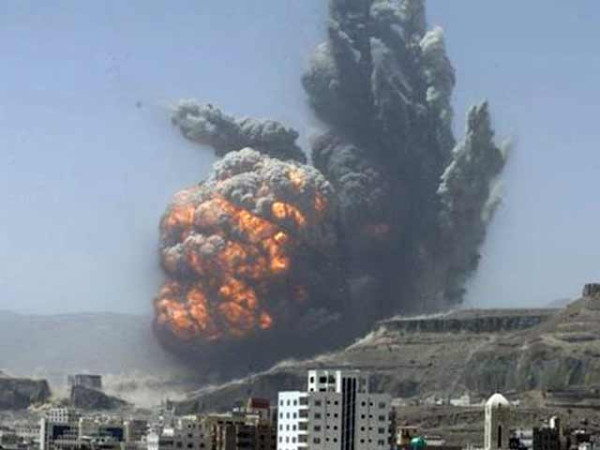
    SANAA: Yemen’s Houthi group has claimed it launched two hypersonic ballistic missiles towards the strategically important Mokha port on the Red Sea coast, adding to growing security concerns around one of the world’s busiest maritime routes. According to Turkey’s Anadolu Agency, the Yemeni military said the two missiles were fired towards Mokha port and the surrounding Red Sea area. However, there was no immediate independent confirmation of whether the missiles reached their intended targets or were intercepted before impact. No casualties or material damage were immediately reported following the alleged missile launches. Mokha, located on Yemen’s western coastline, is an important port area overlooking the Red Sea. The region has remained highly sensitive amid continuing tensions and repeated missile and drone attacks linked to the wider Middle East conflict. The latest claim is likely to raise fresh concerns over maritime security in the Red Sea, where attacks on commercial shipping have previously disrupted international trade and forced some vessels to consider longer alternative routes. The Houthis have repeatedly used missiles and drones in attacks around the Red Sea, saying their operations are connected to the broader regional conflict. Such incidents have drawn international attention because the waterway is a major passage for cargo and energy shipments between Asia, Europe and other global markets. For now, key details surrounding Monday’s alleged attack remain unclear, including the exact type of missiles used, their intended targets and whether any interception took place. The Houthi claim has not been independently verified, and further information from Yemeni authorities or other sources is expected to clarify what happened. With tensions already high across the region, the reported launch underscores the continuing risks facing ports and shipping lanes along the Red Sea.

  • | | | |

    ‘Severe anxiety’: What Imran Khan’s report r…

    A medical report submitted to the Supreme Court has revealed that former prime minister and PTI founder Imran Khan is experiencing severe anxiety symptoms. The report was submitted by the superintendent of Adiala Jail. It contains details about Imran Khan’s physical and mental health. The report was submitted after PTI Secretary General Salman Akram Raja approached the Supreme Court. His petition raised concerns about Imran Khan’s health and restrictions on meetings with him. According to the report, Imran Khan’s anxiety was recorded at “Level 3+”. The condition has been described as severe. A medical board examined Imran Khan on August 10, 2026. The board included specialists in eye diseases, cardiology and general medicine. The report states that Imran Khan is around 73 years old. His blood pressure was recorded at 140/80. His pulse was 54 beats per minute. His ECG was found to be normal. His chest was also clear. Doctors found his heart valves and chambers to be normal. The report says Imran Khan complained of heaviness in his head. He also reported feeling that his heartbeat was faster than usual. However, he did not report chest pain. He also did not complain of chest heaviness or shortness of breath. The medical board recommended medicines to control his blood pressure and anxiety. Doctors also recommended regular physical activity. The board suggested that Imran Khan should walk for one hour every day. It also recommended activities that could provide mental relaxation. The report recommends that he should be provided with magazines, newspapers, television and books. These activities could help reduce mental stress during his imprisonment. The medical board also recommended increasing the duration of meetings with Imran Khan’s family and wife. According to the report, greater family interaction could help control his anxiety and blood pressure. The recommendations come amid repeated demands from PTI leaders for greater access to the former prime minister. Jail authorities said Imran Khan receives regular medical attention. Medical officers reportedly check his food intake and conduct medical examinations three times a day. The report also states that several government doctors have examined him during his imprisonment. Records of these medical examinations have reportedly been maintained. The former prime minister has also received treatment from an eye specialist. According to the jail authorities, one of his eyes has now recovered to an almost normal condition. The report includes a summary of medical examinations conducted by 39 different specialists between November 4, 2023, and August 10, 2026. The jail authorities have asked the Supreme Court to dispose of the petition. They maintain that Imran Khan is receiving regular medical care inside the prison. The report also discusses the issue of meetings with Imran Khan. Jail authorities claimed that some meetings had been used to generate public sentiment against the judiciary, foreign policy and law enforcement institutions. According to the report, Imran Khan and his wife Bushra Bibi meet every Tuesday under jail rules. A total of 84 meetings between them have reportedly taken place so far. The document also states that Imran Khan’s lawyer Salman Safdar met him on February 10 and April 4, 2026. The medical report comes amid renewed political pressure over Imran Khan’s health and access to his family and personal doctors. Khyber Pakhtunkhwa Chief Minister Sohail Afridi recently announced a protest programme if Imran Khan was not allowed access to his family and personal physicians. The issue of Imran Khan’s health has become a major point of political debate. PTI leaders have repeatedly demanded better medical facilities and greater access to his personal doctors. A psychiatrist cited in the report said that “Level 3+” anxiety indicates a severe state of anxiety and distress. The psychiatrist explained that prolonged isolation and limited social interaction can worsen anxiety. Such conditions may also contribute to hopelessness and depression. He said regular interaction with other people can help reduce anxiety. He also recommended walking and exercise as useful measures for managing symptoms of anxiety and panic. The three-member Supreme Court bench headed by Justice Shahid Waheed will hear the petition. Justice Naeem Afghan and Justice Ishtiaq Ibrahim are also part of the bench. The court will examine the medical report and the concerns raised over Imran Khan’s health, medical treatment and access to family members and doctors.

  • | | |

    Israel strikes southern Lebanon, Hezbollah Command…

    BEIRUT: A fragile ceasefire in southern Lebanon is facing another major test after Israeli strikes killed at least 11 people, including civilians, according to Lebanese officials and international media reports. Israel said the attacks targeted Hezbollah positions and claimed to have killed a senior commander. The Israeli military said it had targeted Hezbollah infrastructure in southern Lebanon and claimed that a Hezbollah commander, identified in reports as Abu Hassan, was killed. Israeli officials have described the strikes as a response to Hezbollah activity in the area. Lebanese officials, however, said civilians were among those killed in the attacks. Reports said three children and two women were among the victims, while several others were wounded. One of the strikes reportedly hit a home in the village of Ansar, where members of the same family were killed. The latest violence comes despite a ceasefire intended to prevent a renewed escalation between Israel and Hezbollah. The continued strikes have raised fresh fears that the fragile truce could unravel. Lebanon’s leadership has condemned the attacks, warning that continued military action could undermine efforts to restore stability along the border. The escalation also comes amid unresolved disputes over Hezbollah’s weapons and Israel’s military presence in southern Lebanon. With tensions still high, residents in affected communities remain fearful that another cycle of violence could begin.

  • | | |

    Israeli strikes kill 11 in southern Lebanon, Hezbo…

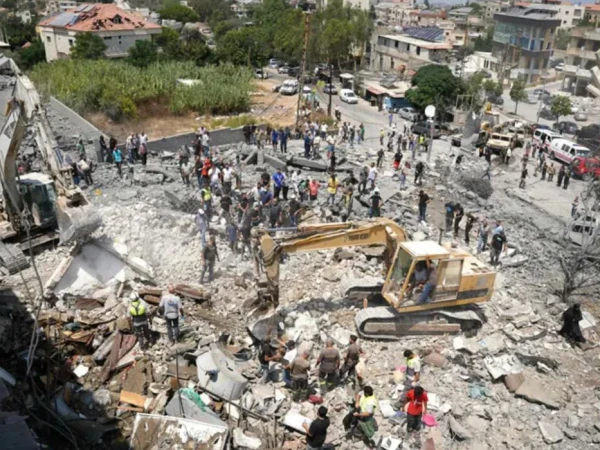
    BEIRUT: Southern Lebanon has been plunged into renewed uncertainty after Israeli airstrikes killed at least 11 people, including three children, and injured 19 others, in the deadliest such escalation since the June ceasefire between Israel and Hezbollah. The strikes hit the towns of Ansar and Deir al-Zahrani on Saturday, according to Lebanese authorities. In Ansar, an airstrike on a residential home killed seven people, while another attack in Deir al-Zahrani killed four and wounded several others. Rescue workers and local residents rushed to the damaged sites, searching through rubble for survivors and recovering bodies. Lebanon’s Health Ministry confirmed the casualty figures, while reports said women and children were among those killed. The attacks have raised fresh concerns about the durability of the ceasefire and the possibility of another escalation along the Israel-Lebanon border. Israel said its military operations targeted Hezbollah infrastructure and were carried out in response to attacks that had seriously wounded three Israeli soldiers. The Israeli military also said a senior Hezbollah commander was among those targeted. Israeli officials maintained that Hezbollah activity in the area posed a continuing threat. Lebanese leaders strongly condemned the strikes. President Joseph Aoun described the attacks as a dangerous message at a time when Lebanon and Israel are preparing for another round of US-backed direct negotiations. He warned that repeated violations of the ceasefire could undermine diplomatic efforts aimed at restoring stability. Prime Minister Nawaf Salam also denounced the attacks, stressing that the women and children killed in Ansar were not military targets. He called on Israel to halt what he described as dangerous escalation. The strikes have also put Hezbollah’s position under renewed scrutiny. The group condemned the Israeli attacks and vowed to deliver an “appropriate response”, warning that continued violations could not go unanswered. Hezbollah also criticised the Lebanese government’s negotiations with Israel and called for a tougher position. The latest violence comes as Lebanon faces a delicate political and security challenge. A US-backed framework announced in June was intended to reduce hostilities, address Hezbollah’s weapons and facilitate an Israeli withdrawal from parts of southern Lebanon. Instead, continued attacks and retaliatory actions have kept the region on edge. For residents of southern Lebanon, the latest strikes have brought back memories of prolonged conflict. With civilians once again caught between military operations and political disputes, fears are growing that the fragile ceasefire could give way to a much wider confrontation. The coming days may prove critical. Any Hezbollah retaliation could trigger further Israeli military action, while continued diplomatic efforts face the difficult task of preventing the latest bloodshed from becoming the beginning of another cycle of violence.

  • | | |

    Iran demands Qatar probe over missing pilots

    TEHRAN: Iran has asked Qatar to allow an Iranian military fact-finding team to enter the country to investigate the fate of pilots Tehran says went missing after an incident involving Iranian aircraft, adding another layer of tension to already strained regional relations. Iranian military official Mohammad Baqerzadeh, commander of the Armed Forces General Staff’s Committee for the Search for Missing Persons, said an Iranian Air Force expert team had been waiting for months to travel to Qatar, according to Iranian media. Baqerzadeh accused Qatari authorities of repeatedly delaying the investigation and called on the International Committee of the Red Cross to intervene in the case. Qatar, however, has rejected Iran’s claim that it is holding Iranian pilots. Doha said its search-and-rescue teams recently recovered the remains of one pilot after Iranian aircraft entered Qatari airspace in March and failed to respond to repeated attempts to establish contact. Qatari authorities said they had contacted Tehran to coordinate the transfer of the remains and invited Iranian officials to examine details of the search-and-rescue operation. Qatar said it had not received a response. The dispute comes as Tehran continues to focus heavily on the security of the Strait of Hormuz, one of the world’s most important energy shipping routes. Iran says air defence capacity survived war Separately, an Islamic Revolutionary Guard Corps official claimed that more than 85 per cent of Iran’s air-defence production capacity survived the recent conflict. According to Iranian media reports, the official said attacks on military production facilities had not significantly reduced the production or delivery of missiles and air-defence systems. He also claimed that production in some areas had increased and that Iran’s operational air-defence capabilities were now stronger than at the beginning of the fighting. The claims could not be independently verified. Hormuz shipping talks continue Iran has also announced progress in negotiations with Oman over new shipping routes through the Strait of Hormuz. Foreign Ministry spokesman Esmaeil Baghaei said Tehran and Muscat had reached an agreement on a shipping-route map following weeks of technical discussions. The negotiations began after a memorandum of understanding was signed in June to develop safer navigation arrangements. Foreign Minister Abbas Araghchi stressed that the technical talks with Oman should not be confused with negotiations over reopening the waterway. He said existing maritime routes were no longer functional and that Iran and Oman were working on a temporary route that could eventually become permanent. Tehran links security to US actions Iranian officials continue to insist that the full restoration of security in the strait depends on an end to what Tehran describes as US military pressure, threats and a naval blockade. Deputy Foreign Minister Kazem Gharibabadi also declared that the Strait of Hormuz would remain under Iranian control, while accusing Washington of suffering strategic setbacks. The statements underline the widening gap between Iran and the United States over the strategic waterway, despite technical discussions between Iran and Oman aimed at facilitating maritime navigation. Hezbollah commander reportedly killed Meanwhile, tensions have also continued along Iran’s regional front. Israel’s military said it killed Abu Hassan Alaa, described as a senior Hezbollah commander, in a strike in southern Lebanon. The Israeli army said the attack targeted a Hezbollah headquarters in the Ansar area. Hezbollah had not immediately commented on the claim. The developments show how multiple disputes remain intertwined across the region, from missing military personnel and air-defence claims to the sensitive question of shipping through Hormuz. For Tehran, however, control and security of the strait remain central. While Iran and Oman appear to be making technical progress on navigation arrangements, Iranian officials continue to maintain that any broader reopening of the waterway will depend on wider political and security conditions.

  • | | | |

    Trump welcomes Makkah joint defence agreement

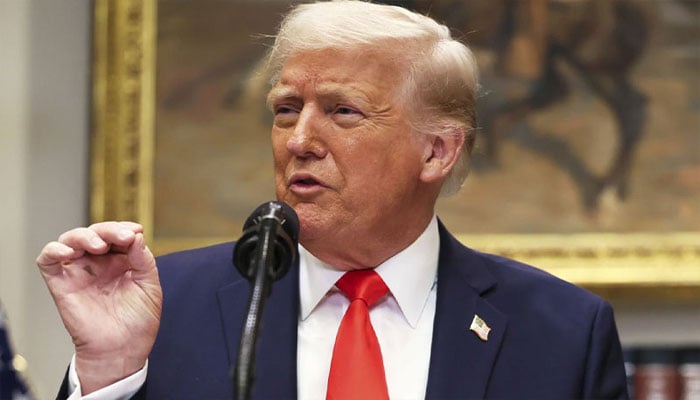
    US President Donald Trump has welcomed the joint defence agreement signed by Saudi Arabia, Pakistan and Türkiye. He described the development as a positive step towards greater unity in the Middle East. In a statement, Trump said he was pleased to see Saudi Arabia, Türkiye and Pakistan sign the Makkah Joint Defence Agreement. He said the agreement could help the three countries strengthen their ability to protect themselves against security threats. Trump said the agreement reflected growing cooperation among countries in the region. He added that the Middle East was becoming more united. According to him, stronger cooperation would allow countries to defend themselves more effectively. Saudi Arabia, Pakistan and Türkiye recently signed the joint defence pact. The agreement aims to increase cooperation between the three countries in defence and security matters. Under the agreement, an armed attack against any one of the three countries will be treated as an attack against all three. This provision is intended to create a stronger collective defence mechanism. The pact is also aimed at improving coordination between the armed forces of Saudi Arabia, Pakistan and Türkiye. The countries are expected to enhance their defence cooperation and work together in dealing with potential threats. The agreement comes amid growing security concerns in the Middle East and wider regional tensions. The three countries have maintained close political and strategic ties and have expressed interest in expanding cooperation in various fields. The Makkah agreement is expected to provide a framework for deeper defence coordination. It could also lead to greater military cooperation, joint planning and closer security coordination among the three countries.

  • | | |

    Trump cuts military drills with South Korea over I…

    WASHINGTON: US President Donald Trump has expressed frustration with South Korea after Seoul declined to join Washington’s campaign against Iran, ordering the Pentagon to reduce joint military exercises with Seoul. Trump said he recently asked South Korea’s president whether the country wanted to participate in efforts to denuclearise Iran, but received a blunt response: “No, thank you.” The US president said he instructed Defence Secretary Pete Hegseth to cut back the military exercises with South Korea. Although the drills had already begun, Trump said it was too late to cancel them completely and criticised the decision to proceed with exercises he considers costly. The Ulchi Freedom Shield exercise began on Monday and is scheduled to continue through Aug 27. About 18,000 South Korean troops are taking part, with training focused on cyber and drone threats. Trump also argued that the exercises send an “inappropriate and hostile” message to North Korea. He pointed to his relationship with North Korean leader Kim Jong Un, saying Pyongyang had not posed a threat to the United States during his presidency and had maintained a respectful attitude. The decision has raised questions about the future of the US-South Korea alliance. Washington and Seoul regard joint military exercises as a crucial part of maintaining readiness and deterring North Korean aggression. Trump’s latest comments suggest the alliance could face pressure as his administration reshapes US military commitments and seeks stronger allied support for its Middle East policies. South Korea has proceeded with the scheduled exercises, while the move to scale them back could fuel debate over regional security and Washington’s long-term commitment to the Korean peninsula.

  • | | |

    Iran announces $30,000 reward for capturing or kil…

    TEHRAN: Iran has announced a $30,000 reward for anyone who kills or captures a US servicemember and hands them over to Iranian authorities, in a striking escalation of rhetoric amid continuing tensions between Tehran and Washington. Iranian Army chief Maj Gen Amir Hatami announced the reward, saying it had been introduced after what he described as a large number of public requests to participate in the confrontation with the United States. Under the reported scheme, a person who kills or captures a US soldier and hands the servicemember to Iranian authorities would receive $30,000, or the equivalent of about 5 billion Iranian tomans. Hatami reportedly said the reward would be doubled if the action was carried out by a woman. The announcement comes as tensions between Iran and the United States remain high. Tehran has repeatedly demanded that American forces leave the region, while Washington has maintained a significant military presence across the Middle East. Despite the threat, there are no known US ground forces permanently deployed inside Iran. Reports indicate that American personnel entered Iranian territory in April during a rescue operation following the crash of a US aircraft. Hatami also issued a warning over the Persian Gulf, Gulf of Oman and Strait of Hormuz, saying American forces would not be allowed to return. His comments came after US President Donald Trump made controversial statements concerning the strategic waterway. The Strait of Hormuz remains a major flashpoint because it is one of the world’s most important energy shipping routes. Any further escalation around the passage could have consequences well beyond the region, particularly for global oil markets. The latest Iranian announcement adds another provocative dimension to an already tense confrontation, raising concerns over the safety of US personnel and the possibility of further escalation across the Middle East.

  • | | | |

    Houthi attack on Yemen’s Mokha leaves six dead

    MOKHA: A Houthi attack on Yemen’s Red Sea port city of Mokha has killed six people, including two security personnel, according to a military official from Yemen’s internationally recognised government. The attack, which took place on Friday, targeted commercial vessels unloading cargo at the port, raising fresh concerns over the security of maritime activity along one of the world’s most strategically important shipping routes. The military official said the Iran-aligned Houthi group fired five missiles at the vessels. The strikes reportedly hit the port area and caused fires to break out aboard two ships. The attack comes as tensions continue to rise across Yemen, with Houthi forces increasingly targeting areas controlled by the internationally recognised government. The latest violence has also added to concerns over the safety of commercial shipping operating near the Red Sea and Bab el-Mandeb Strait. Mokha, historically known as Mocha, is located on Yemen’s western coast near the Bab el-Mandeb, a narrow maritime passage linking the Red Sea with the Gulf of Aden. Its location gives the port significant importance for regional trade and shipping. The latest incident follows a series of Houthi attacks in and around Yemen’s government-held territories and against commercial vessels. The United Nations has warned that Yemen is at increasing risk of a return to wider conflict, with military activity intensifying despite the fragile calm that followed the 2022 truce. The renewed attacks have also raised fears of further disruption to international shipping. Maritime authorities continue to warn commercial operators about missile, drone and other threats in the southern Red Sea, Bab el-Mandeb and Gulf of Aden. Details about the identities of those killed and the extent of damage to the vessels were not immediately available. The attack is likely to further deepen concerns about Yemen’s fragile security situation and the growing risks facing civilian and commercial activity along its Red Sea coastline.

  • | | |

    Iran says Hormuz cannot be seized by ‘tweet or w…

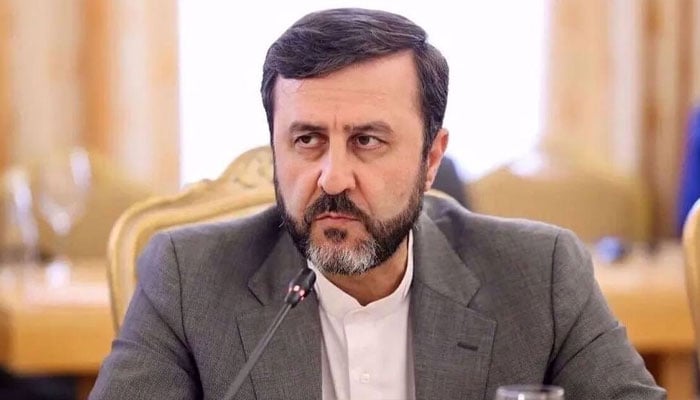
    Iran has rejected US threats over the strategically vital Strait of Hormuz, with Deputy Foreign Minister Kazem Gharibabadi declaring that the waterway cannot be taken over through a presidential order, social media post, aircraft carrier or election speech. Gharibabadi’s remarks came after US President Donald Trump threatened to declare the Strait of Hormuz US territory, according to Iranian media reports. The comments have added another layer of tension to an already volatile confrontation between Washington and Tehran. Writing on X, Gharibabadi said the strategic waterway could not be brought under American control through political statements or military pressure. He argued that decisions concerning the strait remained in Iran’s hands. “The Strait of Hormuz was, is and will remain Iranian,” Gharibabadi said, stressing that Tehran would determine when the passage could be opened or closed. The deputy foreign minister also said Iran was not intimidated by American threats and would continue its blockade until Washington acknowledged what he described as its “strategic defeats” and abandoned what he called unrealistic expectations. Trump has separately warned that he could soon announce plans to designate the Strait of Hormuz as US territory. His reported comments have intensified concerns over the future of one of the world’s most important energy corridors. The Strait of Hormuz connects the Persian Gulf with the Gulf of Oman and the wider Arabian Sea. A major disruption to traffic through the narrow waterway could have significant consequences for global energy markets because substantial volumes of oil and gas pass through it. Iran’s latest statement therefore carries significance far beyond its dispute with Washington. Any prolonged confrontation around the strait could affect commercial shipping, energy supplies and international markets. The exchange of threats also highlights the broader strategic struggle between Iran and the United States, with both sides showing little sign of backing down. For Tehran, the message is clear: control of Hormuz is being presented as a matter of sovereignty and national security, while Washington’s threats are being dismissed as insufficient to alter Iran’s position.