US-Israel War on Iran

  • | | | | |

    Iran issues stark warning to US over ground troops

    TEHRAN: Iran has issued a stark warning to the United States, saying any American ground troops attempting to enter Iranian territory would face fierce resistance. The warning was delivered by Iranian Army Ground Forces Commander Brigadier General Ali Jahanshahi, as tensions between Tehran and Washington remain high and the region continues to watch closely for signs of further military escalation. According to Iranian media reports, Jahanshahi said Iran’s armed forces were fully prepared to respond to any hostile action. He stressed that the country’s ground forces remained at a high state of readiness and were closely monitoring Iran’s borders. The Iranian commander made clear that Tehran would not take any threat to its territory lightly. Any attempt by an enemy to launch military action on Iranian soil, he said, would trigger an immediate and forceful response. The remarks underline Iran’s long-standing position that a direct ground intervention would represent a major escalation. Iranian officials have repeatedly warned that foreign troops entering the country would encounter strong resistance from the country’s armed forces. Jahanshahi also emphasized that Iran’s military units were prepared to respond to a range of potential scenarios. Security measures along the country’s borders, he said, remain active as authorities continue to assess possible threats. The latest warning comes against the backdrop of continued tensions between Iran and the United States, with military developments and diplomatic efforts both shaping the rapidly changing regional situation. For Tehran, the message appears aimed at drawing a clear red line around Iranian territory: while the country may face external pressure, any attempt to send foreign ground forces across its borders would be treated as a direct threat to national security. Analysts say such statements also reflect Iran’s effort to strengthen deterrence and signal military readiness at a time when uncertainty remains over the future course of US-Iran relations. With tensions already running high, any direct military confrontation could have consequences far beyond Iran and the United States, potentially triggering a wider regional crisis. For now, the sharp warning from Iran adds another layer of uncertainty to an already fragile security situation, while international attention remains focused on whether diplomacy can prevent another escalation.

  • | | | |

    Iran’s supreme leader Mojtaba Khamenei names Bag…

    TEHRAN: Iran’s Supreme Leader Ayatollah Mojtaba Khamenei has reshuffled two key positions in the country’s security and political establishment, appointing Mohammad Bagher Zolghadr as his political adviser and former Islamic Revolutionary Guard Corps (IRGC) commander Mohsen Rezaei as his representative on the Supreme National Security Council (SNSC). The appointments were announced through messages attributed to Khamenei on social media on Sunday, according to reports, placing two veteran figures with extensive military and political experience in prominent roles at a sensitive moment for Tehran. In his message to Zolghadr, Khamenei cited his “valuable experience” while appointing him as a political adviser. Zolghadr has held several senior positions in Iran’s security establishment and previously served as secretary of the SNSC. The move follows Zolghadr’s departure from the council’s top administrative position. Reports said Rezaei has been appointed to replace him as secretary of the powerful security body, while also serving as Khamenei’s representative on the council. Rezaei is a veteran figure in Iran’s political and military establishment. He served as commander of the IRGC for much of the Iran-Iraq war era and has held a range of senior political positions. He has also previously run for Iran’s presidency. The latest appointments are drawing attention because the SNSC plays a central role in coordinating Iran’s defence, security and foreign-policy decisions. Although the council is formally chaired by President Masoud Pezeshkian, its work brings together senior political, military and security institutions. The timing of the reshuffle is particularly significant as Iran faces continuing pressure over regional security and negotiations surrounding the Strait of Hormuz. Recent diplomatic efforts have focused on arrangements for shipping through the strategically important waterway, making changes within Tehran’s security leadership especially closely watched. Both Zolghadr and Rezaei are associated with Iran’s security establishment and have extensive experience in military affairs. Analysts are therefore likely to watch closely for any indication that the appointments could affect Tehran’s approach to negotiations, regional security or relations with the United States. The reshuffle also strengthens the role of figures with longstanding links to the IRGC within the leadership structure. Rezaei had already served as a military adviser to Mojtaba Khamenei before taking on the latest assignment. For Zolghadr, the new position keeps him within the senior leadership circle despite his exit from the SNSC secretaryship. His experience in security and political affairs could allow him to continue playing a role in shaping policy from the Supreme Leader’s office. The appointments come at a critical time for Iran, with international attention focused on Tehran’s security posture and the future of the Strait of Hormuz. Whether the changes represent a broader adjustment in Iran’s negotiating strategy remains to be seen, but the elevation of two experienced security figures is likely to keep Tehran’s next moves under close scrutiny.

  • | | | |

    Houthis target Saudi Aramco refinery in drone atta…

    RIYADH/SANAA: Regional tensions have taken another dangerous turn after Yemen’s Iran-aligned Houthi group claimed it carried out a drone attack on Saudi Aramco’s Jazan refinery, while a separate barrage of missiles and drones reportedly struck the Yemeni Red Sea port city of Mokha. The developments come as security concerns continue to grow across the Red Sea and Gulf, adding another layer to an already volatile regional situation. Houthi military spokesman Yahya Saree said the group had targeted the Aramco refinery in Jazan, in southwestern Saudi Arabia, with drones. Saudi authorities confirmed that a fire had broken out at the facility but said it had been brought under control and that no casualties had been reported. Saudi officials did not immediately attribute the fire to the alleged Houthi attack, leaving some details surrounding the incident unclear. The Jazan refinery is a strategically important energy facility on Saudi Arabia’s Red Sea coast. The complex has a crude-processing capacity of around 400,000 barrels per day and produces products including gasoline and ultra-low-sulfur diesel. The latest incident is not the first time Houthi attacks have been reported against Saudi energy infrastructure. The Jazan facility was also reportedly affected by an attack in late July, with parts of its gasification complex and tank farm suffering damage, according to reports. Mokha Port Also Hit The situation became even more serious when Houthi forces reportedly launched missiles and drones toward Mokha, a strategically located port city on Yemen’s western coast. Yemeni government forces and medical sources initially reported at least seven deaths, including civilians and military personnel. Later reports put the death toll at 11, with eight military personnel and three civilians among those killed. Around 32 people were reportedly wounded, although casualty figures varied between sources. Yemeni military officials said air-defence systems intercepted 11 Houthi drones during the attacks. Damage was also reported to civilian and commercial infrastructure around the port. The attacks come against the backdrop of heightened regional tensions involving Iran, Israel and the United States. The Houthis have also previously threatened measures affecting shipping in the Red Sea, framing their actions as retaliation for Saudi policies toward Yemen. The latest escalation is particularly notable because Saudi Arabia has recently deepened its defence cooperation with Pakistan and Türkiye. The new security arrangement has been presented as a collective defence framework in which an armed attack against one member is treated as an attack against all. With attacks now reported near both Saudi Arabia’s energy infrastructure and Yemen’s Red Sea coastline, fears are growing that the conflict could further disrupt an already sensitive regional security and trade environment.

  • | | | |

    Iran says Pakistan-Turkey-Saudi pact not aimed at Tehran

    Iran has said it has no reason to believe that the new security agreement between Pakistan, Turkey and Saudi Arabia is aimed against Tehran. Iranian Foreign Ministry spokesperson Esmaeil Baghaei said the agreement should not be viewed as a direct threat to Iran. He said the new regional security arrangement reflects a broader change in how countries in the Middle East are approaching their security needs. Baghaei said regional states are increasingly recognising that the United States cannot guarantee long-term security in the region. He also accused Washington of contributing to instability in the Middle East. He said regional security arrangements could help strengthen stability if they take into account the political and historical realities of the region. He also called for such arrangements to be broad and inclusive. Baghaei said Iran would not resume direct negotiations with the United States while Washington continues to violate an interim agreement between the two sides. Iran has also linked the reopening of the Strait of Hormuz to several demands from Washington. Iranian Foreign Minister Abbas Araghchi said Tehran and Oman were close to finalising an agreement on new shipping routes through the strategic waterway. He said the agreement was in its final stages. However, Araghchi stressed that an agreement with Oman would not automatically lead to the reopening of the strait. He said the United States would first need to meet several conditions set by Tehran. Iran is demanding compensation for damage caused by US attacks. It is also calling for an end to US military threats and sanctions against Iran. Iran has further demanded an end to attacks against its regional allies. Other demands include the removal of restrictions on Iranian shipping and the release of frozen Iranian assets. The Strait of Hormuz is a major international route for oil and gas shipments. Its prolonged closure has raised concerns over global energy supplies and shipping. Iran and the United States are currently not holding direct talks. Tehran says it will not enter direct negotiations while Washington continues to breach the interim agreement reached earlier this year. Messages between the two countries are being exchanged through intermediaries. Iran has also made a major change in its national security leadership. Former Revolutionary Guards commander Mohsen Rezaei has been appointed secretary of the Supreme National Security Council. Rezaei replaces Mohammad Bagher Zolghadr, who had been appointed to the position in March. No official reason was given for the change. The move, however, comes at a sensitive time for Iran as tensions with the United States and Israel remain high. Rezaei, 71, is a senior figure in Iran’s political and security establishment. He led the Islamic Revolutionary Guard Corps from 1981 to 1997. He served during much of the Iran-Iraq war. He later spent more than two decades as secretary of Iran’s Expediency Discernment Council. Rezaei also served as vice president for economic affairs from 2021 to 2023 under former President Ebrahim Raisi. Iran’s Supreme Leader Mojtaba Khamenei has also appointed Rezaei as his representative on the Supreme National Security Council. Zolghadr has been appointed as Khamenei’s political adviser. The Supreme National Security Council coordinates Iran’s security and foreign policy. It includes senior military, intelligence and government officials. Meanwhile, differences between the United States and Israel are reportedly growing over military operations across the region. Israeli broadcaster Channel 13 reported that Washington is pushing Israel to move toward ending fighting on three fronts. These include Gaza, Lebanon and Iran. US Central Command chief Admiral Brad Cooper reportedly conveyed the message during a visit to Israel. Washington wants progress toward reducing military operations and closing the three active fronts. Israeli officials, however, have indicated that they want to maintain freedom to act against Iran. Israeli military officials reportedly told their US counterparts that Israel intends to retain the ability to strike Iran if Tehran continues developing its nuclear programme or rebuilding its ballistic missile capabilities. Washington is also pushing for further Israeli withdrawals from positions in southern Lebanon. In Gaza, the United States is seeking progress toward a broader settlement. It is also supporting the deployment of a multinational force in the territory. Israeli security officials have reportedly objected to some US demands. These include reducing military operations and targeted killings in Gaza. The developments point to growing differences between Washington and Tel Aviv over how to manage conflicts involving Iran, Lebanon and Gaza. At the same time, the United States appears to be adopting a more cautious approach toward Iran. Tehran, however, continues to link the reopening of the Strait of Hormuz to major concessions from Washington.

  • | | | |

    President Masoud Pezeshkian meets Supreme Leader M…

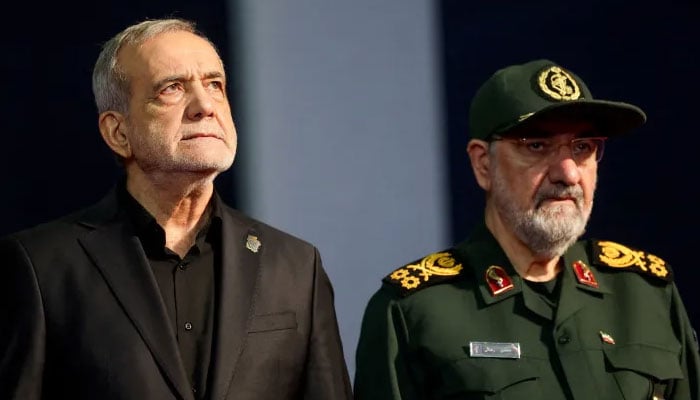
    TEHRAN: Iranian President Masoud Pezeshkian has held an important meeting with Supreme Leader Ayatollah Mojtaba Khamenei as speculation over the president’s future continues to attract attention amid heightened tensions with the United States and Israel. The meeting reportedly came as Pezeshkian entered the third year of his presidency. It also followed reports suggesting that the Iranian president was considering stepping down, claims he has rejected. Iranian authorities have previously dismissed resignation reports as unfounded, while Pezeshkian has publicly indicated that he intends to continue serving. According to statements attributed to Mojtaba Khamenei on social media, the discussions covered a wide range of economic, military and strategic issues facing Iran. Among the topics were the economic needs of ordinary Iranians, the country’s military situation, access to resources and management of the Iranian rial, foreign currency and energy costs. The two leaders also discussed economic relations with foreign partners and the wider implications of the confrontation with Washington and Israel. The meeting comes at a particularly sensitive moment for Tehran. Iran remains under pressure from the continuing regional conflict and economic difficulties, while efforts to engage Washington have faced repeated obstacles. The reported contact is also notable because Pezeshkian recently said that reaching Mojtaba Khamenei had been difficult, prompting speculation about the supreme leader’s health and whereabouts. Reports in recent days have offered conflicting accounts about how and where senior Iranian officials have been able to meet him. Meanwhile, Iran’s diplomatic efforts with the United States remain uncertain. According to the material cited by Iranian officials, negotiations have been reduced largely to messages exchanged through intermediaries after earlier attempts failed to produce a lasting agreement. The political backdrop has also been complicated by reported tensions between the presidency and powerful military-security institutions. Some reports have suggested disagreements over decision-making and the conduct of Iran’s response to the conflict, although details remain contested. Pezeshkian’s political position has therefore become a subject of renewed attention. He was elected president in July 2024 following the death of former President Ebrahim Raisi in a helicopter crash. Mojtaba Khamenei, meanwhile, became Iran’s supreme leader in March 2026 following the death of his father, Ayatollah Ali Khamenei, during the conflict. Against this backdrop, the latest meeting between the president and supreme leader carries significance beyond routine government business, particularly as Iran confronts economic pressures, military uncertainty and difficult relations with Washington. For now, however, Pezeshkian remains in office, while reports of his resignation have been publicly rejected.

  • | | |

    Fake Iranian statements allegedly used to push nuc…

    TEL AVIV: An Israeli journalist has alleged that a fabricated statement attributed to an Iranian official was circulated as part of an effort to portray Tehran as actively seeking to develop nuclear weapons. According to Israeli journalist Ronen Bergman, a false statement was allegedly created and attributed to Ahmad Vahidi, a senior commander of Iran’s Islamic Revolutionary Guard Corps. The fabricated remarks purportedly claimed that Iran was developing nuclear weapons. Bergman said the alleged fake statement was initially circulated through the social media account of a Hindu extremist in India before being amplified by a number of prominent Israeli and US-linked accounts and figures. He alleged that the material was subsequently shared by accounts associated with Israel’s Mossad, an Israeli television channel, Israeli Prime Minister Benjamin Netanyahu and the US ambassador to the United Nations. The claims have raised questions about the role of disinformation in the highly sensitive debate surrounding Iran’s nuclear programme, particularly amid continuing tensions between Tehran and Israel. The allegation is significant because claims about Iran’s nuclear ambitions have repeatedly featured in political and security debates in the region. Any fabricated statement presented as an authentic admission could potentially influence public opinion and international perceptions. However, the reported allegations concern the authenticity and circulation of the statement rather than independently establishing the broader question of Iran’s nuclear intentions. The development highlights how rapidly unverified material can spread across social media and be amplified by influential accounts, especially during periods of heightened geopolitical tension. The claims attributed to Bergman are likely to fuel further debate over information warfare, source verification and the use of alleged intelligence-related material in the ongoing Iran-Israel confrontation.

  • | | | |

    Mojtaba Khamenei appears in new video as health qu…

    TEHRAN: A new video showing Iran’s Supreme Leader Mojtaba Khamenei has emerged, offering a rare public glimpse of the Iranian leader amid heightened attention over his health and whereabouts. The footage was released by Iran’s semi-official Mehr News Agency and appears to show Khamenei sitting with several people and engaged in conversation. The agency did not disclose when or where the recording was made, nor did it identify the other individuals seen alongside him. Khamenei appears in normal condition in the short footage. The release comes after reports and speculation about his health had circulated in recent days, making the video particularly significant for observers following developments in Tehran. Iranian media presented the footage as evidence of the Supreme Leader’s continued presence and activity. The video does not provide independent confirmation of when it was recorded, however, leaving some questions unanswered about Khamenei’s current condition and location. The appearance comes as tensions surrounding Iran remain high. Iranian Foreign Minister Abbas Araghchi has reiterated Tehran’s determination to withstand pressure and continue what he described as resistance. “We are fully prepared for resistance despite all pressures,” Araghchi said, according to the statement cited by Iranian media. He also said Iran would not forget what he described as the unjust bloodshed of its martyrs, adding that those responsible would not be forgiven. Khamenei’s limited public appearances have attracted considerable attention since he became Iran’s Supreme Leader earlier this year. The latest footage is therefore likely to be closely examined both inside Iran and abroad as questions continue over the country’s leadership and its response to mounting regional pressures. For now, the exact timing and location of the recording remain undisclosed.

  • | | | |

    Iran ready to resist pressure as Hormuz talks near…

    TEHRAN: Iran is prepared to continue resisting mounting pressure, Foreign Minister Abbas Araghchi said, as Tehran and Oman move closer to an agreement on managing navigation through the strategically vital Strait of Hormuz. Araghchi said Iran would not forget what it described as the unjust bloodshed of its martyrs and would not forgive those responsible. His remarks come amid continuing tensions between Tehran and Washington and uncertainty over the future of negotiations. The Iranian foreign minister also warned that talks with the United States would not resume if Washington continued to violate the memorandum of understanding between the two countries. According to Araghchi, Iran and the United States are currently not engaged in direct negotiations. However, messages are being exchanged through intermediaries, keeping a narrow diplomatic channel open despite the broader standoff. The most immediate development concerns the Strait of Hormuz, a critical waterway for international energy shipments. Araghchi said negotiations between Iran and Oman over a new arrangement for maritime traffic were in their final stages. He stressed, however, that reaching an agreement with Oman would not automatically mean the strait would be fully reopened. Instead, the proposed arrangement would establish new maritime routes between Iran and Oman. The two countries have previously agreed to work together on future navigation management, shipping services and related arrangements while emphasizing safe passage and their sovereign rights over their territorial waters. The issue has become a major point of contention in wider diplomatic efforts, with Tehran insisting that US actions under the memorandum must be addressed before normal negotiations can resume. For now, the emerging Iran-Oman arrangement could offer a potential pathway for maritime traffic, but significant political hurdles remain. With Tehran maintaining its tough stance toward Washington, the next stage of diplomacy could determine whether the strategic waterway moves toward greater stability or remains at the center of regional tensions.

  • | | | |

    Iran rules out US talks until demands are met

    Iran has ruled out direct negotiations with the United States for now, saying Washington must first comply with the terms of an interim agreement reached in June. Iranian Foreign Minister Abbas Araghchi said on Sunday that Tehran and Washington were not holding direct talks. He said messages were still being exchanged through intermediaries. Araghchi also reiterated Iran’s position on the Strait of Hormuz. He said the strategic waterway would not reopen simply because Iran and Oman reached an agreement on shipping arrangements. According to Iranian reports, Tehran and Muscat are close to finalising an understanding on a temporary shipping route. However, Iran says the route can only be used after other conditions are met. The Strait of Hormuz has remained at the centre of the wider conflict. Iran has repeatedly linked its reopening to demands directed at Washington. Iranian officials have called for an end to US threats and military action. They have also demanded the lifting of sanctions and blockades and the release of Iranian assets. Iran’s Revolutionary Guard has separately warned that the strait will remain closed until Tehran’s conditions are accepted. The force accused its opponents of shifting their focus toward reopening the vital waterway. The strait is one of the world’s most important energy routes. A significant share of global oil and gas shipments normally passes through it. Oman, meanwhile, said discussions with Iran over arrangements for shipping through the waterway had been positive and constructive. Muscat also urged all sides to avoid actions that could undermine the negotiations. Iranian President Masoud Pezeshkian has suggested that the current situation could provide an opportunity for an agreement. He said Iran remained united and strong despite the ongoing conflict. The diplomatic uncertainty comes as tensions continue to affect commercial shipping in the region. The United Arab Emirates said Iran had attacked a vessel linked to its state-owned oil company while it was travelling through the Strait of Hormuz. No injuries were reported. The United Kingdom Maritime Trade Operations agency also reported that a vessel caught fire after being struck by an unidentified projectile. The fire was later brought under control, with no environmental damage reported. Iranian authorities have not immediately commented on the individual incident. Saudi Arabia reports fires at energy facilities Tensions have also spread across the Gulf. Saudi Arabia said firefighters had extinguished a blaze at an Aramco facility in Jizan. The Saudi Energy Ministry said there were no fatalities. Yemen’s Houthi movement claimed responsibility for an attack on the site, saying it had used a drone in response to alleged Saudi strikes in Yemen. A separate explosion was also reported in the industrial area of Jubail. Regional sources said gas facilities were targeted and that a fire broke out. The exact cause remained unclear. It was not immediately established whether the incidents in Jizan and Jubail were connected. US defence industry ordered to increase weapons production Meanwhile, the United States has asked its defence industry to accelerate weapons production amid shortages linked to the war with Iran. US Deputy Defence Secretary Steve Feinberg reportedly instructed defence companies to submit plans aimed at speeding up deliveries and increasing production of critical military equipment. The demand comes amid reports of pressure on US ammunition supplies, including stocks of Patriot missile interceptors. The Trump administration has maintained that the United States has substantial weapons reserves and that additional supplies are being manufactured and delivered. The conflict has also triggered threats from armed groups in the region. The leader of Iraq’s Harakat Hezbollah al-Nujaba, Akram al-Kaabi, has threatened retaliation for US-Saudi strikes on sites belonging to Iraq’s Popular Mobilisation Forces. The group has warned that further military action could lead to a response. Iranian military officials, meanwhile, have claimed that the United States and Israel failed to achieve their objectives against Iran. They have praised the country’s military preparedness and vowed to continue resisting pressure. With the Strait of Hormuz still closed and negotiations remaining indirect, the prospect of restoring normal shipping remains uncertain. Iran insists that reopening the waterway depends on Washington accepting its conditions. The United States, meanwhile, has linked the lifting of its blockade to Iran fulfilling commitments under any future agreement.

  • | |

    Israel rejects Trump’s 15-point Gaza plan

    Israeli Prime Minister Benjamin Netanyahu has rejected US President Donald Trump’s proposed 15-point plan for Gaza, insisting that Israel will not withdraw its forces until Hamas is fully and genuinely disarmed. Netanyahu made the statement during a cabinet meeting on Sunday. He said Israel would not accept any arrangement that allows Hamas to retain its weapons while Israeli troops are required to leave Gaza. “Israel rejects the 15-point document,” Netanyahu said, adding that the Israeli military would continue operating against threats to its forces and citizens. The dispute has created another obstacle for Trump’s efforts to establish a lasting ceasefire and political settlement in Gaza. Trump’s Board of Peace had previously announced that an agreement had been reached on the complete disarmament of Hamas and other armed groups operating in the territory. Hamas, however, has linked the handover of its heavy weapons to wider conditions. The group has demanded an end to Israeli military operations and a withdrawal of Israeli forces from Gaza. Netanyahu said disarmament must take place before any Israeli military withdrawal. He rejected the possibility of what he described as a symbolic or “fictitious” disarmament process. The Israeli premier said his government was discussing the next steps with US officials. He indicated that some American proposals were acceptable to Israel, while others remained unacceptable. “We know how to stand our ground on these matters,” Netanyahu said. The disagreement represents a major challenge for Trump’s Gaza initiative, which was presented as a framework for ending the conflict and creating conditions for reconstruction. The proposed plan includes the disarmament of Hamas, a phased Israeli military withdrawal and the rebuilding of Gaza. It also envisages the creation of an international Board of Peace to oversee implementation of the agreement. Hamas had previously signalled support for aspects of the disarmament framework. However, the group has maintained that weapons cannot simply be surrendered while Israeli forces remain in Gaza and military operations continue. Israel, meanwhile, has continued military strikes in Gaza despite the initial ceasefire agreement reached last October. Netanyahu is also facing political pressure at home. His far-right coalition partners have strongly opposed concessions that could allow Hamas to remain armed or secure a significant Israeli withdrawal. National Security Minister Itamar Ben Gvir has rejected the proposed framework and called it unacceptable. With Israeli elections approaching, Netanyahu faces pressure from both domestic allies and international partners. Any major concession on Gaza could create tensions within his governing coalition. The latest rejection therefore puts Trump’s peace initiative under renewed pressure. The central disagreement remains over the sequence of events: Hamas wants Israeli forces to withdraw and military action to end before completing disarmament, while Israel insists that Hamas must first surrender its weapons.