• | |

    Pakistan goods transport alliance announces nation…

      The Pakistan Goods Transport Alliance has announced a nationwide strike beginning on August 8, warning that transport operations across the country may be significantly disrupted if the government fails to address its key demands. The announcement was made by the alliance’s president, Malik Shehzad Awan, who criticized recent government policies affecting the transport sector and called for immediate corrective measures. Speaking to the media, Malik Shehzad Awan said that transporters are facing increasing financial pressure due to the frequent fluctuations in petroleum prices. He argued that the current system of revising fuel prices on a daily basis has created uncertainty for transport businesses, making it difficult for operators to estimate transportation costs, negotiate freight rates, and manage their daily operations effectively. The alliance has demanded that the government abandon the practice of daily fuel price adjustments and instead adopt a monthly pricing mechanism for petroleum products. According to Awan, fixing fuel prices on a monthly basis would provide greater stability to the transport industry, allowing businesses to plan expenses more efficiently and reducing the uncertainty caused by continuous price changes. He maintained that predictable fuel costs are essential for sustaining commercial transport services and protecting transport operators from unexpected financial losses. In addition to seeking changes in the fuel pricing policy, the alliance has also demanded the resignation of Federal Minister for Petroleum Ali Pervaiz Malik. Malik Shehzad Awan expressed dissatisfaction with the government’s handling of issues related to the petroleum sector, arguing that the concerns of transporters have not been adequately addressed. He claimed that recent policies have increased operational costs and placed an unnecessary burden on transport businesses across Pakistan. Another major demand put forward by the Pakistan Goods Transport Alliance concerns the withholding tax imposed on transport-related transactions. The alliance has urged the government to reduce the withholding tax rate from 7 percent to 2 percent, arguing that the current tax structure is excessive and has significantly increased the financial burden on transport operators. According to the alliance, lowering the tax rate would provide much-needed relief to the industry and improve the financial sustainability of transport businesses, particularly small and medium-sized operators. The transport sector plays a critical role in Pakistan’s economy, serving as the backbone of the country’s supply chain by moving goods between manufacturers, wholesalers, retailers, and consumers. A nationwide strike by transporters could disrupt the movement of essential commodities, industrial raw materials, agricultural products, and imported goods, potentially affecting businesses and consumers alike if the dispute remains unresolved. The alliance has called on the federal government to engage in meaningful dialogue with transport representatives before the scheduled strike date. Its leadership has urged policymakers to reconsider the current fuel pricing mechanism and taxation policies in order to prevent disruption to trade and commercial activities. The transporters maintain that their demands are aimed at ensuring the long-term sustainability of the sector rather than creating difficulties for the public. If negotiations do not produce a satisfactory outcome, the Pakistan Goods Transport Alliance has indicated that transporters across the country will proceed with the nationwide strike on August 8. The proposed shutdown is expected to affect freight services on major highways and commercial routes, potentially disrupting the supply of goods and increasing pressure on businesses dependent on road transport. The alliance has expressed hope that the government will address its concerns before the strike begins, allowing transport operations to continue without interruption.

  • |

    Jean Rhys’s “Good Morning, Midnight” whispers in the dark

    When Jean Rhys published Good Morning, Midnight in 1939, it was met with a chorus of discomfort and bewilderment. Critics at the time found its tone too bleak, its protagonist too unvarnished, and its atmosphere too heavy with melancholy. Yet decades later, this tragic, brilliant novel stands out as one of the most hauntingly modern studies of isolation, vulnerability, and resilience ever written. It is a work that does not simply invite readers into a story; it pulls them directly into the fractures of a wounded mind. The novel centers on Sasha Jansen, an aging Englishwoman returning to Paris after a long absence. Having scraped together a modest sum of money, she hopes to use the trip as a desperate attempt to patch over her fraying life. But the Paris Sasha steps back into is not a romantic city of artists and cafes; it is a claustrophobic landscape of cheap, dimly lit hotel rooms, cold streets, and judgemental eyes. Traumatized by a past filled with poverty, loss, and abusive relationships, Sasha moves through the city like a ghost in her own life, attempting to dull her emotional pain with alcohol while simultaneously craving a human connection she fears will ultimately destroy her. What makes Rhys’s narrative so compelling is her incredible command of internal voice. Written in a tight, stream-of-consciousness style, the novel obliterates the boundary between Sasha’s thoughts and the world around her. Rhys captures the quiet humiliation of financial insecurity. The constant calculation of tips, the fear of being judged by hotel staff, the defensive impulse to buy cheap clothes just to look respectable. Through Sasha’s eyes, even everyday interactions carry a terrifying weight. When she encounters a young Russian man who mistakes her for someone wealthier, or when she interacts with an eccentric gigolo, the tension is palpable. The reader is trapped right alongside Sasha. They navigate the razor-thin line between her deep yearning for intimacy and her absolute terror of being hurt. Beyond its psychological depth, Good Morning, Midnight is a social critique. Published on the cusp of World War II, the novel subtly mirrors the anxiety and dislocation of late-1930s Europe. Sasha’s struggle highlights how unforgiving society can be to women who fall outside traditional expectations of youth, wealth, and domestic stability. She is a woman adrift in an urban landscape that demands self-sufficiency while offering no safety net, making her experience feel astonishingly contemporary to modern readers facing their own eras of isolation and uncertainty. Rhys’s prose is razor-sharp, sparse, and poetic, delivering emotional blows with remarkable economy. The book’s final passage remains one of the most famous, devastating, and deeply ambiguous endings in twentieth-century literature. It is neither a story of neat redemption nor one of complete surrender, but rather a quiet, defiant acceptance of life’s painful complexities. Good Morning, Midnight demands that we look directly at the aspects of human suffering we often try to ignore; loneliness, aging, and  poverty. Jean Rhys offers a masterpiece of modernism that feels as vital, raw, and resonant today as it did nearly a century ago.  

  • 40,000-Year-Old ivory birds discovered in a German cave

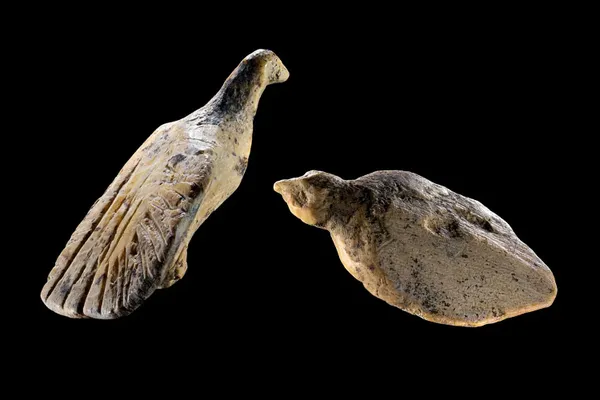
    Archaeologists have recently uncovered two thumbnail-sized sculptures of birds carved from mammoth ivory approximately 40,000 years ago. These delicate figurines, which have spent dozens of millennia buried in sediment, offer an intimate glimpse into the minds, environments, and creative capacities of our ancient ancestors during the Ice Age. The astonishing discoveries were made in the Hohle Fels Cave, a site deeply embedded in the Swabian Jura region of Germany. This location has long been celebrated as one of the most critical archaeological sites in the world for understanding early modern human culture in Europe. The newly found sculptures are extraordinarily small. Each measures less than a single inch in length and weighs merely a fraction of an ounce. It makes them roughly the size of an average human thumbnail. Despite their diminutive scale, the level of detail the prehistoric artist managed to achieve is nothing short of masterful. Rather than relying on abstract or highly stylized representations, the Ice Age carver recorded specific, anatomical observations. The figurines feature carefully incised markings that clearly delineate feathers, as well as distinctively carved eyes. One of the miniature sculptures portrays a bird with its wings fully spread, capturing a moment of dynamic movement, although a few fragments of its body have unfortunately been lost to time. Remarkably, this particular piece now holds the record as the smallest Ice Age artwork ever found in the region. The second figurine, which survived completely intact, depicts a bird in a resting posture. It appears to be lying down, a pose that researchers speculate might represent the animal tending to its eggs. Experts analyzing the avian features believe that at least one of the sculptures represents a ptarmigan, a robust bird belonging to the grouse family that would have been familiar to inhabitants of the harsh Ice Age landscape. While the identity of the second bird remains slightly less certain, it too could be a ptarmigan, or possibly a small bird of prey. Because the two ivory pieces were found just about five feet apart during the 2025 excavation season and share stylistic similarities, archaeologists strongly suspect they were crafted around the exact same time, quite possibly by the very same artist. The excavation was led by Nicholas Conard and a dedicated team from the University of Tübingen, who have been meticulously studying the Hohle Fels site for nearly three decades. The process of unearthing such fragile artifacts requires incredible patience. Researchers painstakingly remove layers of earth before washing and sifting the prehistoric sediment through extremely fine mesh screens. It was during this rigorous process that Elisa Luzi, a paleontologist at the university, first spotted one of the tiny birds. She described the profound emotional weight of the moment, emphasizing the sheer privilege of being the first human being to lay eyes on the carving in 40,000 years, and feeling an instant connection to the humanity of its maker. The Hohle Fels Cave These findings belong to the Aurignacian period, an epoch that coincides with the early settlement of Homo sapiens in Europe. The Hohle Fels Cave which is protected as a UNESCO World Heritage site has previously yielded some of the oldest known figurative art and musical instruments on the planet. The collection includes early bone flutes and the famous Venus of Hohle Fels. Exactly why these early humans took the time to carve such intricate, tiny birds remains a mystery. Researchers have proposed various theories, wondering if they were utilized as personal talismans meant to bring good fortune, or as cultural symbols associated with the specific identity of their owner. While we may never have a definitive answer regarding their prehistoric purpose, these thumbnail-sized masterpieces firmly remind us that the human desire to observe, create, and capture beauty is as ancient as humanity itself.  

  • |

    How canvas and color rescued Winston Churchill

    When history pictures Sir Winston Churchill, it summons the same iconic image of the stoic wartime leader. This typical leader with a bulldog scowl possesses cigar clamped between his teeth and a V-for-victory sign raised to a resilient nation. Yet behind the fierce political maneuvers lay a deeply sensitive man fighting severe emotional exhaustion. There’s a major landmark exhibition in London, titled Winston Churchill: The Painter. It has kept Britain’s titan grounded: his lifelong, intense passion for oil painting. The 1915 Catalyst Churchill did not pick up a paintbrush as a youth or a rested pensioner. He was forty years old and engulfed in the darkest catastrophe of his career. Following the disastrous Gallipoli campaign in 1915 during the First World War, Churchill was stripped of his post at the Admiralty. He got abruptly casted into political exile. So, he felt his mind consumed by overwhelming anxiety and listlessness. He had described himself as a deep-sea creature suddenly hauled to the surface. He suffered from a terrifying drop in pressure. In desperation, he picked up a set of children’s paints belonging to his young family members. What began as a tentative experiment to stave off despair quickly blossomed into an obsession. As Churchill would later recall, The Muse of Painting came to my rescue. The canvas provided something his turbulent political career rarely allowed: a realm where he held absolute command over every stroke, texture, and hue. From Cautious Strokes to Bold Expressionism The exhibition traces Churchill’s artistic maturation across five decades and more than fifty rare works, many loaned from private collections where they have remained hidden from public view for generations. Initially guided by artistic mentors such as Sir John Lavery and Sir William Nicholson, Churchill’s early works were cautious and subdued, capturing war-torn landscapes on the Western Front during his subsequent military service in France. However, as his confidence grew, so too did his appetite for vibrant color and energetic compositions. Influenced by French Post-Impressionism, Churchill developed an eye for brilliant light and rich pigment. He famously declared his disdain for muted palettes, writing that he felt genuine pity for poor, timid browns in favor of unapologetic cobalt blues, emerald greens, and fiery terracottas. Whether rendering the lush water garden at Chartwell or capturing the sun-drenched architectural marvels of Marrakech, Churchill painted with the same he brought to the House of Commons. Morocco, in particular, held a magical appeal for him. He returned there six times, captivated by the dramatic contrast between the snow-capped Atlas Mountains and the luminous desert plains. Art as Solace and Soft Diplomacy For Churchill, painting was never a mere hobby to kill time; it was a psychological anchor and a companion through severe personal tragedies. When his three-year-old daughter Marigold tragically died of sepsis in 1921, or when political fortunes ebbed during his wilderness years in the 1930s, Churchill retreated to his studio at Chartwell. Surrounded by paint tubes housed in old cigar humidors, he labored for hours at his easel, finding peace in the disciplined focus required to translate nature onto canvas. Beyond personal healing, his artwork doubled as subtle political allegory and warm diplomacy. Paintings like The Beach at Walmer (1938) depicted a historical cannon watching over innocent swimmers. This artwork hinted at his growing anxiety over looming European conflict long before others acknowledged the threat. Later in life, he frequently gifted canvases to world leaders, bodyguards, and trusted confidants, using his art as a bridge of personal warmth.  A Portrait of the Man Ultimately, exploring Churchill’s canvases fundamentally reframes our understanding of one of history’s most formidable figures. The bold brushstrokes reveal an individual far more vulnerable, contemplative, and joyful than the uncompromising statesman of public memory. By stepping behind his easel, we discover that the stubborn courage that helped save the free world was nurtured, in no small part, by the quiet sanctuary of color and light.  

  • |

    Han Kang transforms trauma into human connection

    In an era often dominated by literary posturing and self-absorbed memoirs, South Korean author Han Kang offers a profound counterweight. Her collection, Light and Thread, serves as an intimate look into the ethical consciousness of a writer shaped by the long shadow of national tragedy. Rather than using her platform to project certainty or celebrate her global acclaim, Han Kang turns writing into a delicate act of witness. An attempt to span the distance between isolated souls using language as a fragile bridge. The Weight of Historical Memory Beneath the intimate and domestic moments captured in Light and Thread lies an undercurrent of history. For readers familiar with Han Kang’s literary canon, the ghostly presence of unresolved national trauma is a constant motif. History is not presented here as a series of dead facts. Instead, it breathes through silence, leaving behind a persistent political and moral residue. A decisive turning point in her artistic journey occurred when she encountered archival photographs of the 1980 Gwangju massacre. She found herself forced to abandon her previous literary trajectory while confronted by the reality of historical violence. The weight of what she witnessed demanded an entirely new vocabulary of remembrance. This epiphany reflects an overarching ethical seriousness. Literature is not viewed as a vehicle for self-promotion or intellectual display. Creation is treated as a solemn, almost spiritual responsibility toward those who have been sisilenced. Her work continually battles with how language can articulate grief without reducing its magnitude. How it can preserve human dignity against historical erasure and honor the memory of the dead. Even in her Nobel Lecture, Han Kang rejects self-congratulation. She transforms the moment into a vulnerable meditation on a writer’s moral duties, choosing quiet reflection over triumph. An Invisible Connection Between Hearts The central motif of the collection traces back to a poem Han Kang wrote as an eight-year-old child. In it, she envisioned an invisible golden thread linking human hearts across space. Decades later, that simple childhood metaphor provides the framework for Light and Thread. For Han Kang, storytelling operates as that very filament: delicate, easily broken, yet surprisingly resilient. It holds the power to link separated lives across loss, time, and geography. Reading and writing become acts of deep empathy. They’re active ways of reaching into another person’s experience without seeking control or mastery. Dissolving the Self to Preserve Humanity Unlike conventional memoirs focused on self-dramatization, Light and Thread presents a porous sense of self. The author’s first-person perspective regularly fades into descriptions of weather, ambient sound, plant life, and lingering pain. Han Kang shifts the focus away from herself and onto the fragile conditions that allow human consciousness to endure. Her fundamental skepticism toward absolute answers becomes her greatest strength. Her writing creates a quiet space where grief can exist without being distorted.  

  • | |

    Swat hosts flag rally in support of Pakistan army …

    A joint flag rally and patrol were held in Swat to demonstrate solidarity with the Pakistan Army and Khyber Pakhtunkhwa (KP) Police amid the prevailing security situation in the region. The event brought together security personnel and local residents in a show of unity aimed at reinforcing public confidence and promoting peace. According to official information, the rally featured participation from Pakistan Army personnel, KP Police officers, civilians, and children. Participants carried the national flag and expressed support for the country’s security forces while emphasizing the importance of cooperation between the public and law enforcement agencies. During the event, large crowds chanted patriotic slogans, including “Long Live Pakistan” and “Long Live Pakistan Army,” as the joint procession moved through key roads and public areas of Swat. The rally was accompanied by a coordinated patrol involving security vehicles and motorcycles, highlighting the continued presence of security forces across the district. The joint patrol was organized as part of ongoing efforts to strengthen security, reassure local communities, and enhance coordination between the Pakistan Army and the provincial police. Officials said such activities are intended to improve the public’s sense of safety while maintaining vigilance against potential security threats. Authorities stated that the initiative also aimed to send a clear message that the people of Swat stand united with the country’s security institutions against elements seeking to disrupt peace and stability. The visible participation of residents reflected community engagement in efforts to support law enforcement and contribute to a secure environment. Residents from different segments of society, including families and young people, took part in the event, underlining a shared commitment to peace and national unity. Organizers described the rally as a symbol of cooperation between citizens and security forces, stressing that maintaining peace requires collective responsibility and mutual trust. The flag rally comes as security agencies continue to monitor the situation in parts of Khyber Pakhtunkhwa and carry out measures aimed at ensuring public safety. Joint patrols and community outreach initiatives have become an important part of broader efforts to strengthen coordination between security institutions and local communities. Officials expressed confidence that continued collaboration between the Pakistan Army, KP Police, and the people of Swat would help preserve lasting peace and stability in the region. They emphasized that unity, vigilance, and public cooperation remain essential in addressing security challenges and safeguarding the progress made toward maintaining law and order.

  • | |

    Rehman Bhola reportedly taken into custody after c…

    Rehman, widely known as Rehman Bhola, was reportedly taken into custody following a clash and firing incident at the Muttahida Qaumi Movement-Pakistan (MQM-P) headquarters in Karachi’s Bahadurabad area. The reported detention comes shortly after Rehman Bhola was acquitted in the Baldia Factory fire case, drawing renewed public attention to his activities. According to local reports, Rehman Bhola was taken into custody from his residence in North Nazimabad late Sunday night. The reported operation followed a dispute and exchange of gunfire that allegedly occurred at MQM-P’s temporary headquarters in Bahadurabad. CCTV footage circulating on social media and cited in local media reports appears to show plainclothes personnel, uniformed police officers, and female officers escorting Rehman Bhola from his residence before taking him away in official vehicles. However, authorities have not publicly verified the authenticity of the footage. Despite widespread reports of the detention, police officials had not issued an official statement confirming Rehman Bhola’s custody by late Monday night. As a result, the exact legal basis for the reported action and the charges, if any, remain unclear. The reported detention follows tensions at the MQM-P headquarters, where a dispute reportedly escalated into a firing incident on Sunday evening. While the circumstances surrounding the clash are still being investigated, reports indicate that law enforcement agencies launched operations in different parts of Karachi following the incident. Media reports also suggest that several MQM office-bearers and workers were detained from various areas of the city as part of the ongoing investigation. However, authorities have yet to release an official count of those taken into custody or provide details regarding their alleged involvement. Rehman Bhola recently returned to the public spotlight after being acquitted in the Baldia Factory fire case, one of Pakistan’s most high-profile criminal cases. His reported detention has therefore attracted significant attention, although officials have not linked the custody directly to any specific criminal allegation. The investigation into the Bahadurabad incident remains ongoing. Law enforcement agencies are expected to examine available evidence, including CCTV recordings and witness statements, to determine the sequence of events and identify those responsible for the reported violence. Until an official statement is issued, many details surrounding Rehman Bhola’s reported detention and the broader investigation remain unconfirmed. Authorities are expected to provide further updates as the inquiry progresses.

  • | | | |

    Trump warns Iran it has a ‘last chance’ to rea…

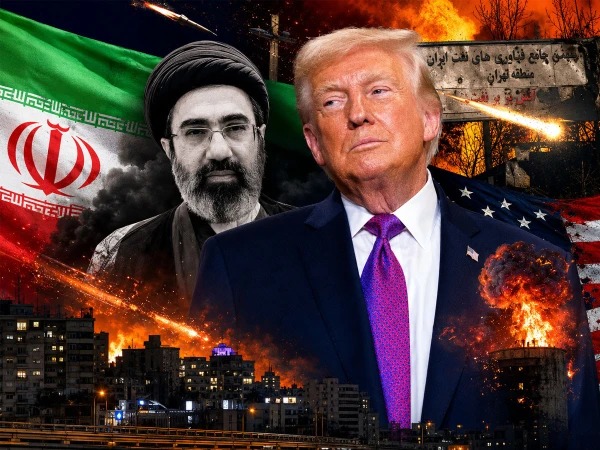
    US President Donald Trump has warned that Iran has a final opportunity to reach an agreement with the United States, saying he postponed planned military action to allow diplomacy one last chance. Speaking to reporters at the White House, Trump said several Gulf countries had urged Washington to delay military strikes against Iran in the hope that negotiations could produce a diplomatic breakthrough. According to the US president, those requests led him to postpone military action once again. Trump stated that multiple regional governments had contacted his administration, asking that Iran be given another opportunity to negotiate. He described the current moment as Iran’s “last chance” to avoid further escalation and urged Tehran to seize the opportunity for a peaceful resolution. When asked why this latest diplomatic effort differed from previous attempts, Trump replied that he wanted to give Iran one final opportunity before what he described as “complete destruction.” However, he did not provide additional details about the conditions that could trigger military action or a specific timeline. Despite his warning, Trump expressed optimism that negotiations could move forward quickly. He said the first phase of a potential agreement would involve reopening the Strait of Hormuz to unrestricted maritime traffic by Tuesday, while the second phase would focus on ending Iran’s nuclear program. The US president acknowledged that dismantling Iran’s nuclear program would not happen immediately and would require additional time to implement. He added that both the reopening of the Strait of Hormuz and measures related to Iran’s nuclear activities were included in a memorandum of understanding reportedly reached between the two sides in June. Trump’s remarks come amid renewed diplomatic efforts surrounding the long-running dispute over Iran’s nuclear program and regional security. Tensions between Washington and Tehran have remained high despite repeated attempts to revive negotiations. Earlier in the day, Trump also announced that talks with Iran were expected to take place. However, Iran has maintained that its current discussions are being conducted through Oman rather than in direct negotiations with the United States. The differing public statements highlight the continuing uncertainty surrounding the diplomatic process. No immediate response from Iranian officials was reported following Trump’s latest comments. It also remains unclear whether a formal agreement is close or whether the two sides have narrowed their differences on key issues, including nuclear activities and regional security. Observers say the coming days could prove significant as diplomatic contacts continue and both sides weigh the possibility of further negotiations against the risk of renewed confrontation in the region.

  • | | |

    Three killed as heavy monsoon rains trigger floodi…

    At least three people lost their lives and three others were injured in rain-related incidents across Punjab as heavy monsoon showers triggered urban flooding, damaged homes, and disrupted daily life in several cities. Authorities have placed emergency services on high alert as the current spell of rain is expected to continue through August 5. According to the Punjab Disaster Management Authority (PDMA), one man died and another person was injured after a house collapsed in Uch Sharif, Bahawalpur district. In a separate incident, two children drowned in Khushab during the ongoing monsoon rains. Two additional people sustained injuries in separate roof collapse incidents reported in Mandi Bahauddin and Lodhran. The PDMA also confirmed damage to at least one house in Bahawalpur. Officials clarified that nine other deaths reported on the same day were not directly linked to rain or flooding. These incidents included drownings in canals and rivers in Kot Addu, Narowal, and Attock, while four children tragically died of suffocation after becoming trapped inside a parked vehicle in Mianwali. PDMA Director General Saif Anwar Jappa directed deputy commissioners across Punjab to remain on high alert as heavy rainfall is forecast to continue. He said Chief Minister Maryam Nawaz is personally monitoring the situation and has instructed district administrations, Rescue 1122, Water and Sanitation Agency (Wasa), and other departments to remain fully prepared for emergencies. Lahore experienced several hours of intense rainfall, leaving many roads and residential areas submerged. Water accumulated up to one-and-a-half feet deep in areas including Township, Kacha Jail Road, Haider Road, and the Quaid-i-Azam Industrial Estate, causing severe traffic congestion and disrupting public movement. According to Wasa Lahore, the city received an average rainfall of 24.8 millimetres, with the highest rainfall recorded at the Wasa Head Office in Gulberg at 66.4mm. Significant rainfall was also reported in Shadipura, Mughalpura, Mannawan, Johar Town, Tajpura, and several other localities. Faisalabad recorded the highest rainfall in Punjab at 103mm, resulting in extensive urban flooding at multiple locations. Water levels reached up to 23 inches in some areas, prompting Wasa teams to continue dewatering operations throughout the day. Heavy rainfall also affected Gujrat and Mandi Bahauddin, where roads were inundated and drainage operations remained underway. In contrast, Jhelum recorded only light rainfall, and officials reported that all waterlogging points had been cleared by the afternoon. Authorities have advised residents to avoid unnecessary travel during heavy rain, stay away from electricity poles and damaged buildings, and keep children away from floodwater and fast-flowing canals as monsoon conditions persist across the province.

  • | |

    Pakistan cuts petrol price by Rs. 4.08 per litre, …

    The federal government has announced a reduction in petroleum prices, lowering the cost of petrol by Rs. 4.08 per litre and high-speed diesel (HSD) by Rs. 2.45 per litre. The revised prices will come into effect from August 4, providing some relief to consumers amid easing international oil prices. According to a notification issued by the Petroleum Division, the new price of petrol has been fixed at Rs. 331.95 per litre, while high-speed diesel will now be available at Rs. 389.93 per litre. The latest revision follows a decline in global crude oil prices after geopolitical tensions in the Middle East showed signs of easing. Despite the reduction, the government continues to impose substantial taxes and duties on petroleum products. Petrol carries approximately Rs. 110 per litre in taxes and levies, while diesel is subject to Rs. 96 per litre in government charges. Fuel prices had surged sharply earlier this year following heightened tensions between the United States and Iran, which raised concerns about potential disruptions to global oil supplies. High-speed diesel reached a record Rs. 520.35 per litre on April 3 after climbing from Rs. 281 per litre in late February. During the same period, petrol rose from Rs. 266 per litre to a peak of Rs. 458.41 per litre. Earlier, Petroleum Minister Ali Pervaiz Malik announced that fuel prices would now be reviewed daily instead of weekly in response to increased volatility in international energy markets. Under the new mechanism, the Oil and Gas Regulatory Authority (OGRA) has been tasked with determining petroleum prices based on prevailing global market trends. The decision to introduce daily pricing has, however, faced criticism from the All Pakistan Petroleum Dealers Association, which has opposed the move and indicated that it may consider launching protests against the policy. Petrol remains the primary fuel used by private vehicles, motorcycles, rickshaws, and small transport, making its price particularly important for middle- and lower-income households. Meanwhile, high-speed diesel is widely consumed by the heavy transport sector, agriculture, industries, power plants, and commercial generators, meaning changes in diesel prices have a broader impact on transportation costs, supply chains, and inflation. The latest reduction is expected to provide modest financial relief to consumers and businesses. However, future fuel prices will largely depend on international crude oil trends, exchange rate movements, and developments in the Middle East, all of which continue to influence Pakistan’s petroleum pricing policy.