thailand cuts oil

Thailand Cuts Oil Refining Margins to 5 Baht in Bold Move

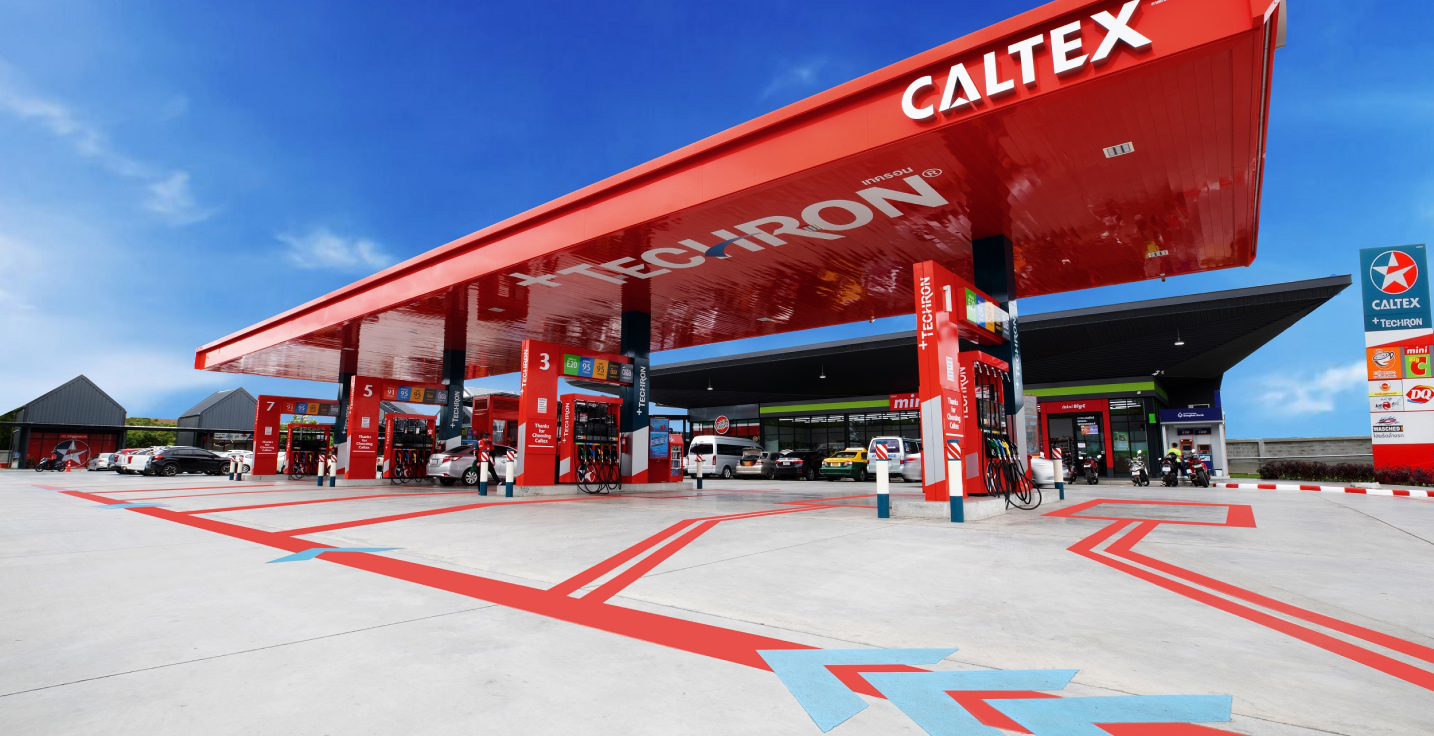
BANGKOK — The National Energy Policy Committee has resolved to cut ex-refinery prices of refined oil products from six domestic refiners by five baht per litre, a significant increase from the previously planned two-baht reduction, in a bold move aimed at reining in what authorities have described as excessive industry profits, Thai PBS World reported.

Thai Government to Roll Out Fuel Relief Measures from April 1

The price cut, effective from tomorrow until May 9, will be followed by an additional three-baht reduction, though Energy Minister Akanat Promphan has made clear that the five-baht cut does not necessarily mean pump prices at service stations will automatically decrease by the same amount. The measure must first be published in the Royal Gazette before it becomes legally binding.

Speaking after the committee meeting, Akanat explained that the ex-refinery price cut is possible because the Gross Refining Margin for April now averages 14 baht per litre, a level he described as excessively high. The committee discovered that Thailand’s six oil refiners have gained a combined windfall of approximately 10 billion baht from elevated margins, including five billion baht in the month of April alone. The five-baht cut is intended to claw back some of those excess profits for the benefit of consumers and the national Oil Fuel Fund.

However, the minister cautioned that service station prices could either be reduced for motorists or the savings could be used to ease the mounting debt burden of the Oil Fuel Fund, which currently carries losses of about 60 billion baht. He warned that if the fund’s debt burden is not curbed sooner rather than later, consumers may eventually have to pay more for oil products as the fund’s ability to subsidise prices diminishes. The ministry envisions cutting the fund’s daily losses from an estimated 2.6 billion baht to approximately 100 million baht, a dramatic reduction that would require both the refining margin cuts and additional financial measures.

In a significant shift in policy direction, Akanat stated that in the future, pump prices will not jump by five or six baht per litre at a time, as has occurred previously during periods of volatility. Instead, prices will increase gradually, providing consumers with more predictability. However, he confirmed that the Singapore oil price reference will still be used as a benchmark to determine domestic oil prices, meaning Thailand remains tied to regional market fluctuations.

The energy minister also disclosed that the ministry will seek government consent to secure a 20 billion baht loan to boost the financial standing of the Oil Fuel Fund. He claimed that this loan is not related to the 500 billion baht loan that the government plans to negotiate from domestic sources for broader economic stimulus purposes, but rather is specifically targeted at stabilising the fund’s operations.

Thai Fuel Prices Jump by Six Baht per Litre as Government Ends Subsidies

The decision represents one of the most aggressive interventions in Thailand’s fuel market in recent years, reflecting the government’s determination to shield consumers from rising energy costs while also addressing the structural weaknesses of the Oil Fuel Fund. For motorists, the impact remains uncertain: prices at the pump may fall, stay the same or rise, depending on how retailers and the fund respond to the ex-refinery cuts. For the six refiners now facing a five-baht reduction in their margins, the era of windfall profits may be coming to an abrupt end. And for the Oil Fuel Fund, drowning in debt, the cuts offer a lifeline—but whether it will be enough to keep the fund afloat remains an open question.

-Thailand News (TN)

Similar Posts

  • | | |

    PM Shehbaz orders scientific system to assess tax …

    Prime Minister Shehbaz Sharif has directed the Federal Board of Revenue (FBR) to develop a scientific and comprehensive method to assess tax potential in different sectors of the economy. The new system is aimed at improving tax collection. It will also help identify sectors with untapped revenue potential. The government wants to strengthen tax administration and reduce tax evasion. The prime minister issued the directives during a meeting on FBR reforms in Islamabad on Wednesday. He directed the FBR to work with the power sector to identify businesses and individuals involved in the informal economy. Authorities will also identify those suspected of avoiding taxes. Shehbaz instructed officials to take legal action against people and businesses found involved in tax evasion. The prime minister said improvements in the FBR’s monitoring system were already producing results. He pointed out that sugar production data had matched FBR records for the first time in Pakistan’s history. He described the development as an important sign of improved monitoring and tracking. Shehbaz praised FBR Chairman Rashid Mahmood Langrial and his team for their efforts. He also appreciated taxpayers and businesses that were following tax laws. The prime minister said the government had provided maximum possible support to export-oriented and domestic industries. He said the government would continue facilitating businesses while ensuring compliance with tax regulations. He directed the FBR chairman and senior officials to spend the first week of every month in Karachi. They will meet business representatives and address their concerns. Shehbaz also ordered the expansion of digital production monitoring. He directed officials to make tracking systems operational in the textile, beverages, steel, poultry, edible oil and ghee, and tyre sectors by December. He also stressed that appointments and transfers within the FBR must be made strictly on merit. The prime minister praised the new system for evaluating officers. He said merit and transparency must remain central to FBR reforms. He directed authorities to prepare a list of high-performing officers. The best-performing officials will be considered for awards on Independence Day. Shehbaz also ordered an immediate third-party audit of customs bonded warehouses. The audit will examine the warehouses and identify possible irregularities. Officials will then be required to take corrective measures where necessary. The meeting was informed about progress on production tracking systems and human resource reforms. Officials said tracking systems were already fully operational in the sugar, cement, tobacco, tiles and fertiliser sectors. Work in five additional sectors was also nearing completion. These sectors have an estimated tax potential of more than Rs700 billion. Officials said tracking systems were also being developed for nine other production sectors. These sectors are estimated to have an additional tax potential of around Rs560 billion. The prime minister directed authorities to complete indirect tax tracking across the production sector by the end of the year. The meeting also reviewed reforms in the FBR’s workforce. Newly recruited officers are receiving specialised training. Existing officers are also undergoing training. The programmes have been designed around merit and performance. Officials said the training modules were aligned with international standards and Pakistan’s tax requirements. A new performance evaluation system has also been introduced. Under the system, high-performing officers can receive recognition. Officials who fail to meet performance standards can face penalties. The government has also appointed 957 third-party auditors. The move is intended to improve transparency and strengthen tax-related processes. Recruitment of 280 goods evaluators is also under way. The evaluators will work under the customs faceless assessment system. The meeting also discussed measures to reduce unnecessary tax disputes. A Case Scrutiny Committee is being established for this purpose. The committee will determine whether tax cases should proceed based on their merits. Officials also provided an update on Alternative Dispute Resolution Committees. By June 2026, 152 out of 377 applications had been resolved within 90 days. The process resulted in the recovery of Rs54 billion in tax revenue. Digital reforms also reviewed Prime Minister Shehbaz Sharif separately reviewed progress on the national digital vision. He ordered immediate measures to make the newly established Sky47 AI national central data centre available to federal government institutions. The prime minister said the initiative would help modernise government services. He said citizens would eventually be able to use a single digital identity to access multiple public services. These services could include government document verification, banking, healthcare and transfers. The prime minister said a central national data centre would bring information from federal institutions together. He said this would reduce the need for separate data centres. It could also help save public resources. Shehbaz said the national digital vision was important for building a more integrated society. He highlighted three key areas of the programme. These include the digital economy, digital citizen services and digital government services. He directed authorities to initially focus on health, agriculture, utilities, housing and small and medium-sized enterprises. The aim is to ensure that citizens begin receiving improved digital services as quickly as possible. Officials said digital implementation was already under way in agriculture, food, health, energy, housing and SMEs. Work has also started in 14 additional priority sectors. The housing component will introduce a central identification number for public and private properties. The SME component will create an integrated system of unique legal identities for businesses. The government believes these measures can improve transparency and economic activity. Shehbaz also ordered an early meeting of the National Digital Commission. The meeting will include key stakeholders. Provincial governments will also be consulted. The commission was established under the Digital Nation Pakistan Act 2025. It is chaired by the prime minister and includes the chief ministers of all provinces. The prime minister said consultation with federal and provincial institutions was essential for effective implementation. He also stressed the importance of international standards and global best practices.

  • | |

    Kelly Clarkson reveals why she regrets her post-Am…

    Kelly Clarkson has never been shy about sharing her true feelings about From Justin to Kelly, the 2003 musical comedy she made shortly after winning the first season of American Idol. Now, the singer has once again made it clear that the movie is not a chapter of her career she wants her children to revisit. During her final Las Vegas concert, Clarkson joked about the movie while speaking to the audience. She sarcastically called it an “Oscar-worthy” production before revealing the real reason she agreed to star in it: she was contractually obligated. Clarkson also joked that she wished she had read the fine print more carefully before signing her American Idol contract. (Page Six⁠) The movie paired Clarkson with Justin Guarini, the runner-up from the first season of American Idol. Their characters meet during spring break and become romantically involved in the musical comedy. Released in 2003, the film arrived when American Idol was becoming a huge television phenomenon. However, Clarkson has previously explained that she did not want to make the movie in the first place. In a 2019 interview, she recalled being extremely unhappy about the project and said she had even spoken to lawyers in an attempt to escape her contractual obligation. She described the experience as one of the most miserable periods of her life. (Vanity Fair⁠) Her concerns were not completely unfounded. From Justin to Kelly received harsh reviews and performed poorly at the box office. The movie reportedly earned around $4.9 million domestically against a budget of about $12 million. Its reputation has remained largely negative over the years. (Wikipedia⁠) Despite her criticism, Clarkson does not believe the entire experience was a waste. During her recent concert, she pointed out that the music was actually fun to make. Her ability to laugh about the experience now shows how much distance she has gained from that early chapter of her career. Clarkson was only beginning her professional journey when she made the movie. Winning American Idol had suddenly placed her in the spotlight, and she was quickly expected to take on opportunities that came with her new fame. More than 20 years later, Clarkson can look back with a much stronger voice and greater control over her career. While From Justin to Kelly may remain a movie she would rather her children skip, she has managed to turn an uncomfortable experience into one of her most amusing career stories.

  • Phuket Authorities Probe Jewish Chabad House Center in Nominee Crackdown

    PHUKET – A major government investigation is currently unfolding in Thailand’s popular tourist hub of Phuket. Local authorities are taking a critical look at suspected foreign business networks operating across the island. This crackdown gained massive public attention after a tense encounter at a local Chabad House Jewish religious center. The situation escalated in late […]

  • | | |

    PM Shehbaz accuses India of backing terrorism, urg…

    ISLAMABAD: Prime Minister Shehbaz Sharif on Friday accused India of playing a direct role in terrorism inside Pakistan and urged Afghanistan’s interim government to prevent militant groups from using its territory to launch attacks across the border. Addressing participants at the Balochistan National Workshop, the prime minister said Pakistan had successfully eliminated terrorism by 2018, but claimed that violence later resurfaced as part of what he described as a “well-organized conspiracy.” “India’s role in terrorism inside Pakistan is evident,” Shehbaz said, adding that the country had paid an enormous price in the fight against militancy, with more than 90,000 Pakistanis losing their lives over the years. Referring to the recent killing of a session judge in Mastung, the prime minister described the incident as another reminder of the continuing terrorist threat facing the country. He stressed that defeating terrorism requires a united national response involving state institutions and the public. Shehbaz also called on Afghanistan’s interim authorities to ensure that Afghan soil is not used by militant groups to carry out attacks against Pakistan. While emphasizing the importance of good relations between the two neighboring countries, he expressed regret that the Afghan administration had failed to stop terrorist elements operating from its territory. The prime minister said Pakistan’s diplomatic efforts for regional peace had received international recognition, adding that the country’s recent achievements had unsettled its adversaries. He praised Field Marshal Syed Asim Munir and Deputy Prime Minister and Foreign Minister Ishaq Dar for their diplomatic initiatives aimed at strengthening Pakistan’s regional and international engagement. Turning to development, Shehbaz highlighted the strategic importance of Balochistan, describing it as Pakistan’s largest province by area and the smallest by population. He said the people of Balochistan had always played a vital role in strengthening the federation and assured them that their sacrifices would never be forgotten. He also announced that construction work on the dual carriageway linking Karachi and Chaman was progressing, calling it a major infrastructure project expected to improve connectivity and economic activity in the province. Discussing the National Finance Commission (NFC) Award, the prime minister said Punjab had made significant contributions for Balochistan while the other provinces had also extended full support. He pledged to correct past shortcomings and ensure every province receives its constitutional share of national resources. Responding to questions from workshop participants, Shehbaz said Pakistan’s future prosperity depends on the collective efforts of all four provinces, expressing confidence that the country is ready to embark on a new phase of national development while continuing its fight against terrorism.

  • | | |

    Iran says Hormuz cannot be seized by ‘tweet or w…

    Iran has rejected US threats over the strategically vital Strait of Hormuz, with Deputy Foreign Minister Kazem Gharibabadi declaring that the waterway cannot be taken over through a presidential order, social media post, aircraft carrier or election speech. Gharibabadi’s remarks came after US President Donald Trump threatened to declare the Strait of Hormuz US territory, according to Iranian media reports. The comments have added another layer of tension to an already volatile confrontation between Washington and Tehran. Writing on X, Gharibabadi said the strategic waterway could not be brought under American control through political statements or military pressure. He argued that decisions concerning the strait remained in Iran’s hands. “The Strait of Hormuz was, is and will remain Iranian,” Gharibabadi said, stressing that Tehran would determine when the passage could be opened or closed. The deputy foreign minister also said Iran was not intimidated by American threats and would continue its blockade until Washington acknowledged what he described as its “strategic defeats” and abandoned what he called unrealistic expectations. Trump has separately warned that he could soon announce plans to designate the Strait of Hormuz as US territory. His reported comments have intensified concerns over the future of one of the world’s most important energy corridors. The Strait of Hormuz connects the Persian Gulf with the Gulf of Oman and the wider Arabian Sea. A major disruption to traffic through the narrow waterway could have significant consequences for global energy markets because substantial volumes of oil and gas pass through it. Iran’s latest statement therefore carries significance far beyond its dispute with Washington. Any prolonged confrontation around the strait could affect commercial shipping, energy supplies and international markets. The exchange of threats also highlights the broader strategic struggle between Iran and the United States, with both sides showing little sign of backing down. For Tehran, the message is clear: control of Hormuz is being presented as a matter of sovereignty and national security, while Washington’s threats are being dismissed as insufficient to alter Iran’s position.

  • | |

    Eight killed as torrential rains devastate Sindh

    Heavy monsoon rains continued to wreak havoc across Sindh, killing at least eight people and injuring another eight as widespread flooding disrupted life in several districts. The provincial government placed all rescue and emergency agencies on high alert and directed authorities to intensify relief efforts in the affected areas. The downpour caused severe urban flooding, inundated roads and residential areas, and damaged public infrastructure. Authorities warned that more rainfall could worsen the situation and urged residents to remain cautious. Hyderabad received an exceptionally high amount of rainfall, with a cumulative 360 millimetres recorded between August 1 and August 2. The continuous rain submerged roads, disrupted traffic and affected routine activities across the city. In Badin district, floodwaters created a major emergency after two breaches developed in the Mirwah Canal on Sunday morning. The breaches, measuring approximately 15 feet and eight feet wide, allowed water to flow into nearby settlements, flooding around 200 houses. Local authorities and rescue teams were deployed to assist affected families and assess the damage. The provincial government also took administrative action during the emergency. The Town Municipal Officer (TMO) of Umerkot was suspended for remaining absent from the district while the crisis unfolded. Sindh Chief Minister Syed Murad Ali Shah directed all rescue organizations to remain on high alert and ensure a rapid response to emergencies. He instructed the Local Government Department that no government officer should leave their place of posting without prior permission until the situation improves. The chief minister also directed Karachi Mayor Barrister Murtaza Wahab, district administrations, town municipal authorities and other civic agencies to keep the city’s drainage network fully operational. He emphasized that all available machinery and staff should be deployed to ensure the quick removal of rainwater and prevent prolonged flooding. Murad Ali Shah ordered the Provincial Disaster Management Authority (PDMA), the Irrigation Department, the Health Department, district administrations and rescue services to stay fully prepared for any further emergencies. He instructed officials to implement all precautionary measures immediately and provide timely assistance to affected residents.

Leave a Reply

Your email address will not be published. Required fields are marked *