
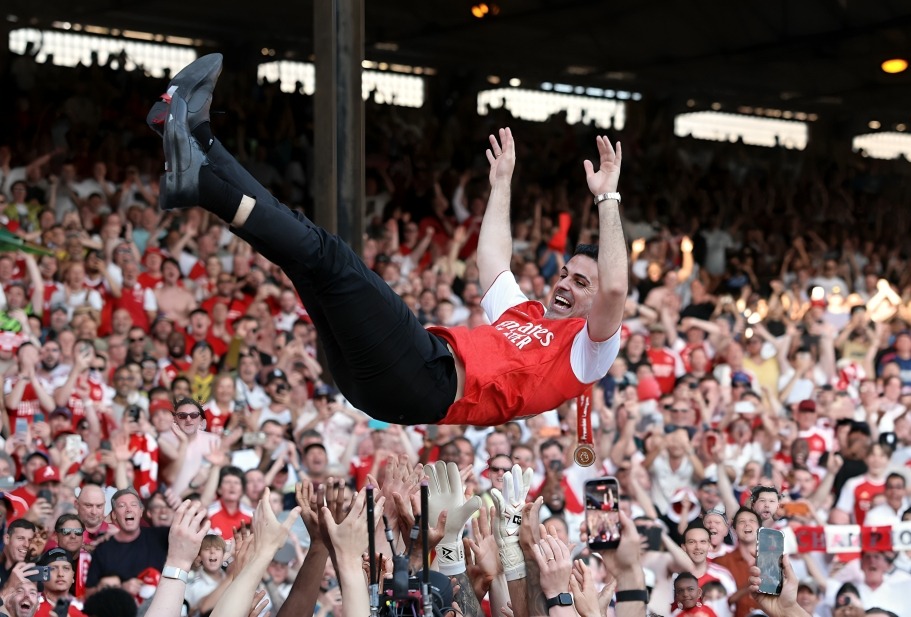

Mikel Arteta đã chính thức được vinh danh là HLV xuất sắc nhất Premier League 2025/26, đánh dấu mùa giải đỉnh cao trong sự nghiệp huấn luyện của ông tại Arsenal. Đây là mùa giải mà Mikel Arteta không chỉ giúp Arsenal vô địch Premier League sau 22 năm chờ đợi mà còn xây dựng một đội bóng có tính ổn định, bản lĩnh và chiều sâu chiến thuật vượt trội. Danh hiệu HLV xuất sắc nhất Premier League được trao tại lễ vinh danh LMA, chỉ 48 giờ sau khi Arsenal nâng cúp vô địch, càng làm tăng thêm giá trị lịch sử của chiến thắng này.
Mikel Arteta Mùa giải lịch sử cùng Arsenal

Mùa giải 2025/26 là thời điểm mà Mikel Arteta thể hiện rõ nhất triết lý bóng đá của mình, khi Arsenal duy trì sự ổn định gần như tuyệt đối trong suốt chiến dịch Premier League. Dưới sự dẫn dắt của ông, đội bóng không chỉ thắng nhiều trận mà còn kiểm soát hoàn toàn cuộc đua vô địch từ đầu đến cuối mùa. Đây cũng là lý do giúp Arteta được công nhận là HLV xuất sắc nhất Premier League 2025/26.
Thành tích nổi bật của Arsenal:
- 27 chiến thắng, 7 trận hòa
- Dẫn đầu bảng xếp hạng gần như toàn mùa
- Chỉ mất ngôi đầu 1 tuần kể từ tháng 10
- Hàng thủ tốt nhất giải đấu
Điểm nhấn chiến thuật quan trọng:
- Hệ thống pressing đồng bộ và kỷ luật
- Khả năng kiểm soát trận đấu vượt trội
- Tối ưu hóa hàng phòng ngự
- Tận dụng cơ hội ghi bàn hiệu quả
Arsenal chỉ để thủng lưới 27 bàn và giữ sạch lưới gần 50% số trận, cho thấy dấu ấn chiến thuật cực lớn của Arteta trong mùa giải mà ông giành danh hiệu HLV xuất sắc nhất Premier League 2025/26.
Thành tích tại Champions League

Không chỉ thống trị nước Anh, Mikel Arteta còn đưa Arsenal trở lại bản đồ bóng đá châu Âu khi lọt vào chung kết UEFA Champions League lần đầu tiên sau 20 năm. Hành trình này chứng minh rằng đội bóng của ông không chỉ mạnh ở Premier League mà còn đủ sức cạnh tranh với những CLB hàng đầu châu Âu.
Dù không thể vô địch, việc vào chung kết vẫn là một bước tiến lịch sử, góp phần củng cố danh tiếng của Arteta trong mùa giải mà ông được vinh danh là HLV xuất sắc nhất Premier League 2025/26.
Dấu ấn cá nhân của Mikel Arteta
Ở tuổi 44, Arteta đã trở thành một trong những HLV trẻ thành công nhất châu Âu, và mùa giải 2025/26 là minh chứng rõ ràng nhất cho sự trưởng thành của ông. Việc giành danh hiệu Premier League 2025/26 không chỉ đến từ chức vô địch mà còn từ sự ổn định kéo dài nhiều năm.
Thành tựu cá nhân nổi bật:
- 8 lần nhận HLV xuất sắc nhất tháng
- Nhiều lần lọt đề cử HLV của mùa
- HLV trẻ thứ hai từng vô địch Premier League
- Xây dựng dự án dài hạn tại Arsenal
Đặc biệt, Mikel Arteta là HLV đầu tiên của Arsenal giành danh hiệu HLV xuất sắc nhất Premier League 2025/26 kể từ thời Arsène Wenger năm 2004.
Bảng thống kê mùa giải 2025/26 của Arsenal
| Hạng mục | Thống kê |
|---|---|
| Trận đấu | 38 |
| Thắng | 27 |
| Hòa | 7 |
| Thua | 4 |
| Bàn thua | 27 |
| Giữ sạch lưới | ~50% |
| Danh hiệu | Premier League |
| Champions League | Á quân |
Bảng thống kê cho thấy sự cân bằng hoàn hảo giữa tấn công và phòng ngự, giúp Mikel Arteta xây dựng một mùa giải xứng đáng với danh hiệu HLV xuất sắc nhất Premier League 2025/26.
Cuộc đua HLV xuất sắc nhất mùa giải
Danh hiệu HLV xuất sắc nhất Premier League 2025/26 không đến một cách dễ dàng, khi Mikel Arteta phải cạnh tranh với nhiều HLV hàng đầu khác. Tuy nhiên, sự ổn định xuyên suốt mùa giải giúp ông vượt lên tất cả.
Các đối thủ cạnh tranh:
- Pep Guardiola
- Andoni Iraola
- Keith Andrews
- Michael Carrick
- Régis Le Bris
Giải thưởng được quyết định bởi phiếu bầu công chúng kết hợp với hội đồng chuyên gia, nhưng Mikel Arteta đã thắng thuyết phục nhờ thành tích toàn diện tại Premier League và Champions League.
Đọc thêm:-
- Michael Carrick Gia Hạn Hợp Đồng Dẫn Dắt Manchester United Đến Năm 2028
- Vì Sao Nhiều CĐV Real Madrid Muốn Kylian Mbappé Rời CLB?
Kết luận
Mùa giải 2025/26 đánh dấu bước ngoặt lớn trong sự nghiệp của Mikel Arteta, khi ông không chỉ đưa Arsenal trở lại đỉnh cao Premier League mà còn khẳng định vị thế tại châu Âu. Danh hiệu HLV xuất sắc nhất Premier League 2025/26 là sự ghi nhận cho chiến lược dài hạn, tư duy hiện đại và khả năng phát triển đội bóng bền vững.
Với những gì đã đạt được, Mikel Arteta xứng đáng được xem là một trong những HLV hàng đầu thế giới hiện nay, và danh hiệu HLV xuất sắc nhất Premier League chỉ là bước khởi đầu cho một kỷ nguyên thành công mới tại Arsenal.


