fenugreek seeds healthier

Fenugreek seeds for healthier hair

Many common kitchen ingredients can be useful for beauty and self care and fenugreek seeds are one of them.  They are often used in home remedies to help keep hair healthy and strong.

Fenugreek seeds contain nutrients such as protein, iron and other compounds that may support hair and scalp health.  They can help nourish dry hair strengthen the roots and make hair look softer and shinier.

Here are some simple ways to use fenugreek seeds for hair care.

For dry hair

Fenugreek can help add moisture to dry and dull hair.  Mix one tablespoon of ground fenugreek with two to three tablespoons of warm coconut oil.  Apply it to your hair after shampooing leave it for about 30 minutes, and then wash it out.

For stronger hair

Soak two tablespoons of fenugreek seeds overnight and blend them into a smooth paste.  Apply the paste from the roots to the ends before shampooing. This can help nourish weak and brittle hair.

For dandruff

Fenugreek may also help keep the scalp clean and reduce dandruff.  Mix three tablespoons of soaked fenugreek with half a teaspoon of lemon juice. Apply the mixture to your scalp leave it for around 15 minutes and then wash your hair.

For shinier hair

You can also use fenugreek water as a final hair rinse. Strain the water from soaked fenugreek seeds and pour it over your hair after washing. It can leave dry and dull hair feeling softer and looking shinier.

Similar Posts

  • The jaded gender talks

     By Saman Aftab We are so habitual of listening to the gender inequality, women empowerment, and ever growing population talks that now these topics have become an essential subject for the matter of discussing societal issues. But what we people have lacked to unravel is the very essence of these debates. Why gender inequality exists? Why we are still lagging behind in terms of employing more women? Why we are unable to control the growing rate of population in our country? Before addressing the ‘absolutely unavoidable’ questions, let me take the readers down an irksome memory lane of my life. Last year when our maid broke the news of her pregnancy to us, our most obvious question was why now? Considering her age which was 42 years that time and her financial grim along with unsupportive role of her husband in bearing the burden of their five children, this question clicked in every mind. And her answer though not surprising was quite gloomy for the existence of every female in this world; “baji, larka chahye humen” (we need a boy). She had four daughters and a deaf son. Her statement broke my heart because it questioned the capabilities of her daughters who were all physically and mentally sound. This memory was not worth forgetting because as a female it made me feel inferior. But this Babygirl vs Babyboy thing is not new, in fact it is one of the most deeply rooted concerns of our society. The normalcy of demanding the birth of a boy from a married woman is consolidating with the passage of time. The worst part of this matter – it’s getting acceptance. Ironically, majority of mothers in law showcase such demands to the newly married couple, as if it is in their hands to ‘design’ the genetic make-up of their offspring. The heart wrenching memory got afresh, when Tabassum shared her so called good news with us. Tabassum, 35 years old woman who works as a maid in three houses, a mother of four girls is expecting again for the sake of receiving a son this time. Her good news reminded me of her last fourth delivery when she gave birth to a girl in government hospital and she was made to give her daughter to a rich family on the persuasion of her drug addict husband. Whether they got money in return was dubious but chances of such happening were bright. I really hope and pray that this time she gets a son, otherwise the couple will continue to bring unwanted girls in this world and ruin their lives. For all the existing daughters of this couple are living a dark and disowned life. This brutal reality of life is not constrained to lower class people and it has crossed the demarcation of social groupings based on all classes, religions and races. Let us take an example of my sister’s friend, who is married to a well-established businessman and living in a posh locality. The poor lady who has a rich family, is a mother of two cute little girls. Although the little girls born to riches are living a good life, their mother is undergoing severe mental anxiety and pressure for not having a son. And of course, she for the sake of getting rid of such pressure is planning to have another baby neglecting her present deteriorating health condition. Unfortunately, the instances are innumerable and the rate of their occurrences is increasing day by day. Why boy child is mostly preferred over girl child? The answer lies in the heart of several burdens tied with bringing up a girl till her marriage. Among so many liabilities, the extra protection needed by the girls in our society and the curse of dowry have aggravated the scenario to such an extent that today girls are seen as “misfortune”. Of course exceptions are always there. Let us shift the focus from this melancholy to addressing those “absolutely unavoidable” questions raised earlier. 1: Gender inequality; Homo sapiens (humans) are generally categorized into three groups namely man, woman and transgender. Men are always ranked superior for enormous reasons but if we see things more pragmatically, it becomes evident that parents are left with sons in their old age while their daughters somehow abandon them and serve in laws for the rest of their lives. Call it our family system, it is the way it is. Then how can girls be loved or demanded? For voicing rights for equality, women should also bear the responsibilities equally. If a woman is capable of doing an employment being educated or skilled, she must pursue it for sake of giving all the best of resources to her parents that are expected of a son. The root cause of inequality among genders is the leverage given to men of being more useful and thus more needed. As long as the share of women in the society is constrained only to domestic chores and family caretaking, this inequality will never fade away. More women should be encouraged to become financially sufficient and independent. But how? This leads to our second question. 2: Women empowerment; there should be more campaigning with regards to educating girls and investing in their skill building. More powerful the educational background of a woman is, more will be the chances of her getting a good job for the sake of financial security. Thus, the number of women working for the betterment of society and raising capital will rise exponentially. And finally once these two milestones are achieved, the third ordeal of our country will evade automatically. 3: Overpopulation: as discussed in the start, demand and desire for the birth of a son has contributed a lot more towards overpopulation. Men are expected to take care of their parents but the same goes for women also. And in this age of compatibility, women should come forward and play a vital part in developing this society. Instead of placing all the

  • |

    Why marginalia is devised for conversation

    For centuries, books were treated as sacred, untouchable artifacts. Readers were taught to open a spine with reverence, turn pages by the edges, and never, under any circumstance, mark the paper. But in the modern reading culture, a quiet revolution has taken root: marginalia is no longer viewed as defacement. Today, it is recognized as a vital form of active intellectual engagement. Marking up a book transforms reading from a passive act of consumption into an active. Reading is a two-way dialogue between the reader and the writer. When you read with a pencil, pen, or sticky tab in hand, your relationship with the text fundamentally shifts. You cease to be a distant spectator observing someone else’s thoughts. In other words, you become a collaborator. Underlining a sentence, drawing an exclamation point next to a surprising plot twist, or a counterargument in the margin forces your brain to process language at a deeper level. It requires you to articulate why a passage resonated or failed. Furthermore, annotated books serve as personal time capsules. When you reopen a novel you marked up five or ten years ago, it offers an unfiltered reflection into who you were at that exact moment in your life. You might find yourself cringing at an old marginal note. Then you agree passionately with a circled phrase, or realizing that a passage you completely ignored years ago now carries personal meaning. The book becomes a physical record not just of the author’s story, but of your own cognitive and emotional evolution. Edgar Allan Poe once wrote: ‘In getting my books, I have been always solicitous of an ample margin … for the facility it affords me of pencilling suggested thoughts, agreements and differences of opinion …’ Practically speaking, marginalia also sharpens critical thinking. Students, scholars, and casual readers alike find that tracking themes through custom color-coded tabs or brief summary notes at the end of chapters drastically improves retention and comprehension. It prevents the common phenomenon of eye-scanning where your eyes move across sentences while your mind wanders elsewhere. Annotation demands presence. Ultimately, scribbling in the margins strips away the artificial pedestal we often place books upon. It reminds us that literature is not meant to sit pristine and untouched on a display shelf. Literature is meant to be wrestled with, questioned, celebrated, and lived in. The next time you open a book that challenges or moves you, don’t hold back. Pick up a pen, claim the empty white space on the page, and join a conversation that has been taking place across centuries.  

  • Indonesia’s youth are reviving leaf weaving art

    Across the tropical islands of Java and Bali, coconut and palm leaves have bound together daily life and spiritual practice for centuries. They include janur (young, pale yellow coconut fronds) and slepan (mature green fronds). These pliable natural fibers have traditionally been folded, sliced, and pinned into delicate ritual offerings. They are a part of canang sari, ornate wedding arches, and festive penjor poles that line village streets. For decades, this intricate craft was widely viewed as a transient household chore or a necessity of ceremonial duty. It was something crafted quickly, admired briefly, and discarded once dried. As younger generations moved toward urban centers and sought modern corporate or tech jobs, the deep knowledge of palm foliage design faced the quiet threat of stagnation. Today, a vibrant revival is underway. A new generation of Indonesian artisans, designers, and environmentalists is taking up leaf weaving. These crafties are reimagining this ancestral skill not merely as a folk tradition, but as a medium for sustainable architecture. The shift began when forward-thinking young crafters began asking a simple question. What if the humble palm leaf could transcend its flat, two-dimensional boundaries? Artisans such as Balinese weaver Ida Bagus Gede Ari Artana (famously known as Gus Ari) began pushing the physical limits of palm leaves. He experimented with twisting, interlacing, and tension-weaving techniques. Crafters transformed flat sheets (klangsah) into expansive 3D installations. As a result, collaborations like Make a Scene Bali, co-founded by Gus Ari and British stage designer Chloe Quinn happened. They brought international theatrical design principles into harmony with native Javanese and Balinese weaving traditions. Instead of tiny ritual baskets, young weavers are now constructing colossal mythological creatures, archways, floating pavilion interiors, stage backdrops, and even high-fashion wearable art and jewelry crafted from dried lontar leaves. These breathtaking installations have graced international platforms. For instance, the G20 Summit held in Bali, where sustainable leaf sculptures of native sea turtles and dragons greeted world leaders. Beyond aesthetic innovation, the youth-driven resurgence of leaf weaving is rooted in environmental activism. Over recent decades, the event and hospitality industries in Southeast Asia grew increasingly dependent on single-use plastics, styrofoam, and non-recyclable synthetic decorations. The movement to revive leaf weaving offers a completely biodegradable, zero-waste alternative. Young coconut fronds are harvested sustainably from local trees without harming the palm. The raw material is renewable, abundant, and locally sourced. Once an event or exhibition concludes, the entire installation can be composted back into the soil. The activism embodies a circular design ethos that resonates with modern eco-conscious consumers and international art curators alike. Perhaps the most significant impact of this movement is economic and cultural. Historically, local crafters have struggled to command fair compensation for traditional foliage work because the raw material was viewed as inexpensive. Now, there’s a promotion of leaf weaving to structural art and luxury event design. Young creative studios are proving that the value resides in the artisan’s vision, precision, and hours of practiced labor. This shift has boosted local earning potential and inspired young men and women across rural communities to remain in their homelands. They are earning sustainable livings while keeping their heritage alive. The palm frond art captures global attention. Alongside, Indonesia’s younger generation is demonstrating that tradition does not have to be frozen in a museum. Rather, it can grow, adapt, and weave a sustainable future for art and community.      

  • |

    Pakistan’s health system requires lasting reform

    By Raja Ashraf A country’s healthcare system is judged not only by the number of hospitals it has but also by whether people can access timely, affordable, and quality medical care. In Pakistan, public confidence in the health sector has weakened due to persistent challenges, including shortages of healthcare professionals, rising medicine prices, under-resourced hospitals, and the continued presence of unqualified medical practitioners. These issues require comprehensive and long-term reforms rather than short-term policy responses Healthcare is a fundamental right closely linked to Article 9 of Pakistan’s Constitution, which guarantees the right to life. The Supreme Court has interpreted this provision to include access to essential healthcare services. Pakistan is also a signatory to the International Covenant on Economic, Social and Cultural Rights, which commits the country to progressively ensuring the highest attainable standard of physical and mental health for its citizens. One of the most pressing concerns is the shortage of qualified doctors in rural and underserved regions. Although medical institutions produce thousands of graduates every year, many public health facilities outside major cities continue to face vacant positions. As a result, many communities struggle to obtain even basic healthcare services and are often forced to travel long distances for treatment. The migration of doctors, nurses, and other healthcare professionals to foreign countries has further weakened the healthcare system. Better salaries, improved working conditions, career opportunities, and greater security abroad encourage many skilled professionals to leave Pakistan, creating significant gaps in public hospitals and specialized medical services. The pharmaceutical sector also faces increasing challenges. Some multinational pharmaceutical companies have reduced their presence in Pakistan, raising concerns about future medicine availability and investor confidence. While local pharmaceutical manufacturers continue to meet much of the country’s demand, policymakers must create a stable regulatory and economic environment that supports both domestic production and responsible international investment. The rising cost of medicines has become another major burden for families already affected by inflation. Patients suffering from chronic illnesses such as diabetes, hypertension, and cardiovascular diseases often require lifelong treatment, making affordability a growing concern. At the same time, the continued circulation of counterfeit and substandard medicines highlights weaknesses in regulation and quality control, despite improvements in oversight by regulatory authorities. Public hospitals also frequently experience shortages of essential medicines and emergency supplies, forcing patients to purchase drugs from private pharmacies. This increases treatment costs and can delay critical medical care during emergencies. Ensuring uninterrupted medicine supplies in government hospitals should remain a national priority. Another persistent issue is the presence of unqualified medical practitioners, commonly known as quacks, particularly in areas where licensed healthcare providers are scarce. Tackling this problem requires stronger enforcement of existing laws alongside improved access to qualified medical professionals. Pakistan’s healthcare challenges extend beyond these issues to include inadequate public health funding, ageing hospital infrastructure, weak primary healthcare services, limited mental health facilities, and uneven implementation of health policies across provinces. Addressing these problems requires a comprehensive national strategy focused on increasing healthcare investment, improving working conditions for medical professionals, strengthening medicine regulation, modernizing pharmaceutical oversight, expanding preventive care, and reinforcing primary healthcare services. Investing in healthcare is not merely a public expense—it is an investment in human capital, economic growth, and national development. Pakistan possesses skilled healthcare professionals, reputable medical institutions, and a capable pharmaceutical industry. With sound policymaking, stronger governance, and sustained investment, these strengths can be transformed into a healthcare system that guarantees every citizen safe, affordable, and quality healthcare. The need for reform is no longer in question; the real challenge is ensuring that action is not delayed any further.


  • When dry skin may lead to infection

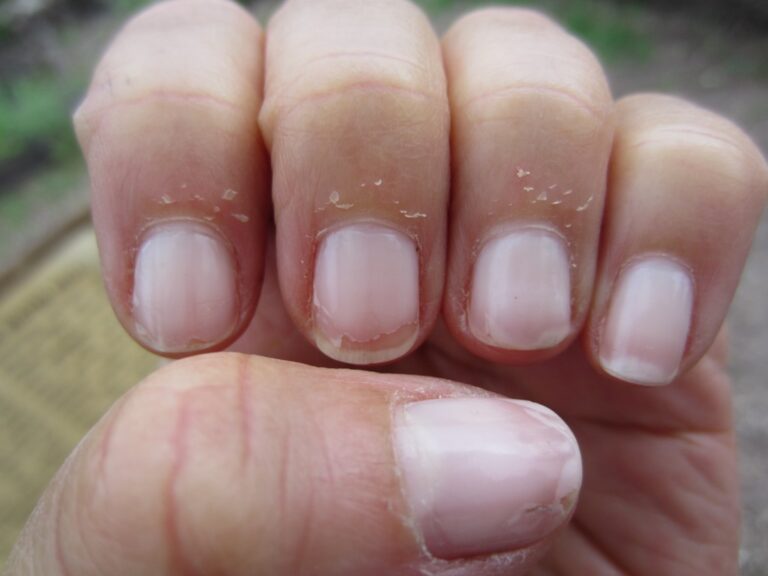
    Dry peeling skin around the nails is a common problem. It can be uncomfortable and may make simple daily tasks difficult.  This dryness can happen for several reasons including frequent hand washing harsh products and skin irritation. Why does skin  around the nails become dry? Frequent hand washing Washing your hands again and again can remove the skin’s natural oils.  If you do not use moisturizer afterward the skin around your nails may become dry and cracked. •Allergies and Irritation •Nail polish soaps detergents and other products may contain chemicals that irritate the skin.  This irritation can cause dryness peeling or redness. Nail Biting Biting your nails can damage the skin around them.  Small cuts may develop and increase the risk of irritation or infection. Lack of nutrients A poor diet may sometimes affect the health of your skin and nails.  A balanced diet with enough vitamins and minerals is important for healthy skin. Infection dry or damaged skin around the nails can sometimes become irritated or infected especially if it is picked or bitten. How can you  care for dry skin around the nails? •Use moisturizer Apply a good hand cream or moisturizer regularly especially after washing your hands.  This helps keep the skin soft and prevents cracking. •Aloe Vera Apply fresh aloe vera gel to the dry skin around your nails. It can help soothe and moisturize irritated skin. •Honey Apply a small amount of honey to your hands for 10–15 minutes then wash it off with lukewarm water. Honey can help keep the skin moisturized. •Cucumber Place fresh cucumber slices on your hands for about 15–20 minutes.  Then wash your hands with lukewarm water. •Olive oil Gently massage a little olive oil around your nails to help soften dry skin. After a few minutes wash your hands and apply moisturizer. Tip Avoid biting or pulling the peeling skin around your nails. If you notice severe pain  swelling pus or redness that does not improve  consult a doctor or dermatologist.

  • The hallucination trap – information convincing but factually incorrect

    By Syeda Samar Zahra Zaidi When you ask an AI chatbot a question it does not know the answer to, an odd thing can happen: instead of hesitating or saying, “I am not sure!” it confidently delivers a tidy, well-structured, completely fabricated response—often with fake citations, fictional figures, and an authoritative tone. This phenomenon is known as the ‘hallucination trap ’, and it may be the most significant barrier between trust and artificial intelligence. I was introduced to the term “AI hallucination” for the first time in the workshop under the project titled “Digital Trust and Free Expression in the AI Era” at Department of Media and Development Communication, University of the Punjab, supported by the U.S. Mission to Pakistan in partnership with the Pakistan-U.S. Alumni Network (PUAN). I learned that a “hallucination” occurs when a language model produces information that sounds convincing but is factually incorrect or completely made up. Examples include inventing a legal case that never existed, citing a research paper that doesn’t exist or boldly misrepresenting a historical date. What is disturbing is not merely that AI can be wrong-humans make mistake too- but rather the way it presents that incorrect information with clearly, confidence and without a trace of doubt. Large language models are essentially highly complex pattern predictors trained to produce the most likely next word in a sequence. As a result, when a model has encountered a topic thousands of times in its training data, the predictors are typically accurate. However, when it comes across a gap, an unidentified fact or a question at the outer edge of its knowledge, it doesn’t shift into a hesitant mode. Instead, it continues doing exactly what it was trained to do: generate a logical, fluent piece of writing, producing a response that is structurally sound and grammatically correct but based on nothing. In human communication, confidence is generally perceived as a sign of strength which is important. We naturally prefer to trust a calm, reliable voice over a hesitant one. AI systems unintentionally exploit the tendency because their language remains confident whether they are right or wrong. The risks increase with the use of AI, as students may unintentionally include false information into their work and journalists have published articles citing artificially created sources and quotes, negatively affecting the credibility of their publications. Such inaccuracies influence what millions of people see, believe or share, thereby amplifying fabricated content. The reason AI does not simply say “I don’t know” is partly due to the way these systems are trained. Many models are designed to provide helpful, comprehensive-sounding answers and are rarely rewarded for expressing doubt during training. This means that a model that frequently acknowledges uncertainty may be judged as less helpful than one that consistently provides an answer, even when that confidence is occasionally misplaced. Such incorrectly aligned incentives arise when the training process gradually teaches the model that sounding confident is more valuable than being accuracy. Retrieval-augmented generation, which relies on responses in actual, verifiable records rather than internal memory alone, improved training techniques that explicitly account for uncertainty; and systems built to simply cite sources. So, users can independently verify claims are just a few of the ways developers are using to addresses this problem. While none of these solutions fully eliminate hallucination yet, taken together they represent a major shift from blind confidence toward earned trust. The most dangerous outcome is not an AI that makes mistakes but a culture of users who stop questioning because the system always sounds so sure of itself.   Therefore, until AI becomes more reliably aware of it own limitation, part of the responsibility falls on the people who use it: treating AI-generated output as a starting point rather than an endpoint, cross checking important facts against credible sources. In the end, the hallucination trap serves as a reminder that illusion is not the same as truth. As AI becomes increasingly common in education, digital media and everyday life, understanding why it occasionally lies with confidence is not only a technical curiosity but also a fundamental aspect of digital literacy. We must strengthen our ability to verify the information provided by AI as they become more persuasive. The views, thoughts, and opinions expressed in this blog are solely those of the author and do not necessarily reflect the official policy or position of the U.S. Mission to Pakistan or USEFP. The writer, Syeda Samar Zahra Zaidi, is a student of Media and Development Communication at  University of the Punjab, Lahore and can be reached at samarzahra456@gmail.com.  

Leave a Reply

Your email address will not be published. Required fields are marked *