कारोबार

  • | | |

    Economists urge SBP to hold rate at 11.5%

    Economists have recommended that the State Bank of Pakistan (SBP) keep its policy rate unchanged at 11.5% at its upcoming monetary policy meeting on July 27. The recommendation comes as inflation has started to ease, but underlying price pressures remain high. Analysts believe the economy is also recovering unevenly, leaving limited room for another increase in borrowing costs. A recent economic assessment showed that headline inflation fell to 11.1% in June. However, core inflation remained elevated. Urban core inflation stood at 8.7%, while rural core inflation was recorded at 7.9%. Economists said much of the current inflationary pressure is coming from food, energy, transport and government-controlled prices. These factors cannot be addressed effectively through interest-rate changes alone. They also warned that a recent increase in the Sensitive Price Indicator (SPI) requires close monitoring. The development could indicate that the decline in inflation has not yet become firmly established. Financial market indicators also support maintaining the current policy rate. Short-term Treasury bill yields remain close to the SBP’s existing rate, while the overnight interest rate is also broadly aligned with the current monetary policy stance. However, yields on longer-term Treasury bills have increased. The six-month yield reached 11.80%, while the 12-month yield rose to 11.99%. Economists said the movement reflects some caution about the medium-term economic outlook. The assessment noted that Pakistan’s economic recovery has gained momentum but remains uneven. Large-scale manufacturing continues to face challenges, while there are no strong signs of excessive demand that would require another rate hike. Economists warned that raising the policy rate further could increase borrowing costs for businesses and consumers. It could also discourage investment and slow economic activity without directly tackling the supply-side factors behind current inflation. Pakistan’s external position has improved in recent months. Higher foreign exchange reserves, strong remittance inflows and relative stability in the exchange rate have reduced immediate pressure on the economy. Despite these improvements, risks remain. The country continues to face a sizeable merchandise trade deficit and upcoming external debt repayments. Heavy dependence on imported energy also leaves Pakistan vulnerable to international oil price fluctuations. A sharp rise in global oil prices could increase transportation and energy costs in Pakistan. It could also widen external pressures and trigger another round of inflation. Persistent core inflation is another major concern. If underlying price pressures remain high, inflation expectations could become difficult to control. This could delay any reduction in interest rates or force the central bank to consider tighter monetary policy. A weakening exchange rate could create additional pressure by making imports more expensive. It could also affect foreign exchange reserves and increase imported inflation. Economists have therefore advised the SBP to closely monitor private-sector borrowing, lending rates, monetary growth and the difference between short- and long-term interest rates. For now, the indicators favour maintaining the policy rate at 11.5%. However, economists say the central bank should remain ready to adjust its stance if inflation, oil prices, exchange-rate pressures or external financing risks deteriorate.
  • | | |

    Govt accelerates FBR reforms to build transparent,…

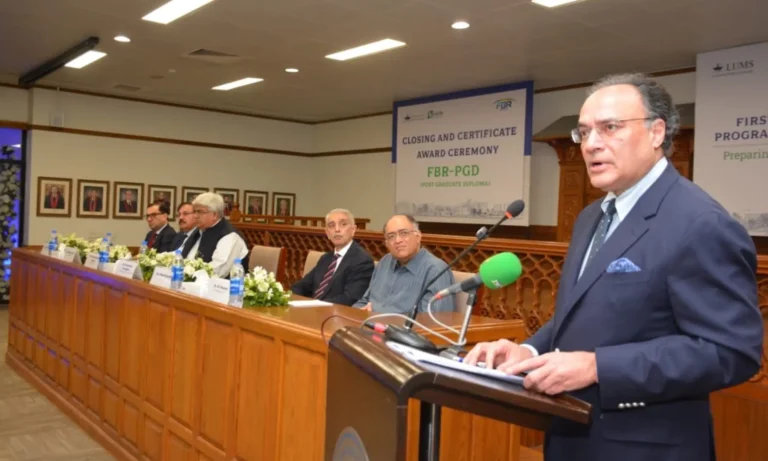
    LAHORE: The federal government has intensified efforts to modernise Pakistan’s tax system by accelerating reforms in the Federal Board of Revenue (FBR), expanding the cashless economy and integrating advanced digital technologies to improve transparency and tax compliance. Speaking at the certificate distribution ceremony for the FBR’s Postgraduate Diploma Programme at Lahore University of Management Sciences (LUMS), Finance Minister Muhammad Aurangzeb said the government is committed to creating a taxpayer-friendly and transparent financial system that supports long-term economic growth. He said reforms are being implemented simultaneously in tax policy and tax administration, with a new operational model being introduced in the FBR to improve efficiency, accountability and public trust. The minister added that Prime Minister Shehbaz Sharif is personally overseeing initiatives aimed at documenting the economy, broadening the tax base and promoting digital financial transactions. Aurangzeb revealed that authorities have uncovered major sales tax evasion cases, resulting in higher tax collections and increased revenue for the national exchequer. He stressed that modern digital tools, integrated databases and artificial intelligence will play a central role in strengthening tax administration and bringing the FBR in line with international standards. Calling on tax officials to continuously upgrade their skills, the finance minister said restoring taxpayers’ confidence and protecting national resources remain among the institution’s highest priorities. He expressed confidence that ongoing reforms would improve the business environment and ensure the benefits of economic reforms reach ordinary citizens. FBR Chairman Muhammad Rashid Langrial also addressed the ceremony, highlighting the importance of professional training and capacity building for tax officers. He said the organisation is focused on developing a modern, transparent and efficient tax system capable of meeting Pakistan’s evolving economic needs.

  • | | |

    Shein posts $99m loss ahead of Hong Kong IPO

    Online fashion retailer Shein has reported a $99 million loss for the first quarter of 2026, highlighting the growing impact of higher import costs, weaker US sales and increased regulatory pressure. The company had recorded a $395 million profit during the same period a year earlier. Its latest financial disclosure comes as Shein prepares for a planned listing in Hong Kong. The company has not yet revealed the size of the initial public offering, expected share price, listing date or the amount it hopes to raise. However, the filing provides investors with a clearer picture of the challenges facing the fast-fashion giant ahead of its potential market debut. A major factor behind the weaker performance is the removal of a US duty exemption for low-value packages. The previous system allowed goods worth less than $800 to enter the country without import duties. Shein said the change has negatively affected its US sales and overall growth while increasing operating expenses. Products of Chinese origin sold through the company and shipped to the US are now subject to taxes ranging from 10% to 87.5%, according to the filing. The company said it is considering several measures to manage the higher costs, including raising prices for American customers. Shein’s US revenue fell 14.3% to $2.04 billion in the first quarter, compared with $2.38 billion a year earlier. The US remains one of its most important markets, although its contribution to total revenue has declined. The company is also facing additional pressure in Europe. The European Union has introduced a €3 charge on low-value e-commerce imports, a move aimed at addressing concerns over competition from low-cost overseas sellers. Shein warned that the European market could experience an impact similar to, or greater than, the one seen in the US following the removal of the duty exemption. The retailer’s financial performance had already weakened in 2025. Its annual revenue increased by 8% to $41.85 billion, but net income dropped nearly 39% to $2.06 billion. Growth also slowed significantly compared with the previous year. Part of the latest quarterly loss was linked to a $328 million accounting charge related to the changing value of convertible preferred shares held by investors. Shein has also faced growing scrutiny over labour practices, environmental concerns and the impact of its business model. The company has defended its policies and said it maintains strict standards against labour abuses within its supply chain. Shein received approval from Chinese regulators for its Hong Kong listing in July, clearing an important hurdle after earlier efforts to pursue listings in New York and London did not materialise.

  • | | |

    PSX rallies over 5,000 points as regional tensions…

    The Pakistan Stock Exchange started the week with a strong rally on Monday. The benchmark KSE-100 Index gained more than 5,000 points during intraday trading. The sharp rise came as investors welcomed the pause in fighting between the United States and Iran. The index opened with strong buying activity. By 9:50am, it had risen 4,501 points to reach 175,522.53 points. The previous close was 171,021.20 points. The upward movement continued during the morning session. By 10:30am, the index had gained 5,069 points and reached 176,090.08 points. The improved geopolitical situation boosted investor confidence. The United States and Iran have paused their military strikes. The development has raised hopes for renewed diplomatic efforts. Investors also expect the easing of tensions to support shipping activity through the Strait of Hormuz. The waterway is important for global energy supplies. Any prolonged disruption can push oil prices higher and increase pressure on economies that depend on imported fuel. The latest development also affected global oil markets. Crude prices fell sharply as investors reacted to the temporary halt in hostilities. Brent crude briefly dropped below $90 per barrel. It fell more than 7% at one stage during early trading. US West Texas Intermediate crude also declined. The fall in international oil prices could provide some relief to Pakistan’s economy. Pakistan spends a significant amount on energy imports. Lower oil prices can therefore help reduce pressure on the country’s import bill and external account. Market analysts said the improvement in geopolitical conditions could also influence the State Bank of Pakistan’s monetary policy decision. Awais Ashraf, director of research at AKD Securities, said investors were expecting the central bank to maintain the policy rate. The State Bank is also expected to assess developments in the Middle East. The impact of recent floods on Pakistan’s economy will also remain under consideration. Analysts said the continuing decline in inflation and a relatively comfortable external account could support monetary easing in the coming months. However, economic activity and money supply trends remain important factors for policymakers. The strong rally follows a difficult week for the PSX. The KSE-100 Index had fallen by around 2.7% last week. The index lost 4,782 points and closed at 171,021.20 points. Rising tensions between the United States and Iran had increased uncertainty in financial markets. Higher international oil prices also added pressure. Investors had remained cautious because of concerns that the conflict could expand across the region. Monday’s sharp recovery shows how quickly market sentiment can change when geopolitical risks decline. Despite the strong gains, analysts remain cautious about the outlook. Further developments between Washington and Tehran will remain important. Global oil prices will also influence investor sentiment. The State Bank’s monetary policy decision is another key factor for the market.

  • | | | |

    SBP holds interest rate at 11.5pc amid growth conc…

    The State Bank of Pakistan (SBP) has kept its policy rate unchanged at 11.5 per cent, maintaining the existing monetary policy stance amid concerns over economic growth. The decision was announced on Monday by SBP Governor Jameel Ahmed following a meeting of the Monetary Policy Committee (MPC). The central bank’s decision was largely expected by financial market analysts. Most experts had predicted that the SBP would maintain the current rate to support macroeconomic stability while monitoring economic conditions. Market surveys conducted by brokerage firms showed that more than 90 per cent of respondents expected the policy rate to remain unchanged. Only a small number of analysts had anticipated a possible increase. The decision comes as Pakistan continues to balance economic stability with the need to encourage business activity and investment. Higher interest rates can help control inflation and support financial stability, but they can also increase borrowing costs for businesses and consumers. The SBP had reduced its policy rate by 50 basis points to 10.5pc in December 2025. It later raised the rate by 100 basis points to 11.5pc in April 2026. Since then, the central bank has maintained the rate at 11.5pc. Business groups have continued to call for a significant reduction in borrowing costs. They argue that lower interest rates could help businesses expand operations, increase investment and support economic activity. However, the central bank has opted for a cautious approach. Policymakers appear focused on maintaining overall economic stability while assessing inflation, growth and other financial indicators.

  • | |

    Japan PM Takaichi’s approval falls as inflation hits households

    Japanese Prime Minister Sanae Takaichi is facing growing public dissatisfaction as rising prices and higher living costs begin to weaken support for her government. A nationwide poll published by the Yomiuri newspaper showed that approval for Takaichi’s administration fell sharply in July. The cabinet’s approval rating dropped to 57 per cent, compared with 69 per cent in June. It is the first time since Takaichi took office that support for her government has fallen below 60 per cent. The survey was conducted from July 24 to 26. It showed that public disapproval also increased significantly. The share of respondents who opposed the cabinet rose to 34 per cent, up from 21 per cent in the previous month. Inflation has emerged as the biggest concern for voters. About 71 per cent of respondents expressed dissatisfaction with the government’s handling of rising prices and living costs. That figure stood at 56 per cent in June. The findings indicate that economic pressure is increasingly affecting Takaichi’s political standing. Her government had previously enjoyed strong public support, but persistent price increases are creating fresh challenges. Takaichi is also facing criticism over her government’s expansionary fiscal and monetary policy approach. The policies have contributed to higher bond yields and pressure on the yen, which has fallen to levels not seen in several decades. The latest polling results could increase pressure on the government to provide immediate relief to households. While issues such as national security remain important, voters are increasingly focused on everyday expenses and their purchasing power. Takaichi now faces the challenge of demonstrating that her economic policies can control inflation while maintaining broader economic stability.

  • | | |

    New KIA Sportage develops repeated fault within 90…

    Islamabad: A consumer court in Islamabad admitted a complaint against KIA Lucky Motors Corporation and related parties after a customer claimed that his brand new KIA Sportage developed a serious technical fault within days of purchase, rendering it unusable despite repeated inspections and repairs. The complaint has been filed under the Islamabad Consumer Protection Act, 1995, and the court has started regular hearing of the matter after reviewing the initial arguments. According to the complaint, the vehicle developed a “Shifter System Malfunctioning: Service Immediately” warning after covering only around 900 kilometres, causing the vehicle to stop working properly and requiring assistance. The complainant claimed that the same problem appeared again shortly after the first repair, raising concerns about the reliability and safety of a newly purchased vehicle. The case was filed against KIA Lucky Motors Corporation, its officials, the Islamabad dealership and KIA Corporation South Korea. The court issued notices to the concerned respondents for appearance and response. The complaint states that the customer purchased the KIA Sportage for personal and official use with the expectation that a new vehicle would be safe, reliable and free from defects. According to the documents, the vehicle was purchased on 13 February 2026 for Rs11.299 million. The customer alleged that while travelling for an official assignment, the vehicle suddenly displayed the shifter system warning and the gear system stopped functioning properly. He claimed that after reaching his destination, the same issue happened again, forcing him to seek help from the company. According to the complaint, the dealership initially informed the customer that the problem was caused by loose internal wiring. The vehicle was inspected and the customer was assured that the issue had been resolved and the vehicle was safe to drive. However, the customer claimed that the same warning appeared again on 30 May 2026 while he was travelling with his family, leaving the vehicle unusable and forcing him to arrange alternative transport. The complaint further states that the vehicle had to be taken away through a recovery service after attempts to fix the problem failed. The customer has alleged that different explanations were provided regarding the cause of the fault, including wiring issues, moisture concerns and failure of the Shifter Control Module, a key part of the vehicle’s transmission system. The complaint argues that these different explanations created further doubts about the actual cause of the problem and the effectiveness of the repairs carried out by the company. The customer has requested the court to order replacement of the vehicle or refund of the purchase price along with compensation for financial losses, inconvenience and distress. The complaint also mentions that the customer contacted the company through official channels and sent a legal notice, but claimed that the issue was not resolved. The company’s response, according to the complaint documents, acknowledged that a shifter malfunction was reported and that the Shifter Control Module was replaced under warranty after diagnosis. The legal case has brought attention to consumer rights in Pakistan, especially regarding the responsibilities of automobile companies when a newly purchased vehicle develops serious problems. The complainant’s lawyer Munir Ahmad Advocate High Court said the purpose of the case is to seek a fair solution for the customer and ensure consumers receive proper protection when purchasing expensive products. The court will continue hearing the matter after receiving responses from the concerned parties.

  • |

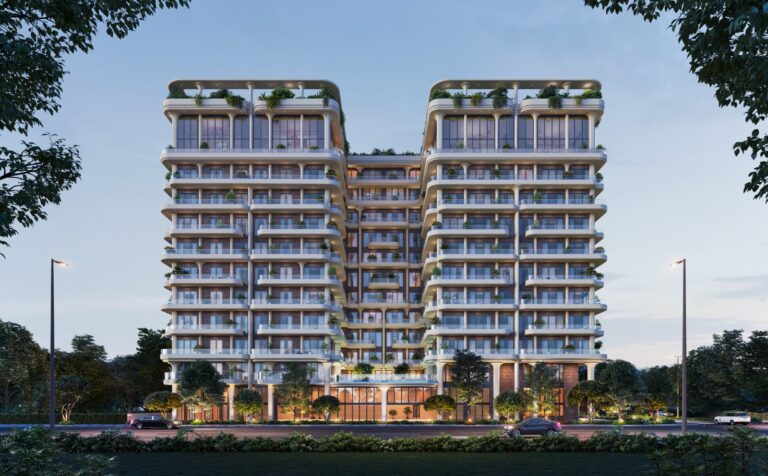
    New $35 million investment in Lahore unveiled in London 

    British-Pakistani business group One Homes has unveiled a new $35 million residential development in Lahore at a global keynote and media event held at The May Fair Hotel in London. The event marked the first official presentation of the development, revealing its architecture, interiors, residences and amenity programme ahead of an international launch across the UK, Europe and North America. One Edition marks the British developer’s return to Lahore following the success of One Canal Road, its flagship development in the city, which has now entered the handover phase. Designed by internationally acclaimed Miami-based architect Kobi Karp, One Canal Road established a new benchmark for premium residential development in Lahore and became one of the city’s most recognised addresses. Aqib Hassan, Chief Commercial Officer at One Homes, said: “One Canal Road proved what was possible. We came to Lahore as an international developer, built in the heart of the city and set out to create a new standard in the market.” The development became the foundation for a wider portfolio that now exceeds $435 million across Lahore and Islamabad. One Edition represents the next stage of that journey, shaped not by what has succeeded elsewhere, but by a deeper understanding of Lahore itself. “One Edition doesn’t try to imitate another city. It belongs here in Lahore. It feels like home,” Hassan added. “It’s modern living fused with a celebration of Lahore’s rich culture.” Located on Raiwind Road, approximately ten minutes from Lahore Ring Road, the development sits within an established residential corridor connecting residents to the wider city. Its position places it within convenient reach of leading schools and universities, healthcare, shopping destinations and major residential communities. One Edition has been conceived specifically for overseas Pakistanis, a community One Homes has developed deep expertise in serving across its portfolio. It is designed for those building lives around the world who want to remain connected to Lahore without compromising the quality, comfort and services they have come to expect. Kobi Karp returns as lead architect following his work on One Canal Road. His appointment reflects both the strength of that collaboration and the ambition of what follows. For One Edition, the design intent moves from import to interpretation, drawing on Lahore’s character to create a building that belongs to its city. London-based Jolie Design Studio has been appointed to lead the interiors, marking its first project in Pakistan. Known for a sensory-led philosophy that considers how spaces are lived and experienced, Jolie brings an approach centred on atmosphere, comfort and the details that shape daily life. Aqib said that the One Group has more than $435 million in projects under development across Lahore and Islamabad, with focus on overseas Pakistanis.

  • | | |

    PM to decide fate of refinery upgrade policy

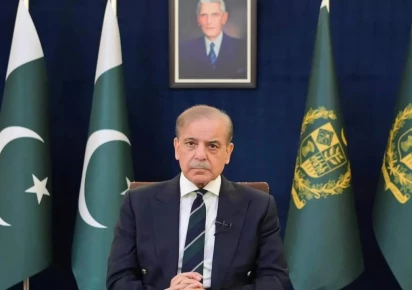
    Prime Minister Shehbaz Sharif is expected to address key issues facing Pakistan’s refinery sector today. The Cabinet Committee on Energy (CCoE) will review proposed changes to the Brownfield Refinery Policy.The policy was approved in 2023. It aims to encourage investment in the modernisation of existing refineries. The proposed changes could affect billions of dollars in planned refinery investments.The main dispute is over deemed duty protection. The government has proposed reducing it from 7.5 per cent to 5 per cent. Refinery companies have opposed the proposed cut. They say it could weaken the financial benefits offered under the policy.The industry also disputes the government’s position on delays in signing Upgrade Agreements. Officials say refineries failed to sign the agreements within the required period.Refinery representatives reject the claim. They say they had already accepted the draft agreements in 2024. According to industry officials, the companies were waiting for the government to arrange the formal signing process.They say the industry repeatedly contacted the Petroleum Division and other authorities to complete the process. The companies argue that the delay was caused by administrative issues on the government side.They therefore believe the incentives should not be reduced because of delays beyond their control. Deemed duty protection is a key part of the refinery upgrade package.The incentive is designed to encourage companies to invest in modernisation. The planned upgrades are aimed at increasing production of Euro-V compliant fuels.They are also expected to reduce furnace oil production. The projects could help improve Pakistan’s overall fuel mix.The refining sector has also faced additional financial pressure from changes in the tax system. The Finance Act 2024 moved several petroleum products from the zero-rated sales tax regime to the exempt category.The change affected the ability of refineries to adjust input sales tax. It also increased their unrecoverable tax costs.The Petroleum Division has acknowledged that the tax changes affected the financial viability of refinery upgrade projects. Officials said the prime minister is expected to review the major issues that have delayed the implementation of the policy since August 2023.The Petroleum Division has proposed limited amendments to make the policy operational. It has also recommended a committee to finalise the Upgrade Agreement.The committee would include senior officials from the Petroleum Division, Law Division and OGRA. A representative of the Special Investment Facilitation Council would also be included.OGRA, however, has reservations about signing the agreements. OGRA Chairman Masroor Khan has argued that the regulator should focus on its regulatory role.He believes OGRA should not become a party to commercial agreements. The refinery industry is now hoping for a decision that removes the remaining hurdles.Companies want the government to maintain the existing incentive structure. They say policy consistency is important for attracting investment.They also warn that changes to agreed incentives could discourage investors. A clear decision by the CCoE could help restart delayed refinery upgrade projects.The decision could also influence Pakistan’s fuel supply and long-term energy security.

  • | | |

    Wheat imports spark farmer anger

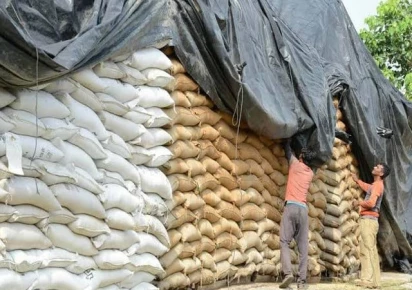
    The federal government’s decision to import one million tonnes of wheat has sparked strong criticism from farmers and agricultural experts. The move has raised concerns about Pakistan’s food policy and the country’s continued dependence on imported grain despite being a major wheat producer. Pakistan produces around 31 million tonnes of wheat annually. The crop covers nearly 40 per cent of the country’s cultivated area and remains a major part of the daily diet of millions of people. Punjab is the country’s largest wheat-producing province and contributes almost three-fourths of national production. Farmers and experts say the issue is not simply about wheat availability. They believe repeated imports are linked to weak planning, inaccurate crop estimates, poor storage facilities, post-harvest losses and inconsistent government policies. Population growth and changing weather patterns have also increased pressure on the wheat supply chain. Farmer organisations have strongly opposed the import decision. They say local growers are still struggling to sell their recently harvested wheat. Many farmers claim they are receiving prices below their production costs after spending heavily on seeds, fertiliser, pesticides, diesel and electricity. Growers fear that imported wheat could further reduce local prices. They argue that the government should first ensure that locally produced wheat is purchased at fair rates before turning to international markets. The controversy has also highlighted changes in Pakistan’s wheat procurement system. Under wider economic reforms linked to the International Monetary Fund programme, successive governments have reduced state intervention in agricultural markets. The aim is to limit government losses and encourage greater private-sector participation. The IMF has not directly ordered Pakistan to stop purchasing wheat from farmers. However, governments have moved away from the traditional procurement and support price system. Provincial authorities have also reduced wheat purchases, leaving farmers increasingly dependent on private traders. Farmers say the transition has not been properly managed. They argue that private buyers now have greater influence over prices because of weak market regulation. This has forced some growers to sell their wheat below production costs.