कारोबार

  • | |

    Google slapped with $1bn EU fine, holds talks to dodge further penalties

    The European Union has fined Google about €890 million, or $1 billion. The fine punishes Google for breaking EU rules meant to control the power of big tech companies. But regulators also hinted that no more fines are coming soon, because Google is making good progress toward following the rules. The fine has two parts. The first part, €460 million, is for Google favoring its own products. When people search for things like shopping, hotels, flights, or sports scores, Google often showed its own results first instead of treating competitors fairly. The second part, €430 million, is about the Google Play app store. Google had stopped app makers from telling users about cheaper deals outside the app store. This is the first time Google has been fined under this specific EU law, called the Digital Markets Act. But counting older cases, Google has now paid six fines for unfair business practices. In total, the company has paid more than €10 billion in EU fines over about twenty years. EU officials said they are just enforcing the law. “Our job is to make sure the rules are followed,” said Teresa Ribera, the EU’s top antitrust official. Another official, Henna Virkkunen, said the goal is fair competition. Google now has 60 days to fix its practices. Google is not happy. A company spokesperson said the changes will hurt features people like, such as quick pricing for hotels and flights. He said the ruling is not really about fair competition, it is making Google’s products worse to please a small number of complainers. Even so, there is good news for Google too. The EU said Google has already started testing new ways of showing search results more fairly. It called this real progress. The EU may also apply the same rules to Google’s AI tools, like AI Overviews. Talks about this are still ongoing. Google’s changes to its app store rules were also seen as a step in the right direction. This fight is happening while tensions rise between the US and EU. The Trump administration says Europe is unfairly targeting American companies and has threatened tariffs in response. Some US lawmakers agree. Google’s fine comes after the EU already fined Apple and Meta last year under the same law. It shows the EU is serious about controlling big tech, even as pressure grows from the US side.
  • |

    OGRA increases petrol, diesel prices again

    Islamabad – The Oil and Gas Regulatory Authority (OGRA) has announced another increase in petroleum prices marking the fourth consecutive day of fuel price hikes and issued new rates for petrol and high-speed diesel. According to an OGRA notification, the price of petrol has been increased by Rs. 4.40 per litre bringing the new price to Rs. 331.52 per litre. Similarly, the price of high-speed diesel (HSD) has been raised by Rs. 3.62 per litre taking the new price to Rs. 378.66 per litre. The notification states that the revised prices will come into effect from 12:00 a.m. on the night between July 23 and July 24 after which fuel stations across the country will charge customers according to the new rates. OGRA said the price adjustment was made after taking into account global crude oil prices, import costs and other relevant market factors. The continued increase in petroleum prices is expected to raise transportation costs which could in turn push up the prices of essential commodities. Members of the public and the business community have expressed concern over the repeated increases and urged the government to take effective measures to stabilize fuel prices. It is worth noting that this is the fourth consecutive day that OGRA has increased petroleum prices resulting in a significant rise in fuel costs over the past several days.

  • | | |

    SBP reserves climb to $17.26bn

    Pakistan’s foreign exchange reserves held by the State Bank of Pakistan (SBP) posted a slight increase during the week ending July 17. However, the country’s overall liquid reserves recorded a small decline as commercial banks’ holdings decreased. According to the latest figures released by the central bank, SBP’s foreign exchange reserves increased by $33 million, taking the total to $17.26 billion. The increase reflects a gradual improvement in the country’s external financial position. Despite the rise in the central bank’s reserves, Pakistan’s total liquid foreign exchange reserves slipped by $5.9 million to $22.67 billion. The decline was caused by a fall in the reserves held by commercial banks. Commercial banks’ net foreign exchange reserves dropped by $38.7 million, bringing their total holdings to $5.41 billion. As a result, Pakistan’s total foreign reserves now provide import cover for nearly 2.5 months, highlighting the need for further improvement in external inflows. The Pakistani rupee remained stable in the interbank market. It closed at Rs277.90 against the US dollar, compared with Rs277.91 a day earlier. The slight gain came as the US dollar also remained mostly steady in global markets despite continued geopolitical tensions. Meanwhile, gold prices in Pakistan declined sharply after international bullion prices fell by more than two percent. The price of 24-karat gold per tola dropped by Rs1,800 to Rs432,036. The price of 10 grams of gold fell by Rs1,543 to Rs370,401. Silver prices also moved lower, with the per tola rate declining by Rs33 to Rs6,370. The decline followed a strong rally in the previous trading session when gold prices had increased significantly in the domestic market. Internationally, gold prices fell after investors shifted their focus to rising oil prices and expectations that the US Federal Reserve may continue raising interest rates to control inflation. Spot gold traded near $4,047 per ounce, while US gold futures also recorded noticeable losses. Global energy markets remained under pressure as Brent crude oil climbed to around $100 per barrel. Rising tensions in the Middle East and concerns over disruptions to oil supplies supported higher crude prices. Analysts believe that increasing oil prices could push inflation higher around the world. This may encourage central banks, particularly the US Federal Reserve, to maintain a tighter monetary policy. Higher interest rates generally reduce the appeal of gold because the precious metal does not provide any interest or fixed return to investors. As borrowing costs increase, investors often shift towards interest-bearing assets.

  • | |

    SBP appoints 10 primary dealers for FY27

    KARACHI: The State Bank of Pakistan (SBP) has appointed 10 financial institutions as Primary Dealers (PDs) and two institutions as Special Purpose Primary Dealers (SPDs) for the fiscal year 2026-27. The appointments will strengthen the government’s domestic borrowing programme and support the country’s financial market. The government continues to rely heavily on domestic borrowing to finance its fiscal requirements. In this system, primary dealers play an important role by participating in government debt auctions and helping raise funds through Treasury Bills and Pakistan Investment Bonds. According to the central bank, United Bank Limited (UBL), National Bank of Pakistan (NBP), and Bank Alfalah secured the top three positions among primary dealers during the fiscal year 2025-26. Their rankings were based on overall performance in government securities auctions and market activities. The 10 institutions selected as Primary Dealers for FY2026-27 are United Bank Limited, National Bank of Pakistan, Bank Alfalah, Habib Bank Limited, Habib Metropolitan Bank, MCB Bank, The Bank of Punjab, Pak Oman Investment Company, JS Bank, and Citi Bank NA Pakistan Branch. The State Bank has also appointed the Central Depository Company of Pakistan Limited (CDC) and the National Clearing Company of Pakistan Limited (NCCPL) as Special Purpose Primary Dealers for the new fiscal year. The appointments were made after evaluating applications submitted by financial institutions under the eligibility criteria laid down in the Primary Dealer System Rules. The central bank had invited applications for the new fiscal year through a circular issued earlier this year. Primary dealers are responsible for purchasing government securities directly from the central bank during auctions. They then distribute these securities among commercial banks, financial institutions and other investors. Their participation ensures that government borrowing operations continue without disruption. These institutions also play an important role in the secondary market by providing liquidity and facilitating the buying and selling of government securities. Their presence helps improve market efficiency and contributes to transparent price discovery. The role of primary dealers has become increasingly important as Pakistan continues to depend on domestic sources to meet its financing needs. Through their participation in debt auctions, they help the government raise funds while supporting stability in the country’s financial system.

  • | | |

    Audit reveals Rs47bn electricity overbilling

    A government audit has uncovered an alleged Rs47 billion electricity overbilling scandal, raising serious concerns over billing practices by power distribution companies (DISCOs). The findings were presented before a subcommittee of the Public Accounts Committee (PAC), where officials said inflated electricity bills were issued to hundreds of thousands of consumers. Audit officials informed the committee that 278,649 consumers received excessive electricity bills in a single month. According to the findings, the overbilling involved nearly 904 million electricity units, creating a major financial burden for households and businesses across the country. The audit report stated that the Lahore Electric Supply Company (LESCO) accounted for the largest share of the overbilling, with consumers allegedly charged around Rs45 billion beyond actual consumption. The Peshawar Electric Supply Company (PESCO) was identified as the second-largest contributor, with overbilling estimated at Rs1.56 billion. Officials told lawmakers that the inflated bills were mainly caused by incorrect meter readings and misuse of authority by field staff responsible for recording electricity consumption. They alleged that overbilling was used to hide electricity theft, transmission losses and inefficiencies within the distribution system. Consumers who regularly paid their bills were reportedly charged extra, while refunds were usually made only after formal complaints were submitted. The Power Division informed the committee that reforms are being introduced to improve the billing system. Smart electricity meters and transformer-based metering technology are being installed in different regions to reduce human error and improve transparency. Officials said these measures have already helped reduce complaints of overbilling in areas where the new system has been implemented. Members of the Public Accounts Committee expressed concern over the scale of the issue and questioned how many similar cases had gone unnoticed. They said the reported figures likely represent only the cases detected through audits, while many more consumers may have suffered from incorrect billing without being aware of it. Lawmakers highlighted the financial difficulties faced by ordinary citizens because of inflated electricity bills. They said many families had been forced to borrow money or sell personal belongings to pay their electricity charges, adding that such practices have increased public frustration over rising utility costs. The committee was also informed that disciplinary action had been taken against officials found responsible for irregularities. According to the management of LESCO, stronger anti-theft operations and stricter monitoring have significantly reduced electricity theft and eliminated overbilling in its service area. Several officers, including an executive engineer and multiple sub-divisional officers, have been dismissed over misconduct. During the same meeting, another audit report highlighted alleged financial irregularities in the Hyderabad Electric Supply Company (HESCO). The report claimed that Rs1.06 billion was misappropriated through payments made to ghost employees and retired staff, with investigators pointing to possible collusion among officials involved in financial administration.

  • | | |

    Gulf conflict pushes oil above $100

    Global oil prices continued their sharp upward trend on Friday as escalating conflict in the Gulf region raised fresh concerns about energy supplies and the outlook for the world economy. The sustained rise in crude prices has increased fears of renewed inflation, unsettled financial markets and strengthened expectations that central banks may keep interest rates higher for a longer period. Brent crude was trading at around $100 per barrel after briefly crossing $102, its highest level in nearly two months. Oil prices have climbed by almost 40% during the month, driven by growing concerns that the conflict could disrupt major shipping routes used for transporting crude oil. The latest increase comes as military tensions involving the United States, Iran and the Iran-backed Houthi movement continue to intensify. Attacks on commercial vessels in the Red Sea have heightened concerns about the safety of one of the world’s busiest maritime trade routes. At the same time, uncertainty surrounding shipping through the Strait of Hormuz has added to worries over global oil supplies. Analysts say the combination of risks to both the Red Sea and the Strait of Hormuz has significantly increased market uncertainty. Any prolonged disruption in these waterways could reduce oil exports from the Middle East and place additional pressure on global energy markets. The rise in crude prices has also revived concerns about inflation. Higher oil prices generally increase transportation, manufacturing and production costs, which can eventually lead to higher prices for goods and services. Economists warn that this could slow progress in reducing inflation across many countries. Global financial markets reacted cautiously to the latest developments. Major Asian stock markets recorded notable losses as investors worried about the combined impact of geopolitical tensions, rising energy costs and uncertainty over future economic growth. Investors increasingly shifted towards safer assets amid concerns that market volatility could continue. The outlook for monetary policy has also changed. Financial markets now expect that major central banks, including the US Federal Reserve, could delay planned interest rate cuts or even consider further rate increases if higher energy prices continue to fuel inflation.

  • | |

    US imposes tariffs on Pakistan and more than 60 trading partners

    The United States has introduced a new round of tariffs on imports from more than 60 trading partners, including Pakistan, as part of a broader effort to strengthen measures against goods allegedly linked to forced labour. The new duties officially came into effect on July 24 and are expected to affect trade between the United States and a large number of countries. Under the latest policy, Pakistan has been placed in the group of countries whose exports to the United States will face a 10% tariff. The same tariff rate has also been imposed on imports from countries including India, Bangladesh, the United Kingdom, Canada, Argentina, Cambodia, Ecuador, El Salvador, Guatemala, Honduras, Indonesia, Jordan, Malaysia, Mexico, Sri Lanka and Trinidad and Tobago. Another group of 38 countries will face a 12.5% tariff on goods exported to the US under the same policy. The US administration said the decision was taken because these countries had failed to effectively prevent the import or production of goods allegedly made through forced labour. According to American officials, stronger enforcement of labour laws and better monitoring of supply chains are needed to stop products made under forced labour conditions from entering international markets. The new measures are part of President Donald Trump’s trade agenda, which focuses on using tariffs to address trade and labour-related concerns. The administration has introduced the tariffs under Section 301 of the US Trade Act, a legal provision that allows the United States to take trade action against countries it believes are engaging in unfair trade practices. The latest action follows a major legal setback earlier this year. In February 2026, the US Supreme Court blocked the implementation of an earlier tariff package introduced by the Trump administration. That policy had proposed additional duties ranging from 10% to 50% on imports from several countries. Following the court’s decision, the administration adopted a different legal mechanism to introduce the current tariffs. The decision has drawn criticism from several US trading partners. Australia and Brazil have described the new tariffs as unfair and said they will continue diplomatic efforts to have the measures withdrawn. Norway also rejected the allegations behind the tariffs, saying the decision was based on unsubstantiated claims. Despite the broad scope of the new policy, several important products have been excluded. The tariffs do not apply to imports of crude oil, natural gas, selected agricultural commodities and fertilisers. Goods that are already subject to separate Section 232 national security tariffs, including steel, aluminium, automobiles and copper, are also exempt from the latest duties.

  • | | |

    PSX extends decline as KSE-100 drops over 1,260 po…

    The Pakistan Stock Exchange (PSX) remained under pressure on Friday, with the benchmark KSE-100 Index extending its recent losing streak during the morning trading session as investor sentiment stayed weak. By the time trading was suspended for the routine Friday prayer break, the KSE-100 Index had fallen 1,264.14 points, or 0.74%, to 170,475.30. The market opened in negative territory and continued to fluctuate throughout the session. The index reached an intraday high of 171,208.55 before declining to a low of 169,512.88, reflecting persistent selling pressure across the market. Trading activity remained moderate, with more than 114 million shares changing hands during the morning session. The total value of traded shares stood at approximately Rs7.83 billion before the temporary suspension. Market participants said investors remained cautious as profit-taking continued in several heavyweight stocks. The absence of strong buying interest also contributed to the downward trend, keeping the benchmark index below its previous closing level. The market moved within a wide range of nearly 1,700 points during the session, highlighting continued volatility as investors assessed economic conditions and overall market sentiment. Analysts said investors are closely monitoring developments that could influence market direction, including corporate earnings, economic indicators and broader financial conditions. They added that confidence has remained subdued in recent sessions, resulting in increased selling activity. Trading is expected to resume after the Friday prayer break, with investors watching for signs of a recovery. Market experts believe the direction of the afternoon session will determine whether the benchmark index can recover some of its losses or end the week on another negative note.

  • | |

    Indian rupee hits record low against dollar

    The Indian rupee has dropped to its lowest level on record against the US dollar, highlighting increasing pressure on the country’s currency amid challenging global economic conditions. For the first time in history, one US dollar has reached the value of 97 Indian rupees, marking a new record low for the Indian currency. The latest decline reflects growing concerns over external economic pressures and weakening investor confidence. According to international reports, the Reserve Bank of India (RBI) stepped into the foreign exchange market to support the rupee and limit further losses. Central bank intervention is aimed at reducing excessive volatility and preventing sharp fluctuations in the value of the currency. The latest depreciation comes only a few months after the rupee had already reached a previous record low of 96.96 per US dollar in May 2026. The fall to 97 rupees per dollar now represents the weakest exchange rate ever recorded for the Indian currency. Economists say several factors are driving the rupee’s decline. One of the biggest reasons is the sharp rise in global crude oil prices, which has significantly increased India’s import bill. As one of the world’s largest importers of crude oil, India requires large amounts of US dollars to pay for energy imports, increasing demand for the American currency. Experts also point to the strengthening of the US dollar in international markets, continued foreign investment outflows and growing pressure from expensive imports. These factors have reduced demand for the rupee while increasing demand for dollars, causing further depreciation. Market analysts warn that a weaker rupee could increase the cost of imported goods, including fuel, machinery and industrial raw materials. Higher import costs may also contribute to inflation and raise production expenses for businesses across different sectors of the economy. Financial experts believe the Reserve Bank of India will continue monitoring developments closely and may introduce additional measures if market volatility continues. The central bank is expected to use its foreign exchange reserves and other monetary tools to stabilise the currency and restore investor confidence.

  • | | |

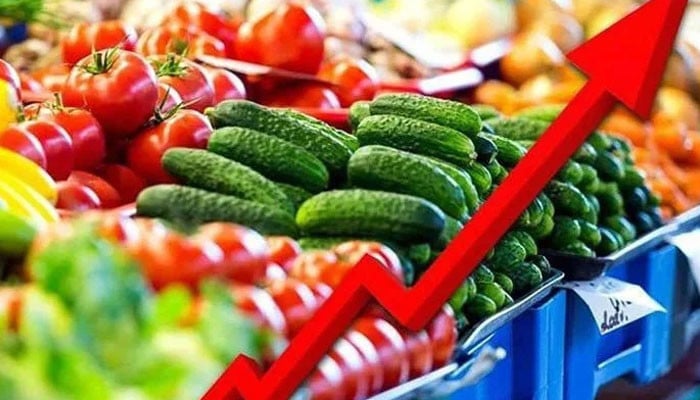
    Weekly inflation hits 9.66% amid price surge

    ISLAMABAD: Pakistan’s weekly inflation increased during the latest reporting period as higher fuel and food prices pushed up the cost of living, according to the latest report released by the Pakistan Bureau of Statistics (PBS). The report showed that weekly inflation rose by 0.91%, while the country’s annual inflation rate reached 9.66%, indicating that prices of essential goods continue to remain under pressure despite declines in a few commodities. According to the Bureau of Statistics, prices of 22 essential commodities increased during the past week, while eight items became cheaper and 21 items recorded no change. The sharpest increase was recorded in petroleum products. High-speed diesel became 15.87% more expensive, while the price of petrol increased by 5.23%. The rise in fuel prices is expected to affect transportation costs and may also increase the prices of other goods in the coming weeks. Among food items, tomatoes recorded the highest increase, with prices rising 39.92% in just one week. Egg prices increased by 7.31%, adding to household food expenses. The report also showed that the price of liquefied petroleum gas (LPG) increased by 0.91%, while potatoes became 3.70% more expensive. Prices of garlic, beef and several other essential food items also registered increases during the week. Although inflation remained on the rise, consumers received limited relief in the prices of a few commodities. Chicken prices fell by 4.66%, making it one of the biggest weekly declines among food products. Bananas became 1.72% cheaper, while prices of sugar, rice and different varieties of pulses also recorded decreases. Economists say rising fuel prices are one of the major reasons behind the increase in weekly inflation because higher transportation and production costs often lead to price increases across various sectors of the economy. The latest inflation figures suggest that many households continue to face pressure from the rising cost of essential goods, particularly food and fuel. While price reductions in some commodities have provided modest relief, overall inflation remains elevated due to continued increases in several key household items.