कारोबार

  • | | |

    Pakistan to import 1 million tons of wheat to meet…

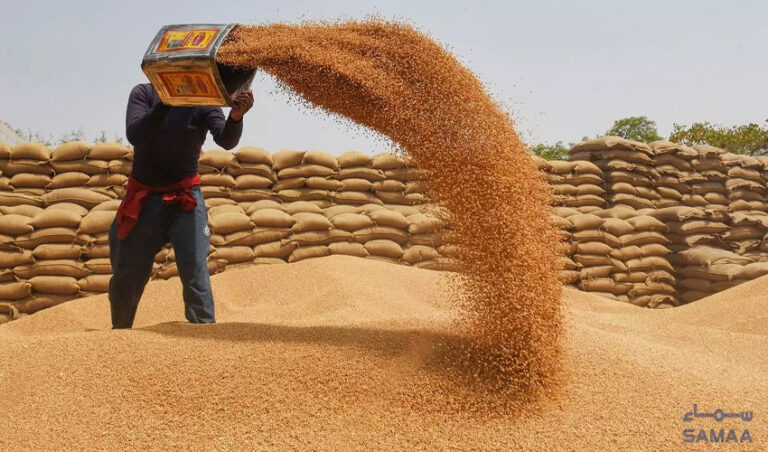
    ISLAMABAD: The federal government has decided to immediately import one million tons of wheat to ensure an uninterrupted supply across the country and meet the growing demand of the provinces. The decision was reached after detailed consultations between the federal government and provincial authorities on wheat availability, pricing, and supply. During the meeting, participants agreed that wheat stocks currently held by the Pakistan Agricultural Storage and Services Corporation (PASSCO) would be released without delay to address the immediate requirements of the provinces. Officials noted that while PASSCO’s existing reserves would help ease the short-term situation, the available stocks are insufficient to meet the combined demand of all provinces. To bridge the gap and maintain market stability, the government approved the immediate import of one million tons of wheat. Federal Minister for National Food Security Rana Tanveer Hussain said the government remains committed to ensuring the availability of affordable, high-quality wheat for consumers. He stated that PASSCO’s wheat reserves would be distributed according to provincial needs, while the planned imports would help fulfill the country’s overall requirements and prevent supply disruptions. The minister added that the move is aimed at maintaining stable wheat supplies, supporting provincial food security, and preventing unnecessary fluctuations in the domestic market.

  • | | | |

    PM, Field Marshal inaugurate Sky47 Karakoram One D…

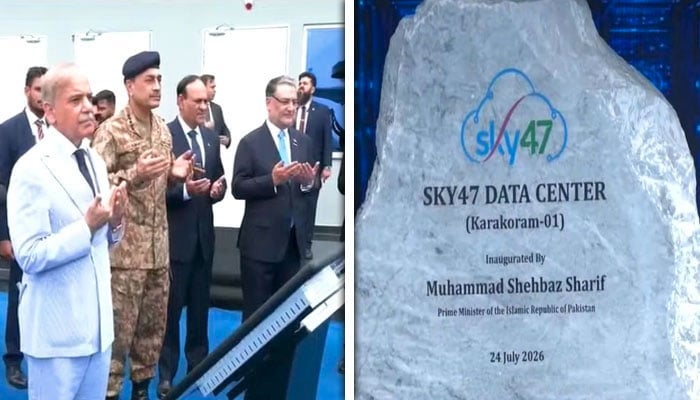
    Prime Minister Shehbaz Sharif and Field Marshal Syed Asim Munir have inaugurated the Sky47 Karakoram One Data Centre, marking a major step towards strengthening Pakistan’s digital infrastructure. During a briefing at the facility, the prime minister was informed that the data centre would provide a strong foundation for cloud computing, data hosting and advanced digital services. Officials said the project would help Pakistan move towards technological self-reliance. The Sky47 Data Centre has the capability to support emerging technologies, including artificial intelligence (AI), machine learning and high-performance computing. It is expected to play an important role in meeting the country’s growing digital and technological needs. Addressing the inauguration ceremony, Prime Minister Shehbaz Sharif described the modern data centre as an impressive and remarkable achievement. He praised the completion of the project in a short period, saying it reflected strong commitment, expertise and determination. The prime minister appreciated the leadership of Field Marshal Asim Munir and the contribution of technology partner ZTE in making the project possible. He said the country’s achievements during difficult times showed that challenges could be overcome through unity, determination and hard work. Shehbaz Sharif said projects like Sky47 represent Pakistan’s future and would contribute to national progress. He thanked all stakeholders involved in delivering the facility and said such initiatives would enhance the country’s digital security and technological capabilities. Federal Minister for Information Technology Shaza Fatima Khawaja said the inauguration of the Sky47 Data Centre marked the beginning of a new era of artificial intelligence in Pakistan. She said the project would open doors to new economic opportunities and allow Pakistan to better utilise its resources, data and skilled workforce. The minister added that transforming data into practical solutions and converting artificial intelligence into economic value would be crucial for future growth. She said the global AI race would depend on secure, affordable and effective use of technology.

  • | | | |

    Petrol hits Rs335.18, diesel climbs to Rs383.46

    The federal government has increased the prices of petrol and high-speed diesel (HSD) in its latest fuel price revision. According to an official notification, the price of petrol has been increased by Rs3.66 per litre, while HSD has gone up by Rs4.80 per litre. The new prices will take effect from July 25. After the increase, petrol will cost Rs335.18 per litre, while high-speed diesel will be available at Rs383.46 per litre. The government revised fuel prices after changes in international oil markets. Global crude prices have remained unstable due to tensions in the Persian Gulf. Petrol is mainly used by private vehicles, motorcycles and rickshaws. Any increase directly affects daily commuters and middle-income families by raising transportation costs. High-speed diesel is widely used by trucks, buses, agricultural machinery and power generators. A rise in diesel prices increases freight charges and production costs. This can eventually lead to higher prices of food and other essential goods. The government has also introduced a daily fuel pricing mechanism. Under the new system, fuel prices will be adjusted every day based on international oil prices and market trends instead of weekly revisions. The decision has faced criticism from petroleum dealers. They say daily price changes could create uncertainty for businesses and consumers. Dealer associations have indicated they may announce a protest plan against the new pricing system.

  • | | |

    Pakistan-origin Saadia Zahidi makes jistory as fir…

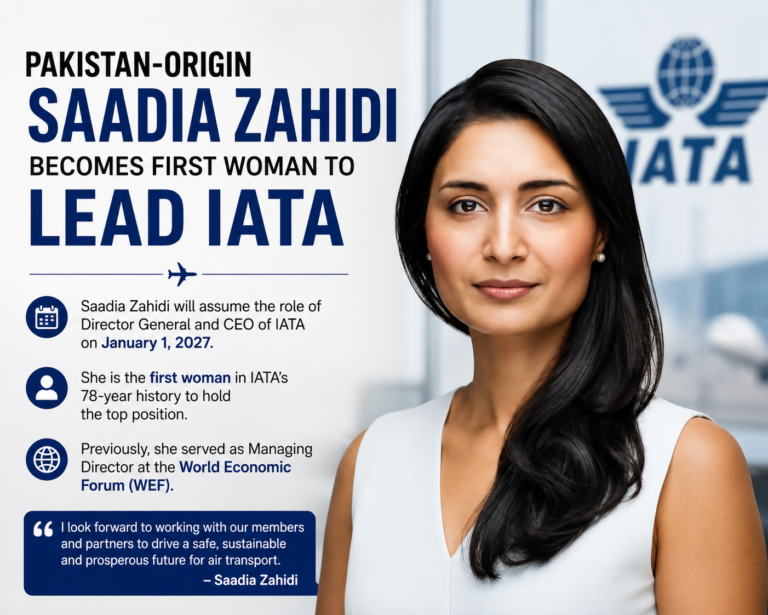
      Pakistan-origin business leader Saadia Zahidi has been appointed as the next Director General and Chief Executive Officer (CEO) of the International Air Transport Association (IATA), becoming the first woman in the organization’s history to hold the top position. Her appointment marks a significant milestone for the global aviation industry and highlights the growing role of women in leadership positions within international organizations. Zahidi is set to officially assume her new role on January 1, 2027, succeeding the current leadership after an extensive international selection process. She brings decades of experience in global economic policy, leadership development, and strategic planning, making her one of the most respected figures in international business and public policy. Before joining IATA, Zahidi served as Managing Director at the World Economic Forum (WEF), where she played a key role in shaping discussions on the future of work, economic competitiveness, gender equality, innovation, and sustainable development. During her tenure, she worked closely with governments, multinational corporations, academic institutions, and civil society organizations to develop policies aimed at promoting inclusive economic growth and preparing societies for emerging global challenges. Her appointment is being viewed as a landmark achievement, not only because she is the first woman to lead IATA but also because she is of Pakistani origin. Many have described the decision as an important step toward greater diversity and inclusion in global leadership. Zahidi’s professional journey has inspired many young professionals, particularly women from developing countries, demonstrating that talent, expertise, and dedication can open doors to leadership at the highest international level. The International Air Transport Association represents hundreds of airlines worldwide and plays a central role in shaping the global aviation industry. The organization is responsible for promoting safe, efficient, secure, and sustainable air transport while working closely with airlines, governments, regulators, and other stakeholders to address industry challenges. As Director General, Zahidi will oversee efforts to support airline operations, strengthen international cooperation, advance environmental sustainability, and guide the aviation sector through future technological and economic changes. Industry observers believe Zahidi’s extensive experience in global policy and economic strategy will bring a fresh perspective to IATA as the aviation sector continues to recover from recent global disruptions and adapts to evolving passenger expectations, digital transformation, and climate commitments. Her leadership is expected to focus on collaboration, innovation, and long-term resilience for the industry. Her appointment has been widely welcomed by professionals across the aviation and business communities. Many have congratulated her on achieving a historic milestone, describing her selection as recognition of her exceptional leadership and international experience. For Pakistanis around the world, Zahidi’s achievement is a source of pride and inspiration. Her rise to the highest position in one of the world’s most influential aviation organizations reflects the growing global impact of professionals of Pakistani origin and reinforces the importance of diversity in shaping the future of international industries.

  • | | |

    Tax ombudsman flags flaw in FBR refund system

    Pakistan’s Federal Tax Ombudsman has identified a major flaw in the Federal Board of Revenue’s (FBR) FASTER sales tax refund system and directed the tax authority to take immediate corrective measures. The ombudsman said the issue is affecting exporters and undermining the effectiveness of the automated sales tax refund mechanism, which was introduced to ensure quicker processing of refund claims. The observations were made in a ruling issued by Federal Tax Ombudsman Zafar Hijazi while deciding complaints filed by a company regarding delays and issues in the refund process. According to the decision, the FASTER system is unable to distinguish between commercial export goods declarations and non-commercial sample exports. As a result, exporters may face unnecessary delays or complications in obtaining legitimate sales tax refunds. The ombudsman directed the FBR to address the technical shortcomings in the system without delay to ensure that genuine exporters receive timely refunds and the automated mechanism functions efficiently. The ruling emphasized that improving the FASTER system is essential for protecting exporters’ interests and maintaining confidence in Pakistan’s tax refund process

  • | | | |

    Oil nears $110 as US-Iran tensions rise

    Global crude oil prices climbed sharply this week as rising tensions between the United States and Iran increased concerns over energy supplies. The escalation in geopolitical risks, combined with ongoing disruptions linked to the wars involving Iran and Ukraine, has pushed physical crude cargo prices to their highest levels in nearly two months. Crude oil cargoes traded across the Middle East, Europe and Africa have risen significantly in value, with some shipments approaching $110 per barrel. The increase reflects growing uncertainty in global energy markets, where buyers are rushing to secure supplies amid fears of further disruptions. Traders say concerns over supply have become the main driver of the latest price rally. Buyers are seeking immediate deliveries from alternative sources as uncertainty over future exports continues to grow. The stronger demand for prompt cargoes has added further pressure on international oil prices. The global benchmark Dated Brent, which is used to price more than 60 percent of physical crude oil cargoes worldwide, climbed to $105.70 per barrel on Thursday, according to market data. The benchmark reached its highest level since late May and moved above the $100 per barrel mark for the first time since early June. Market analysts believe geopolitical developments are having a direct impact on energy prices. Growing fears that conflicts could disrupt production or shipping routes have increased volatility in the oil market. Investors and traders are closely watching developments in the Middle East as they assess the risk of further supply shortages. Oil broker Tamas Varga said supply concerns have once again become the dominant factor influencing the market. He noted that uncertainty over production and exports is encouraging buyers to secure crude oil before prices rise even further. The market was also affected by developments in Kazakhstan. Authorities there announced that the country’s main export terminal for CPC Blend crude oil on the Black Sea had been forced to suspend operations following reported Ukrainian drone attacks. The disruption affected crude exports and reduced oil production. According to a source familiar with the situation, Kazakhstan’s crude oil output has fallen by nearly half, dropping to around 460,000 barrels per day. The decline has added to global supply concerns at a time when markets are already under pressure from geopolitical tensions.

  • | | |

    OGDCL confirms Pakistan’s first lithium disc…

    Oil and Gas Development Company Limited (OGDCL) has announced a major scientific breakthrough by confirming the presence of lithium in underground geothermal formation water, also known as brine. The discovery is the first of its kind in Pakistan and is being seen as an important step towards exploring new sources of critical minerals needed for clean energy technologies. The discovery was made under OGDCL’s pilot geothermal programme. According to officials, advanced geochemical testing was carried out on formation water collected from a successfully tested high-temperature geothermal well. The analysis confirmed the presence of lithium in concentrations comparable to those found in some of the world’s well-known lithium-bearing geothermal brine resources. Senior OGDCL officials said this is the first confirmed lithium discovery from geothermal brine in Pakistan. They described the development as a significant achievement for the country’s energy and mineral exploration sector. The finding places Pakistan among a growing group of countries investigating geothermal resources as a potential source of lithium. Lithium has become one of the world’s most sought-after minerals due to the rapid expansion of clean energy technologies. It is a key component in rechargeable batteries used in electric vehicles, energy storage systems, smartphones, laptops and many other electronic devices. Global demand for lithium has increased sharply as countries move towards renewable energy and low-carbon transportation. Experts say geothermal brine is emerging as an alternative source of lithium in several parts of the world. Unlike traditional mining, lithium extraction from geothermal water has the potential to combine energy production with mineral recovery, although commercial development requires extensive research and investment. Officials stressed that the latest discovery does not mean commercial production will begin immediately. Further geological studies, laboratory testing and feasibility assessments will be required to determine the size of the lithium resource, the concentration of the mineral and whether extraction would be commercially viable. The discovery is expected to encourage more investment in Pakistan’s geothermal and mineral exploration sectors. Researchers believe additional exploration could identify other areas with similar geological conditions and expand the country’s knowledge of its underground mineral resources.

  • | | |

    PSX ends week lower as KSE-100 loses 4,781 points

    The Pakistan Stock Exchange (PSX) closed the trading week with a significant decline, as the benchmark KSE-100 Index recorded heavy losses amid continued market volatility. The negative trend reflected cautious investor sentiment and sustained selling pressure across several sectors. During the week, the KSE-100 Index fell by 4,781 points to close at 171,021 points. The decline marked a weak performance for the stock market after several volatile trading sessions. Investors remained cautious throughout the week, resulting in fluctuations in share prices. The market witnessed wide swings during the five trading days. The benchmark index moved within a range of 8,857 points. It touched a weekly high of 178,370 points before dropping to a weekly low of 169,512 points, highlighting the uncertainty that dominated market activity. Despite the fall in the benchmark index, trading volumes remained healthy. Investors traded a total of 3.48 billion shares during the week. The combined value of these transactions reached Rs138 billion, indicating that market participation remained active despite the downward trend. The market decline also affected the overall value of listed companies. The total market capitalisation of the Pakistan Stock Exchange dropped by Rs512 billion during the week. As a result, the market’s total value stood at Rs19.278 trillion at the close of trading. Market analysts said investors adopted a cautious approach due to uncertainty surrounding economic conditions and profit-taking after recent gains. Selling pressure in key sectors also contributed to the decline in the benchmark index. Experts believe investors will continue to closely monitor economic indicators, corporate earnings, monetary policy developments and government decisions that could influence market sentiment in the coming weeks. Any positive economic developments or improved investor confidence may help the market recover, while continued uncertainty could keep volatility elevated. The week’s performance underscores the sensitivity of the Pakistan Stock Exchange to economic and financial developments, with investors expected to remain watchful as the new trading week begins.

  • | | |

    Pakistan pushes stronger ties with Belarus, Centra…

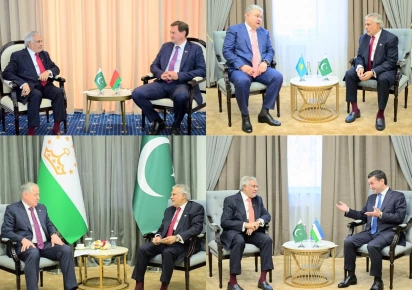
    Pakistan has renewed its commitment to strengthening relations with Belarus and Central Asian countries. Deputy Prime Minister and Foreign Minister Ishaq Dar held separate meetings with the foreign ministers of Belarus, Kazakhstan, Tajikistan and Uzbekistan in Cholpon-Ata, Kyrgyzstan. The meetings were held on the sidelines of the Shanghai Cooperation Organisation (SCO) Council of Foreign Ministers meeting.The discussions focused on bilateral relations, trade, investment, regional connectivity and security. Dar met Belarusian Foreign Minister Maxim Ryzhenkov and reviewed the progress of relations between the two countries.The two sides agreed to expand cooperation in several important areas. These include trade, investment, defence, agriculture, technology and workforce exchanges.They also discussed ways to strengthen economic ties and increase bilateral business activity. Pakistan and Belarus are also preparing for the next session of their Joint Ministerial Commission.The ninth session is scheduled to take place in Islamabad on August 11 and 12, 2026. The two countries are expected to use the meeting to explore new areas of cooperation.Dar and Ryzhenkov also discussed regional developments. The Belarusian foreign minister appreciated Pakistan’s diplomatic efforts to support dialogue and promote peace and stability in the region. Dar also met Kazakhstan’s Foreign Minister Yermek Kosherbayev.The two ministers reviewed the positive progress in relations between Pakistan and Kazakhstan. They agreed to accelerate the implementation of agreements reached during recent high-level exchanges.A key focus was the implementation of 37 memorandums of understanding signed during a high-level visit. The two countries also agreed to increase cooperation in trade, investment, transport, energy and regional connectivity. People-to-people contacts and cooperation at international forums were also discussed.Kosherbayev appreciated Pakistan’s efforts to support regional peace and diplomacy. He also invited Dar to visit Kazakhstan.The Pakistani foreign minister accepted the invitation and said the visit would take place at a mutually convenient time. In another meeting, Dar held talks with Tajik Foreign Minister Sirojiddin Muhriddin.Both sides described Pakistan-Tajikistan relations as close and longstanding. They agreed to further expand cooperation in several sectors.These include trade, investment, energy, connectivity and culture. The two ministers also highlighted the importance of stronger people-to-people contacts.They agreed that regular high-level exchanges could help deepen bilateral relations. The two sides also discussed regional and global developments.They stressed the importance of cooperation through international and multilateral platforms. Tajikistan also expressed support for Pakistan’s efforts to promote peace and the peaceful resolution of regional issues.Dar also met Uzbek Foreign Minister Bakhtiyor Saidov. The two ministers reaffirmed the importance of the Pakistan-Uzbekistan strategic partnership. They reviewed progress in bilateral cooperation.Trade, investment, connectivity, energy, culture and people-to-people relations were among the key areas discussed. Dar and Saidov also stressed the importance of stronger links between the business communities of both countries. They said closer business engagement could help increase trade and investment.The two ministers also discussed the implementation of understandings reached during Uzbek President Shavkat Mirziyoyev’s recent visit to Pakistan. They agreed that existing agreements should be converted into practical projects through timely implementation. Regional and global developments were also discussed.Saidov appreciated Pakistan’s diplomatic efforts to promote regional peace and stability. Both sides expressed hope that dialogue and diplomacy would continue to support lasting peace in the region. Dar’s meetings took place during his visit to Kyrgyzstan for the SCO Council of Foreign Ministers meeting. Pakistan used the diplomatic engagement to highlight its longstanding relations with SCO member states. Islamabad also reaffirmed its readiness to assume the SCO chairmanship for 2026–27.Pakistan has expressed its intention to promote greater cooperation among member states. The focus will include socioeconomic development, regional connectivity and mutual economic benefits. Dar also attended an informal dinner hosted by Kyrgyz Foreign Minister Zheenbek Kulubaev for visiting dignitaries. During the visit, Dar met Kyrgyz President Sadyr Zhaparov and conveyed greetings from Pakistan’s leadership.He expressed Islamabad’s desire to strengthen cooperation with Kyrgyzstan across different sectors. Dar later led Pakistan’s delegation at the SCO ministerial meeting. In his national statement, he reaffirmed Pakistan’s commitment to the SCO Charter and the principles of the Shanghai Spirit.These principles include mutual trust, mutual respect, shared prosperity and development. Pakistan has also invited SCO member states to attend the SCO Council of Heads of State summit in Pakistan next year.The government says Islamabad’s upcoming SCO leadership will provide an opportunity to strengthen regional cooperation and deepen economic and diplomatic ties with member states.

  • | | |

    ECC approves Rs4.188bn PASSCO compensation package

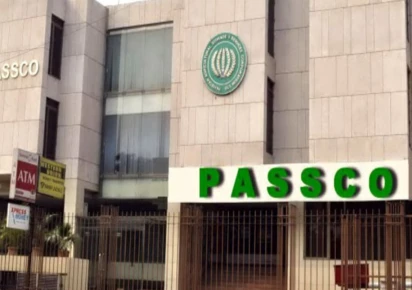
    The Economic Coordination Committee (ECC) has approved a Rs4.188 billion compensation package for employees of the Pakistan Agricultural Storage and Services Corporation (PASSCO). The decision is part of the government’s plan to wind up PASSCO. The process is also linked to the disposal of the corporation’s wheat stocks. The government has set December 2026 as the deadline for completing the process. The ECC directed that the winding-up process must be independently reviewed. A third party will validate the process to ensure transparency and compliance with the approved plan. The committee also stressed the need to dispose of PASSCO’s wheat stocks as soon as possible. Officials said the early disposal of the stocks would help implement the employee compensation package on time. The Ministry of National Food Security and Research assured the ECC that the process would be completed by December. The government began work on the closure of PASSCO in 2025. The Prime Minister’s Office had directed the finance minister to oversee the process in consultation with the relevant ministry. A meeting chaired by the finance minister later decided that a severance package should be prepared for PASSCO employees. The package was designed along the lines of the voluntary separation scheme approved for employees of the Utility Stores Corporation. PASSCO’s Board of Directors subsequently approved the revised compensation package. The scheme covers regular employees as well as contractual and daily-wage workers. It includes severance compensation and several terminal benefits. These include leave encashment and a farewell grant. The package also provides maintenance support for widows and retired employees through PASSCO’s Benevolent Fund. The ECC had previously approved the winding up of PASSCO. It also approved the creation of a Special Purpose Vehicle called the Wheat Stock Management Company (WSMC) Public Limited. The federal cabinet later ratified the decision. The total cost of the employee package is estimated at Rs4.188 billion. Around Rs3.967 billion has been allocated for severance compensation and terminal benefits for PASSCO employees. Another Rs221 million has been set aside for maintenance grants. The amount will benefit 38 widows and 236 retired employees.