कारोबार

  • | | |

    UAE visa restrictions threaten Pakistan’s Gulfoo…

    Pakistani business leaders have raised concerns over reported difficulties in obtaining UAE visas, warning that the situation is disrupting trade, business travel and export activities. The restrictions are causing uncertainty among Pakistani exporters and traders who regularly travel to the UAE for commercial meetings, exhibitions and other business activities. Ismail Suttar, Founder and Chairman of the Salt Manufacturers Association of Pakistan, said Pakistani citizens were facing serious difficulties in obtaining UAE visas. He said the reasons for the reported restrictions had not been clearly communicated. Business representatives said the issue was particularly worrying for companies with established operations in Dubai. Several Pakistani businessmen have offices and long-standing commercial interests in the UAE. Some business owners have also reportedly faced difficulties travelling to the UAE to visit their families. Representatives of the business community said repeated visa rejections had created considerable uncertainty. A member of the Karachi Chamber of Commerce and Industry said the matter had been formally raised with UAE authorities. A letter was sent to the UAE consul general on June 11, followed by another communication on July 7. The business community says the visa situation could also affect Pakistan’s participation in major international exhibitions. Gulfood, one of the major food and beverage exhibitions held in Dubai, is a particular concern. Pakistani food companies are preparing for the upcoming event, but exporters fear that their sales teams may not receive visas. Business leaders say participation in such exhibitions is important for finding international buyers and expanding exports. Without visas, company representatives cannot display products, hold meetings or negotiate new deals. They warned that prolonged travel restrictions could affect Pakistan’s efforts to increase exports and strengthen commercial ties with international markets. Former Federation of Pakistan Chambers of Commerce and Industry Secretary General Shahid Anwar said visa conditions for Pakistanis differed across Gulf countries. He noted that some Gulf states had introduced measures that made travel easier for Pakistani citizens. Saudi Arabia has included Pakistan in a package-based tourist visa programme, while Kuwait has restored several visa categories for Pakistani nationals. According to Anwar, these developments indicate improving engagement in some bilateral relationships. The situation with the UAE, however, remains unclear. UAE authorities have maintained that there is no general visa ban on Pakistanis and that applications across different categories continue to be processed. Business representatives, however, say their experiences do not always match the official position. Rawalpindi Chamber of Commerce and Industry President Usman Shaukat said several chamber members with established businesses in the UAE were facing visa problems. Some businessmen have long-standing commercial links and property interests in the UAE. Despite this, they have reportedly struggled to obtain visas. The difficulties have resulted in cancelled meetings and missed international exhibitions, according to business representatives. They said the impact was being felt not only in Rawalpindi but also among business communities in Karachi, Lahore and other major commercial centres. Travel industry representatives have also reported a significant decline in movement between Pakistan and the UAE. Aviation consultant Wahid Mukhtar said travel to the UAE had been badly affected by visa difficulties. He said family and visit visa applications were also facing high rejection rates. He added that labour visa holders continued to travel, while holidaymakers were increasingly choosing destinations such as Azerbaijan and Tashkent. Qatar has also changed its visa arrangements for Pakistani travellers, according to travel industry representatives. The reported restrictions are also affecting Pakistanis travelling for medical and health-related activities. Masood Ahmed said some applicants below the age of 40 were facing difficulties in obtaining Dubai visas, even when they had supporting letters. He said older applicants were experiencing comparatively fewer problems. Some younger applicants had previously been approved when travelling with family during major health exhibitions. Business leaders have urged the Pakistani government to intervene diplomatically. They want Islamabad to engage with UAE authorities and seek clarity on the visa situation.

  • |

    Oil prices slide as US-Iran tensions ease

    Global oil prices declined by about 1% on Tuesday as investors assessed the possibility of a diplomatic breakthrough between the United States and Iran. Brent crude futures fell by 54 cents, or 0.6%, to $87.82 a barrel. US West Texas Intermediate crude dropped 66 cents, or 0.8%, to $81.95 a barrel. Both benchmarks had fallen by around 1% earlier in the session. They reached their lowest levels in more than a week. The decline came after US President Donald Trump said Washington was engaged in positive talks with Iran. He also indicated that a settlement could be possible. However, Trump warned that US strikes could resume if negotiations fail. Iran has also indicated that it would respond to further attacks. The possibility of diplomatic progress has reduced some concerns about disruptions to oil supplies from the Middle East. Analysts said the market remained highly uncertain. Any breakdown in negotiations could quickly push oil prices higher. Concerns about attacks by Yemen-based Houthi fighters have also influenced the market. Officials in Yemen have warned that the Houthis could seek to disrupt shipping through the Bab el-Mandeb Strait. The waterway is an important route for international energy shipments. Market analysts remain uncertain about whether the Houthis have the ability to impose a complete blockade. However, shipping activity in the Red Sea and nearby waters has already declined significantly. The Strait of Hormuz is another major concern for energy markets. It is a key route for global oil shipments. Recent data showed that oil and refined product exports through the strait had dropped sharply. Net exports averaged around 2.9 million barrels per day in the week ending July 24. The figure was nearly 5.9 million barrels per day during the previous week. The lower shipping volumes have added to concerns about global energy supplies. However, analysts said weaker demand was also preventing oil prices from rising further. Demand in Asia has been particularly affected. Slower consumption could reduce pressure on the global oil market. Investors are also watching US energy inventory data. A preliminary market survey indicated that US crude oil stocks probably declined last week. Gasoline inventories were also expected to fall. Distillate stocks, which include diesel and heating oil, were estimated to have increased. The market is now closely following developments in US-Iran talks. A successful diplomatic agreement could reduce fears about supply disruptions and support the normal flow of energy shipments. A breakdown in negotiations, however, could revive concerns over attacks and shipping disruptions.

  • | | |

    Dar targets $20bn Pakistan-US trade

    Deputy Prime Minister and Foreign Minister Ishaq Dar has expressed confidence that Pakistan and the United States can increase bilateral trade in goods to $20 billion within the next five years. Dar said Pakistan’s trade in goods with the US stood at $9.4 billion during the last fiscal year. He described the US as Pakistan’s largest single-country export market. Addressing a US Congressional Delegation and American business representatives, Dar said stronger trade and investment ties could create new opportunities for companies in both countries. He said closer economic cooperation could also generate employment, encourage innovation and support long-term economic growth. Dar highlighted several areas where Pakistan and the US could expand commercial cooperation. These include information technology, artificial intelligence, energy, manufacturing, agriculture and critical minerals. He said Pakistan is already an important buyer of American cotton and soybeans. The country is also becoming a growing market for US hydrocarbons. At the same time, Pakistan’s increasing demand for advanced machinery, technology and capital goods could create opportunities for American manufacturers, he added. Dar said the presence of more than 80 US companies in Pakistan demonstrated growing confidence in the country’s market and economic potential. He welcomed the interest shown by American companies in Pakistan’s technology, energy, critical minerals and defence sectors. The foreign minister also pointed to the US Exim Bank’s $1.25 billion financing for the Reko Diq project as an indication of increasing US confidence in Pakistan’s investment prospects. Dar encouraged American businesses to establish partnerships with Pakistani companies and explore long-term investment opportunities. He said Pakistan had improved its infrastructure over the past decade through modern highways, ports and logistics networks. These developments, he added, had strengthened the country’s position as a potential trade and investment gateway. The government is also working to make the business environment more investor-friendly. Dar said regulatory procedures had been simplified to reduce bureaucratic delays and make licensing and approvals easier. He said Pakistan wanted to deepen cooperation with the US across both goods and services. Technology, AI, energy, manufacturing, critical minerals and agriculture were among the sectors identified for greater collaboration. Dar also highlighted the broader improvement in Pakistan-US relations. He said frequent high-level contacts under Prime Minister Shehbaz Sharif and US President Donald Trump had helped strengthen bilateral engagement. He said his meetings with US Secretary of State Marco Rubio had also focused on strengthening relations and discussing regional developments. The foreign minister stressed that parliamentary engagement was equally important. He said regular interaction between lawmakers could improve mutual understanding and strengthen institutional ties. Dar said Pakistan’s engagement with the US Congress had increased significantly over the past year. The interaction has included lawmakers from both political parties and key congressional committees. The two countries also discussed regional security and stability. Dar said stronger Pakistan-US relations could contribute to peace and stability in the wider region. He also recalled Pakistan’s role in facilitating dialogue between the US and Iran. Dar said Islamabad remained committed to dialogue, diplomacy and peaceful solutions to regional disputes. The foreign minister separately received a US congressional delegation comprising Representatives Ryan Zinke and Michael James Baumgartner. During the meeting, both sides discussed ways to expand cooperation in trade, investment, IT, energy and other areas. The US lawmakers acknowledged the contribution of the Pakistani community to American society and economy. They described the diaspora as an important link between the two countries.

  • | | |

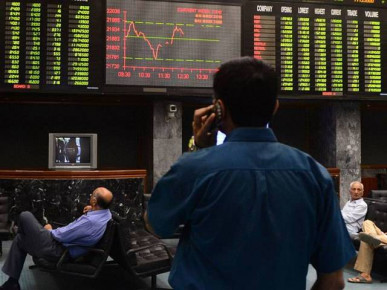
    PSX sheds 280 points amid cautious trading

    The Pakistan Stock Exchange (PSX) remained under pressure during Tuesday’s trading session as investors adopted a cautious approach. The benchmark KSE-100 Index opened on a weak note and stayed in negative territory during the first half of the session. By 1pm, the index had dropped 279.65 points, or 0.16%, to 177,982.68 points. It had closed at 178,262.33 points in the previous session. The market witnessed further pressure shortly after opening. At around 9:39am, the KSE-100 fell to 177,914.38 points, losing 347.95 points, or 0.20%. The index later recovered some of its early losses but remained below the previous close. Trading remained volatile during the session. The index reached an intraday high of 179,123 points and a low of 177,903.87 points. Despite the decline in the benchmark index, market activity remained relatively strong. Around 339.48 million shares were traded during the session. The total value of shares traded stood at approximately Rs19.71 billion. Investor sentiment remained subdued as market participants appeared cautious about taking fresh positions. Profit-taking also contributed to the pressure on the benchmark index. The partial recovery from the morning low indicated some buying interest at lower levels. However, it was not enough to push the index back into positive territory by midday. Investors continued to monitor market developments and broader economic indicators for direction. The afternoon session was expected to determine whether the index could recover its losses or close the day in negative territory.

  • |

    UoG reviews over Rs6bn budget for FY2026-27

    GUJRAT: The Finance and Planning Committee of the University of Gujrat (UoG) has reviewed a proposed budget exceeding Rs6 billion for the fiscal year 2026-27, with a focus on financial sustainability, institutional reforms, student welfare and infrastructure development. The proposed budget was discussed during the committee’s 36th meeting held at the Hafiz Hayat Campus under the chairmanship of Vice Chancellor Prof Dr Zahoor Ul Haq, recipient of the Tamgha-e-Imtiaz. The budget will now be placed before the university syndicate for final approval. During the meeting, the committee was informed that the university had strengthened its financial position through improved governance and prudent resource management. Officials said the institution generated nearly Rs3.75 billion through its own resources, reducing dependence on external financial support. The meeting was told that governance reforms and administrative measures implemented during the previous financial year resulted in savings of around Rs400 million. University management said these savings had been redirected towards student welfare initiatives and development projects. According to the budget proposal, around Rs370 million has been allocated for scholarships, enabling financial assistance for nearly one-third of the university’s enrolled students. Officials said the move reflects the institution’s commitment to ensuring that deserving students continue their education despite financial constraints. The committee also approved plans to invest Rs450 million in the purchase of 18 new buses to improve transport facilities for students and staff. The university estimates the new fleet will reduce annual transportation expenses by nearly Rs60 million through improved operational efficiency. Members were further informed that the university is expanding the use of solar energy across its campuses. The initiative is expected to significantly reduce electricity costs while supporting environmentally sustainable operations. The meeting also reviewed reforms related to faculty workload management, which reportedly generated savings of Rs119 million. University officials said the measures were designed to optimise academic resources without affecting the quality of teaching and learning. Vice Chancellor Prof Dr Zahoor Ul Haq emphasised the importance of financial discipline, transparency and efficient utilisation of resources to ensure the university’s long-term growth. He said the proposed budget reflects the institution’s priorities of academic excellence, student support and sustainable development. The meeting was attended by Additional Treasurer Ghulam Safdar Malik, Additional Secretary Higher Education Department Zahida Azhar, Section Officer Finance Department Asghar Ali, who joined online, Registrar Muhammad Naeem Butt, Dean Faculty of Social Sciences Prof Dr Faisal Mahmood Mirza, Academic Council members Dr Ashfaq Ahmad Mirza and Dr Bushra Akram, Deputy Treasurer Muhammad Fawaz Khokhar, Director ORIC Prof Dr Audil Rashid and other committee members.

  • |

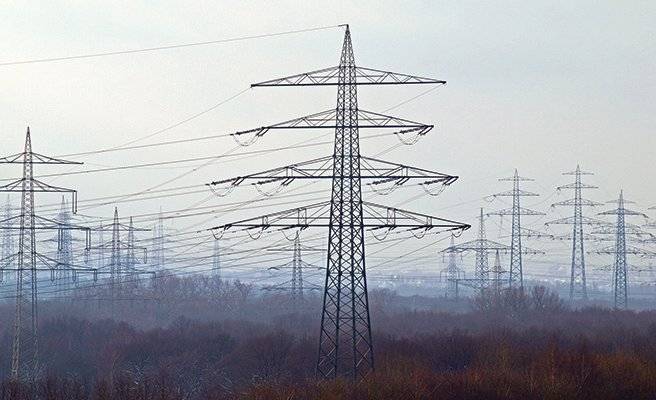
    Senate seeks review of IPP deals over rising power costs

    Islamabad: Independent Power Producers (IPPs) faced strong criticism in the Senate after lawmakers raised serious concerns over billions of rupees paid as capacity payments to power plants that are not fully operational, calling the practice an unnecessary burden on electricity consumers. The issue was discussed during a meeting of the Senate Standing Committee on Cabinet Secretariat, where members questioned the impact of IPP agreements on electricity prices and demanded a complete review of power generation contracts. The committee expressed concern that consumers are paying for electricity capacity even when some power plants are not producing electricity according to expectations. Members said such payments increase the cost of electricity and place additional pressure on ordinary citizens already facing high power bills. The committee directed the National Electric Power Regulatory Authority (NEPRA) to provide complete details of all Independent Power Producers, including their electricity tariffs, generation capacity, installation costs and rate analysis. The committee chairman stressed that electricity prices must be reviewed and unnecessary costs should be removed to provide relief to consumers. The committee also discussed whether some IPPs had affected the government’s solar energy policy. Members observed that certain power producers had, apparently, created difficulties for the promotion of solar energy initiatives and questioned whether existing agreements were supporting or limiting cheaper energy options. The committee demanded transparency in tariff decisions and questioned why NEPRA had not provided complete tariff determination details despite repeated directions. Lawmakers said clear information was necessary to understand how electricity prices are decided and why consumers continue to face expensive power bills. The committee also discussed imported coal and RLNG based power plants installed in Punjab instead of coastal areas. Officials explained that these plants were established near major electricity demand areas to improve supply efficiency. However, the committee directed NEPRA to provide a detailed comparison of all power projects so that lawmakers could examine costs, benefits and long term impact. The chairman said the government should consider renegotiating IPP agreements where necessary and review contracts of projects that are no longer useful. He said reducing electricity prices requires serious decisions and better management of power sector agreements. The meeting was chaired by Senator Rana Mahmood Ul Hassan and attended by Senators Mohammed Abdul Qadir and Aimal Wali Khan, while other members participated in person and online. The committee also reviewed issues related to circular debt, which remains one of the biggest challenges facing Pakistan’s power sector. Members said increasing electricity costs and financial problems in the energy sector require immediate attention because they directly affect households, businesses and the national economy. The committee’s discussion highlighted concerns over the relationship between power generation costs, IPP agreements and electricity bills paid by consumers. Members called for accountability, transparency and a detailed examination of agreements to ensure that the electricity system works in the public interest. The committee will continue reviewing IPP agreements and related energy sector issues in upcoming

  • | | |

    Govt increases petrol by Rs1.63, diesel by Rs1.55

    The government on Tuesday increased the price of petrol by Rs1.63 and high-speed diesel (HSD) by Rs1.55 per litre, passing on the impact of fluctuating global oil prices following renewed hostilities in the Persian Gulf. Following the changes, the price of petrol stands at Rs335.81 per litre, while HSD is now priced at Rs388.38 per litre. The government is charging a total of Rs110 per litre in taxes and duties on petrol and Rs96 on diesel. The Petroleum Division’s notification said the new prices would be applicable for July 29 (Wednesday). The diesel price has come down from a peak of Rs520.35 recorded on April 3, after beginning its upward trajectory from Rs281 per litre when the US-Iran war broke out on February 28. Similarly, petrol had peaked at Rs458.41 on April 3 after rising from Rs266 in the first week of March. Earlier, Petroleum Minister Ali Pervaiz Malik announced that fuel prices would now be fixed on a daily basis due to fluctuations in international market prices. The government had been announcing weekly revisions since early March, alongside conservation measures amid possible oil supply disruptions due to the ongoing Middle East conflict. In April, the federal government also announced targeted relief measures to provide subsidised fuel. The petroleum minister stated that the cabinet and prime minister had decided to give the Oil and Gas Regulatory Authority (OGRA) the responsibility of deciding fuel prices daily based on international market trends. The daily pricing decision was rejected by the All Pakistan Dealers Association, which said it would consider a protest plan this week. Petrol is mainly used in private transport, small vehicles, rickshaws and two-wheelers, and changes in its price affect the middle and lower-middle classes. Similarly, diesel price changes impact the public at large, as it is primarily used in the heavy transport sector, power plants and large generators. Petrol and HSD are the major revenue earners, with monthly sales of about 700,000 to 800,000 tonnes, compared to just 10,000 tonnes of monthly demand for kerosene.

  • | | |

    Oil prices jump as US-Iran tensions rattle markets

    Oil prices climbed sharply on Wednesday as fresh military developments involving the United States, Iran and Saudi Arabia raised fears of further escalation in the Middle East. Brent crude futures rose $3.30, or 3.9%, to $87.39 a barrel. US West Texas Intermediate (WTI) crude also gained $3.05, or 3.8%, to $82.31 a barrel. The latest increase came after the United States and Saudi Arabia carried out strikes against Iran-backed groups in Iraq. The developments followed Iran’s reported missile attack targeting US forces in the region. The renewed tensions have increased concerns about oil supplies from the Middle East. Investors are now watching closely for signs that the conflict could spread further across the Gulf. US officials said American forces intercepted ballistic missiles launched by Iran towards US military positions in the Middle East. Washington described the incident as an attempted surprise attack. Iran’s Islamic Revolutionary Guard Corps later said it had launched several ballistic missiles at a US air base and the US Central Command facility in Jordan. Saudi Arabia also confirmed that its forces had conducted targeted strikes against Iran-backed groups in Iraq. Riyadh said the strikes were carried out jointly with the US Central Command. Saudi authorities linked the operation to drone attacks targeting energy facilities in the kingdom. The developments have added to concerns over the security of critical oil infrastructure in the region. Market analysts said the latest escalation has reduced expectations of a quick easing of tensions in the Persian Gulf. Any disruption to oil production or transportation routes could put additional upward pressure on crude prices. US oil inventories have also provided support to the market. Crude stocks fell by around 3.3 million barrels during the week ending July 24, according to data cited from the American Petroleum Institute. Official inventory figures from the US Energy Information Administration are expected later on Wednesday. Traders will closely examine the data for further signs of changes in demand and supply. Meanwhile, OPEC+ could provide another boost to oil prices. Sources said the producer group is likely to pause planned increases in oil output for three months starting in October. The possible pause would come after OPEC+ completes its scheduled return of barrels that had previously been removed from the market through voluntary production cuts. For now, traders remain focused on developments between Washington and Tehran. Any further military escalation could increase concerns over regional oil supplies and push crude prices higher.

  • |

    PIA-style model proposed for DISCO privatisation

    ISLAMABAD: The government has proposed a new financial structure for the privatisation of three major power distribution companies. The plan covers Faisalabad Electric Supply Company (FESCO), Gujranwala Electric Power Company (GEPCO) and Islamabad Electric Supply Company (IESCO).The proposal is based on the restructuring model used during the privatisation process of Pakistan International Airlines (PIA). Under the proposed plan, selected assets and liabilities of the three companies will be separated from their balance sheets.The government plans to establish a Special Purpose Vehicle (SPV) for this purpose. The SPV will be owned by the government. It will hold specific assets and liabilities removed from the DISCOs. The restructuring is aimed at making the companies more attractive to private investors. The government wants to offer financially stronger entities to potential buyers.Land assets are among the items expected to be separated from the DISCO balance sheets. Liabilities related to retired employees and pension benefits will also be shifted to the SPV.These pension-related liabilities were worth around Rs312 billion for the three companies as of June 2025. The final amount could change after the companies’ balance sheets are restructured. The government plans to use audited financial results for March 2026 as the basis for the final calculation.The three DISCOs had combined assets of around Rs1.2 trillion in June 2025. Their combined liabilities stood at approximately Rs1.05 trillion.The companies together reported net positive equity of around Rs145 billion. However, the financial position of the three companies varies considerably.GEPCO had negative equity of around Rs14.4 billion as of June 2025. The final figures may be different because the government is using March 2026 audited accounts for the restructuring process. The Privatisation Commission board has recommended that the Cabinet Committee on Privatisation approve the restructuring plans. The plans cover the first group of DISCOs selected for privatisation.The proposed arrangements have been prepared using audited financial statements for the period ending March 31, 2026. Officials believe the new structure could increase the value of the companies for the government.It is also intended to make the transactions commercially viable for private-sector investors. The government hopes the approach will attract stronger interest from domestic and international buyers.The strategy closely resembles the model adopted for PIA. During the airline’s privatisation process, the government separated more than Rs650 billion in liabilities from PIA’s balance sheet.The move was designed to leave the airline in a stronger financial position before its transfer to new owners. A similar approach is now being considered for the three DISCOs.The Privatisation Commission has been informed that both local and foreign investors have shown interest in the companies. The government has already announced deadlines for Expressions of Interest.Investors interested in FESCO must submit their Expressions of Interest by August 7, 2026. The deadline for GEPCO is August 21, 2026.For IESCO, the deadline has been set for September 7, 2026. FESCO has a relatively stronger financial position among the three companies.Its assets stood at around Rs410.3 billion as of June 2025. Its liabilities were approximately Rs347 billion.The company reported positive equity of around Rs63 billion. The equity position was supported by deposits for shares and gains from asset revaluation.FESCO also recorded a profit after tax of around Rs9.4 billion. Its non-current liabilities stood at approximately Rs217.6 billion.Staff retirement benefits accounted for around Rs123 billion of these liabilities. The company’s current liabilities were estimated at about Rs130 billion.Trade payables made up around Rs118 billion of the current liabilities. GEPCO reported a profit after tax of around Rs13.7 billion.Its total assets stood at approximately Rs238 billion. However, its equity remained negative at around Rs14.4 billion.The company’s total liabilities were around Rs252.5 billion. Staff retirement benefits accounted for approximately Rs79 billion.IESCO reported a loss after tax of around Rs1.42 billion during the same period. The company had total assets of approximately Rs547 billion.Its liabilities stood at around Rs450 billion. Despite recording a loss, IESCO had positive equity of around Rs97 billion. The company’s equity position was supported by a share deposit of approximately Rs67 billion. It also benefited from a surplus revaluation of around Rs158 billion.IESCO’s liabilities included staff retirement benefits worth around Rs110 billion. The company also carried deferred tax liabilities.The proposed privatisation is part of Pakistan’s wider power-sector reform programme. It is also linked to commitments made under Pakistan’s agreement with the International Monetary Fund (IMF).Pakistan has repeatedly pledged to reduce government involvement in the power distribution sector. The commitment to privatise at least three DISCOs has been made several times since 2013.Previous attempts, however, failed to reach completion. The IMF has urged Pakistan to implement structural reforms in the power sector.The broader objective is to reduce electricity costs for households and businesses. The reforms also aim to improve the operational efficiency of power distribution companies.The IMF has previously noted delays in the private-sector participation process for DISCOs. The first group, consisting of FESCO, GEPCO and IESCO, faced delays after potential investors raised concerns about the proposed transaction structure.The government has now said that those concerns have been addressed. Officials expect the privatisation process to move forward.The government is targeting completion of the first phase by early 2027. The proposed SPV will be an important part of the process.It is intended to separate selected financial burdens from the three companies before they are offered to private investors. The government hopes the restructuring will improve investor confidence and make the DISCO transactions more commercially attractive.

  • | | |

    Gold rates decline by Rs1,000 per tola

    Gold prices continued to fall in bullion markets across Pakistan on Wednesday. The latest decline provided some relief to buyers as local rates moved lower. According to the All Pakistan Gems and Jewellers Association, the price of gold decreased by Rs1,000 per tola. The new price was recorded at Rs426,436 per tola. The decline was also seen in the price of 10-gram gold. Its rate fell by Rs857. The price reached Rs365,600. The latest reduction comes amid continued movement in gold prices in both local and international markets. Gold rates in Pakistan are influenced by global prices, currency movements and trends in the domestic bullion market. The international market also recorded a decline. The price of gold fell by $10 per ounce and reached $4,040 per ounce. The fall in international prices has also contributed to the downward movement in domestic gold rates. Local jewellers and traders closely monitor global prices when determining daily gold rates. Gold remains a popular investment and savings option in Pakistan. Changes in its price can affect both investors and consumers planning to purchase jewellery. The latest decline may offer some relief to customers who have been facing higher gold prices. However, market rates can change quickly depending on international developments and currency fluctuations. Jewellers are expected to continue monitoring the international bullion market. Any major movement in global gold prices could have a direct impact on domestic rates in the coming days. For now, the latest figures show a downward trend in gold prices in Pakistan. The per-tola rate has fallen by Rs1,000, while the price of 10 grams has declined by Rs857.