Middle East

  • | | |

    US rejects Iran’s Hormuz demands

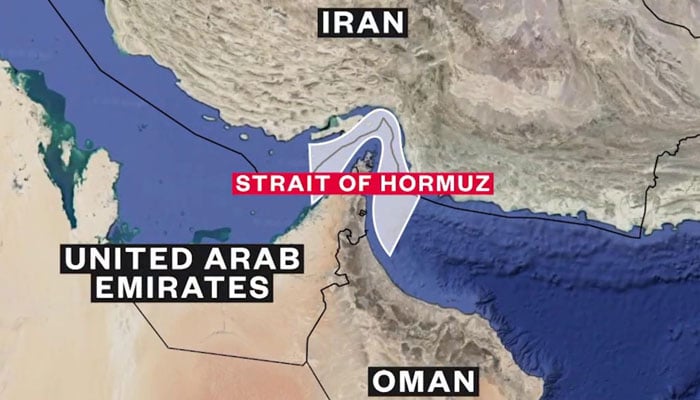
    The United States has rejected Iran’s demands concerning the management and monitoring of maritime traffic in the strategically important Strait of Hormuz, with US officials saying that Tehran’s proposals have not received approval from Oman or the broader international community. American officials said the agreement under discussion focuses only on coordination between the countries involved and does not include any taxes, transit fees, or other financial charges. They described Iran’s demands as unnecessary and maintained that the proposed arrangement should remain limited to practical coordination aimed at facilitating the movement of vessels through the strategic waterway. The US officials’ remarks came after Iranian Deputy Foreign Minister Kazem Gharibabadi revealed that Tehran had proposed a joint monitoring mechanism with Oman for shipping activity in the Strait of Hormuz. According to Gharibabadi, Iran has suggested that each country should manage maritime traffic on its respective side of the strait. Under the proposal, Iranian authorities would oversee vessels and shipping movements in the section under Iran’s responsibility, while Oman would monitor traffic moving through the opposite side. Gharibabadi presented the proposal as an effort to improve coordination and maintain smooth maritime traffic through the strategically located waterway. The Iranian government has long emphasized the importance of regional countries taking greater responsibility for security and navigation in the Gulf and surrounding waters. However, US officials have challenged Iran’s position and said the demands made by Tehran do not form part of the limited coordination framework currently under discussion. They also indicated that neither Oman nor the wider international community has accepted Iran’s proposed conditions. The Strait of Hormuz plays a crucial role in global energy trade. The narrow waterway connects the Persian Gulf with the Gulf of Oman and the Arabian Sea, making it a key route for international oil and gas shipments. Any disruption or uncertainty surrounding navigation in the strait could have consequences for global energy markets, shipping costs, and regional security. The latest disagreement comes amid broader tensions between Iran and the United States over regional security and maritime activity. Tehran has repeatedly stressed its role in maintaining security in the Gulf, while Washington has continued to monitor developments in the area and protect freedom of navigation for commercial and international shipping. The dispute over the proposed arrangement highlights the continuing differences between the two sides over the management of maritime traffic in the Strait of Hormuz. While Iran views its proposal as a framework for shared regional oversight and coordination, the United States maintains that any agreement should focus strictly on coordination and should not impose additional demands, taxes, or fees on international shipping. The issue remains significant because of the strait’s importance to the global economy. Any escalation between Iran and the United States or disagreement over maritime access could draw international attention and raise concerns about the safety and uninterrupted movement of commercial vessels through one of the world’s most important shipping corridors.

  • | |

    Saudi Defense Minister holds urgent talks with Trump

    Saudi Defense Minister Prince Khalid bin Salman held an urgent meeting with US President Donald Trump as Riyadh sought to convey a special message from Saudi Crown Prince Mohammed bin Salman to the American leadership, according to US media reports. The meeting came amid heightened tensions in the Middle East, with Saudi Arabia reportedly pushing for de-escalation while also stressing its readiness to defend its territory and interests. Earlier, during a meeting with US Vice President JD Vance, Prince Khalid said Saudi Arabia wanted to reduce tensions with Iran. He reportedly argued that Iran-backed Iraqi militias had crossed a red line by attacking critical infrastructure and energy facilities, leaving Riyadh with no choice but to respond. However, the Saudi defense minister stressed that the military action in Iraq did not reflect a desire to escalate the regional conflict. He said the operation aimed to demonstrate that Saudi Arabia remains prepared to defend itself when necessary. Prince Khalid also reportedly told Vance that Israeli Prime Minister Benjamin Netanyahu was pushing for greater confrontation with Iran, while Saudi Arabia preferred a path of de-escalation, which it considers more beneficial for regional stability and its own interests. According to US media reports citing sources familiar with the discussions, Saudi Arabia also intended its strikes in Iraq to send a message to Yemen’s Houthi movement. Prince Khalid reportedly told the US vice president that Saudi Arabia has the capability to deal with the Houthis on its own and does not currently need direct US intervention on the issue. The Saudi defense minister also said Riyadh continues to engage in talks with the Houthis, indicating that Saudi Arabia remains open to diplomatic efforts alongside its military preparedness. The meetings highlight Riyadh’s attempt to balance military deterrence with diplomatic engagement as tensions involving Iran, Israel, Iraqi militias and the Houthis continue to shape the security situation across the region.

  • | | | |

    IRGC releases satellite images of US jets in Jordan

    Iran’s Islamic Revolutionary Guard Corps (IRGC) has released satellite images that it says show hangars housing US military aircraft at Jordan’s Al Azraq air base, escalating its information battle with Washington. The IRGC also called on the United States to end what it described as censorship and urged officials to provide the public with accurate information about the ongoing conflict. The release comes after the United States rejected an Iranian claim that its forces had destroyed US F-35 fighter jets. Iranian authorities had earlier claimed that three American fighter aircraft were destroyed at the Al Azraq air base in Jordan. In a statement, the IRGC said its forces had targeted three US F-35 aircraft stationed at the base. The claim has not been independently verified, while US officials have denied that Iran destroyed any American F-35s. By publishing the satellite imagery, the IRGC appears to be seeking to support its version of events and challenge the US account of the reported attack. However, the images alone do not independently confirm whether any aircraft were damaged or destroyed. The conflicting claims come amid heightened regional tensions and an ongoing exchange of accusations between Iran and the United States over military operations and attacks in the Middle East.

  • | |

    Hamas warns it may halt Gaza deal if Israel fails to comply

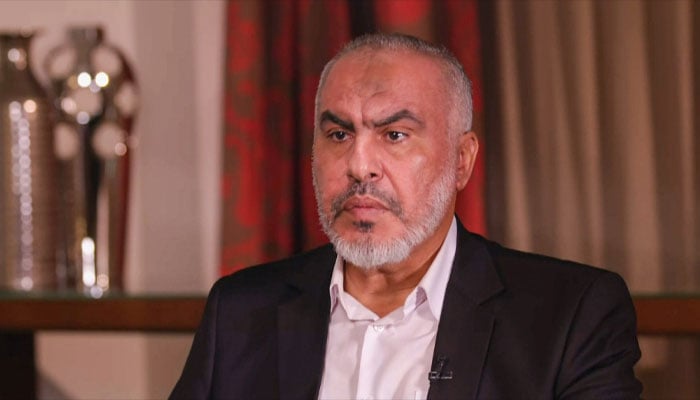
    Hamas negotiating team member Ghazi Hamad has warned that the group will not implement any stage of the Gaza peace agreement if Israeli forces fail to meet their obligations under the deal. Speaking to Arab media, Hamad described the negotiations as difficult and complex but said Hamas worked to reach a practical arrangement that could satisfy all parties. He stressed that Hamas would link its own commitments to Israel’s compliance with the agreement. According to media reports, the group’s disarmament process will also depend on the withdrawal of Israeli forces from Gaza and progress toward rebuilding the Palestinian territory. Israel has not yet issued an official response to the reported agreement. Meanwhile, the Board of Peace has welcomed the reported agreement on Hamas disarmament. The body, established to oversee transitional arrangements in post-war Gaza, said Hamas had formally agreed to a detailed roadmap for implementing the next phases of the ceasefire. In a statement posted on X, formerly known as Twitter, the Board of Peace said Hamas had, for the first time, agreed to a workable plan for disarmament, paving the way for an Israeli withdrawal from Gaza. The board said the agreement followed months of serious and good-faith negotiations aimed at advancing US President Donald Trump’s vision for Gaza. The proposed framework includes new governance, security arrangements, humanitarian assistance, reconstruction and economic recovery, in line with the broader peace plan and UN Security Council Resolution 2803. Hamas and other Palestinian armed groups have reportedly agreed to a document outlining a plan for disarmament in Gaza. Trump described the development as a historic step toward peace and security. Under the reported framework, negotiators will prepare a detailed roadmap for Hamas’s disarmament within 14 days. The international oversight body may extend the deadline if necessary, provided all parties agree and the monitoring mechanism approves the extension.

  • | |

    Pentagon faces shortage of missile defense interceptors

    The US Department of Defense is facing a growing shortage of missile defense interceptors after months of sustained military operations in the Middle East, raising concerns among American defense planners about the Pentagon’s ability to maintain its current pace of operations and protect US forces in the event of another major conflict. According to a report by Fox News, data compiled by the Center for Strategic and International Studies (CSIS) indicates that US stocks of Patriot air defense interceptors have fallen sharply. Before the recent escalation in regional conflicts, the United States reportedly held around 2,300 Patriot interceptors. That figure has now dropped to fewer than 827. The Pentagon has also seen a significant reduction in its stockpile of interceptors used by the Terminal High Altitude Area Defense (THAAD) system. CSIS data cited in the report shows that the number of THAAD interceptors has declined from approximately 452 to fewer than 278. The decline in these critical missile defense stocks has prompted questions about the US military’s ability to respond to multiple threats at the same time. Defense planners are particularly concerned about the possibility of a new crisis emerging in another strategic region, such as the Indo-Pacific, while American forces remain engaged in the Middle East. CSIS has warned that rebuilding depleted interceptor inventories could take at least three years. The lengthy replenishment timeline reflects the difficulty of rapidly expanding production of sophisticated missile defense systems, which require specialized components, advanced manufacturing capabilities and extensive testing. The shortage could create additional pressure on US military leaders as they balance the need to defend American troops and military installations overseas with the requirement to maintain sufficient reserves for future conflicts. To address the growing gap, the Pentagon has included $18.2 billion in its broader $67 billion emergency funding request for fiscal year 2026. The proposed funds would support the replenishment of Patriot interceptors, Tomahawk cruise missiles used by the US Navy and additional interceptors for the THAAD missile defense system. The Pentagon’s spending plans also highlight a broader effort to rebuild weapons inventories that have come under pressure from sustained military operations and rising global security demands. US defense officials have increasingly focused on expanding domestic production capacity and ensuring that the military can replace weapons at a faster rate. According to the report, nearly half of the weapons included in the Army’s preliminary fiscal year 2027 budget requests fall into the relatively lower-cost category, with each weapon costing $600,000 or less. The approach reflects efforts to strengthen stockpiles of systems that the military can procure in larger quantities while continuing to invest in more advanced and expensive defense technologies. The interceptor shortage underscores a wider challenge for the United States as it seeks to prepare for potential conflicts on multiple fronts. While missile defense remains a key component of US military strategy, the depletion of interceptor stocks could limit Washington’s flexibility if it faces simultaneous threats in the Middle East, Europe or the Indo-Pacific. Defense analysts say the issue also highlights the importance of maintaining adequate reserves during prolonged conflicts. Replenishing stocks may take years, meaning decisions about the use of missile defense interceptors could become increasingly important as the Pentagon seeks to protect US personnel and strategic assets while preserving its ability to respond to future crises.

  • | | | |

    Trump warns Oman over Strait of Hormuz

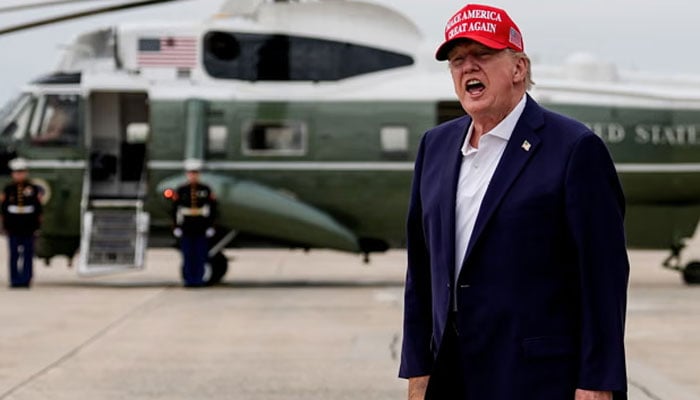
    US President Donald Trump has warned Oman that Washington could launch an attack if Muscat interferes with US efforts in the Strait of Hormuz, according to comments he made in an interview with US media. Trump said the United States would take military action if Oman obstructed American operations in the strategically important waterway. His remarks mark another escalation in Washington’s warnings toward Oman, following a similar threat he reportedly made in May. The US president also said his administration had established a direct, behind-the-scenes communication channel with Iran’s Islamic Revolutionary Guard Corps (IRGC). He did not provide further details about the nature or purpose of those contacts. Trump also sought to underline the scale of America’s military capabilities, saying the United States still has extensive weapons stockpiles. He claimed that the amount of weaponry the US has used so far represents only a small fraction of its available reserves. “We have a lot of weapons left,” Trump said, while indicating that Washington still possesses large quantities of medium-range weapons. The Strait of Hormuz remains a critical global energy route, making any potential military confrontation in the area a major concern for international markets and regional security. Any disruption to shipping through the strait could affect global oil supplies and trigger wider economic and geopolitical repercussions.

  • | |

    Israeli strikes draw Lebanese President’s warning

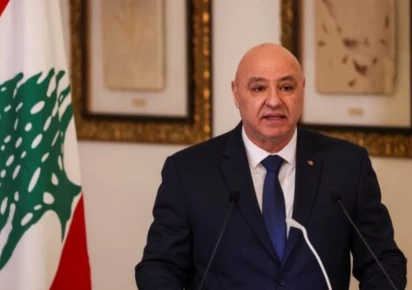
    Lebanese President Joseph Aoun on Saturday condemned Israeli strikes in southern Lebanon, calling them a “clear message” about the ongoing negotiations between Beirut and Tel Aviv ahead of the next round of US-sponsored talks in Rome early next month, AFP reported. Aoun criticised what he described as continued Israeli attacks and repeated violations of the framework agreement and international law protecting civilians. He said an Israeli strike on a house in the southern town of Ansar killed an entire family. At least seven people were killed and three others injured when Israeli warplanes struck a house on the outskirts of Ansar in Nabatieh district early Saturday, Lebanon’s National News Agency (NNA) reported. The strike destroyed the building, while rescue teams searched the rubble for victims and survivors. NNA said the attack marked the first Israeli airstrike to reach this far inside Lebanese territory since a ceasefire took effect two months ago. Israeli aircraft also carried out several strikes on Ali al-Taher hill near Nabatieh al-Fawqa. The strikes came despite a framework agreement signed between Lebanon and Israel on June 26 under US sponsorship. The agreement calls for Israel to gradually withdraw from occupied Lebanese territory while the Lebanese army deploys in those areas and armed groups, including Hezbollah, disarm. According to the report, Israel continues to hold parts of southern Lebanon, including areas it occupied during earlier conflicts. During the latest escalation, Israeli forces advanced more than 10 kilometres into Lebanese territory. Lebanese authorities say the Israeli assault, which began on March 2, has killed 4,335 people and wounded 12,277 others. Aoun warned that the continued violations could undermine the negotiation process and further threaten the fragile ceasefire.

  • | | |

    Drone attack damages oil tanker in Strait of Hormuz

    A drone attack targeted an oil tanker in the Strait of Hormuz, causing minor damage to the vessel but leaving all members of the crew safe, according to the United Kingdom Maritime Trade Operations (UKMTO). The maritime security agency said the incident took place as the tanker was navigating the strategically important waterway. The drone strike caused limited damage to the vessel, but authorities reported no casualties or injuries among the crew. UKMTO also said the incident did not result in any environmental damage. There were no reports of an oil spill, leakage or other pollution following the attack, easing concerns about a possible impact on the marine environment. The Strait of Hormuz remains one of the world’s most important shipping routes, particularly for global energy supplies. Large volumes of crude oil and petroleum products pass through the narrow waterway every day, linking major oil-producing countries in the Gulf with international markets. The latest attack has once again highlighted security concerns surrounding commercial shipping in the region. Any disruption or attack involving an oil tanker in the Strait of Hormuz can raise concerns about the safety of maritime traffic, insurance costs and the uninterrupted movement of energy supplies. Authorities continue to monitor the situation and advise commercial vessels operating in the area to remain alert to potential security threats.