National

  • | |

    Shehbaz govt outlasts political forecasts

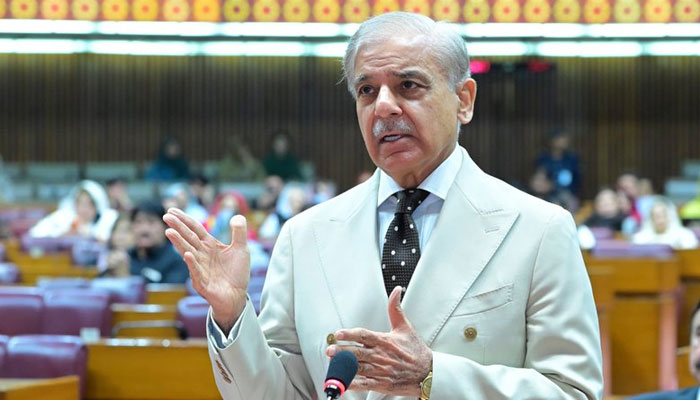
    ISLAMABAD: More than two years after Prime Minister Shehbaz Sharif’s coalition government took office, repeated predictions about its imminent collapse have yet to materialize, even as fresh deadlines continue to dominate Pakistan’s political debate. Since the Pakistan Muslim League-Nawaz (PML-N)-led coalition assumed power following the February 2024 general elections, political commentators, television analysts, and social media personalities have frequently forecast the government’s downfall. The expected timelines have varied—from 90 days to six months and beyond—but each prediction has ultimately passed without bringing the anticipated political change. Over time, different events have been presented as potential turning points, including IMF reviews, the federal budget, economic challenges, coalition disagreements, opposition campaigns, and speculation surrounding Pakistan’s political establishment. As one deadline expired, another quickly emerged, keeping the narrative alive despite the government’s continued survival. The latest claim suggests the government has been given six months to create new provinces. However, constitutional experts argue that such a proposal is highly unlikely within that timeframe. Under Pakistan’s Constitution, altering provincial boundaries requires a constitutional amendment approved by a two-thirds majority in both houses of Parliament as well as the consent of the relevant provincial assembly. Given the current political landscape and the absence of broad political consensus, analysts believe such a move faces significant constitutional and political hurdles. Political observers note that earlier forecasts were largely driven by concerns that the coalition lacked the strength to withstand inflation, IMF-linked reforms, and mounting economic pressures. Yet the government has managed to navigate successive economic and political challenges, prompting critics to repeatedly revise their predictions rather than abandon them. Speculation has also been fueled by statements from several political figures and commentators who have periodically hinted at major political developments or institutional changes. Although such claims have often generated widespread public discussion, none of the predicted political upheavals have occurred. In recent weeks, the Pakistan Peoples Party (PPP) has intensified its criticism of the federal government, particularly amid growing tensions with its coalition partner during the Azad Jammu and Kashmir election campaign. While the PPP has adopted a tougher political tone, analysts caution that electoral rhetoric and coalition disagreements do not necessarily signal the immediate collapse of the federal government. Rumors about possible alternatives to the current leadership have also surfaced repeatedly. Claims that a new political figure was being prepared to replace Prime Minister Shehbaz Sharif, along with speculation about the removal of senior cabinet members, have circulated over the past year. However, none of those predictions have been borne out by subsequent developments. Analysts say the recurring cycle of political forecasts reflects a broader trend in Pakistan’s political discourse, where speculation often outpaces reality. While acknowledging that every government faces political and economic challenges, they note that repeated predictions of the coalition’s imminent fall have consistently failed to match events on the ground, leaving each passing deadline followed by yet another countdown.

  • | | |

    Punjab University introduces AI Chatbot amid recor…

    LAHORE: Punjab University has witnessed a significant increase in applications for its undergraduate programs, receiving more than 25,000 additional confirmed applications compared to last year, reflecting growing student confidence in the institution’s academic standards. According to a university spokesperson, the university received 147,909 applications for undergraduate admissions this year, of which 113,182 were finalized. In comparison, during the first phase of admissions in 2025, the university received 120,395 applications, with 87,831 successfully completed. Vice Chancellor Dr. Muhammad Ali said the record rise in applications demonstrates that Punjab University continues to be the preferred choice for students seeking quality higher education. He noted that the increasing number of applicants highlights the trust students and their families place in the university’s academic reputation. Dr. Ali said the university remains committed to providing students with the best possible opportunities to develop academically while enhancing their research, extracurricular, and professional skills. He emphasized that the institution aims to produce capable, responsible, and ethical graduates who can make meaningful contributions to society, industry, and the country’s development. In a first for the university, Punjab University has also introduced an AI-powered chatbot to assist applicants during the admission and entry test process, making information and guidance more accessible while improving the overall admissions experience.

  • |

    Monsoon rains trigger flood warnings across Pakistan

    Persistent monsoon rains continued to lash several parts of Pakistan on Tuesday, triggering fresh flood alerts, increasing river flows, and prompting disaster management authorities to remain on high alert as another spell of rain is expected over the next 24 to 48 hours. According to the Pakistan Meteorological Department (PMD), weak monsoon currents are currently affecting the country’s upper and eastern regions, while a westerly weather system continues to influence northwestern areas. The department has forecast humid weather across much of Pakistan, with rain and thunderstorms likely in Kashmir, Gilgit-Baltistan, Khyber Pakhtunkhwa, and upper Punjab through Wednesday. The Flood Forecasting Division (FFD) reported that the Indus River remains in a low flood situation at Kalabagh and Chashma, while water levels in all other major rivers are currently within normal limits or below the low-flood threshold. Authorities believe the overall hydrological situation is expected to remain stable over the next 24 hours, although scattered rainfall in the upper catchments may slightly increase river flows. Chenab River Under Close Watch Officials are closely monitoring the Chenab River after India released additional water from the Baglihar Dam following heavy rainfall in the upper catchment of the river. According to available reports, three spillway gates of the dam were opened on Monday, adding to the two spillways that had already been opened several days earlier, resulting in higher downstream water flows. In response, the FFD has issued a low to medium flood alert for Head Marala during the next 24 hours. The latest hydrological data shows inflows of approximately 93,900 cusecs, while outflows stand at around 76,200 cusecs. Forecasts indicate inflows may range between 80,000 and 100,000 cusecs, with the river expected to remain in the low flood category. Heavy Rainfall Recorded Across the Country During the last 24 hours, widespread rainfall was reported in Khyber Pakhtunkhwa, Punjab, Balochistan, Gilgit-Baltistan, and Azad Kashmir. Among the highest rainfall recorded by the PMD, Saidu Sharif received 86 millimetres, Kakul 71 millimetres, and Faisalabad 77 millimetres. Meanwhile, Sibbi remained the hottest city in the country with a maximum temperature of 44 degrees Celsius. The FFD’s rainfall monitoring system recorded exceptionally heavy downpours in Faisalabad, where Ghulam Muhammad Abad Water Works received 126 millimetres of rain, while the WASA Head Office recorded 123 millimetres. Significant rainfall was also reported in Lahore, Sialkot, Gujrat, and several surrounding areas. PDMA Warns of Urban Flooding and Landslides Punjab’s Provincial Disaster Management Authority (PDMA) stated that monsoon rains affected most districts of the province over the past day. The authority said advance planning, timely deployment of drainage machinery, and emergency response teams helped clear accumulated rainwater from urban areas despite the heavy showers. The PDMA warned that the current monsoon spell is likely to continue until August 5, with additional rainfall in upper catchment areas expected to increase water levels in eastern rivers and seasonal streams. Authorities have cautioned that urban flooding remains a significant risk in Lahore, Rawalpindi, Gujranwala, Gujrat, Sialkot, Faisalabad, and Multan. At the same time, the possibility of landslides persists in Murree, Galliyat, and other mountainous regions due to continuous rainfall. Authorities Urge Public to Take Precautions Disaster management authorities have established flood relief camps in vulnerable districts to facilitate emergency response if required. Residents living near riverbanks, seasonal streams, and flood-prone areas have been advised to relocate to safer locations as a precaution.

  • | |

    Balochistan rail operations fully restored

    Train services between Balochistan and other parts of Pakistan have resumed after a one-day suspension caused by railway track repair work. Railway officials confirmed that operations were restored after maintenance teams completed the necessary repairs. The temporary suspension was imposed to ensure passenger safety and to allow engineers to carry out essential work on the affected section of the track. Following the restoration of services, the Jaffar Express departed from Quetta for Peshawar as scheduled. The resumption of the train marked the return of regular rail connectivity between Balochistan and the country’s other provinces. Officials also said that the Jaffar Express travelling from Peshawar is expected to arrive in Quetta on Wednesday according to its scheduled timetable. They added that train operations are now running normally after the completion of repair work. The railway administration said the suspension was purely a precautionary measure aimed at ensuring safe travel. Maintenance crews worked continuously to restore the track within a day, allowing train operations to resume without further delay. The restoration of rail services is expected to provide relief to passengers who were affected by the temporary suspension. Travellers can now continue their journeys through the regular train schedule, while railway authorities have assured passengers that they will continue monitoring the track to ensure safe and uninterrupted operations. Pakistan Railways periodically carries out maintenance work on its network to improve safety and operational efficiency. Officials urged passengers to stay updated on train schedules through official railway channels, particularly when maintenance work or weather conditions affect rail operations.

  • | |

    Kashmir Exploitation Day, Pakistan’s leaders uni…

    ISLAMABAD: Pakistan observed Kashmir Exploitation Day on Wednesday with political leaders across party lines renewing their support for the people of Indian-administered Jammu and Kashmir, while condemning India’s constitutional changes of August 5, 2019, as unlawful and contrary to international law and United Nations resolutions. Messages of solidarity were issued by senior government officials, provincial leaders, parliamentarians and political parties, all reiterating Pakistan’s commitment to supporting the Kashmiri people’s right to self-determination. Rallies, public gatherings and awareness events were also held in different parts of the country to mark the occasion. Deputy Prime Minister and Foreign Minister Ishaq Dar Deputy Prime Minister and Foreign Minister Ishaq Dar said Pakistan would continue extending its political, diplomatic and moral support to the Kashmiri people until they were able to exercise their internationally recognised right to self-determination. He described India’s unilateral decisions of August 5, 2019, as illegal and urged New Delhi to reverse all measures that altered the disputed territory’s constitutional status. Pakistan’s Foreign Office Pakistan’s Foreign Office also reaffirmed the country’s unwavering support for Kashmiris, paying tribute to what it described as their courage, resilience and sacrifices. A spokesperson said Pakistan would continue highlighting the Kashmir issue at regional and international forums and called on the global community to uphold international law and relevant UN Security Council resolutions. Punjab Chief Minister Maryam Nawaz Punjab Chief Minister Maryam Nawaz paid tribute to the families of those who lost their lives during the Kashmir conflict and appealed to the United Nations and international human rights organisations to take notice of alleged human rights violations in the region. She said August 5, 2019, represented an attack on the identity and rights of the Kashmiri people and maintained that Pakistan would continue raising its voice on their behalf. Sindh Chief Minister Murad Ali Shah Sindh Chief Minister Murad Ali Shah also termed India’s constitutional changes a violation of UN Security Council resolutions. He urged the international community to play an effective role in ensuring the protection of human rights in Indian-administered Kashmir. Chairman Senate Yousaf Raza Gilani Chairman Senate Yousaf Raza Gilani strongly criticised India’s actions, saying attempts to alter the demographic composition of the disputed territory and undermine the identity of the Kashmiri people were unacceptable. He stressed that the Kashmir dispute should be resolved in accordance with the aspirations of its people and relevant UN resolutions. Governor Faisal Karim Kundi In Peshawar, a solidarity rally led by Governor Faisal Karim Kundi marched from the Civil Secretariat to the Governor House. Government employees, civil society representatives and citizens participated in the event, carrying Pakistani and Kashmiri flags while expressing support for the Kashmiri cause. Addressing participants, Kundi said Pakistan would continue standing with Kashmiris and expressed confidence that the people of the region would eventually determine their own future according to their wishes. Sindh Interior and Law Minister Zia-ul-Hassan Lanjar Sindh Interior and Law Minister Zia-ul-Hassan Lanjar said force and restrictions could not suppress the desire for freedom among Kashmiris. He alleged that India had violated international law and reiterated Pakistan’s solidarity with the people of Kashmir. Sindh Assembly Speaker Awais Qadir Shah Sindh Assembly Speaker Awais Qadir Shah also urged the United Nations to play a more active role, saying Kashmiris had been facing serious human rights challenges for several years. Jamaat-e-Islami chief Hafiz Naeem ur Rehman Jamaat-e-Islami chief Hafiz Naeem ur Rehman said the Kashmiri freedom movement would continue until the dispute was resolved in line with United Nations resolutions. He described the revocation of Kashmir’s special constitutional status as a challenge to international law and the UN system. Senator Sherry Rehman Senator Sherry Rehman praised the determination and resilience of the Kashmiri people, saying their struggle had continued despite years of political uncertainty. She maintained that India’s constitutional changes were aimed at ending the region’s special status. Federal Minister Amir Muqam At a separate rally in Islamabad, Federal Minister Amir Muqam said Pakistan marks August 5 every year to express solidarity with Kashmiris and condemn India’s actions. He alleged that demographic changes were being introduced in the disputed territory through settlement policies. PPP Parliamentarians Secretary General Nayyar Bukhari Meanwhile, Pakistan Peoples Party Parliamentarians Secretary General Nayyar Bukhari said the revocation of Kashmir’s special status had failed to weaken the freedom movement. He warned that policies pursued by the Indian government could further undermine regional peace and stability. The observance of Kashmir Exploitation Day concluded with renewed calls from Pakistan’s political leadership for greater international engagement on the Kashmir dispute. Leaders urged the United Nations and the global community to work towards a peaceful resolution of the issue in accordance with international law and the wishes of the Kashmiri people.

  • | |

    YDA Sindh pushes healthcare reform agenda

    KARACHI: The Young Doctors Association, YDA, is often seen by the public as violent, irresponsible doctors who take to the streets. But rarely does anyone see the other side of the coin. Behind the protests is a group of young doctors — the young blood of our healthcare system — fighting for their basic rights and for better patient care. Like whistleblowers in every society, they are rarely welcomed when they speak the truth. The Young Doctors Association is no exception. To the common man, YDA means protests, strikes, and chaos in hospitals. What often goes unnoticed is the reason behind it. These are young doctors, the backbone of emergency wards in Sindh, who are demanding dignity, security, and resources. In this context, Chairman of the Young Doctors Association Sindh Chapter, Dr. Farrukh Rauf paints a realistic picture of a system buckling under patient load, with too few specialists and even fewer resources to go around. From JPMC Member To Sindh Chairman YDA was formed in 2013 following an incident in which a female doctor was injured by relatives of a patient who had died. Since then, Dr. Farrukh Rauf has been associated with Young Doctors Association. He started as a member, was later elected General Secretary and then President of the JPMC unit, served as Senior Vice President of YDA Sindh, and is now serving as Chairman of the Sindh chapter. Dr. Farrukh Rauf, Chairman YDA Sindh, is a consultant orthopedic surgeon at Jinnah Postgraduate Medical Centre. He is currently the only surgeon at JPMC who performs orthopedic tumor and cancer surgeries — a super-specialty that only 4 to 5 surgeons practice across Karachi. Surgeons with his expertise in the private sector often draw salaries of over Rs. 20 lakh, but he continues to serve at a public institution out of commitment to suffering humanity. Dr. Rauf has been associated with JPMC for the last 17 years, where he also completed his post-graduation. He serves as General Secretary of the Pakistan Orthopedic Association and is an internationally certified trainer/instructor for HOPE – Hospital Preparedness for Emergencies — a certification he received from Nepal. There are only 4 to 5 such certified trainers in all of Sindh. “Condition Is Still Very Critical” Dr. Farrukh Rauf said that despite the Sindh government’s interest in the healthcare sector, the condition is still very critical, which is truly reflected in the overcrowded corridors of JPMC, Lyari and Civil Hospitals, where patients lie on floors and doctors work 36-hour shifts. On the issue of shortages at Civil, JPMC, and NICVD, Dr. Farrukh offers a mixed assessment. “There is no shortage of life-saving drugs,” he said. “Yes, ICU facility is very limited owing to patient burden. Seeing the overflow of patients, more equipment is needed.” He acknowledged the Sindh government’s efforts but stressed the scale of the problem. “Though the Minister of Health, Dr. Azra Pechuho, is addressing the concerns, however, there is a huge gap and lack of equipment for patients.” At tertiary hospitals like JPMC and Civil, where critical cases from across Sindh land every day, the mismatch between patient inflow and available ICU beds and machines remains a key pressure point for young doctors on duty. He traced the problem back to medical education itself. “The number of medical colleges has increased manifold in the last 10 years, but the standard of education has deteriorated. There is a dearth of quality doctors.” YDA’s Key Milestones According to Dr. Farrukh Rauf, Chairman YDA Sindh, the situation in government hospitals across Sindh, especially in Karachi, has improved only because of constant struggle. “Owing to YDA’s struggle and efforts, salaries of young and mid-career doctors were revised. Previously, they were lower than in all other provinces,” he said. He added that security was one of the biggest issues YDA flagged early on. “Doctors were facing serious security issues. There was no health risk allowance, which is being introduced now owing to the YDA movement.” The gains, he notes, came after years of protests at JPMC, Civil Hospital Karachi, and other tertiary centers where patient load far exceeds available staff and basic facilities. YDA Beyond Protests And Karachi The Young Doctors Association, once seen as a Karachi-centric pressure group, now claims a presence across the province. “I had established YDA units in all districts of Sindh including Umerkot, Thar, Ghotki. Now almost in twenty districts YDA is active for the rights of doctors and patients,” Dr. Farrukh said. In Karachi, the association is active in Civil, Lyari, JPMC and NICH. “We seek and welcome active participation from other government hospitals,” he added. The work has expanded beyond protests. YDA runs a welfare committee that coordinated flood relief last year, and an academic committee that offers career counseling, FCPS guidance, and surgical workshops. “We have constituted a welfare committee which offers coordinated help on disasters like floods last year. There is an academic committee which offers career counseling, how to give high-level exams, and workshops on surgical procedures,” he said. On training, Dr. Farrukh said YDA is pushing for reforms in the PGT system. “We are trying to get PGT seats equal in number to the number of graduates.” Violence And Security Gaps For Dr. Farrukh Rauf, the frustration in wards often boils over into violence against doctors. But he says the anger has a root cause. “Most of the people get provocative owing to the absence of ICU or urgent facility for their patient,” he said. “It is necessary to expand ICUs and facilities to handle the high influx of patients which overburdens doctors.” He was blunt about administrative failures too. “There are security lapses also on the part of the administration.” The Way Forward Dr. Farrukh argues the solution is not in Karachi’s tertiary hospitals alone, but in strengthening the entire pyramid. “We need a proper primary healthcare network across the province, like in developed countries,” he said. “Patients who can be treated at the UC or Tehsil level should not be coming to

  • | | |

    Pakistan marks Kashmir Exploitation Day

    Pakistan observed Kashmir Exploitation Day on August 5, with political leaders reaffirming their support for the people of Indian-administered Kashmir and describing India’s actions of August 5, 2019, as illegal and contrary to international law and United Nations resolutions. Deputy Prime Minister and Foreign Minister Ishaq Dar said Pakistan remains committed to supporting the Kashmiri people’s right to self-determination. In his message, he stated that India’s unilateral constitutional changes made on August 5, 2019, were unlawful and pledged Pakistan’s continued moral, political and diplomatic support for Kashmiris. He also urged India to reverse all measures that altered the disputed region’s constitutional status. The Foreign Office said Pakistan continues to observe Kashmir Exploitation Day to highlight the events of August 5, 2019. A spokesperson praised the courage, resilience and sacrifices of the people of Indian-administered Kashmir and reiterated Islamabad’s support for their cause. Punjab Chief Minister Maryam Nawaz paid tribute to the families of those who lost their lives during the Kashmir conflict and urged the United Nations and international human rights organisations to take notice of alleged human rights violations in the region. She said Pakistan would never accept the constitutional changes introduced by India in 2019. Sindh Chief Minister Syed Murad Ali Shah said India’s actions were against United Nations Security Council resolutions and called on the international community to play a greater role in protecting human rights in Kashmir. Senate Chairman Syed Yousaf Raza Gilani condemned India’s August 5 measures, saying attempts to alter the region’s demographic composition and identity were unacceptable. In Peshawar, a solidarity rally led by Khyber Pakhtunkhwa Governor Faisal Karim Kundi was held from the Civil Secretariat to the Governor House. Government employees and people from different walks of life participated in the event. Addressing the rally, Kundi said Pakistan would continue to stand with the people of Kashmir and support their aspirations. Sindh Home and Law Minister Zia-ul-Hassan Lanjar said the use of force and restrictions could not weaken the determination of the Kashmiri people. Sindh Assembly Speaker Owais Qadir Shah also urged the United Nations to play a more effective role in addressing the situation. Jamaat-e-Islami chief Hafiz Naeem ur Rehman said the struggle of the Kashmiri people would continue until the dispute is resolved in accordance with United Nations resolutions. Senator Sherry Rehman praised the resilience and determination of Kashmiris, while Federal Minister Amir Muqam, speaking at a rally in Islamabad, reiterated Pakistan’s support for Kashmir and criticised India’s policies in the disputed territory. PPP Parliamentarians Secretary General Nayyar Bukhari also condemned India’s 2019 constitutional changes, saying they had failed to suppress the Kashmiri people’s demand for self-determination and warning that such policies could undermine regional peace.

  • | |

    PML-N wins LA-27 as PPP takes LA-28

    The Pakistan Muslim League-Nawaz (PML-N) and the Pakistan Peoples Party (PPP) shared victories in the delayed second phase of the Azad Jammu and Kashmir (AJK) Legislative Assembly elections, with each party securing one constituency in Muzaffarabad, according to unofficial and provisional results. The polling in LA-27 Muzaffarabad-I and LA-28 Muzaffarabad-II was held after voting in several polling stations was postponed on August 2 due to heavy rainfall and landslides that disrupted transportation and created safety concerns for voters and election staff. In LA-27 Muzaffarabad-I, PML-N candidate Noreen Arif was declared the winner after receiving 18,919 votes. She defeated Sardar Tabarak Ali of the Istehkam-e-Pakistan Party (IPP), who secured 18,621 votes, giving the PML-N candidate a narrow lead of 298 votes. Meanwhile, PPP candidate Bazil Ali Naqvi emerged victorious in LA-28 Muzaffarabad-II. He received 28,170 votes, defeating PML-N candidate Chaudhry Shehzad, who polled 26,864 votes. The unofficial results gave Naqvi a winning margin of 1,306 votes. Election authorities had postponed polling at 57 polling stations across the two constituencies after severe weather and landslides affected access to several areas. Once conditions improved and logistical arrangements were completed, voting was conducted peacefully under the supervision of election officials. With the completion of vote counting, the unofficial results confirmed PML-N’s continued dominance in the Muzaffarabad Division. The party has secured 15 of the division’s 21 seats, while the Pakistan Peoples Party has won six seats, making it the second-largest political force in the region.

  • | | |

    Rising chip costs may increase phone prices in Pak…

    The rising cost of semiconductor chips in the global market could lead to another increase in mobile phone prices in Pakistan, as smartphone manufacturers continue to face higher production expenses. Industry experts say the global technology sector is experiencing a sharp rise in the cost of key components used in smartphones. The increasing demand for advanced semiconductor chips, particularly those used in artificial intelligence (AI) data centres, has placed significant pressure on chip manufacturers and global supply chains. In addition to AI-related demand, the prices of memory chips, silicon wafers, chip packaging materials and other electronic components have also increased. These factors have raised the overall cost of manufacturing smartphones, forcing companies to review their pricing strategies. The impact is being felt across the international mobile industry. Manufacturers are facing higher production costs, while suppliers are adjusting prices to cope with increased manufacturing expenses. As a result, smartphone companies are expected to pass part of the additional cost on to consumers. Pakistan’s mobile phone market is closely linked to global supply chains because most smartphones and their components are imported. Any increase in international production costs is likely to affect the prices of devices sold in the local market. Industry analysts say consumers may have to pay more for both premium and mid-range smartphones if the trend continues. They added that the exact increase will depend on international market conditions, import costs and currency exchange rates in the coming months. The expected rise would come at a time when consumers are already dealing with higher prices for electronic goods due to inflation and increased import expenses. A further increase in smartphone prices could reduce purchasing power and slow demand in the local market.

  • |

    SBP chief reaffirms Islamic banking push

    State Bank of Pakistan (SBP) Governor Jameel Ahmad has reaffirmed the central bank’s commitment to implementing a fully Shariah-compliant financial system, saying the SBP continues to work closely with the government to achieve the country’s Islamic banking goals. Addressing a ceremony via video link, Ahmad said the central bank has introduced several measures to facilitate freelancers, helping them receive payments more easily through formal banking channels. He noted that these initiatives have contributed to an increase in workers’ remittances and strengthened the flow of foreign exchange into Pakistan. The SBP governor said the central bank has established a dedicated steering committee to oversee the transition toward Islamic banking. He added that the SBP is revising its regulatory and operational framework to ensure it fully complies with Shariah principles while supporting the financial sector’s gradual transformation. Ahmad recalled that Pakistan’s founder, Quaid-e-Azam Muhammad Ali Jinnah, had expressed the vision of an Islamic financial system during the inauguration of the State Bank in 1948. He said the government has adopted a roadmap to implement a complete Islamic banking system by December 2027, and the SBP remains committed to meeting that target in collaboration with relevant stakeholders. He also revealed that work is underway to develop a comprehensive asset register for government-owned assets, describing it as an important step in supporting Islamic finance initiatives. Stressing the importance of skilled professionals, Ahmad said expanding the capacity of the banking workforce will play a key role in ensuring the successful implementation of the Islamic banking system across the country.