National

  • |

    Four killed as heavy rain causes roof collapse in …

    UPPER SOUTH WAZIRISTAN: Four members of a family lost their lives after the roof of a room collapsed due to heavy rainfall in the Bangiwala area of Upper South Waziristan. According to police, the incident occurred amid intense rain in the region, which caused the structure to give way and trap the family members underneath the debris. Police said the victims included a husband, his wife, their son, and their daughter. The tragic incident has left the local community in mourning. Authorities are assessing the situation in the area and monitoring the impact of the ongoing rainfall. Residents have also been urged to remain cautious as further rain could increase the risk of structural damage and other weather-related incidents.

  • | |

    Six bullet-riddled bodies found across Balochistan

    QUETTA: A wave of violence and tragic accidents swept across Balochistan on Tuesday, as authorities recovered six bullet-riddled bodies from four districts while eight more people, including two women, lost their lives in separate incidents of gunfire, a roadside explosion, a fuel tanker fire and a deadly road crash. According to police officials, the bodies of six unidentified men were recovered from Kalat, Mastung, Panjgur and Kharan, prompting multiple investigations into the killings. Three of the bodies were discovered in different areas of Kalat district. Two were found dumped in the Rej locality after local authorities received information from residents, while another body was recovered from the Chhapar area. All three were shifted to the District Headquarters Hospital for identification, but officials said their identities had not yet been established. In Mastung, police recovered another unidentified man’s body from the Jungle area after receiving reports from local residents. Preliminary investigations suggest the deceased may have been a drug addict, though authorities said the exact cause and circumstances of his death are still being examined. The fifth body was found in Nowan Kur, Panjgur, where police believe the victim was shot dead by unidentified attackers before his body was abandoned. In Kharan, authorities recovered the body of a man who had reportedly been abducted by armed men two days earlier after they stormed his home. His body was later found on the outskirts of the city with bullet wounds. Separate incidents elsewhere in the province added to the death toll. In Kalat’s Mangochar area, unidentified gunmen opened fire on a family travelling from Zhob to Karachi after their driver allegedly failed to stop at a signal. Two women were killed in the attack, while a child sustained injuries and was taken to hospital. Meanwhile, an improvised explosive device (IED) detonated near the N-65 National Highway in Mastung, killing a driver and injuring five others. The explosion severely damaged an LPG tanker and two trailers. In Quetta, two people were burned to death after an oil tanker caught fire at a petrol pump near Sariab Customs. In another tragedy, three people were killed in a head-on collision between two vehicles on the Quetta-Karachi National Highway in the Surab area. Police have launched investigations into the shootings and explosions, while authorities continue efforts to identify the unidentified victims and determine those responsible for the attacks.

  • | |

    Govt advances PNSC privatisation, moves to sell 30…

    ISLAMABAD: The federal government has accelerated plans to transfer a 30 percent stake in the Pakistan National Shipping Corporation (PNSC) to the National Logistics Corporation (NLC), establishing two high-level committees to complete the financial, commercial, and legal framework for the transaction. According to a briefing presented by the Ministry of Maritime Affairs to the Economic Coordination Committee (ECC), the committees will determine key aspects of the deal, including the share price, payment schedule, dividend distribution, utilisation of sale proceeds, and the transfer of management control. The first committee, headed by the Prime Minister’s Adviser on Privatisation, includes senior officials from the Finance, Law and Justice, and Maritime Affairs ministries, along with the Chairman of the Securities and Exchange Commission of Pakistan (SECP) and the Director General of NLC. Its mandate is to finalise the financial and commercial structure of the agreement, including the valuation of shares, payment mechanism, dividend arrangements, and the injection of funds into PNSC. The second committee, led by the Secretary of the Law and Justice Division, will oversee the legal documentation required for the transaction. Its responsibilities include preparing the Share Purchase Agreement, Shareholders’ Agreement, and the legal framework governing the transfer of management control. The ECC endorsed the proposal and emphasised the importance of increasing private sector participation in future maritime initiatives to improve efficiency, strengthen governance, and unlock the sector’s economic potential. To ensure smooth implementation, the Ministry of Maritime Affairs has also proposed an Implementation Committee chaired by the Prime Minister’s Adviser on Privatisation and co-chaired by the Minister for Maritime Affairs. The committee will develop a roadmap and supervise the execution of the transaction. The government had previously granted in-principle approval for NLC to acquire a 30 percent stake in PNSC, along with management control and consolidation rights, subject to all applicable legal requirements. PNSC, a state-owned enterprise listed on the Pakistan Stock Exchange, remains majority-owned by the federal government, which holds 87.56 percent of its shares. Public investors own 10.87 percent, while the PNSC Employees Empowerment Trust holds the remaining 1.57 percent. The national shipping company currently operates a fleet of 14 vessels, including three recently added ships. Despite fluctuations in earnings, PNSC has maintained strong profitability, posting net profits of Rs30 billion in FY2022-23, Rs19.4 billion in FY2023-24, and Rs20.4 billion in FY2024-25. Established under the Pakistan National Shipping Corporation Ordinance, 1979, the organisation has undergone legislative reforms in recent years, with amendments introduced in 2023 and 2024 to align its governance framework with the State-Owned Enterprises Act, 2023. These changes are intended to improve transparency, accountability, and operational performance as the government advances its broader state-owned enterprise reform agenda.

  • |

    Govt extends austerity measures to control expenditure

    The federal government has formally extended its existing austerity policy into the ongoing 2026-27 fiscal year as part of a continued effort to manage public spending and restrict non-essential state expenditures. Following an official decision reached by the federal cabinet to maintain spending controls across public sector institutions, the Ministry of Finance issued a detailed notification on Tuesday outlining the continuation of these operational guidelines. Under the reinforced financial regulations, the government has mandated the immediate abolition of all public sector positions across federal departments that have remained vacant for the past three years. Furthermore, the policy maintains a complete, ongoing prohibition on the creation of any new posts, while also extending strict limitations on the procurement of new machinery, official equipment, and public sector vehicles. In addition to procurement restrictions, the federal government has kept in place its ban on state-funded medical treatment abroad for officials, as well as restrictions on non-essential foreign travel funded at the government’s expense. However, the Ministry of Finance specified that certain essential service categories will remain exempt from the purchase ban. These exemptions cover ambulances, specialised mobile medical vehicles, fire-fighting engines, buses and vans intended for educational institutions, waste and garbage collection vehicles, and operational motorcycles.

  • | |

    Noreen Niazi’s comments do not reflect PTI polic…

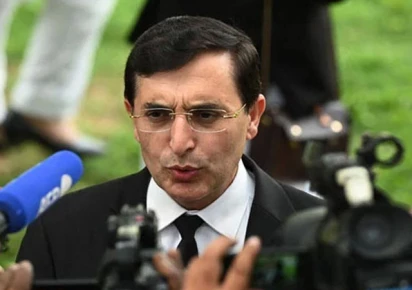
    RAWALPINDI: Pakistan Tehreek-e-Insaf (PTI) Chairman Barrister Gohar Ali Khan has distanced the party from recent remarks made by Imran Khan’s sister, Noreen Niazi, stating that her comments reflected her personal opinion and should not be viewed as the official position of PTI. Speaking to journalists outside Adiala Jail on Tuesday, Gohar said he had been informed that the interview in question was recorded nearly three months ago. He emphasized that Noreen Niazi holds no office within the party and is not involved in PTI’s political decision-making process. Highlighting national security, the PTI chairman described Pakistan’s recent success in Marka-e-Haq as a matter of national pride and credited it as a blessing for the country. He said Pakistan’s response to external threats had demonstrated its strength before the world and warned that any future aggression would be met with an even stronger reaction. Gohar also appealed to political leaders and the public to avoid making controversial statements about the armed forces or the country’s martyrs, stressing that such sensitive issues should remain above political disagreements. Reaffirming PTI’s position on terrorism, he said the party fully supports decisive action against terrorist elements and called for a united national strategy to eliminate the threat through collective efforts and available state resources. On the political front, Gohar confirmed that PTI’s boycott of parliamentary standing committees and the Judicial Commission remains unchanged. Discussing the upcoming Azad Jammu and Kashmir elections, he said the party had received reports that the electoral process had been rescheduled into three phases. Although some members had proposed reconsidering the boycott, no agreement had been reached, and the party’s decision to stay away from the polls remains in force. Separately, prison sources confirmed that former prime minister Imran Khan and his wife, Bushra Bibi, were allowed to meet inside Adiala Jail. The meeting reportedly took place in the prison’s conference room and lasted around 30 minutes. Meanwhile, Imran Khan’s sister Aleema Khan called on PTI lawmakers and senior leaders to actively participate in the party’s anti-government campaign instead of leaving the responsibility to a limited number of workers and family members. Expressing concern over the lack of updates regarding her brother’s condition, she questioned how long the movement could continue without stronger support from the party’s elected representatives and leadership.

  • |

    Pakistan accumulates 6.25maf water in dams as monsoon inflows surge

    Pakistan’s water reservoirs have stored more than 6.25 million acre-feet (MAF) of water during the ongoing Kharif season, bolstered by surging monsoon inflows across major national dams. An official from the Indus River System Authority (IRSA) confirmed that Tarbela Dam currently holds 3.395 MAF, Mangla Dam holds 3.011 MAF, and Chashma Barrage contains 0.121 MAF. At Tarbela, inflows reached 285,700 cusecs against regulated outflows of 210,000 cusecs. Chashma Barrage recorded inflows of 263,700 cusecs and outflows of 225,000 cusecs, while Mangla Dam logged 80,500 cusecs in inflows alongside reduced outflows of 10,000 cusecs to rapidly build capacity. Due to heavy monsoon rains creating flood-like conditions at both major reservoirs, WAPDA and IRSA are managing operations cautiously to regulate inflows safely and conserve water. Downstream of Kotri Barrage, water releases were kept at a minimal 0.138 MAF between April 1 and July 21 to prevent seawater intrusion into the Indus delta, though downstream discharges are projected to increase as peak monsoon flows continue. All four provinces are currently receiving their complete indented irrigation allocations to support agricultural activities during the Kharif season. Water managers continue to monitor basin conditions closely, including at Marala Headworks on the Chenab River, where inflows rose to 102,400 cusecs with outflows kept at 80,100 cusecs following catchment rainfall. However, IRSA expressed concern over the inability to independently verify the exact origin and scale of upstream river flows, as India has suspended real-time hydrological data sharing under the Indus Waters Treaty.

  • | |

    Pakistan seeks $10b in US backstop facility

    Pakistan has formally requested a 10 billion dollar exchange stabilisation facility from the United States to boost its foreign exchange reserves and stabilise its economy, according to a source familiar with the development. The request, addressed to US Treasury Secretary Scott Bessent, seeks a Bilateral Exchange Stabilisation Support Facility with a maturity period of up to five years. This move follows Pakistan’s involvement in facilitating negotiations regarding the Iran war, an effort that elevated the country’s diplomatic standing and fueled expectations of economic support from Washington and international partners. If approved, the 10 billion dollar facility would help replenish Pakistan’s central bank reserves, reduce downward pressure on the rupee, and decrease dependency on multilateral lenders. It would also provide financial flexibility as Islamabad continues implementing strict fiscal and monetary measures mandated under its 7 billion dollar International Monetary Fund programme. These IMF-guided measures have required politically challenging tax hikes, spending cuts, and structural reforms to ensure fiscal discipline. Neither the Pakistani Ministry of Finance nor the US Treasury immediately responded to requests for comment regarding the proposal. US Exchange Stabilisation Facilities, typically administered through the Exchange Stabilisation Fund, are rare financial mechanisms that provide foreign governments with dollars, currency swaps, or guarantees. These backstops differ from the Federal Reserve’s permanent standing swap lines with major foreign central banks. A 2025 financial package provided to Argentina represented the first new exchange stabilisation facility granted to a foreign government since Uruguay in 2002, alongside Mexico’s long-standing swap agreement dating back to the 1940s. Pakistan narrowly avoided a debt default in 2023 by securing a 3 billion dollar IMF standby arrangement, which was later succeeded by the current 7 billion dollar Extended Fund Facility. However, its foreign reserves remain heavily dependent on official loans, debt rollovers, and financial deposits from bilateral partners like Saudi Arabia and China. This reliance leaves the country vulnerable to delays in IMF disbursements and shifts in bilateral support, as demonstrated in April when Pakistan repaid approximately 3.5 billion dollars to the United Arab Emirates, representing a fifth of its reserves, while receiving 3 billion dollars in fresh backing from Saudi Arabia. Despite these vulnerabilities, Pakistan’s central bank projected in January that its foreign exchange reserves could approach their 2021 historical high, reaching 20 billion dollars by the close of 2026. In April, rating agency Fitch noted that compliance with the IMF programme has enhanced Pakistan’s funding capacity, while rebuilt foreign exchange buffers offer a cushion against economic shocks stemming from Middle East instability. However, Fitch cautioned that escalating global energy costs and potential supply disruptions could rapidly erode these reserve buffers. Furthermore, foreign direct investment in Pakistan remains constrained due to recurring external account crises, policy shifts, security concerns, historical restrictions on profit repatriation, and a narrow export base. The nation’s credit rating remains firmly in speculative-grade territory, limiting access to international capital markets and keeping borrowing costs high. To navigate these economic pressures, Islamabad has sought deeper engagement with the Trump administration through various commercial and investment initiatives. These efforts include signing a stablecoin agreement for cross-border transactions with an affiliate of World Liberty Financial, advancing a memorandum of understanding to redevelop the Pakistan International Airlines-owned Roosevelt Hotel in New York with the US government, and encouraging US investment in the domestic mining sector, where the US Export-Import Bank announced 1.2 billion dollars in financing for the Reko Diq project.

  • | |

    Punjab launches ‘Naya Aaghaz’ programme for pr…

    LAHORE: In a major step towards prison reform and prisoner rehabilitation, the Punjab government has launched the “Naya Aaghaz” (New Beginning) Programme, an initiative designed to provide interest-free loans to eligible inmates after their release, enabling them to start small businesses and successfully reintegrate into society. The programme, introduced under Chief Minister Maryam Nawaz’s prison reform agenda, is being implemented through a partnership between the Punjab Home Department and Akhuwat Islamic Microfinance. The agreement aims to support former prisoners by helping them achieve financial independence using vocational skills acquired during their imprisonment. Under the initiative, eligible released prisoners will be able to obtain interest-free loans of up to Rs200,000 to either establish a new business or expand an existing one. The loans will be repaid in equal monthly instalments over 36 months, while recovered funds will be recycled to support future beneficiaries. An initial revolving fund of Rs5 million has been allocated by Akhuwat Islamic Microfinance to launch the programme. All administrative and operational costs will be borne by Akhuwat, ensuring that neither the Punjab Home Department nor the Punjab Prisons Department faces any financial burden. The Punjab Prisons Department will identify inmates expected to be released within the next three months and assess their eligibility based on their conduct in prison and the vocational training they have successfully completed. Final verification of loan applications will be carried out independently by Akhuwat in accordance with its lending policies. Officials said Punjab’s prisons currently offer certified vocational training programmes across all correctional facilities, with inmates receiving technical education in 23 different trades. More than 28,000 prisoners have already earned vocational certificates through TEVTA and PVTC training centres, while approximately 6,500 inmates are presently undergoing skills training. Additionally, 74 psychologists are working in Punjab prisons to encourage rehabilitation through counselling and positive engagement. The agreement was signed by DIG Prisons Ahmed Naveed Gondal and Akhuwat CEO Dr Kamran Shams in the presence of Chairman of the Chief Minister’s Task Force on Prisons Rana Manan Khan, Punjab Home Secretary Dr Ahmed Javed Qazi, Akhuwat Foundation Chairman Dr Amjad Saqib, Inspector General Prisons Mian Salik Jalal, senior Home Department officials and other representatives. Speaking at the ceremony, Rana Manan Khan said the programme would enable released prisoners to become financially self-reliant and lead respectable lives after completing their sentences. He described prison reforms as one of the Punjab government’s highest priorities and said the administration was committed to transforming prisons into genuine rehabilitation centres. Punjab Home Secretary Dr Ahmed Javed Qazi said the initiative reflects the government’s commitment to reducing poverty, promoting social reintegration and ensuring that former prisoners return to society as productive and self-sufficient citizens. He added that education, vocational training and discipline were central to the government’s vision of modern prison reforms. Akhuwat Foundation Chairman Dr Amjad Saqib said the programme is entirely based on the principle of Qarz-e-Hasna (benevolent, interest-free loans) and will provide released inmates with a dignified opportunity to rebuild their lives. He noted that Akhuwat has so far disbursed over Rs500 billion in interest-free loans to around 4.5 million families across Pakistan. Officials also clarified that individuals listed under the National Counter Terrorism Authority (NACTA) or designated under United Nations Security Council sanctions will not qualify for the scheme. They further stated that the Punjab government and the Prisons Department will not be responsible for loan defaults, business losses or repayment issues, as all lending decisions and monitoring will remain the responsibility of Akhuwat Islamic Microfinance.

  • | | |

    Pakistan, Iran agree to strengthen border security…

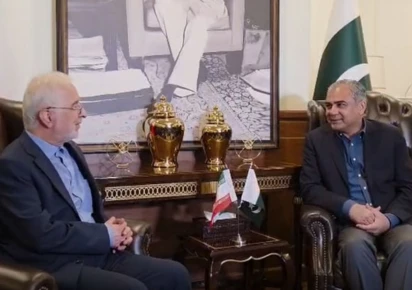
    Pakistan and Iran have agreed to deepen cooperation on border security, counterterrorism, anti-narcotics operations, and efforts to combat illegal immigration and human trafficking. The agreement was reached during a meeting between Interior Minister Mohsin Naqvi and his Iranian counterpart, Eskandar Momeni, in Islamabad. Momeni arrived in Pakistan with a high-level delegation for talks aimed at expanding bilateral cooperation and addressing shared security concerns. During the meeting, both ministers stressed the need for stronger coordination to counter terrorism and drug trafficking in the Pakistan-Iran-Afghanistan border region. They agreed that closer cooperation and intelligence sharing are essential to prevent cross-border crimes and improve regional security. The two sides also reaffirmed their commitment to strengthening bilateral relations and expanding cooperation in trade, transit, agriculture, and other sectors. They agreed to improve coordination mechanisms to promote economic ties and facilitate greater collaboration between the neighbouring countries. Mohsin Naqvi said Pakistan is ready to enhance cooperation with Iran in every field of mutual interest. He praised the efforts of Iranian officials in promoting peace and expressed hope that diplomatic initiatives would help restore stability in the region. The Iranian delegation included senior officials from the interior ministry, urban development and transport ministry, the National Iranian Oil Company, the agriculture ministry, and the governor of Sistan-Baluchestan province. Pakistan’s delegation included senior officials from the Ministry of Interior, the Federal Investigation Agency, the Anti-Narcotics Force, NADRA, the National Cyber Crime Investigation Agency, Immigration and Passports, Islamabad Police, and other relevant departments. The visit comes at a time of renewed tensions in the Middle East. Military exchanges between the United States and Iran have intensified in recent days, raising concerns over regional stability and the security of international shipping routes. The Strait of Hormuz remains a major point of concern as continued hostilities threaten global oil supplies and international trade. The escalating conflict has also increased fears of wider economic disruption.

  • | |

    Ishaq Dar arrives in Manila for ASEAN Forum

    Deputy Prime Minister and Foreign Minister Ishaq Dar arrived in Manila, Philippines, on Wednesday to attend the 33rd ASEAN Regional Forum (ARF) Ministerial Meeting. The visit reflects Pakistan’s continued engagement with regional and international partners on key political, economic, and security issues. Dar reached Manila with a high-level delegation. During his visit, he will participate in the ARF plenary session and hold several bilateral meetings with foreign ministers and senior officials from participating countries. These meetings are expected to focus on strengthening diplomatic ties, expanding economic cooperation, and discussing regional developments. Upon his arrival, Dar was welcomed by senior officials of the Philippine Department of Foreign Affairs, Pakistan’s Ambassador to the Philippines Asima Rabbani, and officials of the Pakistani Embassy. The ASEAN Regional Forum is one of the region’s most important diplomatic gatherings. It brings together foreign ministers and senior representatives from ASEAN member states and partner countries to discuss peace, security, and regional cooperation. This year’s meeting will focus on several pressing international issues. Participants will exchange views on growing geopolitical tensions, regional security challenges, energy security, food supply concerns, trade cooperation, and the impact of ongoing global conflicts. The situation in Myanmar will also be high on the agenda. Leaders are expected to review efforts to implement ASEAN’s Five-Point Consensus and discuss ways to support peace and stability in the country. The continuing tensions between the United States and Iran are also expected to feature prominently during discussions. Delegates will assess the impact of the conflict on regional security, global energy markets, and international trade. Senior diplomats from major world powers are attending the forum. These include representatives from the United States, China, India, Japan, Australia, South Korea, Russia, the United Kingdom, and the European Union. The meeting provides an opportunity for bilateral engagements and dialogue on shared global challenges. ASEAN countries are also expected to discuss measures to strengthen regional energy cooperation. Member states are exploring ways to improve oil-sharing mechanisms to reduce the impact of possible disruptions in global energy supplies.