National

  • | |

    Aamer Raza named Pakistan’s Strategic Commander

    Lieutenant General Syed Aamer Raza, HI(M), SBt, has been promoted to the rank of four-star general and appointed as the Commander of the National Strategic Command, marking a significant milestone in his military career. The appointment places one of the Pakistan Army’s most experienced senior officers at the helm of the country’s strategic command structure. General Aamer Raza has built a distinguished career through a series of key command, operational and administrative appointments. Before his promotion, he was serving as the Chief of the General Staff (CGS) at the General Headquarters (GHQ), one of the Pakistan Army’s most influential positions. As CGS, he oversaw operational planning, intelligence coordination and strategic military affairs, making the role central to the Army’s command structure. Military observers view his promotion as recognition of his extensive professional experience and leadership. His tenure as Chief of the General Staff provided him with broad exposure to strategic planning, operational decision-making and national security matters, qualities considered essential for leading the National Strategic Command. General Aamer Raza also possesses significant expertise in defence technology and military procurement. He previously served as Director General Weapons and Equipment, where he supervised the acquisition, maintenance and development of military hardware. In addition, he served as Chairman of Heavy Industries Taxila (HIT), one of Pakistan’s leading defence production organisations, where he played a role in strengthening indigenous defence manufacturing and modernisation efforts. Commissioned into the Armoured Corps, General Aamer Raza has held numerous command, staff and instructional appointments throughout his career. His service includes leadership roles at various operational formations as well as senior positions within military institutions, giving him extensive experience in both field operations and strategic planning. Defence analysts believe his combination of operational leadership, technical expertise and institutional experience makes him well suited for his new responsibilities. The National Strategic Command is expected to play a key role in coordinating Pakistan’s strategic capabilities, strengthening national security planning and overseeing matters related to strategic deterrence.

  • | |

    Dar urges SCO action against Afghan terrorism

    Deputy Prime Minister and Foreign Minister Ishaq Dar has called on member states of the Shanghai Cooperation Organisation (SCO) to strengthen regional cooperation against terrorism, saying lasting peace and economic development cannot be achieved unless militant groups operating from Afghan territory are effectively eliminated. Addressing the SCO Council of Foreign Ministers’ meeting, Dar said Pakistan remains committed to regional peace and wants to see Afghanistan emerge as a peaceful, stable, regionally connected and economically prosperous country. He said a secure Afghanistan would benefit not only Pakistan but all SCO member states and the wider region. The foreign minister described terrorism originating from Afghan territory as one of the most serious security challenges facing Pakistan. He said militant organisations continue to use Afghan soil for recruitment, training and planning attacks, creating persistent threats to regional stability. Dar said Pakistan has suffered heavily from terrorism in recent years. According to him, more than 560 Pakistanis have lost their lives in over 2,000 terrorist incidents since the beginning of this year. He added that investigations into several attacks had also identified the involvement of Afghan nationals. He urged the SCO to play a more active role in addressing the security situation and called on the Afghan authorities to honour their international commitments against terrorism. He stressed that no country’s territory should be allowed to serve as a base for militant activities targeting neighbouring states. Speaking about the SCO, Dar said the organisation has developed into one of the region’s most important platforms for cooperation over the past 25 years. He noted that it now promotes collaboration not only in security but also in trade, economic development, connectivity, culture and regional stability. Looking ahead, Dar said the organisation should place greater emphasis on digital development, technological cooperation, innovation and energy security to meet future regional challenges and promote sustainable economic growth among member states. Turning to the Middle East, Dar reiterated Pakistan’s position that dialogue, diplomacy and mutual respect remain the only effective means of resolving international disputes. He said peaceful negotiations are essential for achieving lasting regional peace and preventing further conflict. He also highlighted Pakistan’s diplomatic efforts in facilitating dialogue between the United States and Iran. Dar said Pakistan played an important role in encouraging direct engagement between the two countries, leading to the signing of the Islamabad Memorandum of Understanding earlier this year. He described the agreement as a significant diplomatic achievement and encouraged the international community to build on the progress made through continued negotiations. On the sidelines of the SCO meeting, Dar held separate meetings with Kyrgyz President Sadyr Japarov and Chinese Foreign Minister Wang Yi. The discussions focused on strengthening bilateral relations, enhancing regional cooperation and expanding collaboration through multilateral organisations. During his meeting with Wang Yi, both leaders reviewed Pakistan-China relations and exchanged views on regional developments. The Chinese foreign minister appreciated Pakistan’s diplomatic efforts to promote regional peace and extended best wishes for Pakistan’s upcoming chairmanship of the SCO for 2026-27.

  • | | |

    PSX extends decline as KSE-100 drops over 1,260 po…

    The Pakistan Stock Exchange (PSX) remained under pressure on Friday, with the benchmark KSE-100 Index extending its recent losing streak during the morning trading session as investor sentiment stayed weak. By the time trading was suspended for the routine Friday prayer break, the KSE-100 Index had fallen 1,264.14 points, or 0.74%, to 170,475.30. The market opened in negative territory and continued to fluctuate throughout the session. The index reached an intraday high of 171,208.55 before declining to a low of 169,512.88, reflecting persistent selling pressure across the market. Trading activity remained moderate, with more than 114 million shares changing hands during the morning session. The total value of traded shares stood at approximately Rs7.83 billion before the temporary suspension. Market participants said investors remained cautious as profit-taking continued in several heavyweight stocks. The absence of strong buying interest also contributed to the downward trend, keeping the benchmark index below its previous closing level. The market moved within a wide range of nearly 1,700 points during the session, highlighting continued volatility as investors assessed economic conditions and overall market sentiment. Analysts said investors are closely monitoring developments that could influence market direction, including corporate earnings, economic indicators and broader financial conditions. They added that confidence has remained subdued in recent sessions, resulting in increased selling activity. Trading is expected to resume after the Friday prayer break, with investors watching for signs of a recovery. Market experts believe the direction of the afternoon session will determine whether the benchmark index can recover some of its losses or end the week on another negative note.

  • | | |

    PM Shehbaz accuses India of backing terrorism, urg…

    ISLAMABAD: Prime Minister Shehbaz Sharif on Friday accused India of playing a direct role in terrorism inside Pakistan and urged Afghanistan’s interim government to prevent militant groups from using its territory to launch attacks across the border. Addressing participants at the Balochistan National Workshop, the prime minister said Pakistan had successfully eliminated terrorism by 2018, but claimed that violence later resurfaced as part of what he described as a “well-organized conspiracy.” “India’s role in terrorism inside Pakistan is evident,” Shehbaz said, adding that the country had paid an enormous price in the fight against militancy, with more than 90,000 Pakistanis losing their lives over the years. Referring to the recent killing of a session judge in Mastung, the prime minister described the incident as another reminder of the continuing terrorist threat facing the country. He stressed that defeating terrorism requires a united national response involving state institutions and the public. Shehbaz also called on Afghanistan’s interim authorities to ensure that Afghan soil is not used by militant groups to carry out attacks against Pakistan. While emphasizing the importance of good relations between the two neighboring countries, he expressed regret that the Afghan administration had failed to stop terrorist elements operating from its territory. The prime minister said Pakistan’s diplomatic efforts for regional peace had received international recognition, adding that the country’s recent achievements had unsettled its adversaries. He praised Field Marshal Syed Asim Munir and Deputy Prime Minister and Foreign Minister Ishaq Dar for their diplomatic initiatives aimed at strengthening Pakistan’s regional and international engagement. Turning to development, Shehbaz highlighted the strategic importance of Balochistan, describing it as Pakistan’s largest province by area and the smallest by population. He said the people of Balochistan had always played a vital role in strengthening the federation and assured them that their sacrifices would never be forgotten. He also announced that construction work on the dual carriageway linking Karachi and Chaman was progressing, calling it a major infrastructure project expected to improve connectivity and economic activity in the province. Discussing the National Finance Commission (NFC) Award, the prime minister said Punjab had made significant contributions for Balochistan while the other provinces had also extended full support. He pledged to correct past shortcomings and ensure every province receives its constitutional share of national resources. Responding to questions from workshop participants, Shehbaz said Pakistan’s future prosperity depends on the collective efforts of all four provinces, expressing confidence that the country is ready to embark on a new phase of national development while continuing its fight against terrorism.

  • | |

    Dar, Wang Yi discuss bilateral ties and SCO cooper…

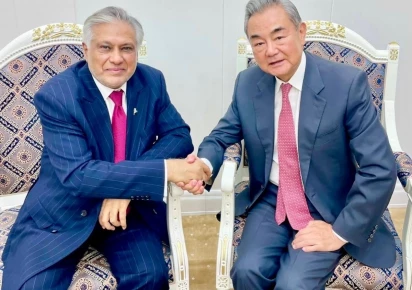
    Deputy Prime Minister and Foreign Minister Ishaq Dar held a meeting with Chinese Foreign Minister Wang Yi on the sidelines of the Shanghai Cooperation Organisation (SCO) Council of Foreign Ministers’ meeting in Cholpon-Ata, Kyrgyzstan. The two leaders reviewed Pakistan-China relations, exchanged views on regional developments and discussed expanding cooperation through multilateral platforms. The meeting reaffirmed the close and longstanding partnership between Pakistan and China. Both sides discussed ways to further strengthen bilateral cooperation in areas of mutual interest, including diplomacy, regional peace, economic collaboration and strategic coordination. During the discussions, Dar thanked Wang Yi for appreciating Pakistan’s diplomatic efforts aimed at promoting regional peace and stability. He said Pakistan remains committed to dialogue, cooperation and peaceful engagement in addressing regional challenges. Wang Yi congratulated Pakistan on its upcoming responsibilities within the Shanghai Cooperation Organisation. He extended his best wishes as Pakistan prepares to assume the chairmanship of the SCO Council of Heads of State for 2026–27 and host the SCO Summit in 2027. He expressed confidence that Pakistan would make a positive contribution to advancing the organisation’s objectives. Both foreign ministers also exchanged views on the regional and international situation. They agreed that continued consultation and cooperation among SCO member states are important for promoting peace, economic development, connectivity and regional stability. Earlier in the day, Dar met Kyrgyz President Sadyr Japarov at the presidential residence in Cholpon-Ata. During the meeting, he conveyed greetings from President Asif Ali Zardari and Prime Minister Shehbaz Sharif and thanked the Kyrgyz leadership for hosting the SCO foreign ministers’ meeting. The meeting with President Japarov focused on regional and global developments as well as the growing role of the SCO in strengthening cooperation among member states. Dar highlighted the importance of maintaining close collaboration as Pakistan prepares to lead the organisation during its upcoming chairmanship. The foreign minister is representing Pakistan at the two-day SCO Council of Foreign Ministers’ meeting, attended by foreign ministers from China, Russia, India, Iran, Kazakhstan, Kyrgyzstan, Tajikistan, Uzbekistan, Belarus and Pakistan. The meeting is reviewing key regional and international issues while preparing the agenda for the next SCO summit.

  • | |

    FCC to hear PTI ‘Release Force’ and May 9 case…

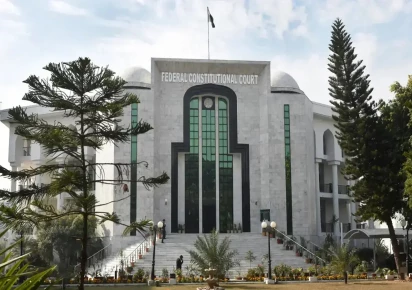
    The Federal Constitutional Court (FCC) has fixed July 29 for hearing two important petitions linked to Pakistan Tehreek-e-Insaf (PTI) founder Imran Khan. The hearings come at a time when PTI is preparing to launch a nationwide campaign demanding the release of its founding chairman. A three-member bench headed by Chief Justice Aminuddin Khan will hear a petition challenging the proposed formation of what has been described as the “Imran Khan Release Force.” On the same day, the bench will also hear another petition concerning the Khyber Pakhtunkhwa government’s decision to withdraw selected criminal cases related to the May 9, 2023 violence. The first constitutional petition argues that the formation or mobilisation of any organisation under the title of the “Imran Khan Release Force” would be unconstitutional and contrary to Pakistani law. The petitioner has requested the court to declare such an organisation illegal, arguing that private forces or militias are prohibited under the Constitution and relevant legislation. The petition also states that citizens and public office holders are constitutionally bound to remain loyal to the state and act within the framework of the law. It argues that any attempt to organise a private force would violate constitutional principles and existing legal provisions. The issue first came before the court after public statements were made earlier this year regarding the creation of a movement aimed at securing Imran Khan’s release. At that time, the court sought a response from the Khyber Pakhtunkhwa chief minister. The matter has now been scheduled for detailed hearing after several months. However, some legal experts have disputed the interpretation presented in the petition. They argue that the term “Release Force” refers to a political campaign or public movement seeking Imran Khan’s release rather than the creation of any armed organisation. According to their view, there is no proposal to establish a private militia, and the movement has no official connection with the provincial government. The same bench will also hear a petition filed by the Pakistan Broadcasting Corporation (PBC) concerning the attack on Radio Pakistan Peshawar during the May 9 unrest. The petition requests that the criminal case be transferred from Khyber Pakhtunkhwa to an anti-terrorism court in Islamabad or another province to ensure an impartial trial. The petitioner argues that political influence and executive interference could affect the fairness of judicial proceedings if the case continues within the province. Earlier, the Federal Constitutional Court issued an interim order preventing the withdrawal of certain May 9-related cases while the matter remains under consideration. Officials from the Khyber Pakhtunkhwa Law Department have questioned that interim order. They maintain that the provincial government had not yet filed any formal application before the anti-terrorism court seeking withdrawal of cases. According to provincial authorities, the cabinet had only approved the withdrawal of cases considered politically motivated or those lacking sufficient evidence. Provincial officials have stated that 23 out of 29 terrorism-related cases linked to the May 9 incidents have already been decided. They also said that 285 of the 319 cases registered in ordinary courts have been concluded, while the remaining cases are still under trial.

  • | | | |

    Pakistan-origin Saadia Zahidi becomes first woman …

    Pakistan-origin global executive Saadia Zahidi has been appointed as the first woman Director General of the International Air Transport Association (IATA), making history by becoming the first female to lead the world’s largest airline industry organisation. She will officially assume her new responsibilities on November 1, taking charge of an organisation that represents hundreds of airlines and plays a key role in shaping global aviation policies, safety standards and industry cooperation. Saadia Zahidi is currently serving as the Managing Director of the World Economic Forum (WEF), where she has held several senior leadership positions. During her time at the WEF, she contributed to global initiatives focused on economic growth, innovation, labour markets, gender equality and sustainable development. Her appointment is being widely viewed as a landmark achievement for the international aviation industry. It reflects the growing recognition of women’s leadership in sectors that have traditionally been dominated by men. After the announcement, Zahidi said she was honoured to take on the new responsibility. She pledged to work closely with airlines, governments and industry partners to strengthen the global aviation sector and prepare it for future challenges. She said her priorities would include promoting innovation, improving the resilience of the aviation industry and supporting sustainable growth. She stressed that international cooperation would be essential in helping the aviation sector meet changing economic, environmental and technological demands. Industry observers believe Zahidi’s extensive experience in global economic policy and international cooperation will bring a broader strategic perspective to IATA as the aviation industry continues to recover from recent global disruptions and focuses on long-term growth. Originally from Lahore, Saadia Zahidi has built an internationally respected career through her work with global institutions. She holds dual Pakistani and Swiss citizenship and has represented Pakistan on several international platforms throughout her professional career. Her appointment is also being celebrated as a proud moment for Pakistan, with many viewing it as recognition of the talent and leadership of Pakistani professionals serving in prominent positions around the world. As Director General, Zahidi will lead IATA’s efforts to support airlines worldwide, strengthen global aviation cooperation, improve operational standards and encourage policies that promote safe, efficient and environmentally sustainable air transport.

  • | |

    Indian rupee hits record low against dollar

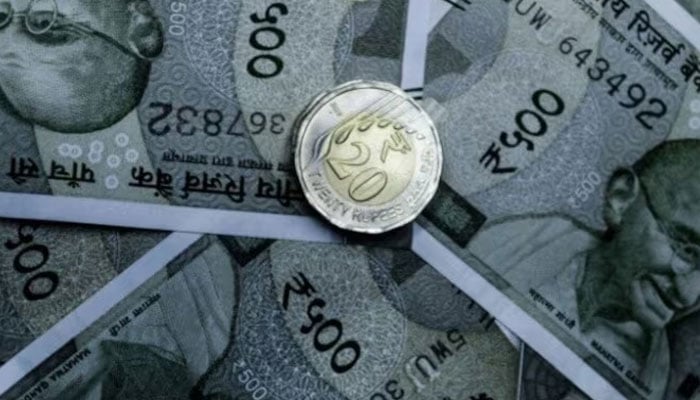
    The Indian rupee has dropped to its lowest level on record against the US dollar, highlighting increasing pressure on the country’s currency amid challenging global economic conditions. For the first time in history, one US dollar has reached the value of 97 Indian rupees, marking a new record low for the Indian currency. The latest decline reflects growing concerns over external economic pressures and weakening investor confidence. According to international reports, the Reserve Bank of India (RBI) stepped into the foreign exchange market to support the rupee and limit further losses. Central bank intervention is aimed at reducing excessive volatility and preventing sharp fluctuations in the value of the currency. The latest depreciation comes only a few months after the rupee had already reached a previous record low of 96.96 per US dollar in May 2026. The fall to 97 rupees per dollar now represents the weakest exchange rate ever recorded for the Indian currency. Economists say several factors are driving the rupee’s decline. One of the biggest reasons is the sharp rise in global crude oil prices, which has significantly increased India’s import bill. As one of the world’s largest importers of crude oil, India requires large amounts of US dollars to pay for energy imports, increasing demand for the American currency. Experts also point to the strengthening of the US dollar in international markets, continued foreign investment outflows and growing pressure from expensive imports. These factors have reduced demand for the rupee while increasing demand for dollars, causing further depreciation. Market analysts warn that a weaker rupee could increase the cost of imported goods, including fuel, machinery and industrial raw materials. Higher import costs may also contribute to inflation and raise production expenses for businesses across different sectors of the economy. Financial experts believe the Reserve Bank of India will continue monitoring developments closely and may introduce additional measures if market volatility continues. The central bank is expected to use its foreign exchange reserves and other monetary tools to stabilise the currency and restore investor confidence.

  • | | |

    Weekly inflation hits 9.66% amid price surge

    ISLAMABAD: Pakistan’s weekly inflation increased during the latest reporting period as higher fuel and food prices pushed up the cost of living, according to the latest report released by the Pakistan Bureau of Statistics (PBS). The report showed that weekly inflation rose by 0.91%, while the country’s annual inflation rate reached 9.66%, indicating that prices of essential goods continue to remain under pressure despite declines in a few commodities. According to the Bureau of Statistics, prices of 22 essential commodities increased during the past week, while eight items became cheaper and 21 items recorded no change. The sharpest increase was recorded in petroleum products. High-speed diesel became 15.87% more expensive, while the price of petrol increased by 5.23%. The rise in fuel prices is expected to affect transportation costs and may also increase the prices of other goods in the coming weeks. Among food items, tomatoes recorded the highest increase, with prices rising 39.92% in just one week. Egg prices increased by 7.31%, adding to household food expenses. The report also showed that the price of liquefied petroleum gas (LPG) increased by 0.91%, while potatoes became 3.70% more expensive. Prices of garlic, beef and several other essential food items also registered increases during the week. Although inflation remained on the rise, consumers received limited relief in the prices of a few commodities. Chicken prices fell by 4.66%, making it one of the biggest weekly declines among food products. Bananas became 1.72% cheaper, while prices of sugar, rice and different varieties of pulses also recorded decreases. Economists say rising fuel prices are one of the major reasons behind the increase in weekly inflation because higher transportation and production costs often lead to price increases across various sectors of the economy. The latest inflation figures suggest that many households continue to face pressure from the rising cost of essential goods, particularly food and fuel. While price reductions in some commodities have provided modest relief, overall inflation remains elevated due to continued increases in several key household items.

  • |

    Cambridge paper leak case: students hand over 17 papers evidence to NCCIA, but investigation still not complete

    Islamabad: The investigation into the alleged Cambridge A Level and O Level paper leaks has drawn fresh criticism after affected students claimed that they provided complete evidence, forensic details and technical assistance to the National Cyber Crime Investigation Agency (NCCIA), but the inquiry remains incomplete. Students associated with the Accountability4Cambridge movement said they made every possible effort to help NCCIA investigate the case and submitted evidence related to 17 leaked examination components. They claimed they even conducted their own forensic checks and prepared detailed records before handing them over to authorities. The students said their main demand was a quick investigation because their future depends on the final results. They wanted the matter resolved before results were announced so that affected students could receive relief if unfair practices had affected their grades. However, according to the students, NCCIA has still not completed its investigation. They claimed that the investigation officer assigned to the case has gone on training, causing further delay. The Accountability4Cambridge representatives said they submitted a complete evidence package to NCCIA, including 44 exhibits with verification details. They said the material was prepared carefully to help investigators identify where the papers were leaked and who was involved. The students said they tracked the movement of leaked papers and provided information about possible sources, online groups and communication channels where the leaked material was shared. Their evidence included details about WhatsApp numbers, Telegram groups and payment methods allegedly used to purchase the leaked papers. The students submitted the evidence directly to NCCIA’s forensic department and expected progress within days, but they were later informed that the assigned official was unavailable because he had gone for training. The controversy started after students alleged that Cambridge examination papers reached some candidates before the official exams, creating an unfair advantage for those who accessed them early. According to Accountability4Cambridge, around 17 examination components were leaked during the June 2026 examination series. They said Cambridge International acknowledged four of these components, while the remaining cases were still disputed. Students argued that a leaked paper could damage the grades of honest candidates because grade boundaries may change when some students score unusually high marks after seeing questions in advance. They said a student who worked honestly could lose university opportunities if their grades dropped because of unfair competition. The students also raised concerns about delays in the official response. The Senate Standing Committee on Federal Education had directed NCCIA to provide findings by July 21, 2026, but the deadline passed without a final report being submitted. The group said only an informal indication was given that findings would come later, while students continued waiting for answers. During their efforts, students met with various institutions, including the IBCC, Senate committees and NCCIA officials, and prepared documentation to support their claims. They said the evidence was not based only on screenshots but included detailed verification methods such as timestamps, recordings and technical information to support the authenticity of the leaked material. The students said they wanted authorities to identify the people responsible and ensure accountability instead of allowing the matter to continue without a clear conclusion. They also demanded stronger action from Cambridge, including transparency regarding how the leaks happened, where they originated and what action was taken against those involved. The students further demanded reforms in the examination system, including better protection of papers, separate arrangements for Pakistan and measures to prevent future leaks. They warned that the issue concerned not only marks but also the future of thousands of students who depend on Cambridge results for university admissions in Pakistan and abroad.