National

  • | |

    Bomb disposal officer injured in explosion at DI K…

    A bomb disposal officer was injured after an explosion ripped through the malkhana (evidence store) inside the Police Lines in Dera Ismail Khan on Thursday, causing significant damage to the building. According to police officials, the blast occurred inside the evidence store where confiscated explosive materials and other recovered items are kept. The force of the explosion caused part of the building’s roof and a wall to collapse. The officer in charge of the Bomb Disposal Squad sustained injuries in the incident. Rescue teams and fellow police personnel rushed to the scene and shifted him to a nearby hospital, where he received medical treatment. His condition was not immediately disclosed. Police said preliminary investigations indicate that the explosion was triggered by the accidental detonation of hand grenades stored inside the malkhana. However, officials stressed that the exact cause would only be confirmed after a thorough investigation. Following the explosion, police sealed off the affected area and launched a detailed search of the site. Investigators and forensic teams began collecting evidence to determine how the stored explosives detonated. Senior police officials also visited the Police Lines to inspect the damaged building and review the initial findings of the investigation. Authorities said all possible angles are being examined, including the handling, storage and condition of the explosive material kept in the evidence store. Police added that a comprehensive inquiry has been launched to establish the circumstances surrounding the blast and to determine whether any negligence or procedural lapse contributed to the incident.
  • | |

    No forced abayas, Senate panel tells banks

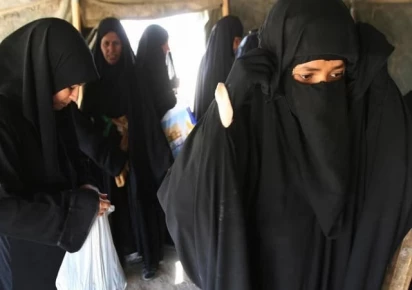
    A Senate committee has directed Islamic banks not to force female employees to wear abayas and instructed all banks to adopt a modest dress policy without making any specific attire compulsory. The Senate Standing Committee on Finance and Revenue, chaired by Senator Saleem Mandviwalla, discussed complaints regarding dress code policies at banks, particularly those offering Islamic banking services. During the meeting, Senator Dr Zarqa Suharwardy Taimur said some female employees had complained that they were being required to wear abayas while male staff were not subject to similar restrictions. Senator Sherry Rehman said no employee should be compelled to wear a particular dress. She said Pakistan already has a recognised national dress and a modest dress code should apply equally to everyone, regardless of gender. State Bank of Pakistan (SBP) Governor Jameel Ahmad informed the committee that similar guidelines had been issued previously and communicated to all banks. The committee clarified that it supported a decent and professional dress code but opposed making any specific clothing mandatory. It directed all banks to submit their dress code policies and instructed the SBP to issue fresh guidelines to ensure employees are not subjected to unnecessary restrictions. The committee also reviewed complaints about charges imposed on ATM withdrawals, Visa card transactions and SMS banking alerts. Members expressed concern over customers being charged for SMS alerts even when they did not request the service. Senator Abdul Qadir claimed that banks were collecting significant amounts through SMS charges. The SBP governor explained that SMS charges were collected by telecom operators rather than banks. However, committee members questioned the level of charges imposed on customers. The panel directed that SMS notifications should only be provided to customers who choose to receive them and unnecessary alerts should be discontinued. The committee also sought details about dollar-denominated charges on ATM and Visa card transactions and asked the relevant authorities to review the matter. Separately, lawmakers discussed taxes collected through electricity bills. Some members argued that electricity consumers were paying a heavy tax burden, making household bills increasingly difficult to afford. Federal Board of Revenue Chairman Rashid Mahmood Langrial said most of the tax collected through electricity bills consisted of sales tax, which is applied under the country’s taxation system. He added that several exemptions were already available for electricity consumers.

  • | |

    Fuel price hikes spark transgender protest in Kara…

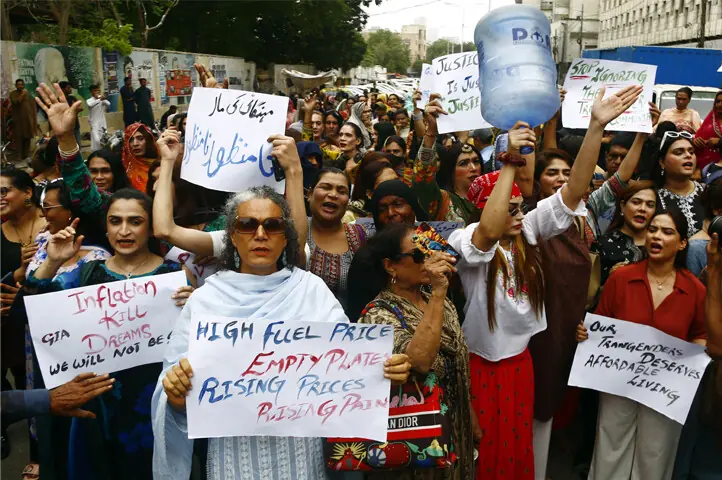
    KARACHI: Frustration over soaring inflation and repeated fuel price hikes spilled onto the streets of Karachi on Wednesday as members of the transgender community staged a protest outside the Karachi Press Club, urging the government to provide immediate relief from the rising cost of living. Holding placards and chanting slogans, protesters called for a reduction in petroleum prices and stricter measures to curb inflation, saying the financial burden had become unbearable for vulnerable communities already struggling with limited economic opportunities. The demonstrators said increasing prices of fuel and essential household items had significantly affected their ability to meet daily expenses. They argued that every increase in petroleum prices triggered higher transportation costs and pushed the prices of food, medicines and other necessities even further beyond the reach of low-income families. Addressing the gathering, Gender Interactive Alliance spokesperson Zehrish Somroo said the transgender community was facing severe financial hardship as inflation continued to erode incomes and reduce public support. “We have come out to protest because the rising cost of living is affecting everyone, including the transgender community,” she said. “Many of us depend on charity and public donations for survival. If inflation continues unchecked, even those sources of support are shrinking.” Somroo urged the government to take practical steps to reduce inflation, adding that the community had long struggled with limited access to education, employment and equal opportunities. Transgender rights activist Bindiya Rana said the demonstration was not intended to create conflict but to draw attention to the growing economic difficulties affecting ordinary citizens across Pakistan. Protesters said many families were being forced to make painful sacrifices to survive, including selling motorcycles, household belongings and even children’s jewellery to cover basic expenses. They warned that the rising cost of food, electricity, transport and healthcare had left countless households uncertain about how they would meet their daily needs. Participants appealed to policymakers to introduce urgent relief measures, including lowering fuel prices and stabilising the prices of essential commodities. They stressed that immediate action was needed to protect low-income and marginalised communities from further economic hardship. The protesters also issued a warning that if their demands were ignored, members of the transgender community from across Sindh would travel to Karachi to stage a larger province-wide demonstration, intensifying pressure on the government to address the worsening cost-of-living crisis.

  • | |

    PTI rejects AJK polls, demands probe into killings

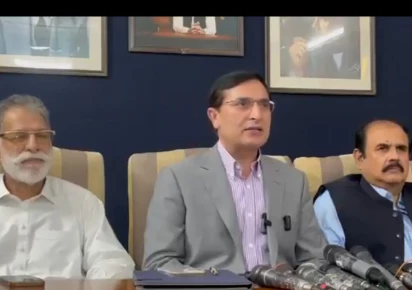
    ISLAMABAD: Pakistan Tehreek-e-Insaf (PTI) on Wednesday rejected the recently concluded Azad Jammu and Kashmir (AJK) elections, alleging that the electoral process lacked transparency and calling for an independent investigation into the killings and violence reported during the polls. Addressing a joint press conference in Islamabad, PTI Chairman Barrister Gohar Ali Khan and former AJK prime minister Sardar Qayyum Niazi accused the authorities of suppressing public opinion and said the events surrounding the elections had damaged both democracy and the Kashmir cause. Niazi said the people of Kashmir had a long history of supporting Pakistan and deserved to have their voices heard through a free and fair electoral process. He alleged that peaceful protesters had faced excessive force despite demonstrating without violence. “They remained peaceful even while facing bullets and batons,” he said, adding that the government should have engaged in dialogue rather than confrontation. Questioning the decision to conduct polling in three phases, Niazi argued that AJK’s relatively small population did not justify such an arrangement. He contrasted the process with Pakistan’s nationwide elections, saying the phased schedule had raised serious questions among voters. PTI Chairman Gohar described the July 27 elections as “a fraud” and maintained that democracy could not function if citizens were prevented from expressing their views through peaceful protest. He said public grievances should be addressed through dialogue instead of force. The PTI chief also criticised major political parties, accusing them of politicising the post-election situation instead of focusing on the concerns of the people. According to Gohar, the low voter turnout reflected growing public dissatisfaction with the existing political system. He further claimed that the election results had failed to inspire public confidence and urged all stakeholders to prioritise transparency, accountability and democratic values. Calling for an impartial inquiry, PTI demanded that those responsible for the reported killings and use of force be identified and held accountable. Party leaders said an independent investigation was necessary to establish the facts, ensure justice for affected families and restore public trust in democratic institutions. The party concluded by urging authorities to avoid further escalation and resolve political disputes through dialogue, warning that prolonged instability in AJK could undermine both democratic credibility and Pakistan’s longstanding position on the Kashmir issue.

  • | | |

    SBP to study daily fuel price impact on inflation

    ISLAMABAD: The federal government has directed the State Bank of Pakistan (SBP) to conduct a comprehensive study on how the daily revision of petroleum prices affects inflation, as authorities seek new measures to protect consumers from rising living costs and volatile global energy markets. The decision was taken during a meeting of the National Price Monitoring Committee (NPMC), which reviewed the country’s inflation outlook and discussed ways to minimise the impact of fluctuating fuel prices on households and businesses. According to officials, the SBP has been asked to prepare a detailed action plan within 15 days to evaluate the inflationary effects of daily adjustments in petrol and high-speed diesel (HSD) prices, following international best practices. The central bank is expected to recommend policy options that could help maintain price stability while supporting economic growth. The committee was informed that the SBP’s primary responsibility is to ensure price stability through effective monetary policy, including the use of interest rates to manage inflation expectations and regulate money supply. Alongside the SBP study, the NPMC instructed provincial governments, Azad Jammu and Kashmir, Gilgit-Baltistan and the Islamabad Capital Territory to strengthen market monitoring and prevent unjustified increases in the prices of essential commodities whenever fuel prices are revised. The committee also expressed concern over excessive pricing of liquefied petroleum gas (LPG), noting that consumers in many areas were paying significantly more than the official rates notified by the Oil and Gas Regulatory Authority (OGRA). Authorities have been directed to intensify monitoring and narrow the gap between notified and market prices. Officials said the recent regional conflict involving Iran had disrupted energy markets, contributing to higher LPG prices despite regulatory efforts. The meeting also focused on the prices of key food items, including tomatoes, chicken, wheat flour and edible oil. Representatives from the Ministry of National Food Security attributed the surge in tomato prices to seasonal shortages, explaining that Pakistan was importing tomatoes from Iran and Afghanistan to meet domestic demand. However, following the closure of the Afghanistan border, officials said additional tomato imports would now be sourced from Romania to prevent supply shortages and stabilise prices. To improve food quality and consumer protection, the Ministry of Science and Technology will work with the Pakistan Bureau of Statistics (PBS) and provincial authorities to develop testing standards for loose milk, dairy products, edible oil and ghee. Accredited laboratories will conduct regular testing, with quarterly reports submitted to the NPMC. The committee also urged authorities to reduce wholesale and retail price disparities across different cities, improve the supply chain for essential goods and work more closely with the private sector to arrange timely imports before seasonal shortages trigger sharp price increases. Officials expressed hope that stronger coordination, tighter market oversight and evidence-based policymaking would help ease inflationary pressures and provide greater stability for consumers in the coming months.

  • |

    ECC approves emergency import of 1 million tonnes …

    ISLAMABAD: In a move aimed at easing mounting pressure on wheat supplies and soaring flour prices, the Economic Coordination Committee (ECC) has conditionally approved the emergency import of up to one million metric tonnes of wheat, with the estimated import bill standing at $340 million. The decision was taken during an emergency meeting of the ECC chaired by Finance Minister Muhammad Aurangzeb. However, officials said the final quantity of wheat to be imported will depend on the requirements of the provinces and their willingness to arrange payments before shipments are ordered. According to the Ministry of Finance, a high-level steering committee led by Deputy Prime Minister Ishaq Dar will oversee the import process, assess the country’s wheat requirements and develop an operational framework to ensure transparency and financial discipline. Federal Minister for National Food Security Rana Tanveer Hussain said the imported wheat would cost approximately $340 million, while transportation costs within Pakistan would be borne by the provinces requesting the grain. Officials said the federal government had linked wheat imports to the opening of letters of credit (LCs) by provincial governments to avoid financial complications experienced during previous commodity imports. Provinces seeking wheat supplies will also participate in decisions regarding import quantity, quality standards and procurement procedures. Government sources indicated that the actual import volume could range between 500,000 and one million metric tonnes, depending on the final assessment by provincial authorities. The approval comes as Pakistan faces a sharp increase in wheat flour prices. According to the Pakistan Bureau of Statistics, the average national price of wheat flour has surged by 74% over the past year, reaching around Rs129 per kilogram, while prices in some cities, including Peshawar, have climbed as high as Rs150 per kilogram. Officials said the provinces had collectively requested around 2.2 million metric tonnes of wheat to stabilise supplies and curb rising prices. The ECC’s approval for up to one million tonnes represents nearly 45% of that total demand. The steering committee will now finalise procurement timelines, import mechanisms and financial arrangements in coordination with provincial governments. Authorities hope the emergency imports will help improve market availability, ease pressure on flour prices and provide relief to consumers struggling with the rising cost of essential food items.

  • | |

    Pakistan pushes for US-Iran dialogue under Islamab…

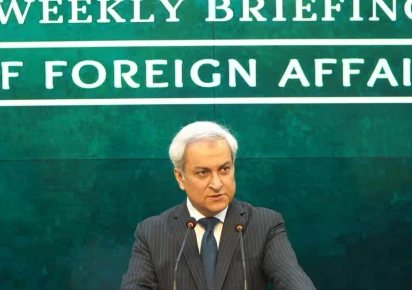
    Pakistan is continuing diplomatic efforts to bring the United States and Iran back to the framework of the Islamabad Memorandum of Understanding (MoU) in a bid to ease regional tensions and promote dialogue, the Foreign Office (FO) said on Thursday. Speaking at the weekly media briefing, Foreign Office spokesperson Tahir Hussain Andrabi said Pakistan remains actively engaged with all relevant parties to encourage the implementation of the Islamabad MoU and the Pakistan-Qatar joint understanding aimed at reducing tensions. He said negotiations are continuing to restore stability, particularly in the Strait of Hormuz, and to support efforts for de-escalation through dialogue and diplomacy. The spokesperson noted that although the region had witnessed a brief period of relative calm, the security situation remains fragile. He said Pakistan hopes the reduction in hostilities will pave the way for a lasting ceasefire and meaningful negotiations. Reaffirming Islamabad’s position, Andrabi said dialogue and diplomacy remain the only practical solution to the ongoing crisis. He added that Pakistan welcomes every initiative aimed at resuming talks between Iran and the United States and will continue to play a constructive role in regional peace efforts. He urged all sides to exercise maximum restraint and honour their commitments to resume technical-level discussions under the Islamabad MoU. Highlighting Pakistan’s recent diplomatic engagements, Andrabi said Prime Minister Shehbaz Sharif and Saudi Crown Prince Mohammed bin Salman agreed to continue close coordination for regional peace, stability and the uninterrupted movement of lawful maritime trade through the Red Sea and the Strait of Hormuz. He said Deputy Prime Minister and Foreign Minister Ishaq Dar also held separate telephone conversations with Saudi Foreign Minister Prince Faisal bin Farhan and Jordanian Foreign Minister Ayman Safadi. The discussions focused on the evolving regional situation, diplomatic cooperation and efforts to maintain peace and stability. The spokesperson said Pakistan and Kuwait also reaffirmed their longstanding partnership and agreed to expand cooperation in trade, investment, energy, information technology, agriculture, education and healthcare. He added that Kuwait’s ratification of the Pakistan-Kuwait Defence Cooperation Agreement would further strengthen defence collaboration between the two countries. Andrabi also highlighted Pakistan’s participation in the Shanghai Cooperation Organisation (SCO) Council of Foreign Ministers meeting, where Islamabad reaffirmed its commitment to regional connectivity, the China-Pakistan Economic Corridor (CPEC) and the Belt and Road Initiative while expressing readiness to assume the SCO chairmanship for 2026-27. On Pakistan-US relations, he said Ishaq Dar recently met a visiting US congressional delegation and an American business delegation, reaffirming Pakistan’s commitment to expanding bilateral cooperation through stronger parliamentary, economic and people-to-people engagement. Addressing the situation in Palestine, Andrabi said Pakistan joined several Arab and Islamic countries in condemning Israeli actions in Jerusalem and called on the international community to uphold international law, protect Palestinian rights and preserve the historical and religious status of Al-Aqsa Mosque.

  • | |

    Mushtaq Ahmad released after brief detention

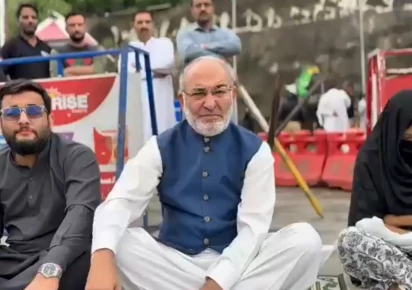
    Former Jamaat-e-Islami senator Mushtaq Ahmad Khan was released on Thursday after his supporters claimed he had been held for more than 24 hours following his attempt to travel to Azad Jammu and Kashmir (AJK), where protests have intensified in recent days. According to his team, Mushtaq Ahmad was stopped by authorities after being denied entry into AJK while travelling to express solidarity with families affected by the recent unrest. They alleged that he was later taken into custody while returning to Islamabad and remained out of contact for several hours before his release. Following his release, his official social media account confirmed that he was safe and announced that he would address a press conference in Islamabad to share details of the incident. Supporters claimed that he was intercepted near Kahuta by Punjab Police and taken away without any formal arrest warrant or explanation. They further alleged that authorities did not disclose his location during the period of detention, prompting concerns among family members and political colleagues. The alleged detention triggered strong reactions from opposition leaders and rights advocates, who demanded transparency and adherence to legal procedures. Several political figures called for an explanation from the authorities, while human rights groups stressed the importance of protecting civil liberties and ensuring due process. The incident comes amid heightened tensions in Azad Jammu and Kashmir following clashes between security personnel and protesters. The unrest has resulted in casualties and injuries, leading to widespread political criticism and renewed calls for an independent investigation into the violence. Political parties have urged the government to exercise restraint and resolve disputes through dialogue, warning that excessive use of force could further inflame the situation.

  • | |

    Pakistan, Türkiye unite for Palestine

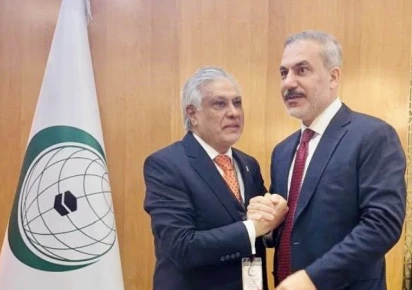
    Pakistan and Türkiye have reaffirmed their unwavering support for the Palestinian people while expressing deep concern over the worsening humanitarian crisis in Gaza, continued military operations in the occupied Palestinian territories, and repeated violations at the Al-Aqsa Mosque compound. The commitment came during a telephone conversation between Deputy Prime Minister and Foreign Minister Ishaq Dar and Turkish Foreign Minister Hakan Fidan. The two leaders reviewed the latest regional and international developments, with the situation in Palestine dominating their discussions. Both foreign ministers voiced serious concern over the continued violence in Gaza and the occupied West Bank, warning that the deteriorating humanitarian conditions require immediate international attention. They also condemned repeated violations at the Al-Aqsa Mosque compound in occupied East Jerusalem and stressed the need to protect religious and historical sites. The ministers reiterated their support for the legitimate rights of the Palestinian people and discussed Jordan’s proposal to convene a meeting of Arab and Islamic countries aimed at coordinating diplomatic efforts to address the crisis and strengthen international support for Palestine. The discussion follows Pakistan’s recent diplomatic engagements with several regional partners, including Egypt, where officials also called for an immediate ceasefire, unrestricted humanitarian assistance, and greater diplomatic coordination to end the ongoing conflict. Meanwhile, fresh violence was reported in Gaza despite an existing ceasefire, with Palestinian medical officials reporting casualties and injuries following new attacks. Military operations and raids also continued across the occupied West Bank, adding to concerns over the worsening security and humanitarian situation.

  • | |

    Internet restored in Muzaffarabad after 53 days

    Broadband internet services have been restored in Muzaffarabad after a 53-day suspension, bringing relief to residents, businesses, journalists and students who had struggled with limited digital connectivity since early June. The restoration took effect late Wednesday night, allowing broadband users to regain access to online services. However, mobile internet connectivity remained unstable in several areas, with users continuing to report intermittent disruptions. The prolonged shutdown had significantly affected communication, online banking, digital businesses, educational activities and media coverage, particularly during the ongoing election season in Azad Jammu and Kashmir (AJK). Journalists and political workers had repeatedly raised concerns over the lack of internet access, saying it hindered the flow of information and election-related reporting. The restoration comes just days before the second phase of the AJK Legislative Assembly elections, scheduled for August 2, when more than 1.24 million voters are expected to cast their ballots in 21 constituencies. The polls will include nine constituencies in Muzaffarabad Division and 12 seats reserved for Jammu and Kashmir refugees residing in Pakistan. Election authorities have completed polling arrangements and announced enhanced security measures to ensure peaceful, transparent and orderly elections. A total of 351 candidates are contesting the second phase, with several high-profile political leaders participating in closely watched races. Political campaigning has intensified across Muzaffarabad, Neelum Valley and Jhelum Valley as major parties make their final push to secure voter support before polling day.