National

  • | | |

    Parliament should focus on Pakistan’s real c…

    Pakistan is an Islamic republic whose Constitution defines not only the structure of the state but also its ideological foundation. It explicitly states that the country should create an environment in which Muslims can live their lives in accordance with the teachings of the Quran and Sunnah. Against this constitutional backdrop, it is surprising that the issue of women wearing the abaya—or an Islamic financial institution including the abaya in its employee dress code—has become a matter of concern for a parliamentary committee. This naturally raises an important question: Who is setting the country’s priorities, and are these truly the issues that deserve Parliament’s attention? Pakistan continues to face pressing challenges, including rising inflation, unemployment, an unequal tax system, a struggling economy, and serious shortcomings in education and healthcare. These are the issues that directly affect the daily lives of millions of citizens. If a parliamentary standing committee, whose primary responsibility is financial oversight, chooses to focus instead on the dress code of Islamic banks, it is reasonable for the public to question whether legislative priorities are aligned with the country’s most urgent needs. The debate also raises questions about consistency. Critics have objected to the abaya as part of an institutional dress code, yet there is little discussion about uniforms in many government departments that follow Western styles of dress. Women serving in the police, the Federal Investigation Agency (FIA), and several other public institutions are commonly required to wear trousers and shirts as part of their official uniforms. If clothing is to become a matter of parliamentary debate, then similar standards should apply across the board. Selective criticism can create the perception of bias. Supporters of Islamic dress codes argue that the issue extends beyond clothing itself and reflects broader concerns about cultural and religious identity. From this perspective, the concern is not simply about the abaya but about a mindset that views visible expressions of religious identity as obstacles to modernization. They question whether institutions with an Islamic identity should be expected to abandon their traditions in the name of progress. This leads to a broader debate: Who defines what it means to be modern? Does modernization necessarily require reducing the public expression of religious values or adopting Western cultural norms? For institutions operating within Pakistan’s Islamic banking framework, supporters argue that their identity is rooted not only in financial principles but also in ethical and religious values. If such institutions adopt internal policies that comply with Pakistani law and reflect constitutional and religious principles, they contend that those choices should be respected. The discussion also draws comparisons with international examples. In countries such as France, restrictions on religious clothing have generated significant criticism from human rights advocates. Supporters of religious freedom argue that Pakistan, which was established with a distinct religious and cultural identity, should carefully consider whether adopting similar approaches is consistent with its own constitutional framework and historical foundations. Ultimately, the central argument is that Parliament should devote its time and resources to addressing issues that directly affect governance, economic stability, and public welfare. Matters of personal attire, religious belief, and institutional identity, many argue, should not become subjects of unnecessary official intervention when the country faces far more pressing social and economic challenges.
  • | |

    Islamabad Court rules in favor of Ahsan Iqbal in d…

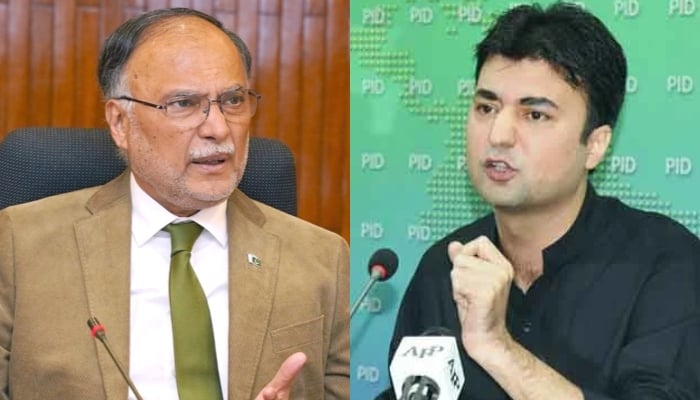
    A district and sessions court in Islamabad has ruled in favor of Federal Minister Ahsan Iqbal in a long-running defamation lawsuit, ordering former federal minister Murad Saeed to pay Rs2.5 million in damages for making corruption allegations that the court found to be unsubstantiated. The judgment was delivered by Additional Sessions Judge Hakim Khan, who concluded that the statements made by Murad Saeed had harmed Ahsan Iqbal’s reputation and amounted to defamation under the law. According to the court’s ruling, Murad Saeed failed to prove his public allegations that Ahsan Iqbal had been involved in corruption worth Rs70 billion. The court held that the accusations, which included claims of corruption, misuse of authority, and receiving illegal commissions, were not supported by evidence and therefore constituted defamatory statements. The case originated from remarks made by Murad Saeed in 2019, when he accused Ahsan Iqbal of financial irregularities in connection with the Multan–Sukkur Motorway Project, one of Pakistan’s major infrastructure developments. Ahsan Iqbal strongly denied the allegations and subsequently filed a defamation suit seeking Rs10 billion in damages. In its written judgment, the court acknowledged that Ahsan Iqbal had claimed Rs10 billion as compensation but determined that the amount sought was excessive in light of the evidence presented during the proceedings. Instead, the court awarded Rs2.5 million in damages, describing the sum as appropriate compensation for the reputational harm caused by the false allegations. The judgment stated that Murad Saeed’s controversial statements had damaged Ahsan Iqbal’s public image, honor, and dignity. It further observed that the allegations created a negative perception of the federal minister among members of the public, affecting his credibility and standing. According to the court, the accusations amounted to a direct attack on Ahsan Iqbal’s integrity, character, and professional reputation. Since the allegations involved serious claims of corruption and abuse of public office, the court found that they had the potential to undermine public confidence in him without any factual basis. The ruling also noted that Murad Saeed neither appeared before the court to defend his statements nor presented any evidence to substantiate the corruption allegations. His failure to support the claims played a significant role in the court’s decision to rule in favor of Ahsan Iqbal. The verdict reinforces the legal principle that individuals making public allegations of corruption must be prepared to provide credible evidence to support their claims. In the absence of such proof, the court held that the statements amounted to defamation and entitled the affected party to compensation. The decision marks the conclusion of a legal dispute that has remained pending since 2019 and highlights the growing use of defamation proceedings in Pakistan to address reputational damage arising from political statements. While the court reduced the amount of compensation sought by Ahsan Iqbal, it nevertheless concluded that Murad Saeed’s allegations were unfounded and had caused measurable harm to the minister’s reputation. As a result, the former federal minister has been directed to pay Rs2.5 million in damages in accordance with the court’s judgment.

  • | |

    HSA controversy: representation before president a…

    Islamabad: A representation submitted before the President of Pakistan has requested an early decision in a workplace harassment case involving Dr. Shahzad Ali Khan and Dr. Ayesha Khan, after the applicant claimed the matter remained pending despite the completion of hearings. The application was addressed to the President of the Islamic Republic of Pakistan through the Secretary to the President, seeking directions for an early decision on Representation No. 18/WO/2026 pending before the Consultant to the President. According to the application, the Federal Ombudsperson for Protection Against Harassment of Women at Workplace (FOSPAH) issued an order on 13 February 2026, dismissing Dr. Shahzad Ali Khan’s complaint and ordering his removal from service. The applicant later filed a representation under Section 9 of the Protection Against Harassment of Women at Workplace Act, 2010. The representation states that both parties appeared before the Consultant to the President and presented their arguments. After hearing the matter, the Consultant reserved the decision on 12 May 2026, but according to the application, the final decision has not yet been announced. The applicant argued that unnecessary delay in deciding the representation is increasing difficulties and hardship, requesting that the matter be decided without further delay according to legal principles of timely justice. The case relates to proceedings under the workplace harassment law involving Dr. Shahzad Ali Khan and Dr. Ayesha Khan. The President Secretariat had earlier issued hearing notices regarding the representation against the FOSPAH order dated 13 February 2026 in Complaint No. FOH HQR H/0341/2025. The President Secretariat scheduled hearings before Mr. Justice (Retired) Irfan Qadir, Consultant Legal Affairs to the President, first on 2 April 2026 and later refixed the matter for 12 May 2026. The notices stated that the matter would be decided on the basis of available record. The dispute has attracted attention because the representation challenges a previous order passed by FOSPAH, while the final decision on the pending matter remains awaited. The available record shows that filing a representation does not itself establish innocence or final relief. The matter remains subject to examination under the applicable legal process, and the final outcome depends on the decision of the competent authority.

  • | |

    SMEDA partners with PAAPAM for auto show 2026

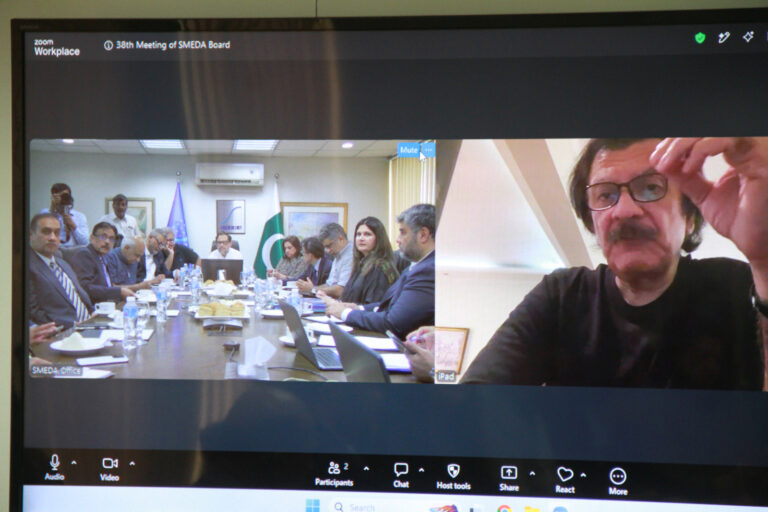
    LAHORE: The Small and Medium Enterprises Development Authority (SMEDA) has partnered with the Pakistan Association of Automotive Parts & Accessories Manufacturers (PAAPAM) as a strategic partner for the 21st Pakistan Auto Parts Show (PAPS) 2026. The three-day exhibition will take place from September 18 to 20 at the Expo Centre Lahore, bringing together stakeholders from Pakistan’s automotive and engineering sectors as well as potential international business partners. The partnership reflects SMEDA’s continued efforts to strengthen micro, small and medium enterprises (MSMEs) in line with the policy direction of the Ministry of Industries and Production and the SMEDA Board of Directors. The initiative aims to help local businesses expand their market reach, develop new partnerships and become part of regional and global industrial supply chains. Special Assistant to the Prime Minister for Industries and Production Haroon Akhtar Khan chaired a meeting on SMEDA’s collaboration with PAAPAM. Secretary of Industries and Production Saif Anjum, SMEDA Board members, CEO Nadia Jahangir Seth, Pak Suzuki head Hiroshi Kawamura and representatives of PAAPAM attended the meeting. Haroon Akhtar Khan said the government wanted to transform Pakistan into a competitive manufacturing hub by empowering MSMEs and strengthening domestic industrial value chains. He highlighted the resilience and growth potential of Pakistan’s automotive sector, saying events such as the Pakistan Auto Show could help promote local manufacturing, encourage innovation and attract investment. The SAPM called for the 2026 exhibition to become a major international platform with a strong focus on business-to-business engagement, memorandums of understanding and joint ventures. He also ordered the formation of a private-sector-led committee to prepare a comprehensive plan for making the event a landmark occasion. Khan further directed SMEDA to provide full support to PAAPAM and engage with foreign embassies and local MSMEs to facilitate effective business matchmaking during the exhibition. He said the government wanted to give MSMEs better access to markets, stronger commercial connections and greater opportunities to join regional and international value chains. Secretary MoI&P Saif Anjum said the event should help local auto parts manufacturers gain greater exposure and establish business links with international competitors. He called for SMEDA, PAAPAM, the Trade Development Authority of Pakistan (TDAP) and the Engineering Development Board (EDB) to work together to achieve the exhibition’s objectives. SMEDA CEO Nadia Jahangir Seth described the automotive sector as one of Pakistan’s most dynamic industries, with significant potential for SME-driven growth. She said numerous MSMEs play a key role in the country’s auto parts and engineering ecosystem. Through its partnership with PAAPAM, SMEDA aims to help these businesses present their capabilities, establish strategic alliances, adopt modern technologies and explore new opportunities in domestic and international markets. PAPS 2026 Convener Salman Saleem welcomed SMEDA’s participation, saying the partnership would strengthen efforts to present Pakistan’s automotive industry to the global market. He said SMEDA’s support would increase SME participation and reinforce efforts to promote local manufacturing under the “Make in Pakistan” vision. A symposium will also take place on September 19 alongside the exhibition. Organisers expect the session to contribute to discussions on the future of Pakistan’s automotive industry and help develop a roadmap for further growth and collaboration.

  • | | |

    Khawaja Asif alleges money laundering network oper…

    Defence Minister Khawaja Asif has claimed that businesses established in Portugal by individuals linked to politics and the real estate sector are being used to facilitate money laundering from Pakistan. In a statement, the minister said that several people associated with political circles and the property business have set up commercial operations in Portugal. According to him, these businesses are allegedly providing services that enable money to be transferred out of Pakistan through illegal channels. Khawaja Asif further alleged that the same network is also involved in arranging documents for individuals seeking citizenship-related facilities in Portugal. He claimed that the businesses are being used not only for financial transactions but also to assist applicants in obtaining the paperwork required for immigration and citizenship purposes. The defence minister did not identify any individuals or organisations allegedly involved in the activities. He also did not present evidence to support the claims during his statement. His remarks come as authorities continue to focus on tackling financial crimes, including money laundering and the illegal movement of funds abroad. The allegations are expected to draw attention to the activities of overseas business networks and the use of foreign countries for financial transactions.

  • | |

    Court awards Ahsan Iqbal Rs2.5m in defamation case

    An Islamabad District and Sessions Court has ruled in favour of Federal Minister Ahsan Iqbal in a long-running defamation case against PTI leader Murad Saeed. The court ordered Murad Saeed to pay Rs2.5 million in damages for making allegations that were not proven during the proceedings. Additional Sessions Judge Hakim Khan announced the verdict after hearing the case. The court held that Murad Saeed’s statements had damaged Ahsan Iqbal’s reputation and public image. It directed the PTI leader to compensate the federal minister with Rs2.5 million. According to the judgment, Murad Saeed accused Ahsan Iqbal of being involved in corruption worth Rs70 billion. However, the court found that he failed to provide any evidence to support the allegations. The court ruled that the accusations of corruption, misuse of authority, and receiving illegal commissions were defamatory because they remained unsubstantiated. The judgment stated that Ahsan Iqbal had initially sought Rs10 billion in damages for the alleged harm caused to his reputation. However, the court observed that the amount claimed was excessive in view of the evidence presented during the trial. It therefore awarded Rs2.5 million as reasonable compensation. The court further observed that Murad Saeed’s controversial statements had harmed Ahsan Iqbal’s reputation, dignity, and credibility. It said the allegations created a negative impression of the minister among the public and directly targeted his honesty, integrity, and professional standing. The judgment also noted that Murad Saeed neither appeared before the court during the proceedings nor submitted evidence to substantiate the corruption claims. The absence of supporting material, the court said, weakened his defence and left the allegations unproven. The case originated from statements made by Murad Saeed in 2019 regarding the Multan-Sukkur Motorway project. At the time, he alleged that Ahsan Iqbal had committed corruption in connection with the project. After reviewing the evidence and hearing the arguments, the court concluded that the accusations were not established and therefore amounted to defamation. The verdict marks the conclusion of the defamation proceedings, with the court reaffirming that public allegations of corruption must be backed by credible evidence.

  • | |

    Police record fiancée’s statement in Mir Ra…

    Police have made fresh progress in the investigation into the murder of 25-year-old Mir Raza, whose body was found in Karachi’s Gulistan-e-Jauhar area. Investigators have recorded the statement of his fiancée and uncovered new details about his movements before his death. According to the investigation, Mir Raza left his home at approximately 4:02am on July 28. Before leaving, he reportedly left behind several personal belongings, including his wallet, house keys, and smartwatch. Police said he also transferred some money to his parents’ bank account before departing. Investigators have obtained more than 100 CCTV recordings from different locations and are reviewing the footage to trace Mir Raza’s final movements and identify any suspects or suspicious activity. Police also recorded the statement of Mir Raza’s fiancée as part of the investigation. She told investigators that he had not shared any concerns, fears, or personal problems with her before leaving home. She added that she repeatedly tried to contact him by phone on the morning of July 28 but received no response. According to the post-mortem report, Mir Raza died after suffering a gunshot wound to the chest, with excessive blood loss identified as the cause of death. Police recently recovered Mir Raza’s mobile phone from a location near the crime scene. The device has been sent for forensic examination to help investigators retrieve digital evidence and establish the circumstances leading to the killing. The investigation remains underway, with police examining CCTV footage, forensic evidence, and witness statements as they continue efforts to determine the motive behind the murder and identify those responsible.

  • | |

    Bilawal begins consultations after JAAC backs reco…

    PPP Chairman Bilawal Bhutto Zardari has announced that he has received a response from the banned Joint Awami Action Committee (JAAC) regarding his proposal to establish a Truth and Reconciliation Commission to address the ongoing crisis in Azad Jammu and Kashmir (AJK). He said the response marked an important step towards finding a peaceful and institutional solution to the unrest. In a statement issued on Saturday, Bilawal said the committee had shown willingness to consider the proposed commission. He welcomed the response and said it reflected support for resolving the dispute through dialogue rather than confrontation. He added that the proposal had already been endorsed by the Azad Jammu and Kashmir Legislative Assembly. The PPP chairman said the loss of every life during the recent unrest was a national tragedy. He stressed that his foremost priority was to help restore peace, reduce tensions, and bring normal life back to the people of AJK as soon as possible. Bilawal said the next stage would involve consultations with AJK Prime Minister Faisal Mumtaz Rathore. He explained that the prime minister would hold discussions with the federal government and other relevant stakeholders to determine whether sufficient consensus exists to move forward with the proposed commission. According to Bilawal, these consultations are necessary before any final decision is taken. He expressed hope that all parties would work together to develop a mutually acceptable framework capable of addressing the concerns raised during the recent protests. The proposal comes after weeks of political tension between the AJK government and the Joint Awami Action Committee. The dispute intensified over the committee’s demand to abolish the 12 seats in the AJK Legislative Assembly reserved for refugees from Indian-administered Jammu and Kashmir who settled in Pakistan after 1947. The disagreement led to widespread demonstrations across the region and increased political uncertainty. Bilawal has repeatedly called for the establishment of an independent Truth and Reconciliation Commission over the past month. He believes such a body could impartially investigate the recent violence, determine the facts surrounding the unrest, and help create conditions for meaningful dialogue between the government and protesters. Speaking at a public gathering in Muzaffarabad earlier this week, Bilawal said maintaining peace, fairness, and transparency was essential during the election period. He argued that resolving the crisis should not be viewed as a political victory or defeat for any party but as a national responsibility aimed at protecting the future of Kashmir and safeguarding Pakistan’s position on the Kashmir issue.

  • | |

    Fake arms licence racket busted in KP, two arreste…

    Police have uncovered a fake arms licence racket in Khyber Pakhtunkhwa, exposing an illegal network that allegedly produced forged weapon licences from a house. Authorities believe the operation had been running through a well-organised system and involved both private individuals and a government employee. According to police, the suspects were preparing counterfeit arms licences using computer equipment and printing materials inside a residential property. Investigators said each fake licence was sold for amounts ranging from Rs80,000 to Rs250,000, depending on the type of licence and the customer’s requirements. Police said an employee of the Home Department’s Licence Branch has also been found involved in the case. His alleged role is being investigated to determine how official records or procedures may have been misused. A case has been registered, and two suspects have been arrested during the operation. Police carried out a raid and seized a large quantity of equipment allegedly used to manufacture the fake licences. The recovered items include a laptop, a printer, ink bottles, around 700 licence cards, and other materials believed to have been used for printing forged documents. Investigators are examining the seized equipment to identify additional suspects and uncover the full scale of the operation. Police have also written to the Home Department, requesting assistance in the investigation. Officials are expected to examine departmental records to determine whether more employees were involved or if official data was misused. Sources in the Home Department said a committee will be formed to conduct a detailed inquiry into the incident. The committee will investigate the role of all individuals linked to the case and recommend legal and departmental action where necessary. CCPO Dr Mian Saeed said the investigation is progressing and that authorities are determined to bring everyone involved to justice. He said strict action will be taken against all suspects, including any government officials found responsible. He added that no official involved in the fake arms licence racket would be given any leniency, and the investigation would continue until the entire network is exposed.

  • | |

    Shahid Khaqan Abbasi criticizes government over ec…

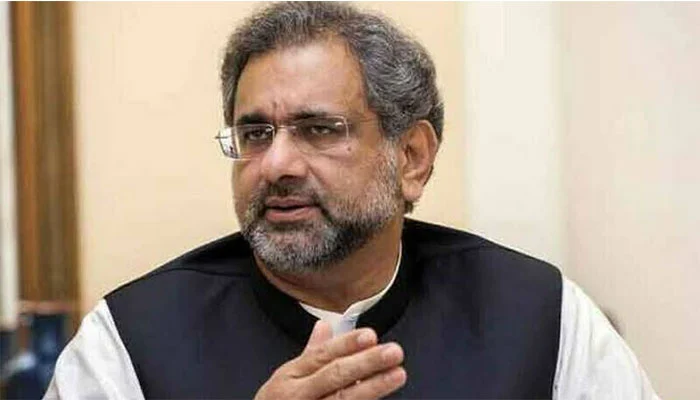
    The head of the Awam Pakistan Party, Shahid Khaqan Abbasi, has criticized the government over the country’s worsening economic and political situation, saying that even government representatives have now started raising concerns about the state of affairs in Pakistan. Speaking at a press conference in Islamabad, Abbasi said that the interior minister had realized after four to five years that the country was facing serious governance challenges, while ordinary Pakistanis had been expressing similar concerns for years. “The people of Pakistan have been saying the same thing for the past four to five years,” Abbasi stated, adding that government ministers should raise such issues directly during cabinet meetings instead of discussing them publicly. The former prime minister stressed that Pakistan urgently requires meaningful reforms and warned that temporary or superficial measures would not solve the country’s deep-rooted problems. He argued that the country has repeatedly experimented with short-term solutions every year, but what is needed is a fundamental change in the system. “We need to change the system and establish the rule of law,” Abbasi said, emphasizing that strong institutions and equal application of laws are necessary for long-term stability. Abbasi also criticized political divisions and the practice of using accountability cases against opponents. He called for an end to the cycle of imprisoning political rivals, questioning how the country could progress if every politician was accused of corruption. “If all politicians are corrupt, then who will run the country?” he asked. The Awam Pakistan Party leader claimed that two major stakeholders currently play a dominant role in running the country, but instead of working together, both sides continue to blame each other for national problems. Discussing the economic situation, Abbasi said that the income of Pakistani citizens has declined significantly over the past six years. He claimed that household purchasing power has fallen by approximately 14 percent, leaving many families struggling financially. “Every household in Pakistan has become poorer,” he said, adding that unemployment has reached its highest level in 21 years. Abbasi also highlighted the increasing tax burden on citizens, stating that the average Pakistani now pays around Rs60,000 in taxes annually. He said that taxes that were previously around Rs30,000 have doubled in recent years, while poverty continues to rise across the country. The former prime minister argued that Pakistan is struggling to attract investment because of inconsistent policies and uncertainty. He accused the government of relying heavily on taxation rather than creating conditions that encourage economic growth. “There is no certainty about when new taxes will be imposed,” Abbasi said, claiming that unpredictable policies discourage businesses and investors from operating in Pakistan. He also raised concerns about public health and food security, stating that thousands of children in Pakistan are affected by HIV and that the government has started importing wheat despite the country being an agricultural economy. “A country known for agriculture is now purchasing wheat from abroad,” he remarked. Abbasi further criticized rising costs of essential services, including electricity, gas, petrol, and diesel. He said that ordinary citizens are facing increasing financial pressure because of continuous price increases. According to Abbasi, Pakistan’s current situation reflects a broader governance failure, and without major reforms, improvements in economic conditions will remain difficult. He called for political cooperation, institutional reform, and policies focused on economic stability rather than short-term measures.