بلاگز

  • Everything you need to know about air turbulence

    Many people have experienced a flight suddenly shaking while flying thousands of feet above the ground.  It can feel as if the airplane has hit a large bump in the sky, leaving passengers frightened. This is called air turbulence a common part of air travel that is usually harmless but can sometimes be severe. What causes turbulence? Airplanes fly through different layers of moving air called air currents.  When the speed or direction of these air currents changes suddenly the aircraft passes through rough air causing it to shake. This is known as turbulence. Aviation experts say that most turbulence is mild and modern airplanes are built to handle forces much stronger than those experienced during normal flights. In most cases turbulence does not cause an aircraft to crash. The biggest risk is to passengers who are not wearing their seat belts. Types of air turbulence There are several types of turbulence Clear Air Turbulence (CAT) This is one of the hardest types to predict because it happens in clear skies and often cannot be detected by weather radar. It usually occurs between 30,000 and 40,000 feet due to fast moving jet streams. Wake Turbulence. This happens when a large aircraft leaves powerful swirling air behind it and another plane flies through it. Thermal turbulence On hot days warm air rises from the ground. If an aircraft flies through these rising air currents passengers may feel bumps. Frontal turbulence This occurs when warm and cold air masses meet often during storms rain or cloudy weather. Can turbulence be dangerous? Turbulence is usually more dangerous for people than for the airplane itself. Passengers who are standing or not wearing seat belts can be thrown from their seats and may suffer injuries to the head neck or bones. Strong turbulence can also cause luggage food carts and other loose items inside the cabin to move around increasing the risk of injury. Some passengers may also experience fear or anxiety during the shaking. In rare cases pilots may change the flight path or make a precautionary landing if the turbulence is unusually severe. How to stay safe Aviation experts recommend keeping your seat belt fastened whenever you are seated even if the seat belt sign is off. This is the best way to stay safe if unexpected turbulence occurs. Scientists also say that climate change may be increasing the number of clear air turbulence events in some parts of the world. To improve safety airlines use advanced weather forecasts satellite data and warning systems to avoid areas with severe turbulence whenever possible. Although turbulence can feel frightening experts stress that modern aircraft are designed to withstand very strong air movements. Staying calm following the crew’s instructions and keeping your seat belt fastened are the best ways to stay safe during a turbulent flight.

  • China’s Rising Global Image: Insights from the 2026  Pew Research Survey

    By Absara Kashaf  The international political landscape is undergoing a noticeable transformation. For many years, the United States was widely regarded as the world’s most influential political, economic and military power. However, recent global opinion surveys indicate that public perceptions are changing. Countries around the world are increasingly evaluating global powers not only by their military strength but also by their economic cooperation, development assistance, investment and diplomatic engagement. The Latest Pew Research Center Global Attitudes Survey (july 2026) provides important evidence of this shift. Based on interviews with 42,151 adults across 36 countries, the survey reveals that China now enjoys a more favorable public image than the United States in a majority of the countries included in the study. The findings highlights China’s growing international influence, particularly among developing and middle-income nations. One of the survey’s most significant findings is that China is viewed more favorably than the United States in 30 of the 36 countries surveyed. This represents a remarkable change in global public opinion. While the United States continues to enjoy strong support in few countries, particularly among some of its long-standing allies, China has gained considerable public approval across Asia, Latin America, and parts of Europe. This shift suggests that many people now associate China with economic opportunity, infrastructure development, and long-term cooperation rather than viewing it solely as an emerging global competitor. China’s growing popularity is closely linked to its expanding economic partnerships around the world. Over the past two decades, China has invested billions in infrastructure projects, transportation networks, energy development, industrial zones, digital connectivity and trade agreements. Through initiatives such as Belt and Road Initiative (BRI), China has financed highways, railways, ports, power plants, and industrial zones in numerous developing countries. These projects have contributes to economic growth, employment opportunities and improved connectivity in many regions. As a result, public opinion in several countries increasingly reflects appreciation for China’s contribution to national development. The survey further shows that 69 percent of respondents in 17 middle-income countries consider China to be somewhat or very reliable international partner. This finding is particularly important because middle-income countries often seek foreign investment, technology and infrastructure financing to support their development goals. Many respondents appear to believe that China provides practical economic cooperation without imposing extensive political conditions. Whether this perception fully reflects reality remains a subject of academic debate, but it undoubtedly contributes to China’s improving international image. Another major finding concerns confidence in Chinese President Xi Jinping. According to the survey, global confidence in Xi Jinping has improved compared to previous years. Across many countries,  larger number of respondents believe that President Xi will make responsible decisions regarding international affairs. Although confidence levels differ from one country to another, the overall trend indicates that China’s leadership is gaining broader international acceptance. Leadership perceptions often influence how countries are viewed internationally, making this finding particularly significant for understanding China’s growing diplomatic influence. Among all the countries surveyed, Pakistan recorded one of the strongest levels of support for China. According to the survey, 90 percent of Pakistanis expressed a favorable opinion of China, while 83 percent reported confidence in President Xi Jinping to do the right things regarding world affairs. These are among the highest approval ratings recorded anywhere in the survey. In contrast, only 15 percent of Pakistanis expressed a favorable opinion of the United States, while confidence in former U.S President Donald Trump stood at just 12 percent. These figures demonstrate the exceptionally positive image that China currently enjoys among the Pakistani public. Several factors help explain Pakistan’s strong support for China. The two countries have maintained close diplomatic and strategic relations for decades, often referring to their friendship as an “all-weather strategic partnership”. In recent years, this relationship has expanded significantly through the China-Pakistan Economic Corridor (CPEC), one of the flagship projects under the Belt and Road Initiative. CPEC includes investments in roads, highways, ports, power generations, industrial zones, and communication infrastructure. Many Pakistanis associate these projects with improved economic opportunities, enhanced connectivity, and future development. Consequently, China’s image among Pakistani Public has become increasingly positive Beyond Pakistan, the survey also suggests that China is increasingly perceived as a contributor to global peace and stability. One notable example is South Africa, where the proportion of respondents who believe China contributes positively to global peace increased from 47 percent in 2023 to 64 percent in 2026. Similar improvements were observed in several other developing countries. China’s active participation in diplomatic negotiations, peacemaking missions, humanitarian assistance, and international development initiatives appears to have strengthened its reputation among many respondents. The survey also explores whether people believe China considers the interest of developing countries when making international policy decisions. Among respondents in the 17 middle-income countries, 57 percent stated that China takes the interests of countries like their own into account. This finding reflects an important aspect of China’s international strategy. Many developing countries view China as a partner that understands their development challenges and provides economic cooperation through investment, trade, infrastructure financing, and technology transfer. Whether this perception continues in the future will depend on China’s policies and long-tern outcomes of its international projects Despite China’s growing popularity, the survey also demonstrates the global opinion remains diverse. Several countries continue to express stronger support for the United States than for the China. These include Japan, India, Philippines, Israel, Poland, and South Korea. Historical alliances, security partnerships, regional geopolitical concerns, and territorial disputes continue to influence public opinions across countries. The findings also illustrated the growing importance if soft power illustrates the growing importance of soft power in international relations. Soft power refers to a country’s ability to influence others through attraction, cooperation, culture, diplomacy and economic engagement rather than military force. China’s engagement in infrastructure, trade, education techonolgy in many developing countries have strengthened its soft power in many developing countries. Public opinion surveys such as Pew’s demonstrate that these efforts are increasingly shaping how ordinary citizens perceive China’s global role. The finding offer important insights

  • SpaceX’s 4-ton rocket crashes into Moon at 5,400mph

    Elon Musk’s SpaceX rocket has crashed into the Moon’s surface while travelling at a speed of 5,400 miles per hour while a telescope in Chile captured evidence of the impact. The European Southern Observatory’s (ESO) Very Large Telescope observed the impact on August 5 and detected colorful spectral lines of sodium and lithium gas. These were produced by clouds of lunar dust that were thrown up by the impact. The ESO telescope recorded the “chemical fingerprints” of the gas cloud which remained visible for around 5 to 10 minutes. The cloud was estimated to extend across dozens of kilometers. Experts had previously said that the impact could provide valuable data for future space experiments and help scientists analyze the effects of collisions involving human-made space debris. As NASA plans to establish a permanent human base on the Moon in the future understanding what happens when space debris strikes the lunar surface will be important. Impact site The impact occurred at a location on the Moon that is considered to be near the boundary between the sunlit and dark regions. When the impact sent clouds of dust into the air, they briefly became illuminated by sunlight. However, observing them with the naked eye from Earth was almost impossible. Although several satellites are currently orbiting the Moon, none was positioned at the time of the impact to directly observe it. The rocket fragment was approximately as tall as a five-story building and weighed around 4 tons. NASA’s Lunar Reconnaissance Orbiter and South Korea’s Korea Pathfinder Lunar Orbiter are being considered for photographing the impact site. These images could help determine how much damage was caused by the rocket although it may take several days to collect and analyze the information. It is worth noting that the SpaceX Falcon 9 rocket was launched in January 2025 and carried two landers toward the Moon. Its boosters returned to Earth while the upper stage continued carrying the landers toward the Moon.

  • Online Harassment and Cybercrime in Pakistan: High Court Strengthens Protection of Digital Rights

    By Syeda Shehar Bano Bukhari Introduction: The rapid growth of social media and digital communication has transformed how people interact, work, and share information. Platforms such as Facebook, Instagram, TikTok, WhatsApp, and other online services have become an important part of everyday life. However, the expansion of digital spaces has also created new forms of crime, including cyber harassment, online blackmail, identity theft, unauthorized sharing of private information, and the misuse of digital content. In Pakistan, cybercrime has become an increasingly important legal issue. Courts are now required to balance the protection of individuals from online abuse with fundamental rights such as freedom of expression and privacy. Recent judicial rulings have highlighted the need for effective investigation, proper use of digital evidence, and protection of victims of online harassment. Background of the Legal Issue: Online harassment can take many forms. It may involve sending threatening messages, repeatedly contacting a person against their wishes, creating fake social media accounts, spreading private photographs, or publishing false information to damage someone’s reputation.  Women are particularly vulnerable to certain forms of online harassment. In some cases, social media platforms are used to threaten women with the publication of private photographs or videos. Such conduct can cause serious psychological distress and may affect a person’s family relationships, education, employment, and social reputation. The problem becomes more complicated when victims hesitate to report such incidents because of social pressure or fear of further harassment. As a result, many cases of online abuse may remain unreported. Role of the Prevention of Electronic Crimes Act: Pakistan’s main legal framework for dealing with cybercrime is the Prevention of Electronic Crimes Act, 2016 (PECA). The law provides criminal penalties for several forms of unlawful activity carried out through information technology and electronic communication. The law covers offences relating to unauthorized access, interference with information systems, cyberstalking, harassment, identity-related offences, and the misuse of electronic information. Under the legal framework, victims of cyber harassment can approach the relevant authorities and provide evidence such as screenshots, messages, emails, social media links, recordings, and other digital material. Such evidence may assist investigators in identifying the accused and establishing the circumstances of the alleged offence. Importance of Digital Evidence: One of the most important aspects of cybercrime cases is the collection and preservation of digital evidence. Unlike traditional crimes, online offences often leave electronic traces. For example, if an individual repeatedly threatens another person through WhatsApp messages, the victim may preserve screenshots, message records, telephone numbers, and other relevant information. Similarly, if a fake social media account is created to impersonate someone, the account link and associated digital information may become important evidence. However, digital evidence must be properly collected and authenticated. Courts must ensure that evidence presented before them is reliable and has not been manipulated by the offenders in connivance with the authorities. This makes forensic investigation an important part of modern criminal justice. Freedom of Expression and Online Abuse: The regulation of online content also raises questions concerning freedom of expression. Freedom of expression is a fundamental right, provided by the Constitution of Pakistan, 1973, but it is not unlimited and is also restricted. The law may impose reasonable restrictions in certain circumstances, including where speech involves threats, harassment, incitement to violence, or other unlawful conduct. The challenge for courts and law-enforcement authorities is to distinguish between legitimate criticism and unlawful online abuse. For example, a person criticizing a public official’s policies may be exercising freedom of expression. However, repeatedly threatening that official with violence or publishing private information with the intention of causing harm may cross the boundary between protected expression and unlawful conduct. Therefore, effective cybercrime laws must protect both individual safety and legitimate freedom of expression. A Real-Life Example: Consider a situation in which a woman receives repeated threatening messages from an unknown social media account. The person behind the account threatens to publish her private photographs unless she follows certain demands. Such conduct may create fear and psychological pressure. The victim can preserve the messages, take screenshots, record relevant account information, and report the matter to the appropriate authorities. The case demonstrates why awareness of digital rights and legal remedies is important. Victims should know that online harassment is not simply a personal disagreement; depending on the circumstances, it may constitute a criminal offence. Challenges in Cybercrime Investigations: Despite the existence of cybercrime laws, several challenges can affect the investigation and prosecution of online offences. First, offenders may use fake identities or anonymous accounts. Second, digital evidence can be deleted or altered quickly. Third, cybercrime investigations often require specialized technical expertise.  Another challenge is the international nature of the internet. An offender may operate from another country while targeting a victim in Pakistan. In such circumstances, obtaining evidence and identifying the person responsible may require international cooperation. These challenges demonstrate the need for trained investigators, modern forensic laboratories, effective cooperation between institutions, and public awareness. Protection of Victims: Victim protection is an important part of the response to cybercrime. Victims of online harassment may experience anxiety, fear, depression, and social pressure. In cases involving private images or blackmail, the psychological consequences can be particularly severe and damaging. Legal institutions should therefore ensure that victims can report complaints safely and confidentially. Investigations should be conducted professionally, and unnecessary exposure of victims’ private information should be avoided. The justice system should also recognize that victims of cyber harassment may require psychological and social support in addition to legal remedies. Broader Legal Significance: The increasing number of cybercrime cases demonstrates that traditional concepts of criminal law must adapt to technological developments. Crimes committed through digital platforms can cause real-world harm, even when the offender and victim never meet physically. The legal system must therefore develop effective methods for dealing with electronic evidence, online anonymity, cross-border offences, and rapidly changing technology. At the same time, laws should be applied carefully so that legitimate criticism, journalism, and freedom of expression are not unnecessarily restricted. A balanced legal approach is necessary to


  • | |

    The Sham Shaman

    In 1968, a graduate student in anthropology at the University of California, published a book that would reshape the publishing world. Titled The Teachings of Don Juan: A Yaqui Way of Knowledge. The book purported to be a faithful academic field report by Carlos Castaneda detailing his apprenticeship under an elderly Yaqui shaman named Don Juan Matus in the Mexican desert. Castaneda’s account became an overnight sensation as it blended desert mysticism, hallucinogenic plant rituals, and philosophical paradoxes. It sold millions of copies, earning him a doctorate from UCLA. This success made him a guru to icons like Bob Dylan, John Lennon, and Octavio Paz. A Life Built on Fabrications Long before he wrote about desert sorcery, Castaneda had mastered the art of reinventing himself. Born César Carlos Salvador Arana in Peru in 1925—the son of a humble watchmaker—he routinely rewrote his origin story. He claimed to have been born in Brazil, shaved years off his age, and concocted wild tales of fighting as a soldier in North Korea or working as a border spy. In reality, he fled Peru after fathering a child at thirteen, eventually making his way to Los Angeles in the 1950s. Ground-breaking Anthropological Discoveries. Yet beneath the celebrated field notes lay one of the most audacious literary fabrications in modern history. Don Juan Matus was not a real person. The desert apprenticeships never took place. Castaneda was not a devoted field researcher. He was a master illusionist who deceived prestigious academics and eager seekers alike. When Castaneda enrolled at UCLA, he found an academic environment eager for authentic indigenous wisdom and existential insight. Synthesizing disparate ideas into a singular narrative, he assembled Don Juan’s philosophical worldview by freely borrowing from European philosophy, Buddhist theology, ethnomethodology, and popular horror fiction. To his impressionable professors, the resulting texts appeared to be ground-breaking anthropological discoveries. Unraveling the Hoax While Castaneda’s books topped bestseller lists throughout the late 1960s and 1970s, critical cracks in his story soon began to widen into chasms. Skeptical researchers and anthropologists began scrutinizing the timeline and claims in his field notes. Archive Contradictions: UCLA library records revealed that on dates Castaneda claimed to be in the Sonoran desert learning shamanic secrets, he was actually signed into the university library reading room. Botanical and Cultural Errors: Experts on Yaqui culture noted that the spiritual concepts and language attributed to Don Juan bore almost no resemblance to authentic Yaqui traditions or language structures. Philosophical Echoes: Literary sleuths discovered that Don Juan’s most profound dialogues were near-verbatim adaptations of modern academic sociology and Western philosophical texts. Despite being systematically exposed by critics, Castaneda maintained his mystique. He avoided photo shoots, refused interviews, and cultivated an aura of secretive invulnerability. He also assured his devotees that any perceived discrepancies were simply part of a sorcerer’s duty to erase his personal history. The Guru’s Reclusive Cult and Legacy As public acclaim gave way to scholarly embarrassment, Castaneda retreated further into reclusiveness. In the 1990s, he launched a movement called Tensegrity. He promoted a series of physical movements he claimed were ancient Toltec magical passes. Critics quickly noted their striking resemblance to modern martial arts taught by a local Santa Monica instructor. Surrounding himself with a inner circle of devout disciples in Los Angeles, Castaneda governed his group with increasing paranoia until his death from cancer in 1998. Anthropology’s Ultimate Trickster Ultimately, Carlos Castaneda remains a complex figure in cultural history. His anthropological credentials were exposed as entirely fraudulent. His writings captured the yearning of an era desperate for spiritual transcendence beyond traditional structures. He stands as anthropology’s ultimate trickster. He’s a man who turned a fictional thesis into a million-dollar empire and proved that, given the right narrative, millions of people will gladly step through the looking glass.

  • Top health benefits of curry leaves

    Curry leaves are best known for adding a rich flavor and fresh aroma to food but they also offer many health benefits. Packed with important nutrients and natural plant compounds these leaves can be a healthy addition to your daily diet. Rich in nutrients Curry leaves contain vitamins A, B, and C along with other nutrients that help support overall health.  Their natural antioxidants may help protect the body from damage caused by harmful molecules. May support weight loss Many people use curry leaves as part of a healthy weight loss plan. Drinking curry leaf tea on an empty stomach every morning for several weeks is believed to support weight management when combined with a balanced diet and regular exercise. Some people also eat 10 to 15 fresh leaves in the morning and drink warm water afterward. May help lower Cancer risk Curry leaves contain natural compounds called flavonoids which have antioxidant properties.  Research suggests these compounds may help protect cells from damage and could play a role in lowering the risk of certain types of cancer. However more human studies are needed. Good for People with Diabetes Curry leaves are a good source of dietary fiber which may help support healthy blood sugar levels.  They may also improve the body’s ability to manage glucose making them a helpful addition to a diabetes friendly diet. They should not replace prescribed treatment. Supports digestive health Curry leaves have long been used to help with digestive problems such as constipation and diarrhea.  They contain natural plant compounds that may help support healthy digestion and improve gut health. •Easy ways to add curry leaves to your diet •Curry leaves are easy to use in everyday meals. You can •Add them to soups curries and lentil dishes. •Use them in stir fries or vegetable dishes. •Blend them into smoothies. •Brew them into herbal tea. Adding curry leaves to your diet is a simple way to boost flavor while enjoying their potential health benefits. Combined with a balanced diet and healthy lifestyle they can be a nutritious part of everyday meals

  • Scientists propose nuclear plan to stop Earth-bound asteroids

    Beijing: Chinese scientists have proposed a new planetary defense strategy to deflect or destroy potentially hazardous asteroids that could collide with Earth. According to the proposed approach, placing a nuclear device inside an asteroid and detonating it could be one of the most effective ways to deal with a major impact threat. According to a report, researchers at the China Academy of Launch Vehicle Technology said that large asteroids have always posed a serious threat to human civilization. In the distant past, asteroid impacts caused mass extinctions and triggered devastating environmental changes. The scientists noted that astronomers have discovered several asteroids hundreds of meters wide passing very close to Earth in recent years prompting increased research into new planetary defense methods. The study suggests that a nuclear explosion could be the most effective strategy for either destroying a large asteroid or deflecting it away from Earth particularly when there is very little time to respond. Under the proposed plan, a spacecraft would first create a deep crater on the asteroid. A nuclear device would then be placed inside the crater and detonated to alter the asteroid’s trajectory or break it into smaller pieces. According to the research, a 100-meter-wide asteroid could be completely destroyed by an explosion with a yield equivalent to 200 times the atomic bomb dropped on Hiroshima. Similarly, detonating a nuclear device at a depth of 20 meters inside an asteroid about one kilometer wide could change its velocity enough for it to safely miss Earth. The researchers said the study could help pave the way for future planetary defense strategies against large near-Earth asteroids.

  • Scientists uncover clue behind Antarctica’s mysterious blood falls

    Scientists have uncovered an important clue about the source of the mysterious red water flowing from Antarctica’s famous Blood Falls in Taylor Valley. The iron-rich and crimson-coloured saline water has fascinated researchers for decades. While its red color has long been attributed to the iron it contains, a new study offers fresh insight into where the water originated. According to research published in the journal Nature Geoscience, scientists have found molecular and genetic evidence indicating that the salty water flowing from Blood Falls has a marine origin. The findings strengthen the long-standing theory that the water was once part of an ancient sea. Researchers collected and analyzed 167 samples of water, sediment and air from Blood Falls and the surrounding area. The study found that samples from Blood Falls contained 9 percent eukaryotic genetic signatures associated with marine environments compared with only about 1 percent in samples collected from nearby locations. According to the researchers, the new evidence strongly supports the theory that the water at Blood Falls originates from a reservoir of ancient seawater that became trapped beneath the Taylor Glacier millions of years ago. The researchers said the presence of strong marine genetic signatures in the red saline water provides evidence that an ancient marine ecosystem once existed there before becoming isolated beneath Antarctica’s thick ice sheet. Scientists believe this discovery could improve our understanding of how microscopic organisms survive in some of the harshest environments on Earth. The findings may also help researchers investigate the possibility of life beneath the icy surfaces of other worlds, including Europa, one of Jupiter’s moons and Enceladus, a moon of Saturn.

  • | | |

    Rabindranath Tagore’s statue in Edinburgh

    The Sandeman House garden in Edinburgh holds a bronze statue of Asia’s first Nobel laureate in Literature, Rabindranath Tagore. Inscribed upon the pedestal supporting his likeness are his famous words, “I am a wayfarer on an endless road.” A Cross-Cultural Bridge Travelers often seek out Scotland’s capital for its ancient castles, gothic architecture, and literary heritage tied to the likes of Sir Walter Scott or Robert Louis Stevenson. However, discovering Tagore’s presence in this peaceful courtyard offers a cross-cultural bridge. The statue, unveiled to commemorate the deep-seated connections between Scotland and India. It is particularly the intellectual dialogue between Scottish polymath Patrick Geddes and Tagore himself. This monument serves as a physical testament to a global humanism that transcends geographic boundaries. Tagore’s India Tagore was far more than a celebrated poet and author. He was an uncompromising philosopher, musician, visual artist, and social reformer whose thoughts shaped modern South Asia and beyond. At the heart of his vast body of literature lies a profound critique of borders, nationalism, and sectarian division. Tagore envisioned an India, and indeed a world, defined by radical openness. In his mind, India is a sanctuary where diverse faiths, ethnicities, and cultures could coexist in mutual respect. He rejected narrow chauvinism in favor of an inclusive internationalism, advocating for a world where the mind is without fear and the head is held high. Tagore’s Literary Legacy In the contemporary geopolitical landscape, Tagore’s ideals feel relevant. Across the globe, modern youth face a climate marked by rising social polarization, cultural fracturing, and ideological echo chambers. In response, a growing movement of young activists, writers, thinkers, and students are turning back to Tagore’s literary legacy as a blueprint for unity. They are rediscovering his essays and poetry not merely as historical artifacts, but as active tools to reclaim a society rooted in pluralism and dialogue. By reimagining Tagore’s vision for a modern era, today’s generation is fighting to restore an environment where freedom of thought, artistic expression, and inclusivity thrive over division. His stance on education emphasized learning in harmony with nature and breaking down rigid academic and social silos. Young scholars and community organizers are channeling this exact ethos, utilizing art, literature, and grassroots civic engagement to rebuild cross-cultural bridges in an increasingly fragmented world. Message of Universal Brotherhood   Standing before Tagore’s statue in Edinburgh’s quiet garden, one is reminded that his journey as a “wayfarer” was never meant to be walked alone. His message of universal brotherhood, preserved in stone far from his native Bengal, serves as a timeless compass. For the youth striving to cultivate a more empathetic and open world, Tagore’s endless road remains wide open, inviting everyone to walk forward together.

  • | |

    Echoes from the Interstellar Dark

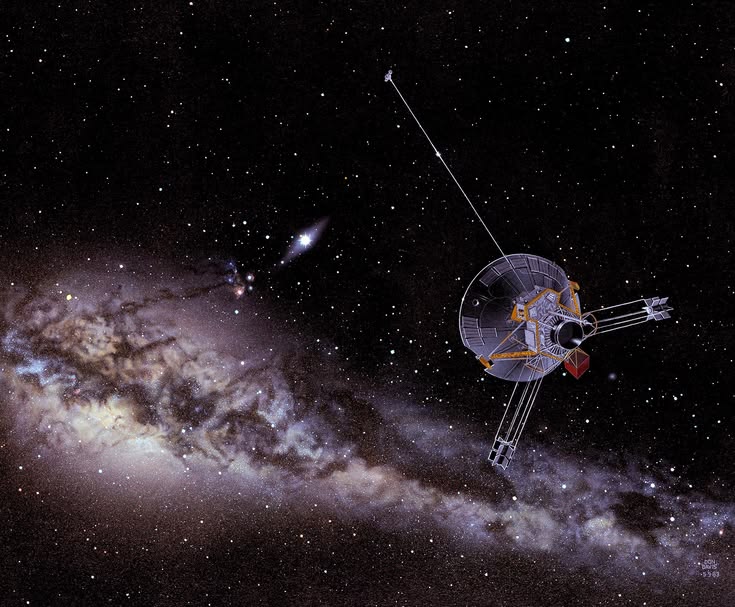
    NASA’s Voyager 1 probe was designed to explore the outer giant planets and send back photographs of Jupiter and Saturn. It was launched in 1977. More than eleven billion miles from Earth, floating through the icy void beyond our solar system, a tiny scrap of 1970s human ingenuity continues its lonely journey. Decades after its primary mission ended, the craft crossed the heliopause. The boundary where the sun’s protective magnetic bubble ends and true interstellar space begins. ​In recent months, engineers faced a daunting crisis. Voyager 1 began transmitting a repeating, meaningless gibberish loop of ones and zeros back to Mission Control. For a moment, scientists feared that after nearly half a century of unbroken operation, the farthest human artifact had finally succumbed to cosmic radiation and cold degradation. Yet through meticulous diagnostic work, engineers isolated a corrupt microchip. They rerouted its memory code across ancient hardware.  Hence, they successfully restored intelligible science data across the vast distance. ​Voyager 1’s survival is not just an engineering miracle; it is a profound testament to humanity’s desire to touch the unknown. ​A spindle of wire, a heart made of bronze, It drifts through the night where the quiet responds. Beyond the sun’s breath and the cradle of red, It whispers the secrets of worlds overhead. ​A Message in a Bottle Across Cosmic Waves ​Carried on the hull of Voyager 1 is the Golden Record, a gold-plated copper phonograph disc containing sounds of Earth, greetings in fifty-five languages, musical compositions from Bach to Chuck Berry, and encoded images of terrestrial life. It serves as an interstellar time capsule, intended to outlast our civilization and tell any distant intelligence who we were. ​We carved our desire on golden veneer, To prove in the darkness that someone was here. A chorus of ocean, a child’s brief greeting, Sent out to outlive every mortal heart’s beating. ​As the probe glides through the cosmic dust, its radio signal traveling at the speed of light takes over twenty-two hours to reach dish antennas on Earth. Every line of telemetry received is a faint echo from an environment no human eye will ever witness firsthand. The spacecraft operates on a diminishing power supply provided by its decaying plutonium generators. Year by year, NASA engineers shut down non-essential instruments to conserve every milliwatt of power, prioritizing the magnetometers and cosmic ray sensors that measure the interstellar medium. ​The Final Quiet Crossing ​The remaining active instruments will inevitably power down as the thermal generators fade entirely by the end of this decade. Voyager 1 will then become a silent voyager, drifting along its galactic orbit around the center of the Milky Way, unbothered by atmospheric drag or gravitational interference, lasting for millions of years. ​When the last power flickers and warmth slips away, It will glide through the night till the dawn of no day. No longer a transmitter, no longer a thread, Just a monument floating where gods used to tread. ​The triumph of retrieving clear data from Voyager 1 reminds us why we look up. Science and art stem from the same original impulse: the refusal to remain quiet in the vastness of the dark, and the drive to leave something meaningful behind before the power fades.