بلاگز

  • | | |

    Omar Musa secures 2026 Miles Franklin Award with Fierceland

    Omar Musa has been named the winner of the prestigious 2026 Miles Franklin Literary Award for his novel, Fierceland. Recognized as Australia’s most celebrated literary prize, the award honors novels of the highest literary merit that explore Australian life in all its phases. Musa’s victory highlights a powerful shift in the country’s literary landscape, celebrating a work that fearlessly confronts historical legacies while weaving together rich cultural folklore. Deconstructing Colonial Narrative Frameworks At the core of Fierceland lies an ambitious, multi-layered critique of Joseph Conrad’s classic 1899 novella, Heart of Darkness. Where Conrad’s seminal text depicted the non-Western world through a lens of exoticism, peril, and foreign mystery, Musa flips the narrative on its head. He reclaims the riverlands and lush rainforest environments not as places of terrifying obscurity, but as vibrant ecosystems steeped in history, memory, and indigenous knowledge. The True “Darkness” Musa confronted the colonial storytelling. In fact, he challenges readers to examine how Western literature has historically framed non-Western landscapes and their people. Fierceland presents the journey inward as a descent into moral decay. This journey is an essential process of unlearning, confrontation and reclamation. The novel demonstrates that the darkness lies within the unchecked impulses of imperial exploitation. It also compels the reader to not surrender to the historical erasure. The Role of Spectral Presence and Cultural Folklore Ghosts and supernatural forces drift consistently throughout the narrative of Fierceland. These forces serve as both literal story elements and profound allegorical symbols. Rather than functioning purely as horror tropes, these spectral figures act as guardians of history and physical manifestations of unhealed wounds. Musa attributes this atmospheric depth to his upbringing and heritage. He reflects on the influence of his family and heritage. Musa noted that ghost stories are deeply woven into the fabric of Malaysian culture. Growing up, he listened to his father recount haunting tales from his homeland. He developed an early appreciation for oral traditions where the living and spiritual realms continually intersect. In Fierceland, these inherited myths explore themes of displacement, grief, and ancestral connection.  These myths gave a voice to forgotten histories that refuse to remain buried. A Multidisciplinary Voice in Modern Storytelling Musa’s background is of an acclaimed spoken-word poet, hip-hop artist, and woodcut printmaker. His own roots shine brightly throughout the pages of Fierceland. The prose is defined by a rhythmic, visceral cadence that reflects his poetic mastery. His ability to blend social commentary with lyricism creates a sensory reading experience.   Winning the 2026 Miles Franklin Literary Award positions Musa as one of the most compelling voices. The judging panel has recognized the evolving nature of Australian literature. Fierceland stands as a testament to the power of reclaiming narrative agency. The novel proves that when old myths are critically dissected, extraordinary stories can emerge.

  • | | |

    The silence of the state

    Al Jazeera’s digital domain was restricted in Pakistan following its critical coverage of regional unrest and local election turmoil. Pakistan had become the second country after Israel to ban the Qatari broadcaster. While the statement makes for a soundbite, it oversimplifies both history and the mechanics of state censorship. In reality, the history of sovereign states attempting to mute inconvenient journalism is long, systemic, and filled with precedent. The Reality Behind the Headlines The recent digital restrictions in Pakistan emerged after the network broadcast extensive ground coverage of civil protests, Internet shutdowns, and election-related violence in Pakistan-administered Kashmir. State authorities responded by accusing the international news organization of yellow journalism and selective reporting. Shortly after, users across the country reported that the network’s website had become inaccessible. Repeated bans on Al Jazeera However, this action makes Pakistan the first nation to follow Israel’s 2024 ban overlooks press suppression. Over the past two decades, Al Jazeera has faced repeated office closures, revocations and total broadcast bans across numerous jurisdictions. Egypt (2013): Following political upheaval, the government shut down the network’s local operations and detained several of its journalists under allegations of threat to national stability. The Gulf Blockade (2017): During a severe diplomatic rift, Saudi Arabia, the United Arab Emirates, Bahrain, and Jordan blocked the channel’s signals and shuttered its regional bureaus. Israel (2024): Emergency legislation empowered authorities to halt local broadcasts, raid offices, and seize transmission equipment over national security claims. Far from being a rare sequel, the administrative impulse to silence an uncomfortable mirror is an old story retold. The Architecture of Banishment In literary traditions, the suppression of speech is rarely about the words themselves; it is about who holds the authority to define reality. George Orwell  observed in 1984 that the primary goal of totalitarian control is to limit the perimeter of thought by controlling the historical record. When a state apparatus brands unfavorable reporting as inherently fraudulent or subversive, it engages in an act of narrative containment. The label of yellow journalism becomes a rhetorical wall. This label shield the public from realities that disrupt official consensus. This dynamic reflects the bureaucratic absurdity depicted in Franz Kafka’s The Castle, where an elusive authority governs from above while remaining immune to direct questioning. In Kafka’s vision, the citizen is caught in a maze of unwritten rules and opaque decrees, where seeking transparency is treated as an act of insubordination. When digital portals are quietly restricted without formal public legislation or explicit judicial oversight, the state operates within a similarly Kafkaesque realm. The silence itself becomes an instrument of governance. The Illusion of Total Control There is a profound irony in modern media suppression. In classical literature, exile was absolute. A banished figure like Ovid was removed physically from the city center, their voice fading at the empire’s edges. Today, however, censorship in a hyper-connected world is an exercise in futility. Blocking a website or pulling a broadcast signal rarely extinguishes the narrative. Instead, it often draws greater international scrutiny to the very events the state wished to obscure. A phenomenon akin to the Streisand effect.   When governments resort to digital blockades, they reveal a fundamental fragility. True political stability rests on the capacity to withstand criticism.  To edit reality is like trying to stop the tide by breaking the hourglass. The water continues to rise, and the story, inevitably, finds another way to be told.

  • | |

    Shakespeare’s sorcery and silicon valley

    For over four centuries, William Shakespeare’s plays have served for understanding human nature, politics, psychology, and empire. Yet, as scholars Xin Chen Chai and Xin Ying Lim argue, his work offers surprising insights into a decidedly modern phenomenon. The hidden human and physical infrastructure driving artificial intelligence. When millions of users enter prompts into generative AI chatbots every day, the experience feels weightless, instantaneous and virtual. However, behind every generated sentence lies a physical network of high-powered data centers. These facilities consume massive volumes of electricity and millions of gallons of water to cool servers. This illusion of effortless command reflects the dynamic in Shakespeare’s The Tempest. In the play, the exiled duke Prospero rules a remote island through sorcery. He forces the spirit Ariel and the native inhabitant Caliban into servitude. Prospero’s magical feats appear grand and detached from the labor and coercion required to maintain his power. Modern AI systems operate on a similar logic. The seamless magic of AI algorithms obscures the extractive resource demands and physical labor that sustain them. Prospero’s dominance depended on usurping Caliban’s land and subjugating its inhabitants. Similarly, the expansion of tech infrastructure often targets marginalized or rural territories. The reasons are land and natural resources that can be acquired with minimal resistance. A real-world example unfolded within the Mvskoke Nation in Oklahoma. A proposed legislative bill, NCA 25-077, sought to establish the Mvskoke Technology and Innovation Park. The bill was put on the table to bring major data centers to tribal lands. However, Indigenous citizens, including Jordan Harmon and Mackenzie Roberts, showed strong opposition. They highlighted the facilities’ ravenous water and energy consumption. They raised concerns regarding digital surveillance.  Framing the development as a continuation of historical colonial exploitation. Due to community pressure and concerns, the tribal council ultimately rejected the proposal. Postcolonial scholars have long viewed The Tempest as a critique of colonial dynamics. They have  drawn direct parallels between Prospero’s rule and imperial subjugation. In the play, Prospero surrenders his magical powers only after securing his own political goals. It demonstrates that rulers rarely give up power purely out of goodwill.   The successful resistance within the Mvskoke Nation highlights an essential difference between literature and real-life action. Unlike Shakespeare’s characters, real communities are actively demanding accountability from corporate giants. Their resistance demonstrates that the unchecked expansion of data centers is not an inevitable trajectory. By pushing back against resource-extractive technology models, Indigenous and local communities are forcing a necessary public conversation about who truly benefits from artificial intelligence and who pays the hidden costs.

  • 4 Natural face scrubs

    Exfoliation is an important part of skincare because dead skin cells can build up over time making the skin look dull and feel rough. Using a gentle scrub can help remove these dead cells leaving your skin feeling cleaner and smoother. You can make simple face scrubs at home with everyday ingredients.  However if you have sensitive skin always do a patch test before trying any homemade remedy. Rice face scrub Mix finely ground rice with honey aloe vera gel or coconut oil to make a smooth paste.  Gently massage it onto your face for a few minutes then rinse with water. Barley face scrub Combine roasted barley flour with milk or almond oil to create a soft paste.  Apply it to your face and gently massage before washing it off. It may help your skin feel fresh and soft. Gram flour (Besan) scrub Mix gram flour with a small pinch of turmeric and a few drops of lemon juice.  Add milk or water to make a paste. Apply it to your face let it dry slightly and then rinse with water. Oat scrub for dry skin Mix oat flour with buttermilk to make a creamy paste. Apply it to your face leave it on for a few minutes then gently massage and wash it off with lukewarm water. Tips for safe exfoliation The skin on your face is delicate so avoid rubbing it too hard.  Exfoliating once or twice a week is usually enough for most people. If you notice redness irritation itching or acne getting worse stop using the scrub and consult a dermatologist if the problem continues.

  • | |

    Greek epic poetry finds a home in Irish literature

    There is an intimacy in the way Irish writers engage with classical mythology including epic poetry. The Odyssey predates Ireland’s earliest written epic, Táin Bó Cúailnge (The Cattle Raid of Cooley), by nearly 1,400 years. The distance in time and geography vanishes the moment an Irish poet puts pen to paper. Universal Image of The Weary Traveler In her modern translation of The Odyssey, classicist Emily Wilson frames Homer’s epic through a deeply human lens. She writes of an exhausted wanderer standing outside a home. A figure who has been displaced and lost for decades. That universal image of the weary traveler searching for home is precisely why Homer’s writing has found such a permanent resonance in Ireland’s literary canon. Across generations, Ireland’s greatest literary minds have treated Homer as a living contemporary. William Butler Yeats, Patrick Kavanagh, and Nobel laureate Seamus Heaney all drew heavily on Homeric motifs to articulate the Irish experience. For these writers, the themes of exiled wanderers, domestic longing, political strife, and tragic return were not abstract concepts from a bygone Mediterranean era. They mirrored the realities of Irish history, rural life, and national identity. Seamus Heaney Seamus Heaney’s engagement with classical literature was particularly profound. Heaney frequently used ancient myths to process modern conflict, finding in Greek drama and epic poetry a framework to speak about political violence, loss, and reconciliation during the Troubles in Northern Ireland. By mapping Homeric echoes onto the Irish landscape, Heaney showed that the struggles of Ithaca were not so different from those of Derry or Ulster. To Heaney and his peers, classical antiquity offered a universal mirror through which local grief and local beauty could be understood. Patrick Kavanagh Similarly, Patrick Kavanagh famously elevated the quiet, local struggles of rural Monaghan by comparing them to the epic siege of Troy, insisting that the everyday life of ordinary people contains just as much drama and dignity as the ancient sagas. Meanwhile, W.B. Yeats wove Homeric imagery directly into the fabric of the Irish Literary Revival, bridging Ireland’s Gaelic heritage with classical antiquity to forge a distinct national identity. Ireland’s Relationship with The Odyssey What makes Ireland’s relationship with The Odyssey so enduring is this sense of shared cultural DNA. Both traditions belong to storytelling cultures rooted in oral performance, mythic memory, and a deep reverence for language. Homer’s tales of displaced heroes, lingering grief, and ultimate return resonate naturally within an island nation shaped by exile, migration, and the constant search for home. Ultimately, the literary bridge connecting Homer to Heaney proves that timeless stories do not belong to a single era or place. As long as readers recognize the tired wanderer standing at the door, The Odyssey will continue to find a home in Irish literature. The Literary Parallel Homer’s The Odyssey predates Ireland’s national epic, Táin Bó Cúailnge, by roughly 14 centuries, yet their thematic overlap remains seamless. Prominent Irish authors including Seamus Heaney, W.B. Yeats, and Patrick Kavanagh frequently adapted Homeric themes into their modern works. Emily Wilson’s modern translation highlights themes of exile and displacement, which reflect Ireland’s history of migration, political conflict, and domestic longing.

  • Hair loss causes and prevention

    Hair loss is a common problem that can affect both men and women. For some people it is temporary while for others it may slowly lead to noticeable thinning or baldness. Experts say hair loss can happen for many reasons. These include poor nutrition hormone changes stress certain illnesses inherited factors and frequent use of harsh hair products or chemical treatments. Common causes of hair loss Some of the most common reasons for excessive hair loss include. •Poor or unbalanced diet •Iron and vitamin deficiencies •Hormonal changes •Anemia •Stress •Certain medical conditions •Some medicines or medical treatments Family history of hair loss Women may also experience hair loss because of hormone related conditions. Tips to help reduce hair loss Healthy daily habits may help keep your hair strong and reduce breakage. Eat a balanced diet rich in protein. Ask your doctor about iron or vitamin deficiencies if you think you may have one. Keep your hair and scalp clean. Avoid using too many chemical hair products or treatments. •Do not brush or comb wet hair roughly. •Drink enough water every day. •Get enough sleep and manage stress. Before trying any new hair oil or home remedy do a patch test to check for skin irritation. Onion Juice A popular home remedy onion juice is a well known home remedy that many people use for hair care. It is usually applied to the scalp left on for a short time, and then washed off. However onion juice is not a proven cure for baldness. It may also cause irritation or allergic reactions in people with sensitive skin so it should be used with care. When to see a doctor If your hair is falling out quickly or you notice clear bald patches do not rely only on home remedies. It is best to visit a dermatologist to find the cause and get the right treatment.

  • | |

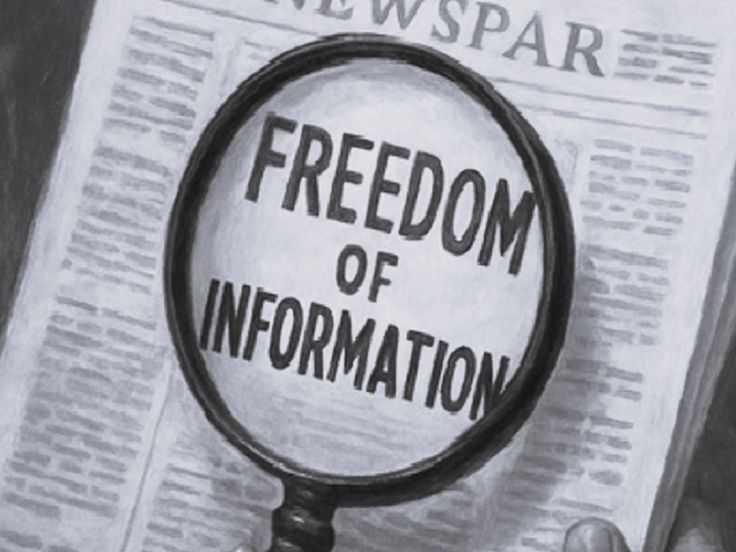
    Press freedom across South Asia

    Press freedom across South Asia faces significant structural constraints. Media environments throughout the region share a common historical legacy often relying on inherited colonial-era penal codes alongside modern cybersecurity legislation. However, the legal frameworks and regulatory instruments used to govern the press vary across neighboring countries. Comparative Analysis by Country  Pakistan Pakistan Electronic Media Regulatory Authority (PEMRA), Prevention of Electronic Crimes Act (PECA), and administrative policy frameworks like the Foreign Media Facilitation Guidelines. Media regulation in Pakistan relies heavily on administrative controls, licensing restrictions, and broad content advisories prohibiting coverage of sensitive political or national security subjects. While constitutional protections exist under Article 19, exceptions based on glory of Islam, national defense, and public order give authorities broad latitude to issue blackout orders, manage foreign correspondents’ mobility through No Objection Certificates (NOCs), and impose structural pressure on broadcast networks.  India Information Technology Rules (2021), Digital Personal Data Protection (DPDP) Act, and the Unlawful Activities Prevention Act (UAPA). While India possesses a large and diverse private media market, journalists increasingly face legal scrutiny under broad national security and anti-terror legislation. Amendments to digital media laws allow central authorities to demand the takedown of online content deemed harmful to state interests. Furthermore, criminal defamation suits and restrictions on access to conflict areas (such as Jammu & Kashmir) remain common mechanisms of regulatory pressure. Bangladesh Cyber Security Act (CSA)—which replaced the controversial Digital Security Act (DSA) and state information ministry directives. For years, non-bailable clauses in cybersecurity statutes were widely criticized by media watchdogs for chilling investigative reporting on corruption or state officials. Following recent political transitions, draft media reform policies have been introduced, though press operations remain tightly monitored during periods of political volatility and public unrest.  Sri Lanka Online Safety Act, Prevention of Terrorism Act (PTA), and Official Secrets Act. Sri Lanka’s regulatory framework expanded significantly with the passage of the Online Safety Act, which created a government-appointed commission with sweeping powers to classify online content as false statements and order its removal. Critical reporting regarding state response to economic crises or wartime history continues to face legal and physical friction in sensitive provinces. Nepal: Press Council Act and National Mass Communications Policy. Nepal consistently ranks highest in South Asia on global press freedom indices, supported by a constitution that explicitly guarantees press rights without prior restraint. However, challenges persist regarding local government transparency, criminal defamation provisions, and proposed social media regulation bills that civil society groups fear could introduce licensing hurdles for digital outlets.  Afghanistan Direct directives issued by the Ministry for the Propagation of Virtue and the Prevention of Vice and the Ministry of Information and Culture. Following the political shift in 2021, independent journalism in Afghanistan has faced near-total suppression. Women journalists are largely banned from broadcasting, international news services face widespread blocking, and all local reporting is subject to strict pre-publication censorship. Common Trends Across the Region Across South Asia, governments are increasingly shifting control from traditional print/broadcast regulators toward cybersecurity, online safety, and data protection laws to monitor digital newsrooms and independent creators. Constitutional guarantees of free speech throughout South Asia uniformly contain broad public order and national defense exceptions, which states routinely cite to enforce reporting restrictions during regional crises. Beyond direct legal action, states across the region frequently utilize non-judicial levers such as withholding state advertising funds, slow-walking accreditation, or requiring special travel permits to shape editorial stances.

  • Whitening creams may damage your skin

    Many people use skin whitening creams and bleaching products to make their skin look lighter and brighter. While these products may change skin tone for a short time experts say they can cause serious skin problems if used for a long period. In Pakistan and many other Asian countries skin lightening creams are widely used. Many people buy and use these products without first talking to a dermatologist. According to skin experts many whitening creams contain strong chemicals and steroids. These ingredients can make the skin appear lighter for a while but they may also damage the skin over time and lead to long lasting problems. One common side effect is acne. Experts say corticosteroids found in some creams can make the skin look smooth at first but continued use may trigger pimples. These pimples can later leave permanent dark marks or scars. This problem can affect both men and women. Some whitening creams also contain hydroquinone. Research suggests that using hydroquinone for a long time may cause a condition called exogenous ochronosis. This condition leads to blue or dark patches on the skin especially in people with sensitive skin. These marks can be difficult to hide even with makeup. Another possible risk is dermatitis a skin condition that causes irritation and inflammation. It may lead to redness itching, swelling, dry skin, rashes blisters and in severe cases painful sores. Dermatologists advise stopping the use of any whitening cream if you notice redness itching swelling unusual spots or other skin changes. They recommend seeking advice from a qualified skin specialist instead of relying on products that promise quick results. Protecting your skin and following professional medical advice is a safer and healthier choice.

  • | | |

    Pakistan imposes new restrictions on foreign media

    Pakistani authorities have exposed regulatory measures governing foreign media operations in the country. The strategy has triggered an alarm among press freedom advocates, legal observers, and media personnel. Under the newly issued Foreign Media Facilitation Guidelines, journalists representing international organizations will no longer be permitted to travel or cover news events outside three major metropolitan hubs without explicit prior authorization from the government. The regulations come at a delicate juncture marked by escalating political instability, public demonstrations, and security crackdowns across key regions including recent demonstrations connected to heightened tensions in Kashmir and subsequent enforcement actions in urban centers like Lahore. Critics argue that by constraining the scope of international newsgathering precisely when accurate coverage is most vital, the state risks deepening information voids and exacerbating the spread of unverified claims. Key Requirements of the New Media Framework Administered through the External Publicity Wing of Pakistan’s Ministry of Information, the updated regulatory policy establishes procedural hurdles for international news agencies. Foreign correspondents, local staff, contributors, and freelance journalists working for international outlets must secure an official No Objection Certificate (NOC) before traveling to conduct reporting assignments outside Islamabad, Karachi, and Lahore. Regions requiring prior approval now explicitly cover all provincial territories, sensitive border zones, and Pakistan-administered Kashmir. The framework provides no defined processing timeframe for NOC applications, leaving reporting teams facing unpredictable delays and potential administrative holds. The Ministry reserves the authority to suspend or revoke official media accreditation if reporting is judged to run counter to the country’s national sovereignty, ideology, or public safety phrasing that legal analysts describe as intentionally open-ended. Backlash from Analysts and Rights Groups The enactment of these guidelines has drawn sharp rebuke from political commentators, civil society organizations, and international press watchdogs, who view the move as part of a systematic contraction of independent journalism within the country. Former senator and political commentator Mustafa Nawaz Khokhar highlighted the grave consequences of curtailing foreign news organizations, warning that restricting legitimate press operations ultimately undermines public trust. These guidelines are tantamount to choking international media in an increasingly shrinking space, Khokhar noted, emphasizing the vital role global news outlets play when local media environments face structural pressure. The public looks at the international media for independent reporting. Placing restrictions simply creates more room for disinformation and the spread of fake news.   Rights groups including the Pakistan Federal Union of Journalists (PFUJ) and international watchdogs have echoed these concerns. They’re pointing out that advance the requirement of government permission for routine reporting effectively grants authorities veto power over what news reaches the global audience. Broader Context of Press Freedom in Pakistan Pakistan’s media environment has historically operated in a complex space balancing constitutional guarantees of free speech against national security laws. However, media analysts note that state oversight of both traditional print/broadcast journalism and online digital spaces has tightened significantly in recent years. The introduction of the new foreign media guidelines coincides with broader legislative shifts aimed at regulating online speech and social media platforms. Observers express concern that administrative barriers, combined with strict digital laws, could leave remote or politically sensitive areas completely cut off from independent news coverage. By limiting foreign journalists’ mobility primarily to the capital and two largest economic centers, field reporting from rural regions, border zones, and conflict-affected territories will become exceptionally difficult to conduct legally. Implications for International Coverage As international newsrooms adapt to the new framework, news gathering strategies across South Asia are likely to face operational friction. Bureau chiefs and correspondents report that unpredictable NOC processing times make time-sensitive breaking news coverage outside major cities nearly impossible to guarantee.   Without direct on-the-ground access for independent journalists, global news consumers may increasingly have to rely on official statements or unverified social media updates during crises. For a country navigating complex domestic politics and delicate international relations, press freedom advocates warn that restricting the lens through which the world views Pakistan could backfire, isolating the nation’s political discourse and fostering an environment where misinformation thrives unchecked.

  • | | |

    Benjamin Franklin’s iconic ‘Join, or Die’ cartoon

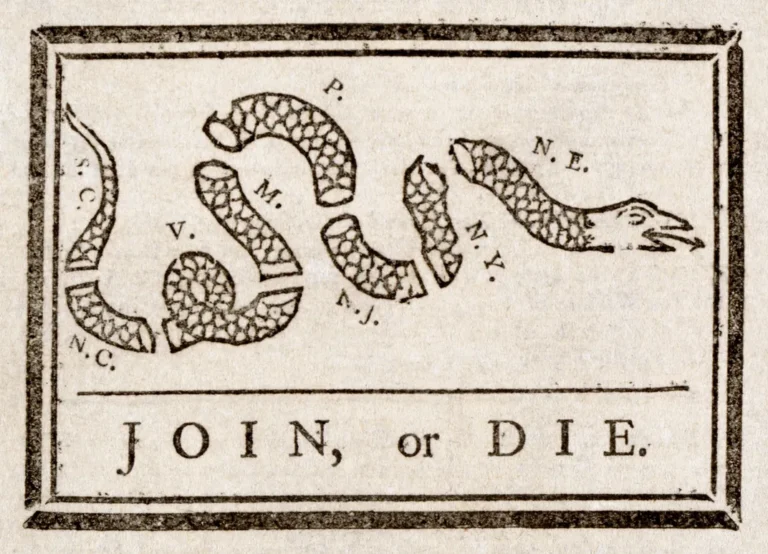
    In Philadelphia, a new public artwork inspired by Benjamin Franklin’s famous “Join, or Die” woodcut is being installed on Independence Mall. Designed by artist John Collins, the impressive 46-foot-long granite sculpture is slated for its official public unveiling later this autumn on the Liberty Bell Center Block, right in the historic heart of the city. From 18th-Century Print to 21st-Century Granite The original artwork that inspired this modern installation carries significant historical weight. On May 9, 1754, Franklin published the illustration in his newspaper, the Pennsylvania Gazette, as the French and Indian War was breaking out. Created as a woodcut print, the imagery depicted a serpent severed into eight distinct segments, directly above the stark warning “JOIN, or DIE.” A Collection of American Colonies Each section of the snake was carved with initials symbolizing the American colonies of the era. N.E. (New England, grouped as one block) N.Y. (New York) N.J. (New Jersey) P. (Pennsylvania) M. (Maryland) V. (Virginia) N.C. (North Carolina) S.C. (South Carolina) At the moment he published the print, Franklin was preparing for the Albany Congress. This critical meeting brought colonial delegates together to strategize against common external threats and to negotiate a vital alliance treaty with the Iroquois Confederacy. Strength Lies in Solidarity. The cartoon served as an urgent call for collective action, warning that a fragmented collection of colonies would inevitably perish individually. “The confidence of the French in this undertaking seems well-grounded on the present disunited state of the British Colonies, and the extreme difficulty of bringing so many different governments and assemblies to agree in any speedy and effectual measures for our common defence and security,” A Lasting Legacy of American Unity   By translating this historic woodcut into a physical, segmented granite monument, the National Park Service and artist John Collins aim to give visitors an interactive connection to early American history. Set against the backdrop of Independence Hall and the Liberty Bell, the 46-foot sculpture preserves Franklin’s message: strength lies in solidarity.