فیچرڈ

  • | |

    Flood alert as rivers rise, Sukkur, Marala and Bal…

    ISLAMABAD: Pakistan is bracing for another spell of flood-related risks as heavy monsoon rains, rising river levels and high water storage at major dams put several parts of the country on alert. The National Disaster Management Authority (NDMA), through its National Emergencies Operation Centre, has warned of possible low to moderate flooding in vulnerable areas of Khyber Pakhtunkhwa, Punjab, Balochistan and Azad Jammu and Kashmir. According to the latest assessment, the Indus River has already reached low flood levels at Kalabagh, Chashma, Taunsa and Guddu. While the Ravi, Chenab, Jhelum, Kabul and Sutlej are currently within normal ranges, officials expect water flows in several major rivers to increase on August 8 and 9. The NDMA has identified Sukkur on the Indus, Marala on the Chenab and Balloki on the Ravi as areas where low-level flooding could occur. The Jhelum downstream of Mangla Dam and the Kabul River near Adezai are also being closely monitored. Several districts in Khyber Pakhtunkhwa, including Chitral, Upper Dir, Abbottabad, Shangla, Khyber, Orakzai, Kohat, Tank and North and South Waziristan, face the possibility of low to moderate flooding. In AJK, Bagh and Kotli are also considered vulnerable, while Zhob, Musakhel, Kohlu, Barkhan and Dera Bugti in Balochistan remain under watch. Punjab is facing risks from hill torrents, particularly in Dera Ghazi Khan and Rajanpur. The NDMA has also warned of possible urban flooding in Rawalpindi, Gujranwala, Sialkot, Narowal, Faisalabad, Okara and Lahore. Water storage at the country’s major reservoirs remains high. Tarbela Dam’s water level has reached 1,548 feet, with storage at 97.94 per cent, compared with 95.98 per cent during the same period last year. Mangla Dam is at 1,205.2 feet, with storage recorded at 62.99 per cent, slightly above last year’s 62.80 per cent. Authorities have urged residents, tourists and travellers in mountainous and flood-prone areas to remain vigilant, as intense monsoon rainfall can trigger flash floods, landslides and debris flows with little warning. People have been advised to avoid riverbanks, streams and other vulnerable locations and to check weather forecasts and road conditions before travelling as the monsoon system continues to affect the country.

  • | |

    Exhumation uncovers bullet wound and pre-death inj…

    An eight-member medical exhumation board has confirmed that Mir Raza Ali suffered a fatal gunshot wound to the back alongside multiple severe pre-death injuries, drastically shifting the trajectory of the high-profile investigation. The four-page preliminary report, issued following an court-ordered grave exhumation at Karachi’s Rehmanial Masjid Graveyard, reveals extensive physical trauma sustained prior to death. Pathologists identified a 0.8-centimeter entry wound on the left side of the upper back, which fractured the sixth rib and tore through the heart before exiting the right side of the upper chest. Forensic examiners confirmed the presence of extravasation of blood in the underlying tissues, answering affirmatively that these injuries were inflicted while the victim was still alive. Beyond the firearm damage, the post-mortem detailed significant blunt-force trauma across the victim’s head, face, and neck. Doctors documented deep bruising on the skull, fractures to the nasal bone, tissue congestion over the maxilla, and a diastatic fracture running along the posterior sutures of the skull filled with congealed blood. Discoloration was also noted around the hyoid bone, though advanced decomposition hindered complete soft tissue analysis. While the medical board has verified antemortem bleeding and severe skeletal fractures, a final determination on the official cause of death remains reserved. Pathologists have submitted collected skin, muscle, hair, and bone samples for detailed chemical, forensic, and gunshot residue testing. The findings provide critical scientific evidence that redefines the ongoing investigation from a missing person query into a detailed homicide inquiry.

  • | |

    15 terrorists killed in Balochistan intelligence-b…

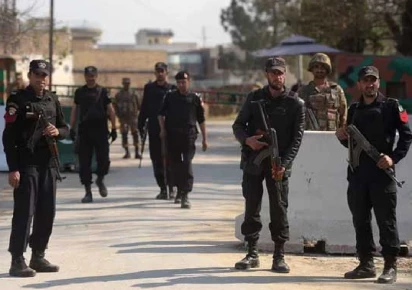
    QUETTA: Security forces have killed 15 terrorists during a series of intelligence-based operations conducted across several districts of Balochistan, security sources said on Sunday. The operations were carried out under the ongoing Operation Rad-ul-Fitna-3, targeting militant networks in Mastung, Bolan, Washuk, Awaran, Sibi, Khuzdar, Harnai and Noshki. According to security sources, the operations were launched following intelligence about the presence and movement of militants in the targeted areas. A significant quantity of weapons and ammunition was also recovered during the actions. Officials said the operations dealt a major blow to militant networks and disrupted their ability to move and operate across parts of the province. Security forces, they added, remain committed to continuing intelligence-driven operations until terrorist activity is eliminated. Interior Minister Mohsin Naqvi praised the security forces for what he described as successful operations against militant groups. He commended the personnel for their professionalism and said the government would continue supporting efforts to counter terrorism. The latest operations come amid heightened security concerns in Balochistan, where militant attacks have targeted both civilians and security installations. Security forces have continued intensified operations in the province following a series of deadly attacks. Earlier, security forces reported killing 12 militants during intelligence-based operations in the Washuk and Mastung districts. Authorities have also launched joint operations involving the Pakistan Army, Frontier Corps and Balochistan Police following recent attacks on security personnel and civilians. Pakistan has witnessed a significant rise in militant violence in recent years, with Balochistan and Khyber-Pakhtunkhwa remaining among the most affected regions. Security agencies say intelligence-led operations will continue as part of broader efforts to prevent further attacks and dismantle militant networks.

  • | |

    Wild Monkey captured in Indonesia after attacks, f…

    A wild monkey that reportedly injured 17 people and sparked fear across a community in Indonesia’s Riau province has been captured following a coordinated operation involving several government agencies. The adult male monkey had been attacking residents in the Tembilahan area for nearly two weeks, with victims reportedly including children and elderly people. Authorities said the animal targeted people outside their homes and on public streets, raising concerns among local residents. The repeated attacks prompted police, military personnel, firefighters and wildlife officials to launch a joint effort to capture the animal. According to Police Chief Doni Aco Listanto, the Riau Natural Resources Conservation Agency placed three traps in areas where the monkey was active. One of the traps eventually succeeded in capturing the monkey alive, bringing an end to the weeks-long ordeal. The incidents had caused widespread anxiety in Tembilahan, with authorities taking additional precautions to protect residents. Schools in the district were closed for three days, while students were instructed to continue their lessons through online classes. Officials are now expected to assess the monkey and determine the appropriate measures following its capture.

  • | |

    Bans on baajas, firecrackers and one-wheeling ahea…

    PESHAWAR: The Peshawar district administration has imposed restrictions on several Independence Day activities, banning baajas, firecrackers, toy pistols, aerial firing and one-wheeling under Section 144. According to an official notification, the restrictions will remain in effect until August 15 as authorities prepare for Pakistan’s Independence Day celebrations on August 14. The administration has prohibited the sale and purchase of toy horns, toy pistols and firecrackers, while fireworks and aerial firing have also been restricted to prevent accidents and maintain public order. Authorities have particularly warned young people against one-wheeling, describing the stunt as a serious threat to public safety that can endanger both riders and other road users. Officials said the measures are intended to protect lives and property and prevent festive gatherings from turning into incidents involving reckless driving, injuries or public disorder. Residents have been urged to celebrate Independence Day responsibly and comply with the restrictions, with authorities warning that violations could result in legal action.

  • | |

    Transport crisis threatens to disrupt economic act…

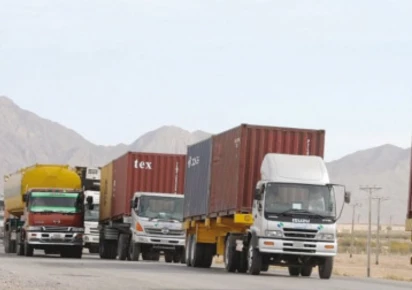
    The economists and business experts have warned that the nationwide suspension of goods and oil transportation could create serious disruptions across Pakistan’s supply chains if the dispute is not resolved quickly, adding that prolonged interruption in cargo movement would increase operating costs, disrupt industrial production and put further pressure on exports. Experts said the ongoing situation should not be viewed merely as a dispute between transporters and the government, as the uninterrupted movement of goods is essential for manufacturing, agriculture, wholesale and retail trade, imports, exports and the distribution of essential commodities. They said the suspension of a large portion of the country’s freight fleet could create a chain reaction across the economy. Factories dependent on regular supplies of imported and locally produced raw materials could face interruptions, while manufacturers with completed consignments could experience difficulties in moving goods to ports, warehouses and domestic markets. According to economic experts, any prolonged disruption in freight movement could raise costs at multiple stages of the supply chain, ultimately increasing prices for businesses and consumers. They urged the government to give immediate priority to negotiations with transport representatives and ensure restoration of normal cargo movement, while simultaneously addressing the structural issues that have contributed to growing tensions in the transport sector. Experts said the introduction of daily petroleum price adjustments had added another layer of uncertainty to an already difficult operating environment. Fuel represents a major component of freight costs, and daily changes make it difficult for transport operators to determine charges for journeys that may take several days. The resulting uncertainty also affects manufacturers and traders because businesses cannot accurately forecast the cost of moving raw materials and finished products. For exporters, the issue is particularly significant as freight costs are often incorporated into orders and contracts agreed weeks or months before shipment. Economists said Pakistan needed a petroleum pricing framework that reflected international market movements while providing sufficient predictability for businesses. They noted that frequent changes in fuel prices could complicate production planning, inventory management and commercial contracting. They further cautioned that heavy reliance on petroleum taxes and levies could become counterproductive if it substantially increased transportation and production costs. Higher fuel prices raise the delivered cost of raw materials, machinery, food products and finished goods and also increase the cost of moving agricultural inputs and crops between production areas and markets. According to experts, the current disruption has also exposed weaknesses in Pakistan’s logistics infrastructure. The country needs better freight facilities, rationalised toll charges, adequate parking for heavy vehicles around ports and industrial zones, streamlined licensing procedures and a taxation framework that does not place excessive pressure on formal transport operators. They stressed that logistics costs should be considered an integral part of Pakistan’s export strategy. Export competitiveness depends not only on the cost of manufacturing a product but also on the expense and reliability of moving raw materials to factories and finished goods to ports. Experts said Pakistani exporters already face intense competition from regional economies where supply chains are becoming more efficient and predictable. Any additional increase in domestic transportation costs could further reduce the price competitiveness of Pakistani products in international markets. They recommended establishing a permanent consultation mechanism involving transporters, chambers of commerce, manufacturers, exporters, oil-sector representatives and relevant government agencies. Such a platform could identify emerging problems and develop solutions before individual disputes escalate into economy-wide disruptions. Economists also called for a review of withholding tax arrangements affecting goods transporters, saying the taxation system should encourage formalisation, investment and expansion of the logistics sector rather than create additional working-capital pressures. They said all transport-related taxes, tolls, fees and regulatory charges should be reviewed collectively to determine their overall impact on freight costs.

  • | |

    Punjab teachers union rejects pay hikes, demands b…

    LAHORE: The Punjab Teachers Union has rejected the recent increases in salaries and pensions announced by the provincial government, describing them as inadequate in the face of rising inflation and calling for the restoration of cutbacks in employee benefits. Central President of the Punjab Teachers Union Rana Anwar-ul-Haq, along with Yasin Warraich, Rana Liaquat and other office-bearers, said the government must end what they described as discriminatory economic treatment of public-sector employees. The union leaders said inflation had reached unprecedented levels, with prices now rising almost daily, making it increasingly difficult for government employees to meet their household expenses. They termed the announced 7 per cent salary increase and 3.5 per cent pension increase insufficient, arguing that the relief did not correspond with the rapidly rising cost of living. They demanded that Punjab employees receive salary increases at par with federal government employees. They also called for the restoration of cuts affecting leave encashment, pensions and gratuity. Yasin Warraich demanded a 45 per cent Disparity Reduction Allowance for Punjab government employees, arguing that denying them such an allowance while similar measures were being considered or implemented at the federal level would amount to unfair treatment. The union representatives also criticised the provincial government for failing to address the growing gap in compensation among public-sector employees. They said Punjab employees should not be deprived of financial benefits available to workers in other parts of the country. Rana Liaquat said employees affiliated with the All Government Employees Grand Alliance (AGEGA) Punjab remained united under the leadership of Chairman Khalid Javed Sangheera and expressed full confidence in the alliance’s leadership. The teachers’ representatives said they would honour the agreement reached between the two AGEGA groups at Masjid-e-Shuhada on June 16. They further announced that the Punjab Teachers Union would fully implement the protest schedule issued under the umbrella of AGEGA. The union leaders maintained that employees would continue their struggle for equitable salaries, pensions and service benefits until their demands were addressed.

  • | |

    Punjab repatriates over 140,000 undocumented Afgha…

    LAHORE: The Punjab government has intensified its province-wide campaign against Afghan nationals residing in Pakistan without valid legal documentation, with more than 140,000 people repatriated from Punjab so far, according to the Home Department. The department said its Foreign National Security Cell was continuing monitoring and enforcement operations across the province under the government’s national repatriation policy. Individuals found to be residing illegally are being detained and transferred to designated holding centres, where registration and other formalities are completed before their return to Afghanistan. According to official figures, a total of 2,689,295 Afghan nationals have been repatriated from Pakistan, including 140,468 from Punjab. The Home Department said 39 holding centres are currently operational across Punjab, with 188 Afghan nationals presently housed there. Temporary accommodation, registration and repatriation arrangements have been established at these facilities, while those cleared for return are handed over to Afghan authorities at the Torkham border. Officials said checks were being conducted in residential areas and markets across the province as part of the ongoing enforcement campaign. The department maintained that the action was specifically aimed at individuals staying in Pakistan without legal status. The Home Department urged citizens to report cases involving illegal residence, identity fraud or suspicious activities to Emergency Helpline 15, assuring that the identities of informants would be kept confidential. The Foreign National Security Cell is continuing province-wide coordination and monitoring to support the government’s repatriation programme, the department said.

  • | | |

    Free entry announced for national champions cup in…

      MULTAN: The Pakistan Cricket Board (PCB) has announced free entry for cricket fans attending the upcoming National Champions Cup, which is scheduled to take place from 11 to 18 August at the Multan Cricket Stadium. The PCB confirmed the decision through an official promotional flyer shared on its social media platforms. The move is expected to encourage cricket supporters to attend the matches and watch some of the country’s leading domestic players in action. The tournament will feature seven matches all of which will be played under day-night conditions. According to the schedule, the matches are expected to begin at around 3 pm local time. The National Champions Cup is a new 50-over List-A domestic competition and will also officially mark the beginning of Pakistan’s 2026-27 domestic cricket season. Four teams will participate in the tournament: Pakistan Greens, Pakistan Whites, Pakistan Blues and Pakistan Gold. The competition will follow a single-league round-robin format meaning each team will compete against the other participating sides during the league stage. At the conclusion of the league matches, the two teams with the highest points will qualify for the final, where they will compete for the tournament title. The PCB has also finalised the playing XIs for all four teams. In addition, a 13-player reserve pool has been selected for the competition. The reserve players will remain with their respective teams during training sessions and match days. According to the PCB’s arrangements, reserve players can be included in the playing XI if a team faces an injury or concussion-related replacement requirement after announcing its original XI. This arrangement is intended to ensure that teams have adequate cover throughout the competition. The tournament will feature several prominent Pakistan players as captains. Shaheen Shah Afridi will lead Pakistan Gold, while Shadab Khan has been appointed captain of Pakistan Greens. Saim Ayub will captain Pakistan Whites, whereas Sahibzada Farhan will lead Pakistan Blues. The Champions Cup is particularly important as the PCB continues its preparations for the 2027 ICC Men’s Cricket World Cup. The board has selected a wider pool of 44 players along with reserve players, to provide opportunities for cricketers to demonstrate their abilities and strengthen their claims for future national selection. The domestic competition will therefore serve as an important platform for players seeking to establish themselves at the national level. Performances during the tournament could help the selectors assess the form, fitness and consistency of players ahead of future international assignments. With free admission, a strong line-up of players and the opening of the new domestic season, the National Champions Cup is expected to attract considerable interest from cricket fans in Multan and across Pakistan. The tournament will provide supporters with an opportunity to watch emerging and established players compete in a competitive 50-over format while the PCB continues its broader preparations for the next World Cup cycle.

  • | |

    DI Khan church still guards colonial memories

    There are some places we pass every day without realising how much history they hold. They remain untapped until some visitors put their eyes on them. During summer vacations, I travelled to Dera Ismail Khan, a district situated in southern Khyber Pakhtunkhwa. It takes six hours from Lahore to arrive in this historic city. During my stay there, I came across one such place that immediately captured my attention, and I thought to write about it. It was St Thomas Church, sacred place of worship for Christian community. A large cross standing at the entrance, old rusty walls, and an ambience of spiritualism. But the Church showcased more than that. Its walls contain historical accounts of colonial past, the military campaigns led by British soldiers in this area and a grave of one Lieutenant Governor of Punjab.   St Thomas Church was built in 1856 during British rule in the Indian subcontinent. It is one of the oldest churches in present-day Pakistan. It has survived political changes, the Partition of 1947, and the passing of time. Even today it stands as a symbol of the rich and diverse heritage of Dera Ismail Khan. The church is not only a place of worship but also a reminder that different faiths and communities have long been part of the history of this region. As we walked inside, we met the old priest and caretaker of the church named Chand. He welcomed us warmly and narrated the remarkable history of this place. There are memorials of British soldiers who lost their lives in this region during military campaigns. The priest stood in front of each tablet inscribed on the church wall and briefed about it. One memorial narrates the names, ranks and units of one hundred and 69 British military officers and other ranks who were killed or died due to injuries or disease in Waziristan military campaigns launched between 1919 to 1921.     Another memorial lists details of sixty-eight officers and other ranks who met a similar fate during the 1936-1938 Waziristan military campaigns. Similarly, one tablet erected by friends and fellow officers mourns the death of Herbert Walter Gee, ICS, deputy commissioner of Dera Ismail Khan, who died in 1901. There are other memorials as well, erected by colleagues in memory of the fallen officers. I thought that these names contain historical accounts year by year about what happened in this part of the world at that time. Every sentence of the Priest carried a new story, such as how the church has witnessed a lot of happenings through generations and that it still serves the small Christian community living in Dera Ismail Khan. As we stepped outside, believing our visit had come to an end, the priest said, “Wait. I have to show you one more thing.” He took me to the back of the building, where I saw a large white grave standing quietly among the dusty bushes. Here rests Lieutenant General Sir Henry Marion Durand (1812-1871). Durdand – a quite familiar name for the people of Pakistan and Afghanistan. Sir Durand was a career British military officer, diplomat, and administrator. He served in the East India Company Army, took part in several military campaigns, and later became the Lieutenant Governor of Punjab from 1870 to 1871. His son Sir Mortimer Durand is the one who drew the contours of the border between British India and Afghanistan in 1893. A man who once held such an important position now lies in silence behind an old church, while many people living nearby are unaware that his grave even exists. Henry Marion Durand died in 1871 at the age of 58 from a tragic accident. He was visiting Nawab of Tank Shahnawaz Khan along with his daughter when he fell from an elephant. The elephant was passing through the gateway by the town of Tank with the Nawab on the same elephant and an official (Chaprassy). The gate was too low to cross an elephant with howdah. The howdah struck the walls of crossing and the elephant got frightened resulting in the fall of Durand. He remained unconscious for a few days and never recovered. He was buried beside St. Thomas’ Church in Dera Ismail Khan. The British suspected some conspiracy into this incident. One of descendent of Nawab Shahnawaz Khan says that The British launched an enquiry into it. But the daughter of Durand gave testimony in favour of the Nawab that it was just an accident and there was no fault on his part. However, as a punishment, the British authorities stripped the powers of Nawab Shahnawaz Khan in 1875 and sent him to Lahore under strict watch. He passed away in 1881 while under surveillance. Standing beside the grave of Sir Henry Durand, I felt as if I had stepped into a forgotten chapter of history. The name engraved on the stone reminded me that many important events and personalities of the past remain connected to places that we often overlook. How easily history can fade from people’s memories, even when it is standing right in front of us. As I left St Thomas Church, I felt that I had walked through a chapter of history that few people ever get to read. Sir Henry Durand ruled Punjab from this soil, and his son later sat across a table in Kabul and drew the line that still separates Afghanistan and Pakistan today. That line appears in newspapers and political debates all the time. Yet the grave of the man whose name it carries lies quietly behind a church in Dera Ismail Khan.