تازہ ترین

  • | |

    Houthis claim missile and drone attack on Saudi oil tankers

    Yemen’s Houthi movement has claimed responsibility for attacking two Saudi oil tankers in the Red Sea, marking a major escalation in regional tensions and raising fresh concerns over the security of one of the world’s busiest maritime trade routes. Houthi military spokesperson Yahya Saree said the group targeted the tankers, identified as ENCELA and LAYLIA, because they allegedly violated the maritime blockade the Houthis imposed on Saudi Arabia earlier this week. According to the spokesperson, the operation involved ballistic missiles, cruise missiles and drones. He claimed the strikes caused fires aboard both vessels and forced nearly 10 other commercial ships to abandon their planned routes and turn back. Saudi authorities have not officially commented on the Houthi claims. However, the United Kingdom Maritime Trade Operations (UKMTO), which monitors maritime security in the region, confirmed receiving a report from the captain of a tanker that an unidentified projectile had struck the vessel, sparking a fire. The crew managed to respond to the incident, and no casualties or environmental damage have been reported. The attack comes just days after the Houthis announced a maritime blockade against Saudi Arabia, saying the move was retaliation for recent military actions in Yemen. The group accused Riyadh of maintaining a long-standing blockade on areas under Houthi control and vowed to respond with similar measures at sea. The latest developments have increased fears over shipping through the Red Sea and the Bab al-Mandeb Strait, a strategic waterway linking the Red Sea to the Gulf of Aden. The route is vital for global energy supplies and international trade, carrying millions of barrels of crude oil and petroleum products every day. Shipping security in the region has already been under pressure because of wider Middle East tensions. Any prolonged disruption in the Bab al-Mandeb Strait could further affect global oil markets, increase transport costs and delay commercial shipping.
  • | |

    JI Secretary General Ameerul Azeem passes away

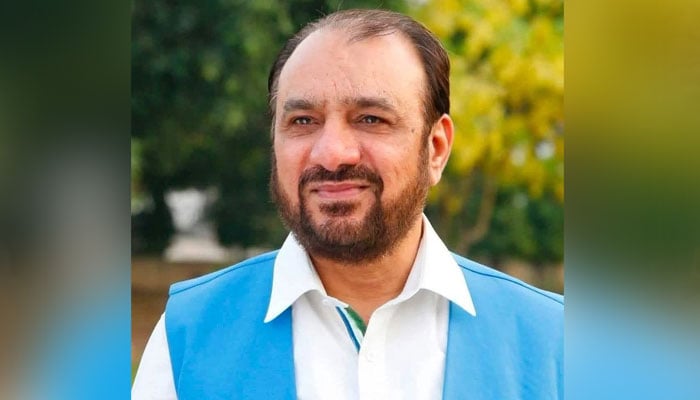
    Ameer-ul-Azeem, Secretary General of Jamaat-e-Islami (JI) Pakistan, has passed away after a prolonged illness. His funeral prayers will be offered at 5:00 pm today at Mansoora, Lahore. A Jamaat-e-Islami spokesperson confirmed his death, saying he had been battling cancer for a long time. Before becoming the party’s Secretary General, he served for many years as the central Secretary for Information. Born in Lahore in 1958, Ameer-ul-Azeem completed his matriculation from Islamia School Sant Nagar and his intermediate studies at Islamia College Railway Road. He later earned a BSc in Physics and Double Mathematics from Islamia College Civil Lines and an MBA from the University of the Punjab. He became associated with Islami Jamiat-e-Talaba (IJT) during his school years and later served as the elected president of the Punjab University Students’ Union. He also held the position of Nazim-e-Aala (Chief Organizer) of IJT. During General Zia-ul-Haq’s rule, Ameer-ul-Azeem led a long march demanding the restoration of student unions and was imprisoned for his role in the movement. While in jail, he was elected as the head of Islami Jamiat-e-Talaba. He later served as Jamaat-e-Islami’s central Secretary for Information, Secretary General of the party’s Lahore chapter, and Ameer of Lahore. In 2019, he was appointed Secretary General of Jamaat-e-Islami Pakistan by then party chief Siraj-ul-Haq following consultation with the party’s Central Shura.

  • | |

    PAC flags Rs19bn BISP payment irregularities

    A subcommittee of the Public Accounts Committee (PAC) has raised concerns over financial irregularities in the Benazir Income Support Programme (BISP) after audit officials revealed that more than Rs19 billion was paid outside the beneficiaries’ respective provinces or districts. The meeting was chaired by subcommittee convener Moeen Aamir Pirzada. Members reviewed a series of audit objections related to BISP covering the financial years from 2010-11 to 2022-23. During the briefing, audit officials informed the committee that payments worth over Rs19 billion had been made in locations different from the beneficiaries’ registered districts or provinces. The audit team said the transactions required further scrutiny to determine whether they resulted from administrative weaknesses, verification gaps or possible misuse of the programme. Committee members expressed concern over the findings and stressed the need for stronger monitoring and accountability in the country’s largest social welfare programme. They said public funds intended for deserving families must be distributed through a transparent and well-monitored system. The subcommittee examined the audit observations in detail and sought explanations from the relevant BISP officials regarding the irregular payments. Officials were asked to clarify how such payments were processed and whether adequate checks were in place to prevent similar cases. The committee also discussed measures to improve the verification process, strengthen oversight and ensure that future payments are made only to eligible beneficiaries through proper channels. Members emphasized that any financial irregularities should be investigated thoroughly and those responsible should be held accountable.

  • | |

    Court rejects Gohar’s FIR plea against PM

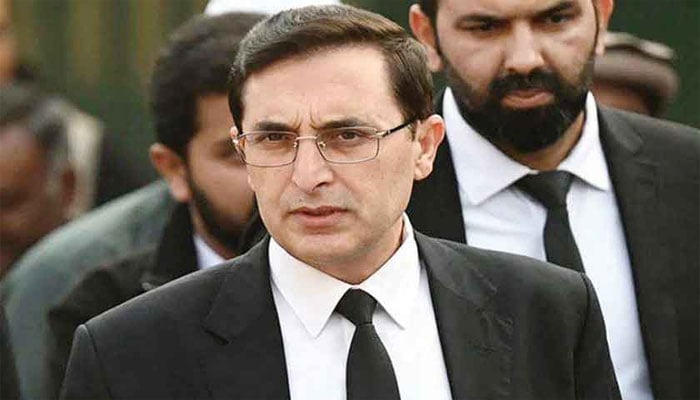
    A district and sessions court in Islamabad has dismissed a petition filed by Pakistan Tehreek-e-Insaf (PTI) Chairman Barrister Gohar Ali Khan, who had sought the registration of a criminal case against Prime Minister Shehbaz Sharif, Interior Minister Mohsin Naqvi, and several other senior government officials over the events of the November 26 protest. The court issued a detailed 17-page written judgment, outlining the reasons for rejecting the application. The verdict was authored by Additional Sessions Judge Afzal Majoka, who concluded that the petitioner had failed to provide sufficient evidence to justify the registration of a first information report (FIR). According to the judgment, Barrister Gohar was given multiple opportunities to appear before the court and record his statement as an eyewitness. However, the court noted that he did not record his testimony despite repeated chances. The ruling further stated that the petitioner neither presented eyewitnesses nor submitted legally admissible evidence in support of his allegations. The court observed that the application relied mainly on claims without providing documentary or forensic material required to initiate criminal proceedings. The petition alleged that 12 people lost their lives and more than 38 PTI supporters were injured during the November 26 protest. However, the court noted that no post-mortem reports, death certificates, medical records, digital videos, photographs or other primary evidence were produced to verify the claims. The judgment emphasized that criminal action cannot be initiated against senior public officeholders solely on the basis of verbal allegations. It said there must be credible and legally admissible evidence before the court can direct the registration of an FIR against high-ranking officials. Among those named in the petition were Prime Minister Shehbaz Sharif, Interior Minister Mohsin Naqvi, Information Minister Atta Tarar, Defence Minister Khawaja Asif, Islamabad Inspector General of Police Ali Nasir, DIG Operations Ali Raza, SSP Operations Zeeshan Haider and other officials. The court also observed that if the petitioner believed that government institutions were not cooperating in the investigation, he had legal options available under Pakistani law. These included approaching the courts for further investigative measures, including exhumation where legally justified. The judgment noted that no such legal remedies were pursued.

  • |

    India’s young protesters turn memes into a tool of resistance

    NEW DELHI: A massive youth-led protest in India’s capital has taken an unusual turn after thousands of demonstrators responded to a police crackdown not only with slogans but also with memes, short videos and social media posts. The online campaign has become a powerful extension of the street movement, with young protesters using humour to document their experiences and keep public attention focused on their demands. The demonstrations were organised by supporters of the Cockroach Janta Party (CJP), a youth movement that first emerged over allegations of examination paper leaks and irregularities in government recruitment. Over time, the campaign expanded into a broader call for transparency, accountability and reforms in India’s education and recruitment systems. Tens of thousands of protesters marched towards Parliament in New Delhi, demanding the resignation of Education Minister Dharmendra Pradhan. Demonstrators accused the government of failing to stop repeated examination leaks that they say have damaged the future of millions of students. The minister has rejected the allegations and insisted that opposition parties are using students for political purposes. Police blocked the march before protesters could reach Parliament. Security personnel used tear gas and baton charges to disperse the crowd after demonstrators attempted to cross security barriers. Authorities also suspended mobile internet services around the protest area, saying the measure was necessary to maintain law and order. Both protesters and police reported injuries during the clashes. Demonstrators claimed that many participants were beaten during the operation, while police said several officers were also injured. Once internet services were restored, social media platforms were flooded with videos recorded during the protest. Instead of sharing only images of violence, many young protesters posted humorous clips showing themselves preparing for the march, running from tear gas and joking about the day’s events. Several participants uploaded “fit check” videos before joining the protest. The popular social media trend, usually used to show clothing and fashion, was transformed into political content. Some joked that they were dressed for a protest where they expected to face police action. Hours later, many of those same individuals were posting videos from the streets after the clashes. Other protesters shared short clips reviewing the effects of tear gas in a humorous style or laughing about the long distances they ran while escaping baton charges. The humour quickly attracted millions of views and became one of the defining features of the protest movement online. Participants said the jokes were never meant to make light of the violence. Instead, they described humour as a way to deal with fear and emotional stress. Many said laughing together helped them remain calm during an extremely tense situation. Young demonstrators also explained that recording videos had become a natural part of participating in modern protests. Smartphones allowed them to document events from their own perspective and preserve evidence of what happened on the streets. Researchers who study digital culture say the protests highlight how political activism is changing among younger generations. Unlike traditional demonstrations that relied mainly on speeches, banners and newspapers, today’s movements increasingly use short videos, memes and online storytelling to spread their message. Experts believe internet humour has become an effective political tool because it reaches audiences who may not normally follow current affairs. A single viral video or meme can introduce complex political issues to millions of young people in a simple and engaging way. Observers also note that humour has always played an important role in protest movements around the world. Songs, cartoons, street theatre and satire have historically helped protesters build unity, reduce fear and maintain morale during difficult campaigns. Social media has simply given those traditions a new digital form.

  • | | |

    Petrol up Rs6.39, diesel Rs7.83

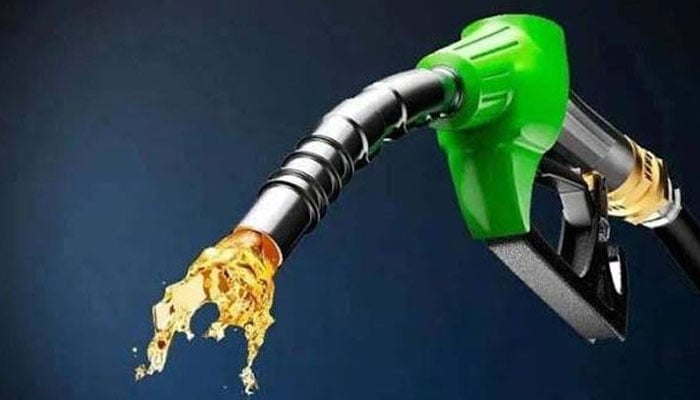
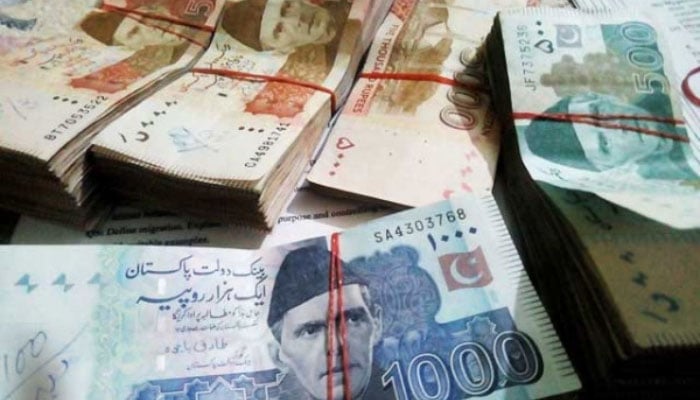
    The federal government has announced an increase in the prices of major petroleum products, including petrol, high-speed diesel and kerosene oil. The revised prices came into effect from today and will remain applicable for one day, according to official notifications. The Oil and Gas Regulatory Authority (OGRA) issued a notification confirming the increase in fuel prices. The revised rates were also endorsed through a separate notification issued by the Petroleum Division. Under the new pricing structure, the price of petrol has been increased by Rs6.39 per litre. Following the increase, the new retail price of petrol has been fixed at Rs327.12 per litre. The price of high-speed diesel (HSD) has also been revised upward. It has been increased by Rs7.83 per litre, taking the new price to Rs375.04 per litre. The government has also raised the price of kerosene oil by Rs7.80 per litre. The new price has been set at Rs297.17 per litre. The revised fuel prices became effective immediately after the issuance of the official notifications. According to the government, these rates will remain in force for one day only. The increase is expected to affect transportation costs and fuel expenses for consumers during the period in which the revised prices remain applicable. Petrol is widely used by private vehicles and motorcycles, while high-speed diesel is consumed by heavy transport vehicles, public transport, agriculture and industrial sectors. Kerosene oil is commonly used in remote areas for cooking and heating purposes.

  • | |

    Maryam hits back at Bilawal with video proof

    Punjab Senior Minister Maryam Aurangzeb has responded to criticism by Pakistan Peoples Party (PPP) Chairman Bilawal Bhutto Zardari by releasing video footage showcasing the condition of roads, streets, and sanitation in several cities across Punjab. The response followed Bilawal’s address at an election rally in Azad Jammu and Kashmir (AJK), where he questioned the state of development and municipal services in different parts of Punjab. During his speech, Bilawal raised concerns about the condition of cities beyond Lahore and asked whether residents of other districts were receiving the same level of attention and development. Soon after the speech, Maryam Aurangzeb shared a series of videos on social media. The footage focused on the same cities mentioned by Bilawal. According to her, the videos were intended to present the actual situation on the ground and respond directly to the questions raised during the rally. The videos highlighted roads, streets, and cleanliness operations in different districts. They showed paved roads, cleaned streets, and sanitation activities carried out by local authorities. Maryam Aurangzeb maintained that the footage reflected the provincial government’s ongoing efforts to improve infrastructure and public services across Punjab. She gave special attention to Vehari and Kasur, two districts specifically mentioned by Bilawal in his speech. To answer his criticism, she shared separate videos from both cities. The footage displayed roads, residential streets, and cleanliness arrangements, which she described as evidence of the government’s development work. Maryam Aurangzeb said the videos served as visual proof of the progress made in Punjab. She maintained that the provincial government was working to improve civic facilities in both major cities and smaller districts, rather than focusing only on Lahore. https://x.com/i/status/2079953668946976948

  • | | |

    Aurangzeb reviews Pakistan’s economic progress i…

    Finance Minister Muhammad Aurangzeb held a series of high-level meetings with senior officials of the International Monetary Fund (IMF) in Washington to review Pakistan’s economic performance and discuss the progress of the country’s reform agenda. The meetings included discussions with IMF First Deputy Managing Director Dan Katz, Deputy Managing Director Nigel Clarke, Middle East and Central Asia Department Director Jihad Azour, and IMF Mission Chief for Pakistan Iva Petrova. During the talks, the finance minister presented an overview of Pakistan’s recent macroeconomic performance. He highlighted improvements in fiscal management, stronger external accounts, higher foreign exchange reserves, record inflows of overseas workers’ remittances, and a healthier current account position. He also noted that the government had met its revenue collection targets, which he said reflected the positive impact of ongoing economic reforms. The discussions also focused on Pakistan’s progress under the IMF-supported Extended Fund Facility (EFF) and the Resilience and Sustainability Facility (RSF). Both sides reviewed measures aimed at strengthening economic stability and ensuring long-term, sustainable growth. Aurangzeb briefed IMF officials on reforms in taxation, the energy sector, public debt management, tariff rationalisation, and the government’s privatisation programme. He also discussed efforts to broaden financing sources, improve the investment climate, and restore Pakistan’s access to international capital markets. The meetings further covered issues related to human capital development, increasing women’s participation in the economy, addressing demographic challenges, encouraging technology-led growth, and promoting private sector investment and export-driven development. The finance minister reaffirmed the government’s commitment to maintaining fiscal discipline and implementing structural reforms. He said Pakistan would continue pursuing policies aimed at strengthening economic stability, improving investor confidence, and achieving long-term economic transformation. During his visit to Washington, Aurangzeb also met John Jovanovic, President and Chairman of the Export-Import Bank of the United States, to discuss expanding economic cooperation between the two countries. The meeting focused on financing long-term development projects and increasing bilateral trade in agricultural commodities, including cotton and soybeans, as well as cooperation in the hydrocarbons sector. The two sides also explored opportunities to facilitate greater access to US financing, technology, equipment, and services for priority projects in Pakistan. Officials agreed to identify short-term investment opportunities, appoint focal persons from both sides, and prepare a strategic cooperation framework. The proposed framework is expected to be finalised and signed on the sidelines of the United Nations General Assembly session in September 2026.

  • |

    US House approves $1.15 trillion defense budget package

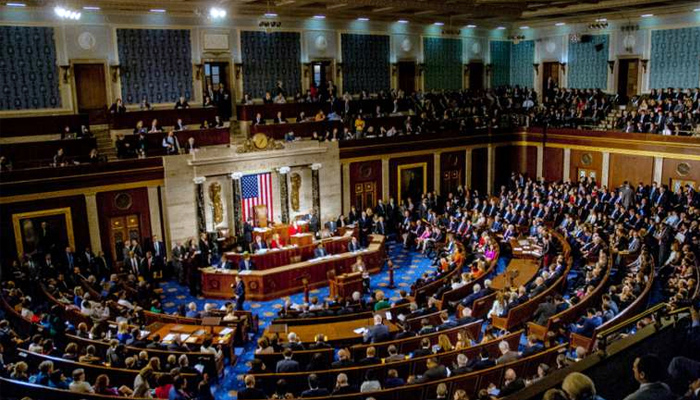
    The US House of Representatives has passed a $1.15 trillion defense budget bill by a narrow vote of 216 to 212. Supported by a majority of Republicans and six Democrats, the legislation includes provisions to deepen defense ties and military technology integration with Israel. The bill faced internal pushback, with Congressman Thomas Massie raising concerns over integrating US military technology and supply chains with Israel. The passage follows a major funding request from the Trump administration, which asked Congress for nearly $87 billion in supplemental appropriations to support ongoing operations against Iran. Appropriations Committee, US Secretary of Defense Pete Hegseth stated that military action against Iran has cost $37.5 billion so far, including projected costs through September 30. Hegseth urged lawmakers to maintain robust military spending, arguing that failing to provide the full defense budget represents the single greatest threat to national security.

  • |

    France records more than 5,000 deaths during June heatwave

    More than 5,000 excess deaths were recorded in France during the severe heatwave that spanned late June and early July. According to data released by France’s national health agency, Santé publique France, 21,674 total deaths from all causes were registered between 17 June and 2 July across the affected regions. Under normal conditions, statistical modeling projected approximately 15,910 deaths for that period, resulting in 5,764 additional or excess deaths, a 36 per cent increase above expected baselines. Public health officials attribute the sharp rise in mortality to the intensity, early onset, and duration of the extreme temperatures, which affected 92 administrative departments representing nearly 98.5 per cent of the country’s population. Over half of the excess deaths occurred during the peak of the heatwave between 25 June and 27 June, with individuals aged 75 and older accounting for roughly two-thirds of the fatalities. The Île-de-France region, which encompasses Paris, recorded the highest impact, experiencing nearly 2,000 excess deaths, an 80 per cent surge above normal levels. The preliminary figures mark the highest excess mortality recorded from a heatwave in France since the historic 2003 heatwave. Authorities noted that the initial tally surpasses total summer heat-related excess deaths from the entire previous year, with consolidated final figures expected following the conclusion of summer health monitoring in the autumn.