• Senate seeks action to protect Pakistan’s historical archives

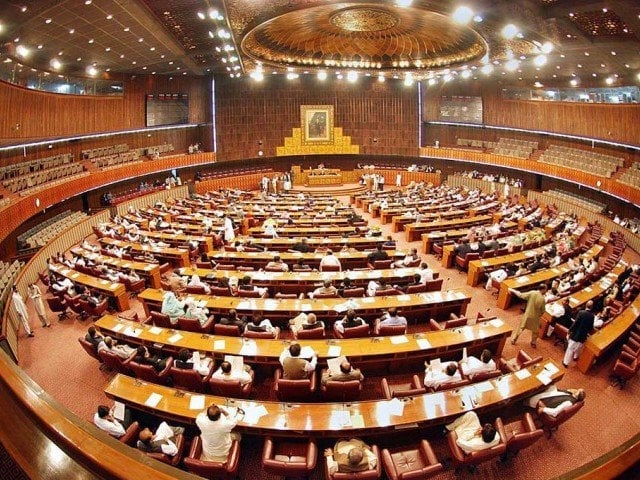
    Islamabad: Pakistan’s historical records and national documents came under Senate focus as lawmakers raised concerns over the protection, preservation and possible illegal movement of valuable archival material. The Senate Standing Committee on Delegated Legislation reviewed new rules for the National Archives and called for stronger measures to protect important historical documents from damage, smuggling and misuse. The committee, chaired by Senator Naseema Ehsan, examined the draft National Archives Rules and Archival Material Preservation and Export Control Rules during a meeting at Parliament House. Officials informed the committee that under the proposed rules, documents of major national importance would be officially declared archival material after 25 years. This step would provide stronger legal protection and help prevent the illegal removal of historical records from Pakistan. The committee stressed that old documents are not just papers but a valuable record of the country’s history, identity and national memory. Members emphasized the need to create awareness among young people about protecting historical records. The committee directed that the draft National Archives Research and Reference Rules 2026 should be finalized after considering members’ recommendations. Chairperson Senator Naseema Ehsan also directed the Cabinet Division to consult provincial governments before finalizing the rules to develop a coordinated system across Pakistan. During the meeting, officials briefed the committee about efforts to modernize the National Archives of Pakistan. Officials informed the committee that around nine million archival documents have already been digitized and the next phase will focus on making these records available to the public through an online electronic library. The committee appreciated the digitization project but stressed that strong cybersecurity and data protection measures must be included to protect digital records from misuse or unauthorized access. Officials informed the committee that a Rs 285 million modernization project is underway to improve fire safety systems, lighting and environmental controls at the National Archives. However, officials highlighted a shortage of skilled archivists due to low salaries and limited career opportunities in the field. The committee recommended cooperating with universities and academic institutions to introduce specialized courses in archival preservation and improve professional opportunities for experts. The committee also reviewed rules related to the preservation, exhibition and export control of archival material owned by both government institutions and private individuals. Members welcomed the introduction of a licensing system aimed at controlling the illegal movement of historical records outside Pakistan. The committee expressed particular concern over archival collections held in provincial areas and stressed the need for their digitization and proper preservation through cooperation with provincial authorities. The chairperson directed that the legal framework should include stronger penalties for smuggling archival material. The committee also called for disaster management plans to protect historical records from floods, fires and other natural risks. During the meeting, officials also briefed the committee on the progress of the Balochistan Child Protection Commission. The committee was informed that the Balochistan Cabinet had approved Child Protection Rules 2026, while legislation related to child marriage was under consultation. The Ministry of Human Rights informed the committee about the lack of rehabilitation facilities for children affected by drug dependency and support centres for girls abandoned by their families. The committee stressed the need for awareness campaigns about safe social media use among children and encouraged parents to play an active role in protecting children online. Senator Naseema Ehsan appreciated the steps taken for child protection and emphasized that continuous efforts are required to safeguard children’s rights.

  • How to remove shower head Limescale

    If the water coming from your shower has become weak or sprays unevenly limescale buildup inside the shower head could be the reason. Experts say a simple citric acid solution is one of the easiest and most effective ways to restore normal water flow. Limescale forms when minerals such as calcium and magnesium commonly found in hard water collect inside the tiny holes of the shower head. Over time these deposits reduce water pressure block the spray nozzles, and can shorten the life of the fixture. To clean it experts recommend mixing 2–3 tablespoons of citric acid with warm water. Remove the shower head if possible and soak it in the solution for 30 minutes to one hour. After soaking gently scrub the nozzles with an old toothbrush and rinse thoroughly with clean water. If the shower head cannot be removed pour the citric acid solution into a plastic bag and secure it around the shower head with a rubber band so the nozzles remain fully submerged. After soaking remove the bag scrub away any remaining deposits and rinse well. Experts say this method helps dissolve stubborn limescale improves water pressure restores an even spray pattern and can extend the lifespan of the shower head. To prevent future buildup clean your shower head at least once a month wipe it dry after use whenever possible and consider installing an anti-limescale or water softening filter if you live in an area with hard water. Regular maintenance can keep your shower working efficiently and reduce the need for costly replacements.

  • What do different colours on Google Maps mean?

    Google Maps is a highly useful navigation app. Although users may occasionally encounter some issues, it generally provides accurate directions for most routes. Over the years, Google Maps has undergone many changes and received several new features to improve the user experience. One of its most prominent features is the use of different colours to indicate traffic conditions. Google Maps uses various visual indicators to show different types of roads, highways, underground tunnels, railway tracks and other features. At the same time, specific colours are used to help drivers understand the traffic situation in a particular area. Basic colours on Google Maps Roads and highways are generally displayed as gray lines. There are some differences, however. Light gray is used for streets and smaller roads while dark gray is used for major roads. Railway lines are also shown in light gray but they are represented by thin lines so users can identify them as train tracks. When it comes to traffic conditions, users can turn on the traffic layer through the Layers button in Google Maps. Green indicates that traffic is moving smoothly and that there is little or no congestion. Yellow and orange indicate that vehicles are moving but at slower-than-normal speeds meaning you may experience some delays. Yellow indicates slightly heavier traffic while orange indicates more significant congestion. Red is primarily a warning colour indicating heavy traffic in an area and potentially longer travel times. It may mean that you could encounter a traffic jam. Light red indicates heavy traffic while dark red signals very heavy traffic or significant congestion. Blue is not related to traffic. Instead, it indicates route guidance. Dark blue is used for the preferred or selected route while light blue is used to show alternative routes.

  • | | | |

    PM Shehbaz directs timely implementation of privat…

    Prime Minister Shehbaz Sharif has directed all relevant ministries and institutions to ensure the timely implementation of targets and deadlines under the government’s privatisation programme, stressing the need for close coordination to complete the process according to schedule. The directives were issued during a meeting held to review progress on the privatisation of state-owned enterprises. The meeting was informed that a total of 27 public sector organisations have been included in the government’s privatisation agenda, which is being carried out in three phases. During the briefing, officials updated the prime minister on the progress of the privatisation of Islamabad, Lahore and Karachi airports, as well as several major public sector entities. The meeting also reviewed the privatisation process of electricity distribution companies, including the Islamabad Electric Supply Company (IESCO), Faisalabad Electric Supply Company (FESCO), and Gujranwala Electric Power Company (GEPCO). Officials informed the prime minister that Expressions of Interest (EOIs) have already been invited for all three companies. The deadline for investors to submit documents for FESCO has been set for August 7, while submissions for GEPCO will close on August 21. The deadline for IESCO is September 7, 2026. The briefing noted that several international companies have expressed interest in acquiring the power distribution companies. Officials added that roadshows and engagement sessions with potential investors are continuing to attract further investment. Prime Minister Shehbaz also reviewed the proposed privatisation of the Zarai Taraqiati Bank Limited (ZTBL) and directed authorities to design the transaction in a way that preserves the bank’s vital role in supporting Pakistan’s agricultural sector. He emphasised that the bank should continue providing agricultural loans and financial services to farmers even after privatisation. The prime minister said farmers’ access to financial resources is essential for increasing crop yields and improving agricultural productivity. He further stated that agriculture remains a key pillar of Pakistan’s economy and plays a critical role in ensuring food security. Therefore, any privatisation model should safeguard the sector’s long-term interests while maintaining uninterrupted financial support for farmers.

  • Experts warn against extra soft pillows

    A soft pillow may feel comfortable at first but health experts say it is not always the best option for good sleep. They explain that a pillow should not only feel soft in the store but also provide proper support for your head and neck throughout the night. Physiotherapists say many people choose pillows after trying them for only a few minutes. However the real test comes after several hours of sleep. As your head presses down on the pillow it can lose its shape. If it does not give enough support your neck and spine may become misaligned leading to pain or stiffness in the morning. Allan Fu, a physiotherapist and lecturer at the University of Sydney says many people judge a pillow by how comfortable it feels at first. He believes the most important thing is whether the pillow keeps your head and neck properly supported all night. A short test in a store is not enough to know how well a pillow will perform. Experts say the average human head weighs about 4.5 kilograms which means a pillow is under constant pressure while you sleep. If it is too soft it may not support your head and neck properly. That is why comfort should not be the only thing to consider when buying a pillow. Research suggests that latex and memory foam pillows may help reduce neck pain because they keep their shape better and provide steady support. Feather and synthetic fiber pillows can also be used but experts recommend choosing firmer versions as very soft ones lose their support more quickly. Experts also advise against judging a new pillow after just one night. Feather and synthetic pillows usually settle into their normal shape within a day or two while memory foam pillows may take several weeks to fully adjust to your body. When buying a pillow experts recommend lying on it for a few minutes if possible.  A pillow that feels slightly firmer or a little higher at first may become more comfortable with regular use. They say proper support is more important than softness for keeping your neck healthy.

  • | |

    Delay in NOC stalls NADRA counter at Pakistan Emba…

    A proposed NADRA counter at the Pakistan Embassy in Tokyo, expected to benefit nearly 30,000 to 35,000 Pakistanis living in Japan, has remained stalled for the past three to four months due to delays in the issuance of a No Objection Certificate (NOC), despite receiving formal approval from NADRA. According to official documents, NADRA granted in-principle approval for the establishment of the counter on April 22, 2026, and requested the relevant authorities to issue the required NOC without delay. The documents stated that the counter would become operational immediately after the NOC is issued. The delay has prevented the project from moving forward, leaving thousands of overseas Pakistanis in Japan facing continued difficulties in accessing essential identity and registration services. Sources said the initiative was made possible through the persistent efforts of Overseas Pakistanis Foundation (OPF) Chairman Syed Qamar Raza Shah. During his visit to Japan in April, he met members of the Pakistani community, listened to their concerns, and identified the absence of NADRA services as one of their most pressing issues. After returning to Pakistan, Shah reportedly pursued the matter with the relevant departments and raised it at senior government levels, resulting in NADRA’s formal approval for establishing the counter at the embassy. Under the approved plan, NADRA agreed to provide biometric machines, fingerprint devices, cameras, technical support, and staff training. The Pakistan Embassy in Tokyo is responsible for providing office space, computers, internet connectivity, furniture, and other administrative facilities. Officials said all technical and administrative arrangements have already been finalised. However, the project remains on hold because the required NOC has yet to be issued by the concerned ministry. As a result, Pakistani nationals living in Japan continue to face significant challenges in obtaining or renewing national identity cards, completing family registration, biometric verification, and accessing other NADRA-related services. Members of the Pakistani community in Japan have praised Syed Qamar Raza Shah for his efforts, saying the project would likely not have reached the approval stage without his personal involvement. They urged the relevant authorities to demonstrate the same commitment by removing the remaining administrative hurdles and ensuring that the approved project is implemented without further delay. The community has also appealed to Prime Minister Shehbaz Sharif and Deputy Prime Minister Senator Ishaq Dar to personally intervene and direct the concerned authorities to issue the pending NOC so that the NADRA counter can be established at the Pakistan Embassy in Tokyo as soon as possible, providing long-awaited relief to thousands of overseas Pakistanis.

  • Pakistan entering era of national reforms, not systemic failure: Ahsan Iqbal

    Islamabad: Federal Minister for Planning, Development and Special Initiatives Professor Ahsan Iqbal on Monday said Pakistan had not failed as a state but had entered an era of national reforms, urging the country’s youth to lead the transformation with confidence, innovation and hard work. Addressing the launch ceremony of a national anthem marking Pakistan’s 79th Independence Day and the 150th birth anniversary of Quaid-e-Azam Muhammad Ali Jinnah, the minister said the country was standing at the threshold of a new phase driven by hope, national unity and economic revival. Rejecting claims that Pakistan’s institutions had collapsed, Ahsan Iqbal said the country was modernising its governance system and national priorities to meet the demands of the 21st century. “This is not the age of systemic failure; it is the age of national reform,” he said, adding that sustainable progress required continuity of reforms, national consensus and collective responsibility. The minister stressed that the challenges facing a country of more than 250 million people could not be addressed by elected representatives alone. He called for the active participation of youth, the private sector, civil society, experts and state institutions in driving national development. Highlighting the role of young Pakistanis, Ahsan Iqbal described them as the country’s greatest asset. “Our youth are not cockroaches; they are Iqbal’s Shaheens,” he said, urging them to embrace ambition, self-confidence and excellence in shaping Pakistan’s future. Referring to the country’s economic outlook, the minister said predictions made in 2022 about Pakistan defaulting had proved wrong, attributing the recovery to prudent economic policies, public support and collective national resolve. He said overseas Pakistanis were increasingly recognising the country’s improving economic trajectory. The minister said the government’s URAAN Pakistan initiative was a comprehensive national transformation framework aimed at building a one-trillion-dollar economy through export-led growth, technological advancement, energy security, digital transformation, human capital development and sustainable development. He added that significant investments were being made to equip young people with artificial intelligence, digital skills and future-oriented education, saying the youth were not only Pakistan’s future but also its present. Ahsan Iqbal said the newly launched national anthem symbolised national awakening and reflected the vision of Allama Muhammad Iqbal and Quaid-e-Azam Muhammad Ali Jinnah by inspiring young people to pursue knowledge, character, self-reliance and nation-building. He concluded by saying that Pakistan’s strength lay in the talent, resilience and determination of its youth and reaffirmed that URAAN Pakistan was a national mission rather than the agenda of any single political party, aimed at building a strong, prosperous and self-reliant Pakistan.

  • | |

    Bilawal calls AJK polls ‘bloody elections&#8…

    Pakistan Peoples Party (PPP) Chairman Bilawal Bhutto Zardari has strongly criticised the recent Azad Jammu and Kashmir (AJK) Legislative Assembly elections, describing them as “bloody” and “rigged” while vowing to continue the party’s political and legal battle over the results. In a statement, Bilawal alleged that the elections were neither free nor fair. He claimed the polls were marred by rigging and violence, calling them “bullet elections,” “killer elections,” and “bloody elections.” Despite his criticism of the electoral process, Bilawal thanked PPP supporters for their backing, saying voters had enabled the party to secure victory on nine seats. He further alleged that several seats in Mirpur and Muzaffarabad had been “stolen” from the PPP and pledged to pursue all constitutional and legal avenues to reclaim what he described as the party’s rightful mandate. Bilawal said the PPP would not be discouraged by the election outcome and reaffirmed the party’s commitment to continuing its political struggle. “The Pakistan Peoples Party does not lose courage, does not retreat, and does not abandon the political field,” he said. The PPP chairman also announced that he would address a public gathering in Bagh district as part of the party’s ongoing election campaign. Inviting supporters from the Poonch region, Bilawal said he would visit the area on August 10 and urged party workers and supporters to prepare for the rally. His remarks come amid continuing political tensions following the AJK elections, with the PPP maintaining that it will challenge the disputed results through legal and constitutional channels.

  • Sajid Khan shines as Pakistan dismiss West Indies 

      TRINIDAD:Pakistan’s bowlers wrapped up the West Indies first innings on the second day of the second and final Test at Queen’s Park Oval on Monday, with off-spinner Sajid Khan leading the charge by claiming four wickets. The Caribbean side were eventually dismissed for 344 runs in 105.4 overs, after resuming their innings from an overnight score of 239 for 5. Despite several determined partnerships and fighting half-centuries, the hosts were unable to build on their solid position as Pakistan’s bowlers struck regularly during the morning session. Justin Greaves emerged as the top scorer for the West Indies with a composed 73 off 150 deliveries, an innings decorated with nine boundaries. The all-rounder displayed patience and resilience, helping stabilize the innings after the loss of early wickets. Captain Roston Chase also played a significant role, contributing a valuable 70 runs from 126 balls, which included 11 fours. His knock provided the backbone of the middle order and kept Pakistan’s bowlers under pressure for long periods. Greaves and Chase resumed batting together on the second morning and added another 20 runs to their overnight partnership before Pakistan finally found the breakthrough. The pair had already frustrated the visitors with a crucial 96-run sixth-wicket partnership, helping the West Indies recover from a difficult position. Pakistan’s breakthrough came in the 82nd over when Ali Usman dismissed skipper Roston Chase, bringing an end to the dangerous stand. The wicket shifted the momentum back in Pakistan’s favour and opened the door for the visitors to attack the lower order. Following Chase’s dismissal, Pakistan’s bowlers maintained disciplined lines and lengths, preventing the remaining West Indies batters from adding substantial contributions. Sajid Khan, who consistently troubled the batters with his accurate off-spin, played a decisive role in cleaning up the tail. His four-wicket haul ensured that the hosts were unable to push their total beyond the 350-run mark. Pakistan’s bowling attack complemented Sajid well, with Ali Usman providing an important breakthrough at a crucial stage, while the rest of the bowlers kept the scoring under control and applied constant pressure. Their collective effort ensured that West Indies’ promising overnight position did not translate into a commanding first-innings total. Although the hosts managed to post a competitive score of 344, Pakistan will feel satisfied with the way they fought back after Greaves and Chase threatened to take the game away with their resilient partnership. Restricting the West Indies below 350 gives Pakistan a realistic opportunity to respond strongly with the bat and establish a solid first-innings platform. The focus now shifts to Pakistan’s batting unit, which will aim to negotiate the West Indies bowling attack and build a substantial reply. With the match evenly poised after the completion of the hosts’ first innings, the visitors will look to capitalize on the momentum generated by their bowlers and gain the upper hand in the remainder of the Test.

  • Senate seeks PM intervention over Khairpur Dates Research Centre

    Islamabad: A major agriculture research project aimed at improving Pakistan’s date production has faced a setback after the proposed Dates Research Centre in Khairpur was excluded from the Public Sector Development Programme 2026 and 2027, prompting the National Assembly Standing Committee on National Food Security and Research to demand immediate reconsideration of the decision. The committee expressed concern that a project designed to improve date farming, develop disease-resistant varieties, increase exports and support farmers was left out due to financial limitations. The matter was discussed during the 29th meeting of the National Assembly Standing Committee on National Food Security and Research, chaired by Syed Hussain Tariq, MNA, at Parliament House Islamabad. Officials informed the committee that the joint project of the Pakistan Agricultural Research Council and Shah Abdul Latif University Khairpur for establishing the Dates Research Centre could not be included in the PSDP 2026 and 2027 because of limited financial resources. The Ministry of Planning, Development and Special Initiatives informed the committee that the Ministry of National Food Security and Research had prioritized only three new development schemes for inclusion in the national development programme, leaving several important projects outside the plan. The committee strongly disagreed with the decision and highlighted the importance of the dates sector for Pakistan’s agriculture and economy. Members noted that Pakistan is among the leading date producers, and a dedicated research centre could help farmers increase production, fight crop diseases, improve quality, develop new varieties and boost the country’s share in international markets. The committee directed the Ministry of National Food Security and Research to formally approach the Ministry of Planning and request a review of the decision. The committee also decided to seek a meeting with the Prime Minister to discuss establishing the Dates Research Centre through cooperation between the Pakistan Agricultural Research Council and Shah Abdul Latif University Khairpur. During the proposed meeting with the Prime Minister, the committee also plans to discuss other major agriculture challenges including wheat imports, setting a fair minimum support price for wheat, providing DAP fertilizer subsidies similar to regional countries and investigating reasons behind wheat shortages despite earlier reports of surplus stocks. The committee said agricultural development requires long term planning and research facilities to support farmers and improve food security. The meeting also reviewed concerns regarding artificial sweeteners and flavored drinks, especially their possible health effects on children, pregnant women and breastfeeding mothers. Officials informed the committee that earlier recommendations were made after findings from the National Institutes of Health highlighted possible health risks linked with excessive consumption of such products. The committee was informed that frequent consumption of artificial sweeteners and flavoured drinks may contribute to health problems, including an increased risk of diabetes and other serious diseases. The committee expressed dissatisfaction over delays in implementing earlier recommendations and directed the Pakistan Standards and Quality Control Authority to urgently review existing regulations. PSQCA was directed to hold a meeting in Islamabad involving committee members, health officials, NIH representatives, mango growers and other stakeholders. The committee instructed that revised standards should include clear product labels, prevention of misleading claims, visible health warnings, proper expiry date information, suitable fruit pulp requirements and regulations for plastic bottle usage. The National Institutes of Health was also directed to provide scientific evidence regarding health impacts and international guidelines to help improve the regulatory framework.