International

  • |

    Strait of Hormuz closure halts oil shipments from Iran’s Kharg Island

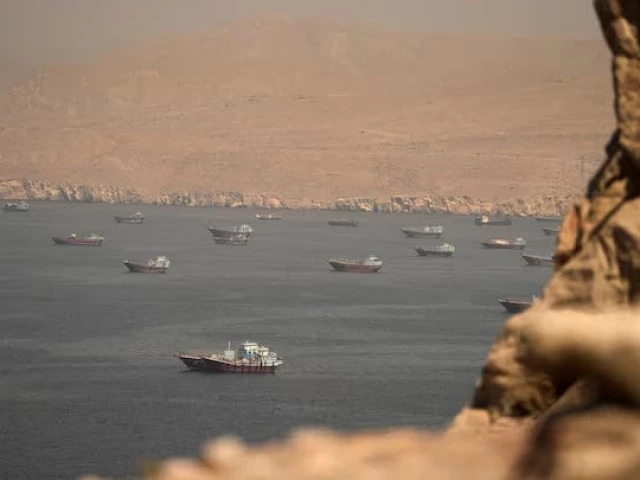
      US media has claimed that the closure of the Strait of Hormuz has completely disrupted oil shipments from Iran’s Kharg Island, one of the country’s most important centres for crude oil exports. According to a reports, Kharg Island serves as the largest hub for the transportation and export of Iranian crude oil. The island plays a central role in Iran’s oil-export infrastructure and handles a significant portion of the country’s crude shipments to international markets. Three oil terminals on Kharg Island have been completely emptied. According to the report, no ship or oil tanker has departed from Kharg Island since July 31, indicating that crude oil exports through the facility have effectively come to a halt. The report further stated that a large share of the oil exported from Kharg Island is destined for China. However, no oil has reportedly been exported from the island for approximately two weeks. The reported disruption is being linked to the situation surrounding the Strait of Hormuz, a strategically important waterway through which a substantial portion of the world’s oil and energy supplies normally pass. Any prolonged disruption in the strait can have significant consequences for oil-producing countries, shipping companies and global energy markets. Kharg Island is particularly important to Iran because of its role in the country’s crude oil export network. Oil produced in different parts of Iran is transported to export terminals, from where it is loaded onto tankers for shipment to international destinations. The reported halt in tanker movements from Kharg therefore represents a major disruption to Iran’s traditional oil-export operations. If the situation continues, it could potentially affect the volume of Iranian crude reaching international buyers, particularly major customers in Asia. China has historically been an important destination for Iranian crude oil, making the reported suspension of shipments from Kharg Island particularly significant. Any interruption in the supply chain could have implications for refiners and traders that rely on Iranian crude. The Strait of Hormuz connects the Persian Gulf with the Gulf of Oman and the Arabian Sea. Its strategic importance comes from the large volume of oil and other energy products transported through the waterway. Because of this, tensions or restrictions affecting maritime traffic in the area can quickly generate concerns in international energy markets. According to report, the absence of vessels from Kharg Island since July 31 suggests that the impact of the reported disruption has extended beyond individual shipping delays. The complete emptying of the island’s three oil terminals could indicate that existing crude stocks have already been cleared while further exports have been prevented or significantly restricted. However, the report’s claims about the complete halt in Iranian oil exports from Kharg Island would need to be assessed alongside independent shipping and energy-market data. Tanker movements, satellite observations and official statements from Iranian authorities and international monitoring organisations can provide additional information about the actual scale and duration of the disruption. The development highlights the vulnerability of global energy supplies to disruptions in major maritime routes. With Kharg Island serving as Iran’s largest crude-export hub and China reportedly receiving most of its shipments, continued restrictions around the Strait of Hormuz could have wider implications for regional trade and international oil markets. For now, the reported absence of oil tankers from Kharg Island since July 31 marks a significant interruption in Iran’s crude export activity and could remain an important factor for global energy markets if the disruption persists.

  • |

    Thai teen’s shooting sparks school safety review

    Thai police said a 14-year-old boy accused of carrying out a deadly shooting near Bangkok had shown an interest in firearms for up to two years and had watched violent material online. The teenager allegedly killed his grandparents at their home on Friday before shooting six people at his school and taking his own life. More than 20 others suffered injuries in the attack, which became Thailand’s deadliest mass shooting since 2022. Deputy Commissioner of Provincial Police Region 1 Atthapol Anusit told reporters that investigators had questioned 17 witnesses so far. Police also found a knife in the teenager’s school bag, along with a firearm, spent cartridge cases and a personal computer. Investigators examining the computer found social media content involving violence. Police also said the boy had used social media to learn about firearms, although they have not yet found evidence that he regularly practised shooting. A teacher had confiscated a BB gun from the boy at school last year, according to police. The teenager had lived with his grandparents for about 12 years after his parents separated. In response to the tragedy, Thailand’s Ministry of Education said it would introduce new school safety measures within three months. The plan includes mental health screening, referrals for students considered at risk, emergency response drills, stronger anti-bullying measures and tighter checks to prevent weapons and other dangerous items from entering schools. The shooting has renewed calls for stronger firearm controls in Thailand, which has one of the highest rates of civilian gun ownership in Southeast Asia.

  • | |

    Did a Japanese man really spend Rs220 crore to become a dog?

    A viral claim suggesting that a Japanese millionaire spent Rs220 crore on surgeries to transform himself into a dog has been debunked, with available information indicating that the story is based on a highly realistic costume rather than any medical procedure. The claim recently gained traction on social media alongside a video showing a man appearing to move and behave like a dog. Posts circulating online alleged that a 26-year-old Japanese millionaire, reportedly identified as “Jaso”, had undergone expensive surgeries to permanently alter his body and acquire a canine appearance. However, there is no credible evidence that the man underwent such surgeries or spent anything close to Rs220 crore on a physical transformation. The viral story appears to have originated from a genuine case involving a Japanese man known online as “Toco”. He attracted international attention after fulfilling his long-held dream of experiencing life as a dog. Toco commissioned Japanese modelling and sculpting company Zeppet to design an extremely realistic Collie costume. The outfit was specially created to resemble the appearance of a real dog and reportedly cost around 2 million Japanese yen, equivalent to approximately Rs11–12 lakh. The costume was designed with considerable attention to detail, allowing Toco to convincingly appear as a Collie when wearing it. Videos and photographs of him using the costume subsequently spread widely across social media. The transformation, however, was entirely temporary. Toco did not undergo surgery, alter his body permanently or medically transform himself into an animal. Instead, he uses the elaborate costume as part of a personal hobby and to fulfil a childhood fascination with experiencing life from an animal’s perspective. The dramatic Rs220-crore figure appears to have been added or distorted as the original story circulated online. The huge difference between the reported cost of the costume and the alleged surgical expenditure highlights how the original account was exaggerated on social media. The viral video may therefore give viewers the impression that a person has physically transformed into a dog, but the available details point to a sophisticated costume rather than surgery or permanent physical modification.

  • |

    3 killed, 25 injured in Ukraine drone strike on Russia

    Three people were killed and 25 others injured after Ukrainian drones struck Russia’s Belgorod region, according to Russian authorities. Officials said the drone attack took place overnight, targeting areas in and around Belgorod. Emergency teams responded to the affected locations and began rescue and relief operations following the strikes. The latest attack comes amid continued fighting between Russia and Ukraine, with both sides carrying out frequent drone and missile strikes against targets across the border. Meanwhile, Russia has launched an attack on Ukraine’s strategic port city of Odesa. Ukrainian President Volodymyr Zelenskyy confirmed the Russian strike, saying the attack caused damage to the Odesa port. Zelenskyy condemned the assault and said the continued attacks on civilian and critical infrastructure demonstrated the intensity of the ongoing conflict. The strikes on Belgorod and Odesa highlight the continued escalation of cross-border attacks as the war enters another phase of sustained military confrontation.

  • |

    Typhoon Dolphin hits China

    Typhoon Dolphin made landfall in eastern China’s Zhejiang province on Sunday, bringing powerful winds and heavy rain after authorities issued the country’s highest-level typhoon warning. China’s National Meteorological Centre said the storm reached the coast near Yuhuan City at around 5:30pm local time, with winds exceeding 150 kilometres per hour. The typhoon disrupted air and sea travel across the region. Nearly 1,400 flights at Shanghai’s two main airports were cancelled, while Hangzhou airport reported another 270 cancellations. Authorities also suspended more than 200 ferry routes in Zhejiang and Fujian. China evacuated nearly 99,000 people from high-risk areas in Fujian ahead of the storm. Officials also suspended work and transport services in several locations along the typhoon’s expected path. The storm affected neighbouring areas as well. Taiwan cancelled more than 180 flights and suspended dozens of ferry services after heavy rain and strong winds hit the north. In Japan’s Okinawa, seven people suffered minor injuries, while more than 5,000 households lost electricity. Hong Kong also experienced unusually high temperatures. The Hong Kong Observatory recorded 36.9°C and warned that hot weather could continue through Tuesday as warm air from the storm moved over the territory. The weather centre expects Typhoon Dolphin to weaken as it moves northwest across eastern China. However, heavy rain could continue in Shanghai and parts of Zhejiang, Fujian, Anhui and Jiangsu through Monday.

  • |

    Hong Kong records hottest day in more than 140 years 

      Hong Kong has experienced an unprecedented heatwave, with temperatures reaching a record high and breaking a more than 140-year-old temperature record. The city endured its hottest day on record as the Hong Kong Observatory recorded a scorching 36.9°C at its headquarters. The extraordinary heat was felt even more intensely in several parts of the region. In Sheung Shui, located in Hong Kong’s New Territories, temperatures climbed to an astonishing 39.8°C, highlighting the severity of the heatwave affecting the territory. According to reports,the extreme weather conditions were linked to subsiding air associated with Tropical Cyclone Dolphin. The atmospheric conditions caused temperatures to rise sharply across Hong Kong, producing exceptionally hot and humid weather. The new temperature record surpassed the previous official high of 36.6°C, which was recorded in August 2017 during the passage of Typhoon Hato. The latest reading therefore represents a significant increase and underscores the intensity of the current heat event. The Hong Kong Observatory serves as the city’s primary reference point for official temperature records. However, temperatures recorded in other areas demonstrate that some communities experienced considerably more severe conditions than the official citywide figure. The 39.8°C recorded in Sheung Shui is particularly notable and reflects the potentially dangerous conditions faced by residents in inland areas. Authorities have urged members of the public to remain cautious as the extreme temperatures continue. Residents have been advised to avoid prolonged exposure to direct sunlight, remain hydrated and take appropriate measures to reduce the risk of heat-related illness. Vulnerable groups, including older people, children and those working outdoors, are particularly susceptible to the effects of extreme heat. Weather officials have warned that the intense heat is unlikely to disappear immediately. Forecasts indicate that the heatwave could continue for the next several days before changing weather conditions potentially bring some relief. Meteorological authorities are closely monitoring the situation as hot and humid conditions remain across the region. The record-breaking temperatures have also renewed concerns about the growing frequency and intensity of extreme heat events. Hong Kong is not alone in facing unusually high temperatures. Several countries across Asia, Europe and the Middle East have experienced severe heatwaves, with temperatures in some locations reaching between 40°C and 55°C. Scientists and climate experts have increasingly warned that extreme heat is becoming a major global environmental challenge. Rising temperatures can place additional pressure on healthcare systems, energy supplies and water resources while increasing risks to people who work or spend extended periods outdoors. Hong Kong’s latest record serves as another reminder of the changing climate and the growing threat posed by extreme weather. As heatwaves become more frequent and intense, authorities and communities are being encouraged to strengthen preparedness and public awareness. With temperatures expected to remain elevated in the coming days, residents across Hong Kong are being urged to follow official weather advisories and take precautions against prolonged heat exposure.

  • |

    Air India pilot undergoes confirmatory drug test after turbulence incident injures 17

      India’s aviation authorities have launched an investigation after an Air India flight experienced severe turbulence that injured 17 passengers and crew members, with the pilot now undergoing additional testing following an initial screening result. The incident occurred on August 4 when an Air India Airbus A320 was travelling from Phuket, Thailand, to New Delhi. The aircraft was carrying 137 passengers and eight crew members when it suddenly lost approximately 300 feet, or 91 metres, in altitude before recovering and continuing its journey safely. After the aircraft landed in the Indian capital, eight passengers and four cabin crew members were taken to hospitals for medical treatment. Authorities said their conditions were stable. Following the incident, both pilots underwent routine screening for psychoactive substances, as required under aviation safety procedures. According to India’s Ministry of Civil Aviation, the initial screening involving the pilot-in-command produced a result that required further examination. The ministry said the pilot’s sample has been sent to an authorised laboratory for confirmatory analysis. Officials are now waiting for the final laboratory report before deciding whether any further action is necessary. The aviation ministry has classified the incident as a “Serious Incident”, prompting India’s Aircraft Accident Investigation Bureau (AAIB) to begin a formal investigation into what happened aboard the aircraft. Both pilots have also been temporarily removed from flight duties while the investigation and confirmatory testing are underway. Authorities said any additional measures will depend on the findings of the investigation and the results of the laboratory analysis. Footage shared after the incident showed signs of the turbulence inside the aircraft, including cabin baggage scattered along the aisle. Some injured passengers were reportedly carried from the aircraft on stretchers after landing. Air India separately confirmed that its pilots had undergone post-flight screening following the incident. However, the airline said the results of those tests had not been provided to the company. The incident represents another challenge for Air India as the carrier continues a major transformation under the ownership of India’s Tata Group. Since acquiring control of the airline in 2022, Tata has undertaken an extensive modernisation programme, including placing large aircraft orders and working to upgrade Air India’s ageing fleet and operations. The airline has made progress in integrating its aviation businesses and improving its services, but it continues to face several difficulties. These include delays in aircraft deliveries and disruptions caused by airspace closures linked to the 2025 India-Pakistan conflict. Air India has also been attempting to rebuild public confidence following a far more devastating accident in June 2025. Air India Flight 171, a Boeing 787 Dreamliner travelling to London, crashed shortly after take-off from Ahmedabad. The accident killed all but one of the 242 people aboard the aircraft, while 19 people on the ground also lost their lives. As the airline works to recover from recent setbacks, it has appointed aviation industry veteran Tewolde Gebremariam, the former chief executive of Ethiopian Airlines, as its new CEO. He is expected to play a key role in the company’s efforts to strengthen operations, restore confidence and lead its broader turnaround strategy. The latest turbulence incident will now be closely examined by Indian aviation authorities as they determine its cause and assess whether any further safety measures are required.

  • | | | |

    Roman-Era masterpiece found hidden beneath fields …

    Archaeologists have uncovered a stunning 4th-century Roman mosaic beneath farmland in England, offering new insight into life during the period when Britain was part of the Roman Empire. The remarkable mosaic was discovered at the remains of an ancient Roman villa in Devon. Made from thousands of colorful stones arranged into intricate floral patterns, the artwork is believed to date back to the fourth century AD. The discovery provides fresh evidence of the wealth, architecture and cultural influence that existed in Roman Britain. The Roman Empire controlled much of Britain from around AD 43 until around AD 410, leaving behind numerous settlements, villas, roads and other archaeological remains. Alongside the mosaic, archaeologists discovered a large and sophisticated Roman bathhouse near the site. The complex reportedly contained several small pools, walls decorated with colorful plaster and a range of other ancient artifacts. The excavation was carried out over a two-month period by archaeologists from the University of Exeter and Cotswold Archaeology. Volunteers also participated in the work, helping researchers investigate the agricultural land located between the Devon villages of Hill Barton and Sampford Peverell. The archaeological team already knew that the Roman villa and surrounding working areas were potentially important for understanding the spread of Roman culture across Devon. However, the latest findings have revealed that the site was considerably larger and more significant than previously understood. Project leader Dr Susan Greaney said the discoveries could help researchers better understand Roman cultural influence and its interaction with local communities in the region. The detailed mosaic is particularly significant because such decorative artwork can provide clues about the status and lifestyle of people who lived at Roman villas. Its elaborate design and the presence of a substantial bathhouse suggest that the site was an important settlement rather than a simple rural dwelling. Archaeologists will now continue studying the discoveries and artifacts recovered from the site. Researchers hope the evidence will shed more light on how people lived, worked and adopted Roman customs in southwest England nearly 2,000 years ago. The Roman mosaic discovered in Devon is another reminder of how much of Britain’s ancient history remains hidden beneath modern farmland. Further archaeological investigation could reveal even more about the communities that lived in the region during the final centuries of Roman rule.

  • |

    Syria and Russia redefine military ties

    Syria and Russia have reached a new agreement regarding the future of two strategically important Mediterranean military sites, marking a major shift in Moscow’s role in the country after years of close military cooperation with the former Syrian government. According to Syria’s Foreign Ministry, the agreement will bring changes to the way Russia operates at the Hmeimim air base near Latakia and the Tartus naval facility on Syria’s Mediterranean coast. Both locations served as key Russian military positions during the rule of former President Bashar Assad, who relied heavily on Moscow’s political and military support throughout Syria’s long civil war from 2011 to 2024. The Hmeimim air base became one of Russia’s most important overseas military installations, supporting Russian air operations in Syria and strengthening Moscow’s influence in the eastern Mediterranean. Meanwhile, the naval base at Tartus provided Russia with its only major naval facility outside the former Soviet Union, allowing it to maintain a strategic presence in the region. Under the newly announced arrangement, Syria will assume control of the Hmeimim air base and the commercial section of Tartus port as part of its civilian administration. The remaining military areas at both locations will reportedly be transformed into joint training and qualification centers rather than serving as traditional Russian military outposts. Syria’s Foreign Ministry described the agreement as a “reorganization of the Russian presence” along the country’s coastline. The ministry said the deal represents the most significant step forward in negotiations that have continued for around 18 months and could open the door to a new stage in Syrian-Russian relations. Russia has not yet issued an official public response to the announcement. However, Moscow’s position in Syria has changed significantly since the fall of Assad’s government. During the uprising and subsequent conflict, Russia was one of Assad’s strongest supporters, providing military assistance that helped his government remain in power. After Assad was removed from office, Russia allowed him and his family to seek asylum, while many remaining Russian forces gradually withdrew from Syria. Despite these changes, Syria’s new leadership has attempted to maintain diplomatic relations with Moscow. Interim President Ahmad al-Sharaa has met Russian President Vladimir Putin in Moscow on two occasions since taking office, with the future of the Mediterranean bases being one of the main issues discussed during their talks. At the same time, Syria has expanded its diplomatic engagement with Western nations and regional Arab countries. Several states that had distanced themselves from Damascus during Assad’s crackdown on opposition movements have begun rebuilding relations with the new Syrian authorities. The United States has also removed many of the sanctions that had severely affected Syria’s economy, while European countries have increased diplomatic contacts. French President Emmanuel Macron’s visit to Syria in July marked another important step, with both countries announcing plans to appoint ambassadors for the first time in 14 years. The agreement over Hmeimim and Tartus reflects the changing balance of international influence in Syria. While Russia remains an important partner, the country’s new government appears to be pursuing broader relationships with multiple global and regional powers as it seeks to redefine Syria’s future after years of conflict.

  • | | |

    11 killed, 40 injured in Houthi attack in Yemen

    A deadly Houthi attack in Yemen has killed 11 people, including eight military personnel and three civilians, according to Yemeni officials and reports from international news agencies. The attack reportedly took place in the coastal city of Mokha, an area controlled by Yemen’s internationally recognized government. A health ministry official in the city confirmed the deaths and said dozens of people were also injured in the incident. According to officials, the casualties included eight military personnel and three civilians. Initial reports about the number of wounded varied, with one account reporting 32 people injured, including six in critical condition, while military sources said more than 40 personnel had been wounded. The reported casualties occurred following an attack in the port area of Mokha. The incident adds to the continuing violence in Yemen, where the conflict between the internationally recognized government and the Houthi movement has persisted for years. Earlier, reports indicated that the Houthis had also carried out a drone attack targeting a Saudi oil refinery along the Arabian Sea coast. The reported incident comes amid continued tensions involving Houthi forces and regional actors. Yemeni government forces also claimed to have carried out drone strikes against Houthi positions in the southwestern province of Al Dhale’e. According to military statements, the strikes caused significant casualties and material losses among Houthi forces. The government forces claimed that several Houthi military positions were hit during the operation. Barracks, trenches, tunnels and other military sites were reportedly targeted, along with military vehicles and equipment. The latest Houthi attack in Yemen highlights the continuing instability in the country, where military confrontations and drone attacks remain a major security concern. The conflicting figures regarding casualties reflect the rapidly developing nature of the incident, and further updates may emerge as authorities assess the damage and verify the number of casualties. Yemen has experienced years of conflict, creating a severe humanitarian and security crisis. Any renewed escalation between Houthi forces and government-aligned forces risks further worsening the situation for civilians and military personnel alike. Authorities are expected to continue assessing the impact of the latest attack while military forces on both sides remain on heightened alert.