देश-विदेश

  • |

    Five dead, 41 missing after Indonesia ferry catches fire

    At least five people have died and 41 others remain missing after a passenger ferry caught fire while sailing off Indonesia’s Madura Island, prompting a large-scale search and rescue operation. According to Indonesian authorities, the ferry was carrying at least 250 passengers and crew when the blaze erupted during its voyage from Surabaya in East Java to Makassar in South Sulawesi. The captain alerted rescue authorities after the fire broke out early in the morning. Within hours, emergency teams launched a major operation involving rescue vessels and other maritime agencies to evacuate passengers from the burning ship. Officials said the fire rapidly spread across the ferry, leaving much of the vessel engulfed in flames. Many passengers gathered at the bow and bridge while waiting for help, while others were forced to jump into the sea to escape the intense heat and thick smoke. Videos circulating on local media showed heavy black smoke rising from the ferry as passengers wearing life jackets crowded onto lifeboats. Other footage captured desperate scenes of people entering the water as rescue teams threw lifebuoys and pulled survivors aboard nearby vessels. Search and rescue teams have so far recovered five bodies and rescued a large number of passengers. However, 41 people are still unaccounted for, and the operation continues with authorities searching the surrounding waters. Officials said emergency crews responded immediately after receiving the distress call and continue to coordinate efforts to locate the missing. Medical teams are also providing treatment to survivors rescued from the sea. The exact cause of the fire has not yet been determined. Maritime authorities have launched an investigation to establish how the blaze started and whether any safety violations contributed to the incident. Indonesia, an archipelago of more than 17,000 islands, depends heavily on ferry transport for inter-island travel.

  • | |

    Apple risks losing $500 billion in market value

    The renowned and highly valued technology company Apple is facing the risk of losing its status as the world’s most valuable company. According to media reports, Apple’s supply chain could be affected due to the AI chip crisis. Analysts say that slower-than-expected growth in the company’s services business along with pressure on its supply chain has further increased concerns among investors. Meanwhile, weaker financial forecasts have dealt a major blow to Apple. According to the British news agency, Apple’s shares fell by around 10% on Friday raising concerns that the company’s market value could decline by approximately $500 billion.

  • |

    US military faces growing strain as Iran conflict tests support for Israel

    A senior American military commander has warned that the United States could soon struggle to maintain its support for Israel while also protecting its own military interests across the Middle East. The warning reflects increasing concern inside the Pentagon that the ongoing conflict with Iran is placing heavy pressure on US naval forces and missile defence resources. According to reports from The Washington Post and other international media outlets, General Alexus Grynkewich, who leads US European Command, has told Pentagon officials that American naval assets in the region are becoming overstretched. He reportedly said that unless another US Navy destroyer is deployed, military commanders may eventually have to choose between defending American personnel and continuing missile defence operations in support of Israel. His assessment has drawn attention because it comes from one of the senior officers directly responsible for overseeing US military operations rather than from outside analysts. It suggests that the growing demands on American forces are becoming a serious concern at the highest levels of military planning. US Navy destroyers equipped with the Aegis combat system have played a major role in helping defend Israel from Iranian missile attacks. These warships are capable of detecting incoming ballistic missiles and intercepting them using advanced SM-3 and SM-6 missile systems. However, these destroyers are also critical to American security operations around the world. They are needed in the Indo-Pacific to counter China’s growing military presence, in Europe to support NATO allies, and across the Middle East to protect US military bases and key shipping routes. Sending more of these ships to one conflict reduces the military’s ability to respond quickly to other global crises. The conflict has also placed significant pressure on America’s stockpile of advanced missile defence systems. Pentagon assessments reported by The Washington Post indicate that US forces have fired more than 200 THAAD interceptors during the fighting with Iran, which is believed to be nearly half of the country’s available inventory. In addition, US Navy ships have launched more than 100 missile interceptors. Although Israel also relied on its own defence systems, including the Arrow and David’s Sling missile shields, American support proved essential during the most intense phases of the missile exchanges. Military experts say the challenge goes beyond the number of missiles used. Advanced interceptors are highly sophisticated weapons that require considerable time and resources to manufacture. Replacing depleted stockpiles cannot happen quickly, raising concerns about America’s ability to sustain long conflicts while remaining prepared for new security threats elsewhere. Defence planners have warned that prolonged military operations could leave the United States with reduced inventories of some of its most important air defence weapons. For many years, US military strategy has been based on the ability to respond to several major conflicts at the same time. The country maintains security commitments across Europe, the Middle East, and the Indo-Pacific, requiring a constant supply of military equipment and personnel. The latest warning from US European Command suggests those assumptions are now being tested as growing global tensions demand the same resources in multiple regions. An analysis by the Center for Strategic and International Studies, cited by CNN, estimates that the US has already used a large share of its advanced missile inventory in recent weeks. The report suggests that around half of the country’s THAAD and Patriot interceptors have been consumed, while substantial numbers of Precision Strike Missiles, Tomahawk cruise missiles, Joint Air-to-Surface Standoff Missiles, and SM-3 and SM-6 interceptors have also been used. The findings highlight a broader challenge facing the US military. Although it remains one of the world’s strongest armed forces, modern warfare is consuming advanced weapons at a pace that is difficult for defence industries to match. As conflicts continue across different regions, Washington may increasingly face difficult decisions about where to deploy its military resources.

  • |

    Gazans welcome Hamas disarmament plan but remain doubtful of Israeli withdrawal

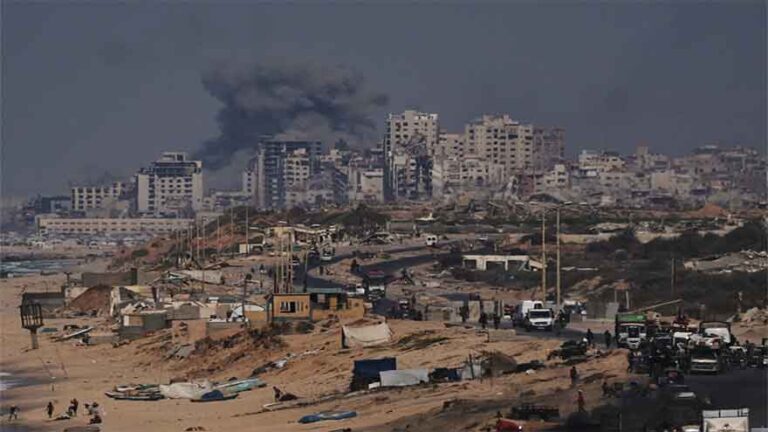
    Many Palestinians in Gaza have cautiously welcomed reports that Hamas has agreed to disarm under a new United States backed proposal, hoping it could eventually bring an end to the devastating conflict. However, despite this small sign of progress, many remain unconvinced that Israel will withdraw its forces or that lasting peace is within reach. US President Donald Trump recently announced that Hamas had accepted a plan to surrender its weapons as part of a broader roadmap aimed at stabilising Gaza and beginning reconstruction. Hamas later confirmed the agreement. Even so, Israeli military operations have continued, leaving many residents uncertain about whether the proposal will lead to any real change. Thousands of families remain displaced, while many others continue living in overcrowded tent camps where shortages of food, clean water, medicine and proper sanitation have created severe humanitarian conditions. Disease outbreaks and poor living conditions have become an everyday reality for much of the population. For many Palestinians, survival remains the immediate concern. Abdel Moneim Aboul Roos, a 24 year old tuk tuk driver who lost a leg in an Israeli airstrike, said discussions about disarmament and troop withdrawals mean little while people continue to struggle for basic necessities. He said access to food and medical care matters more than political agreements that have yet to improve conditions on the ground. The latest proposal builds on a ceasefire agreement reached last year with US support. That deal ended large scale fighting for a period, secured the release of Israeli hostages and increased humanitarian aid entering Gaza. It also included plans for a gradual Israeli military withdrawal, the formation of an international stabilisation force and the dismantling of Hamas’ weapons. However, the agreement soon stalled as both Israel and Hamas accused each other of violating its terms. Hamas retained its weapons while Israeli forces remained in the territory, causing negotiations to break down. The newly announced roadmap provides more detailed arrangements for transferring Hamas’ weapons to a technocratic Palestinian administration. According to the proposal, Israel would not participate in the disarmament process and would instead halt military operations to allow political transition and reconstruction efforts to move forward. Despite these commitments, many Gazans remain deeply sceptical because previous promises of peace failed to deliver lasting results. Displaced resident Ayman Ahmed said people have repeatedly been told that the war would end, only to see the violence continue. While he hopes Hamas eventually lays down its arms, he believes such a step is unlikely in the near future and expressed frustration that ordinary Palestinians continue to suffer while political leaders remain divided. The conflict began after Hamas launched its October 2023 attack on southern Israel, killing around 1,200 people and taking hundreds of hostages. Israel responded with a large military campaign in Gaza that has caused widespread destruction and heavy casualties. According to Gaza health authorities, more than 73,000 Palestinians have been killed during the war, while the fighting has displaced most of the territory’s population. The figures do not distinguish between civilians and fighters, although officials say women and children account for a large share of those killed. Many residents also fear that Israel has no intention of fully leaving Gaza even if Hamas is disarmed. Israeli officials have not publicly endorsed the latest roadmap and anonymous government sources have suggested that it does not match Israel’s security objectives. They have also indicated that Israeli forces intend to remain along the Yellow Line, a military zone separating Israeli controlled territory from the rest of Gaza. The military has strengthened its positions in these areas by building defensive barriers and carrying out demolition operations, leaving many displaced families uncertain whether they will ever return to their homes. Despite these fears, many Palestinians continue to hold onto hope. Anas Nakla, whose home in Rafah was destroyed during the war, said he still dreams of returning with his family even though nothing remains of his house. Mohamed Hamad, displaced from northern Gaza, believes that if the new plan results in even a partial Israeli withdrawal, it would restore hope that one day all displaced families could rebuild their lives in their own communities.

  • |

    Crimean residents struggle with power cuts as Ukrainian strikes disrupt daily life

    Residents across Crimea are facing growing hardship after repeated Ukrainian attacks on energy infrastructure disrupted electricity and fuel supplies across the peninsula. Long power outages have forced many families to rely on community kitchens for hot meals as daily life becomes increasingly difficult. Crimea, which Russia annexed from Ukraine in 2014, has experienced months of pressure on its energy network following Ukrainian strikes targeting power plants and other strategic facilities. Ukrainian officials say the campaign is aimed at weakening Russia’s military capabilities and bringing the effects of the war closer to Russian controlled territory. The attacks come as Ukraine continues to endure regular missile and drone strikes on its own cities since Russia launched its full scale invasion in 2022. In the town of Massandra, local authorities have organised public meal services for residents who are unable to cook because of prolonged electricity cuts. Large pots of buckwheat and reheated canned beef are prepared each day and distributed to around 200 people. Officials say many households depend entirely on electric stoves, leaving them without a way to prepare food when the power goes out. Massandra town administration head Oksana Madyud said the community kitchens were set up to support families facing ongoing disruptions. She explained that many residents have no alternative cooking methods and need access to hot meals until electricity supplies become more stable. Local workers continue preparing food every day to help elderly residents and vulnerable families cope with the difficult conditions. The prolonged outages have created serious challenges for many people, particularly those living in high rise apartment buildings. Marina, a local resident, said she was forced to search for a gas stove and fuel cylinders after losing electricity in her apartment. She explained that climbing down from her tenth floor flat has become painful because of a leg injury, yet she had little choice because her home has only an electric cooker that cannot be used during blackouts. Another resident, Alexandra, said she had spent ten days without electricity before power was finally restored. She joined the queue for a hot meal after being drawn by the smell of freshly prepared food. Although electricity had returned that afternoon, she remained uncertain whether the supply would continue once she reached home, reflecting the uncertainty many families now face. Fuel shortages have added to the difficulties across towns and cities in Crimea, making transport and everyday activities more challenging. The continuing disruption has increased pressure on local authorities to provide emergency support while residents adjust to frequent interruptions in essential services. As the conflict between Russia and Ukraine continues, civilians on both sides are increasingly feeling the consequences. While Ukraine says its strikes are intended to weaken Russia’s military infrastructure, residents in Crimea are left dealing with power shortages, limited fuel supplies and an uncertain daily routine as the war continues to affect civilian life far from the front lines.

  • |

    Sri Lanka strengthens prison security after deadly riot at overcrowded jail

    Sri Lankan authorities have stepped up security measures at prisons across the country after a violent riot at Mahara Prison left one person dead and six others injured. The latest unrest has once again highlighted the serious overcrowding and growing pressure within the country’s prison system. The violence broke out on Saturday at Mahara Prison, located about 15 kilometres from the capital Colombo. According to police sources, the disturbance began during family visiting hours when a group of inmates climbed onto rooftops, set fire to a building inside the prison compound and damaged several facilities. The unrest also resulted in the destruction of documents kept in administrative offices, while parts of the prison hospital, training centre and kitchen suffered extensive damage. Law enforcement agencies, supported by the military and other security personnel, were deployed to regain control of the situation. Officials said the operation successfully ended the riot and prevented further violence from spreading within the prison. The Sri Lankan Air Force also assisted by deploying helicopters and drones to monitor the prison complex during the emergency. The incident has renewed concerns about the country’s overcrowded prisons. Mahara Prison currently holds around 4,100 inmates despite having space for only about one quarter of that number. Similar conditions exist throughout Sri Lanka’s prison network, where more than 41,000 convicted prisoners are housed in 22 facilities built to accommodate only around 11,000 inmates. In addition to convicted prisoners, thousands of remand prisoners awaiting trial are also being held in these facilities, adding to the strain on available space and resources. The latest violence comes only weeks after another deadly prison clash in the coastal town of Negombo. In early July, fighting between rival inmate groups resulted in the deaths of 10 prison officials and 20 prisoners over two days. Authorities described that incident as the country’s worst prison violence since 2012, prompting the deployment of police special forces, the military and navy to restore order. Senior Deputy Inspector General of Police Sajeewa Medawatta said security has now been increased at major prisons across the country, particularly those located near Colombo, including Negombo Prison. He said officials have transferred inmates back to their cells and are ensuring they receive food and water as normal while security operations continue. According to Medawatta, the combined efforts of police, military and prison authorities were crucial in bringing the Mahara situation under control. Outside the prison, dozens of worried relatives gathered on Saturday evening seeking information about family members inside. Police established security cordons to prevent crowds from approaching the prison during the operation. To maintain public order, authorities also imposed a temporary curfew in three nearby villages. The restrictions remained in place overnight before being lifted by midday on Sunday after officials confirmed the situation had stabilised. The repeated outbreaks of violence have intensified calls for reforms within Sri Lanka’s prison system. Human rights groups and legal experts have long warned that severe overcrowding, ageing infrastructure and limited resources have created dangerous conditions that increase the risk of unrest. The latest incident has added further pressure on the government to address these long standing challenges while ensuring the safety of both prison staff and inmates.

  • |

    Iran cautions US against military action during regional diplomatic calls

    Iran has warned that it will respond firmly to any future military action by the United States, with Foreign Minister Abbas Araghchi delivering the message during separate conversations with senior officials from Pakistan, Turkiye and Saudi Arabia. The diplomatic outreach comes as tensions in the region remain high amid growing speculation about possible American military action against Iran. According to statements released through Iran’s Foreign Ministry, Araghchi held separate telephone discussions with Turkish Foreign Minister Hakan Fidan, Saudi Foreign Minister Prince Faisal bin Farhan Al Saud and Pakistan’s Field Marshal Asim Munir. During the conversations, he stressed that Iran would react decisively to what he described as any new act of aggression by the United States or its allies. He said Tehran would respond proportionately to any attack targeting the country’s territory or critical infrastructure. In his discussion with Turkish Foreign Minister Hakan Fidan, both sides reviewed the latest developments in regional diplomacy and ongoing negotiations related to the current crisis. Fidan later confirmed the conversation on social media, saying the two officials exchanged views on recent diplomatic efforts and the evolving regional situation. Araghchi also used his conversation with Saudi Foreign Minister Prince Faisal bin Farhan to repeat Iran’s warning that any military action by the United States, Israel or other regional actors would receive a strong and direct response. Iranian officials have consistently maintained that the country’s defence policy is based on responding to attacks with equal force rather than initiating conflict. Last week, Araghchi reinforced this position through a social media post, describing Iran’s defence strategy as an “eye for an eye” approach. He said any strike against Iranian infrastructure would be met with a comparable response, signalling that Tehran remains prepared to retaliate if its security is threatened. The latest statements come as reports continue to circulate about possible military planning in Washington. Michael Doran, a former senior official on Middle East affairs at the US National Security Council, said President Donald Trump is reportedly close to deciding whether to authorise a large scale military operation against Iran. Citing an Israeli official quoted by Israel’s Kan 12 television channel, Doran said the US military has reached its highest state of readiness, although no final decision has been made. Neither the White House nor the Pentagon has publicly confirmed the reports. However, the speculation has added to concerns that the already fragile security situation in the Middle East could worsen if diplomatic efforts fail. Regional governments have been closely monitoring developments, with many countries urging restraint and encouraging dialogue to prevent a wider conflict. Analysts say continued communication between Iran and neighbouring states reflects growing efforts to avoid further escalation while preparing for the possibility of increased military tensions. Iran has repeatedly said it prefers diplomacy but insists it will defend its territory and national interests if attacked. As uncertainty continues over Washington’s next move, the exchange of warnings and diplomatic contacts highlights the delicate balance facing the region, where any military confrontation could have far reaching consequences beyond Iran and the United States. Focused keyword:

  • |

    Saudi Arabia detains more than 14,000 people in nationwide enforcement campaign

    Saudi authorities arrested more than 14,000 people during a week long nationwide campaign targeting violations of residency, labour and border security laws, according to the Kingdom’s Ministry of Interior. The ministry said joint inspection operations carried out between July 23 and July 29 resulted in the detention of 14,154 individuals. The campaign formed part of ongoing efforts to strengthen border security and ensure compliance with the country’s immigration and labour regulations. Official figures showed that 7,103 people were arrested for violating residency rules, while 3,654 were detained for breaching border security laws. Another 3,397 individuals were taken into custody for labour related offences. Authorities said the inspections were conducted across different regions of the Kingdom with the participation of several government agencies. The ministry also reported that 1,418 people were arrested while attempting to enter Saudi Arabia illegally. Among them, 54 percent were Yemeni nationals and 45 percent were Ethiopian nationals, while the remaining one percent belonged to other nationalities. In addition, security forces detained 23 people who were allegedly trying to leave the country through illegal routes. Authorities also arrested 17 individuals accused of helping violators by transporting, sheltering, employing or concealing people who had breached residency, labour or border security regulations. Officials stressed that anyone assisting illegal entry or providing support to those staying in the Kingdom unlawfully would face strict legal action. According to the ministry, 30,679 people are currently undergoing legal procedures related to residency, labour and border security violations. This group includes 28,187 men and 2,492 women. Officials said 17,903 individuals have been referred to their respective diplomatic missions to obtain travel documents needed for their return, while 5,424 have been directed to complete travel arrangements. So far, 12,613 people have been deported after completing the required legal process. The Ministry of Interior warned that facilitating illegal entry into Saudi Arabia or providing transportation, accommodation or any other form of assistance to violators is considered a major criminal offence. Those found guilty could face prison sentences of up to 15 years, fines reaching one million Saudi riyals and the confiscation of vehicles or properties used in committing the offence. Authorities also said offenders may be publicly identified as part of the legal penalties. The ministry urged residents to report any suspected violations through emergency numbers designated for different regions of the Kingdom. Officials said public cooperation remains essential in supporting efforts to enforce immigration laws and maintain national security. Saudi Arabia regularly conducts nationwide inspection campaigns aimed at regulating the labour market, strengthening border controls and ensuring that foreign residents comply with the country’s legal requirements. The latest operation reflects the government’s continued focus on enforcing immigration and employment regulations across the Kingdom.

  • |

    Trump rejects Justice Department findings on Lincoln Memorial Reflecting Pool damage

    US President Donald Trump has publicly rejected the findings of his own Justice Department after federal prosecutors concluded that construction problems, rather than vandalism, were responsible for damage to the recently renovated Lincoln Memorial Reflecting Pool in Washington. In a post on his Truth Social platform on Saturday, Trump said he strongly disagreed with US Attorney for the District of Columbia Jeanine Pirro and insisted that vandals were responsible for the damage. He argued that although there may have been issues with the construction work, the main cause of the deterioration was deliberate vandalism. The disagreement follows a court filing submitted on Friday by Jeanine Pirro and Assistant US Attorney Michael Spence, who asked a judge to dismiss the government’s case against David Hearn, a 67 year old former Olympian. Hearn had been accused of damaging the Reflecting Pool, an allegation that became part of a wider debate over the Trump administration’s renovation project in the nation’s capital. According to the filing, newly received documents from the Department of the Interior showed that the problems were linked to a rushed and defective installation process. Prosecutors said the pool’s lining experienced repeated failures during construction and that extensive peeling occurred across the surface because of installation defects rather than intentional damage. The Lincoln Memorial Reflecting Pool underwent a renovation costing around 14.7 million dollars. Soon after the project was completed, the site experienced several problems, including algae growth that turned the water green and sections of the blue lining peeling away. The issues attracted public criticism and raised questions about the quality of the renovation work. Throughout the controversy, Trump repeatedly claimed that vandals had deliberately damaged the pool. Following the Justice Department’s decision to withdraw the case, he continued to defend that position. In another social media post, the president shared previously released video footage from the US Park Police that he said supported his claim. He argued that the footage showed people damaging the Reflecting Pool while maintenance workers were cleaning algae from the water. However, the video does not clearly show acts of vandalism. It remains unclear whether the individuals seen in the footage were intentionally damaging the lining or simply handling material that had already begun peeling because of the reported construction flaws. The Justice Department has not publicly responded to Trump’s criticism. Jeanine Pirro’s office also did not immediately comment on the president’s remarks. The dispute highlights a rare public disagreement between President Trump and his own administration’s legal team. While federal prosecutors have concluded that faulty construction caused the damage, the president continues to argue that criminal vandalism was primarily responsible, keeping the controversy surrounding the renovation project in the public spotlight.

  • |

    OPEC+ expected to approve another oil output increase for September

    OPEC+ is widely expected to approve another increase in oil production when its members meet virtually on Sunday, as the alliance continues to adjust supply while global energy markets remain affected by ongoing geopolitical tensions. According to market analysts, Saudi Arabia, Russia and several other key members of the alliance are likely to raise their combined production target by around 188,000 barrels per day for September. If approved, the increase would continue a series of monthly production hikes introduced this year and is expected to mark the final step in the group’s current plan to gradually restore previously reduced output. OPEC+, which includes members of the Organization of the Petroleum Exporting Countries and allied producers, introduced major production cuts between late 2022 and 2023 after concerns that falling oil prices could weaken global energy markets. Those reductions removed nearly six million barrels of oil per day from the market in three separate phases. As demand gradually recovered, the group shifted its strategy by slowly increasing production, beginning in 2025, to balance supply while supporting market stability. A September increase would complete the reversal of the second package of production cuts introduced during that period. However, analysts note that higher production targets do not necessarily mean actual oil output will increase by the same amount. Several member countries are currently unable to reach their assigned quotas because of declining production capacity, ageing infrastructure or operational challenges. Energy analyst Giovanni Staunovo of UBS said many producers are already pumping below their official targets, making further quota increases less significant in practical terms. He noted that production capacity has declined in several member states, limiting their ability to take full advantage of higher output allowances. Regional tensions have also affected oil exports. Gulf producers continue to face challenges because shipping through the Strait of Hormuz has been disrupted during the conflict involving Iran. Although maritime traffic briefly improved after a memorandum of understanding between the United States and Iran was signed in June, transport through one of the world’s busiest oil routes remains uncertain. Russia is also dealing with production difficulties as repeated Ukrainian drone attacks have targeted parts of its energy infrastructure. Current Russian oil production remains close to nine million barrels per day, well below its official production target of 9.8 million barrels per day, highlighting the gap between quotas and actual output. Some OPEC+ members, including Iraq, have indicated they want to increase production significantly once conditions allow. At the same time, the alliance is reviewing the maximum sustainable production capacity of each member to help determine future output allocations. These discussions are expected to play an important role in setting production quotas for 2027 and beyond. Analysts believe negotiations over future production targets could become more challenging after the September meeting. While they say the alliance remains united for now, the departure of the United Arab Emirates from OPEC+ earlier this year has raised questions about the group’s long term cohesion. The UAE said its decision to leave was based on national interests and long term strategic goals, pointing to major investments aimed at expanding its oil production capacity beyond the limits previously set by the alliance. Despite these challenges, OPEC+ is expected to continue coordinating production policies in an effort to maintain stability in the global oil market as economic uncertainty and geopolitical tensions continue to influence energy demand and supply.