بلاگز

  • |

    Why marginalia is devised for conversation

    For centuries, books were treated as sacred, untouchable artifacts. Readers were taught to open a spine with reverence, turn pages by the edges, and never, under any circumstance, mark the paper. But in the modern reading culture, a quiet revolution has taken root: marginalia is no longer viewed as defacement. Today, it is recognized as a vital form of active intellectual engagement. Marking up a book transforms reading from a passive act of consumption into an active. Reading is a two-way dialogue between the reader and the writer. When you read with a pencil, pen, or sticky tab in hand, your relationship with the text fundamentally shifts. You cease to be a distant spectator observing someone else’s thoughts. In other words, you become a collaborator. Underlining a sentence, drawing an exclamation point next to a surprising plot twist, or a counterargument in the margin forces your brain to process language at a deeper level. It requires you to articulate why a passage resonated or failed. Furthermore, annotated books serve as personal time capsules. When you reopen a novel you marked up five or ten years ago, it offers an unfiltered reflection into who you were at that exact moment in your life. You might find yourself cringing at an old marginal note. Then you agree passionately with a circled phrase, or realizing that a passage you completely ignored years ago now carries personal meaning. The book becomes a physical record not just of the author’s story, but of your own cognitive and emotional evolution. Edgar Allan Poe once wrote: ‘In getting my books, I have been always solicitous of an ample margin … for the facility it affords me of pencilling suggested thoughts, agreements and differences of opinion …’ Practically speaking, marginalia also sharpens critical thinking. Students, scholars, and casual readers alike find that tracking themes through custom color-coded tabs or brief summary notes at the end of chapters drastically improves retention and comprehension. It prevents the common phenomenon of eye-scanning where your eyes move across sentences while your mind wanders elsewhere. Annotation demands presence. Ultimately, scribbling in the margins strips away the artificial pedestal we often place books upon. It reminds us that literature is not meant to sit pristine and untouched on a display shelf. Literature is meant to be wrestled with, questioned, celebrated, and lived in. The next time you open a book that challenges or moves you, don’t hold back. Pick up a pen, claim the empty white space on the page, and join a conversation that has been taking place across centuries.  

  • |

    The return of physical books in a digital world

    ​When e-readers and digital publishing exploded in the late 2000s, tech prognosticators predicted the rapid demise of the printed book. Paper was deemed inefficient, heavy, and outdated. An analog relic doomed to follow the cassette tape and the encyclopedia into obscurity. Yet, decades into the digital revolution, the physical book has successfully survived. It is thriving, driven by a growing cultural hunger for tactile experiences in an increasingly virtual world.   ​The persistence of print comes down to a fundamental human reality. Sensory experience matters. A digital screen, no matter how crisp its resolution, flattens every piece of content into the same glass surface. A tweet, a work email, a news alert, and a classic novel all look and feel virtually identical. In contrast, a physical book offers a distinct multi-sensory landscape. The weight of the volume in your hands. The subtle texture of the paper stock. The faint scent of ink and binding glue. Above all, the visual progress of physical pages moving from right to left. Reading a physical book creates an immersive environment that screens simply cannot replicate. British writer Roald Dahl who is known for such classic children’s books as Charlie and the Chocolate Factory (1964) and Matilda (1988). His other notable works include James and the Giant Peach (1961), The BFG (1982), and The Witches (1983). He famously said, So please, oh please, we beg, we pray, go throw your TV set away, and in its place you can install a lovely bookshelf on the wall. Roald Dahl (Roald Dahl was a British novelist, short-story writer, poet, screenwriter, and wartime fighter pilot.)   ​Moreover, print offers a rare sanctuary from the relentless ping of notifications. Modern digital life is characterized by fragmented attention and constant micro-interruptions. Reading a book on a tablet or smartphone means constantly resisting the urge to check email, glance at social media, or reply to a text message. A physical book possesses no hyperlinks, no pop-ups and no algorithmic distraction loops by default. It demands a single-tasking mindset and offers a meditative refuge from digital fatigue.   ​There is also a social and aesthetic dimension to the print resurgence. Bookshelves in a home are not just storage units. Rather, they are visual representations of identity, curiosity, and intellectual history. Browsing a physical bookstore or sharing a physical copy with a friend fosters spontaneous community connections that digital files cannot mirror.   e-books certainly offer undeniable convenience for travel and instant access. However, they have become a supplement to print rather than a replacement. Readers are making a conscious choice to slow down. The deliberately disconnect from screens, and hold stories in their hands. The physical book stands high not for some reason of nostalgia. Rather, it fulfills a psychological need that technology has only managed to heighten.  

  • |

    How the art of Tsundoku quietly transforms our minds

    Walk into the home of almost any avid reader, and you are bound to encounter the unread shelf. The uncracked spines perched on nightstands, overflowing from crowded bookshelves, or quietly gathering dust in living room corners. For years, Western cultural narratives have framed these unread collections as evidence of poor self-discipline, financial wastefulness, or half-baked literary ambitions. However, behavioral psychology and cultural reporting offer a far richer perspective. This habit is known in Japanese as tsundoku. It is not an intellectual failure. It is passionately human. It is rather psychologically beneficial relationship with knowledge, identity, and curiosity. The word tsundoku dates back to Japan’s Meiji era in the late nineteenth century. It cleverly fuses tsunde-oku (to pile things up for later) with dokusho (reading). This habit is unlike hoarding, which carries clinical connotations of distress and emotional attachment to clutter. tsundoku is characterized by a playful, optimistic spirit. It describes the act of gathering books with every intention of absorbing them, even if time inevitably falls short of ambition. In order to understand why so many people practice tsundoku, psychologists look at how the human brain processes reward and anticipation. When you pick up an intriguing volume in a bookstore, your brain’s neural circuits trigger a sudden release of dopamine. Interestingly, this neurochemical hit does not wait for you to actually finish the final chapter. The simple act of purchasing a book acts as a pivot for the learning experience itself. In that single moment of acquisition, your brain projects a vivid future self. One that’s sitting quietly by a window, sipping tea, and expanding their wisdom. The purchase satisfies a psychological longing for growth, even before page one is turned. Furthermore, an unread collection creates what essayists and thinkers call an antilibrary. The read books truthfully represent the territory of knowledge you have already conquered. In contrast, unread books serve as a physical map of your own ignorance. Surrounding yourself with stories you have yet to explore harbours intellectual humility. It keeps you constantly aware that the world is far larger, richer, and more complex than your current understanding. In a fast-paced modern culture obsessed with optimization, tracking goals and productivity metrics, an unread stack stands as a testament of pure potential. There is also immense emotional comfort in physical books. Unlike endless, urgent digital feeds or unread emails, physical volumes sit silently without making demands. They anchor a home, offering a tactile, grounding presence that reflects who you were when you bought them and who you hope to become in the future. So, if your personal library continues to consume your available free time, resist the urge to feel guilty. Those unread pages are not a monument to broken promises. They are a physical testament to a hungry mind that refuses to stop asking questions.  

  • |

    How translation reconstructs global literature

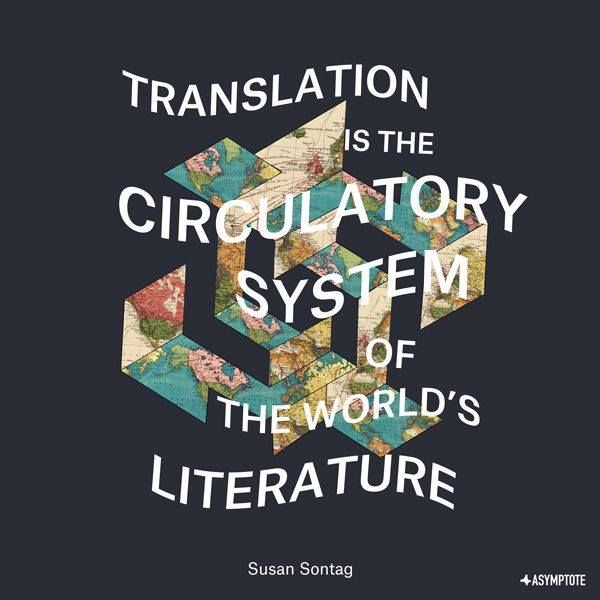
    For generations, the international publishing world operated around a narrow geographic axis. Books written in dominant English-speaking hubs dominated bookstore displays worldwide. Stories crafted in regional languages across Asia, Africa, South America, and Eastern Europe struggled to secure international distribution. When works were translated, the process was often viewed as a purely mechanical service. A utilitarian act of converting words from one dictionary to another. Today, a seismic cultural shift is redefining global literature. Translation is finally recognized as a sophisticated, creative art form that acts as the lifeblood of global storytelling. Recent publishing trends and prestigious accolades, such as the International Booker Prize, highlight this remarkable transformation. In 2026, the prize made history by awarding its top honor to Taiwan Travelogue by Yáng Shuāng-zǐ, brilliantly translated from Taiwanese Mandarin into English by Lin King. This historic win marking the first time a Taiwanese Mandarin work secured the award highlighted a broader reality. Global audiences are hungrier than ever for diverse, culturally distinct narratives. Over the past decade, sales of translated fiction have surged dramatically, proving that readers no longer seek comfort solely in familiar local settings. At the center of this movement is a fundamental re-evaluation of the translator’s role. Far from being invisible ghostwriters, translators are cultural ambassadors and literary artists in their own right. Translating a novel is rarely a matter of word-for-word substitution. Every language carries unique rhythms, idioms, historical baggage, and untranslatable social nuances. When a translator approaches a text, they must reconstruct its tone, preserve its emotional core, and decide how to navigate cultural concepts that have no direct equivalent in the target language. They rewrite the story from the inside out, ensuring it resonates authentically with a brand-new audience without stripping away its original soul. This evolving respect for translation has sparked important industry changes, such as the widely supported movement to print translators’ names directly on book covers alongside the author’s. Independent publishers are leading the charge, taking bold risks on works translated from lesser-represented languages, including Kannada, Taiwanese, Bulgarian, and Arabic. Digital distribution platforms have further accelerated this trend, allowing indie books to cross oceans instantly. Ultimately, translation is what prevents global literature from becoming an echo chamber. It dismantles geographical gatekeeping, fosters empathy across political divides, and allows readers to step directly into the lived experiences of people half a world away. The delicate craft of translation and the global literary community ensure that stories are no longer limited to by borders of the language in which they were born.  

  • |

    The architecture of world-building in fiction

    When readers choose a speculative novel or immerse themselves in a literary landscape, they are considering than following a character’s journey. They are stepping into a fully realized alternate reality. The imaginary reality is complete with its own geography, social hierarchies, natural laws, and cultural mythologies. While world-building is often discussed as a technical craft of maps, timelines, and terminology, its true power lies in psychology. The most compelling fictional universes merely inform readers. They subtly reshape how the human brain processes space, identity, and meaning. Psychologists refer to the mental phenomenon of becoming lost in a narrative as narrative transportation. When world-building is executed with precision, readers undergo a temporary shift in consciousness. Their immediate physical surroundings fade, and their working memory fully commits to the sensory and spatial details of the fictional environment. This process relies heavily on cognitive schemas. The mental blueprints the brain uses to organize information about the real world. Effective authors exploit these schemas. They purposefully present familiar elements of human behavior or physics to evoke wonder. What makes world-building psychologically resonant is the sheer volume of factual detail an author creates. Above all, the emotional truth that lies within those details. A fantasy city or distant alien colony feels authentic. Especially, its architecture, customs, and laws reflect the lived anxieties and aspirations of its inhabitants. Consider how fictional societies address scarcity, power, memory, or grief. When a setting’s internal logic mirrors fundamental human dilemmas, the brain accepts the setting as tangible. The world becomes a living stage rather than a static backdrop. Furthermore, immersive world-building fulfills a profound psychological need for safe exploration.  Well-crafted settings safely ask readers to navigate complex political systems, environmental collapses, or unfamiliar norms from a comfortable distance. Fiction acts as cognitive testing where readers can process real-world existential fears without experiencing direct danger. The sense of discovery that comes from decoding a world’s hidden rules releases dopamine. The experience rewards the reader’s curiosity and keeps them engaged across hundreds of pages. Ultimately, world-building is an exercise in mutual trust between writer and reader. The author provides the architectural framework. However, the reader’s mind brings the bricks and mortar. They use their own memories, visual imaginations, and emotional experiences to bring the landscape to life. When done right, a well-built fictional world never truly leaves the reader. Long after the final page is turned, its echoes linger in the mind. The immersive imagination forever alters how we view the boundary between what is real and what can be imagined.  

  • |

    The comfort of familiar stories

    In a world that constantly demands novelty, the act of re-reading can feel like a radical act of slowing down. The digital feeds update every second and endless streams of new books hit shelves each month. In this case, opening a novel whose plot twists you already know by heart, whose characters are familiar companions, and whose ending holds no surprises might seem inefficient to an outsider. Yet, psychologists and literary scholars recognize that re-reading is not a passive repetition. It is a claimed psychological profound and an essential dimension of human storytelling. At its core, returning to a beloved text satisfies a deep need for emotional regulation. Life is unpredictable, chaotic, and frequently overwhelming. When we navigate complex personal challenges or heightened anxiety, processing entirely new information requires significant cognitive effort. Re-reading, by contrast, lowers the mental load. It offers what psychologists call predictable comfort. Knowing exactly how a narrative conflict resolves provides a soothing sense of control and stability. In the pages of a familiar book, the universe behaves according to rules we already understand. The phenomenon offers a safe harbor when the real world feels chaotic. However, the appeal of re-reading goes far beyond simple comfort. It also acts as a mirror reflecting our own internal growth. Heraclitus famously remarked that you cannot step into the same river twice, for it is not the same river, and you are not the same person. The same principle applies to literature. The physical words printed on the page do not change over time, but we do. When you re-read a book after five, ten, or twenty years, you bring a completely different set of life experiences, heartbreaks, victories, and insights to the text. A passage that meant little to you as a teenager might suddenly strike depth in adulthood. A character you once viewed as an antagonist might reveal subtle vulnerabilities that evoke your empathy today. In this way, re-reading becomes an intimate dialogue between your past and present selves. It is a clear timeline of your emotional and intellectual evolution. Additionally, re-reading changes our focus from what happens next to how the story is constructed. Our brains are liberated to appreciate the finer nuances of literary craft. We begin to notice subtle foreshadowing, thematic motifs, delicate sentence rhythms, and character moments that flew past us during our breathless initial read. Ultimately, re-reading reminds us that literature is not a checklist of titles to be consumed and discarded. The greatest books are living spaces. The places we can inhabit again and again, finding new rooms every time we cross the threshold.  

  • |

    The evolution of the modern literary hero

    For millennia, the literary hero was defined by extraordinary grandiosity. From Gilgamesh navigating epic wildernesses to Achilles demanding battlefield glory, ancient narrative traditions favored figures of superhuman strength, divine lineage, and absolute moral certainty. These classic archetypes reflected societies that sought order in chaos through idealized figures who conquered external monsters and conquered impossible odds. Yet, as civilization evolved, so too did our definition of heroism. The story of global literature is, in many ways, the gradual dismantling of the perfect hero in favor of someone far more recognizable: ourselves. The shift began in earnest during the European Renaissance and accelerated through the rise of the novel in the eighteenth and nineteenth centuries. Readers began turning away from mythic kings and gods, seeking stories that reflected the complex realities of ordinary life. Authors like Cervantes with Don Quixote poked affectionate fun at chivalric romance, replacing invincible knights with well-meaning, delusional dreamers. By the nineteenth and early twentieth centuries, writers like George Eliot, Fyodor Dostoevsky, and James Joyce completely reshaped the landscape. Heroism moved inward. The primary battleground was no longer a blood-soaked field of armor. It’s transformed into the unseen terrain of human conscience, social expectation, and psychological angst. In modern and contemporary literature, the classical hero has largely given way to the complex protagonist or antihero. Today’s readers are naturally suspicious of flawless saviors. We recognize that perfection in storytelling is flat, predictable, and fundamentally false. Instead, modern narrative arcs celebrate figures characterized by vulnerability, moral ambiguity, and deep personal flaws. Characters like Jay Gatsby, Arthur Pendelton, or Holden Caulfield resonate not because they always make noble choices, but because their struggles with identity, grief, and societal pressure mirror our own daily conflicts. Moreover, modern literature has democratized who gets to be a hero. Where ancient myths strictly reserved heroism for powerful men of noble birth, contemporary fiction centers voices that were historically marginalized or silenced. Today’s protagonists reflect diverse racial, economic, gender, and neurodivergent experiences. Heroism in the modern era is rarely about wielding a magical sword to slay a dragon; it is about surviving systemic pressure, demonstrating radical empathy, reclaiming identity, or simply deciding to get out of bed and keep going in an unpredictable world. This historical transformation underscores a profound truth about human nature. We no longer look to literature for godlike ideals to worship from afar. Instead, we look into the literary mirror to see our own fractures, uncertainties, and quiet triumphs validated on the page. The modern literary hero reminds us that courage does not require perfection. Rather, it requires the willingness to remain human despite everything.  

  • |

    How fiction brain-trains compassion

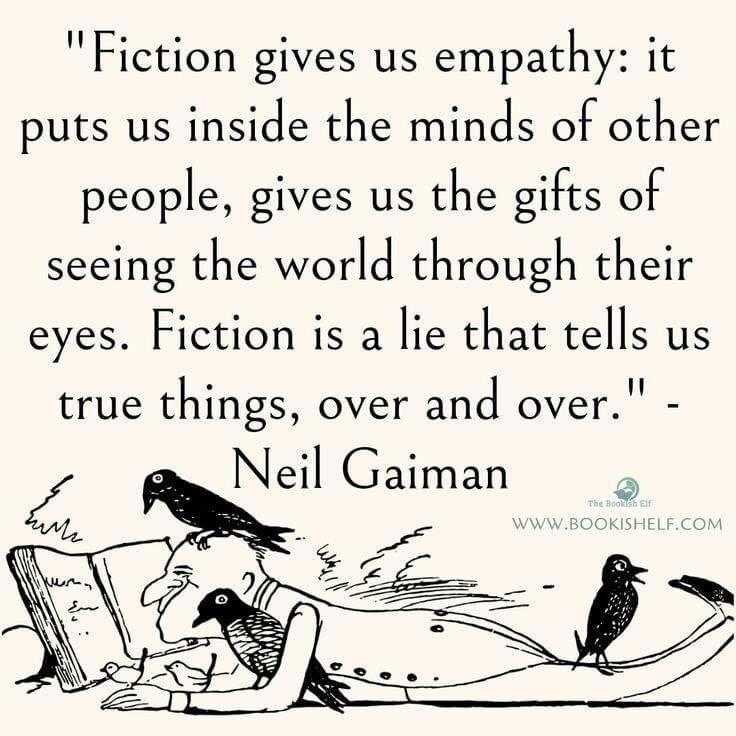
    Empathy is the capacity to understand and share the feelings of another. It’s not merely an inherent personality trait; it is a cognitive muscle that requires exercise. While there are many ways to practice compassion in daily life, neuroscientists and psychological researchers have uncovered a uniquely powerful tool for training this mental capacity: reading deep, character-driven fiction. For decades, society viewed reading literature as a purely intellectual or escapist hobby. However, recent scientific studies using functional magnetic resonance imaging (fMRI) have revealed that when we read a story, our brains process the experience in ways remarkably similar to real-world social interaction. When an author describes a character running through a dark forest, struggling with heartbreak, or feeling a sharp pang of injustice, the sensory and emotional centers in the reader’s brain light up as if the reader were experiencing those events directly. This neural simulation allows us to step entirely out of our own shoes and temporarily inhabit the subjective reality of someone else. Psychologists often refer to this ability as theory of mind. It’s the cognitive skill that enables human beings to attribute mental states (beliefs, intents, desires, emotions, and knowledge) to themselves and others. Life only permits us to live a single, localized existence defined by our specific background, culture, and circumstance. Literary fiction breaks through those physical and social barriers. Through the pages of a novel, a reader living in a quiet suburban town can intimately experience the internal struggles of an immigrant navigating a new city, an incarcerated individual fighting for dignity, or a historic figure facing a agonizing moral dilemma. Crucially, fiction tells us what people do. Also, it exposes why they do it. It grants us unprecedented access to the secret thoughts, doubts, and vulnerabilities that real people rarely reveal in public. By witnessing a character’s internal contradictions, readers learn that human behavior is rarely black-and-white. We develop a tolerance for ambiguity and a healthier skepticism toward snap judgments. When we close the book, that expanded perspective lingers in our conscious mind, subtly altering how we interact with co-workers, strangers, and loved ones. Furthermore, reading fiction builds emotional stamina. It asks us to sit quietly with uncomfortable emotions like grief, fear, longing, and regret without fleeing into digital distractions. In doing so, it expands our capacity to hold space for others when they undergo difficult seasons in real life. Literary fiction, therefore, is far more than entertainment. It is a quiet, radical act of bridge-building. Every time we turn a page and immerse ourselves in a stranger’s story, we perform a vital neurological exercise that softens our defenses, broadens our horizons, and reminds us of our shared humanity.  

  • AI Cannot Replace Expertise

    By Arooba Younas The surge in the use of Artificial Intelligence by businesses, corporations, and organisations has been illustrated by the latest McKinsey Global Survey on the state of AI. Accordingly, 88 per cent of organisations reported the regular use of AI in at least one business function, a 10 per cent increase from the results of the survey conducted in the preceding year. Indicative of business leaders’ desire to boost productivity and reduce operational costs, companies adopted AI to achieve greater efficiency. The reverberations of AI integration are felt in the splintering of the organisational pyramid, driven by the expansion of what a single individual can accomplish. However, flattening hierarchies is not tantamount to flattening skill hierarchies or democratisation of expertise. Research has shown that Generative AI (GenAI) has the greatest impact on the level of expertise required to perform jobs, resulting in an accelerated learning curve for entry-level workers. Whilst shortening the learning curve and the time it takes novices to gain competence at new tasks, the limits of GenAI in upskilling workers have been revealed in an experiment conducted by researchers from Harvard Business School’s Data Design Institute and Stanford University, involving 78 employees from IG Group, a UK-based fintech company. Dividing the employees into three groups of occupational insiders (professional writers), adjacent outsiders (marketing specialists), and distant outsiders (technologists), the experiment attempted to gauge whether marketing specialists and technologists could match the performance of professional writers in conceptualising and drafting articles for IG Group’s website while receiving GenAI assistance. The results revealed that AI levelled the playing field at the conceptualisation stage. However, when the nature of the task shifted to executing the ideas by putting them in writing, a prominent expertise gap emerged. Both with and without GenAI’s help, the writers produced the best work, with marketers coming close and technologists lagging behind regardless of AI use. The divergence in performance, despite AI support, is a portrayal of the “GenAI Wall”, depicting the point at which GenAI does not sufficiently reduce the expertise gap between occupational insiders and outsiders. This is indicative of GenAI’s limit in how far it can carry workers outside their domain expertise. Without foundational knowledge, it becomes difficult for outsiders to distinguish between effective and flawed suggestions generated by GenAI. As a result, they may rely on its outputs without applying the necessary refinement, critical judgement and contextual understanding. Nonetheless, the experiment has implications for business organisations, particularly for leaders who overestimate the abilities of AI. It can only hasten the competency of individuals who are adjacent to a domain, and not conjure expertise out of thin air. In this regard, work structure, which is already undergoing change, can be rethought along the lines of expertise. A more fluid work environment can be created, where, in lieu of strict job roles, boundaries can blur by converging adjacent specialists. However, the experiment is not an advocacy for hiring fewer novices. Studies have shown a reduction in entry-level role postings, falling by 32 per cent in 2025 compared to 2019-2022. This suggests a myopic conclusion drawn from GenAI’s putative capabilities, for it is beginners who, when assimilated into the company’s culture and learn through practice, become experts. By thwarting the pipeline of learners by letting AI take over early-career work, which actually led to the making of experts, today’s efficiency may be sacrificed for impoverished talent tomorrow. The latter has been represented by the AI boomerang effect – recent AI-related layoffs, which are now being quietly reversed – as reports indicated employers regretting layoff decisions. This is because of AI hallucinations as well as its inadequacy to replace the required context or institutional knowledge, which human employees possessed. Although the IG Group experiment was conducted in a Western context, its implications can be generalised across the world, particularly as the allure of AI has diffused across continents. However, the embracing of AI in the Global South, whether in businesses or other sectors, has to be accompanied by digital literacy, localised governance, and a research ecosystem. This is significant lest the adoption of AI brings with it downsides in the form of overdependence and a putative magic bullet solution to solving complex issues ranging from bad governance to climate-related disasters. Additionally, GenAI’s exposure to the labour market has caused faster materialisation of disruptions rather than productivity gains due to a higher risk of job losses, as AI-driven automation can close clerical and administrative positions, which have historically served as pathways to decent work. Conclusively, GenAI has brought the promise of enabling individuals to bridge their capability gaps. However, AI cannot replace expertise or be an all-encompassing fix because it relies on pattern recognition rather than understanding real-world context. Thus, the future of work is where humans can learn to effectively partner with AI, grounded in human judgement, and not replacing it.   Arooba Younas is a Research Assistant at the Centre for Aerospace and Security Studies (CASS), Lahore. She can be reached at info@casslhr.com.  

  • Justice Delayed, Safety Denied: Why Women Still Fear Reporting Violence

    “How Social Stigma, Institutional Challenges, and Delayed Justice Continue to Discourage Women from Reporting Violence in Pakistan” For many women in Pakistan, reporting violence is not simply the first step towards justice, it is often the beginning of another struggle. While laws have evolved to provide greater protection against domestic violence, sexual assault, workplace harassment, acid attacks, and other forms of gender-based violence, countless women continue to hesitate before approaching the police or the courts. Their reluctance is not always born out of ignorance of the law; rather, it stems from fear of social stigma, institutional barriers, prolonged legal proceedings, and uncertainty about whether justice will ever be delivered. This reality raises an important question: if legal safeguards exist, why do so many women still fear reporting violence? The Constitution of the Islamic Republic of Pakistan provides a strong foundation for the protection of women’s rights. Article 9 guarantees the right to life and liberty, Article 14 safeguards the dignity of every individual, Article 25 ensures equality before the law and prohibits discrimination on the basis of sex, while Article 34 directs the State to ensure the full participation of women in all spheres of national life. These constitutional guarantees are reinforced by various legislative measures, including the Anti-Rape (Investigation and Trial) Act, 2021, the Protection Against Harassment of Women at the Workplace Act, the Acid Control and Acid Crime Prevention laws, and provincial domestic violence legislation. Together, these laws demonstrate that Pakistan has made significant progress in recognizing and protecting women’s rights. However, legislation alone cannot guarantee justice. The effectiveness of any legal framework depends upon its implementation. For many survivors, the greatest obstacle is not the absence of legal remedies but the fear of navigating the justice system itself. Reporting violence often means facing uncomfortable questions, social judgment, pressure from family members, financial hardship, and emotional trauma. In many cases, victims worry that their complaints will not be taken seriously or that the legal process will take years to reach a conclusion. Such concerns discourage many women from seeking legal protection altogether. The problem is further aggravated by the slow pace of criminal proceedings. Delayed investigations, repeated adjournments, and prolonged trials can force survivors to relive traumatic experiences for years. Justice delayed not only prolongs suffering but also weakens public confidence in the legal system. When victims believe that reporting a crime will expose them to further hardship without a timely or meaningful remedy, silence often appears to be the safer option. In this sense, delayed justice becomes a denial of safety, discouraging others from coming forward and allowing perpetrators to act with greater confidence. Several high-profile incidents have highlighted both the urgency of reform and the limitations of existing mechanisms. The Motorway rape case in 2020 sparked nationwide outrage and prompted important legislative reforms, including the enactment of the Anti-Rape (Investigation and Trial) Act, 2021. While these reforms strengthened the legal framework, they also reminded the nation that effective implementation, victim-sensitive investigations, and timely prosecution remain equally essential. Similarly, acid attacks and cases of so-called honour based violence have continued to expose the gap between legal protections and the realities faced by many women, particularly in rural and underserved communities. Legal reforms must therefore be accompanied by institutional reform. Police officers, prosecutors, judges, and medico-legal professionals require continuous training to handle cases involving gender-based violence with professionalism, sensitivity, and respect for victims’ dignity. Fast-track procedures for serious offences against women should be implemented effectively to reduce unnecessary delays. Victim and witness protection mechanisms must be strengthened so that survivors feel safe throughout the judicial process. Equally important is ensuring that legal aid and psychological support are readily available to those who seek justice. Beyond the courtroom, society itself has a crucial role to play. Victim-blaming, social stigma, and cultural stereotypes remain among the greatest barriers preventing women from reporting violence. Questions such as “Why did she report it now?” or “What was she doing there?” unfairly shift attention away from the offender and onto the survivor. Such attitudes discourage reporting and perpetuate a culture of silence. A justice system can function effectively only when society supports victims rather than subjects them to suspicion and criticism. Protecting women’s rights is not solely a legal obligation; it is a constitutional, moral, and social responsibility. Laws are meaningful only when they inspire confidence in those, they are designed to protect. A woman should never have to choose between her safety and the fear of navigating the justice system. She should have confidence that her complaint will be heard fairly, investigated promptly, and decided without unnecessary delay. Pakistan has undoubtedly taken important legislative steps to combat violence against women. The challenge now lies in translating those legal guarantees into practical realities. Stronger enforcement, efficient investigations, timely trials, greater institutional accountability, and increased public awareness are essential to restoring confidence in the justice system. Justice cannot be measured merely by the number of laws enacted; it must be measured by the willingness of victims to seek its protection without fear. A society where women hesitate to report violence is a society where justice remains incomplete. The true success of any legal system is not reflected in the statutes it enacts but in the trust it inspires. Until every woman feels secure enough to report violence without fear of stigma, intimidation, or delay, the promise of equal justice will remain only partially fulfilled. Justice delayed is not merely justice denied it is safety denied. A legal system earns public confidence not when it promises protection, but when it delivers it.