National

  • | | |

    Supreme Court bars fresh claims after final contra…

    ISLAMABAD: The Supreme Court of Pakistan has ruled that contractors cannot pursue additional financial claims or seek arbitration after voluntarily accepting a final settlement, reinforcing the binding nature of contractual agreements. A three-member bench headed by Chief Justice Yahya Afridi, alongside Justice Irfan Saadat Khan and Justice Aqeel Ahmed Abbasi, dismissed a petition seeking permission to appeal against an earlier ruling of the Peshawar High Court. Justice Irfan Saadat Khan authored the judgment. The dispute originated from a construction contract awarded in December 1993 for the Hayatabad Medical Complex in Peshawar. During the project, the contractor sought additional payments, citing delays and funding shortages. According to the judgment, the company later accepted Rs88.555 million as final payment and signed a No Demand Certificate, formally giving up its right to pursue further financial claims under the contract. Despite the settlement, the contractor subsequently approached the courts seeking arbitration over additional demands. The trial court and the Peshawar High Court rejected the request, and the Supreme Court has now upheld those decisions. The apex court clarified that once a party willingly accepts final payment and signs a No Demand Certificate, it cannot reopen financial claims or invoke arbitration unless it can establish that the settlement was secured through fraud, coercion or undue influence. The court stressed that voluntarily concluded agreements must remain enforceable, particularly in public-sector development projects where contractual certainty is essential. It warned that allowing settled disputes to be reopened without evidence of wrongdoing could weaken confidence in contracts and create uncertainty in commercial dealings.

  • | | |

    Saudi Crown Prince receives PM Shehbaz Sharif in M…

    Prime Minister Muhammad Shehbaz Sharif was received by Saudi Crown Prince and Prime Minister Prince Mohammed bin Salman bin Abdulaziz Al Saud at Al-Safa Palace in Makkah on Friday, where the two leaders commenced high-level bilateral talks aimed at further strengthening Pakistan-Saudi Arabia strategic ties. The Prime Minister is accompanied by Deputy Prime Minister and Foreign Minister Senator Mohammad Ishaq Dar, Field Marshal Syed Asim Munir, Chief of Army Staff and Chief of Defence Forces, and Defence Minister Khawaja Muhammad Asif. The meeting is expected to review the full spectrum of bilateral relations, with discussions focusing on defence and security cooperation, trade and investment, regional developments, and ways to deepen the longstanding strategic partnership between Pakistan and Saudi Arabia. The talks come amid heightened regional diplomatic activity and underscore the close coordination between Islamabad and Riyadh on key geopolitical and economic issues.

  • | | |

    PSX retreats as profit-taking, oil prices hit sent…

    The Pakistan Stock Exchange (PSX) came under pressure on Friday as investors opted to book profits after the market’s recent gains. The benchmark KSE-100 Index fell sharply during early trading, reflecting cautious investor sentiment amid rising global oil prices and uncertainty over developments surrounding the Strait of Hormuz. The index dropped 771.05 points, or 0.42%, to 181,005.54 by 9:39am. Selling was reported across several major sectors, putting pressure on the overall market. By noon, the KSE-100 had recovered some of its losses and was trading at 181,326.54 points, down 450.05 points, or 0.25%, from Thursday’s close of 181,776.59. During the session, the index moved between an intraday high of 181,647.27 and a low of 180,620.08 points. Trading activity remained moderate, with around 146.05 million shares changing hands. The total value of traded shares stood at approximately Rs10.06 billion. Selling was visible in several heavyweight sectors, including automobile assemblers, cement companies, commercial banks, fertiliser firms, oil and gas exploration companies and oil marketing companies. Market sentiment was also affected by the continued rise in international crude prices. Investors remained cautious over possible disruptions to energy supplies amid tensions surrounding the Strait of Hormuz. Analysts attributed the decline largely to profit-taking following the market’s recent strong performance. Investors appeared reluctant to make fresh aggressive positions while global oil prices and geopolitical risks remained elevated. Despite Friday’s decline, the KSE-100 remained above the 181,000-point level, indicating that the broader market continued to retain much of its recent gains.

  • | |

    Qul held for Ustad Noor Muhammad Nizami

    Dera Ghazi Khan: A large number of people from all walks of life attended the Qul ceremony of legendary qawwal Ustad Noor Muhammad Nizami, held in Taunsa Sharif. The renowned qawwal, who passed away on 6 August 2026 after battling lung complications since 5 July, was 86. Prayers were offered for the departed soul, and admirers paid tribute to his lifelong contributions to Qawwali and Sufi music. Born in 1940, Ustad Noor Muhammad was the torchbearer of a glorious seven-generation Qawwal legacy, rooted in the soil of Taunsa. His seventh forefather, Mian Ahmad, was brought from Mahaar Sharif to Taunsa by Khawajah Shah Sulaiman Taunsavi of the Chishti Order. For seven generations, his family has devoted their art to the shrine of Taunsa, offering soul-stirring Qawwali in service of the divine. Ustad Noor Muhammad began his musical journey at the tender age of seven, singing at shrine Mahmoodia Taunsa in the presence of Khawajah Nizamudin Taunsvi. His musical education was nurtured by his uncle, Ghulam Sarwar, who guided him in the classical traditions. He was a master of the Kaafi Thaath and Raag Darbari, and his renditions of Ghazal, Kaafi, and Qawwali captivated audiences for decades. From 1970 to 1974, he lent his voice to Radio Pakistan Multan, enriching the airwaves with his timeless artistry. He shared deep bonds with the members of the Sham Chaurasi and Patiala clans, who held him in the highest esteem as a friend and fellow maestro. Ustad Noor Muhammad Nizami leaves behind a grieving family—three sons, Mazhar Ali, Azhar Ali, and Imran Haider, who courageously carry forward his legacy, along with five daughters and a host of grandchildren. His voice may have fallen silent, but his spirit lives on in every note his sons sing and in the hearts of all who were blessed to hear him.

  • | | | |

    Pakistan, Saudi Arabia and Türkiye sign Makkah jo…

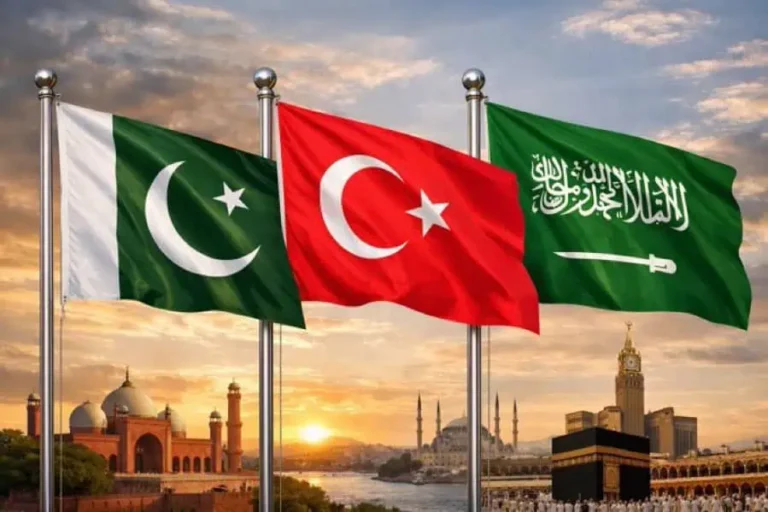
    MAKKAH: Pakistan, Saudi Arabia and Türkiye have signed the Makkah Joint Defence Agreement, pledging to strengthen collective security and defence cooperation among the three countries. The agreement was signed on Friday during a high-level summit at Al-Safa Palace in Makkah, where Saudi Crown Prince and Prime Minister Mohammed bin Salman received Pakistani Prime Minister Shehbaz Sharif and Turkish President Recep Tayyip Erdogan. According to the agreement, the three countries reaffirmed their commitment to strengthening collective security and promoting peace, stability and security in the region and beyond. The agreement is based on the longstanding relations and shared strategic interests of Pakistan, Saudi Arabia and Türkiye. It also highlights their continued defence cooperation and commitment to closer coordination on security matters. Any attack to be treated as an attack on all three A key provision of the agreement states that an armed attack against any one of the three countries will be regarded as an attack against all three. The pact is intended to enhance collective deterrence against acts of aggression and expand cooperation across various areas of defence. The agreement also seeks to strengthen military and security coordination among the three states and build a framework for closer cooperation in the face of regional security challenges. The summit brought together the leaders at a time of heightened tensions and instability across the Middle East. Recent reporting had indicated that the three countries were preparing to deepen defence coordination through a joint pact. Prime Minister Shehbaz Sharif was accompanied by Deputy Prime Minister and Foreign Minister Ishaq Dar, Chief of Army Staff and Chief of Defence Forces Field Marshal Syed Asim Munir, and Defence Minister Khawaja Asif. The leaders also reviewed bilateral and regional matters of mutual interest and discussed ways to further strengthen cooperation. The Makkah agreement marks a significant development in defence ties among Pakistan, Saudi Arabia and Türkiye, establishing a stronger trilateral framework for collective security and defence cooperation.

  • | | | |

    Makkah pact cements Pakistan-Türkiye-Saudi defenc…

    The newly signed defence agreement between Pakistan, Saudi Arabia and Türkiye marks a significant step towards formalising their longstanding security and strategic cooperation, while establishing a framework focused on collective defence and regional stability. The trilateral partnership brings together three countries with strong historical, political, economic and defence ties. Their cooperation has grown over decades and is now being shaped into a more structured security framework amid a rapidly changing regional environment. The agreement comes as conflicts, emerging security threats and evolving forms of warfare continue to reshape the strategic landscape. Supporters of the pact say closer coordination among the three countries can contribute to regional stability and strengthen their ability to respond collectively to security challenges. Focus on defence and deterrence The agreement has been described as defensive rather than offensive. Its central principle is collective security, under which an armed attack against one member is considered a threat to all three. The arrangement is aimed at strengthening deterrence and reducing the possibility of conflict by demonstrating that aggression against one country could trigger a coordinated response from the other two. The framework is not intended to target any particular country, according to the explanation of the agreement. Instead, it seeks to promote peace, stability and security through stronger defence cooperation. Complementary strengths Pakistan, Saudi Arabia and Türkiye bring different strategic capabilities to the partnership. Pakistan contributes extensive military experience and defence expertise, including experience in managing complex security challenges. Saudi Arabia brings its strategic position in the region, economic strength and political influence. Türkiye contributes advanced defence technology, a growing defence industry and substantial industrial capabilities. Together, these capabilities could provide the three countries with a broader platform for strategic coordination and defence preparedness. The partnership could also encourage greater cooperation in areas such as military coordination, intelligence sharing, defence technology and strategic planning. Pakistan’s regional role The agreement also highlights Pakistan’s expanding engagement with different regional and global actors. Islamabad maintains strategic and diplomatic relations with Saudi Arabia and Türkiye while also engaging Iran, China, the United States and other international partners. This network of relationships could allow Pakistan to play a constructive role in regional diplomacy and help facilitate communication among countries with differing interests. The effectiveness of the trilateral framework, however, will depend on how consistently the three countries translate the agreement into practical cooperation. Not a NATO-style alliance The partnership has also been described as not a Muslim NATO and not a mechanism for providing nuclear protection to its members. Instead, it is presented as a defensive arrangement designed to strengthen collective deterrence and security cooperation while supporting regional peace. The agreement effectively formalises much of the strategic cooperation that Pakistan, Saudi Arabia and Türkiye have developed over the years.

  • | | | |

    Attack on one, defence of all: Makkah pact

    Saudi Arabia, Türkiye and Pakistan have signed a joint defence agreement aimed at strengthening collective security and defence capabilities among the three countries. According to the Foreign Office spokesperson, the agreement was signed during a trilateral joint defence summit held in Makkah. Saudi Crown Prince and Prime Minister Mohammed bin Salman, Prime Minister Shehbaz Sharif and Turkish President Recep Tayyip Erdogan signed the agreement. Under the pact, an armed attack against any one of the three countries will be treated as an attack against all three. The Foreign Office said the agreement is aimed at strengthening the three countries’ collective defence capabilities against any act of aggression. The development came after Prime Minister Shehbaz Sharif met Saudi Crown Prince Mohammed bin Salman in Makkah. Field Marshal Syed Asim Munir and other members of the Pakistani delegation also attended the meeting. The leaders discussed the regional situation and ways to further strengthen the strategic partnership between Pakistan and Saudi Arabia. Earlier, a trilateral summit involving Saudi Arabia, Pakistan and Türkiye was scheduled to take place in Jeddah, with expectations of important developments concerning regional peace and security. According to Turkish media reports, the three countries were set to sign an agreement concerning regional security during the summit. Turkish President Recep Tayyip Erdogan also arrived in Saudi Arabia to participate in the high-level meeting. Prime Minister Shehbaz Sharif and Field Marshal Syed Asim Munir had arrived in Saudi Arabia a day earlier at the invitation of the Saudi Crown Prince. During their visit, the Pakistani delegation also performed Umrah and offered prayers at the Holy Kaaba.

  • | |

    Inquiry Committee formed against Punjab University…

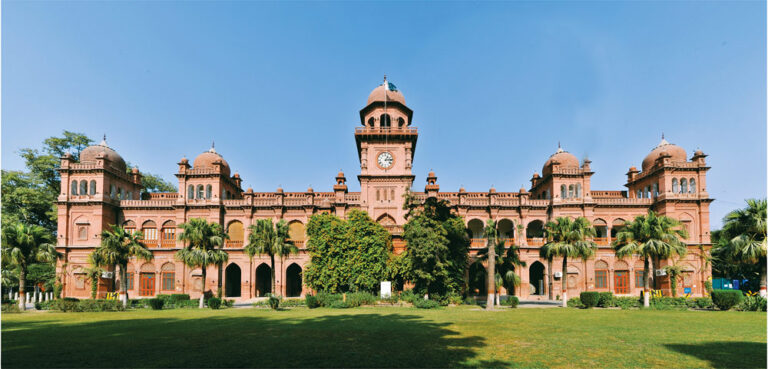
    Lahore : The administration of Punjab University has taken a significant step by forming a three-member inquiry committee to investigate multiple complaints submitted against the university’s Public Relations Officer (PRO), Khurram Shehzad. The committee has been constituted with the approval of the Vice Chancellor and has been directed to complete its investigation within one week and submit a detailed report along with recommendations. According to official documents, the inquiry committee comprises Dr Nadir Shah, Dr Imtiaz Shafiq, and the Deputy Registrar (Administration). The committee will review the complaints, examine relevant records, assess available evidence and record statements from concerned individuals before finalising its findings. Sources said that Khurram Shehzad has been serving as PRO on additional charge for several years. During this period, several faculty members reportedly submitted written complaints to the Vice Chancellor, alleging concerns regarding the use of official authority and the handling of administrative responsibilities. The complaints reportedly include allegations relating to misuse of official resources, administrative conduct, procedural issues and other matters connected with the performance of duties. The allegations, however, will be subject to verification by the inquiry committee. The Vice Chancellor has directed the committee to conduct a transparent review and submit its findings within the stipulated timeframe, after which any further administrative action will be considered in light of the inquiry report. The formation of the committee has attracted attention within academic and administrative circles, with university stakeholders awaiting the outcome of the investigation.

  • | |

    PM Shehbaz, Ishaq Dar and Field Marshal Asim Munir…

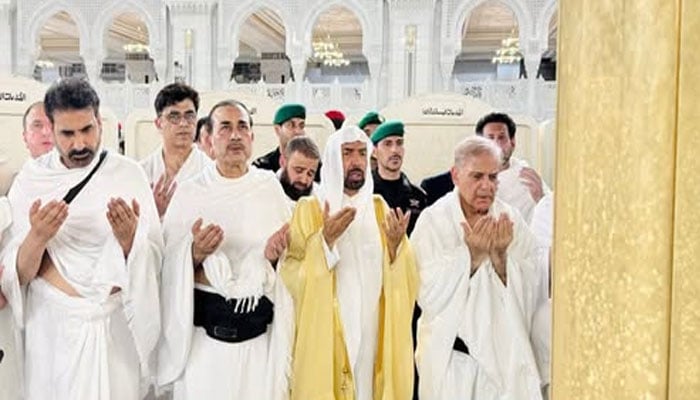
    MAKKAH: Prime Minister Shehbaz Sharif, Deputy Prime Minister Ishaq Dar and Field Marshal Syed Asim Munir performed Umrah in Makkah on Thursday, joining other members of a high-level Pakistani delegation in a deeply spiritual visit. The Pakistani leaders arrived in Saudi Arabia as part of Prime Minister Shehbaz Sharif’s official visit and later proceeded to the holy city of Makkah to perform the religious ritual. The visit comes amid efforts to further strengthen Pakistan-Saudi Arabia relations and discussions on regional developments. Before performing Umrah, the Pakistani delegation was also granted the opportunity to make a special visit to the Holy Kaaba, according to the information released regarding the visit. The prime minister, deputy prime minister, Field Marshal Asim Munir and members of the delegation offered prayers for the progress, prosperity and well-being of Pakistan. They also prayed for the safety and security of the Muslim Ummah and for peace across the region and the wider world. The spiritual moment added a solemn dimension to Prime Minister Shehbaz’s Saudi visit, which also carries important diplomatic significance. His trip is taking place at a time of heightened regional tensions, with talks expected to focus on bilateral ties and developments affecting the wider region. The Umrah performed by the Pakistani leadership reflects the close religious and longstanding relationship between Pakistan and Saudi Arabia, while the accompanying diplomatic engagements are expected to reinforce cooperation between the two countries.

  • | | |

    Pakistan, Saudi Arabia, Türkiye set for strategic…

    Pakistan’s top civilian and military leadership offered prayers at Islam’s holiest site on Friday as Islamabad prepared for what diplomatic sources describe as a pivotal round of high-level engagements in Saudi Arabia that could reshape strategic cooperation among Pakistan, Saudi Arabia and Türkiye. Prime Minister Shehbaz Sharif, Chief of Defence Forces and Chief of Army Staff Field Marshal Syed Asim Munir, Deputy Prime Minister and Foreign Minister Senator Ishaq Dar, Defence Minister Khawaja Muhammad Asif, Information Minister Attaullah Tarar, Special Assistant Tariq Fatemi and members of the Pakistani delegation performed Umrah during their official visit to the Kingdom. Before performing Umrah, the delegation was granted the rare honour of a special visit inside the Holy Kaaba. Following the pilgrimage, Prime Minister Shehbaz Sharif, Field Marshal Asim Munir and members of the delegation offered special prayers for Pakistan’s peace, economic prosperity, national security, the unity of the Muslim Ummah and lasting regional and global peace. The visit comes at a strategically significant moment for the region. Diplomatic sources say Turkish President Recep Tayyip Erdoğan is also expected to arrive in Saudi Arabia, where a possible trilateral engagement involving the leaders of Pakistan, Saudi Arabia and Türkiye is expected on the sidelines of high-level consultations. According to diplomatic sources, the expected meeting could pave the way for a major expansion in defence cooperation, with discussions likely to focus on military collaboration, defence industrial partnerships, regional security coordination and strategic cooperation among the three countries. The Saudi visit underscores Pakistan’s growing diplomatic profile and its deepening strategic partnerships with Riyadh and Ankara. Officials view the engagements as an opportunity to advance cooperation in defence, investment, regional stability and economic development, while reinforcing Pakistan’s role in promoting peace and security across the Muslim world.