
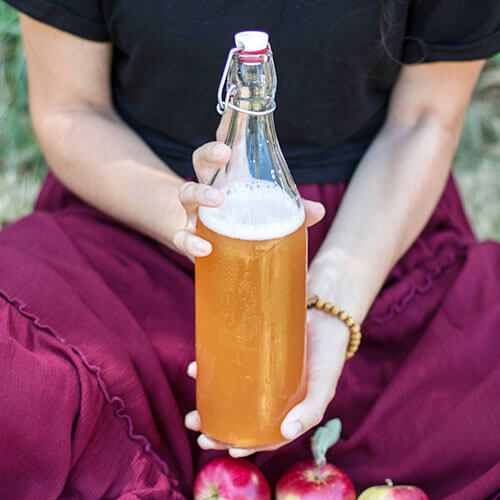
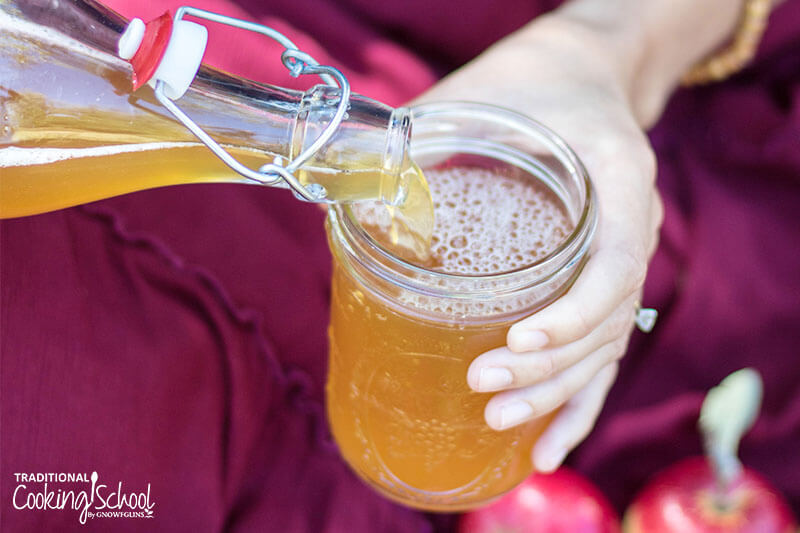
This fall, turn your backyard, u-pick, or farmers market apples into fresh-pressed, spontaneously fermented, sparkling apple cider! This recipe couldn’t be easier but the fizzy, sweet-and-tart cider is out of this world!
Wherever you live, I want you to get your hands on as many apples as you can…
The uglier the better. 😉
And it’s not to make grain-free apple pie shortbread or chai spiced apple cake or cider donuts. (Though, please feel free to make all of those before fall is over!) It’s because you NEED spontaneously fermented sparkling apple cider in your life. Stat!
Table Of Contents
Why I Love This Recipe
Now, just so we’re clear, this isn’t like those other sparkling apple cider recipes that call for a combination of apple, grape, and/or orange juice plus soda for carbonation. This is the real deal that your great-grandparents might have been making a hundred years ago, with apples picked off their own or a neighbor’s apple tree.
Spontaneously fermented sparkling apple cider can hardly be called a recipe. After all, it’s just one ingredient — freshly pressed apple cider.
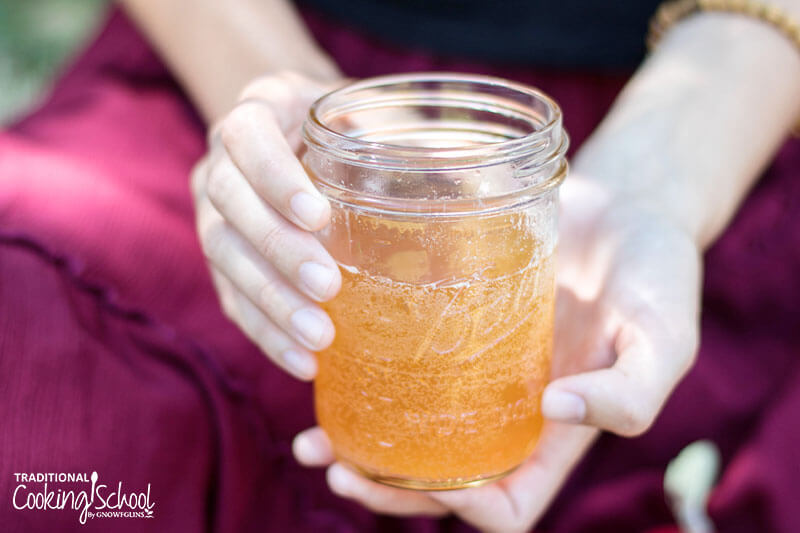
The skin of unwashed, organic apples is teeming with microscopic organisms — tiny yeasts and bacteria that feed off the natural sugars in apple cider and turn it into a bubbly, sparkling, sweet-and-tart glass of fall flavor! No need to add sugar or spices!
When those dark, cold winter days blow in… And when those yucky, wet spring days seem to drag on forever… You’ll be so thankful that you bottled up the best of the fall harvest — apples!
Apple Cider Or Apple Juice… Which Is It?
Is there a difference between apple cider and apple juice? You bet there is!
Real apple cider is made from freshly pressed (or juiced) apples and is not filtered. So, when you’re fermenting your cider, you should see bits of brown sediment settling at the bottom of your jars or bottles.
On the other hand, apple juice starts as cider. Then it’s filtered and concentrated. Water is added back to it, and then it is pasteurized to be shelf-stable.
You CANNOT use pasteurized, bottled apple “cider” or juice from the grocery store for this process. It will not work. Furthermore, if you purchase any sort of shelf-stable product labeled “apple cider”, especially if sweeteners, spices, or flavors have been added, it is not real cider at all!
Traditional cider is raw and unfiltered. Once fermented to suit your tastes, it must be stored in the refrigerator or a very cold root cellar. To save refrigerator space, I have a friend who water bath cans her cider. Of course, it’s no longer raw or fermented after this, but it does remain unfiltered and is shelf-stable cider.
Now that we’ve got that cleared up… let’s ferment some cider!
Ingredients
- Apples — Choose organic so that the herbicides and pesticides on conventional apples don’t interfere with fermentation. It’s even better if the apples are locally grown. If organic from a local source you trust (your neighbor’s tree, a nearby orchard, etc.) you don’t even need to wash the apples, and it’s better not to so you don’t wash away the beneficial microorganisms that will kickstart fermentation!
Supplies Needed
- A cider press or juicer — Follow the specific instructions below depending on which option you choose!
- Swing-top bottles or quart-sized Mason jars — Either will work, but swing-top bottles ensure better carbonation.
How to Make Sparkling Apple Cider
By doing large batches of spontaneously fermented sparkling apple cider, you can enjoy this quintessential fall ferment throughout winter and spring!
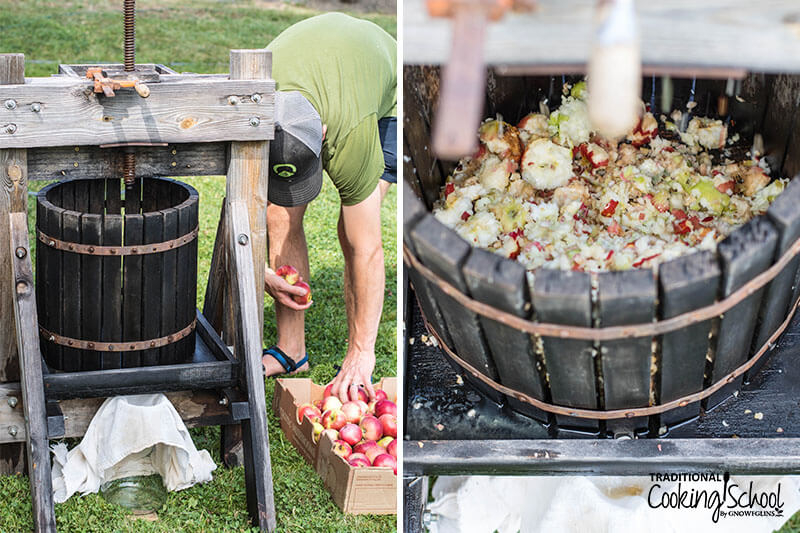
Using a cider press…
- Press the apples — skin, stems, peels, and all! This means adding apples a few at a time to the grinding box where the blade is. The apple pieces or pulp will then fall into the tub (the part that looks like a barrel).
- Once the tub is full, position the pressing plate that looks like a lid but actually fits inside the tub like a round plate. As you screw it tighter down into the tub, it squeezes the cider out of the apple pulp into the jar below!
- You don’t have to worry about stray leaves or sticks because they’ll be filtered out (as you can see in the photos, the tub catches most of the debris, but I also cover my jar with a layer of cheesecloth just in case). As long as you’re sure your apples are organic and have never been sprayed with anything, you don’t even need to wash them first!
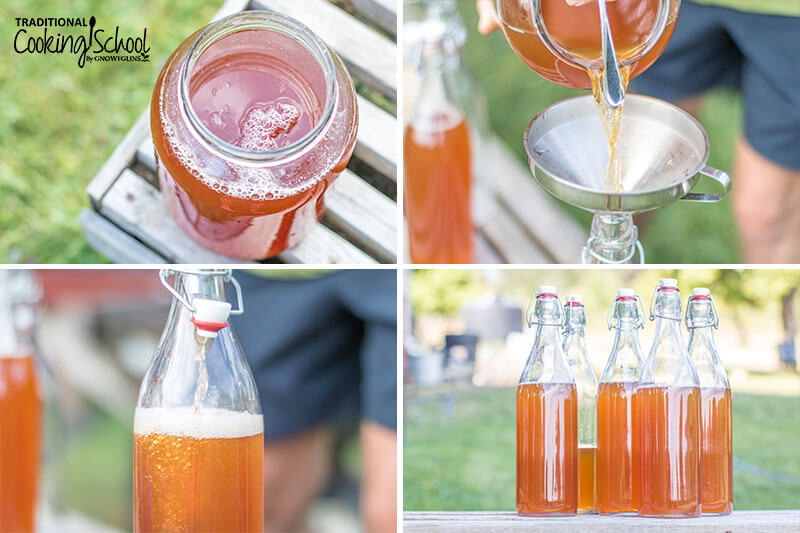
- Transfer the fresh-pressed cider to swing-top bottles or quart-sized jars and close.
- Leave to ferment at room temperature for 2 to 4 days. You can go longer, but the cider will lose most of its sweetness and become slightly alcoholic the longer it ferments.
- Make sure to check and “burp” your jars at least once a day! This means opening each bottle to release the pent-up gases to prevent explosions. As the yeasts and bacteria get to work eating the apple’s sugar, they’ll begin to release carbon dioxide, especially by the end of the second day.
- Once the apple cider tastes like you want and has the fizz (sparkle!) you like, transfer it to the refrigerator.
Using a juicer…
- Remove leaves and sticks, but don’t worry about the skins, stems, and peels.
- Juice according to your juicer’s instructions.
- Transfer the fresh-pressed cider to swing-top bottles or quart-sized jars and close.
- Leave to ferment at room temperature for 2 to 4 days. You can go longer, but the cider will lose most of its sweetness and become slightly alcoholic the longer it ferments.
- Make sure to check and “burp” your jars at least once a day! This means opening each bottle to release the pent-up gases to prevent explosions. As the yeasts and bacteria get to work eating the apple’s sugar, they’ll begin to release carbon dioxide, especially by the end of the second day.
- Once the apple cider tastes like you want and has the fizz (sparkle!) you like, transfer it to the refrigerator.
Recipe Tips & FAQs
You can compost your apple scraps, feed them to your animals, or turn them into homemade apple cider vinegar!
If you have any other questions, check out our guide to fermentation troubleshooting to see if it has been answered there!
Other Naturally Fermented Recipes
Sparkling apple cider may be fall’s easiest ferment… but it’s just the beginning of what’s possible through lacto-fermentation! Check out our free Fermenting archives here at TCS, and enjoy some of our favorite recipes, below…
- Honey-Sweetened Ginger Beer {probiotic, non-alcoholic, GAPS-friendly natural soda!}
- The ULTIMATE Water Kefir Guide (how to make it, store it, flavor it, brewing tips & MORE!)
- The ULTIMATE Kombucha Guide {how to make it, store it, flavor it, SCOBY care, troubleshooting, and MORE!}
- 5-Spice Apple Chutney {lacto-fermented!}
- Fizzy Apple Cider Switchel (VAD)
- Homemade Raw Apple Cider Vinegar Recipe
- 5-Minute Probiotic Mixed Berry Switchel {paleo, GAPS, AIP}
- How To Make Beet Kvass
Did you make this sparkling apple cider recipe? If so, please give us a rating on the recipe card below. Then snap a photo and tag us on social media so we can see how you enjoyed it!
Sparkling Apple Cider Recipe
This fall, turn your backyard, u-pick, or farmers market apples into fresh-pressed, spontaneously fermented, sparkling apple cider! This recipe couldn’t be easier but the fizzy, sweet-and-tart cider is out of this world! No need to add sugar or spices!
Ingredients
-
apples
locally grown, if possible -
a juicer
We use a neighbor’s cider crusher/press, but you can totally do this without one! -
swing-top bottles
and/or quart-size Mason jars
Instructions
First, juice (or press) the apples — skin, stems, peels, and all!
-
If you’re using a cider press, you don’t even have to worry about stray leaves or sticks because they’ll be filtered out. As long as you’re sure your apples are organic and have never been sprayed with anything, you don’t even need to wash them first!
-
If you’re using a juicer, remove leaves and sticks before juicing, but don’t worry about the skins, stems, or peels. Whether using a cider press or juicer, there won’t be any leaves, seeds, or stems in the finished cider.
Transfer…
-
the fresh-pressed cider to swing-top bottles or quart-size jars and close. Leave on your countertop for 2 to 4 days. (You can go longer, but the cider will lose most of its sweetness and become slightly alcoholic the longer it ferments.)
-
As the yeasts and bacteria get to work eating the apple’s sugar, they’ll begin to release carbon dioxide, especially by the end of the second day. Make sure to check and burp your jars at least once a day! Once the apple cider tastes like you want and has the fizz (sparkle!) you like, transfer it to the refrigerator.
Recipe Notes
- Traditional cider is raw and unfiltered. Once fermented to suit your tastes, it must be stored in the refrigerator or a very cold root cellar.


