
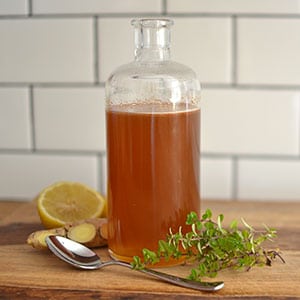
Quick and easy to make in the Instant Pot or on the stove-top, this old-fashioned homemade cough syrup uses real food ingredients to help relieve a persistent cough and sore throat!
Remember when I gave you a peek inside my medicine cabinet? Nothing’s changed… I’m still fighting illness with food!
It’s always best to keep your immune system strong to keep from getting sick in the first place. For us, we like to use the immune-boosting tips in this post.
My most recent addition to our natural homemade remedies is this cough syrup — made with one of my favorite kitchen gadgets, the Instant Pot!
If you don’t have an Instant Pot, don’t let that dissuade you! You can easily make this recipe in a saucepan on the stove instead.
Why I Love This Recipe
I love giving my family all-natural ingredients that not only fight illness, but also nourish their bodies.
Fresh herbs have many medicinal benefits on their own, and when you combine them together they can be a powerful remedy!
Here are a few reasons I love this recipe:
- It whips together very quickly.
- It lasts a very long time in the refrigerator.
- I can be confident giving it to my family because I know every ingredient used to make it.
- It really works!
Benefits of Honey And Herbs For A Cough
I’ve got nothing against plain ol’ raw honey as a natural cough remedy. I’ve given my family many a spoonful of it to ease a cough. It’s powerful, and it works!
Yet, for stubborn coughs or coughs that accompany colds, herbs and spices speed healing and bring relief more quickly.
This is where my Instant Pot comes in handy. Using the Sauté feature, I can gently simmer herbs in water with a constant temperature. No more adjusting the stove and babysitting the pot!
Ingredients Needed
- Fresh Thyme* – Fresh thyme is anti-inflammatory and disinfecting. It’s the perfect addition to homemade cough syrup, especially when the cough accompanies a cold. And you just can’t find its lovely herbaceous flavor in any store-bought syrups.
- Fresh Sage* – Traditionally added to old-fashioned cough syrup recipes, sage is anti-inflammatory and an expectorant.
- Fresh Ginger – Ginger works as an expectorant to loosen and break up mucous in the lungs. Gingerol, the main bioactive compound in ginger, possesses anti-inflammatory, anti-bacterial, and immune-boosting properties. Exactly what we need to fight illness and stop persistent coughing! If your cough is caused by a bacterial infection, you want ginger in your Instant Pot cough syrup! (Source.)
- Cayenne Pepper – Cayenne pepper contains a compound called capsaicin. Capsaicin “relieves the pain by suppressing a chemical that carries the pain message from nerves in the affected area to the brain” (source). This is especially relieving if coughing causes or worsens a sore throat. Feel free to omit or reduce this ingredient if you plan to administer your homemade cough syrup to children or sensitive adults.
- Lemon – Finally, lemon is anti-bacterial, helps boost the immune system, and can open up the sinuses. I’ve even used it alongside raw garlic to treat strep throat!
*In this recipe, use either thyme or sage. Both are unnecessary since their properties are very similar. Medicinal use of sage is contraindicated for pregnancy, so please use fresh thyme if you are pregnant.
Now that you know a little bit about the ingredients, let’s make cough syrup in the Instant Pot!
Directions
Now that your ingredients are gathered and ready to go, let’s get started!
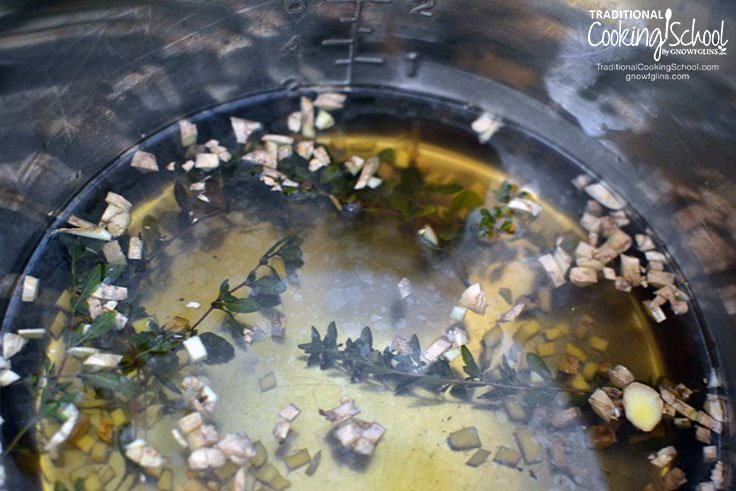
- Add water, thyme, and chopped ginger to the Instant Pot and press the “Sauté” button.
-
Simmer the herbs in water until reduced by half.
-
Allow it to cool until the temperature is warm, not hot, steeping the herbs the entire time.
-
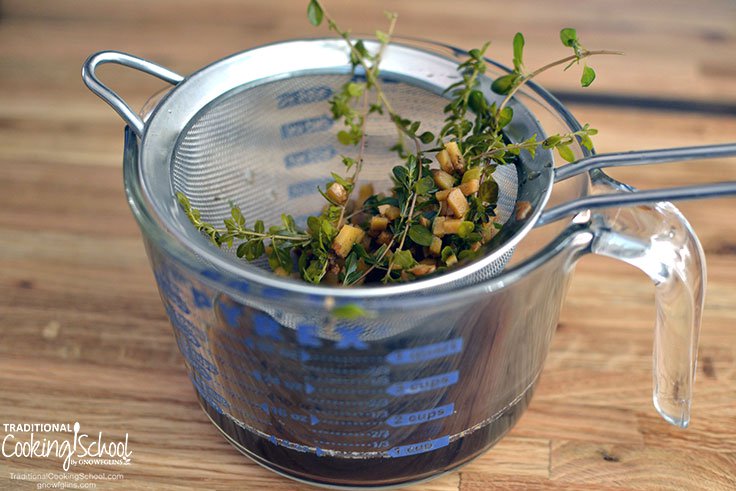
Strain the liquid into a bowl through a fine-mesh sieve, discard or compost the thyme and ginger.
-
Return the thyme-ginger tea to the Instant Pot.
-
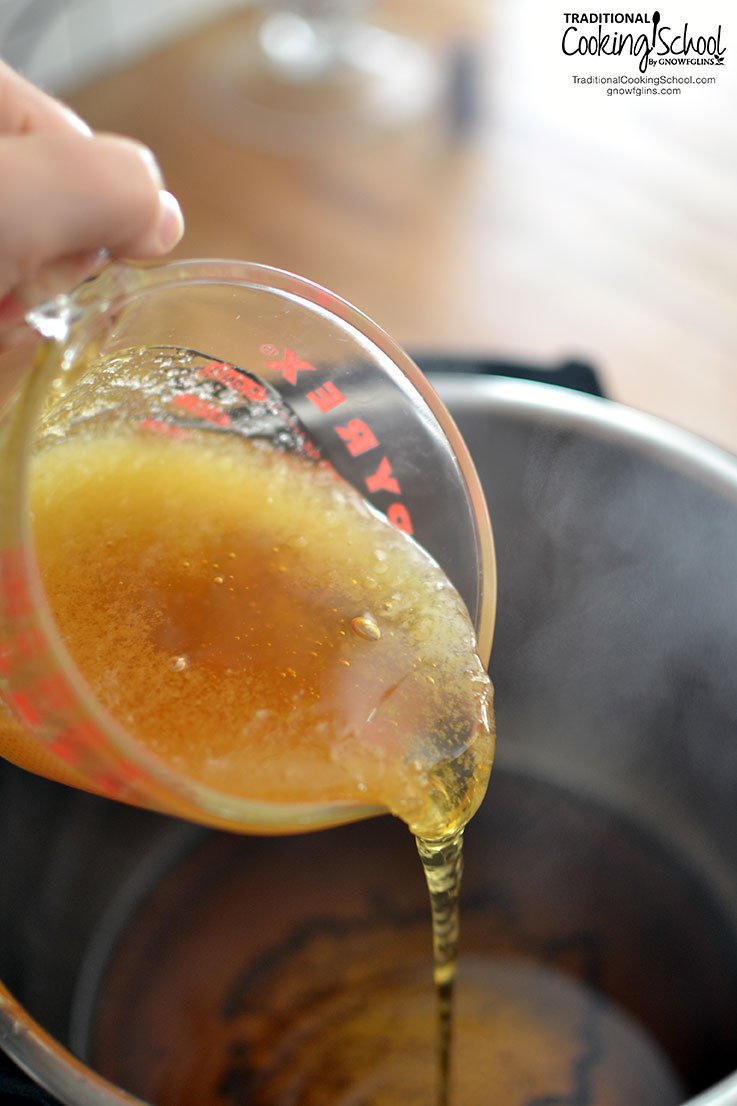
Whisk in honey, lemon juice, and optional cayenne pepper, and stir until all the honey is dissolved.
-
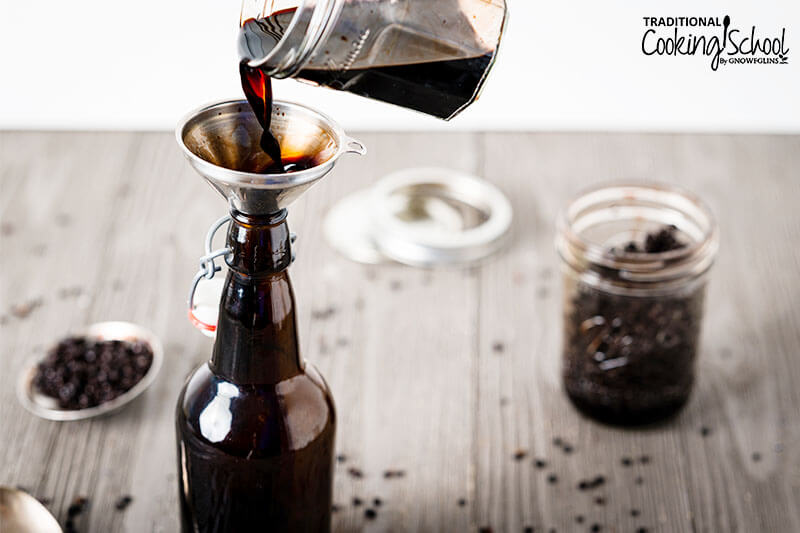
Transfer cough syrup to an airtight jar or bottle and store in the refrigerator for best results.
How to Use Homemade Cough Syrup
More Immune Boosting Remedies
- Immune Boosting Homemade Elderberry Gummies
- Homemade Elderberry Tincture
- 7 Immune Boosting Remedies
- Cinnamon Licorice Tea (to boost your immune system)
- Pepper Juice – An Immune Boosting Tincture
- 14 Herbs to Boost Immunity
- Homemade Beef Broth
- Homemade Vegetable Broth
Have you made this homemade cough syrup? If so, I want to see your homemade remedies! Snap a photo and tag me on social media @tradcookschool! Then leave a star rating on the recipe card below to tell us how you liked it!

Homemade Cough Syrup
Make homemade cough syrup with real food ingredients to help combat the cold and flu season naturally. This easy old-fashioned remedy works wonderfully.
Ingredients
-
2
cups
pure water -
8
fresh thyme -
1/4
cup
ground ginger
finely chopped -
1
cup
raw honey
preferably local -
1
organic lemon
juiced -
1/8
teaspoon
ground cayenne pepper
Instructions
-
Put water, thyme, and chopped ginger into the Instant Pot.
-
Press the Saute button.
-
Simmer the herbs in water until reduced by half.
-
Allow to cool until the temperature is warm, not hot, steeping the herbs the entire time.
-
Strain.
-
Discard or compost the thyme and ginger.
-
Return the thyme-ginger tea to the Instant Pot.
-
Whisk in honey, lemon juice, and cayenne pepper, if using.
-
Transfer to an airtight jar or bottle.
-
Syrup will keep in a dark cupboard for 1 week. After that, it should be stored in the refrigerator.
-
Administer a tablespoon as often as necessary to soothe a sore throat and calm a cough.
Recipe Video
Recipe Notes
- Store up to one week at room temperature, or up to a month or more in the refrigerator.
- For stubborn coughs or coughs that accompany colds, the combination of honey, herbs, and spices speeds healing and brings relief quickly.
Disclaimer: I’m not a doctor. All information is meant for your general knowledge only and is not a substitute for medical advice or treatment for specific medical conditions. You are responsible for your own health and for the use of any remedies, treatments, or medications you use at home.
This post was originally published and written by Lindsey Dietz on 10/10/16. It was updated and republished on 2/10/21.


