
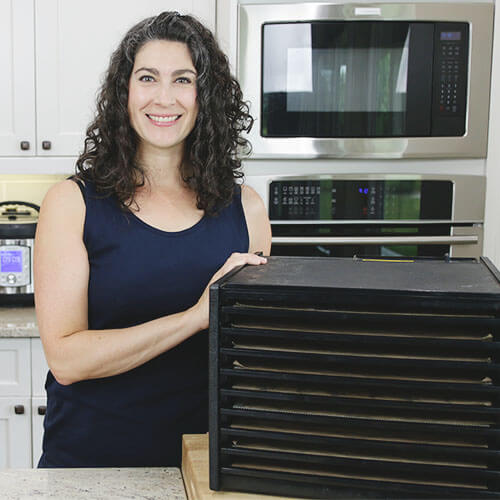
From airflow to number of trays, how do you choose the best food dehydrator for your family? Watch, listen, or read to learn about the seven features I consider essential to any dehydrator, plus three non-essential ones, too!
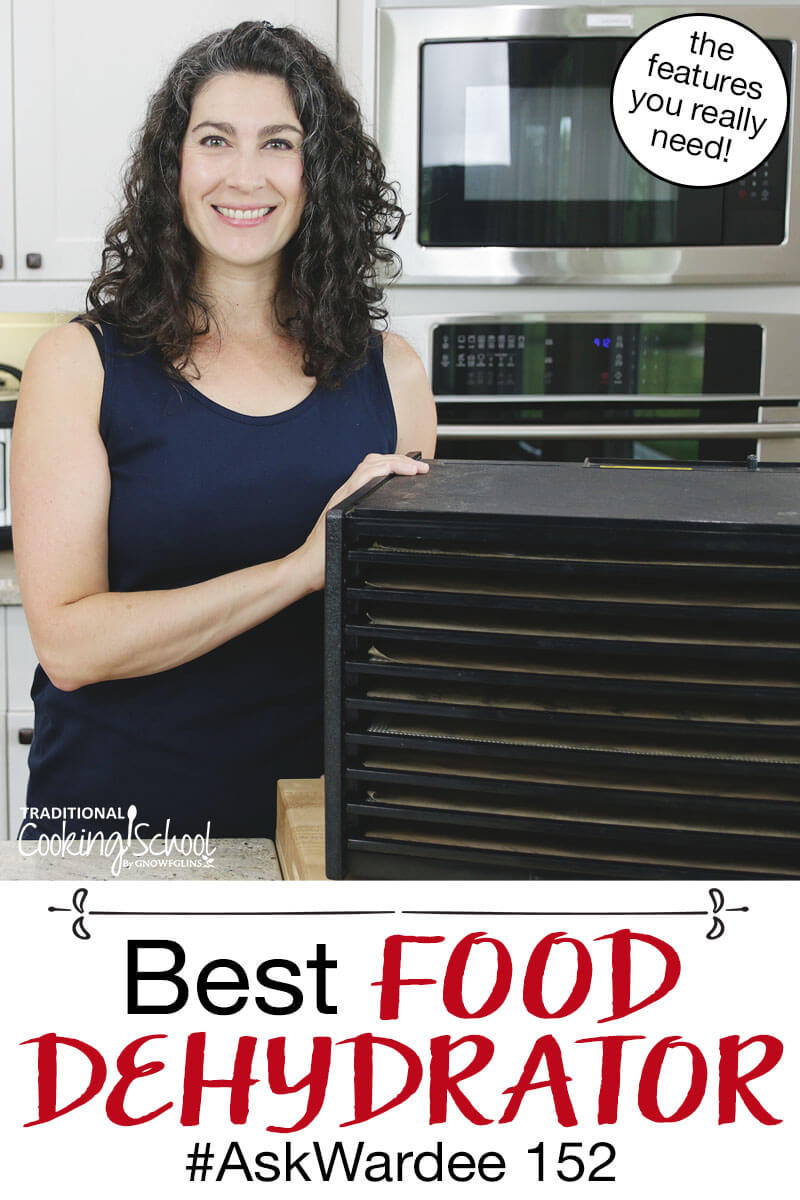
Oh, the dehydrator options… stackable trays or a cube, stainless steel or plastic, thermometers and timers…
What is essential and what you can pass on?
In today’s #AskWardee, I’m sharing what you must have in a dehydrator … and what won’t make a difference!
Keep reading or watching below to learn more!
Subscribe to #AskWardee on iTunes, Stitcher, YouTube, or the Podcasts app.
The Question: What’s The Best Food Dehydrator? What Features Do You Recommend?
Meghan R. asked:
Before I purchase your Dehydrating eCourse, I see the Excalibur brand recommended by you has a variety of options from digital to non digital, timers of 26-48 hours, solid door to clear, adjustable temperature or not. Having never dehydrated except in my Wedgewood oven with gas pilot, I don’t know what features would be good to have and what are not really necessary as there are a variety of models to choose from. Thanks for the help.
Lori, thank you for your question!
Because we’re featuring your question on today’s #AskWardee, you’re getting a gift — a FREE eBook and Video Package! Our team will be in contact with you so you can choose which one you’d like!
Essential Features
I’ll share some of the essential features I look for in a dehydrator… and why! So whether or not you choose the dehydrator I recommend (this Excalibur 9-tray), you’ll know what to look for in brands and models.
#1 — Airflow Direction
Dehydrators usually have one of two forms of airflow: vertical or horizontal.
Vertical is where the fan is on top or bottom of unit and flows up and down (vertically). Horizontal is where the fan is at the the back or side of dehydrator and flows horizontally.
Horizontal airflow is preferred by most people, as you get even heating/drying and less mixing of flavors. However, vertical (with the fan on bottom) is more in line with nature, as heat rises — and you can rotate trays to increase drying efficiency and consistency.
The Excalibur dehydrator is an example of a horizontal airflow unit. It, along with L’Equip, has square/rectangular trays for more efficient usage of space.
The Nesco / American Harvest and L’Equip dehydrators with stackable trays use vertical airflow. A downside to the Nesco / American Harvest is that food drips down right onto the fan at the bottom, and that’s not so fun to clean.
Nesco also has circular trays.
#2 — Shape Of Trays
The Excalibur and L’Equip have square/rectangular trays for more efficient usage of space, while the Nesco/American Harvest has circular trays.
#3 — Shape Of Dehydrator
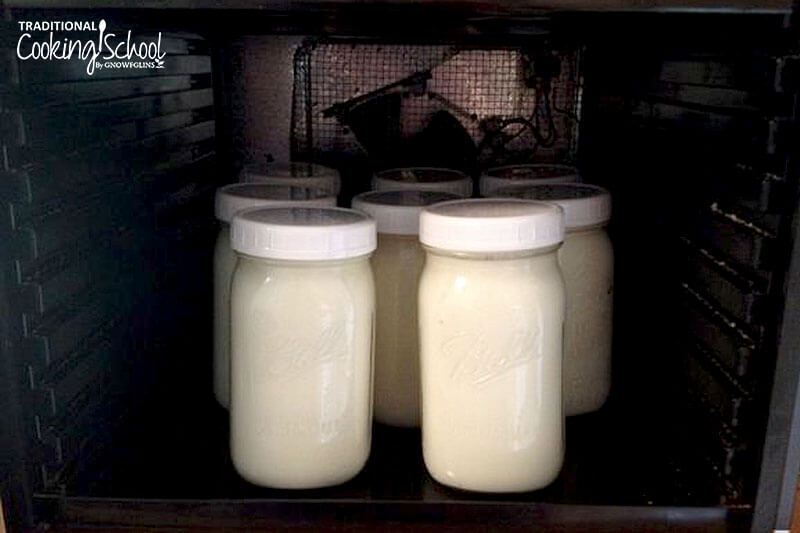
Will you be able to do other things with your dehydrator? For instance, a cube shaped dehydrator like the Excalibur 9-tray, with its removable trays (preferably 9), gives you space to proof bread dough or incubate yogurt (find the recipe in our Cultured Dairy eCourse!).
#4 — Number Of Trays
With the Excalibur, you have a choice of 4 or 9 trays. If you have room for it, I always recommend the 9 tray, even if you’re a small family. If you’re dehydrating, you’re doing batch processing and it allows you to do larger batches.
I haven’t heard of anyone who regretted getting the larger dehydrator.
#5 — Thermometer
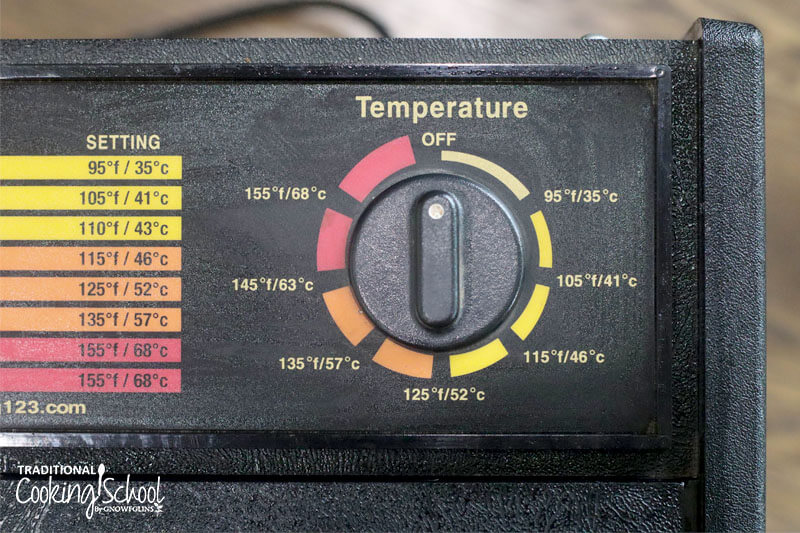
The first dehydrators did not have a thermostat, but today’s dehydrators do. Ideally, yours should have a temperature control range of 95 to 155 degrees Fahrenheit.
#6 — Tray Material
Most inexpensive, budget dehydrators offer plastic trays.
The Excalibur and Nesco/American Harvest plastic trays are BPA-free. The Excalibur offers an upgrade to stainless steel trays.
Although normally, I would suggest staying away from plastic, it’s less of an issue with dehydrating because we’re using lower temperatures. Plastic use is more of a concern at high cooking temperatures.
Still, at a minimum, I would suggest your dehydrator have BPA-free plastic.
#7 — Tray Liners
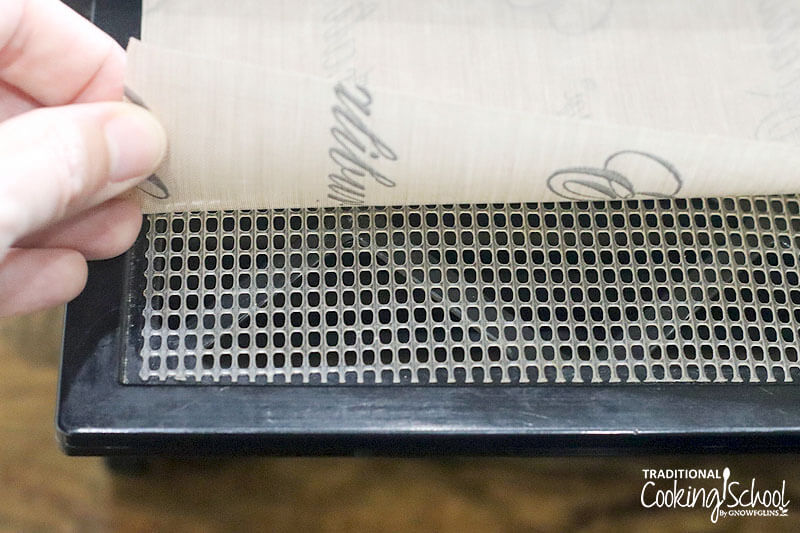
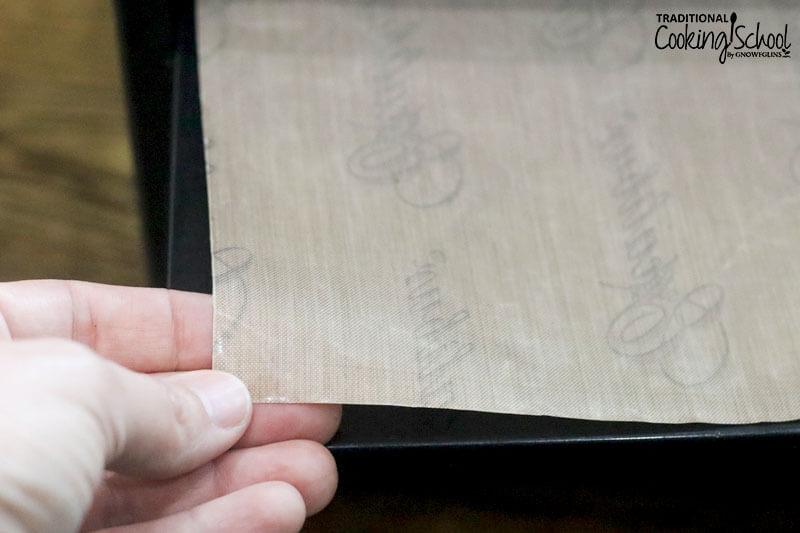
When drying food in small pieces, or when drying wet foods, you need to line your dehydrator trays. Believe me, it is necessary!
Dehydrator manufacturers provide liner options. For instance, you can choose to get ParaFlexx sheets with your Excalibur dehydrator.
And the Nesco/American Harvest dehydrators offer plastic fruit leather accessory trays.
If ready-made liners aren’t included with your package or not in your budget, you can use unbleached parchment paper to line your trays. Very wet things (like pureed fruits) can wet the paper to the point it is saturated and tears, but if you’re careful you can probably work around that.
Non-Essential Features
Now I’ll share some factors that will come down to personal preference and price. These issues don’t have huge efficiency, functionality, or health impacts… so go with your heart’s desire and budget. 🙂
#1 — Digital v. Non-Digital
I generally choose manual over digital because 1) manual usually lasts longer and 2) is less expensive to repair.
Having said that, this is not always true. Just something to keep in mind.
#2 — Timer
A timer might be helpful if you work outside the home and want your dehydrator to turn off at a certain time but you won’t be there to do it.
Having said that, dehydrating is hardly ever “done” on time, so a timer cannot replace a person being there to check on, rotate food, and remove done pieces. The timer might turn off the dehydrator… but the food might not be done.
In addition, while it’s usually not a good idea to turn off a dehydrator before food is done… it is almost always okay for a food to keep drying and get more dry.
Also… you can always add an after-market timer, like the kind people use to turn on house lamps at a certain time of day even if they’re not home.
I prefer NOT to have a timer on my dehydrator. I keep an eye on how the food is progressing myself.
#3 — Door Style
Lori, you mentioned a clear versus solid door. Unless you like the look or idea of a clear door (and can afford it), I don’t consider it essential.
If the door is clear, you might be able to see the front of each tray while food is drying. But to really check how dry the food is, you’ll have to open the door and pull out the trays.

More Traditional Cooking Info…
If you haven’t already, be sure to sign up for the FREE Traditional Cooking Cupboard… you’ll get 14+ FREE eBooks featuring recipes, info, and articles on Traditional Cooking School, and a free Traditional Cooking video series!
Click here to grab your 14+ free eBooks and free video series today!
Any Questions Or Comments?
If you have other questions or comments about dehydrators, be sure to leave them in the comments!
Helpful Links
- FREE Traditional Cooking Video Series + 14 Free eBooks on Traditional Cooking
- Dehydrating eBook or eCourse
- What’s The Best Food Preservation Method… Canning, Freezing, Dehydrating, or Fermenting? #AskWardee 147
- Dehydrating Tools Guide
- The Excalibur 9-tray dehydrator I recommend
- ParaFlexx sheets for Excalibur dehydrator
- Dehydrating tips and recipes
How did you choose the best food dehydrator for your family? What features are essential for you and why?


