
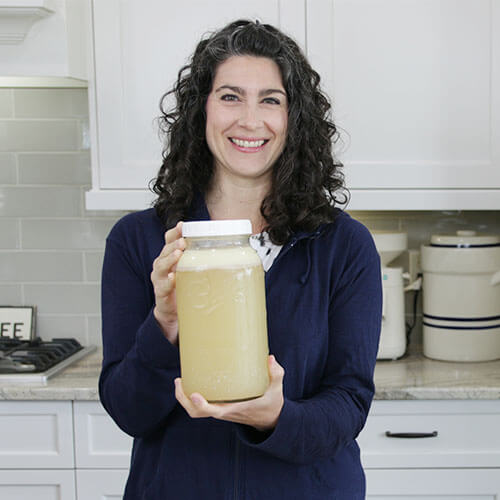
What’s the difference between stock and broth? When a recipe calls for one, are you sure you’re using the right thing? Is it ever important to use one, and not the other? Let’s find out!
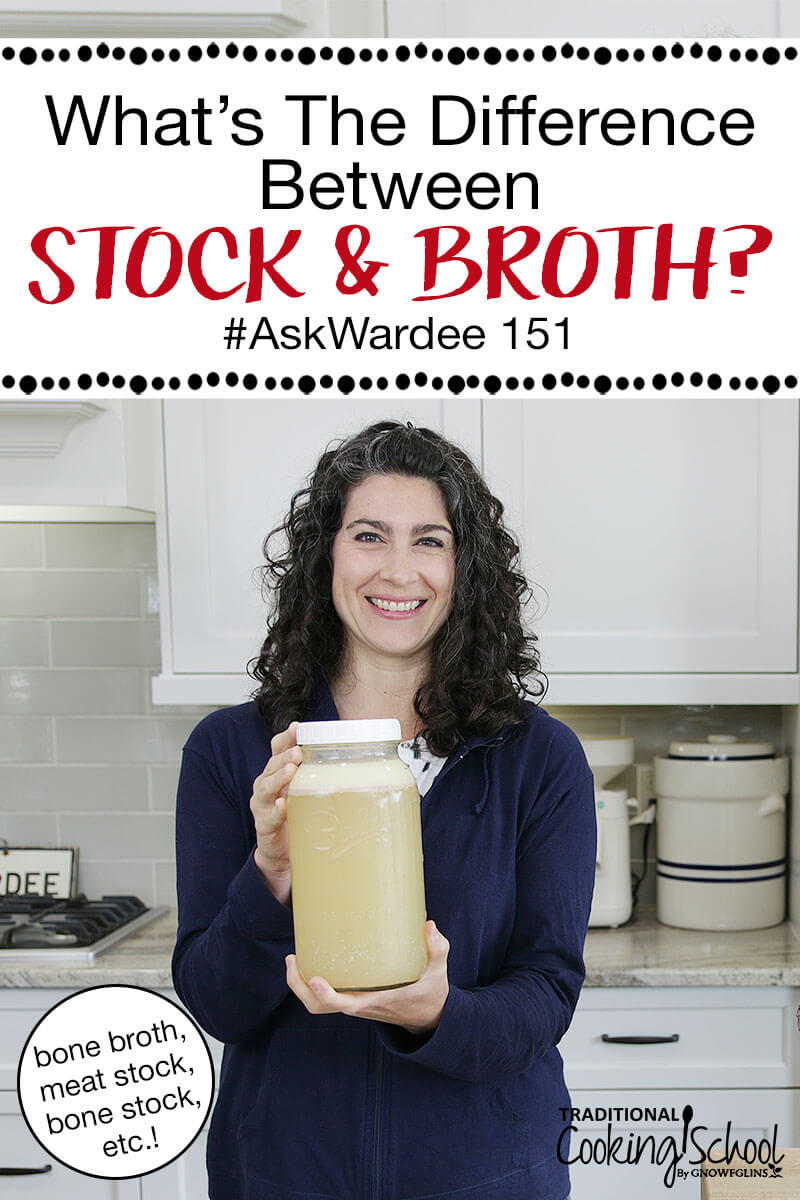
What’s the difference between broth and stock?
We often use the terms interchangeably… but as it turns out, they don’t mean the same thing!
On today’s #AskWardee, I’m sharing those differences … and you won’t be confused again!
Keep reading or watching below to learn more!
Subscribe to #AskWardee on iTunes, Stitcher, YouTube, or the Podcasts app.
What’s The Difference Between Broth And Stock?
When a recipe calls for stock or broth, are you sure you’re using the right thing?
Although we use the terms and the flavorful liquids interchangeably, and often it’s fine…
…if you’re on a gut-healing diet, it’s important to make the right kind for the sake of healing.
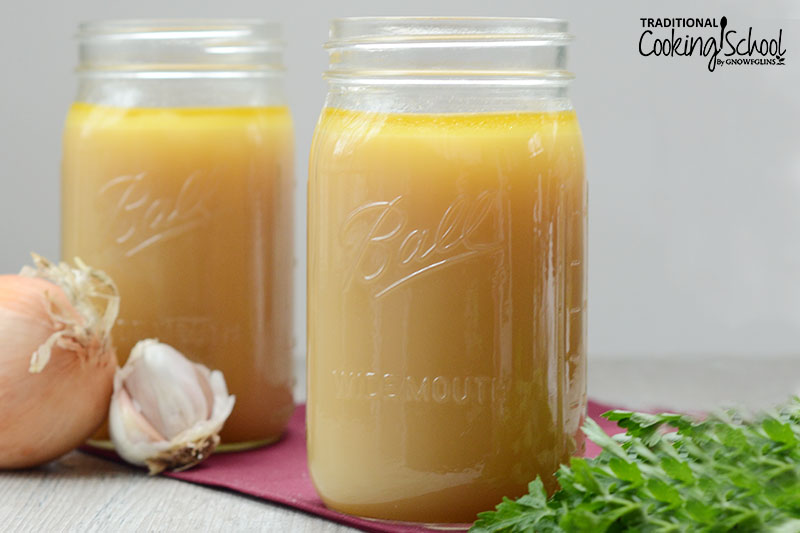
Broth
Broth is technically the liquid in which meat is cooked. It does not necessarily include bones, but often does. It may include some vegetables and is usually seasoned.
Bone Broth
And then you have “bone” broth… a special broth that’s cooked for even longer than regular broth (or stock, see below). This broth includes bones and connective tissues of animals.
It is one of the top 5 nutrient-dense foods to feed your family. Here’s my favorite beef bone broth recipe and 9 ways to get that broth in without drinking it straight.
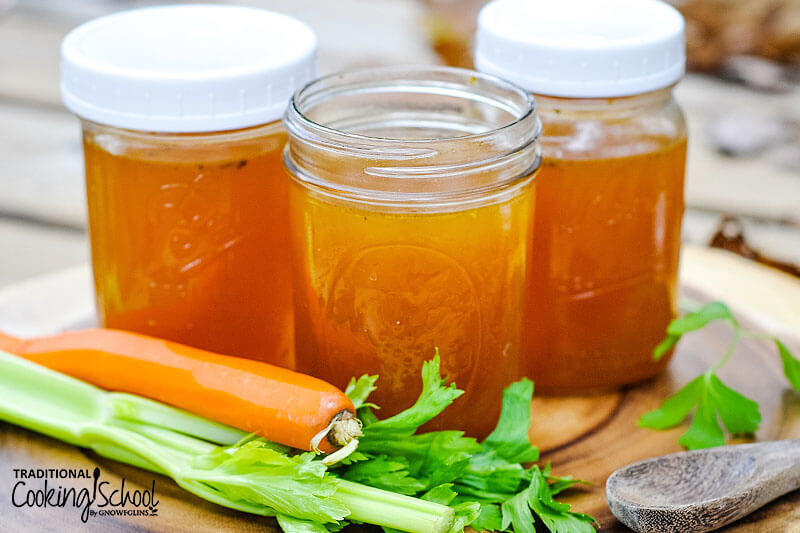
Stock
Stock often has a richer flavor and always includes bones. It is cooked for a longer amount of time than regular broth to allow the nutrients and flavor of the bones to be released.
Meat Stock v. Bone Stock
If you’re familiar with gut-healing diets such as GAPS, you may have heard the terms “meat stock” and “bone stock”.
Here’s what those terms mean:
Meat stock is used at the beginning of the GAPS Diet and only cooked for 2 to 3 hours. This stock is thought to better help the gut-healing process at this stage of the diet (not as strong).
To make good meat stock you need joints, bones, a piece of meat on the bone, a whole chicken, giblets from chicken, goose or duck, whole pigeons, pheasants or other inexpensive meats. It is essential to use bones and joints, as they provide the healing substances, not so much the muscle meats. Ask the butcher to cut in half the large tubular bones, so you can get the bone marrow out of them after cooking. Put the bones, joints and meats into a large pan and fill it up with water, add natural unprocessed salt to your taste at the beginning of cooking and about a teaspoon of black peppercorns, roughly crushed. Bring to boil, cover and simmer on a low heat for 2.5 – 3 hours” (source).
Bone stock is used in the later stages of the GAPS Diet, once healing has begun. It is cooked for much longer than meat stock (48 to 72 hours).

More Traditional Cooking Info…
If you haven’t already, be sure to sign up for the FREE Traditional Cooking Cupboard… you’ll get 14+ FREE eBooks featuring recipes, info, and articles on Traditional Cooking School, and a free Traditional Cooking video series!
Click here to grab your 14+ free eBooks and free video series today!
Any Questions Or Comments?
If you have other questions or comments about broth or stock, be sure to leave them in the comments!
Helpful Links
- FREE Traditional Cooking Video Series + 14 Free eBooks on Traditional Cooking
- The Best Ways To Extract Marrow For Bone Broth #AskWardee 070
- How To Make Healing Homemade Broth & Stock + Why You Should
- Homemade Beef Broth Recipe (Stove Top, Instant Pot, Crock Pot)
- Homemade Vegetable Broth Recipe (Stove Top, Instant Pot)
- What To Do With Bitter Broth
- 5 Ways to Make Your Bone Broth More Exciting
- GAPS Book
- Traditional Cooking School’s archive of GAPS-friendly recipes
- Traditional Cooking School’s archive of GAPS articles and tips
- Stock tips and recipes
- Broth tips and recipes
- How to make meat stock instructions from Dr. Natasha Campbell-McBride, author of the GAPS Diet
What do you use most often in your kitchen, broth or stock? When and why?


