
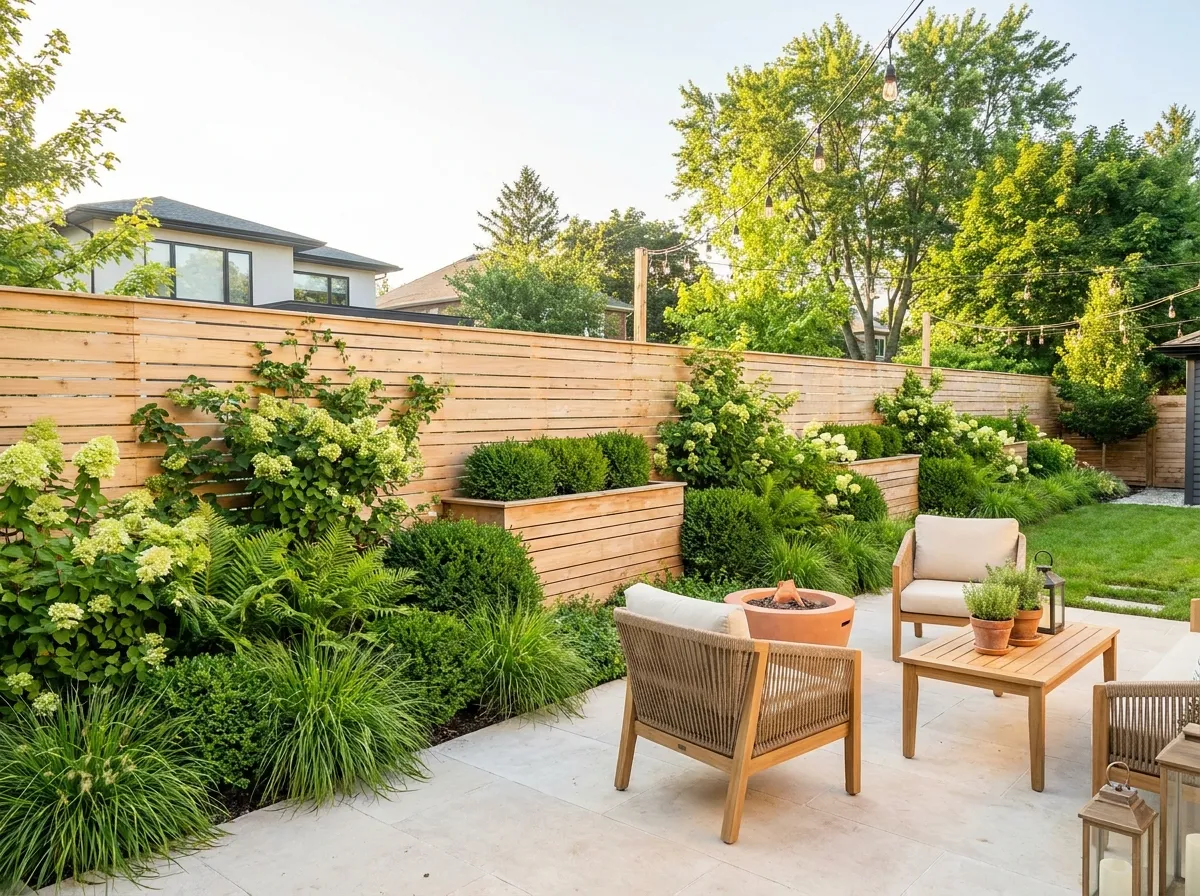
Cast Artistic Silhouettes Using Shadow-Play Plants
A few years back, I tried setting up a cozy little reading nook right by our side boundary line, completely surrounded by dense, shapeless shrubs. At night, with my new uplights turned on, those bushes just looked like a giant, terrifying dark blob that made our property feel like a horror movie set. Talk about a massive design fail!
Choosing Plants with Architectural Forms
That creepy backyard mistake taught me that if you want beautiful shadows, you need plants with distinct, architectural forms.
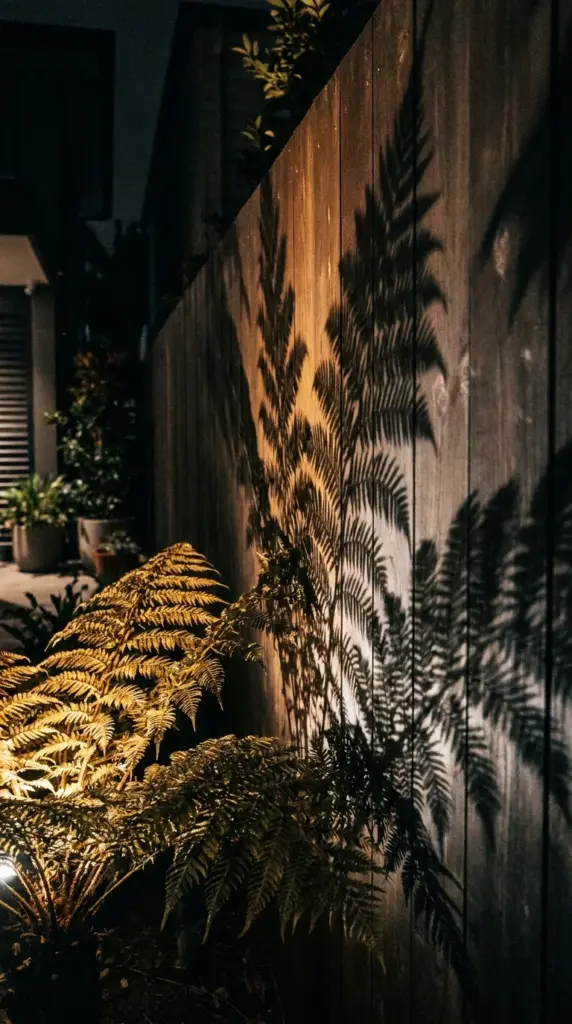
Instead of dense blocks of leaves, look for species with dramatic fronds like ostrich ferns or structural fan palms.
Ornamental grasses or a weeping laceleaf Japanese maple also work incredibly well because their intricate branches create beautiful lace patterns on a flat wood canvas.
Positioning Lights for Maximum Drama
To actually get those gorgeous shapes to project correctly, you have to master a technique called shadow lighting.
Instead of placing your light right against the fence, pull the fixture back so it sits directly in front of the plant.
Aim the beam straight through the foliage toward the wood panels, which instantly scales up the plant’s shadow into a massive piece of living art.
Playing with those dramatic shapes completely changes your yard’s nighttime vibe, but you also want your garden to feel amazing during the bright daytime hours. Hit that next button below because I am sharing exactly how to mix rigid hedges with soft, blowing grasses for the ultimate sensory experience!


