
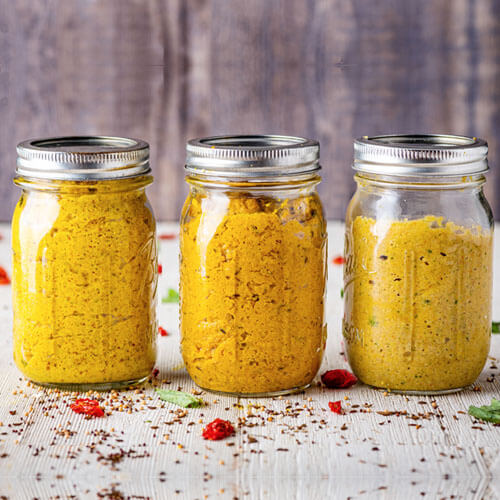
Zippy, zingy homemade mustard is easy, delicious, and lacto-fermented! Whip it into potato salad, salad dressing, or deviled eggs… dollop it on hamburgers or hotdogs… or use it as a dip for soft pretzels. You’ll never buy store-bought mustard again!
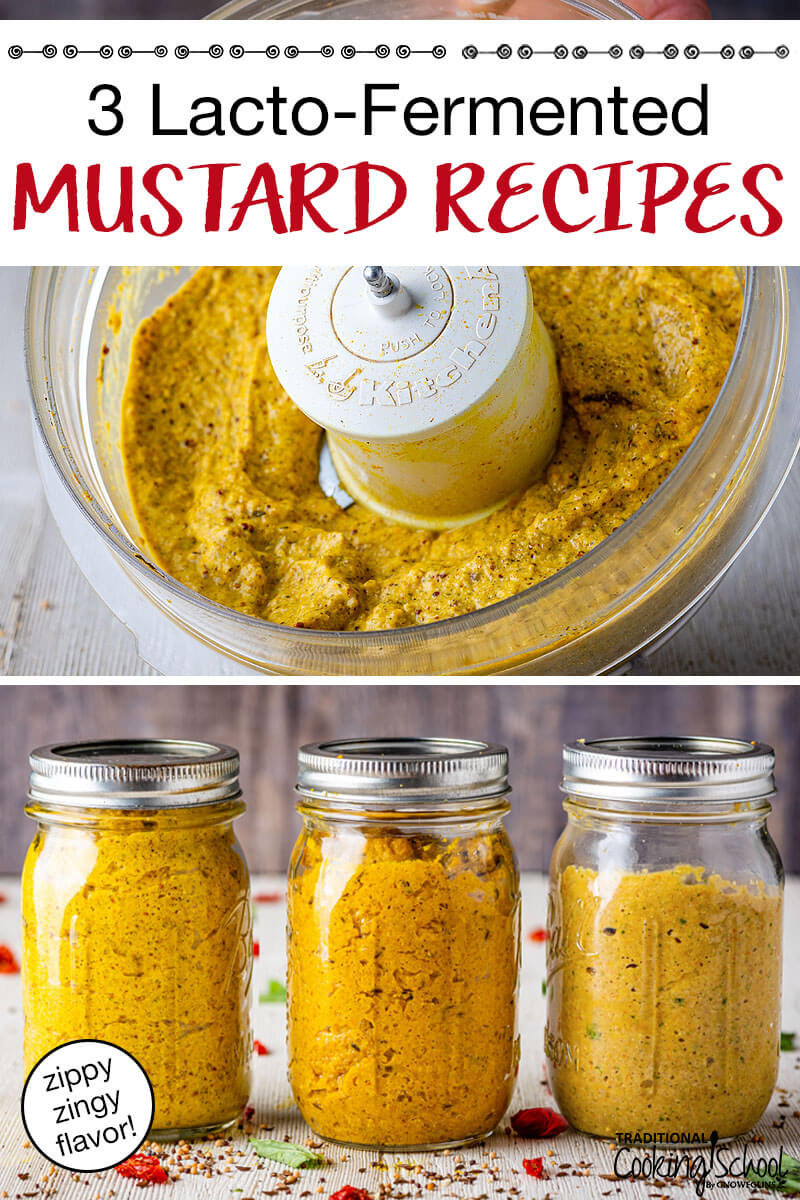
Mustard rolls right along with you… whether you’re experiencing the brisk breezes of fall, sweltering temperatures of summer, or fresh snows of winter.
Such a simple, yet complex, condiment. Ready to enhance the flavors of your soups, stews, dressings, salads, casseroles, meats, and more!
Mustard is amazing for so many reasons…
- Spread it on a deli sandwich made with delicious homemade sourdough sandwich bread or other sourdough bread.
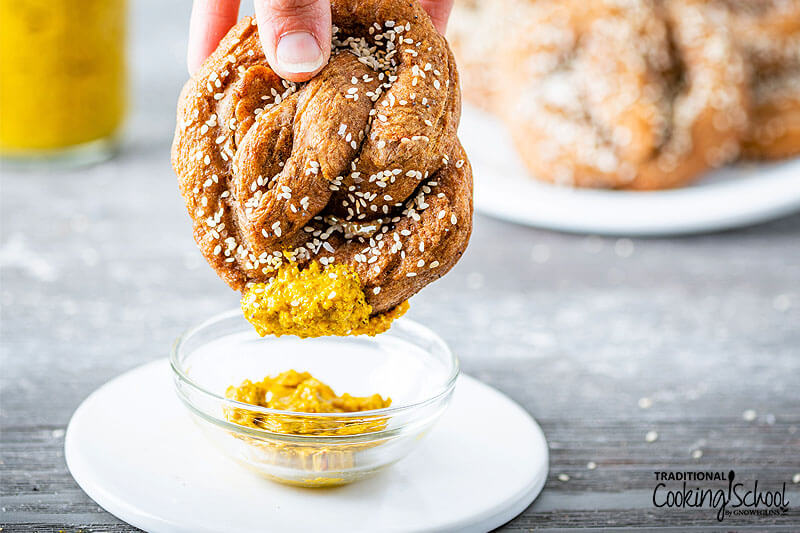
- As a dip for a homemade soft pretzel.
- Use it in a homemade potato salad (or a keto-friendly cauliflower “fauxtato” salad).
- A must in deviled eggs.
- For the emulsifier in your favorite salad dressing recipes.
- And perfectly paired with fermented ketchup and fermented mayonnaise on a hamburger!
- Don’t forget these other fermented condiments… once you try these mustard recipes, you’ll likely be back for more of our 43+ fermented and probiotic-filled condiments!
3 Homemade Whole Grain Mustard Recipes
Honestly, we just couldn’t decide which of these whole-grain mustards were our favorite, so we decided to share them all together!
Choose from Lacto-Fermented Beer-Thyme Grainy Mustard, Lacto-Fermented Beer-Caraway Grainy Mustard, and a fun twist with Lacto-Fermented Sun-Dried Tomato and Basil Grainy Mustard.
They all sound amazing, right? You’ll just have to try each of them and let us know which is your favorite.
Why Lacto-Fermentation?
Lacto-fermentation gives this condiment the added benefit of probiotics. And by now, we all know the benefits of fermented food in our diet!
How simple to get them from a condiment!? Almost as easy as these probiotic beverages!
Not only are you getting fermentation from the whey (or non-dairy culture), but you’re also getting probiotics from the apple cider vinegar (as long as you’re using homemade raw apple cider vinegar or a brand with the mother). Want to learn more about ACV? Check out 5 Health Benefits of Apple Cider Vinegar & 50+ Unique Ways to Use It!
What Whole-Grain Mustard Seeds Are Best?
If you prefer more mild mustard, you’ll want to stick with the white or yellow mustard seeds. But if you can handle a little bit of kick, go for the black or brown mustard seeds.
A combination of any or all works perfectly well, too. Find what your taste-buds (and family) like best.
We like to use these recipes as a guideline, but we tend to mix it up depending on what’s in our fridge and pantry at the time. Have fun with it!
How To Make Homemade Mustard (That’s Lacto-Fermented)
These recipes all start out the same, by soaking the seeds overnight in either beer or wine. This helps the seeds soak up that great tangy flavor and really adds to the end result.
What beer or wine should you use? Well, what’s in your fridge? Use whatever you like best!
Then, you mix all the ingredients together in a blender or food processor and whiz away until you reach your perfect mustard consistency.
You can also leave a few of the mustard seeds out to stir in at the end if you like to have some whole-grain in your mustard. This is where your own preference determines how long to blend.
Transfer your mustard to a glass jar and cover. Leave the mustard out at room temperature up to three days.
You can taste it after 24 hours to find your perfect taste, the fermented flavor will intensify the longer it sits at room temperature.
Move the mustard to the fridge and use it in any recipe that calls for mustard!
Lacto-Fermented Beer-Thyme Grainy Mustard Recipe
This recipe combines the flavors of tangy and “hoppy” beer with mustard, thyme, and onion. This makes a fantastic spread on burgers but is also subtle enough to be mixed into recipes that call for grainy or whole-grain mustard.
And it’s as simple as soaking the mustard seeds overnight, mixing in the other ingredients, giving it a good blend, then leaving to ferment for three days.
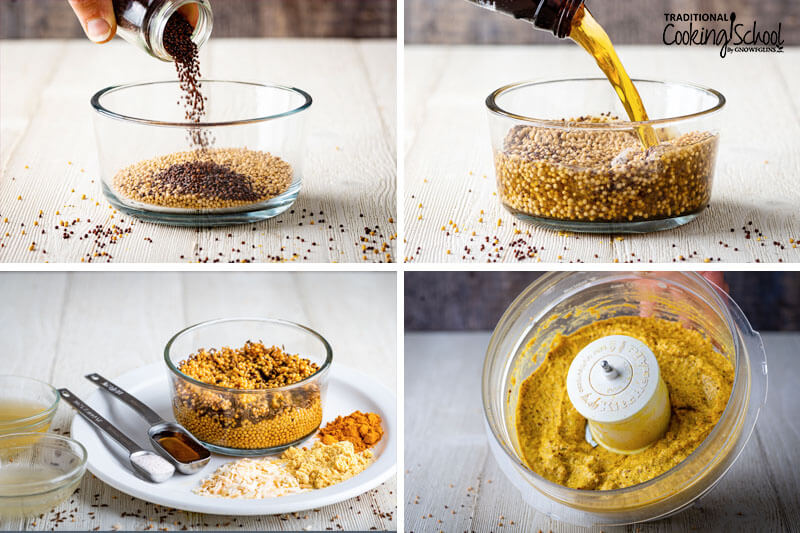
Though the recipe below says it’s “optional”, we like to add in a teaspoon or so of turmeric to give this mustard a nice golden color. As they say, you eat with your eyes first, and not all homemade mustards turn out a beautiful bright yellow color!
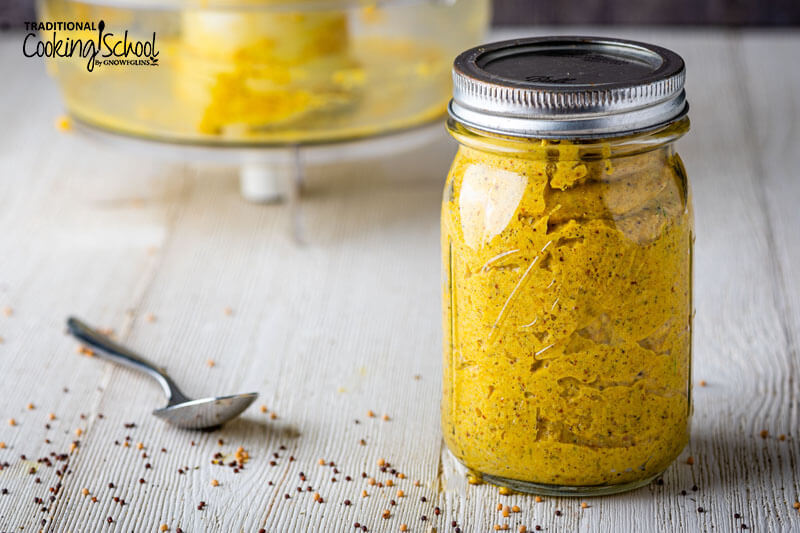
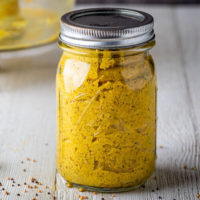
Lacto-Fermented Beer-Thyme Grainy Mustard
Tangy and packed full of flavor, this homemade mustard recipe blends the flavors of beer, thyme and onion with whole-grain mustard for a flavorful zip and zing to any sandwich, burger or recipe. (Makes about 2 cups)
Ingredients
-
1/2
cup
mustard seed
yellow or white* -
3/4
cup minus 1 tablespoon
beer -
1
tablespoon
mustard flour
** -
1
tablespoon
dried minced onion
or 1/4 cup diced fresh, sauteed or raw -
2
teaspoons
dried thyme leaves
or 2 tablespoons fresh -
1/2
cup minus 1 tablespoon
raw apple cider vinegar -
1/2
teaspoon
sea salt -
1
teaspoon
turmeric
optional (for color) -
2
tablespoons
whey
or dairy-free starter culture such as Caldwell’s***
Instructions
-
Soak the mustard seeds in the beer overnight.
-
When ready to make the mustard, combine the soaked seeds with the remaining ingredients in a blender or food processor (for a whole-grain mustard you can reserve two tablespoons of the mustard seeds to stir in later, if desired).
-
Blend in the blender or food processor to your preferred consistency.
-
Gently stir in reserved mustard seeds (if desired)
-
Transfer to a glass jar and cover.
-
Let sit on the counter for 3 days.
-
Pop in the fridge and enjoy!
Recipe Notes
*If you like a little more heat, use half or all brown (or black) mustard seeds.
**Mustard flour, mustard powder, or homemade finely whizzed up mustard seeds can work here.
***Find Caldwell’s dairy free starter culture here.
Calories from Fat 9
Lacto-Fermented Beer-Caraway Grainy Mustard Recipe
This recipe combines the flavors of tangy and “hoppy” beer with mustard, caraway, and onion. It makes a fantastic spread on burgers but with the addition of caraway, we find it pairs very well with pork or used to make a salad dressing.
To make this recipe, simply soak the mustard seeds overnight, mix in the other ingredients, give it a good blend, then leave it to ferment for three days.
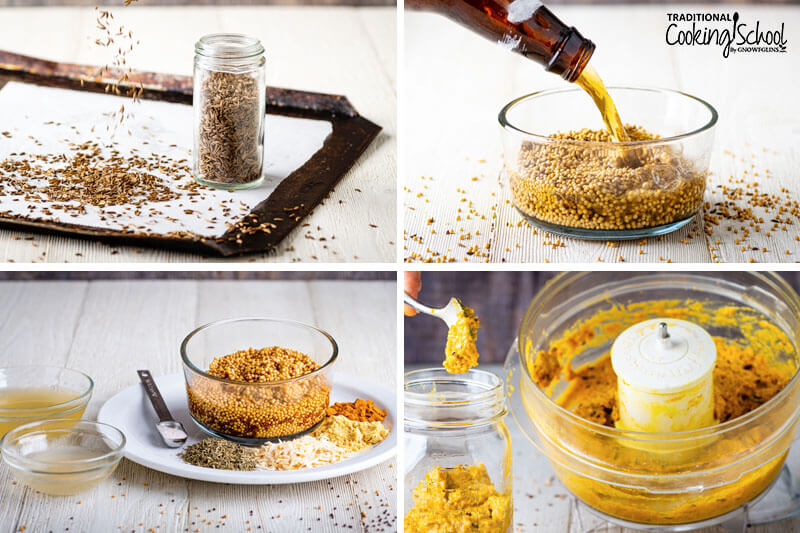
Again, although the recipe below says its “optional”, we like to add in a teaspoon of turmeric to give this mustard a beautiful golden color.
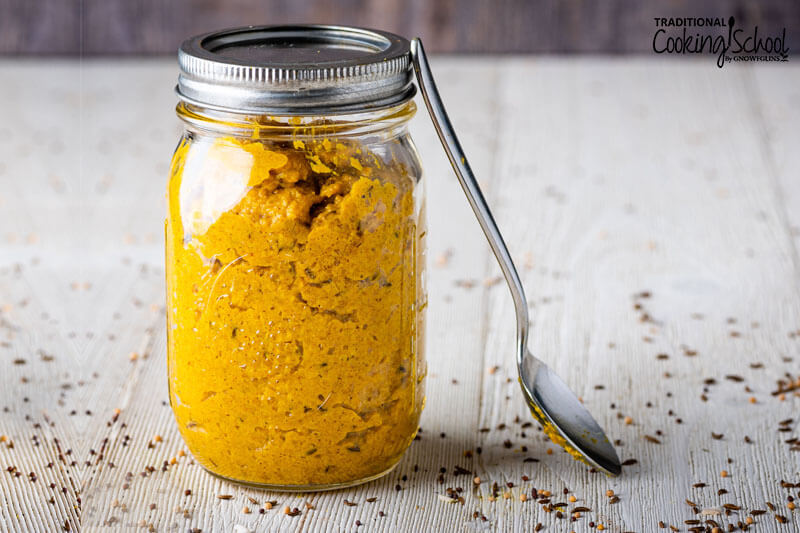
Lacto-Fermented Beer-Caraway Grainy Mustard
A tangy blend of beer, caraway, onion and mustard seeds, this homemade mustard pairs very well with pork and makes a fantastic addition to homemade salad dressings. (Recipe makes about 2 cups.)
Ingredients
-
1/2
cup
mustard seed
yellow or white* -
3/4
cup minus 1 tablespoon
beer
What’s your favorite? What’s in your fridge? -
1/2
cup minus 1 tablespoon
raw apple cider vinegar -
1
tablespoon
mustard flour
** -
1/2
teaspoon
sea salt -
1
tablespoon
caraway seeds
toasted -
1
tablespoon
dried minced onion
or 1/4 cup diced fresh, sauteed or raw (optional) -
1
teaspoon
turmeric
optional -
2
tablespoons
whey
or dairy-free starter culture such as Caldwell’s***
Instructions
-
Soak the mustard seeds and caraway seeds in the beer overnight.
-
When ready to make the mustard, combine the soaked seeds with the remaining ingredients in a blender or food processor (for a whole-grain mustard you can reserve two tablespoons of the mustard seeds to stir in later, if desired).
-
Blend in the blender or food processor until desired consistency is reached.
-
Stir in reserved mustard seed, if desired.
-
Transfer to a glass jar and cover.
-
Let sit on the counter for three days.
-
Pop in the fridge and enjoy!
Recipe Notes
*If you like a little more heat, use half or all brown (or black) mustard seeds.
**Mustard flour, mustard powder, or homemade finely whizzed up mustard seeds can work here.
***Find Caldwell’s dairy free starter culture here.
Calories from Fat 9
Lacto-Fermented Sun-Dried and Basil Grainy Mustard Recipe
This recipe combines the Mediterranean flavors of sun-dried tomatoes and basil with white wine and mustard. It’s truly the most unique of the three recipes, and also a fantastic use for those sun-dried tomatoes.
Pair this mustard with fish, blend it into salad dressings, or even spread it on your favorite panini!
This recipe includes the extra step of dehydrating your tomatoes, however it’s well worth the effort! From there, it’s simply soaking the mustard seeds overnight, mixing in the other ingredients, giving it a good blend, then leaving to ferment at room temperature for three days.
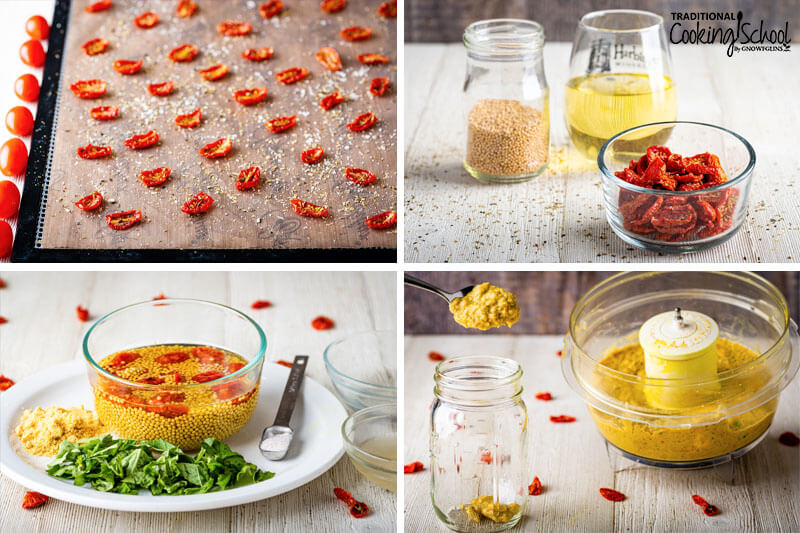
Look at all those specks of fresh basil! This is truly a show-stopping mustard recipe.
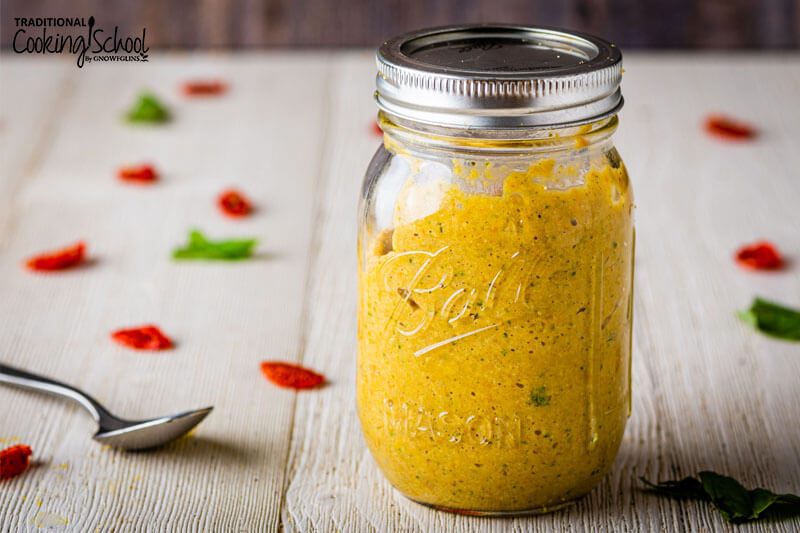
Lacto-Fermented Sun-Dried Tomato and Basil Grainy Mustard
With the addition of sun-dried tomatoes and basil, this homemade mustard is fantastic as a dip for soft pretzels, spread on homemade crusty bread, or even used in salad dressings. (Recipe makes about 2 cups.)
Ingredients
-
1/2
cup
mustard seed
yellow* -
4
sun-dried tomatoes
cut up a bit -
1
cup minus 1 tablespoon
white wine
your choice of variety -
1
rounded tablespoon
mustard flour
** -
1/4
cup minus 1 tablespoon
white wine vinegar -
1/4
cup
fresh basil
packed, chopped -
1/2
teaspoon
sea salt -
2
tablespoons
whey
or dairy-free starter culture such as Caldwell’s***
Instructions
-
Soak the mustard seeds and sun-dried tomato in the wine overnight.
-
When ready to make the mustard, combine the soaked seeds with the remaining ingredients in a blender or food processor (for a whole-grain mustard you can reserve two tablespoons of the mustard seeds to stir in later, if desired).
-
Blend in a blender or food processor until desired consistency is reached.
-
Stir in reserved mustard seeds, if desired.
-
Transfer to a glass jar and cover.
-
Let sit on the counter for three days.
-
Pop in the fridge and enjoy!
Recipe Notes
*If you like a little more heat, use half or all brown (or black) mustard seeds.
**Mustard flour, mustard powder, or homemade finely whizzed up mustard seeds can work here.
***Find Caldwell’s dairy free starter culture here.
Calories from Fat 9
More Ways to Use Your Mustard
- Smoked Salmon Salad
- Sourdough Hotdog Wraps
- Homemade Salad Dressings
- Egg Salad and other Egg Dishes
- Grilled Meats/Fish
- English Muffin Sandwiches
- Homemade Savory Dips, Sauces, Relishes, and Marinades
Do you love mustard, too? What’s your favorite kind? Fill-in-the-blank: When I’m eating __________, I’ve got to have my mustard!
More Fermented Recipes, Techniques, Formulas, and Troubleshooting
Looking for more fermented condiments? Try these!
- Lacto-Fermented Homemade Ketchup
- Lacto-Fermented Mayonnaise
- Homemade Sauerkraut In A Stoneware Crock
- Homemade Kimchi: An Easy Korean Sauerkraut Recipe
- Old-Fashioned, Crunchy, Fermented Garlic-Dill Pickles
- Lacto-Fermented Turnips & Beets
Want to learn more about techniques for fermentation, or maybe you need help troubleshooting? It all awaits in the Lacto-Fermentation eCourse of our online Traditional Cooking School.
This post was featured in 43 Fermented & Probiotic-Filled Condiments, 60 Easy & Nourishing Picnic Recipes, and 92 Nourishing Grill & Barbecue Dishes, Drinks, & Desserts.


