
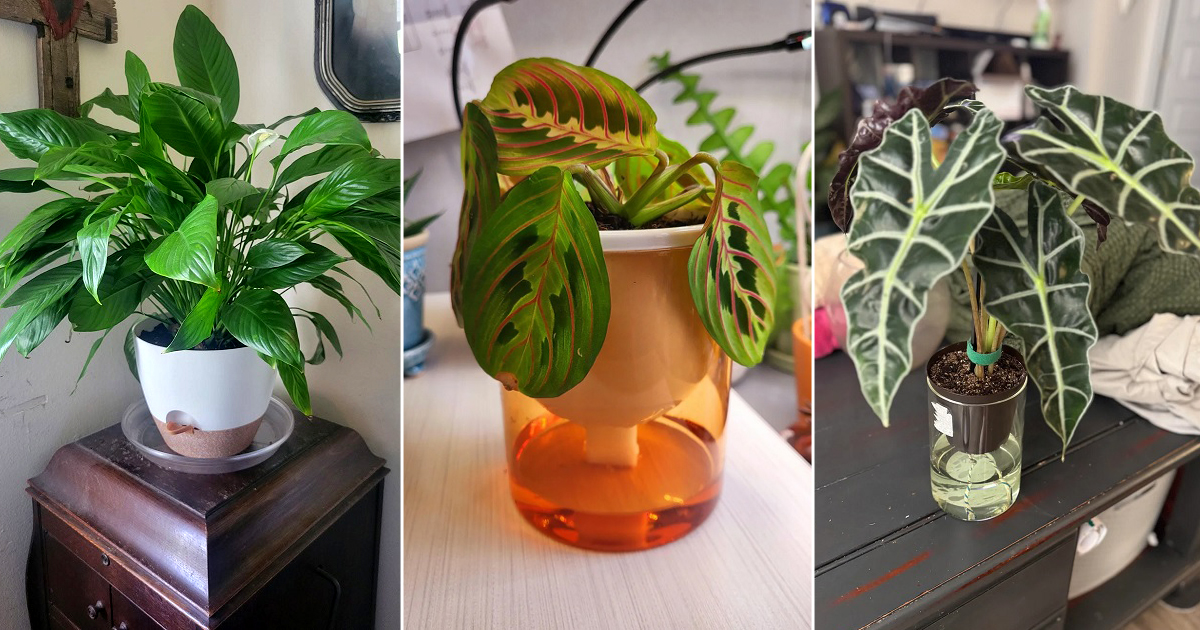
Turn your houseplant care routine into an easy task with these indoor plants that grow well in self-watering pots!
Some houseplants seem to wilt the moment you miss a watering. That’s where self-watering pots can make a real difference. Their built-in reservoirs keep moisture available to the roots, helping many indoor plants stay healthier with less day-to-day maintenance. If you’re thinking about making the switch, these are some of the best plants to start with.
Indoor Plants You Should Grow in Self-Watering Pots
This post contains affiliate links. As an Amazon Associate, we earn from qualifying purchases, which support our website. You can also check out our Amazon storefront here for all kinds of gardening essentials you’ll need.
1. Peace Lily

Botanical Name: Spathiphyllum spp.
If you’ve ever grown a peace lily, you’ve probably seen it flop over dramatically after missing a watering. The good news? It usually bounces back quickly, but repeated dry spells can put unnecessary stress on the plant.
A self-watering pot helps keep the soil consistently moist, so your peace lily spends less time recovering and more time producing lush foliage and elegant white blooms.
Pro Tip: Even so, allow the reservoir to empty occasionally before you refill it, as constantly saturated soil can reduce oxygen around the roots.
2. Boston Fern

Botanical Name: Nephrolepis exaltata
Boston ferns naturally grow in humid forests where the soil rarely dries out completely. That’s why they often struggle indoors, especially if watering is inconsistent. This is what makes them an excellent match for self-watering planters.
However, their delicate fronds often develop crispy brown tips if the potting mix dries out too much between waterings. Pairing it with a compact humidifier can help keep the fronds lush, especially during dry winter months.
3. Philodendron

Botanical Name: Philodendron species
Philodendrons are easygoing houseplants, but they reward consistent care with noticeably stronger growth. Keeping the soil evenly moist encourages larger leaves, healthier vines, and more vigorous development, especially during the active growing season.
Of course, a self-watering planter won’t turn a small philodendron into a giant overnight, but it does make maintaining healthy, vigorous vines much easier, especially if your schedule isn’t always predictable.
Check out the best variegated and colorful Philodendron varieties in this guide to see which one suits your home colors!
4. Prayer Plant

Botanical Name: Maranta leuconeura
One of the best things about prayer plants is watching their beautifully patterned leaves fold each evening upward. To keep that foliage looking healthy, they need evenly moist soil.
Since frequent drying can lead to curled leaves, crispy edges, and faded colors, a self-watering pot setup provides a steadier supply of moisture, helping the plant stay vibrant with much less effort. Here are the best spots for a prayer plant to thrive!
5. Fittonia
Botanical Name: Fittonia albivenis
Quite popular as the “fainting plant,” Fittonia tends to collapse dramatically when it gets thirsty. Although it usually perks up after watering, repeated episodes can weaken the plant over time. That’s why you should grow one in a self-watering pot!
The built-in reservoir in such a pot keeps moisture available to the roots, so the potting mix doesn’t dry out as quickly between watering sessions. Here are lovely varieties to grow!
6. Chinese Evergreen

Botanical Name: Aglaonema spp.
Chinese evergreen is often recommended to beginners because it’s forgiving, but even this easy-going plant appreciates steady moisture while it’s actively growing. Likewise, irregular watering can slow growth and leave the foliage looking less lively than it should.
So, rather than relying on a fixed watering schedule, a self-watering planter lets the roots draw moisture when needed! That and feeding it with a balanced liquid houseplant fertilizer every few weeks during the growing season. Simple, right?
7. Pothos

Botanical Name: Epipremnum aureum
Pothos is famous for surviving neglect, but if you want those long, cascading vines to really take off, steady moisture makes a noticeable difference. When the soil repeatedly swings between very dry and soaking wet, growth often slows, and new leaves may appear smaller.
Just go with a self-watering planter! It will help create more consistent conditions, encouraging fuller vines and healthier foliage over time. Here’s some inspiration to grow one in your home!
8. Arrowhead Plant

Botanical Name: Syngonium podophyllum
Arrowhead plants grow quickly once they’re happy, constantly producing fresh leaves and longer stems. That kind of growth uses plenty of water, especially during the warmer months.
Now, only a self-watering planter helps meet those demands without giving you any fuss. It keeps moisture available when the roots need it, allowing the plant to focus on producing lush foliage instead of recovering from dry spells. Maybe try one in pink?
Pro Tip: Go for a medium-sized self-watering planter to help maintain the steady moisture this tropical climber prefers, so it can focus on producing healthy foliage rather than recovering from repeated dry spells.
9. African Violet

Botanical Name: Saintpaulia ionantha
Few houseplants bloom as generously indoors as African violets, but they do appreciate a little consistency. Instead of watering from above and risking spotted leaves, a self-watering pot lets the roots absorb moisture as needed.
It’s one of the easiest ways to keep the plant healthy and encourage flowers throughout the year.
Pro Tip: Bright, indirect light and regular deadheading will reward you with even more blooms.
10. Maidenhair Fern

Botanical Name: Adiantum spp.
Ask any plant enthusiast about difficult ferns, and maidenhair usually tops the list. Its delicate fronds dry out incredibly fast, so even one missed watering can leave the plant looking tired.
But not if you have a self-watering pot! It solves the biggest challenge by providing a steady supply of moisture that these beautiful ferns depend on.
Pro Tip: Keeping a fine mist spray bottle nearby is another simple way to boost humidity around the delicate fronds.
11. Alocasia

Botanical Name: Alocasia spp.
Every new Alocasia leaf is a showpiece, and producing those large, dramatic leaves takes plenty of water and energy. When the soil dries out too often, growth may stall or older leaves can decline sooner than expected.
So go with a self-watering planter. It allows the plant to invest its energy in growing those impressive leaves. But during winter, let the reservoir stay empty a little longer between refills, as growth naturally slows.
Check out this chunky aroid potting mix that offers excellent drainage while retaining just the right amount of moisture for healthy Alocasia growth.
12. Calathea

Botanical Name: Goeppertia species
Calatheas have a way of letting you know when something isn’t quite right. Those brown edges, curled leaves, and faded patterns are often the first clues that conditions have become too dry.
Rather than watering on a strict schedule, letting the plant draw what it needs from a reservoir creates a much steadier environment. That’s often enough to keep those intricate leaf patterns looking their best.
Self-watering pots won’t replace good plant care, but they can make it much easier to keep your favorite houseplants happy. Pair one with the right potting mix, and you’ll spend less time worrying about watering and more time enjoying healthy, thriving foliage.
Don’t forget to try this Plantopedia guide, which covers all the steps you need to grow a healthy plant. Buy yours now!


