
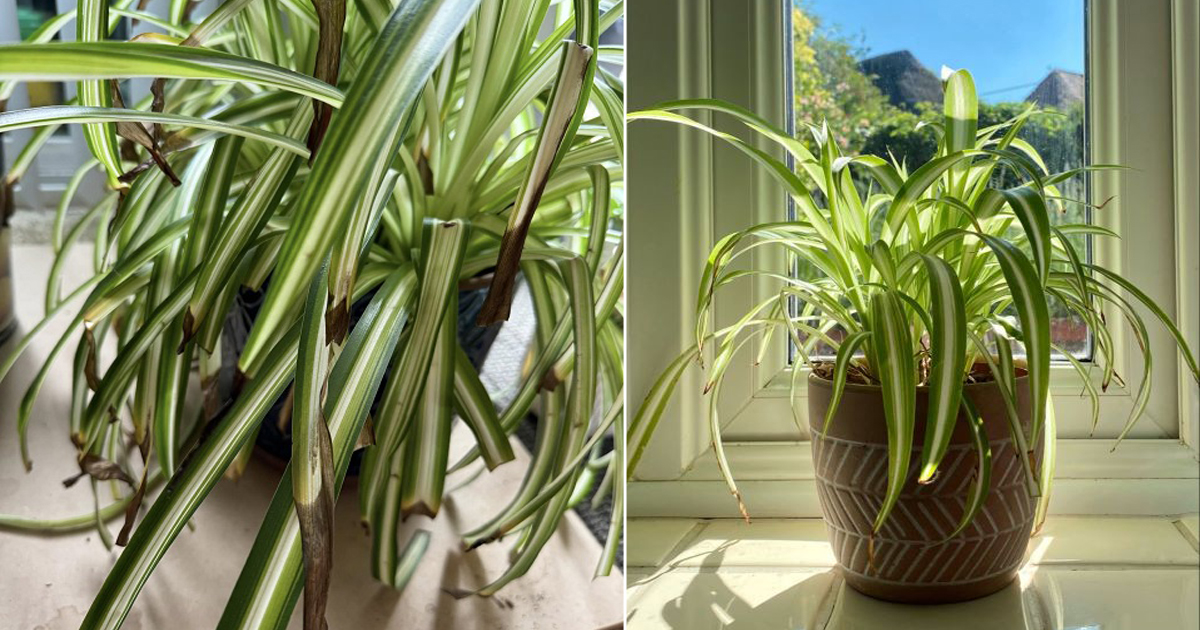
Learn about these hacks to keep your spider plant healthy all summer without following any lengthy care routine!

So many spider plants suddenly develop brown tips or start looking tired in the middle of summer, even in homes where they seemed perfectly healthy before.
But these few smart hacks can help the plant stay full, fresh, and actively growing all season without turning care into a daily chore.
What Happens to Your Spider Plants in Summer
When summer kicks in, warm temperatures push them into active growth, yet the same heat also dries out the soil and air around them faster, stresses the roots, and makes even small watering mistakes show up almost immediately. Here’s what is happening!
1. Brown Leaf Tips and Crispy Edges

This is usually the first thing you notice. The tips begin turning brown, the edges feel dry, and some leaves may even start curling slightly inward.
In many cases, this happens because the plant is losing moisture through its leaves faster than the roots can absorb it back. Plus, hot rooms, dry balconies, and bright afternoon light speed this process up quickly.
2. Droopy and Dull Foliage

A thirsty spider plant does not always look completely dry. Sometimes it simply looks droopy. The leaves lose their natural arch, the green color appears duller, and the plant stops looking crisp. It usually happens when watering only wets the top layer of soil.
And due to that, the roots stay closer to the surface instead of growing deeper into the pot, making them more sensitive to heat and faster drying.
3. Stunted Growth and Fewer Spiderettes

Summer should be the season when spider plants produce long leaves and plenty of spiderettes. But if the growth suddenly slows down, the plant is usually conserving energy because conditions are not stable enough.
You may notice newer leaves coming in thinner than usual or the plant producing fewer offshoots. Inconsistent moisture is often the reason here.
Hacks To Keep Your Spider Plant Healthy All Summer
Now that you know how to identify the issues, here’s what you can do to keep your plant healthy throughout this season!
1. Water Deeply, Not Frequently

This one change alone fixes most summer problems. Instead of giving your spider plant a little water every day, water slowly and thoroughly until excess water drains out from the bottom holes. Doing so hydrates the full root ball instead of just dampening the surface.
Then allow the top layer of soil to dry slightly before watering again. Spider plants actually prefer this pattern because it encourages the roots to grow deeper and stronger. Shallow, frequent watering creates weak surface roots that dry out quickly in hot weather.
Pro Tip: A simple trick gardeners use is checking moisture deeper in the pot. Push your finger a couple of inches into the soil or insert a wooden skewer near the edge of the pot. If it comes out cool with slight moisture attached, wait another day. If it feels dry, it is time to water.
Morning watering works best during summer because the plant gets enough moisture before daytime heat increases evaporation. Plus, room-temperature water is gentler on the roots than very cold water straight from the tap.
Better yet, have you ever tried applying milk to your spider plants? Here are 3 reasons you should be doing this!
2. Repot Your Spider Plant at the Right Time

Many people avoid repotting in summer, but refreshing a crowded spider plant early in the season can actually help it grow better. But first, check if the roots are circling tightly inside the pot, pushing through the drainage holes.
Old soil becomes compacted over time, especially after repeated watering. Once that happens, airflow around the roots decreases, and water either drains too fast or stays trapped unevenly.
First, pick a new pot only one size larger than the current one. Then, go for a loose mix. Something simple like cocopeat (as it has a neutral pH), compost, and perlite; this creates enough airflow around the roots without drying out too aggressively. If you do not have perlite, even a small amount of coarse sand or orchid bark will work.
Once you have both things ready, just follow our detailed guide on repotting a spider plant!
3. Bury a Small Piece of Banana Peel

It sounds unusual at first, but spider plants respond surprisingly well to the decomposing banana peel in the pot corner. As it breaks down, it releases potassium and trace minerals (magnesium, calcium, manganese, and iron) that help support stronger leaves and healthier root function during hot weather.
The key here is restraint. Most people make the mistake of adding too much.
Here’s what to do: You only need a small piece, around one or two inches long. Chop it finely and bury it deep enough that it is fully covered with soil. (Large chunks will attract fungus gnats or start smelling unpleasant, so don’t skip chopping.)
Experienced gardeners often use this method for spider plants that look pale or stop producing healthy spiderettes in summer despite regular watering. If you already fertilize regularly, skip this hack.
Combining too many feeding methods at once can overload the soil and create the exact salt buildup spider plants dislike.
4. Rotate the Pot Every 10 Days

Spider plants love bright light, but summer sunlight can be surprisingly uneven inside homes and on balconies. One side of the plant often receives far more light than the other, causing it to lean toward the window and grow lopsided over time.
A simple solution is rotating the pot about a quarter turn every 7-10 days. Doing so allows all sides of the plant to receive similar light exposure, encouraging fuller, more balanced growth.
At the same time, pay close attention to afternoon sunlight. Spider plants enjoy bright, indirect light and can handle some gentle morning sun, but intense afternoon rays can scorch the leaves, fade their color, and worsen brown tips.
If your plant sits near a south- or west-facing window or on a sunny balcony, move it to one of these spots!
Pro Tip: If the leaves feel hot to the touch or start looking pale and dry despite proper watering, the light is likely too strong.
Keep forgetting when it’s time to rotate? The easiest way to do this correctly is by rotating the pot during your regular watering routine every week.
Keeping your spider plant healthy in summer comes down to understanding how it handles heat and moisture. Get the watering method right, and throw in the occasional banana peel, and you will have a plant that stays fresh and actively growing all season long.


